 Skip to content
An architecture detail is a drawing of a small part of a building at a large scale. Unlike a plan or section, which shows the whole building, a detail shows how things connect. A window meets a wall. A roof meets a parapet. A column meets a beam. A stair tread meets a riser. The detail is where architecture becomes real. It is where ideas meet materials.
These 12 architecture detail ideas span connections, junctions, and assemblies. Each detail includes defining characteristics, construction principles, and drawing techniques.
1. The Window Head Detail
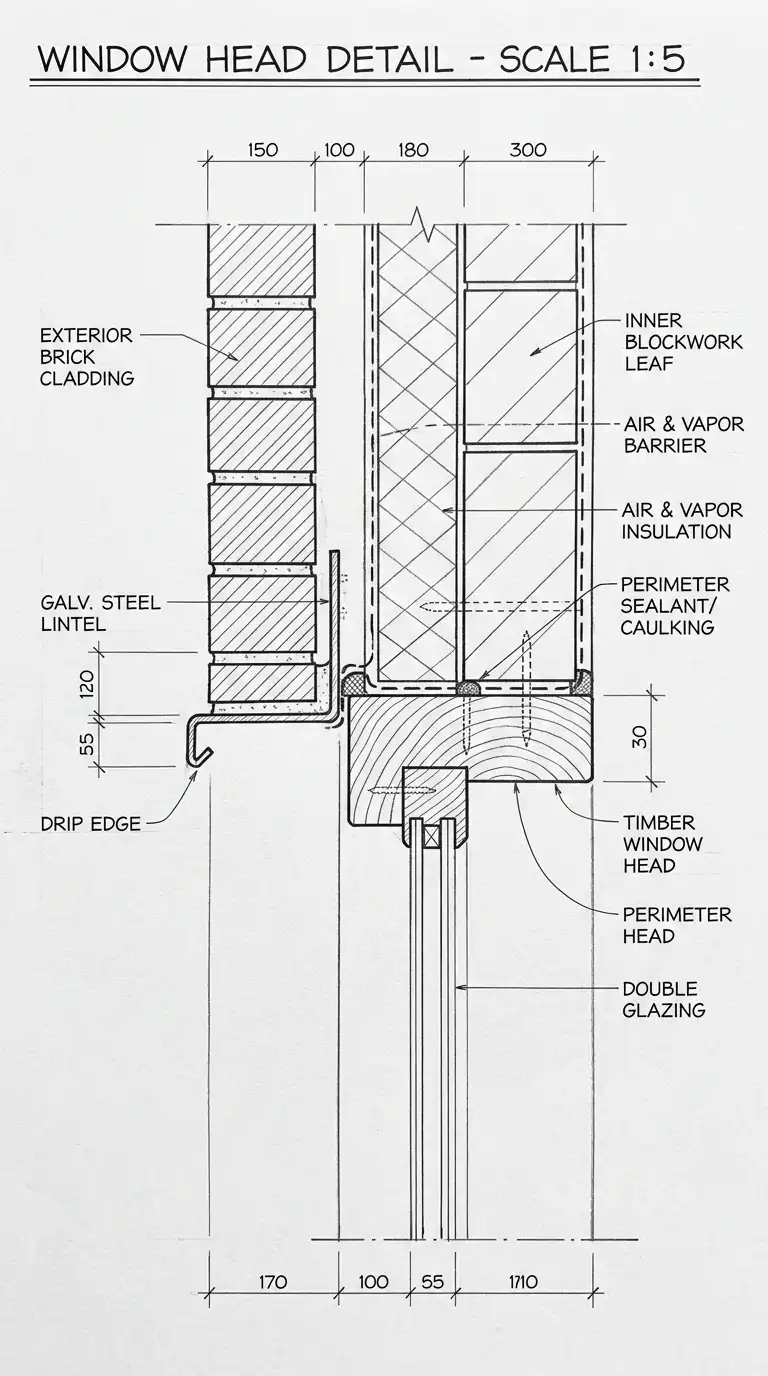
The window head detail shows how the top of a window connects to the wall above. The detail includes the window frame, the lintel, the insulation, the air barrier, and the exterior cladding. The window head detail is critical for water management. Water must drain out, not in.
This detail is ideal for all buildings with windows. The emotional effect is precise, watertight, and structural.
Quick Tips
- The lintel must support the wall above the window.
- A drip edge must direct water away from the window.
- The air barrier must be continuous.
2. The Window Sill Detail
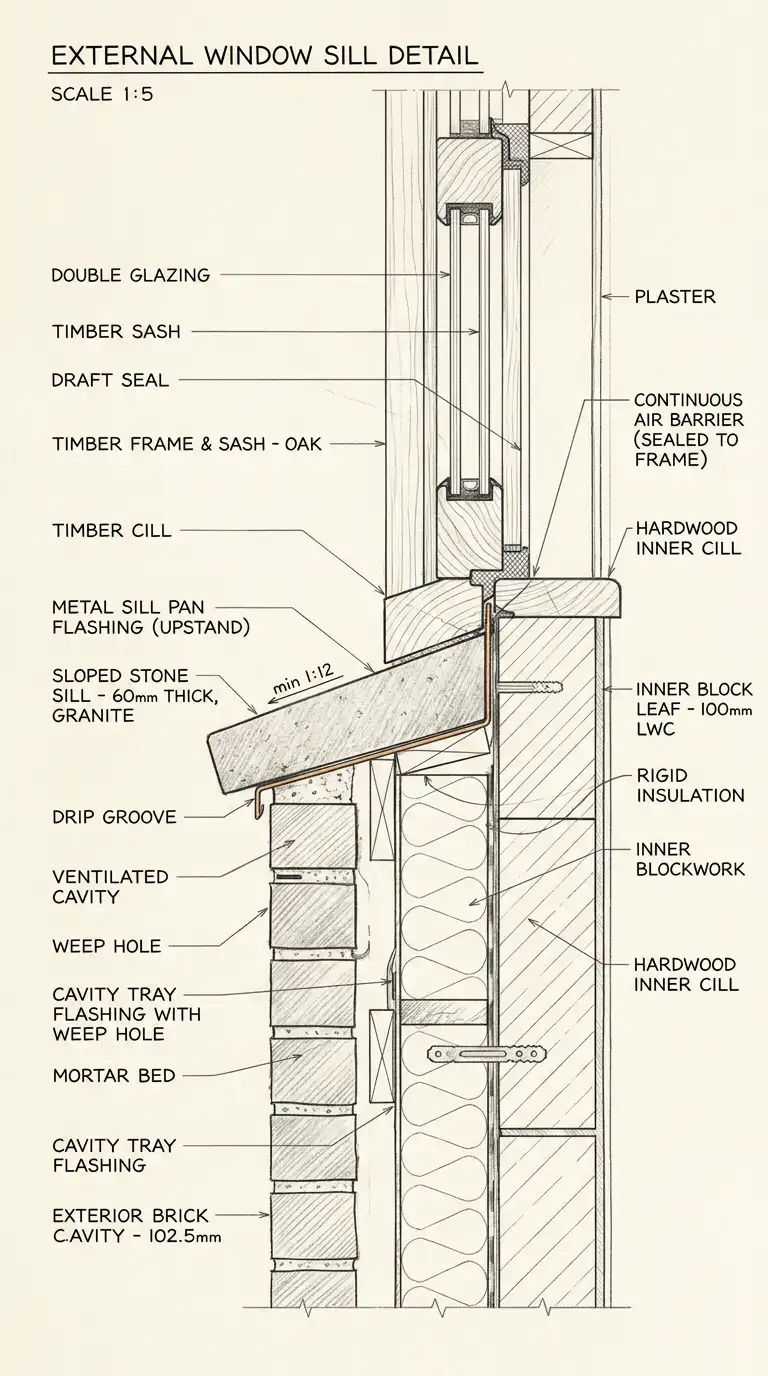
The window sill detail shows how the bottom of a window connects to the wall below. The detail includes the window frame, the sill, the flashing, the insulation, and the exterior cladding. The window sill detail is critical for water management. Water must drain away from the wall.
This detail is ideal for all buildings with windows. The emotional effect is precise, watertight, and sloped.
Quick Tips
- The sill must slope outward to shed water.
- Flashing must extend behind the cladding.
- The air barrier must be continuous.
3. The Wall Section
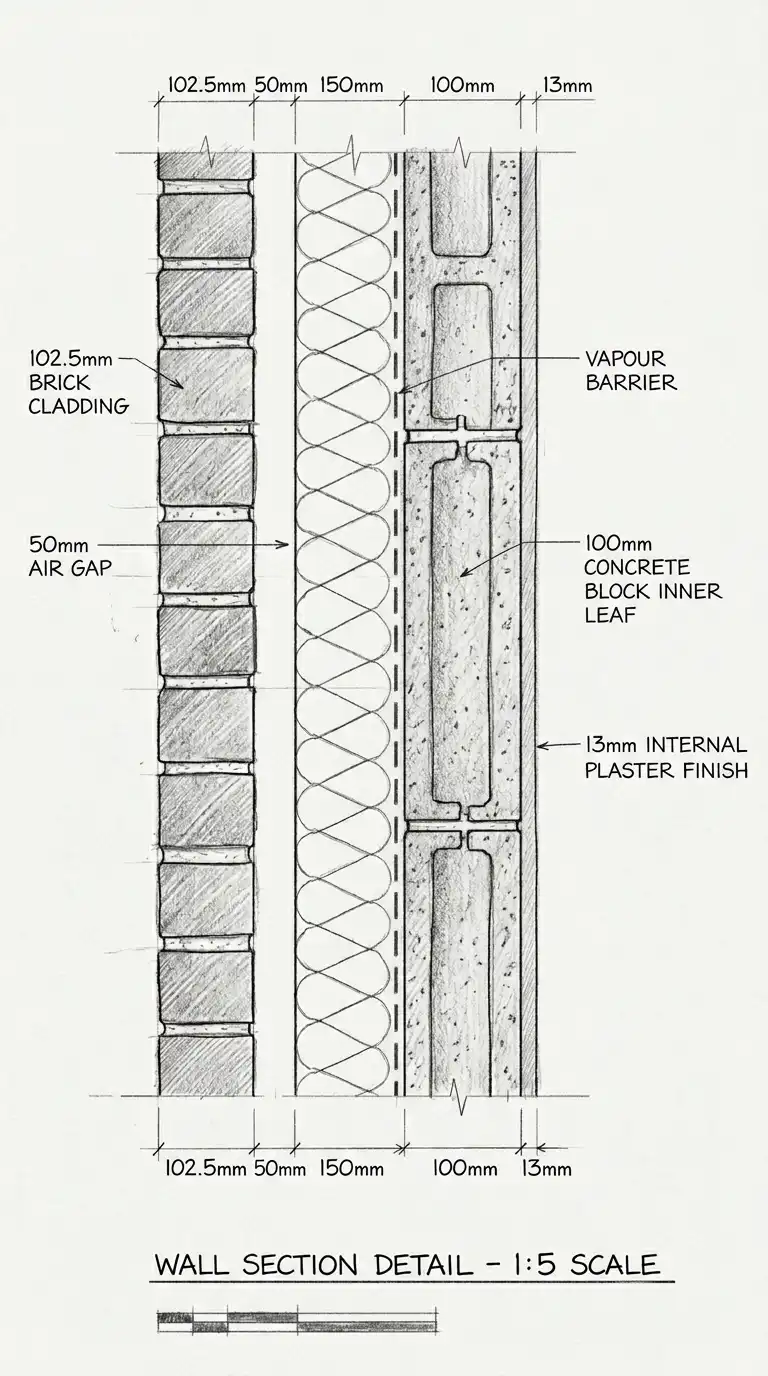
The wall section shows the entire wall assembly from exterior to interior. The detail includes the exterior cladding, the air gap, the insulation, the structure, the vapour barrier, and the interior finish. The wall section is the most important detail in a building.
This detail is ideal for all buildings. The emotional effect is layered, insulating, and continuous.
Quick Tips
- Label every layer from exterior to interior.
- Show the thickness of each layer.
- The air barrier must be on the exterior side of the insulation.
4. The Roof Parapet Detail
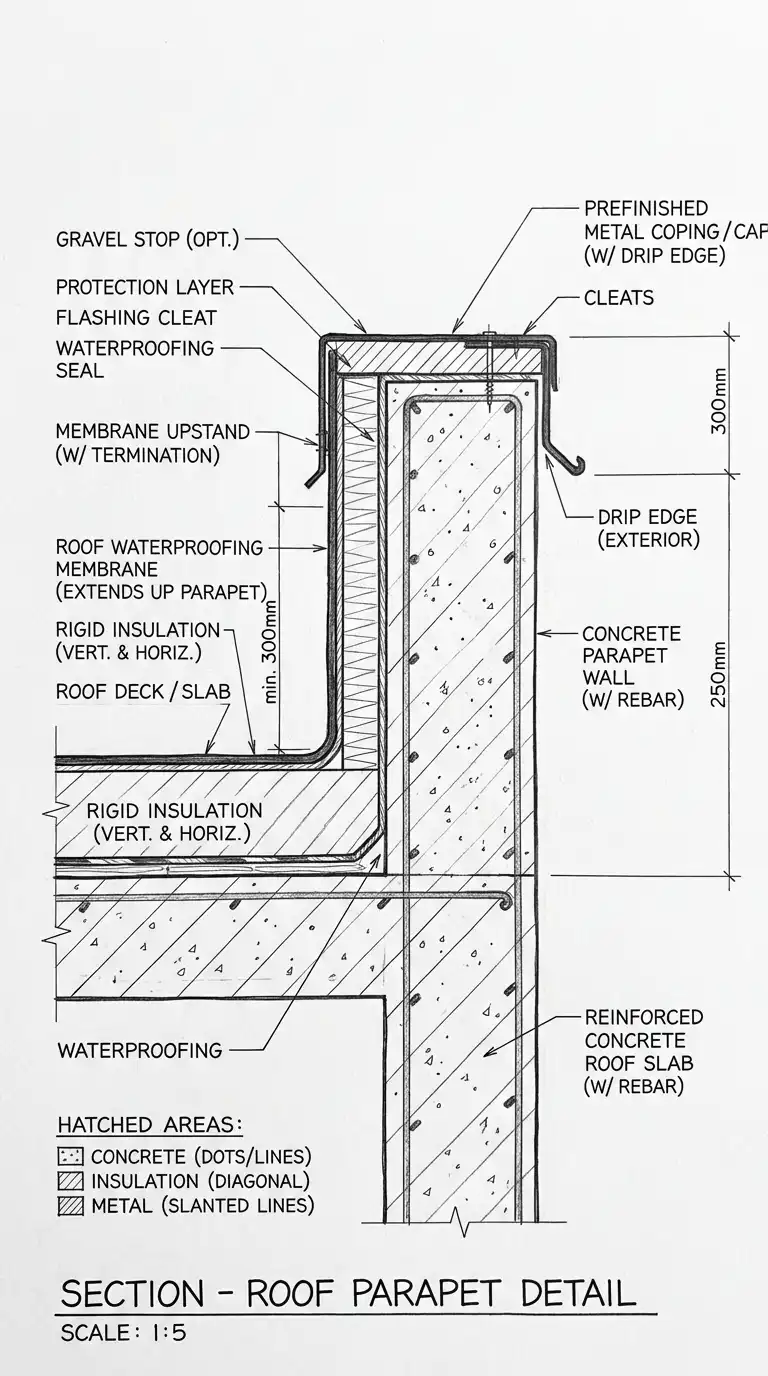
The roof parapet detail shows how the wall continues above the roof. The parapet is a low wall at the edge of a flat roof. The detail includes the parapet, the roof membrane, the insulation, and the flashing. The parapet detail is critical for water management.
This detail is ideal for flat roofs. The emotional effect is capped, watertight, and terminated.
Quick Tips
- The parapet must be capped with metal or stone.
- The roof membrane must extend up the parapet.
- A drip edge must direct water away from the wall.
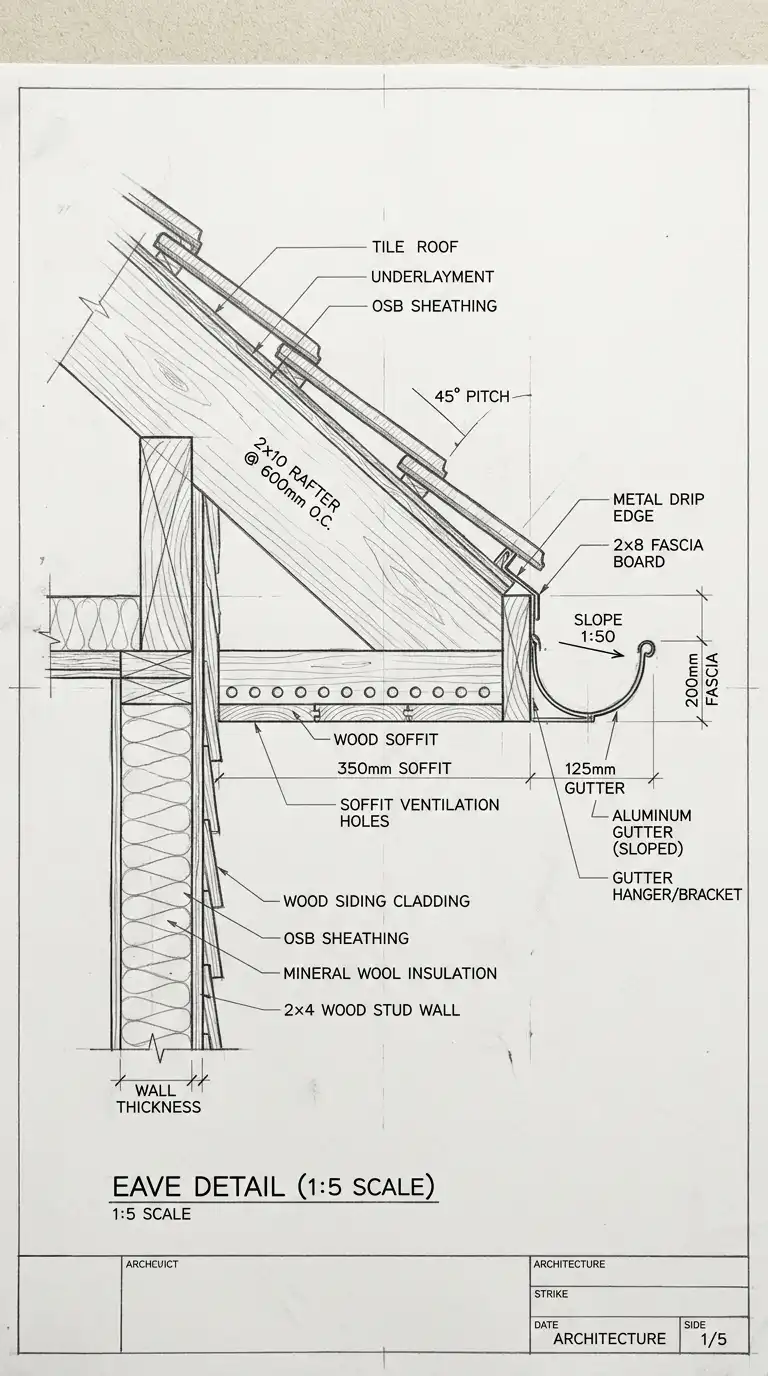
5. The Eave Detail
The eave detail shows where the roof overhangs the wall. The detail includes the roof structure, the soffit, the fascia, the gutter, and the wall below. The eave detail is critical for water management. Water must be collected and directed away.
This detail is ideal for pitched roofs. The emotional effect is overhanging, gutted, and ventilated.
Quick Tips
- The soffit must be ventilated for attic airflow.
- The gutter must be sloped to the downspout.
- The fascia must support the gutter.
6. The Column Base Detail
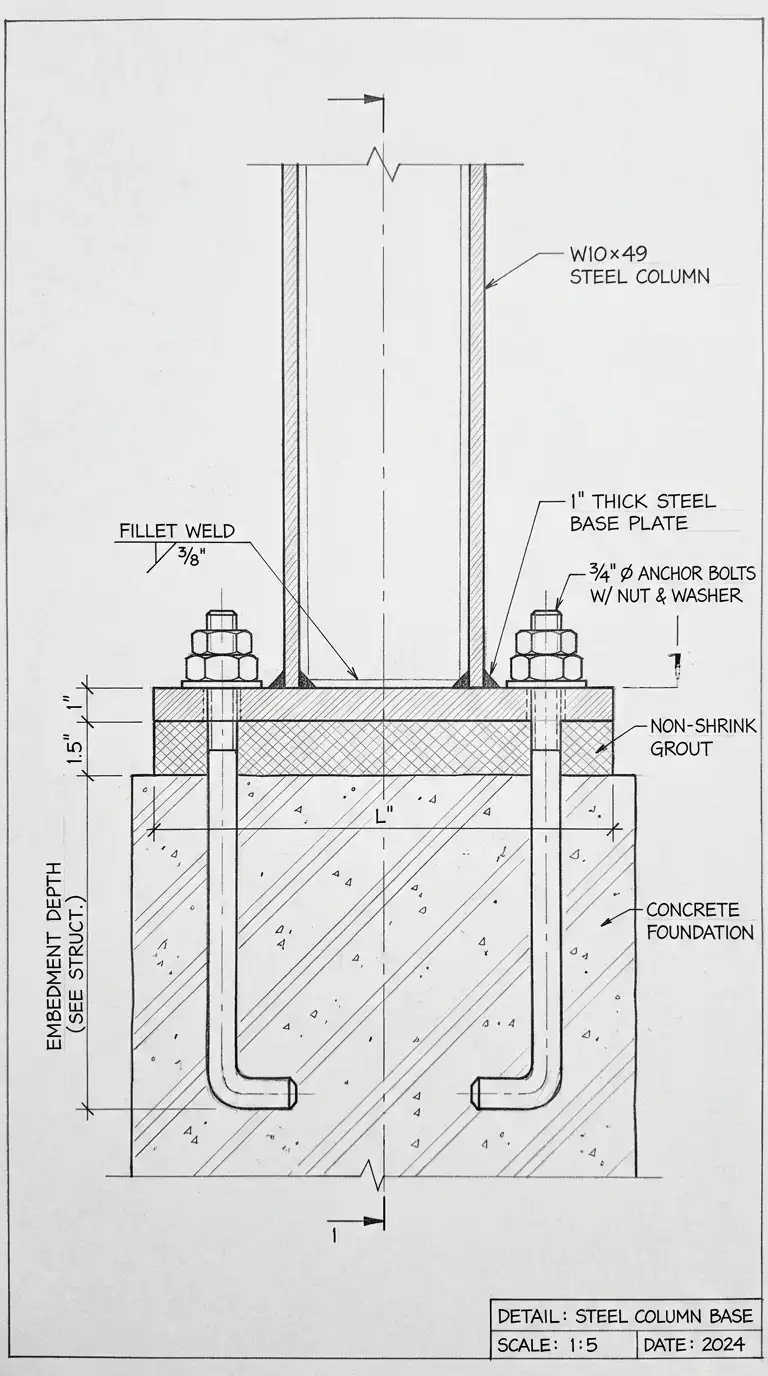
The column base detail shows how a column meets the floor. The detail includes the column, the base plate, the anchor bolts, the grout, and the floor slab. The column base detail is critical for structural stability. The column must be anchored and levelled.
This detail is ideal for steel and concrete structures. The emotional effect is anchored, levelled, and structural.
Quick Tips
- The base plate must be welded to the column.
- Anchor bolts must extend into the concrete.
- Grout must level the base plate.
7. The Column Beam Connection
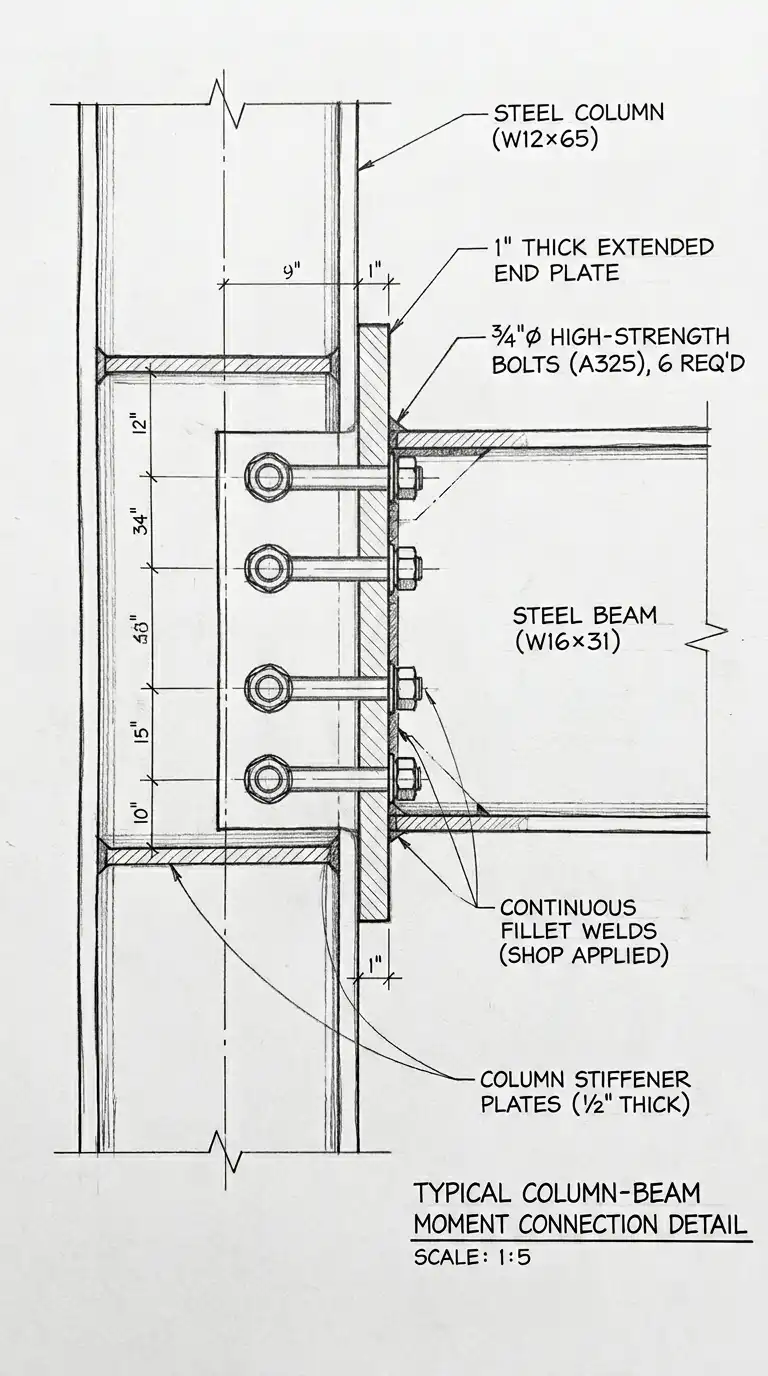
The column beam connection detail shows how a beam meets a column. The detail includes the column, the beam, the connection plates, the bolts, and the welds. The column beam connection is critical for structural stability. The connection must transfer loads.
This detail is ideal for steel and concrete structures. The emotional effect is bolted, welded, and structural.
Quick Tips
- The connection plates must be welded to the column.
- The beam must be bolted to the plates.
- The connection must be moment-resisting or shear.
8. The Floor Slab Edge Detail
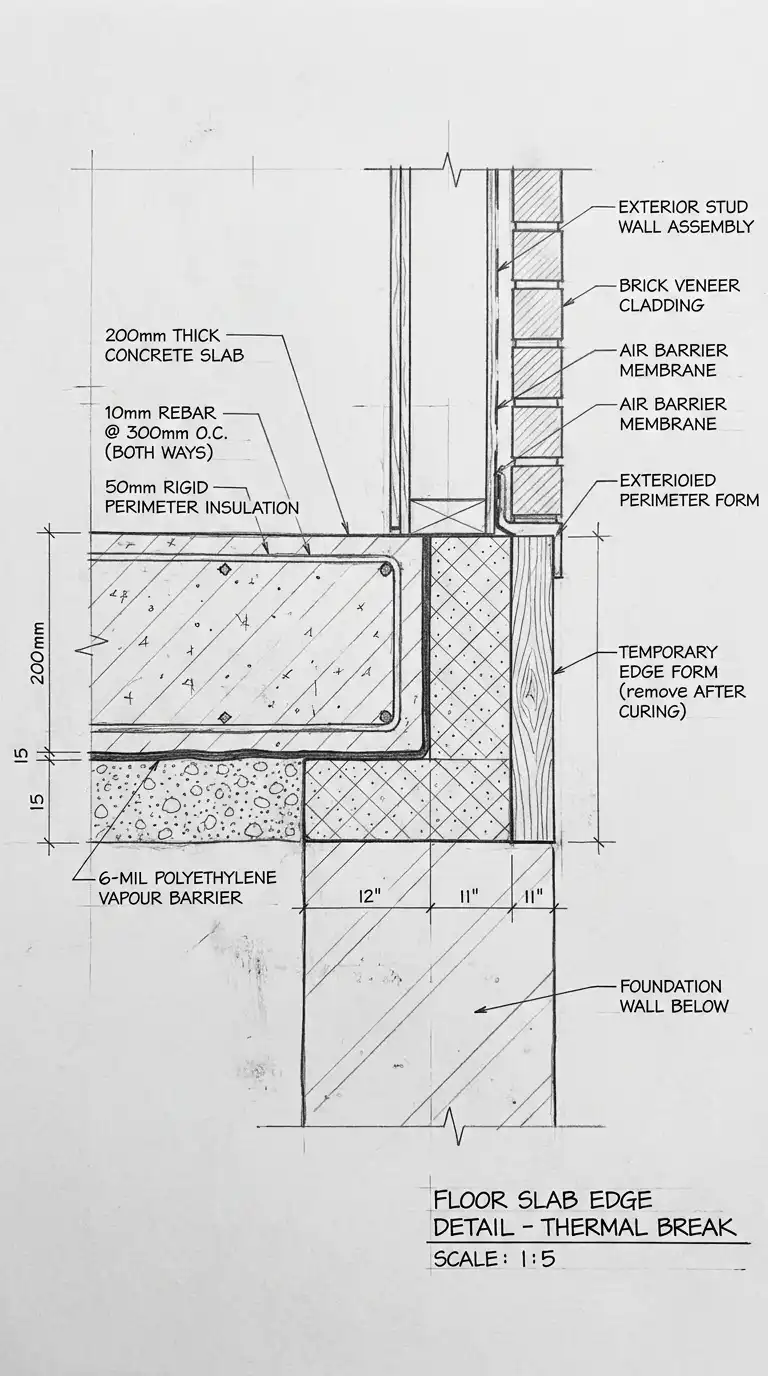
The floor slab edge detail shows where the concrete slab meets the exterior wall. The detail includes the slab, the insulation, the vapour barrier, the edge form, and the wall. The floor slab edge detail is critical for thermal performance. The slab must be insulated from the exterior.
This detail is ideal for concrete buildings. The emotional effect is insulated, edged, and thermal-broken.
Quick Tips
- Insulation must be on the exterior side of the slab edge.
- The vapour barrier must be under the slab.
- The edge form must hold the concrete.
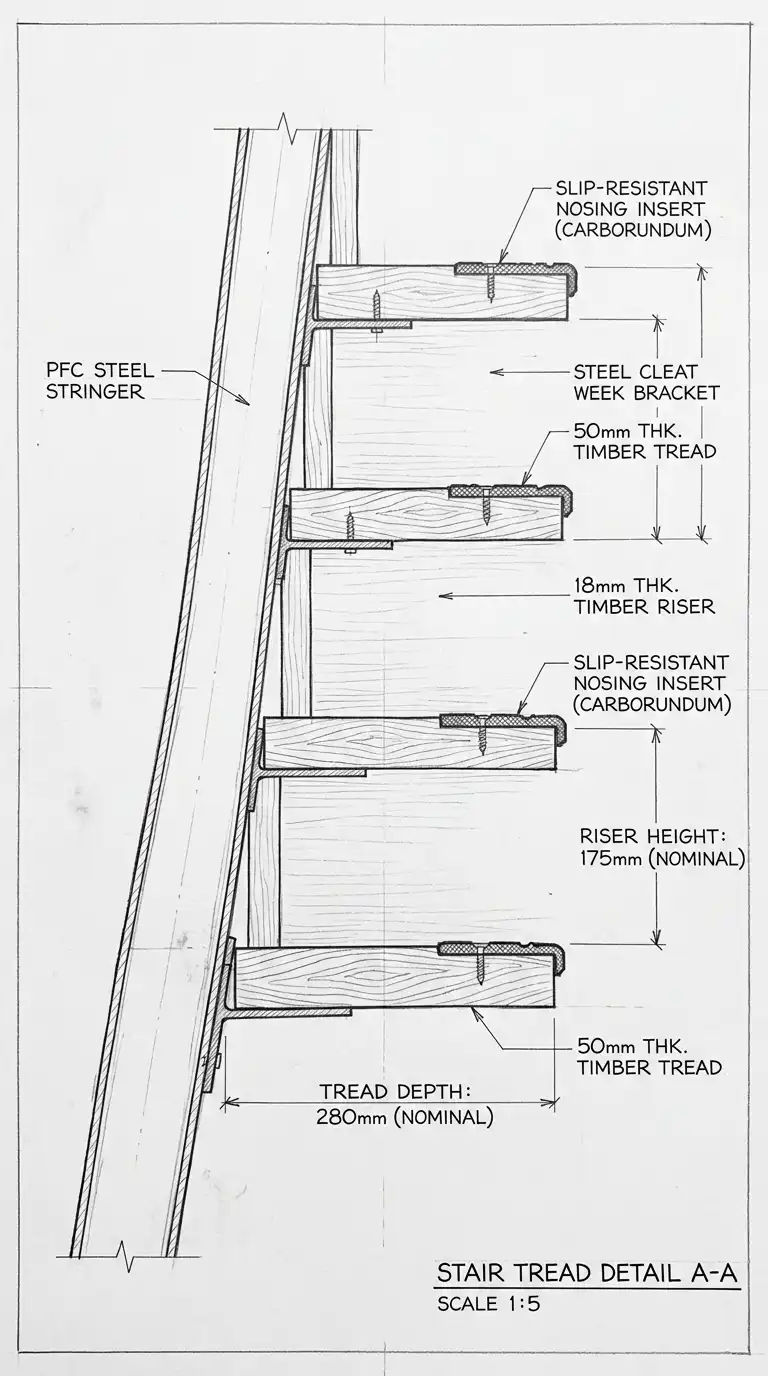
9. The Stair Tread Detail
The stair tread detail shows how one step meets the next. The detail includes the tread, the riser, the nosing, the stringer, and the landing. The stair tread detail is critical for safety. The tread must be slip-resistant. The riser must be consistent.
This detail is ideal for all stairs. The emotional effect is stepped, nosings, and consistent.
Quick Tips
- Tread depth must be consistent (minimum 250mm).
- Riser height must be consistent (maximum 190mm).
- The nosing must be slip-resistant.
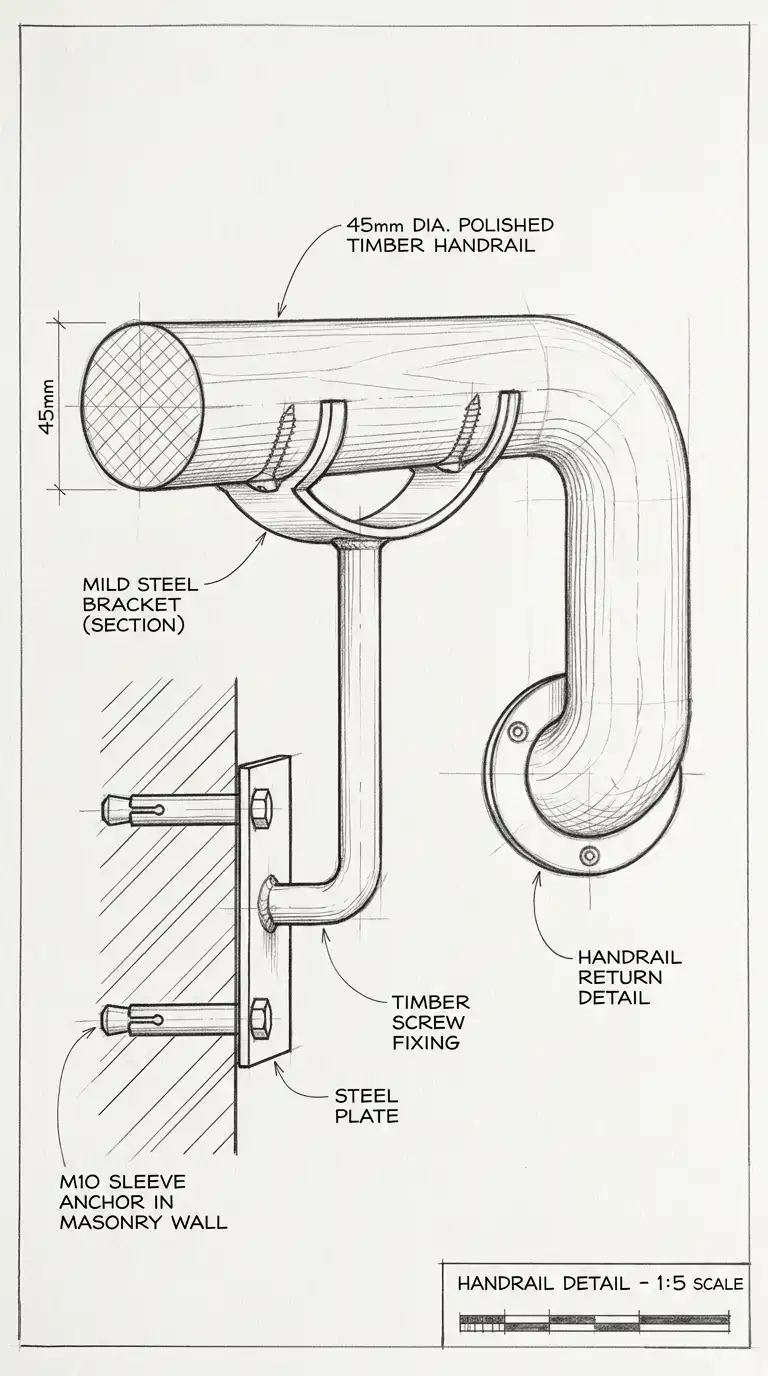
10. The Handrail Detail
The handrail detail shows how the handrail attaches to the wall or to the stair. The detail includes the handrail, the bracket, the wall anchor, and the guardrail (if required). The handrail detail is critical for safety. The handrail must be graspable and secure.
This detail is ideal for all stairs and ramps. The emotional effect is graspable, bracketed, and secure.
Quick Tips
- The handrail must be graspable (circular or oval profile).
- Brackets must be spaced at regular intervals (maximum 1.2 metres).
- The handrail must return to the wall at the ends.
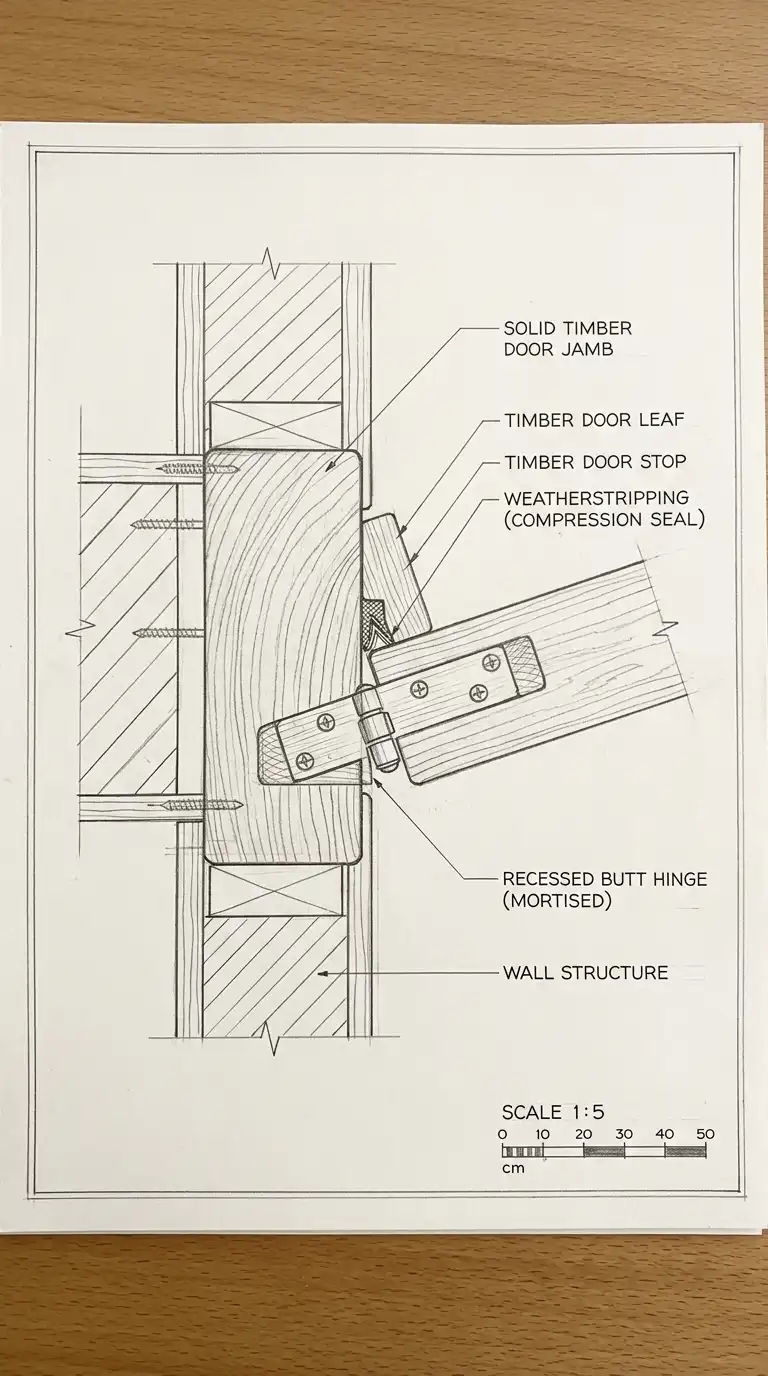
11. The Door Jamb Detail
The door jamb detail shows how the door frame meets the wall. The detail includes the door frame, the stop, the weatherstripping, the hinges, and the wall. The door jamb detail is critical for security and weather resistance.
This detail is ideal for exterior and interior doors. The emotional effect is framed, stopped, and weatherstripped.
Quick Tips
- The stop must be on the interior side of the frame.
- Weatherstripping must be on the exterior side.
- Hinges must be recessed into the frame and door.
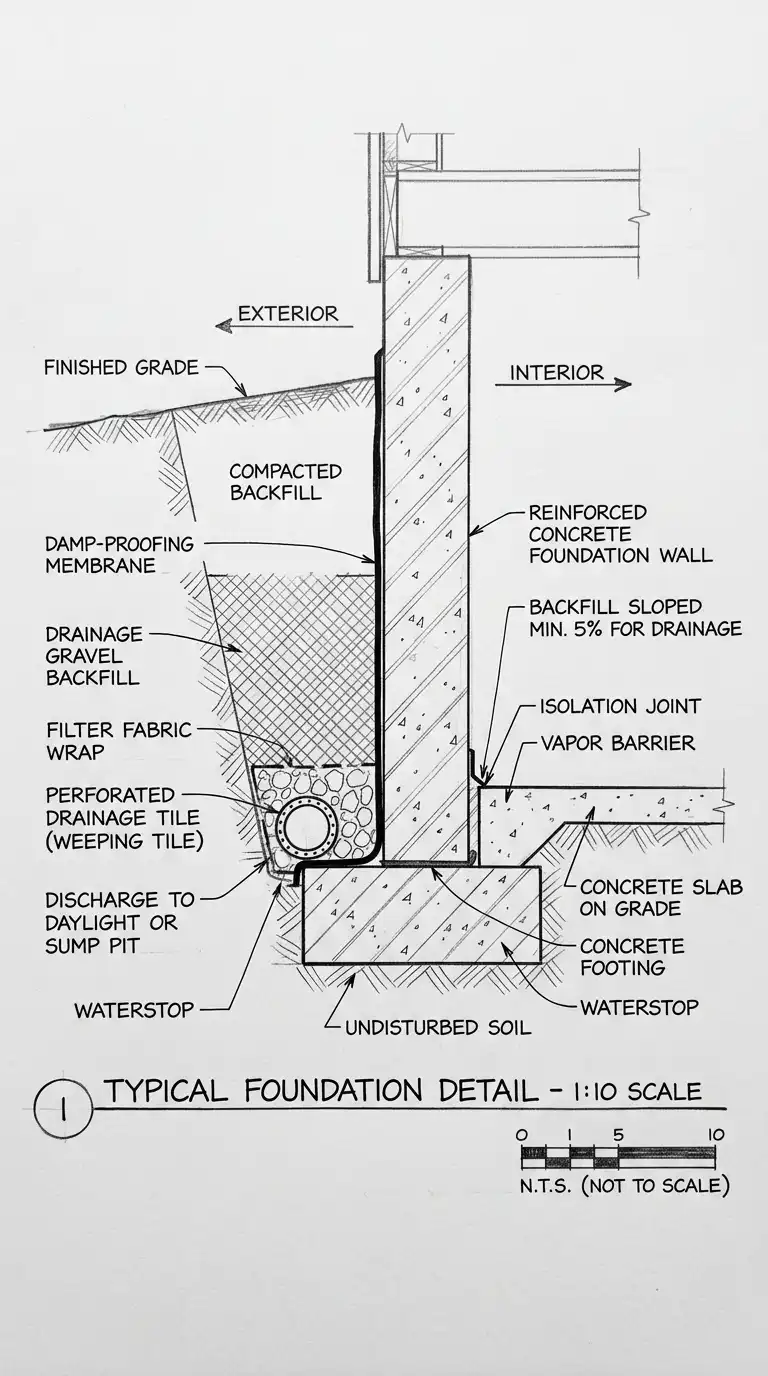
12. The Foundation Detail
The foundation detail shows how the building meets the ground. The detail includes the footing, the foundation wall, the damp-proofing, the drainage, and the grade. The foundation detail is critical for structural stability and water management. Water must drain away from the foundation.
This detail is ideal for all buildings. The emotional effect is footed, drained, and waterproofed.
Quick Tips
- The footing must be wider than the foundation wall.
- Damp-proofing must be on the exterior of the foundation wall.
- Drainage tile must be at the base of the footing.
Final Thoughts
These 12 detail types are not mutually exclusive. A wall section can include a window head. A column base can be in a foundation. A handrail can be on a stair. The best details are not the most complex — they are the most clear. They show how things connect. They show how buildings stay dry, stay warm, and stay up. They are not just drawings — they are instructions for building well. They are the difference between a building that leaks and a building that lasts. They are architecture at its most real.
