 Skip to content
A masterplan is a long-term framework for the development of a site, district, or city. It is not a building plan — it is a plan for many buildings over many years. A masterplan sets the streets, blocks, parks, and infrastructure. It determines what can be built where. A good masterplan is flexible, resilient, and visionary.
These 13 masterplan architecture designs span scales from neighbourhoods to new cities. Each design includes defining characteristics, organisational principles, and urban strategies.
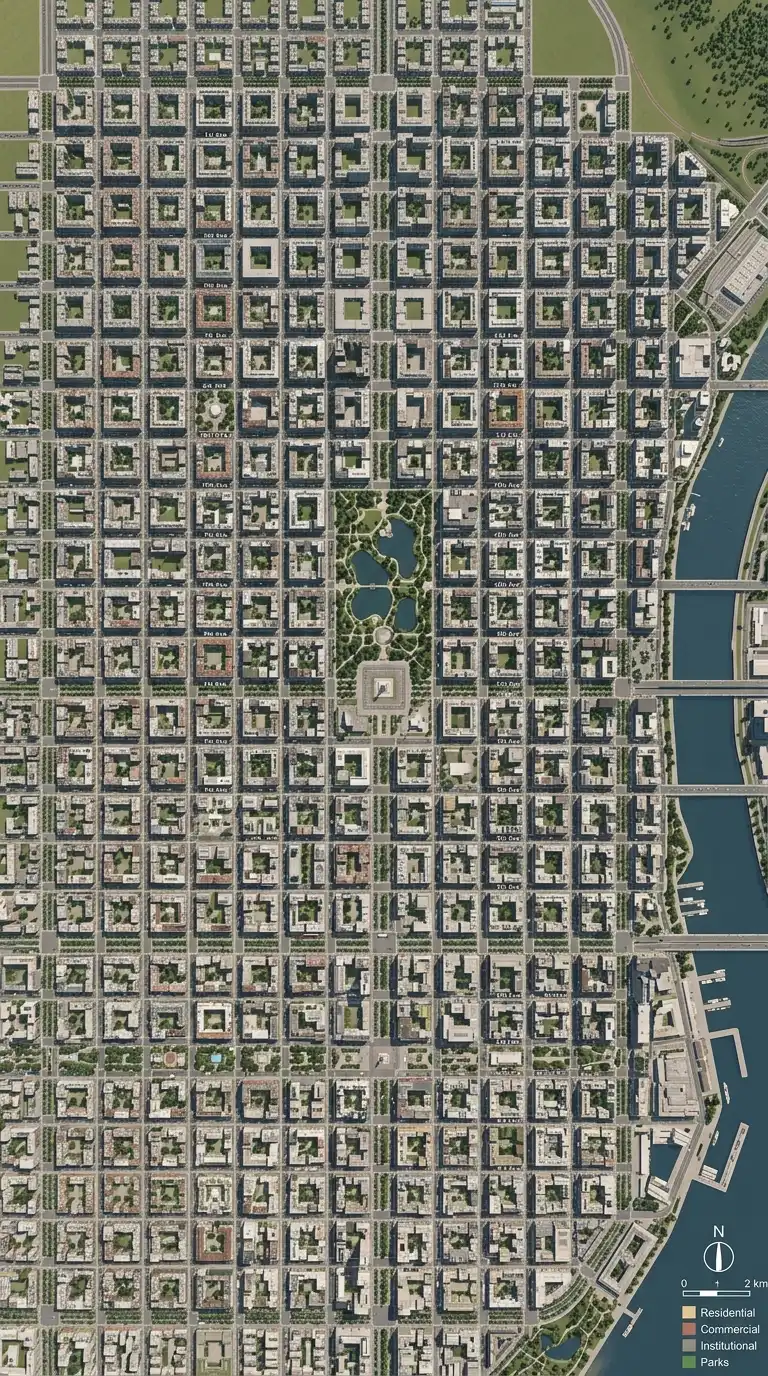
1. The Grid Masterplan
The grid masterplan organises streets in a regular orthogonal grid. The grid is rational, efficient, and expandable. Blocks are uniform. The grid can be oriented to the sun, the wind, or the view. The grid masterplan is the oldest and most common masterplan type.
This design is ideal for flat sites and rapid urban expansion. The emotional effect is rational, efficient, and orderly.
Quick Tips
- The grid must be regular — square or rectangular blocks.
- Streets must be orthogonal (right angles).
- The grid can be rotated to respond to sun or topography.
2. The Radial Masterplan
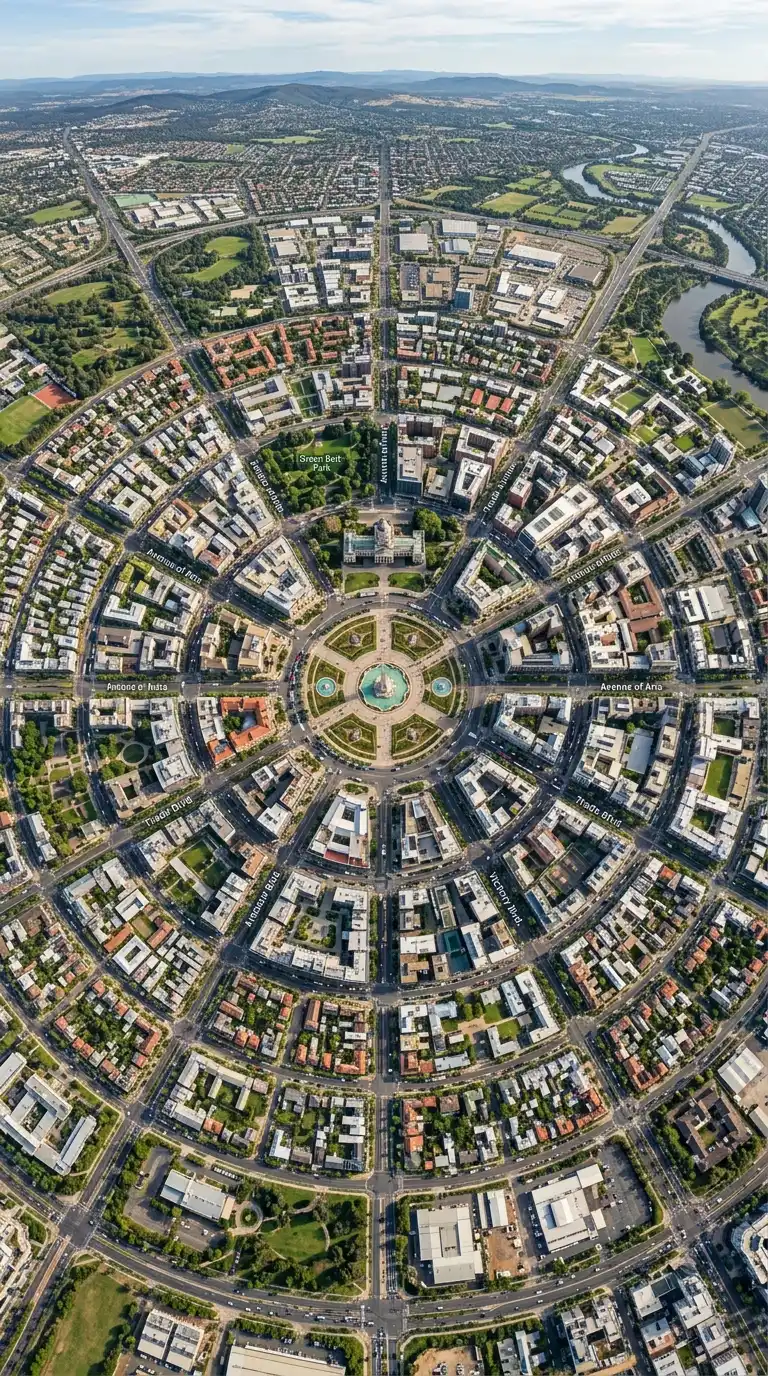
The radial masterplan has streets radiating from a central point like spokes from a wheel. The centre is a plaza, park, or landmark. Concentric rings connect the spokes. The radial masterplan is dramatic, hierarchical, and ceremonial.
This design is ideal for capital cities and ceremonial centres. The emotional effect is dramatic, hierarchical, and ceremonial.
Quick Tips
- The centre must be a significant plaza, park, or landmark.
- Streets must radiate from the centre.
- Concentric rings must connect the spokes.
3. The Organic Masterplan
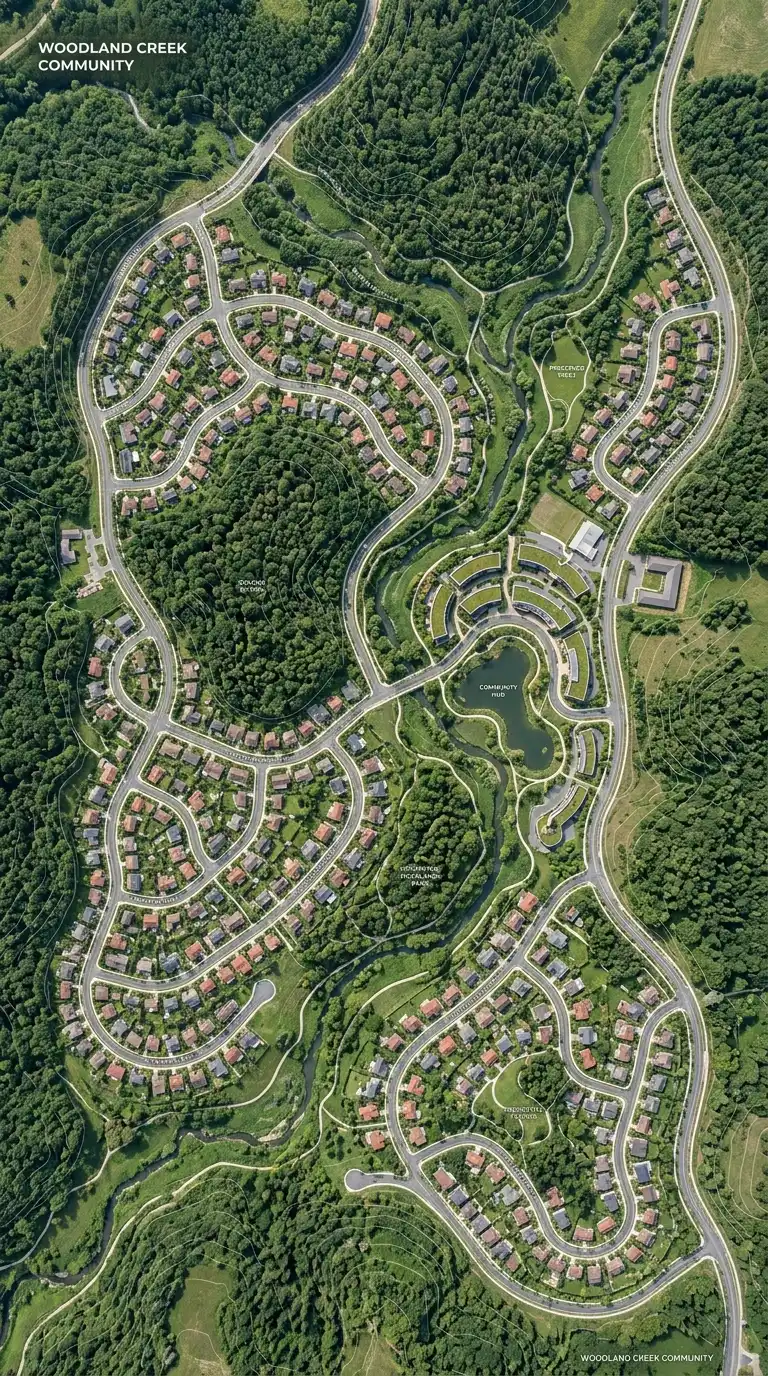
The organic masterplan follows the natural forms of the land. Streets curve, blocks are irregular, and open space is preserved. The plan looks like it grew from the site, not imposed upon it. The organic masterplan is ideal for hilly or wooded sites.
This design is ideal for suburban developments and rural sites. The emotional effect is organic, natural, and landscape-integrated.
Quick Tips
- Streets must follow contour lines.
- Blocks must be irregular.
- Existing trees and streams must be preserved.
4. The Linear Masterplan
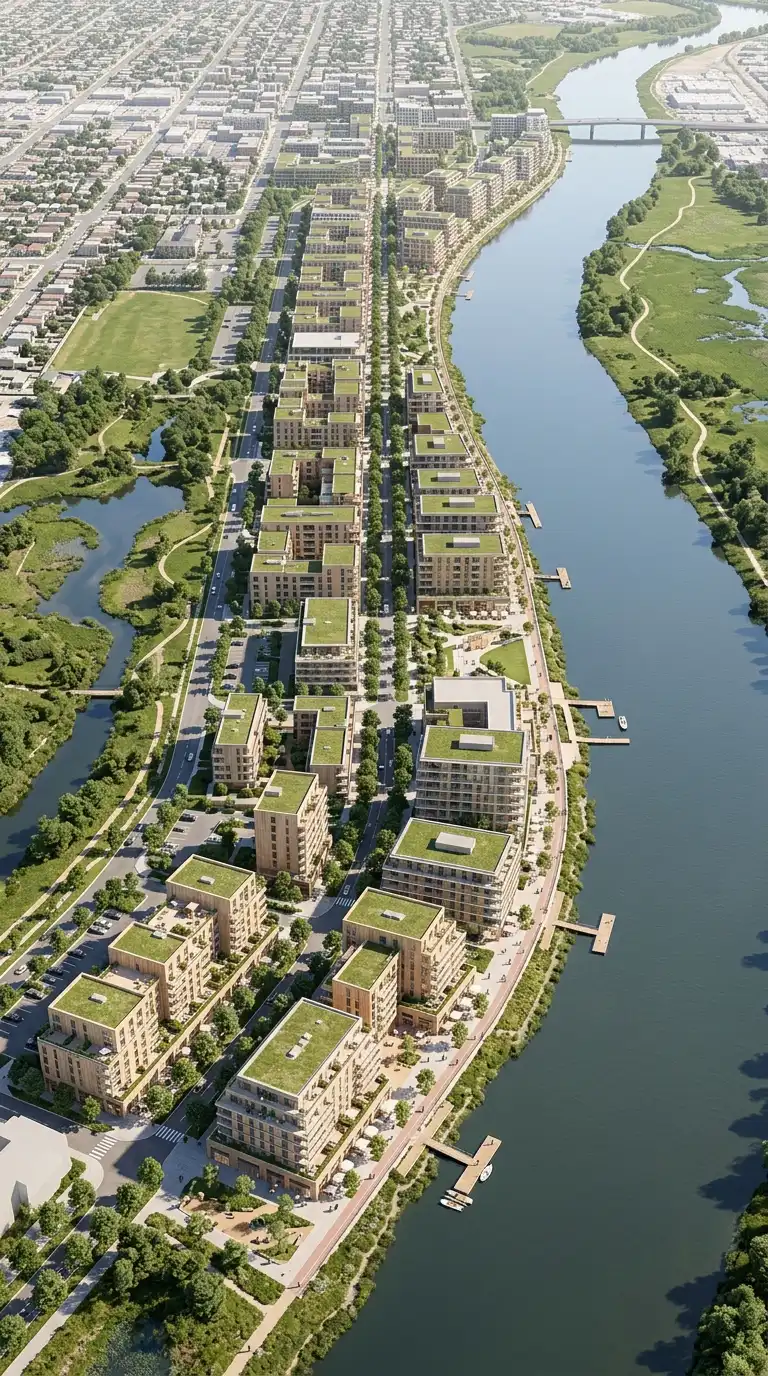
The linear masterplan organises development along a single axis — a road, a river, a ridge, or a transit line. Buildings are strung like beads on a string. The linear masterplan is ideal for long, narrow sites.
This design is ideal for waterfronts, ridgelines, and transit corridors. The emotional effect is linear, sequential, and directional.
Quick Tips
- The axis must be the organising element (road, river, transit).
- Buildings must face the axis.
- The axis must have a clear beginning and end.
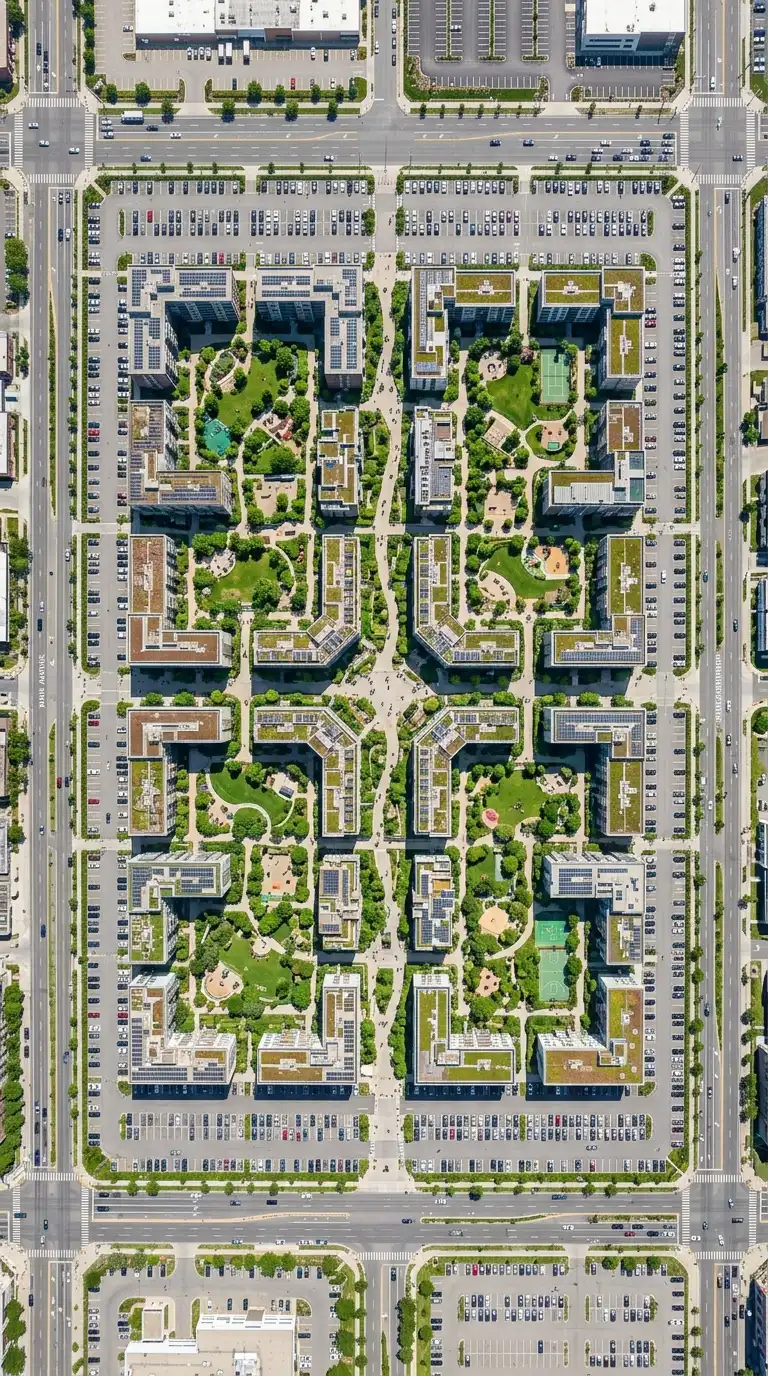
5. The Superblock Masterplan
The superblock masterplan replaces the traditional street grid with large blocks. The interior of the block is pedestrian-only, with buildings arranged around courtyards. Parking is on the perimeter or underground. The superblock masterplan is a modernist planning ideal.
This design is ideal for dense urban development and campus plans. The emotional effect is pedestrian-friendly, green, and modern.
Quick Tips
- Blocks must be large (at least 100×100 metres).
- Parking must be on the perimeter or underground.
- The interior must be pedestrian-only.
6. The Finger Masterplan
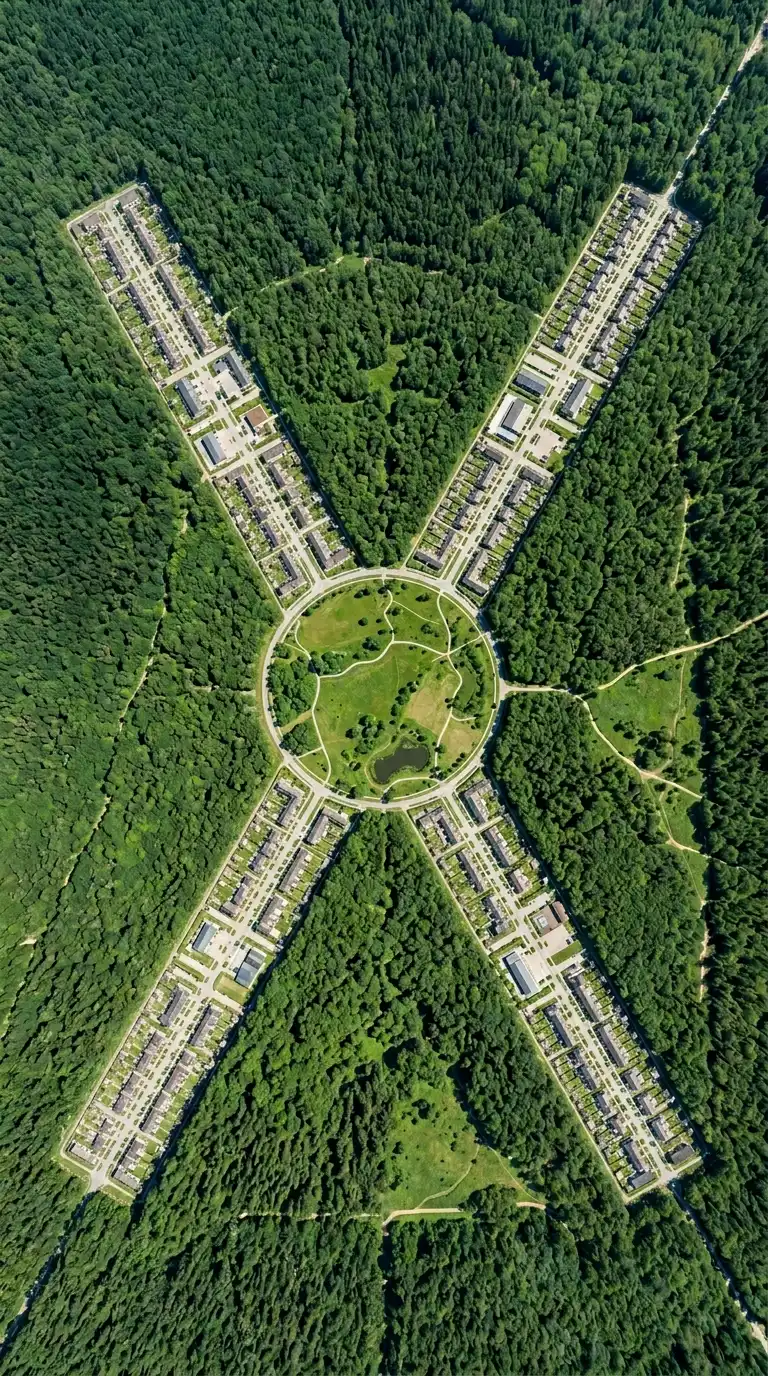
The finger masterplan extends fingers of development into preserved open space. Each finger is a linear cluster of buildings. The fingers are separated by green wedges that penetrate from the perimeter to the centre. The finger masterplan preserves open space while allowing development.
This design is ideal for suburban and rural sites with significant natural features. The emotional effect is green, linear, and nature-preserving.
Quick Tips
- Fingers must be narrow (100-200 metres wide).
- Green wedges must be at least as wide as the fingers.
- The centre of the plan should be preserved as open space.
7. The Perimeter Block Masterplan
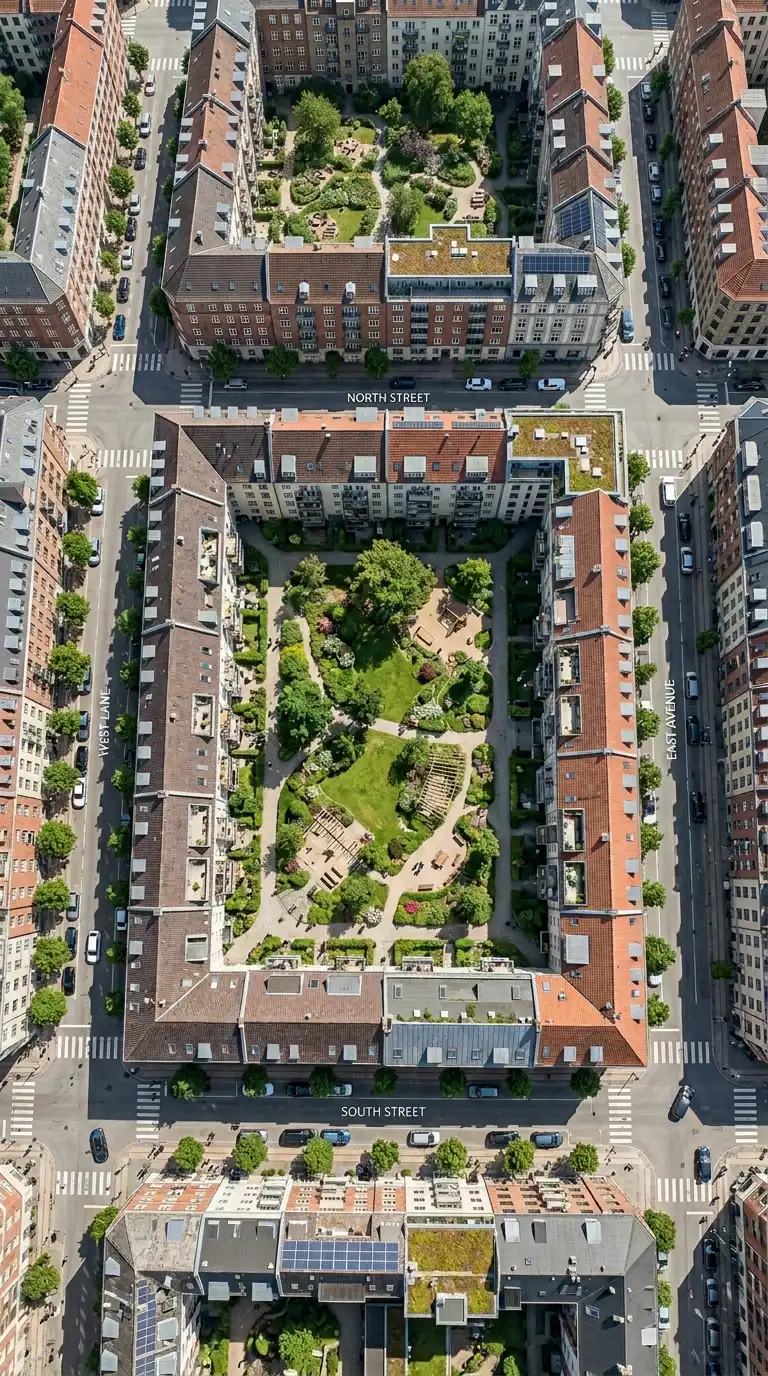
The perimeter block masterplan places buildings around the perimeter of the block, with a common courtyard in the centre. The street edge is solid and urban. The interior is private and green. The perimeter block masterplan is common in European cities.
This design is ideal for urban infill and mixed-use development. The emotional effect is urban, private, and communal.
Quick Tips
- Buildings must line the street edge — no setbacks.
- The courtyard must be accessible to all residents.
- Parking must be underground or on the street.
8. The Transit-Oriented Masterplan
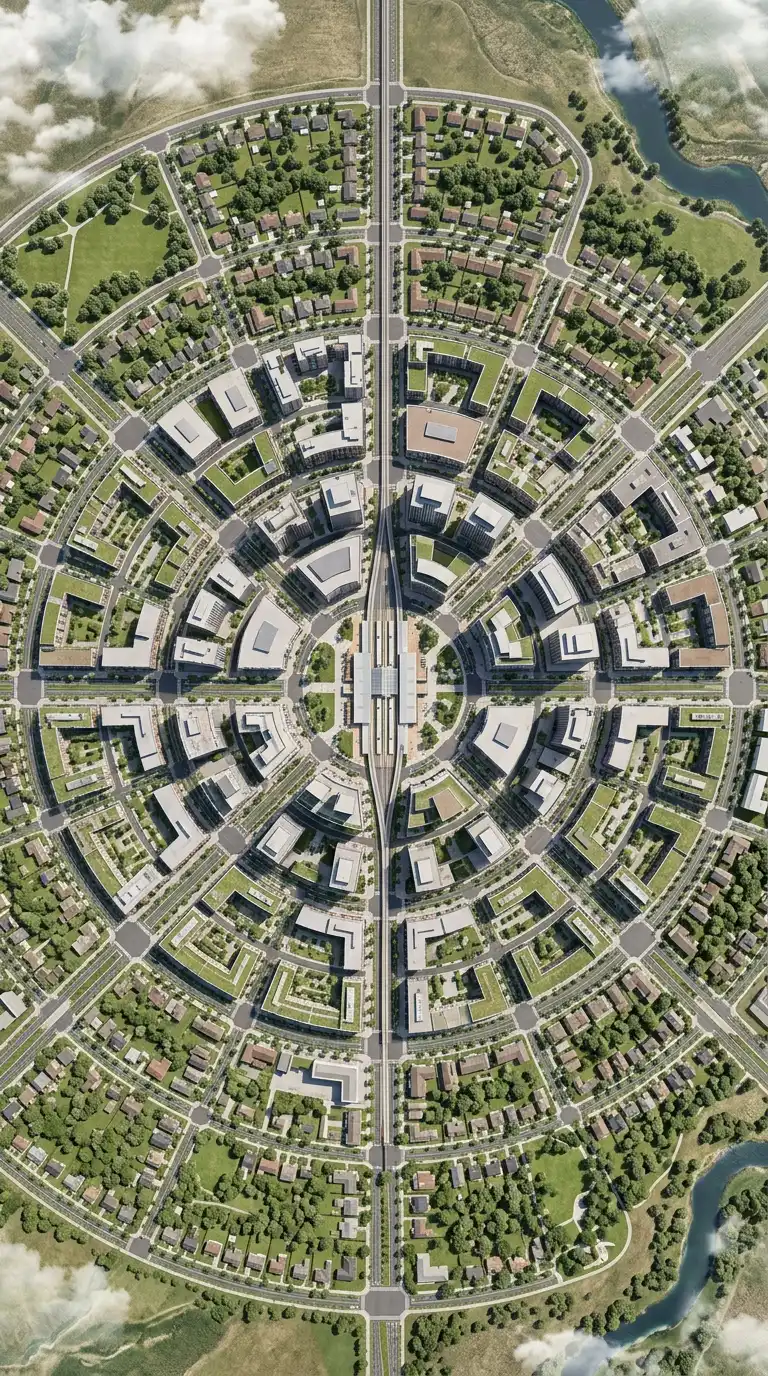
The transit-oriented masterplan clusters development around a transit station. The highest density is closest to the station. Density decreases with distance from the station. The transit-oriented masterplan is designed for walking, biking, and transit.
This design is ideal for suburban infill and brownfield redevelopment. The emotional effect is transit-focused, walkable, and dense.
Quick Tips
- The transit station must be at the centre.
- Density must decrease with distance from the station.
- Streets must be pedestrian and bike-friendly.
9. The Mixed-Use Masterplan
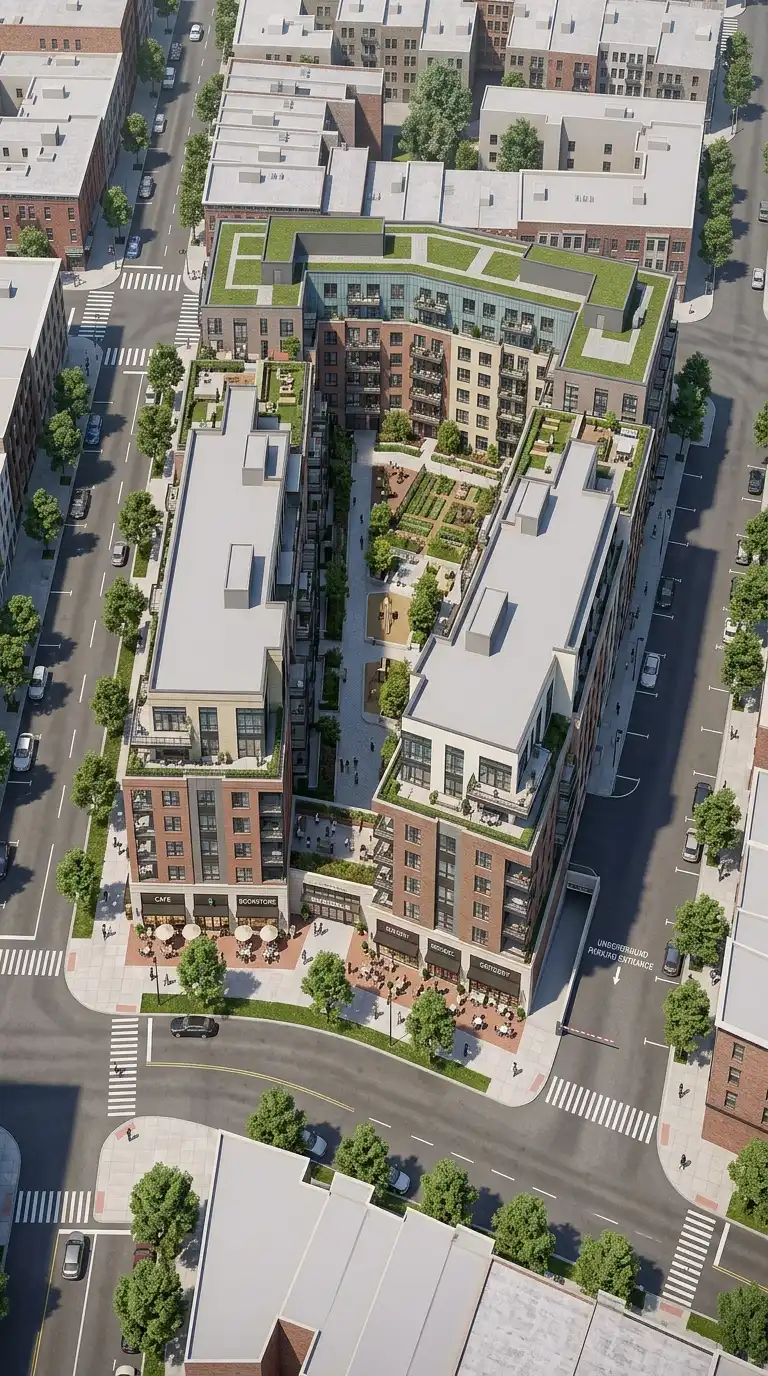
The mixed-use masterplan combines residential, commercial, office, and civic uses in the same area. Retail is at the street edge. Housing is above or behind. The plan is walkable and diverse. The mixed-use masterplan creates lively streets.
This design is ideal for urban infill and new town centres. The emotional effect is urban, walkable, and diverse.
Quick Tips
- Retail must be at the street edge.
- Housing must be above retail or behind.
- Parking must be underground or in structures.
10. The Campus Masterplan
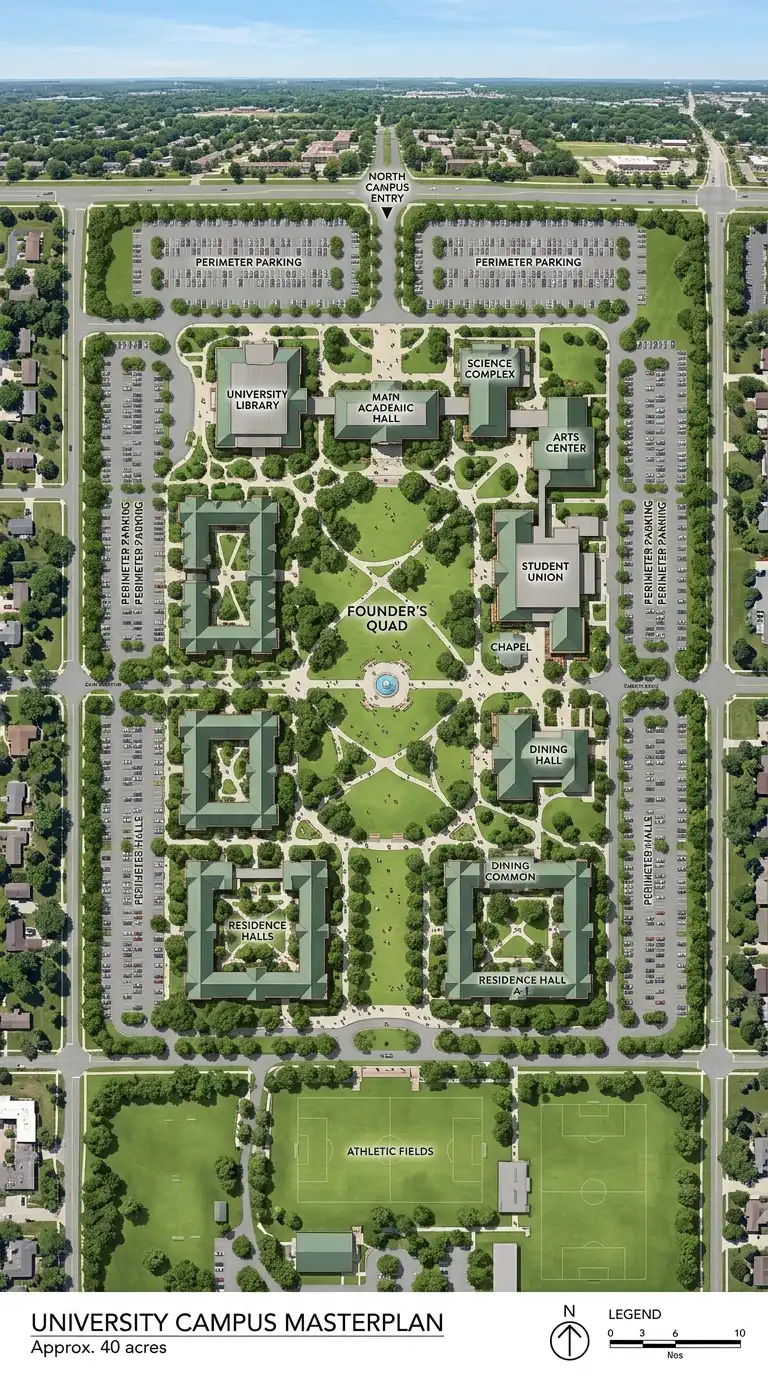
The campus masterplan organises buildings around quadrangles, courtyards, and malls. The plan is pedestrian-only. Parking is at the perimeter. The campus masterplan is ideal for universities, hospitals, and corporate campuses.
This design is ideal for institutional sites. The emotional effect is pedestrian, collegiate, and green.
Quick Tips
- Buildings must be arranged around quadrangles or courtyards.
- The interior must be pedestrian-only.
- Parking must be at the perimeter.
11. The Waterfront Masterplan
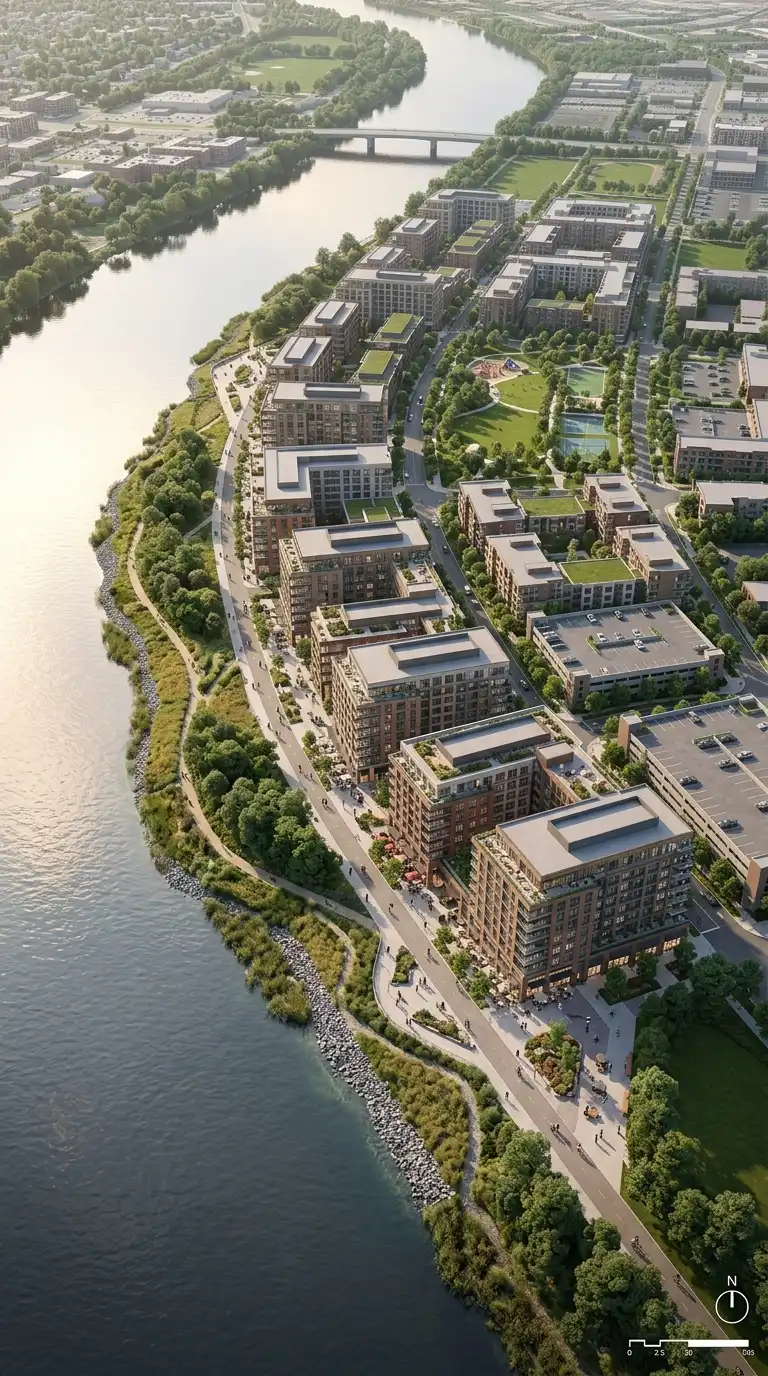
The waterfront masterplan is organised around a body of water — a river, lake, or ocean. Buildings face the water. Public access to the water is provided. The waterfront masterplan protects the shoreline from erosion and development.
This design is ideal for coastal and riverine sites. The emotional effect is waterfront, open, and view-oriented.
Quick Tips
- Buildings must face the water.
- Public access to the water must be provided.
- The shoreline must be protected with a setback and native vegetation.
12. The Phased Masterplan
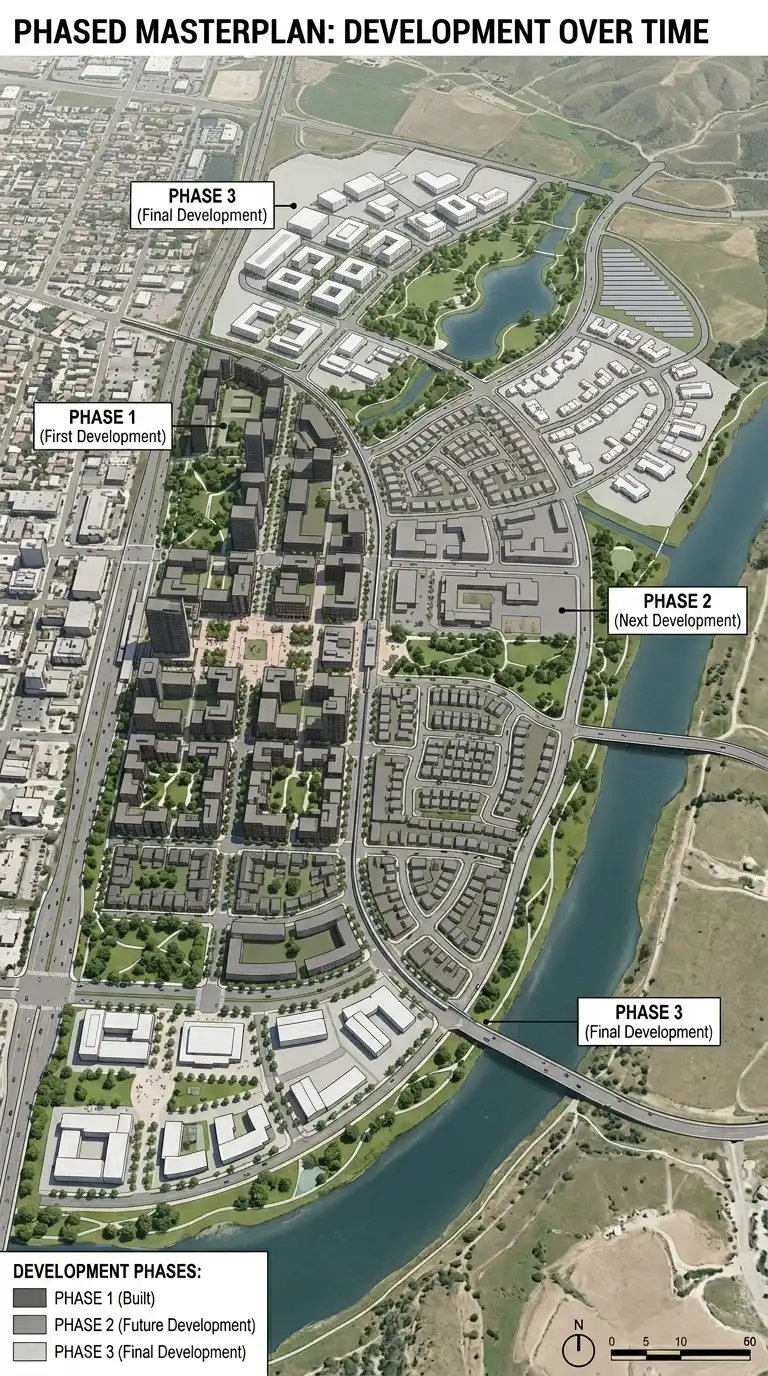
The phased masterplan shows how the site will be developed over time. Phase 1 is the first development. Phase 2 is the next. Phase 3 is the final. The phased masterplan is realistic and buildable. It allows the plan to grow with demand.
This design is ideal for large sites and long-term development. The emotional effect is temporal, phased, and realistic.
Quick Tips
- Phase 1 must be the most developable land.
- Phase 2 must build on Phase 1 infrastructure.
- Phase 3 must be the least developable land.
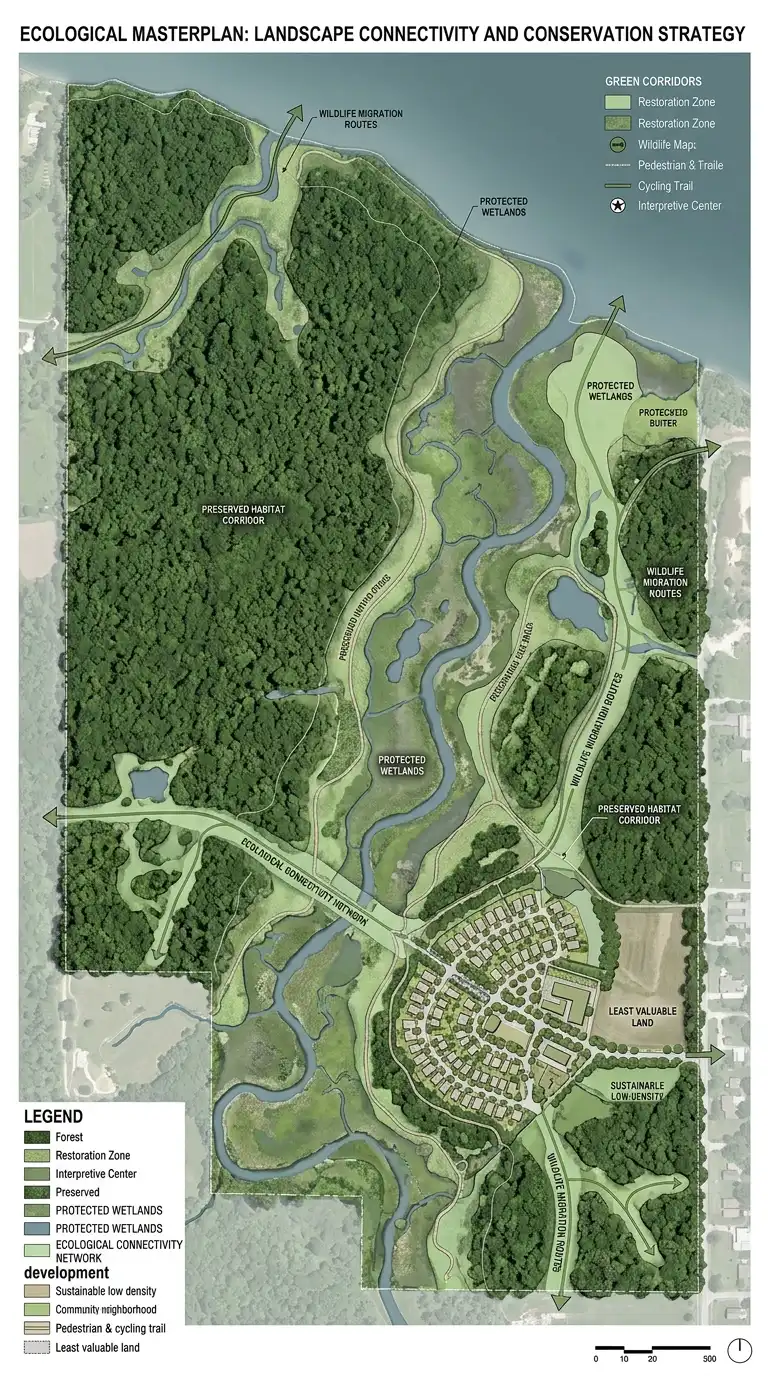
13. The Ecological Masterplan
The ecological masterplan prioritises ecology over development. Open space is preserved first. Development is placed on the least ecologically valuable land. Green corridors connect natural areas. The ecological masterplan is sustainable and resilient.
This design is ideal for sites with significant natural features. The emotional effect is ecological, green, and sustainable.
Quick Tips
- Open space must be preserved first.
- Development must be on the least valuable land.
- Green corridors must connect natural areas.
Final Thoughts
These 13 masterplan designs are not mutually exclusive. A radial masterplan can have a grid. A transit-oriented masterplan can be mixed-use. A waterfront masterplan can be phased. The best masterplans are not the most rigid — they are the most flexible. They set a framework for growth, not a prescription. They are not finished — they are seeds. They are plans for the future.
