 Skip to content
A case study sheet is an architectural analysis of an existing building. It is not a design — it is research. A case study sheet deconstructs a building to learn from it. It answers: how does this building work? Why is it beautiful? What can I learn? Case study sheets are essential for students and architects who want to learn from the masters.
These 12 case study sheets architecture ideas span drawing techniques, analytical approaches, and presentation strategies. Each idea includes defining characteristics, research methods, and graphic principles.
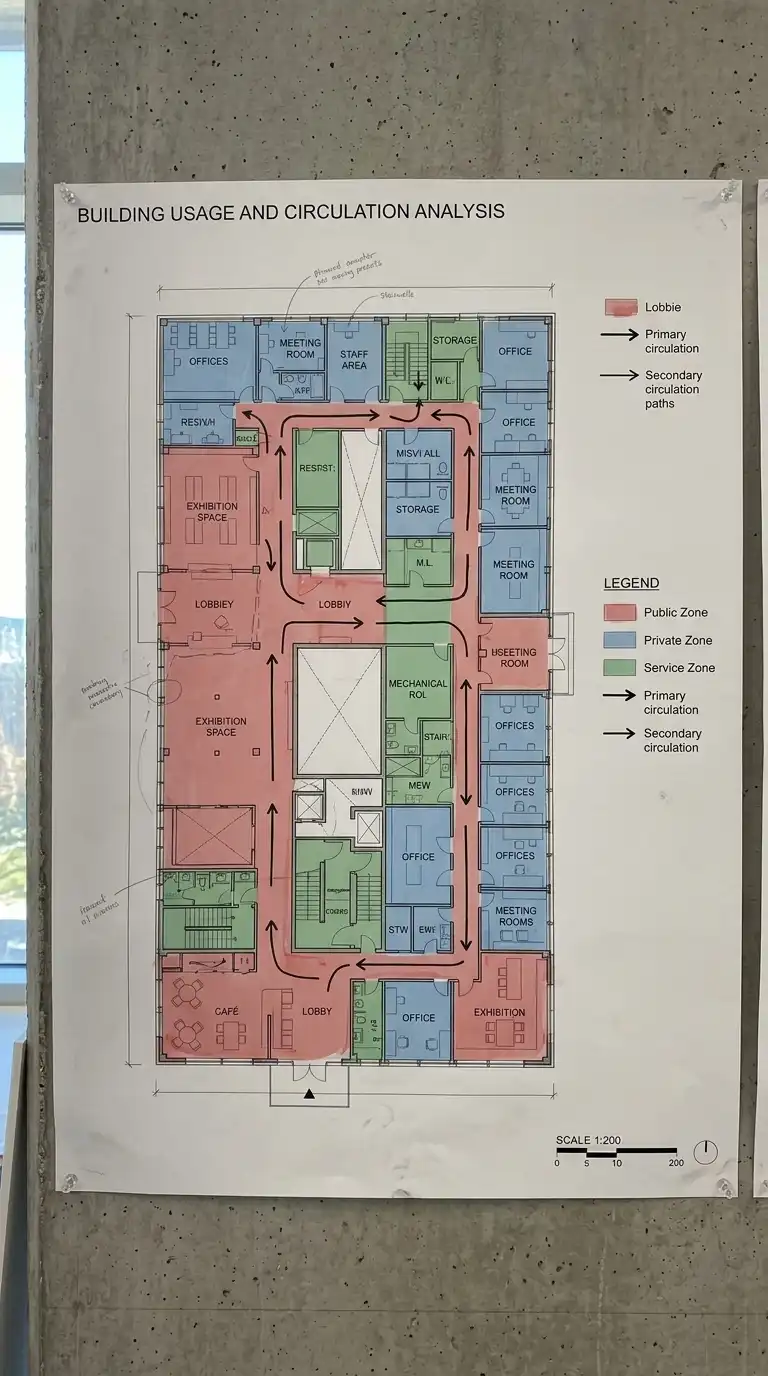
1. The Plan Analysis Sheet
The plan analysis sheet focuses on the building’s plan. The plan is drawn at scale. Circulation paths are highlighted. Programmatic zones are coloured. Public and private spaces are distinguished. The plan analysis sheet is planimetric, analytical, and colour-coded.
This sheet is ideal for studying spatial organisation. The emotional effect is planimetric, analytical, and colour-coded.
Quick Tips
- Draw the plan at a consistent scale (1:200 or 1:500).
- Colour-code public, private, and service zones.
- Use arrows for circulation.
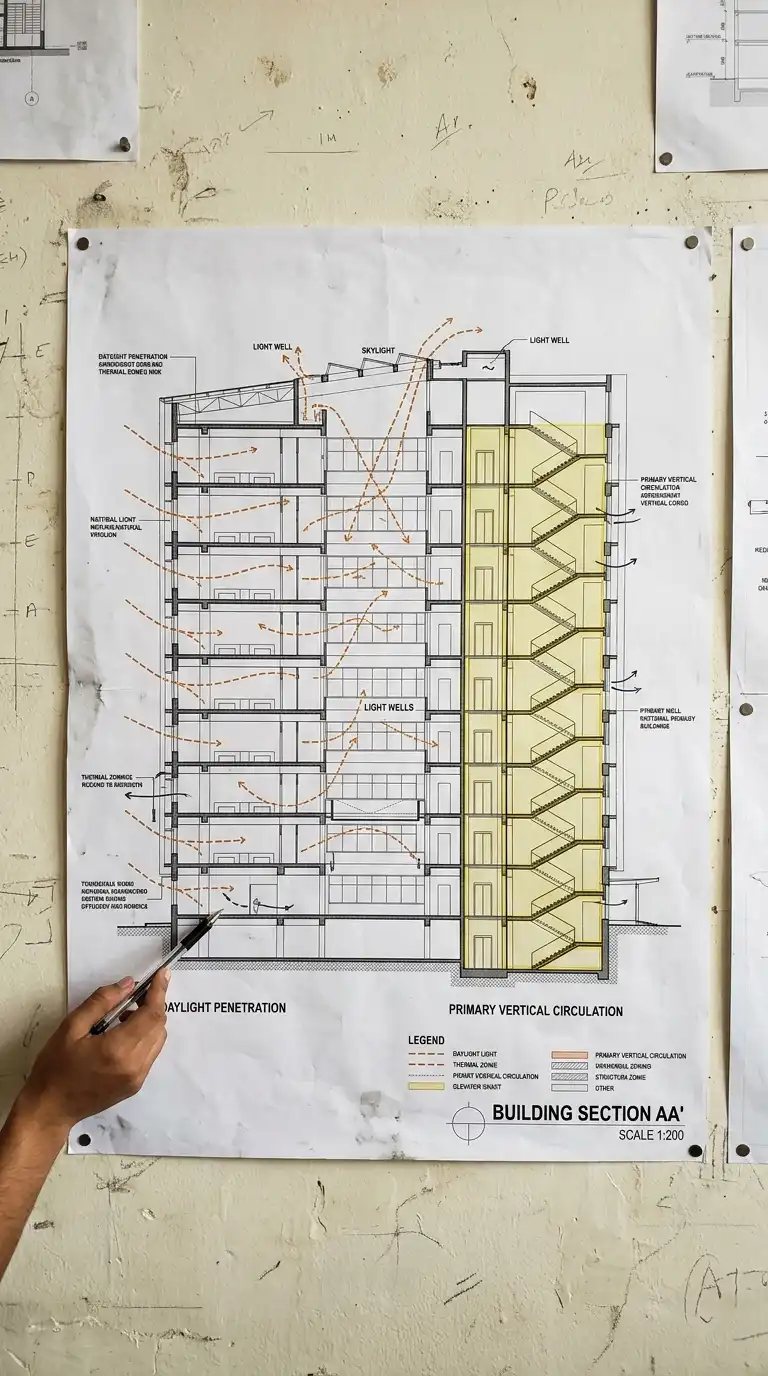
2. The Section Analysis Sheet
The section analysis sheet focuses on the building’s section. The section is drawn at scale. Vertical circulation is highlighted. Light penetration is shown. Spatial relationships are analysed. The section analysis sheet is sectional, analytical, and light-focused.
This sheet is ideal for studying vertical organisation. The emotional effect is sectional, analytical, and light-focused.
Quick Tips
- Draw the section at a consistent scale (1:200 or 1:500).
- Show the path of light with dashed lines.
- Highlight stairs and vertical circulation.
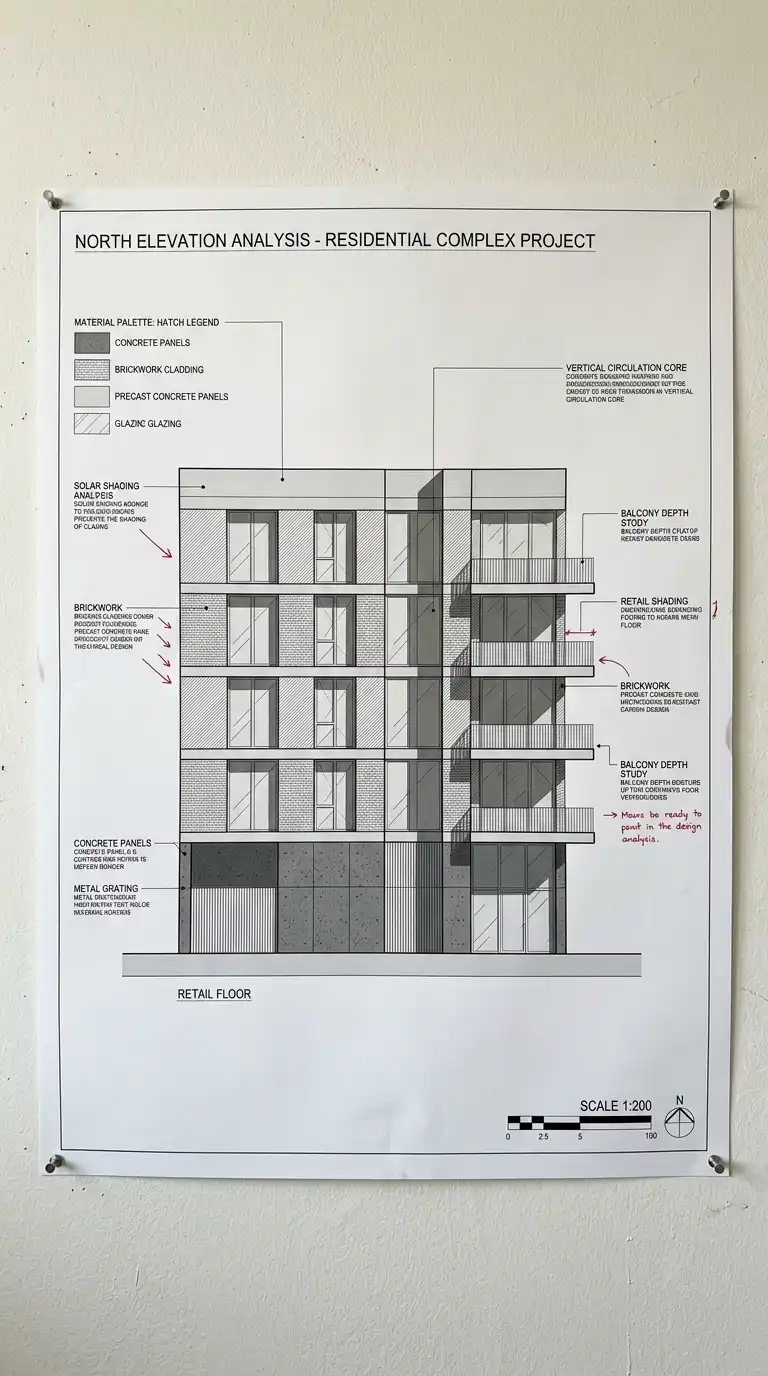
3. The Elevation Analysis Sheet
The elevation analysis sheet focuses on the building’s facade. The elevation is drawn at scale. Material patterns are indicated. Window-to-wall ratio is analysed. Shadow patterns are studied. The elevation analysis sheet is elevational, analytical, and material-focused.
This sheet is ideal for studying facade composition. The emotional effect is elevational, analytical, and material-focused.
Quick Tips
- Draw the elevation at a consistent scale (1:200 or 1:500).
- Indicate materials with hatch patterns.
- Show shadow patterns.
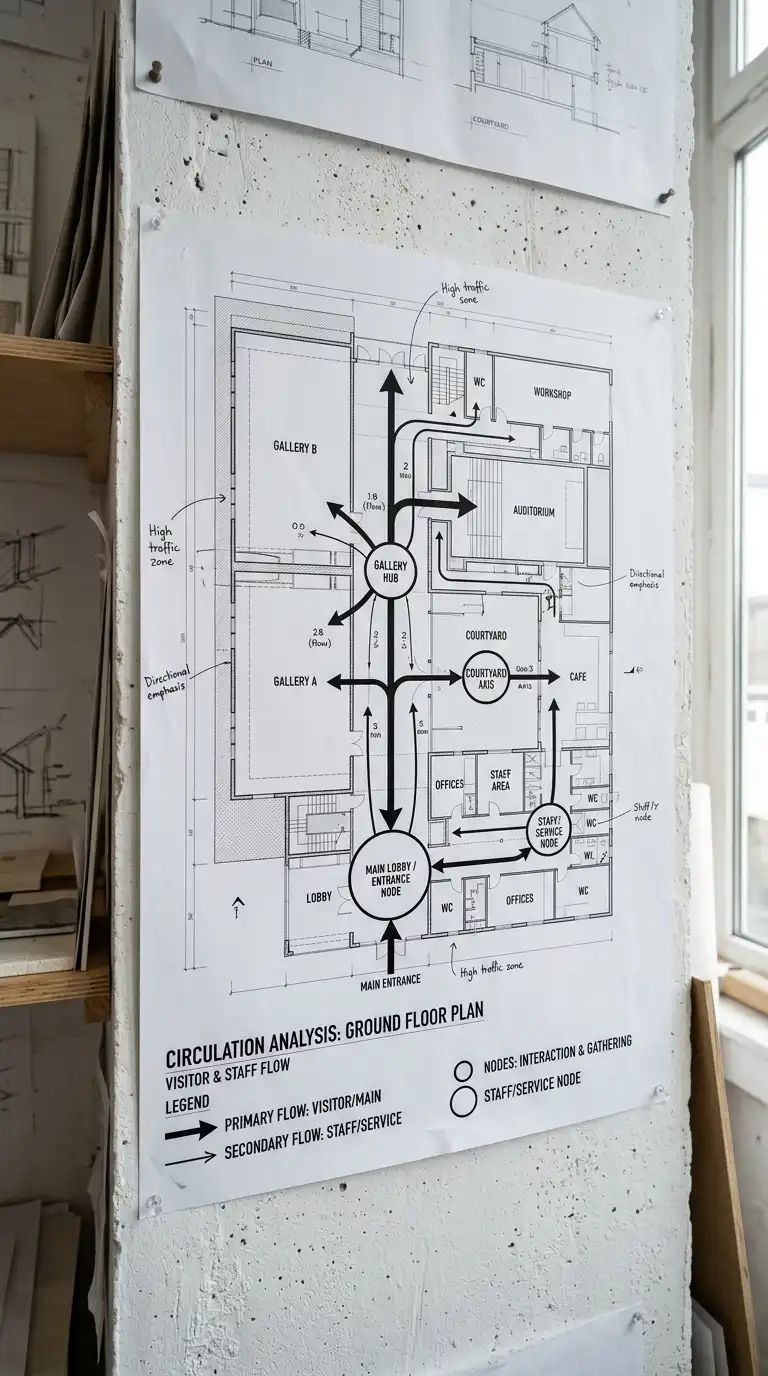
4. The Circulation Analysis Sheet
The circulation analysis sheet focuses on how people move through the building. The plan is the base. Arrows show primary, secondary, and service circulation. Nodes (entrances, stairs, elevators) are marked. The circulation analysis sheet is circulatory, directional, and nodal.
This sheet is ideal for studying movement and flow. The emotional effect is circulatory, directional, and nodal.
Quick Tips
- Use thick arrows for primary circulation.
- Use thin arrows for secondary circulation.
- Mark nodes (entrances, stairs, elevators) with circles.
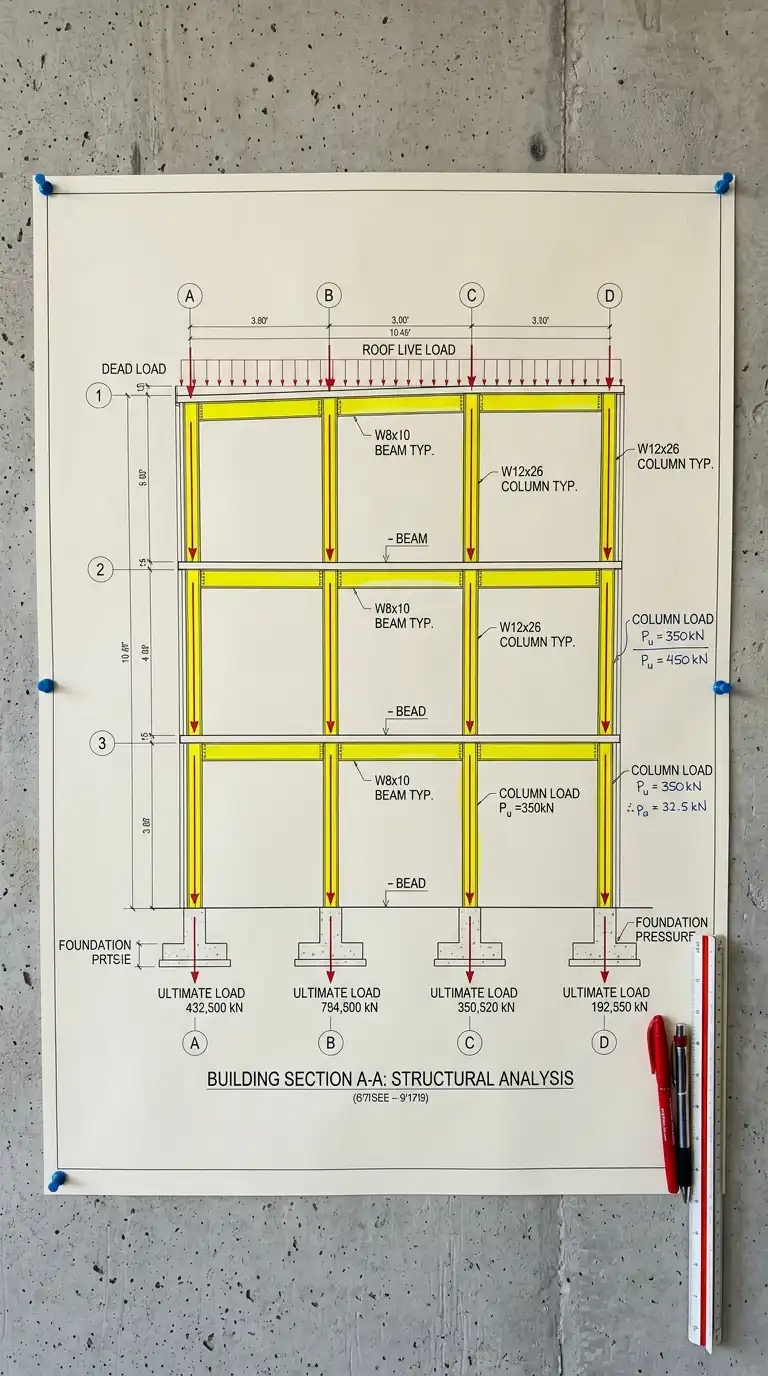
5. The Structural Analysis Sheet
The structural analysis sheet focuses on how the building stands up. The plan or section is the base. Columns, beams, and load-bearing walls are highlighted. Load paths are shown with arrows. The structural analysis sheet is structural, load-focused, and tectonic.
This sheet is ideal for studying structure and construction. The emotional effect is structural, load-focused, and tectonic.
Quick Tips
- Highlight columns, beams, and load-bearing walls.
- Show load paths with arrows from roof to foundation.
- Use a structural grid overlay.
6. The Light Analysis Sheet
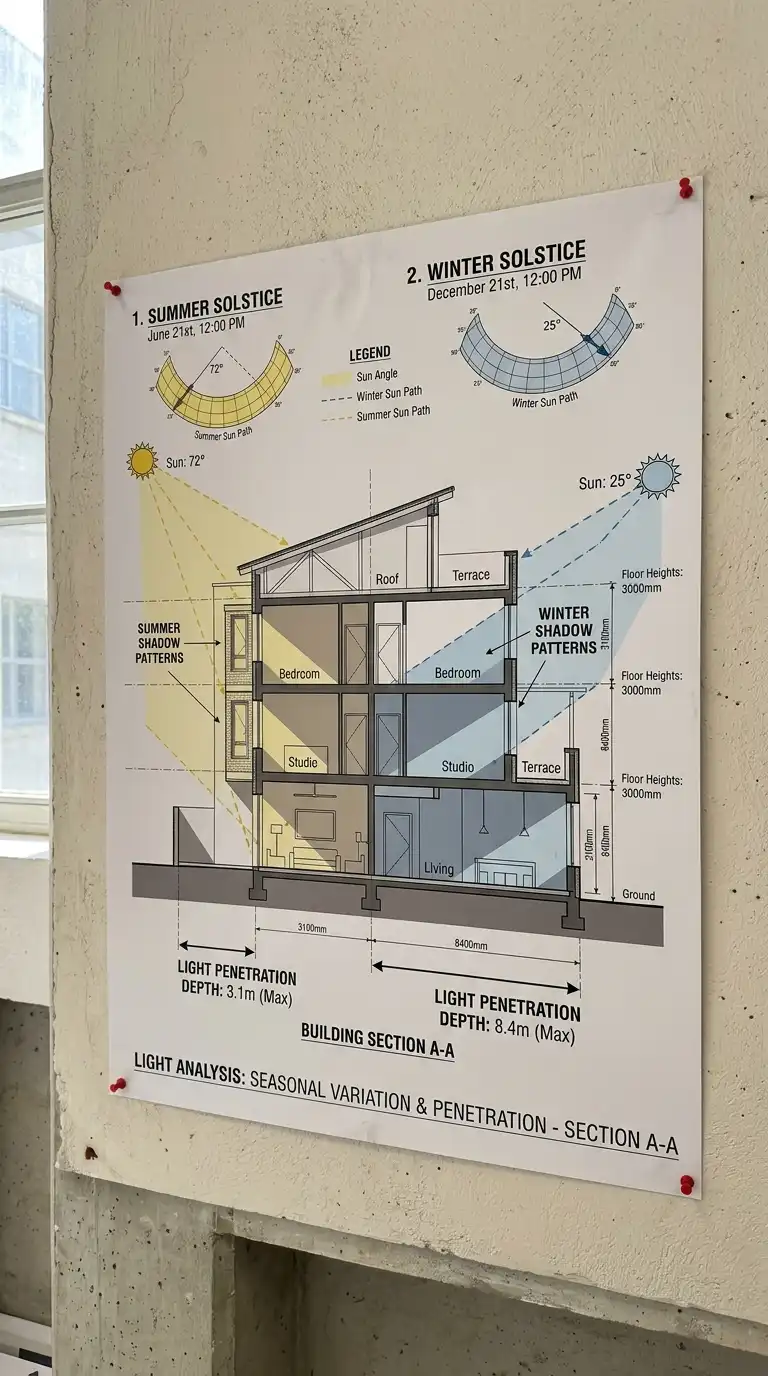
The light analysis sheet focuses on natural light. The section is the base. Sun angles are drawn for summer and winter. Shadow patterns are shown. Light penetration depth is measured. The light analysis sheet is luminous, seasonal, and shadow-focused.
This sheet is ideal for studying daylighting. The emotional effect is luminous, seasonal, and shadow-focused.
Quick Tips
- Draw sun angles for summer and winter solstices.
- Show shadow patterns.
- Measure light penetration depth.
7. The Material Analysis Sheet
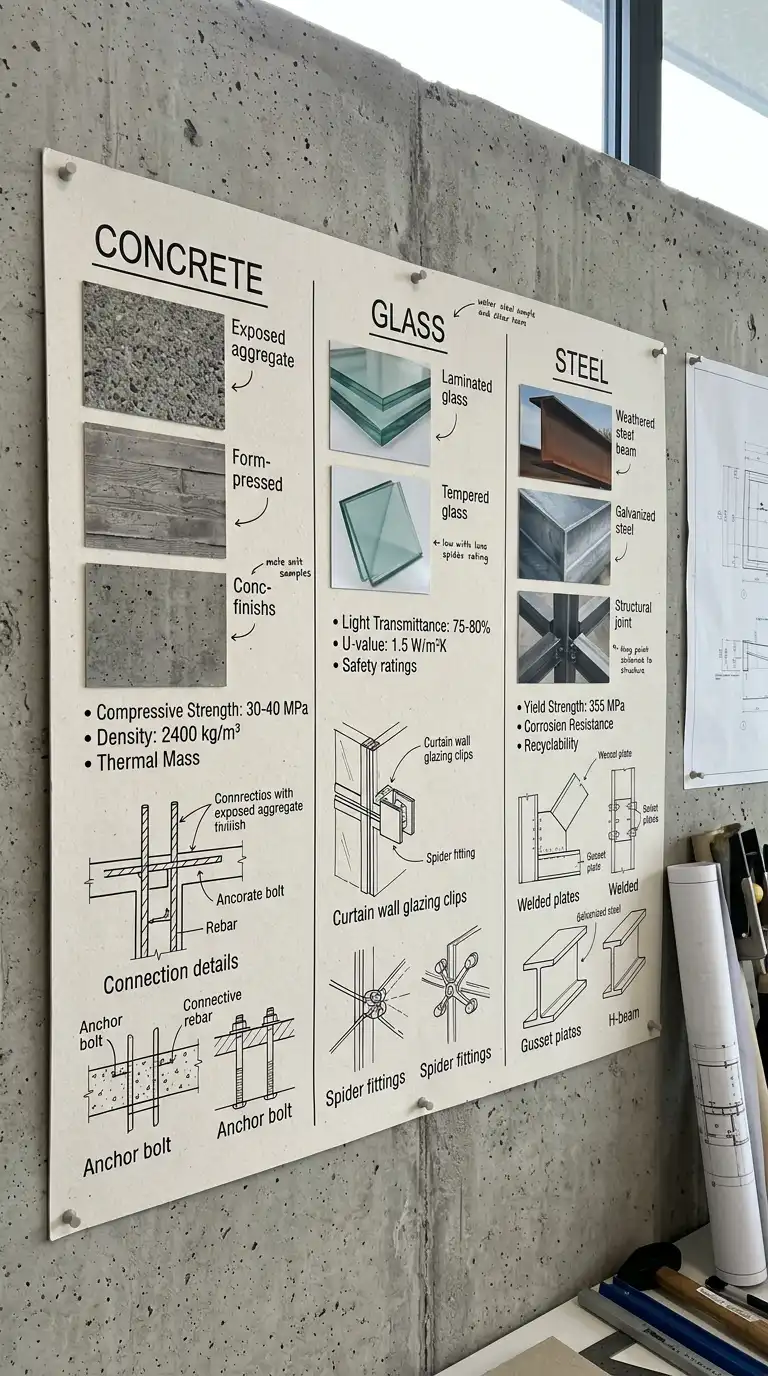
The material analysis sheet focuses on what the building is made of. Photographs or drawings of materials are arranged. Material properties are noted (colour, texture, durability). Material connections are detailed. The material analysis sheet is material, tactile, and detailed.
This sheet is ideal for studying materiality and craft. The emotional effect is material, tactile, and detailed.
Quick Tips
- Use photographs or detailed drawings of materials.
- Note material properties (colour, texture, durability).
- Show how materials connect.
8. The Site Context Analysis Sheet
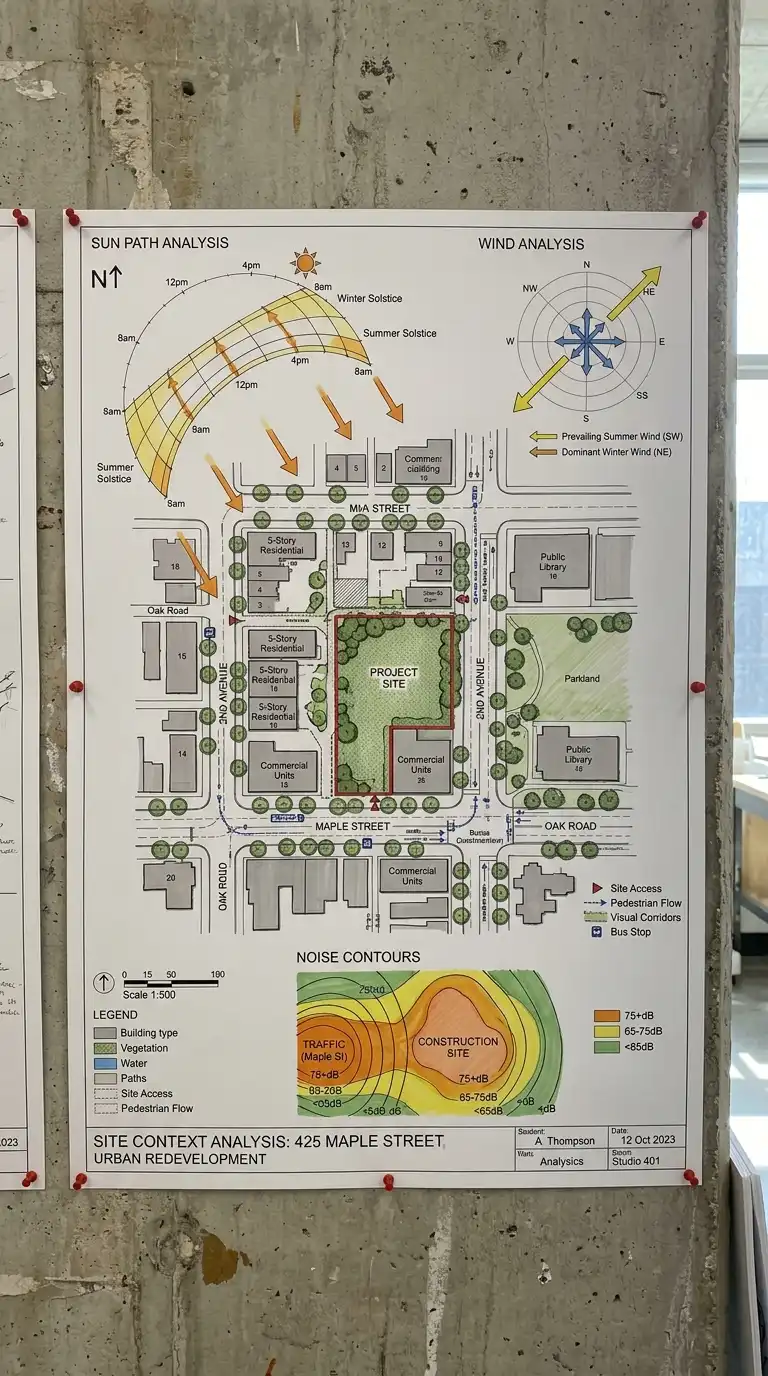
The site context analysis sheet focuses on the building’s site. The site plan is the base. Surrounding buildings, streets, and landscape are shown. Sun, wind, and noise are analysed. The site context analysis sheet is contextual, environmental, and site-specific.
This sheet is ideal for studying how the building fits its site. The emotional effect is contextual, environmental, and site-specific.
Quick Tips
- Draw the site plan at a large enough scale to show context.
- Show surrounding buildings, streets, and landscape.
- Indicate sun, wind, and noise.
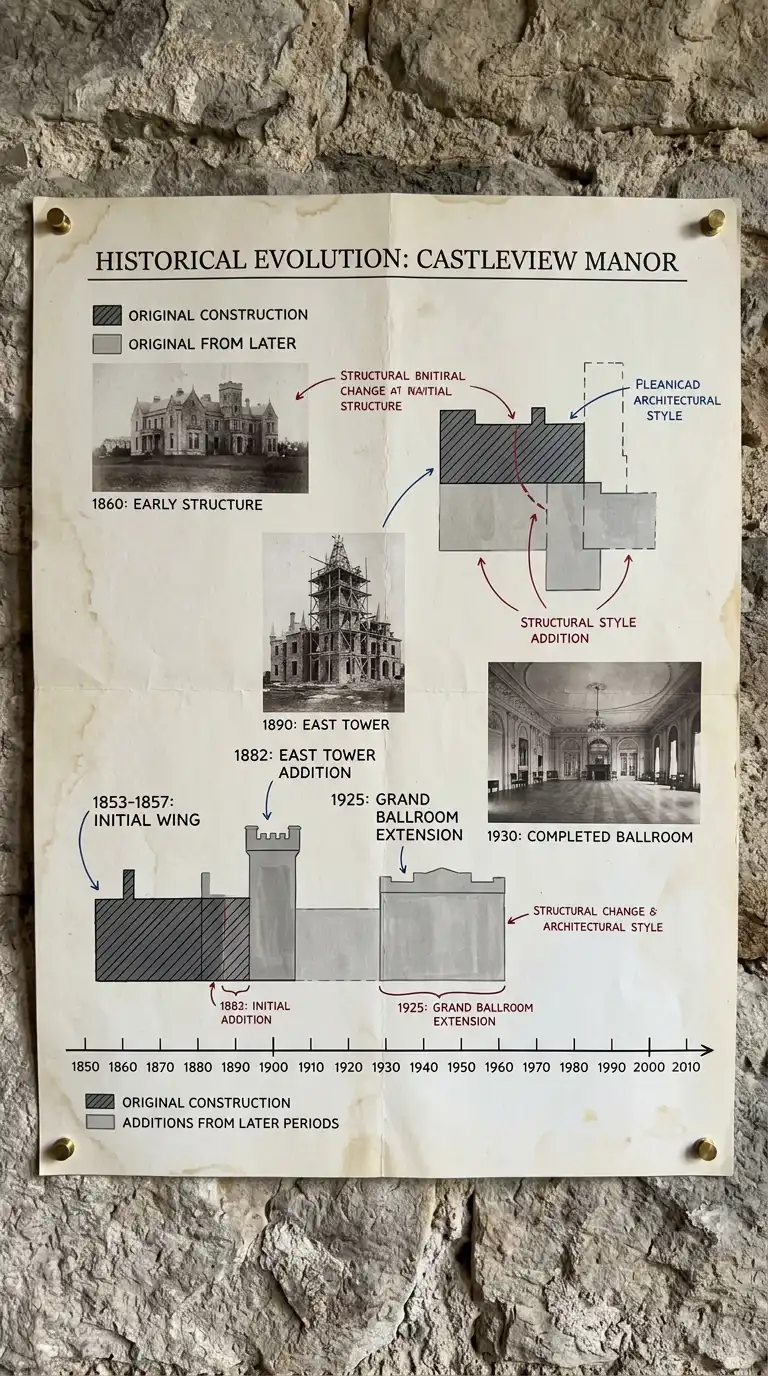
9. The Historical Analysis Sheet
The historical analysis sheet focuses on the building’s history. A timeline shows key dates. Historical photographs or drawings are included. Original construction and later additions are distinguished. The historical analysis sheet is historical, chronological, and layered.
This sheet is ideal for studying historic buildings. The emotional effect is historical, chronological, and layered.
Quick Tips
- Create a timeline of key dates.
- Include historical photographs or drawings.
- Distinguish original construction from additions.
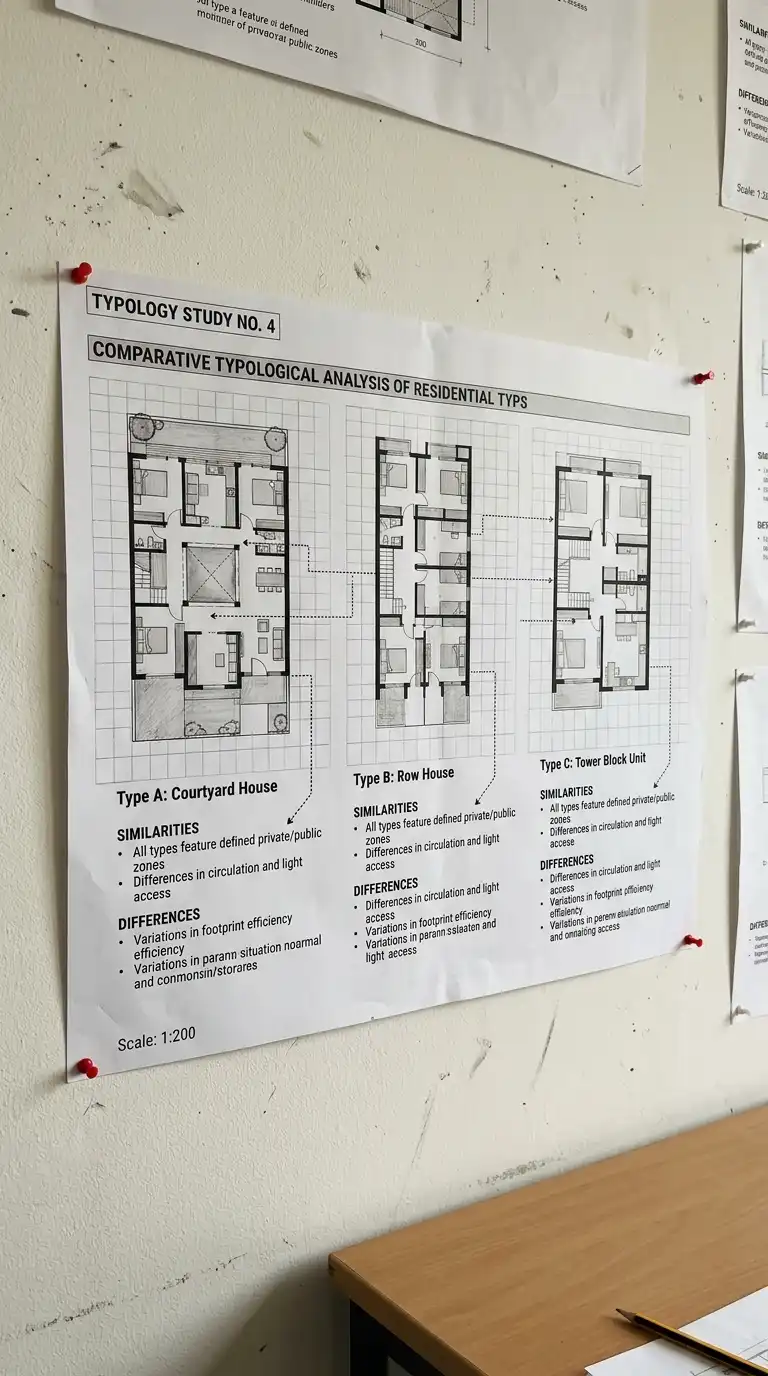
10. The Typological Analysis Sheet
The typological analysis sheet compares the building to other buildings of the same type. Multiple plans or sections are drawn at the same scale. Similarities and differences are noted. The typological analysis sheet is comparative, scaled, and typological.
This sheet is ideal for studying building types. The emotional effect is comparative, scaled, and typological.
Quick Tips
- Draw multiple plans or sections at the same scale.
- Align all drawings on the same grid.
- Note similarities and differences.
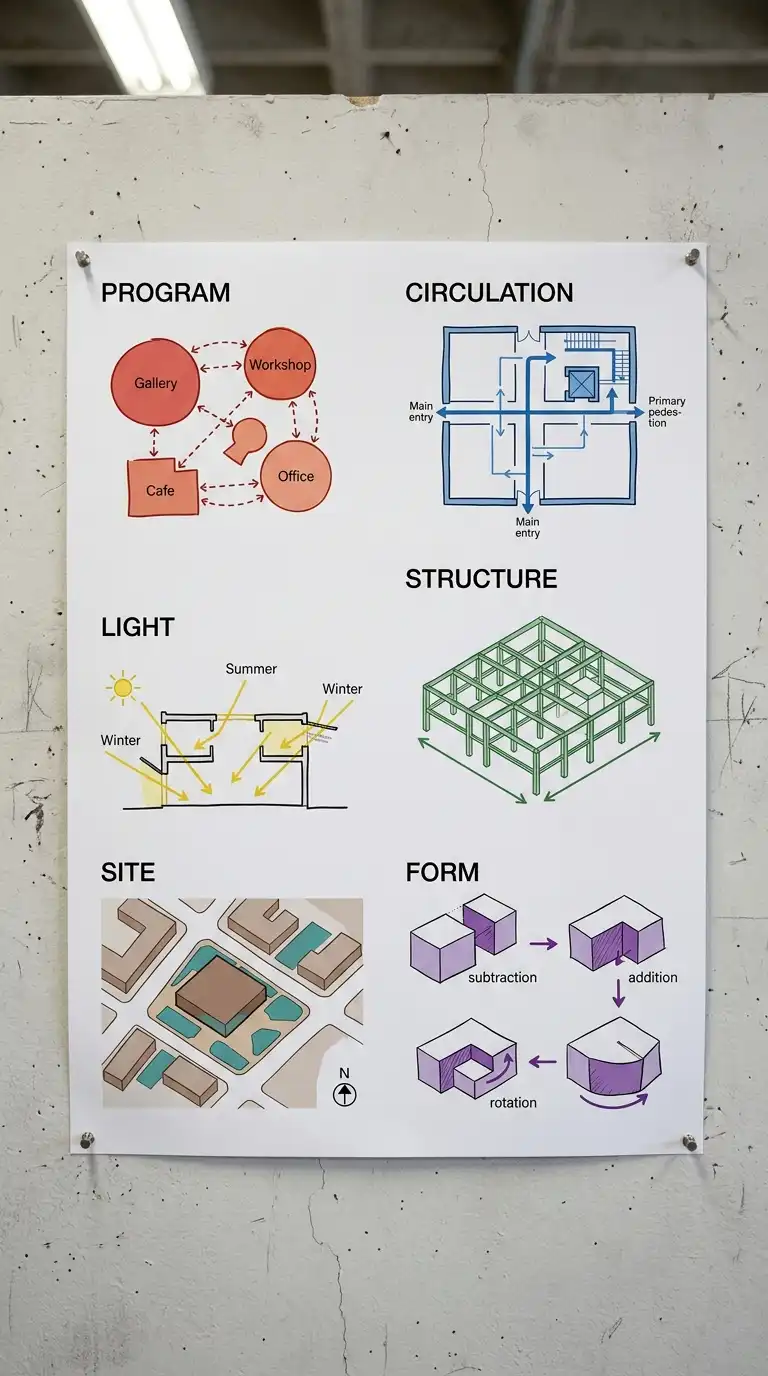
11. The Diagrammatic Analysis Sheet
The diagrammatic analysis sheet uses abstract diagrams to explain the building’s concepts. No realistic drawings. Only diagrams. Program, circulation, structure, light, and site are each a diagram. The diagrammatic analysis sheet is abstract, conceptual, and graphic.
This sheet is ideal for studying architectural ideas. The emotional effect is abstract, conceptual, and graphic.
Quick Tips
- Use only diagrams — no realistic drawings.
- Each diagram should explain a single concept.
- Use a consistent colour code.
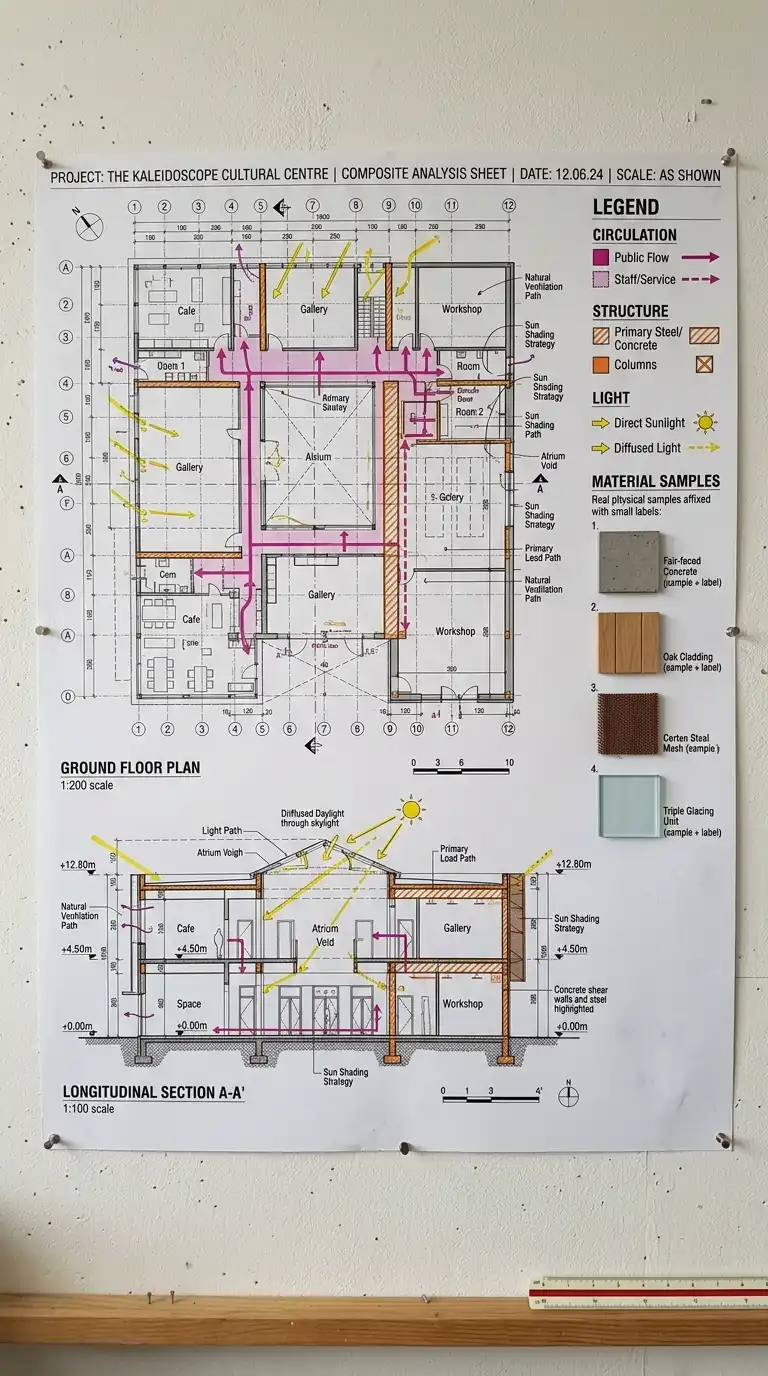
12. The Composite Analysis Sheet
The composite analysis sheet combines multiple analysis types on one sheet. Plan, section, circulation, structure, light, and material are all shown. The composite sheet is dense, comprehensive, and layered.
This sheet is ideal for final case study presentations. The emotional effect is dense, comprehensive, and layered.
Quick Tips
- Combine plan, section, circulation, structure, light, and material.
- Use a consistent colour code.
- Keep the sheet readable — do not overload it.
Final Thoughts
Study the masters. Draw their buildings. Learn their secrets. Then make your own. That is the purpose of the case study sheet. It is not the end — it is the beginning. It is how you learn architecture. It is how you become an architect. It is the case study. It is the sheet. It is the lesson.
