Skip to content
Moroccan architecture is the architecture of sun, shade, and water. It is the architecture of the medina, the riad, the mosque, and the souk. Moroccan buildings are inward-facing, private, and richly decorated. The courtyard is the heart of the house. The fountain is the heart of the courtyard. The tilework is geometric. The wood is carved. The light is filtered.
These 12 Moroccan architecture ideas span houses, mosques, gardens, and urban spaces. Each design includes defining characteristics, material principles, and spatial strategies.
1. The Riad
The riad is a traditional Moroccan house with an interior courtyard. The courtyard has a fountain or garden. The house is inward-facing, with high, windowless exterior walls. The rooms open onto the courtyard. The riad is private, shaded, and courtyard-centred.
This design is ideal for houses and hotels in hot climates. The emotional effect is private, shaded, and courtyard-centred.
Quick Tips
- The house must have a central courtyard.
- Exterior walls must be high and windowless.
- The courtyard must have a fountain or garden.
2. The Moroccan Courtyard
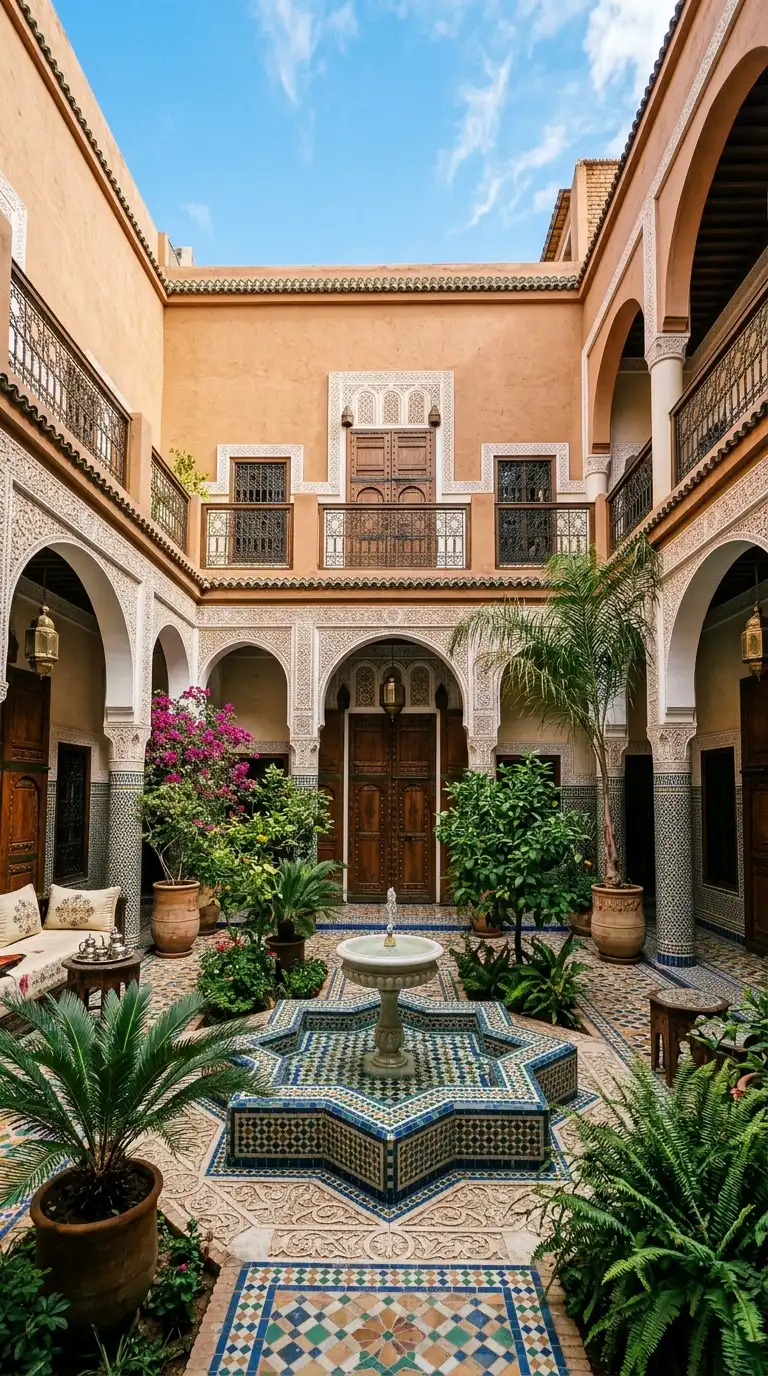
The Moroccan courtyard is the heart of the riad. It is paved with tile (zellij). It has a central fountain. It is planted with orange trees or jasmine. The courtyard is shaded by the surrounding building. The Moroccan courtyard is tiled, fountained, and shaded.
This design is ideal for houses and hotels. The emotional effect is tiled, fountained, and shaded.
Quick Tips
- The floor must be tiled (zellij).
- A fountain must be at the centre.
- The courtyard must have plants (orange trees, jasmine).
3. The Zellij Tilework
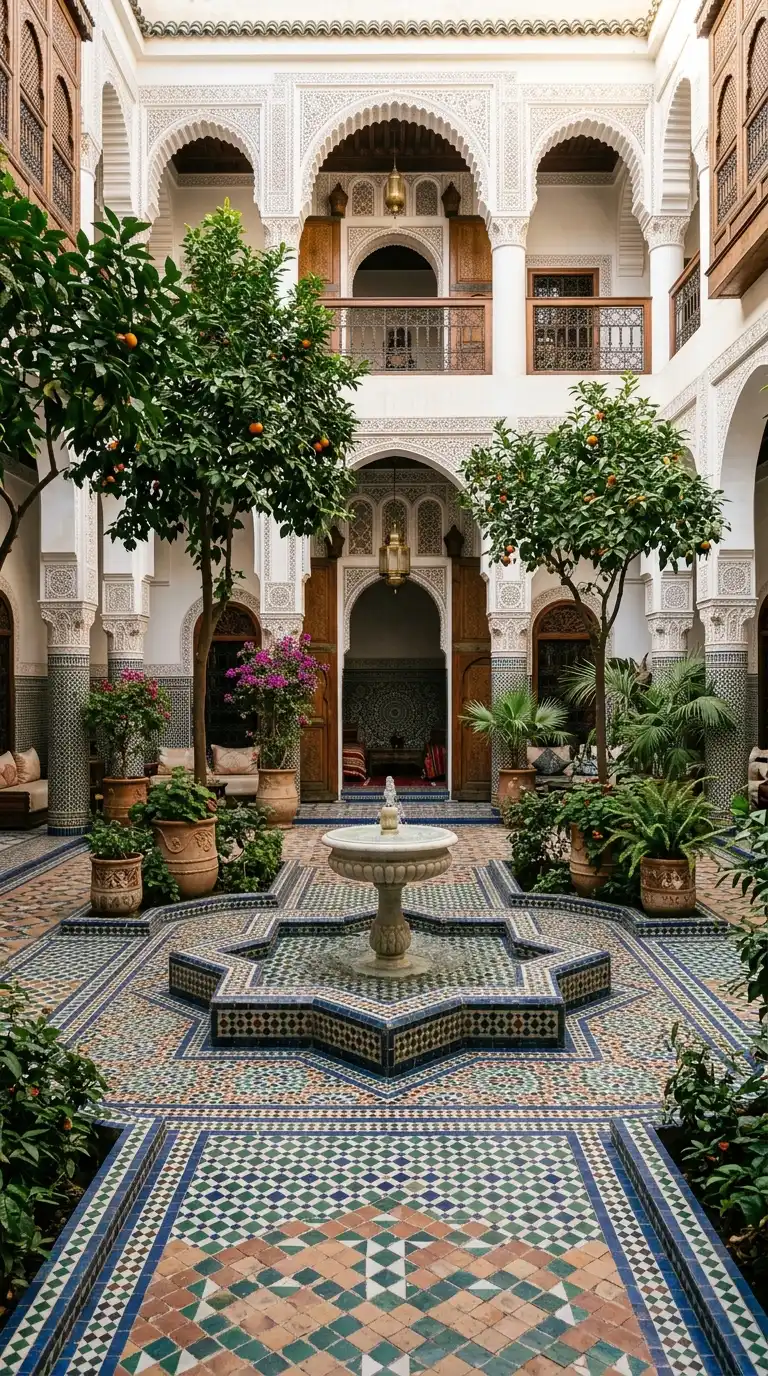
Zellij is geometric mosaic tilework. The tiles are cut into small shapes (squares, triangles, stars) and assembled into patterns. The patterns are geometric and repetitive. Zellij is used on floors, walls, and fountains. Zellij is geometric, colourful, and repetitive.
This design is ideal for floors, walls, and fountains. The emotional effect is geometric, colourful, and repetitive.
Quick Tips
- The tiles must be cut into geometric shapes.
- The pattern must be geometric and repetitive.
- The colours are typically blue, green, yellow, and white.
4. The Moroccan Arch
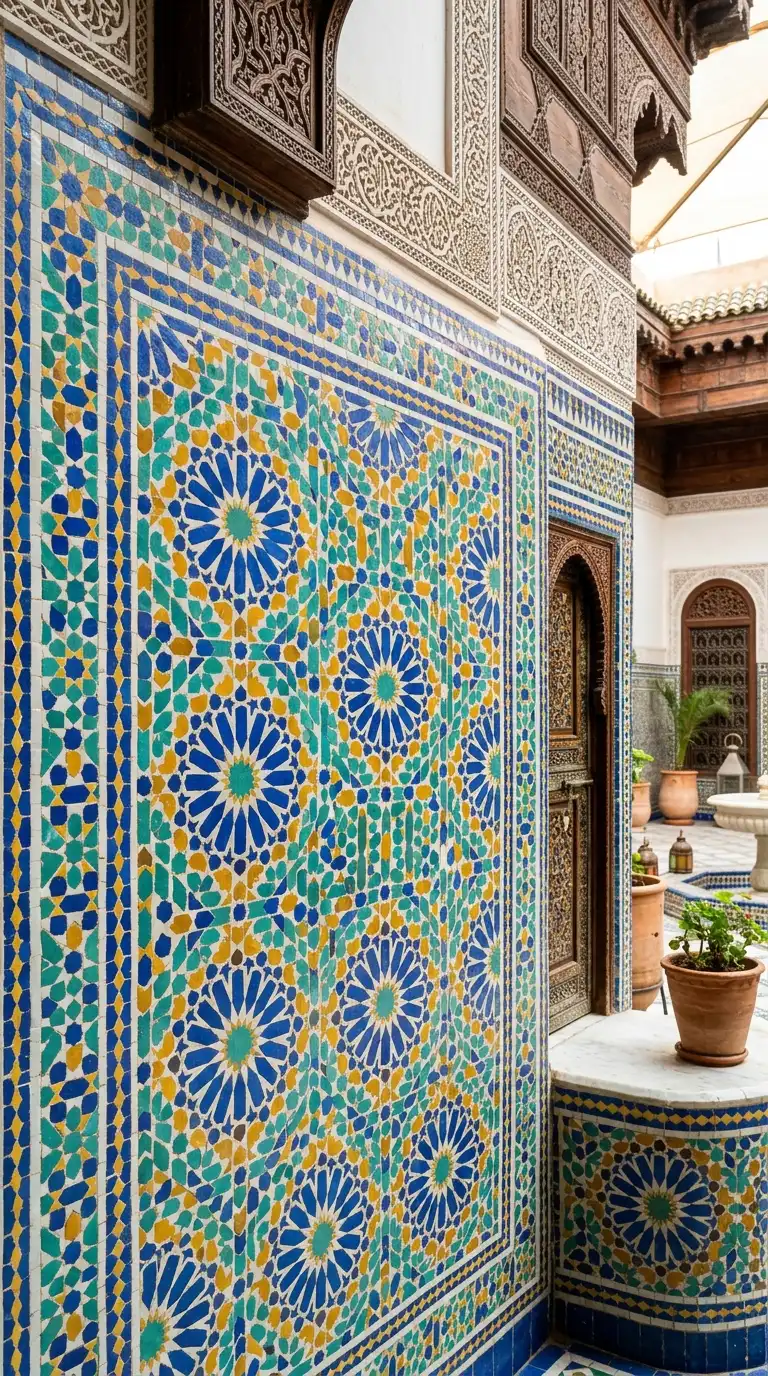
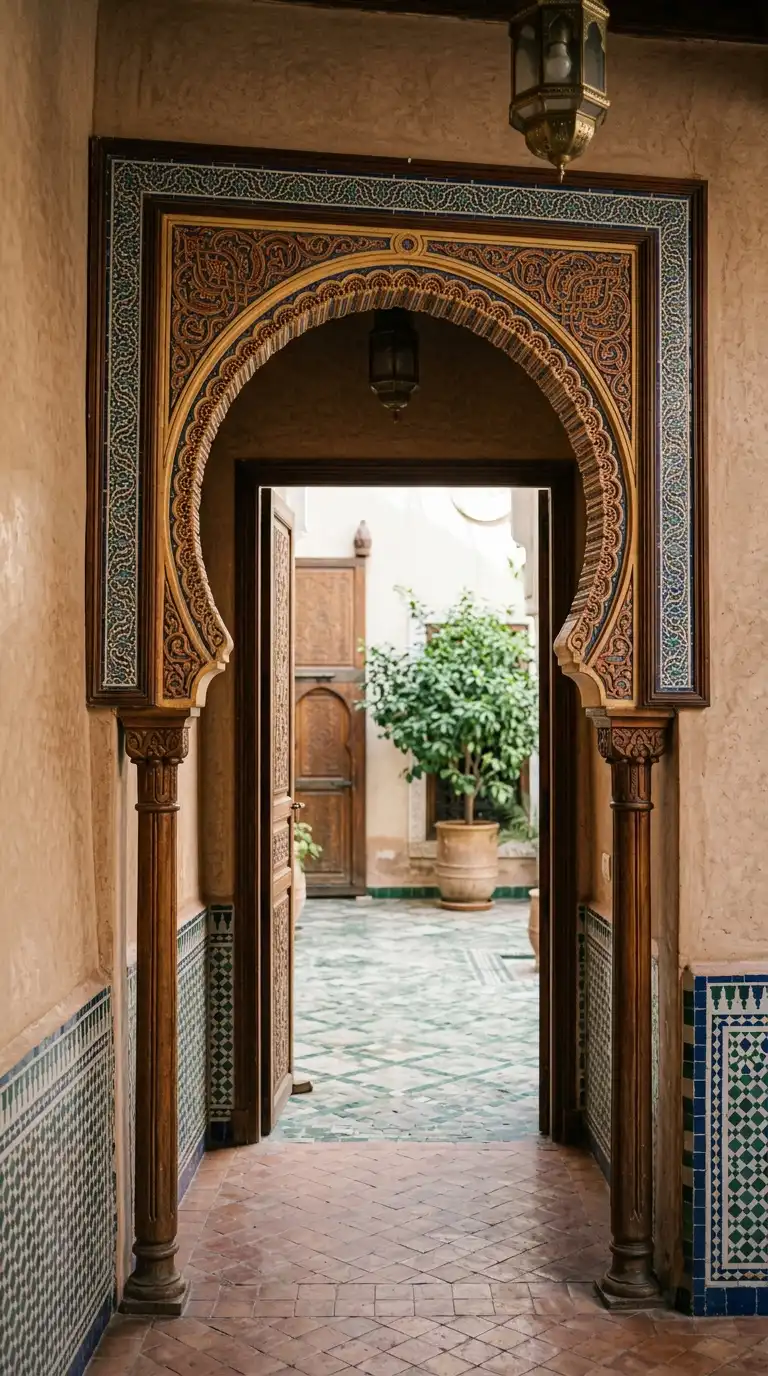
The Moroccan arch is a horseshoe or pointed arch. The horseshoe arch curves inward at the base. The pointed arch rises to a point. Both are used in doorways, windows, and arcades. The Moroccan arch is horseshoe-shaped, pointed, or arched.
This design is ideal for doorways, windows, and arcades. The emotional effect is horseshoe-shaped, pointed, and arched.
Quick Tips
- The arch can be horseshoe (curving inward) or pointed.
- The arch must be used in doorways, windows, or arcades.
- The arch may have intrados decoration.
5. The Mashrabiya
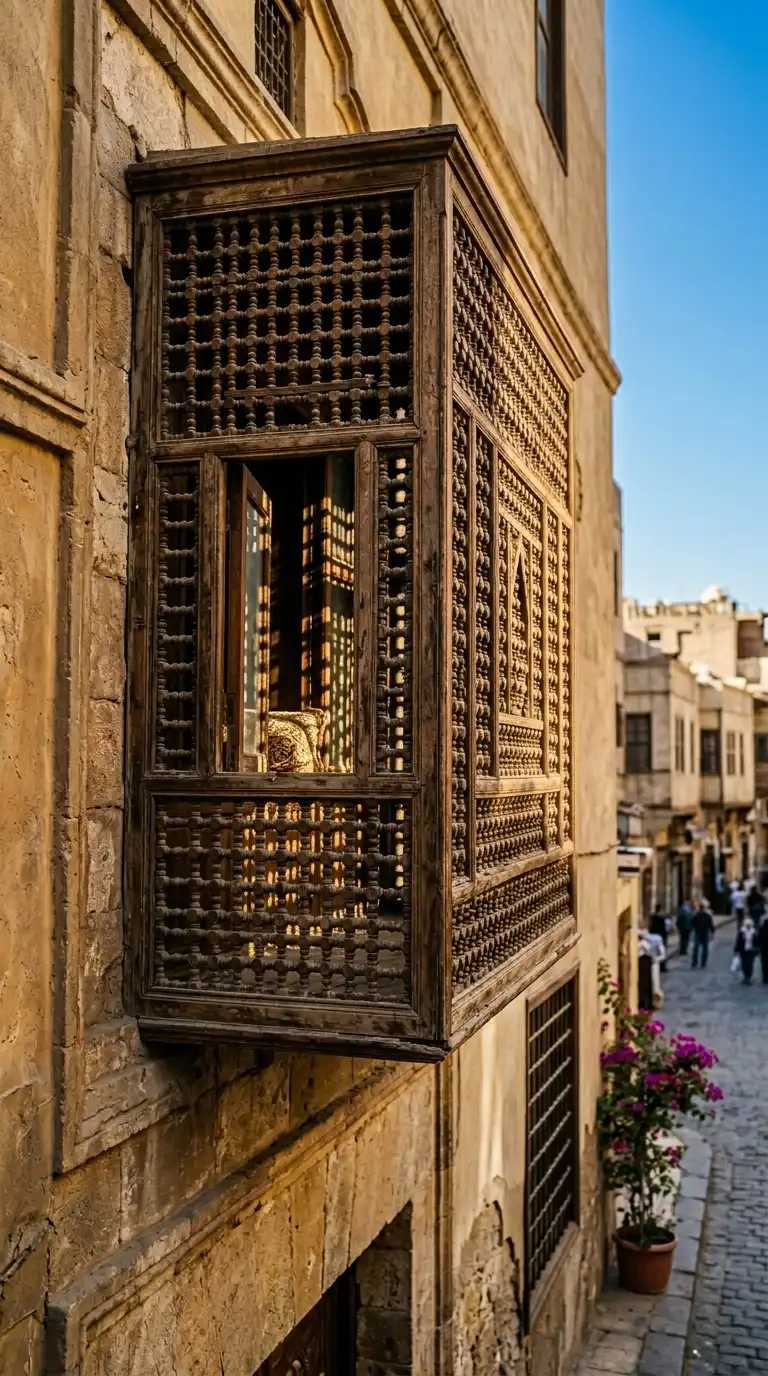
The mashrabiya is a wooden lattice screen. It is used on windows and balconies. The mashrabiya provides privacy, shade, and ventilation. It allows the occupant to see out without being seen. The mashrabiya is wooden, latticed, and private.
This design is ideal for windows and balconies. The emotional effect is wooden, latticed, and private.
Quick Tips
- The screen must be made of turned wood.
- The lattice must be dense enough for privacy.
- The screen must be on the exterior of the window.
6. The Souk
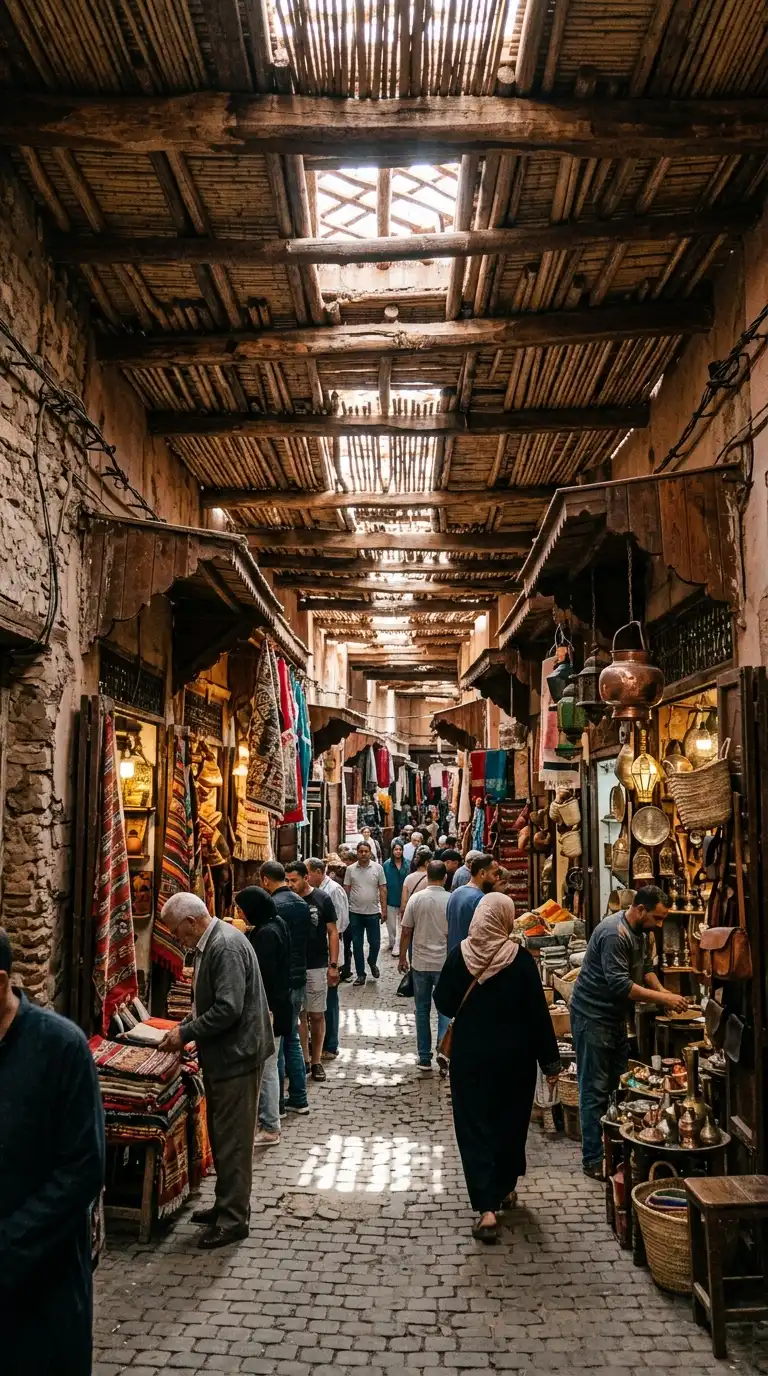
The souk is a covered market street. The street is lined with shops on both sides. The roof is wooden beams and reeds, with occasional openings for light. The souk is shaded, narrow, and commercial.
This design is ideal for market districts. The emotional effect is shaded, narrow, and commercial.
Quick Tips
- The street must be 3-4 metres wide.
- Shops must be small and uniform.
- The roof must be wood and reeds with light openings.
7. The Moroccan Mosque
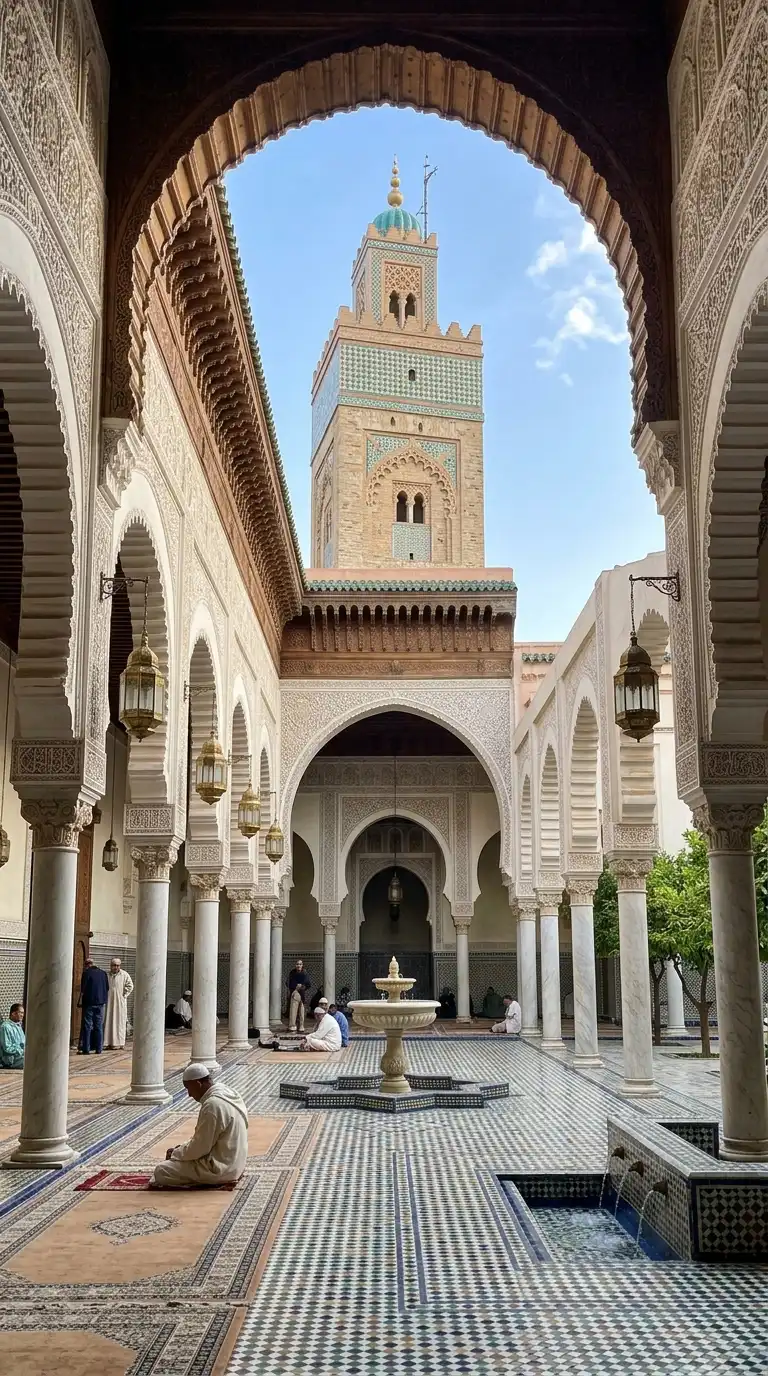
The Moroccan mosque has a large prayer hall, a courtyard (sahn), a fountain for ablution, and a minaret. The minaret is square and tall. The prayer hall is a hypostyle hall with rows of arches. The Moroccan mosque is hypostyle, courtyard-centred, and minareted.
This design is ideal for mosques. The emotional effect is hypostyle, courtyard-centred, and minareted.
Quick Tips
- The prayer hall must have rows of arches.
- The courtyard must have a fountain for ablution.
- The minaret must be square.
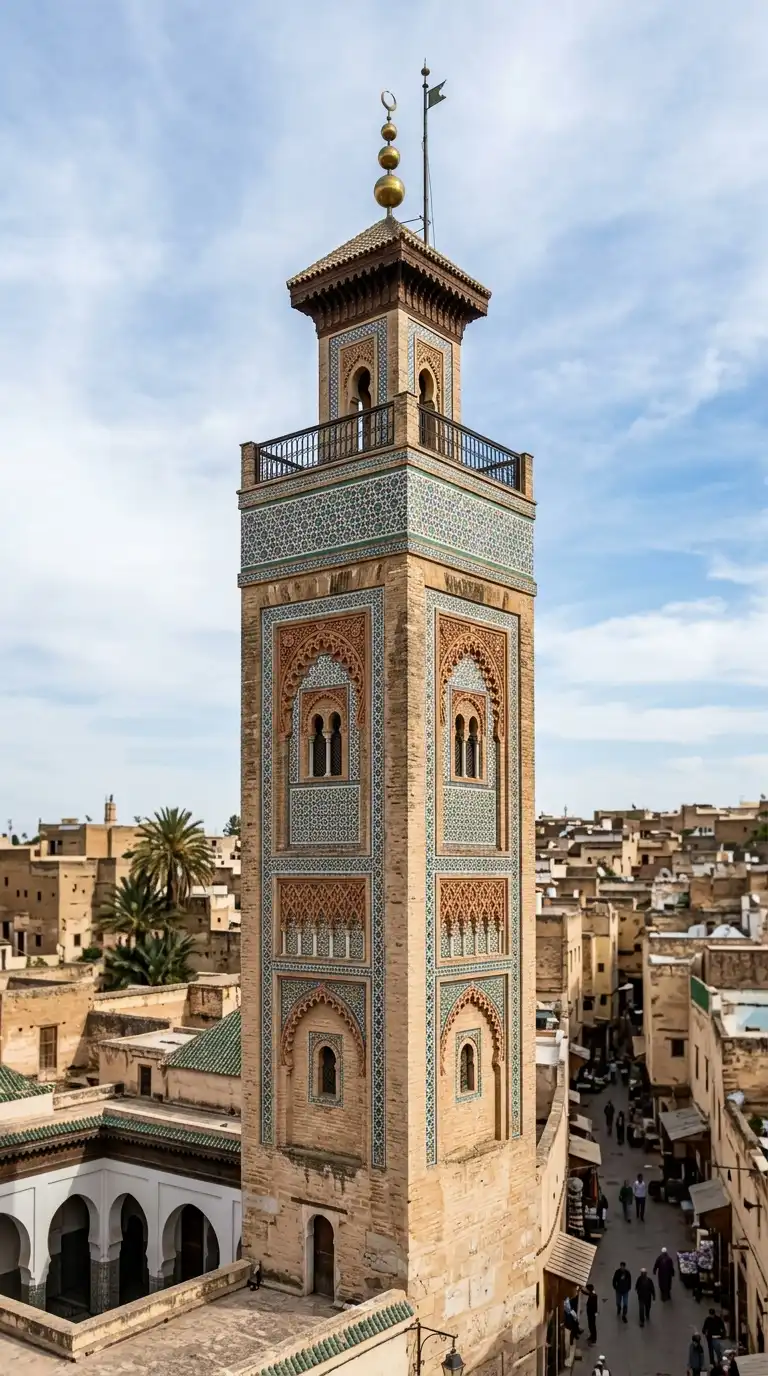
8. The Minaret
The Moroccan minaret is square in plan. It is tall and slender. It has decorative bands of tilework or carving. The top has a smaller lantern tower and metal spheres. The minaret is square, vertical, and decorative.
This design is ideal for mosques. The emotional effect is square, vertical, and decorative.
Quick Tips
- The plan must be square.
- The tower must be tall and slender.
- The top must have a lantern and spheres.
9. The Fondouk
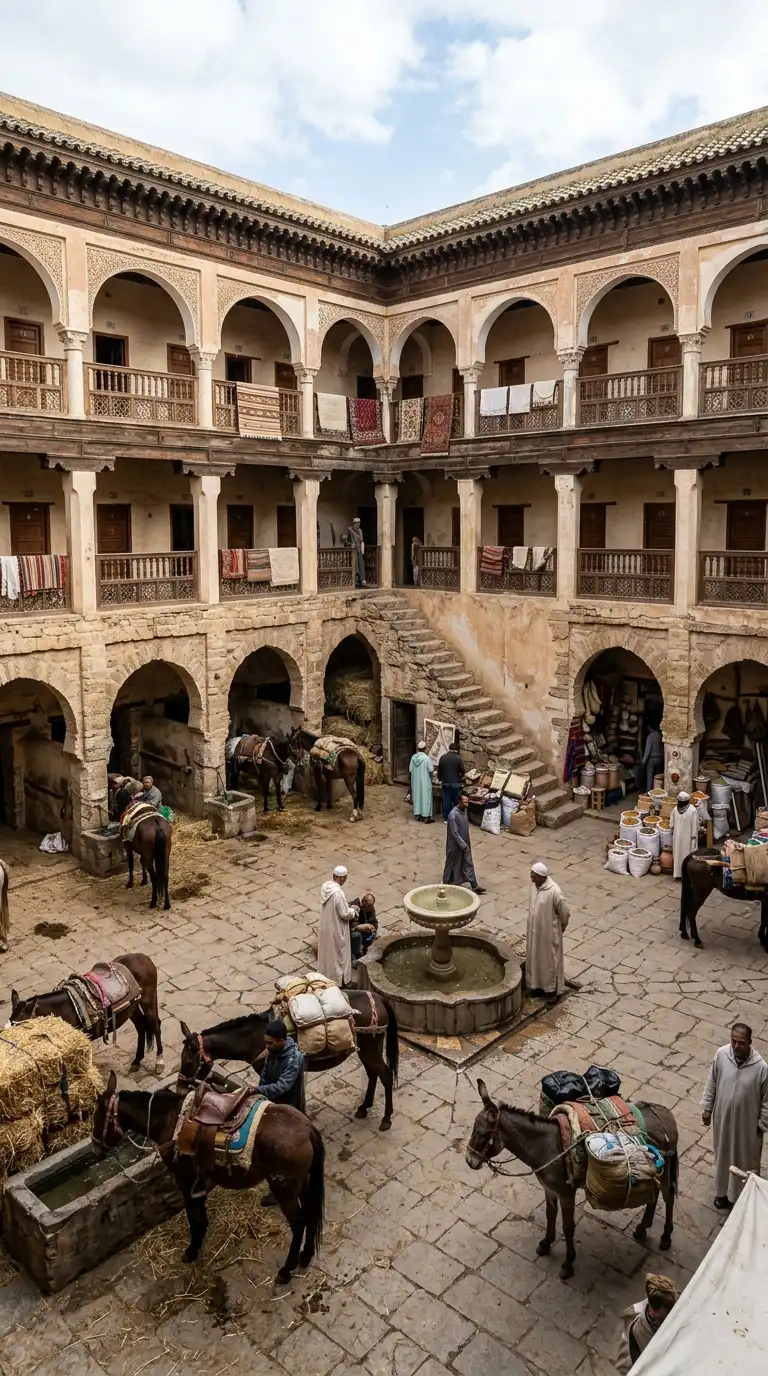
The fondouk is a traditional inn for merchants and their animals. It has a large central courtyard. The ground floor has stables and storage. The upper floor has rooms for travellers. The fondouk is courtyard-centred, arcaded, and commercial.
This design is ideal for inns and caravanserais. The emotional effect is courtyard-centred, arcaded, and commercial.
Quick Tips
- The courtyard must be large enough for animals.
- Ground floor must have stables and storage.
- Upper floor must have rooms.
10. The Hammam
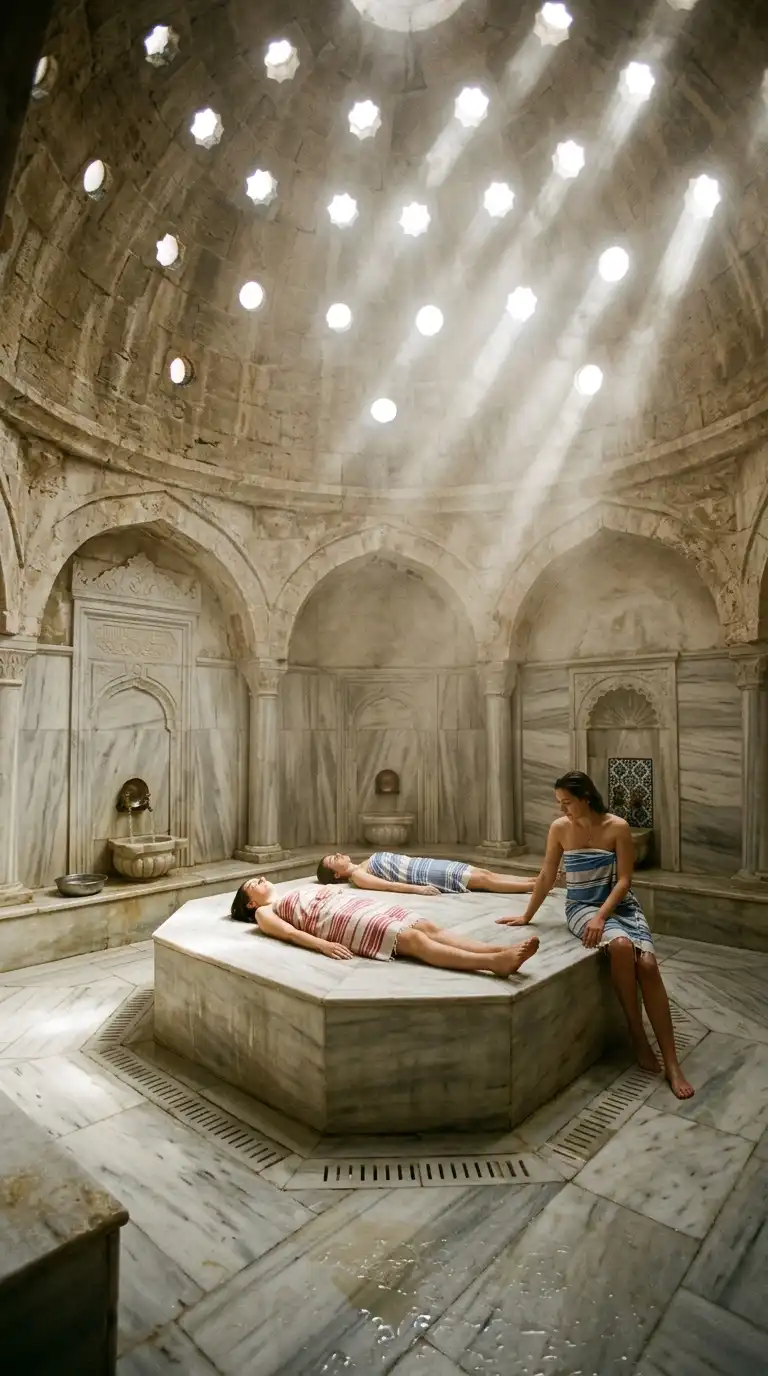
The hammam is a traditional Moroccan bathhouse. The plan is a sequence of three rooms: cold, warm, and hot. The hot room has a domed ceiling with small glass openings. Light streams through the openings, creating a starry effect. The hammam is steamy, social, and relaxing.
This design is ideal for public baths. The emotional effect is steamy, social, and relaxing.
Quick Tips
- The three rooms must be in sequence: cold, warm, hot.
- The hot room must have a domed ceiling with light openings.
- The floors must be marble.
11. The Agdal
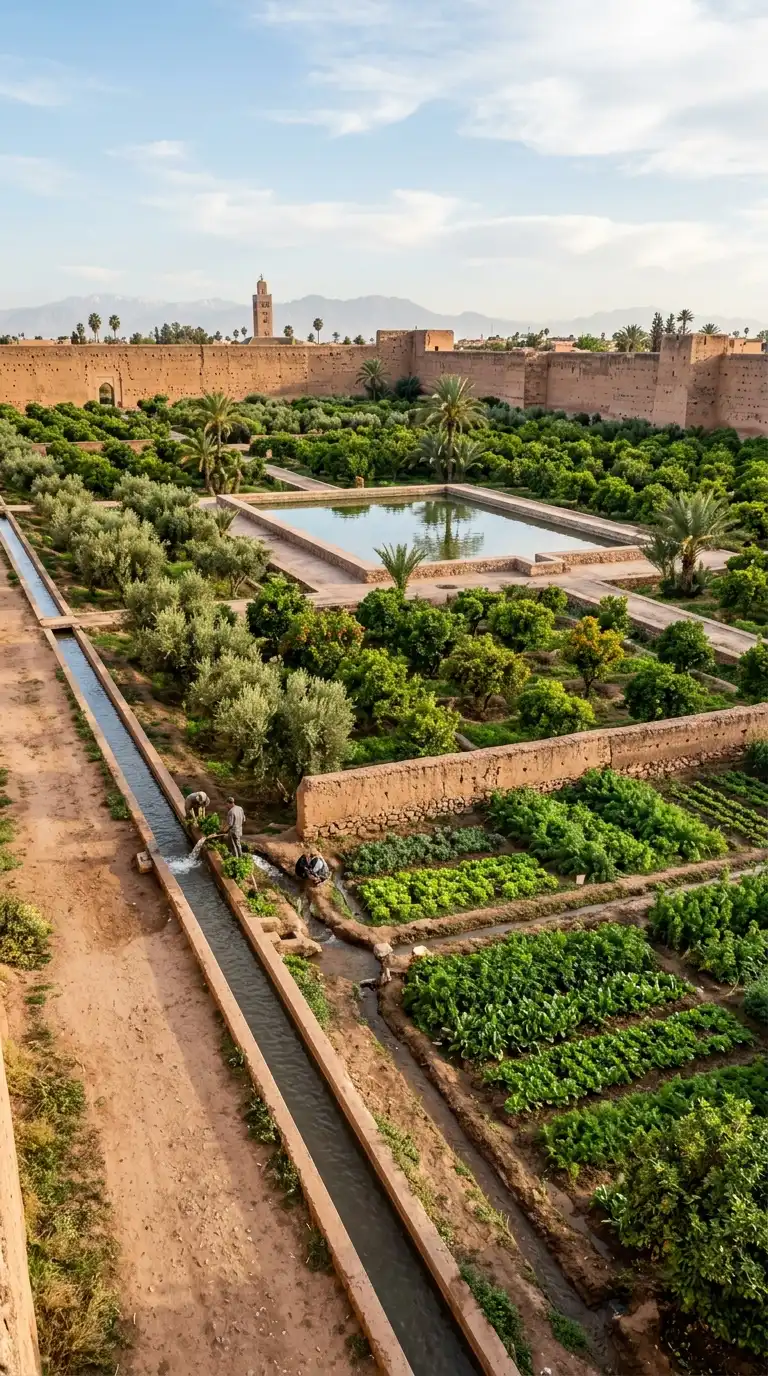
The agdal is a large walled garden or agricultural estate. It has orchards, vegetable gardens, and water basins. The agdal is irrigated by a traditional water system (khettara). The agdal is walled, watered, and agricultural.
This design is ideal for gardens and estates. The emotional effect is walled, watered, and agricultural.
Quick Tips
- The garden must be walled.
- The garden must have water basins.
- The garden must be irrigated.
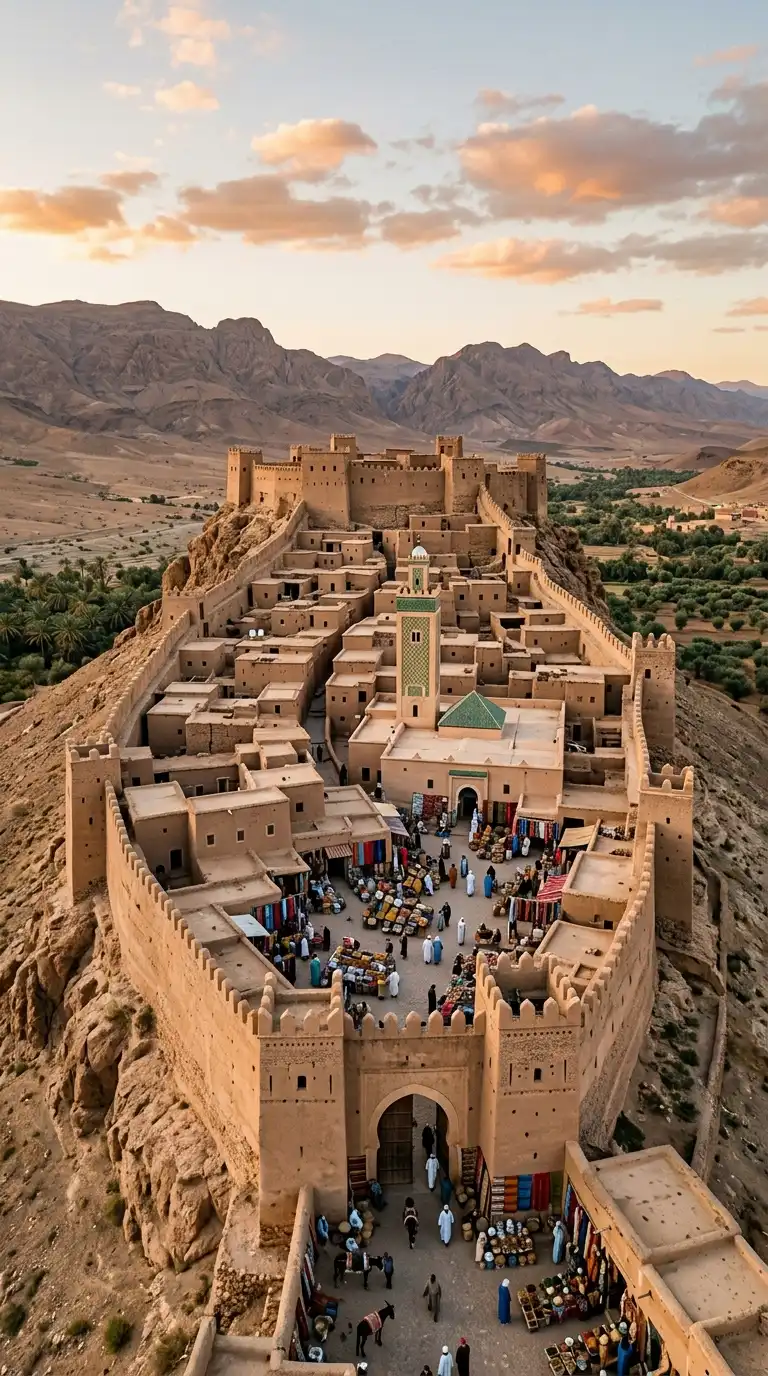
12. The Kasbah
The kasbah is a fortified village or citadel. It has high defensive walls, a gate, a mosque, a market, and houses. The kasbah is often on a hilltop. The kasbah is defensive, walled, and village-like.
This design is ideal for fortified settlements. The emotional effect is defensive, walled, and village-like.
Quick Tips
- The kasbah must have defensive walls.
- The kasbah must have a gate.
- The kasbah must be on a hilltop.