 Skip to content
Classical architecture is the architecture of ancient Greece and Rome. It is the foundation of Western building. The classical language of columns, entablatures, pediments, and arches has been used for over two thousand years. Classical architecture is rational, proportional, and ideal. It is the architecture of democracy, empire, and reason.
These 12 classical architecture designs span Greek and Roman temples, civic buildings, and theatres. Each design includes defining characteristics, proportional principles, and architectural strategies.
1. The Greek Doric Temple
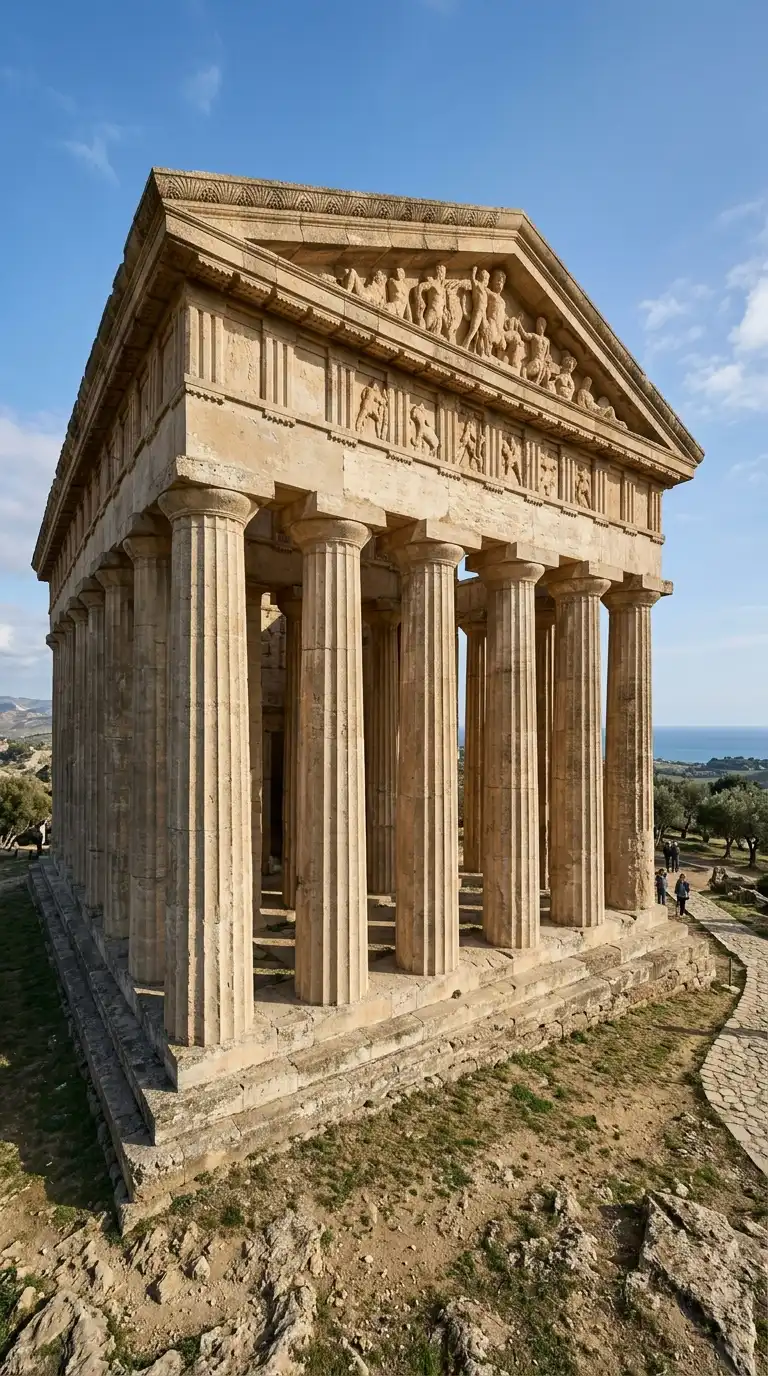
The Doric temple is the oldest and most powerful Greek order. The column has no base, a fluted shaft, and a simple capital of a rounded echinus and a square abacus. The entablature has triglyphs and metopes. The pediment is low and triangular. The Parthenon is the masterpiece. The Doric temple is powerful, rational, and ideal.
This design is ideal for temples and civic buildings. The emotional effect is powerful, rational, and ideal.
Quick Tips
- Doric columns must have no base.
- The shaft must have 20 flutes with sharp arrises (edges).
- The frieze must alternate triglyphs and metopes.
2. The Greek Ionic Temple
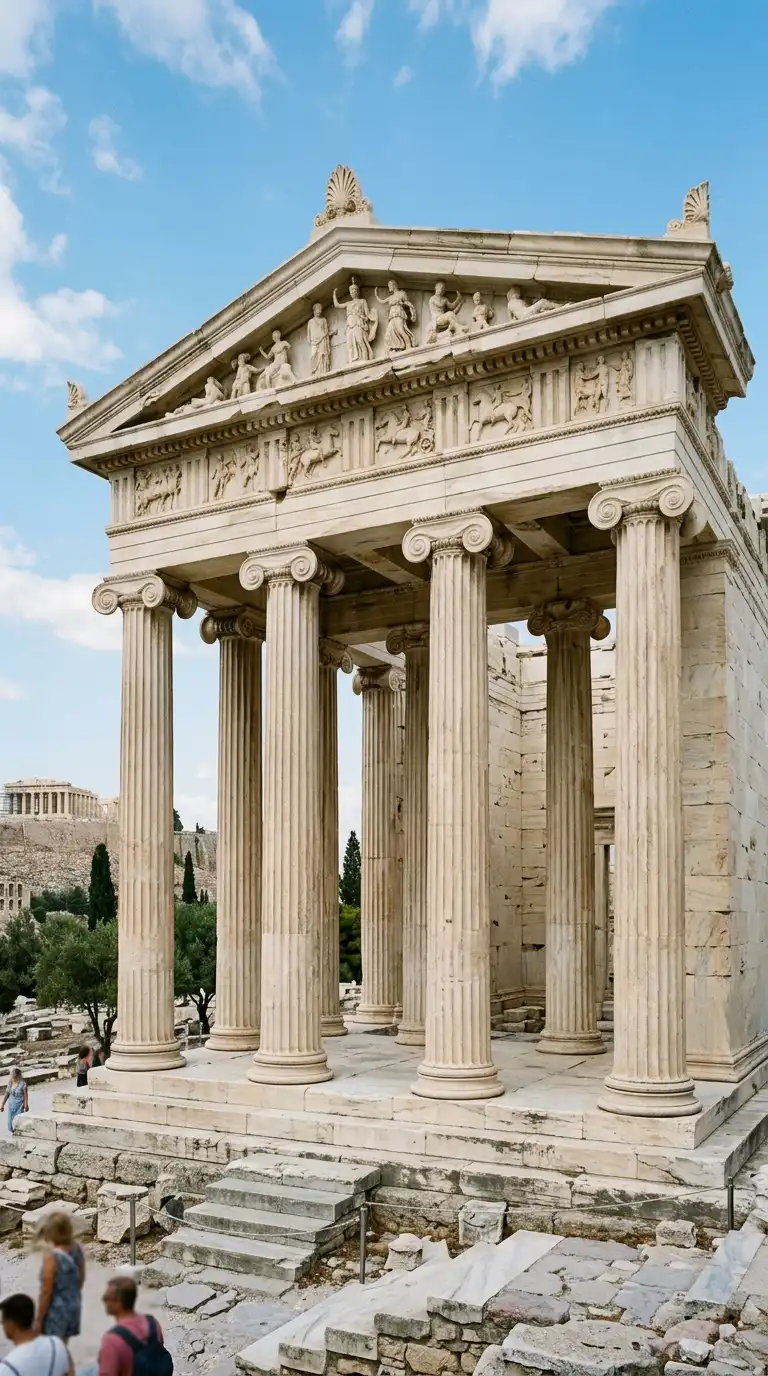
The Ionic temple is more slender and elegant than Doric. The column has a base, a fluted shaft, and a capital with volutes (spiral scrolls). The entablature has a continuous frieze (no triglyphs). The Erechtheion on the Acropolis is a famous example. The Ionic temple is elegant, refined, and feminine.
This design is ideal for temples and civic buildings. The emotional effect is elegant, refined, and feminine.
Quick Tips
- Ionic columns must have bases with torus and scotia mouldings.
- The capital must have volutes on two faces (or four on corner columns).
- The frieze must be continuous — no triglyphs.
3. The Greek Corinthian Temple
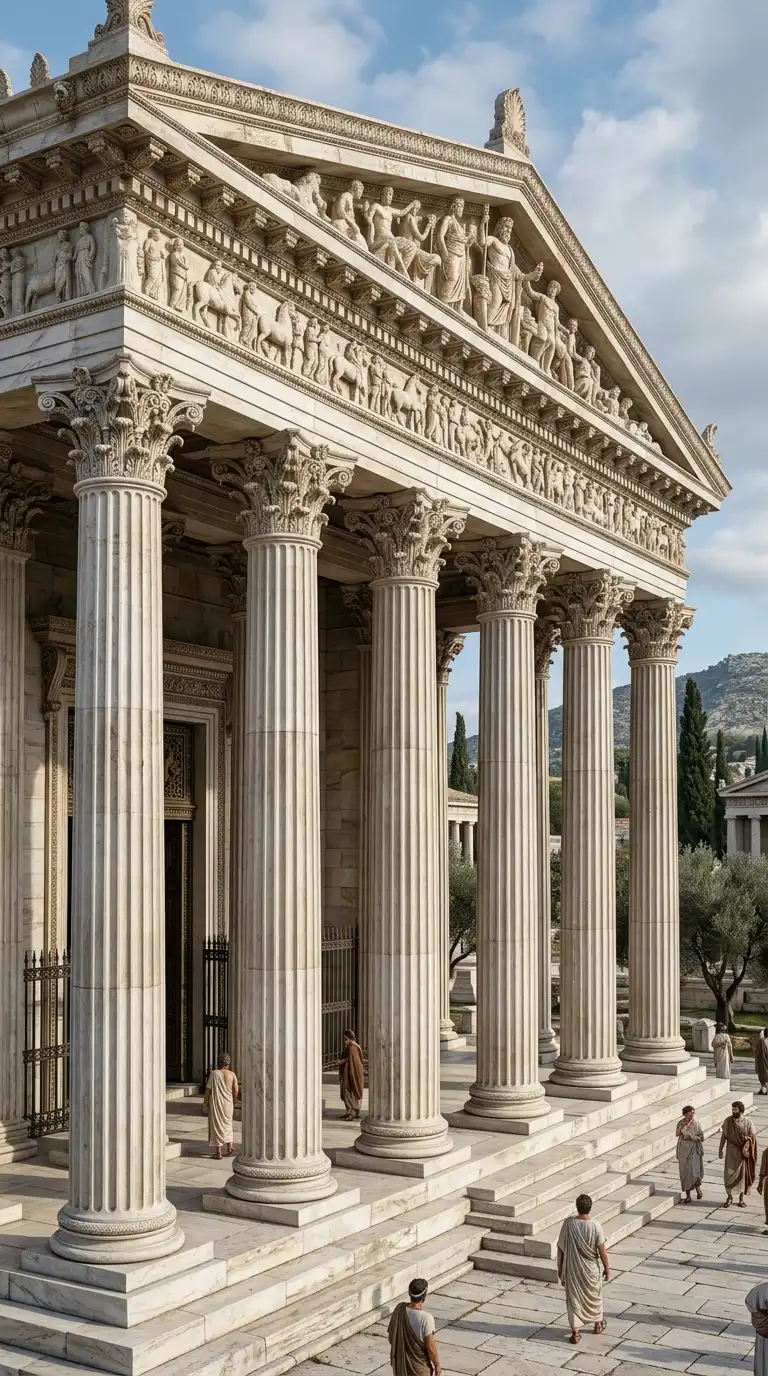
The Corinthian temple is the most ornate Greek order. The column has a base, a fluted shaft, and a capital decorated with acanthus leaves. The Corinthian order was used less frequently in Greece but became dominant in Rome. The Temple of Olympian Zeus in Athens is a late example. The Corinthian temple is ornate, rich, and luxurious.
This design is ideal for temples and civic buildings. The emotional effect is ornate, rich, and luxurious.
Quick Tips
- The capital must have two rows of acanthus leaves.
- The shaft must have 24 flutes (more than Doric or Ionic).
- The entablature is often more richly decorated.
4. The Roman Temple
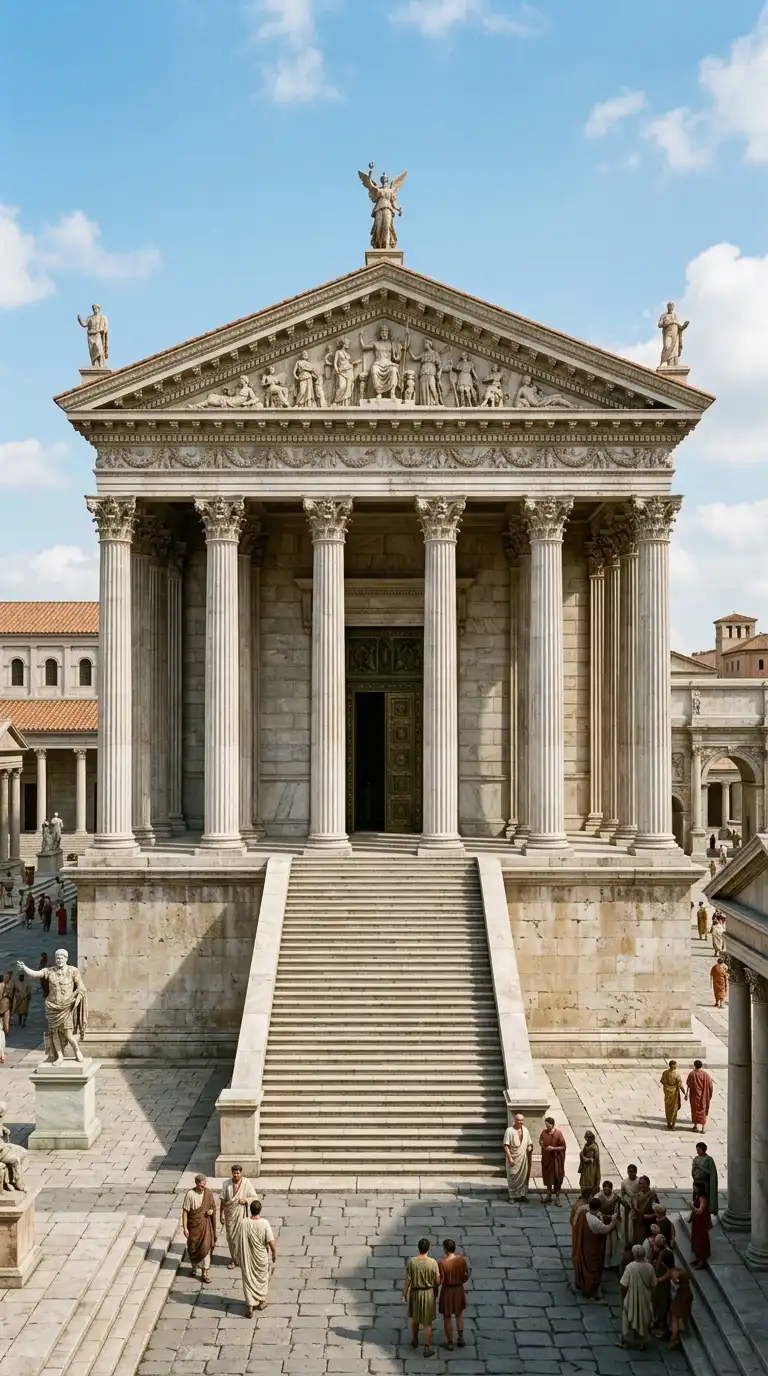
The Roman temple differs from its Greek predecessor. The Greek temple is a sculptural object, visible from all sides. The Roman temple is frontal — entered from the front only, with a deep porch and a single staircase. The temple sits on a high podium. The columns are often engaged (attached to the wall) on the sides and rear. The Maison Carrée in Nîmes is the defining example. The Roman temple is frontal, hierarchical, and civic.
This design is ideal for temples and civic buildings. The emotional effect is frontal, hierarchical, and civic.
Quick Tips
- The temple must sit on a high podium.
- The entrance must be frontal — one staircase, one door.
- Columns should be engaged on the sides and rear, free-standing in front.
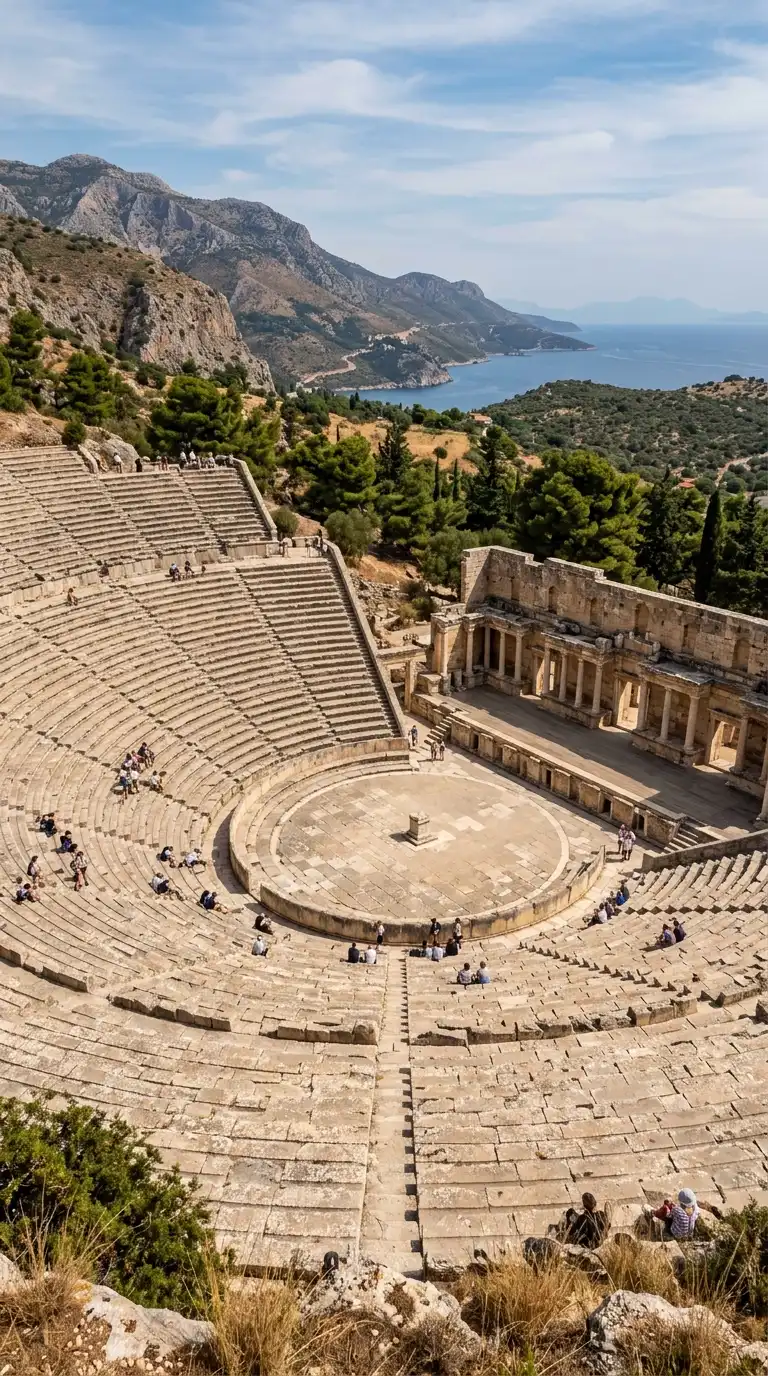
5. The Greek Theatre
The Greek theatre is carved into a hillside. The seating (theatron) is a semicircle rising up the slope. The orchestra (dancing place) is a circle at the bottom. The skene (stage building) is behind the orchestra. The theatre is designed for acoustics — every seat can hear the stage. The Theatre of Epidaurus is the defining example. The Greek theatre is dramatic, acoustic, and landscape-integrated.
This design is ideal for theatres and performance spaces. The emotional effect is dramatic, acoustic, and landscape-integrated.
Quick Tips
- The seating must be a semicircle steeper than 30 degrees.
- The orchestra must be a full circle.
- The theatre must be carved into a hillside.
6. The Roman Amphitheatre
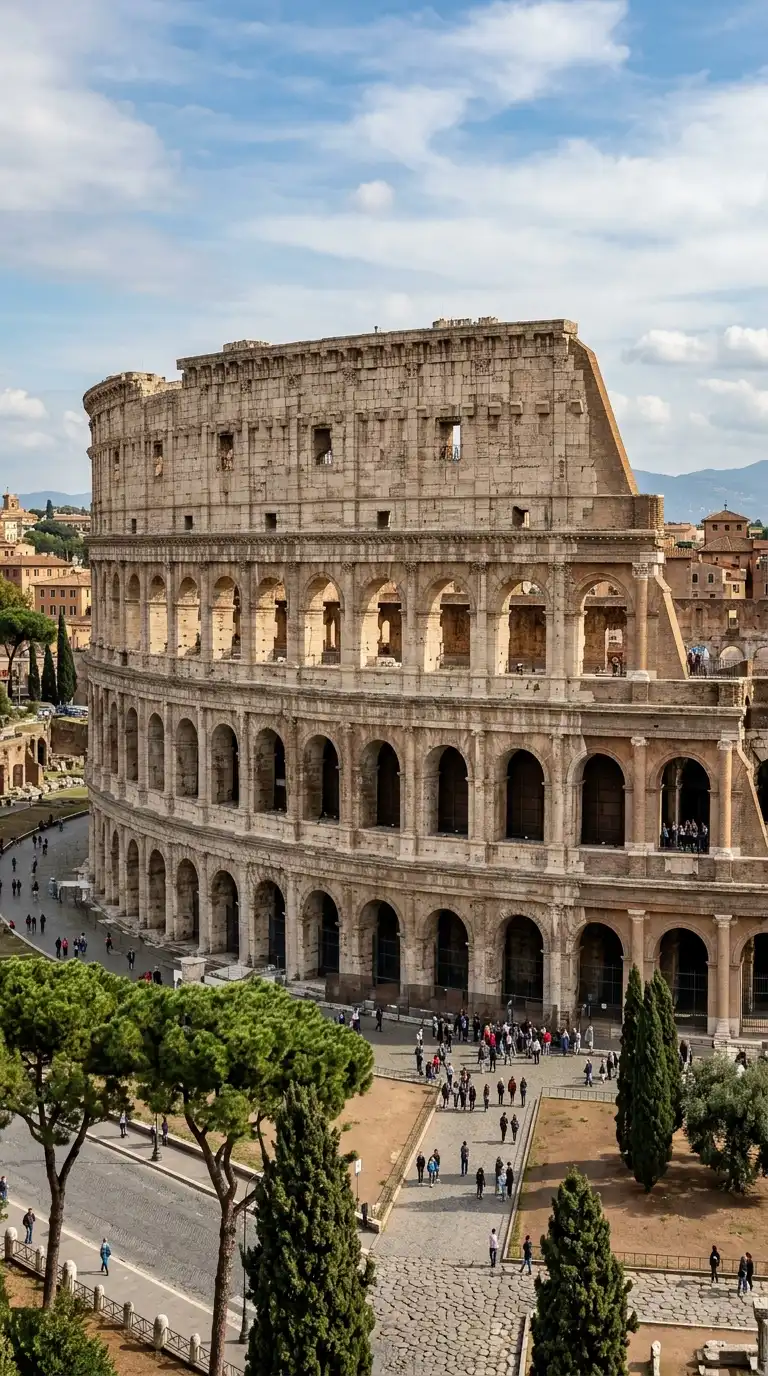
The amphitheatre is a Roman invention. Two theatres placed face to face create an oval arena surrounded by rising seating. The amphitheatre hosted gladiatorial combats, animal hunts, and executions. The seating is supported by concrete vaults and arches. The Colosseum in Rome is the defining example. The amphitheatre is monumental, public, and terrifying.
This design is ideal for arenas and stadiums. The emotional effect is monumental, public, and terrifying.
Quick Tips
- The plan must be an oval or ellipse.
- Seating should rise on all sides around a central arena.
- The exterior should have arched openings on multiple levels.
7. The Roman Basilica
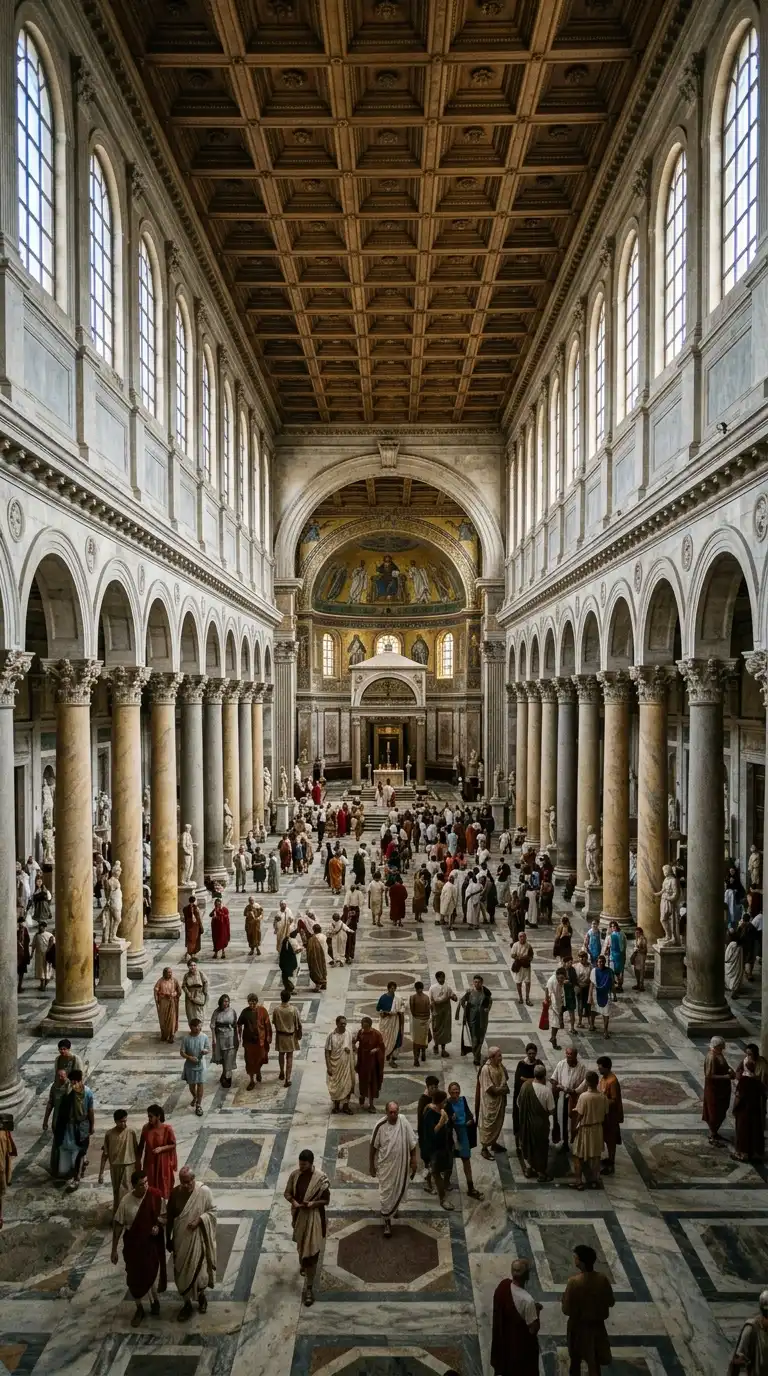
The Roman basilica was the law court and public hall. The plan is a long rectangle with a central nave and lower side aisles. The nave is lit by a clerestory — a row of windows above the aisle roofs. The apse at one or both ends held the magistrate’s tribunal. The Basilica of Maxentius and Constantine in Rome is the defining example. The basilica is axial, hierarchical, and public.
This design is ideal for law courts and public halls. The emotional effect is axial, hierarchical, and public.
Quick Tips
- The plan must be a long rectangle with a central nave and side aisles.
- The nave must be higher than the aisles with a clerestory.
- An apse must be at one or both ends.
8. The Roman Bathhouse (Thermae)
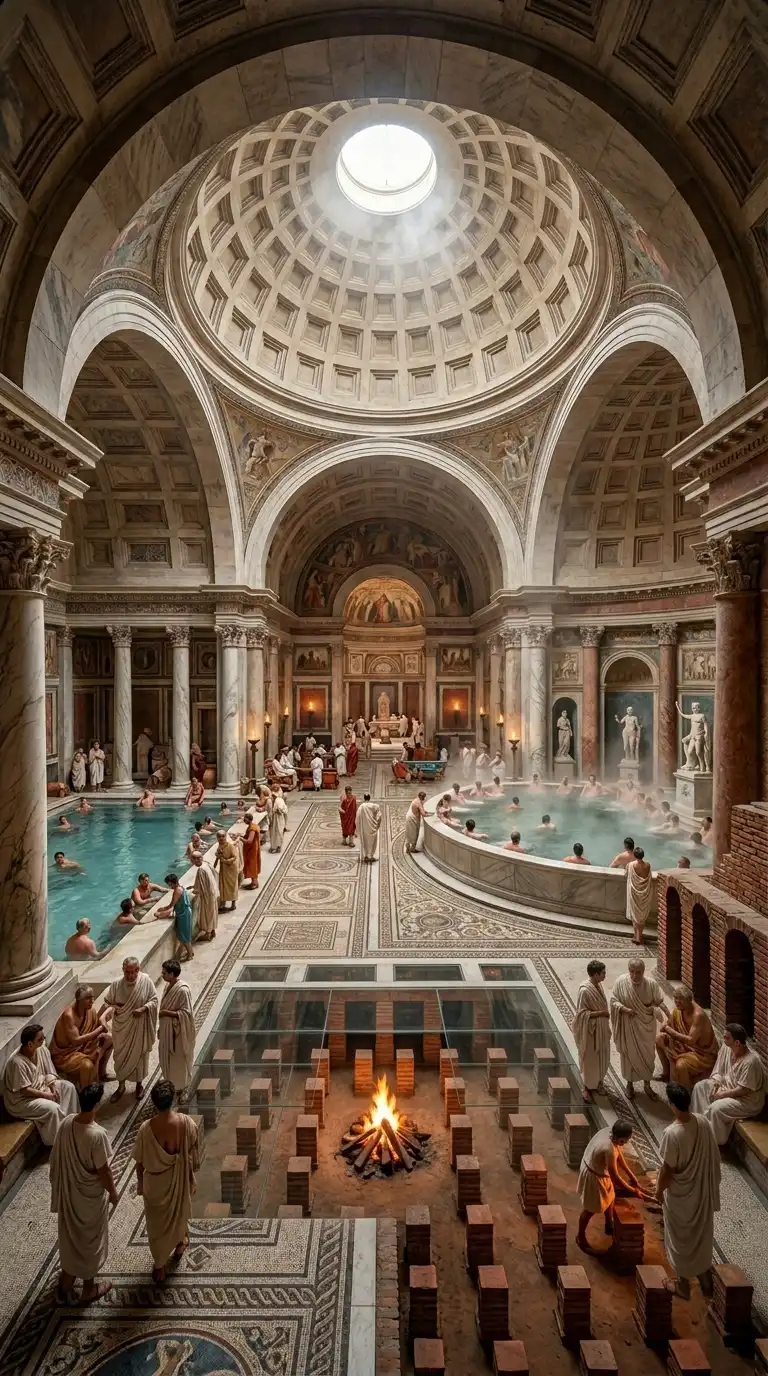
The Roman bathhouse was a public leisure complex. The plan is symmetrical, with a sequence of rooms: apodyterium (changing room), tepidarium (warm room), caldarium (hot room), and frigidarium (cold room). The rooms are heated by a hypocaust — a raised floor with hot air circulating beneath. The Baths of Caracalla in Rome are the defining example. The bathhouse is social, leisurely, and monumental.
This design is ideal for baths and leisure centres. The emotional effect is social, leisurely, and monumental.
Quick Tips
- The plan must be symmetrical with a sequence of heated rooms.
- The caldarium should be domed.
- The hypocaust system should be visible in section.
9. The Roman Dome (Pantheon)
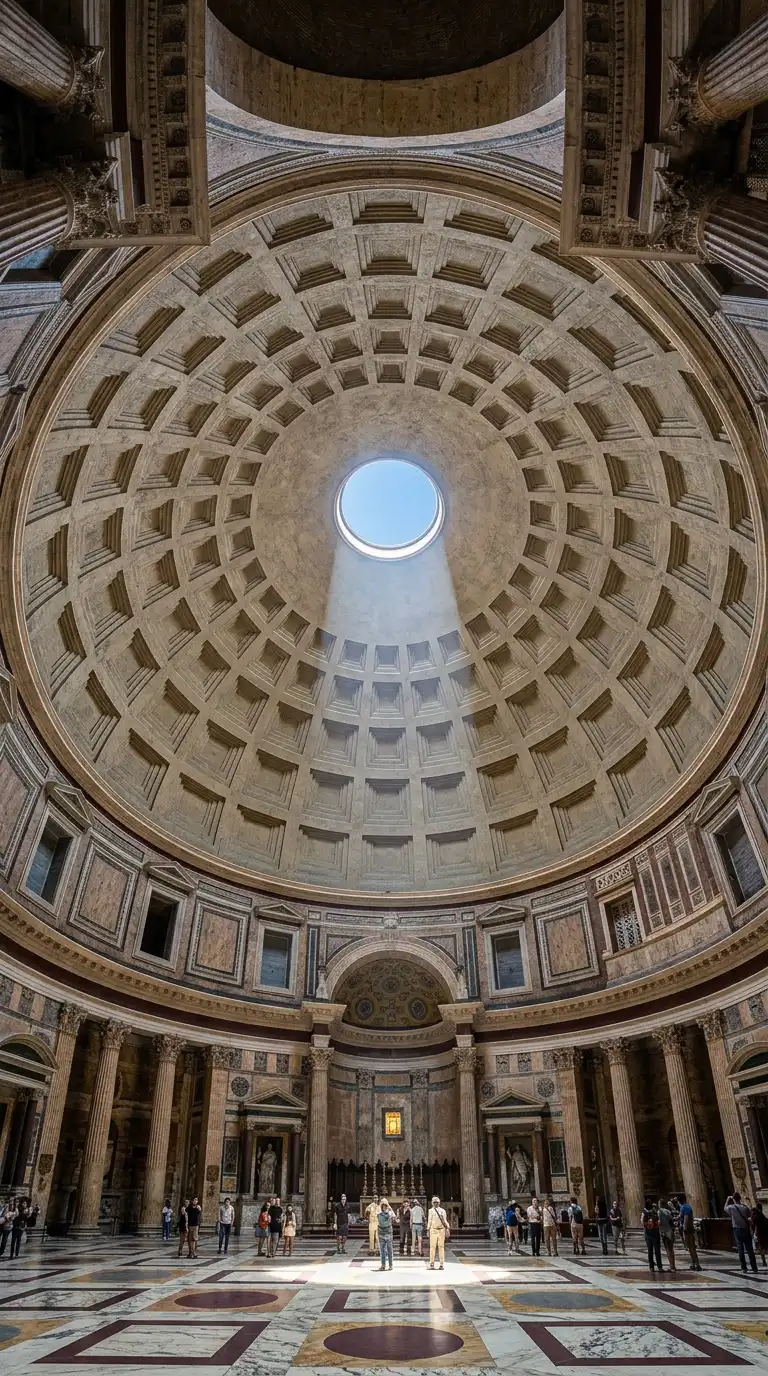
The Pantheon in Rome (126 CE) is the best-preserved Roman building. It is a rotunda with a domed ceiling. The dome is a hemisphere, with the height equal to half the span. The dome is coffered — the interior surface is divided into recessed panels that reduce weight. The oculus at the centre is open to the sky. The Pantheon is circular, domed, and celestial.
This design is ideal for churches and memorials. The emotional effect is circular, domed, and celestial.
Quick Tips
- The plan must be a circle.
- The dome must be a hemisphere (height = half the span).
- The oculus must be open to the sky.
10. The Roman Arch
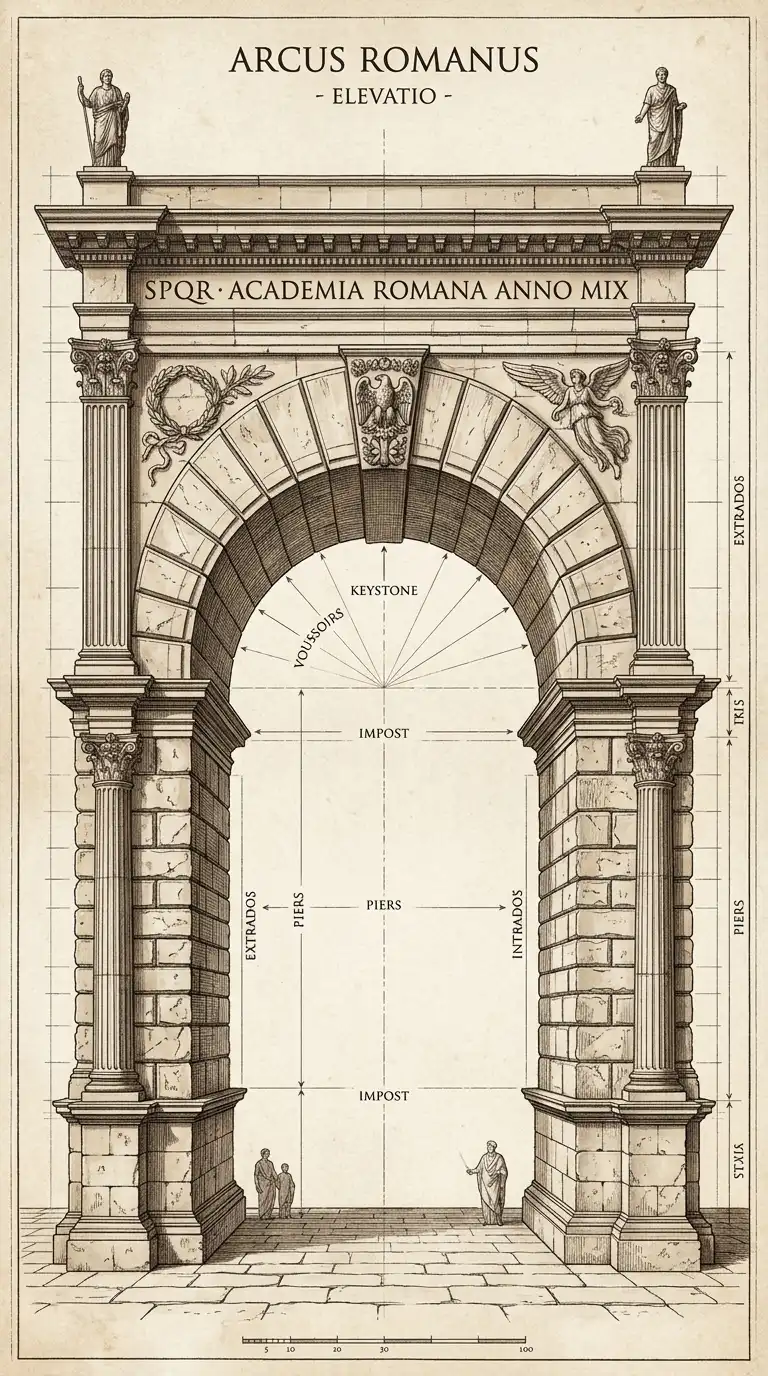
The Roman arch is a semicircular arched opening, supported by piers. The arch is made of wedge-shaped stones (voussoirs) that lock together. The arch can be repeated in arcades, aqueducts, and bridges. The arch is the basic unit of Roman engineering. The Roman arch is structural, rhythmic, and engineered.
This design is ideal for arcades, aqueducts, and bridges. The emotional effect is structural, rhythmic, and engineered.
Quick Tips
- The arch must be semicircular (half a circle).
- The voussoirs should be visible as wedge-shaped stones.
- The keystone at the centre should be emphasised.
11. The Roman Triumphal Arch
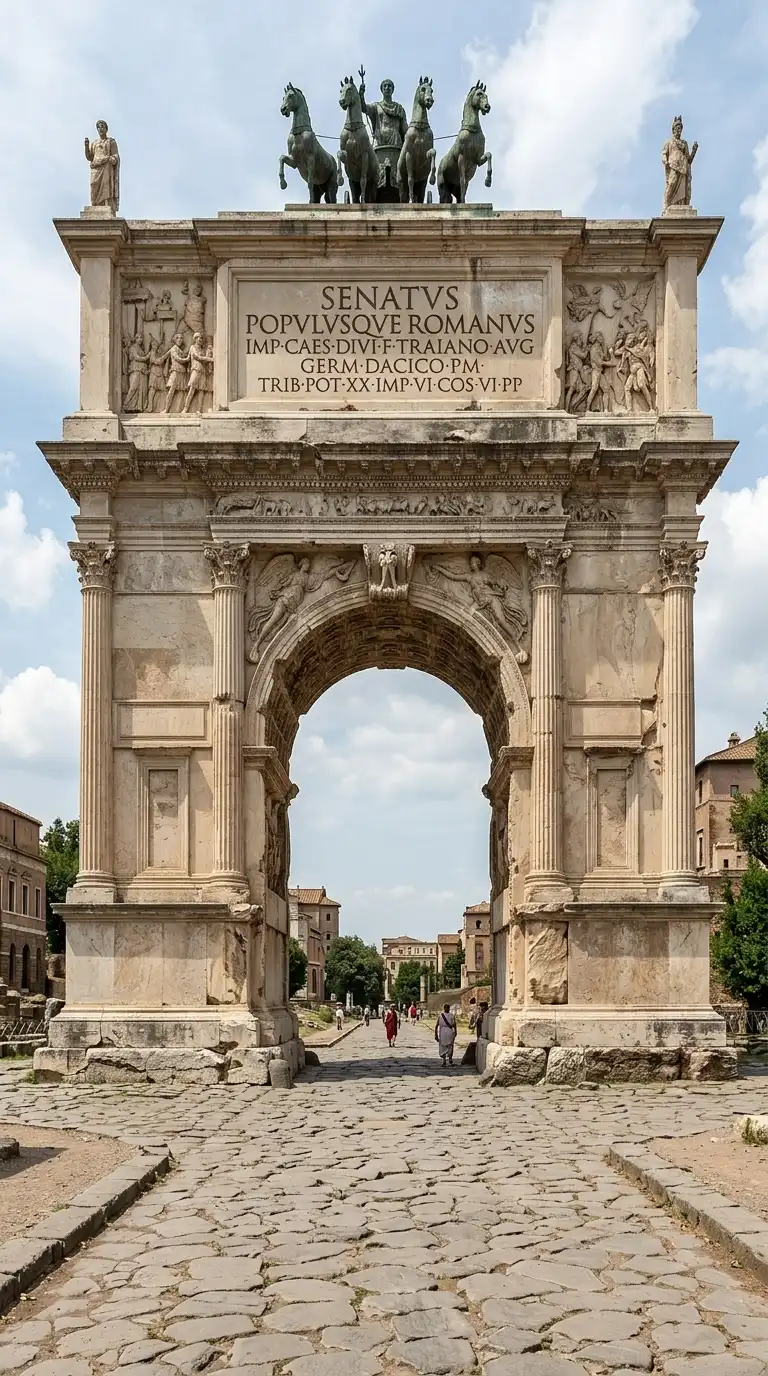
The triumphal arch is a free-standing arch commemorating a military victory. The arch has one large central opening (single arch) or three openings (triple arch). The arch is decorated with columns, pediments, and sculpted reliefs. The Arch of Titus in Rome (81 CE) and the Arch of Constantine in Rome (315 CE) are defining examples. The triumphal arch is commemorative, monumental, and heroic.
This design is ideal for memorials and gateways. The emotional effect is commemorative, monumental, and heroic.
Quick Tips
- The arch should be free-standing.
- The central opening should be arched, not lintelled.
- Columns should be engaged on the piers.
12. The Roman Forum
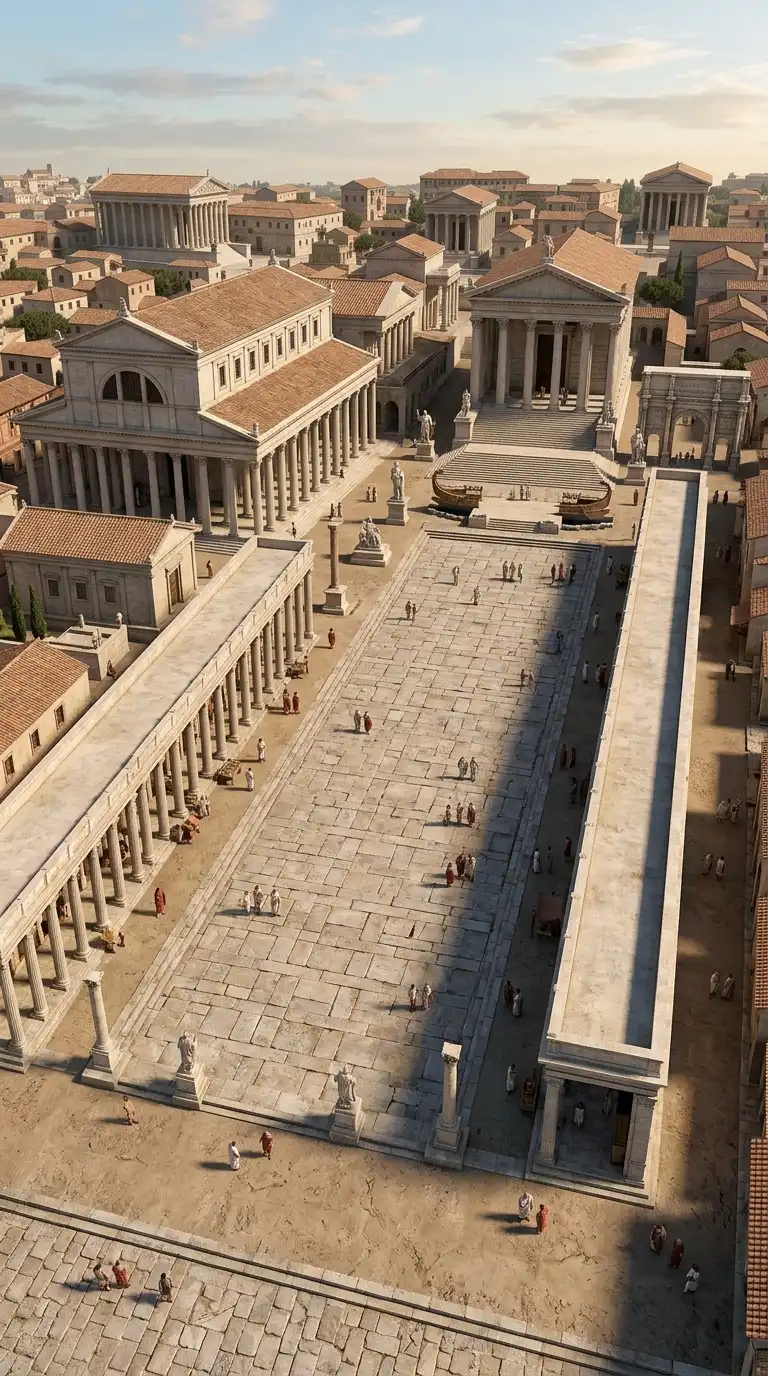
The Roman forum was the civic centre of a Roman city. The forum was a rectangular open space, surrounded by colonnades, basilicas, temples, and public buildings. The forum was the place for law, commerce, politics, and religion. The Roman Forum in Rome and the Forum of Trajan (112 CE) are defining examples. The forum is civic, public, and axial.
This design is ideal for civic centres and public squares. The emotional effect is civic, public, and axial.
Quick Tips
- The forum should be a rectangular open space.
- The forum should be surrounded by colonnades and public buildings.
- A temple should close the vista at one end.
Final Thoughts
These 12 classical designs are not mutually exclusive. A Roman forum can have a basilica and a triumphal arch. A Roman bathhouse can have a Pantheon-like dome. A Greek theatre can be part of a Roman city. The best classical architecture is not the most decorated — it is the most rational. It is the architecture of proportion, order, and reason. It is the architecture of Greece and Rome. It is the architecture of democracy and empire. It is the foundation. It is classical. It is eternal. It is the language of columns and pediments. It is the architecture of the West. It is classical. It is the beginning. It is classical. It is architecture. It is the ideal. It is the measure. It is classical.
