Skip to content
A hospital is not just a building with beds. It is a machine for healing. A well-designed hospital reduces stress, improves outcomes, and supports staff. It is calm, efficient, and safe. The best hospitals are not intimidating — they are welcoming. They are not confusing — they are legible. They are not cold — they are warm.
These 12 hospital design architecture ideas span planning strategies, patient room designs, and public spaces. Each design includes defining characteristics, operational principles, and patient experience strategies.
1. The Radial Plan Hospital
The radial plan hospital has a central core with wings radiating outward like spokes from a wheel. The core contains diagnostic and treatment services. The wings contain patient rooms. The radial plan is efficient and legible. The radial plan is centralised, radiating, and efficient.
This design is ideal for large hospitals on flat sites. The emotional effect is centralised, radiating, and efficient.
Quick Tips
- The core must contain diagnostic and treatment services.
- Wings must contain patient rooms.
- The radial plan minimises walking distances.

2. The Finger Plan Hospital
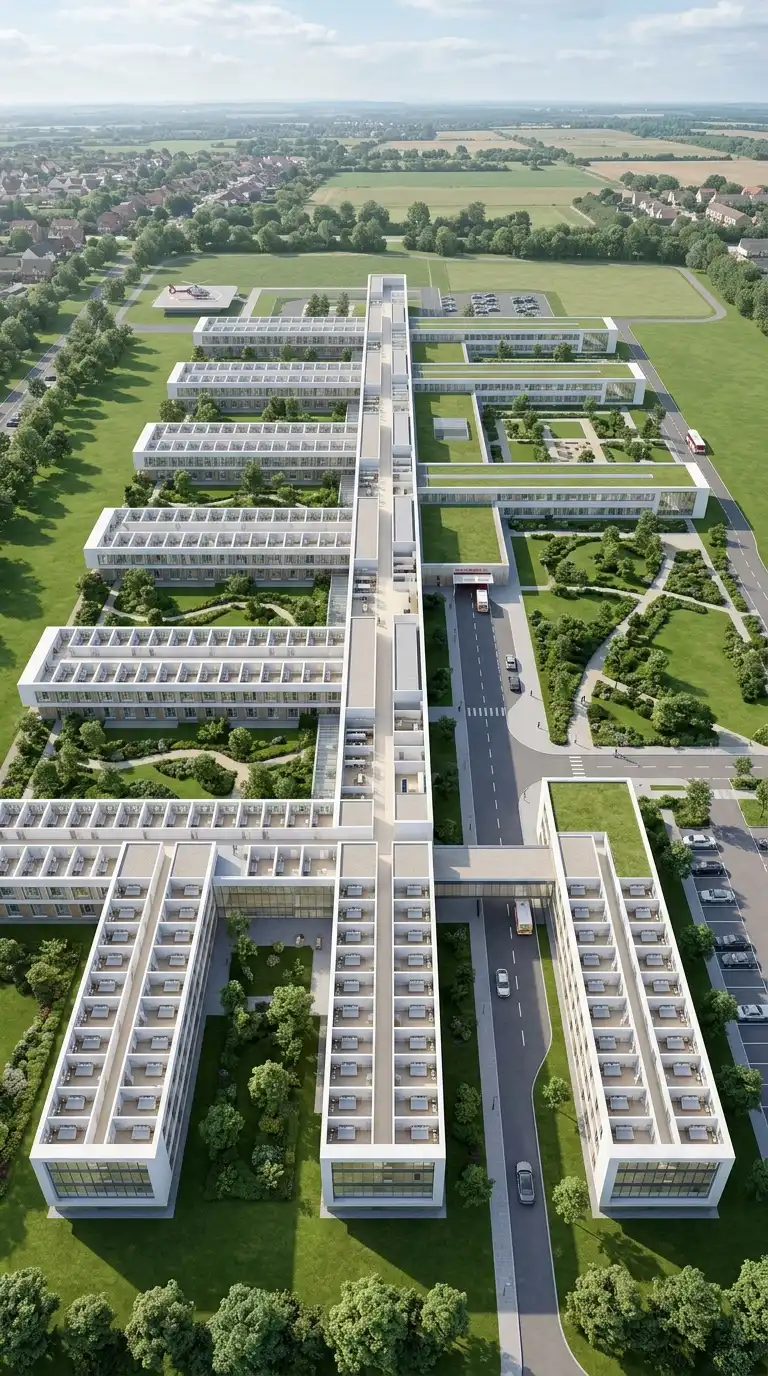
The finger plan hospital has a central spine with fingers of patient rooms extending perpendicularly. The spine contains circulation and services. The fingers contain patient rooms with windows at both ends. The finger plan is linear, ventilated, and efficient.
This design is ideal for hospitals on narrow sites. The emotional effect is linear, ventilated, and efficient.
Quick Tips
- The spine must contain circulation and services.
- Fingers must contain patient rooms.
- Patient rooms must have windows at both ends for cross-ventilation.
3. The Courtyard Hospital
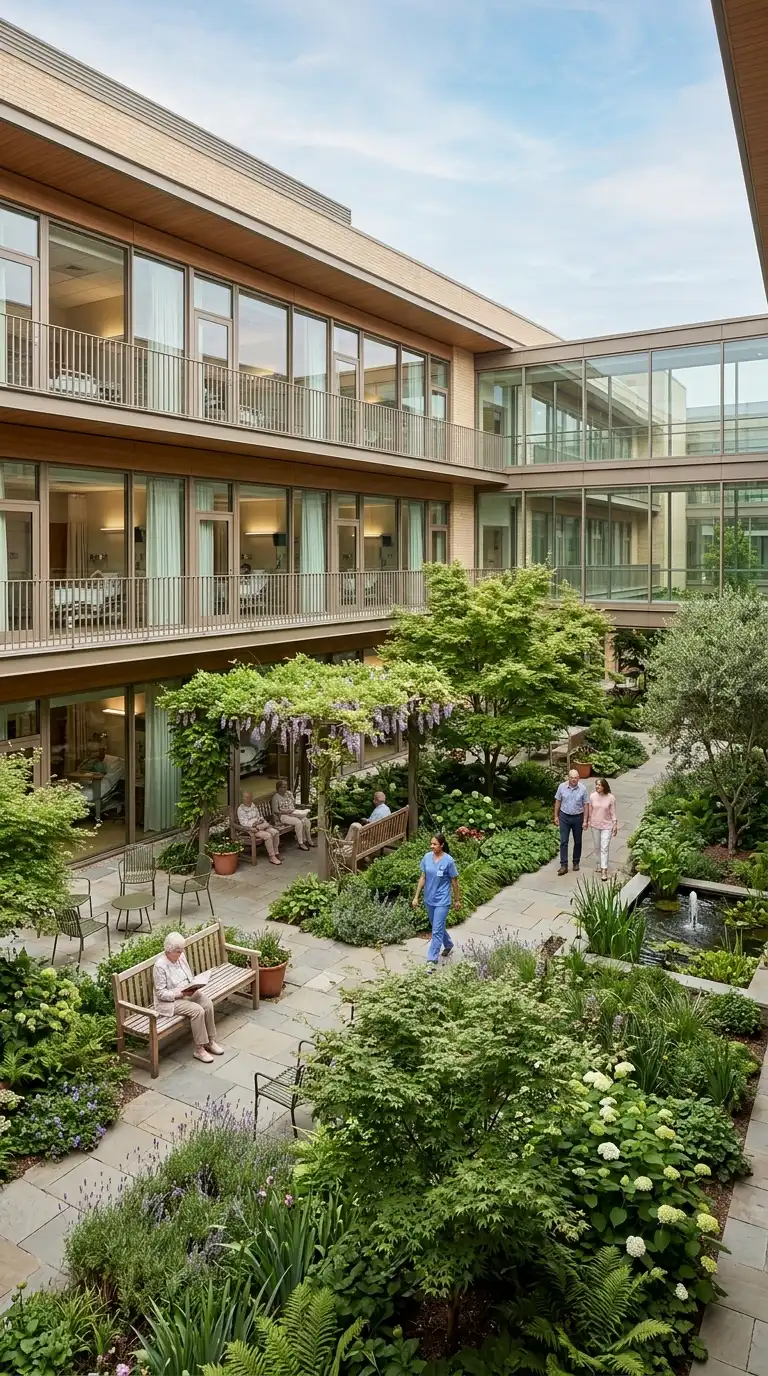
The courtyard hospital wraps patient rooms around a central courtyard. The courtyard provides light, air, and a garden view. The courtyard is a place for patients, families, and staff to rest. The courtyard hospital is calm, garden-centred, and healing.
This design is ideal for hospitals in warm climates. The emotional effect is calm, garden-centred, and healing.
Quick Tips
- The courtyard must be at least 10×10 metres.
- Patient rooms must face the courtyard.
- The courtyard must have a garden, seating, and shade.
4. The Atrium Hospital
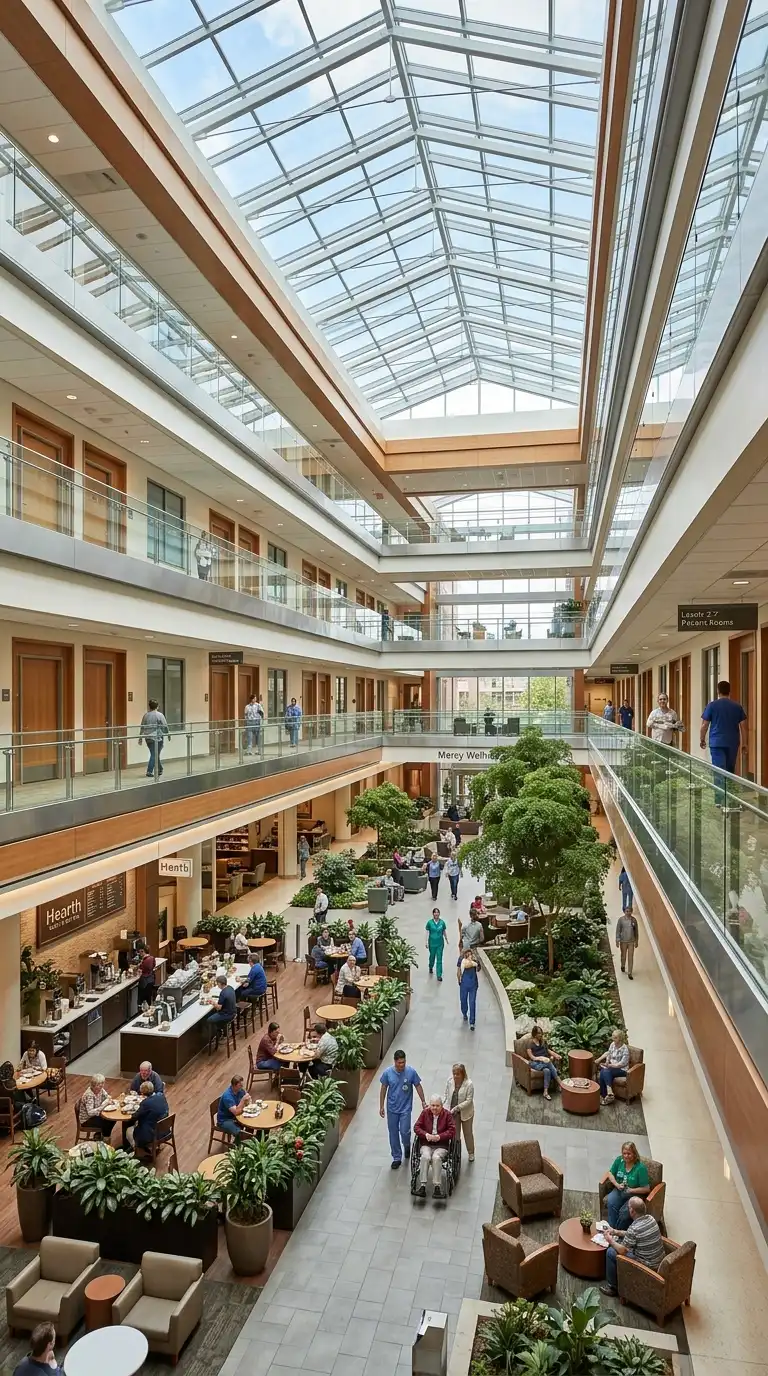
The atrium hospital has a large central atrium open to the sky. The atrium is the heart of the hospital — a place for orientation, rest, and gathering. Patient rooms are on the upper floors. The atrium hospital is luminous, vertical, and welcoming.
This design is ideal for urban hospitals on small sites. The emotional effect is luminous, vertical, and welcoming.
Quick Tips
- The atrium must be at least 6 metres wide.
- Patient rooms must be on upper floors.
- The atrium must have seating, plants, and a cafe.
5. The Single-Patient Room
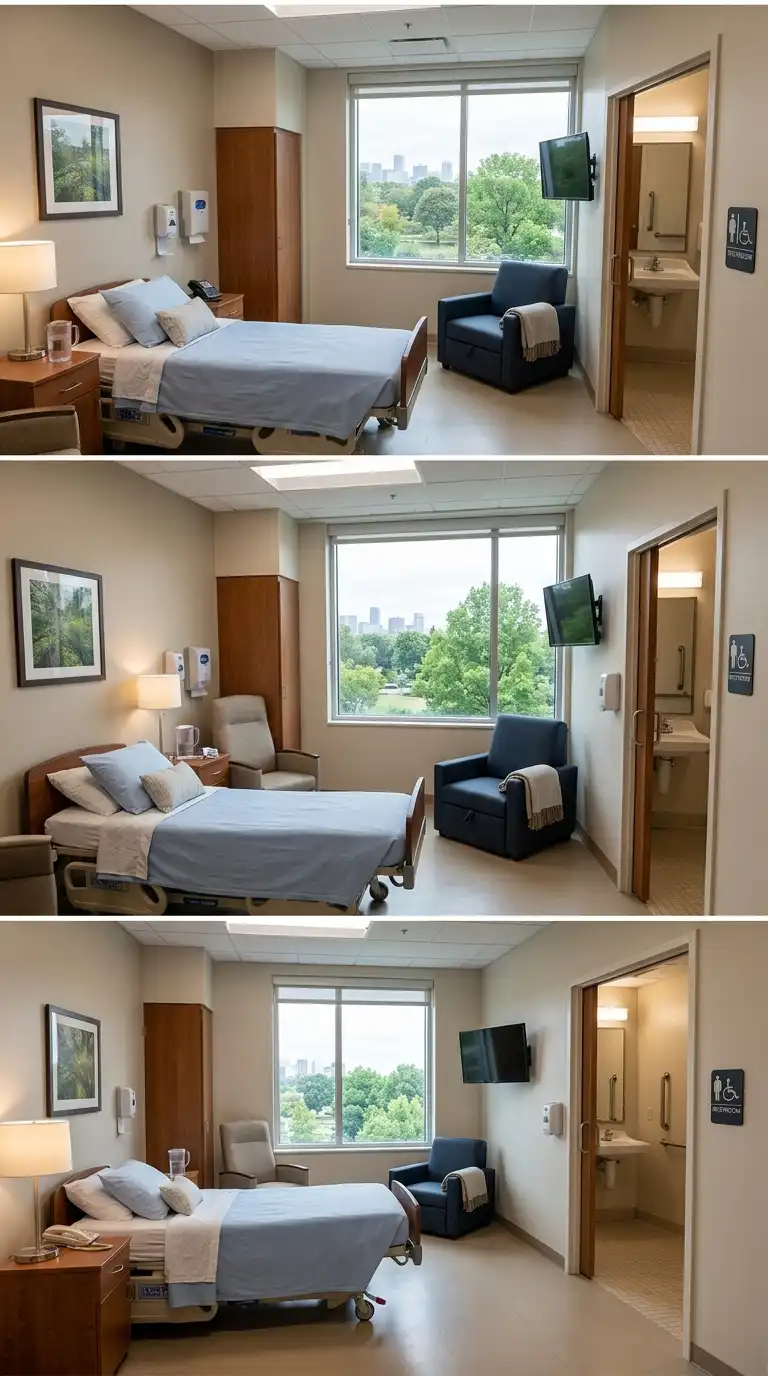
The single-patient room is the standard for modern hospitals. The room has one bed, a window, a bathroom, and space for a family member to stay overnight. The single-patient room reduces infection, improves sleep, and supports family. The single-patient room is private, healing, and family-centred.
This design is ideal for all hospitals. The emotional effect is private, healing, and family-centred.
Quick Tips
- The room must have one bed.
- The room must have a window with a view.
- The room must have a chair that converts to a bed for a family member.
6. The Intensive Care Unit (ICU)
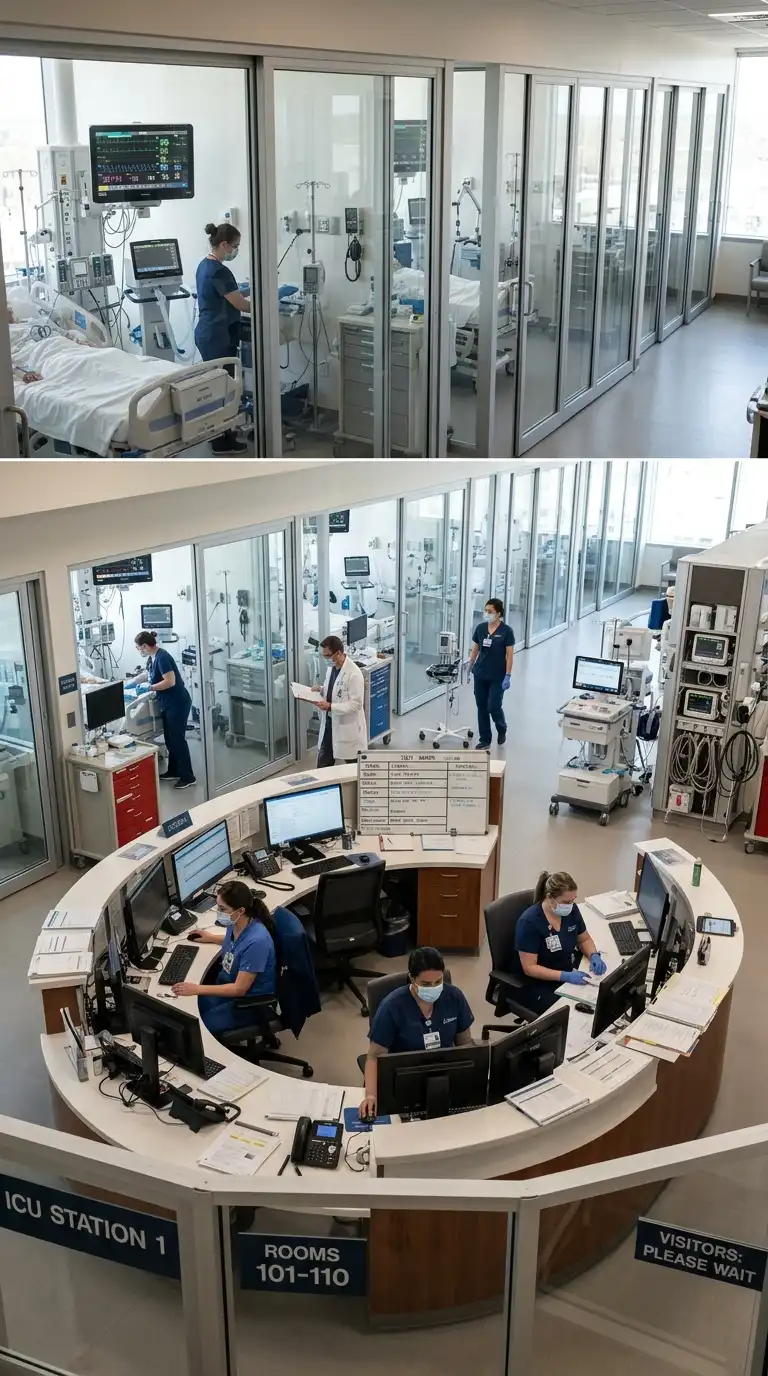
The ICU is a high-acuity unit for critically ill patients. The ICU has large windows into each patient room so staff can see patients at all times. The ICU has a central nursing station. The ICU is high-tech, visible, and efficient.
This design is ideal for intensive care. The emotional effect is high-tech, visible, and efficient.
Quick Tips
- Each patient room must have a large window for visibility.
- The nursing station must be central.
- Equipment must be accessible but not intrusive.
7. The Emergency Department
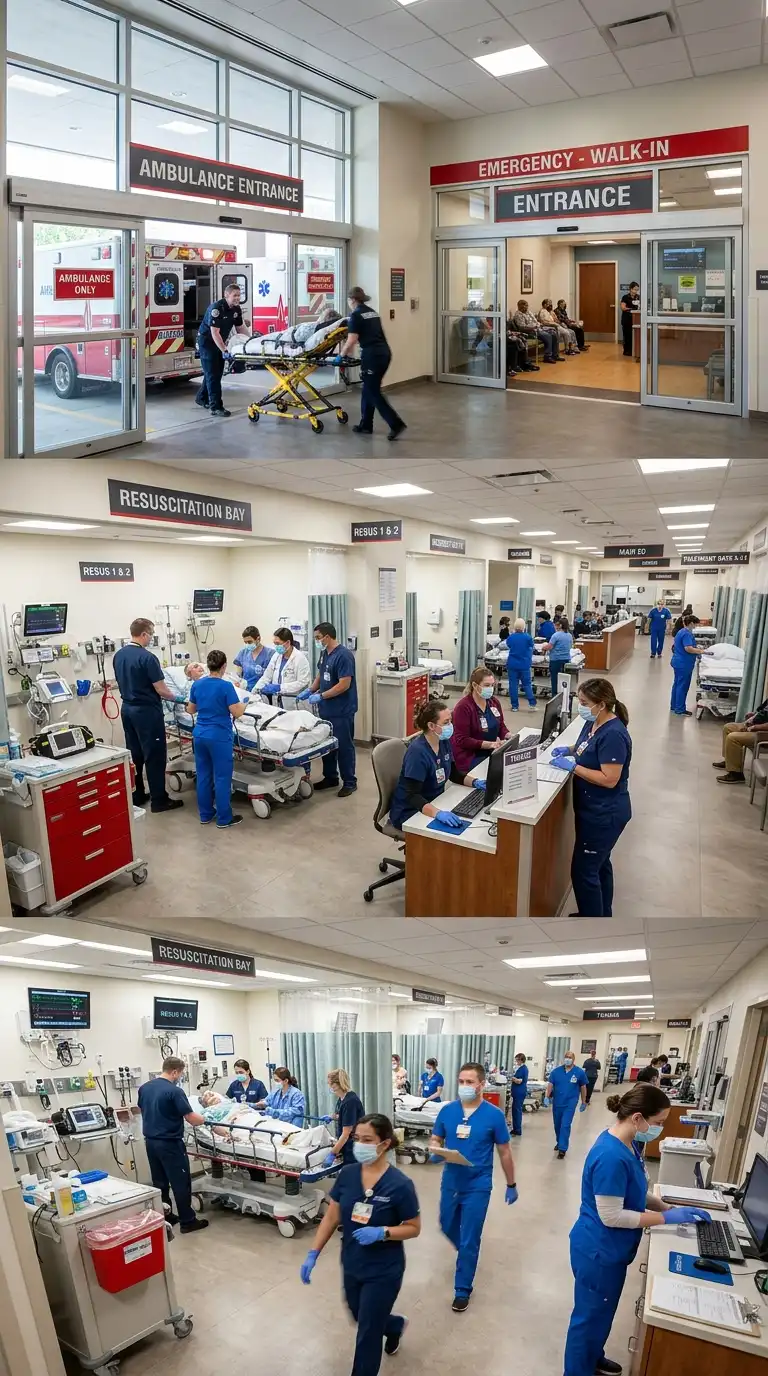
The emergency department is the front door of the hospital. It has a dedicated entrance for ambulances and a separate entrance for walk-in patients. The ED has triage, treatment rooms, a resuscitation bay, and a waiting area. The ED is fast, efficient, and organised.
This design is ideal for emergency care. The emotional effect is fast, efficient, and organised.
Quick Tips
- Ambulance entrance and walk-in entrance must be separate.
- Triage must be at the entrance.
- Resuscitation bay must be near the ambulance entrance.
8. The Operating Suite
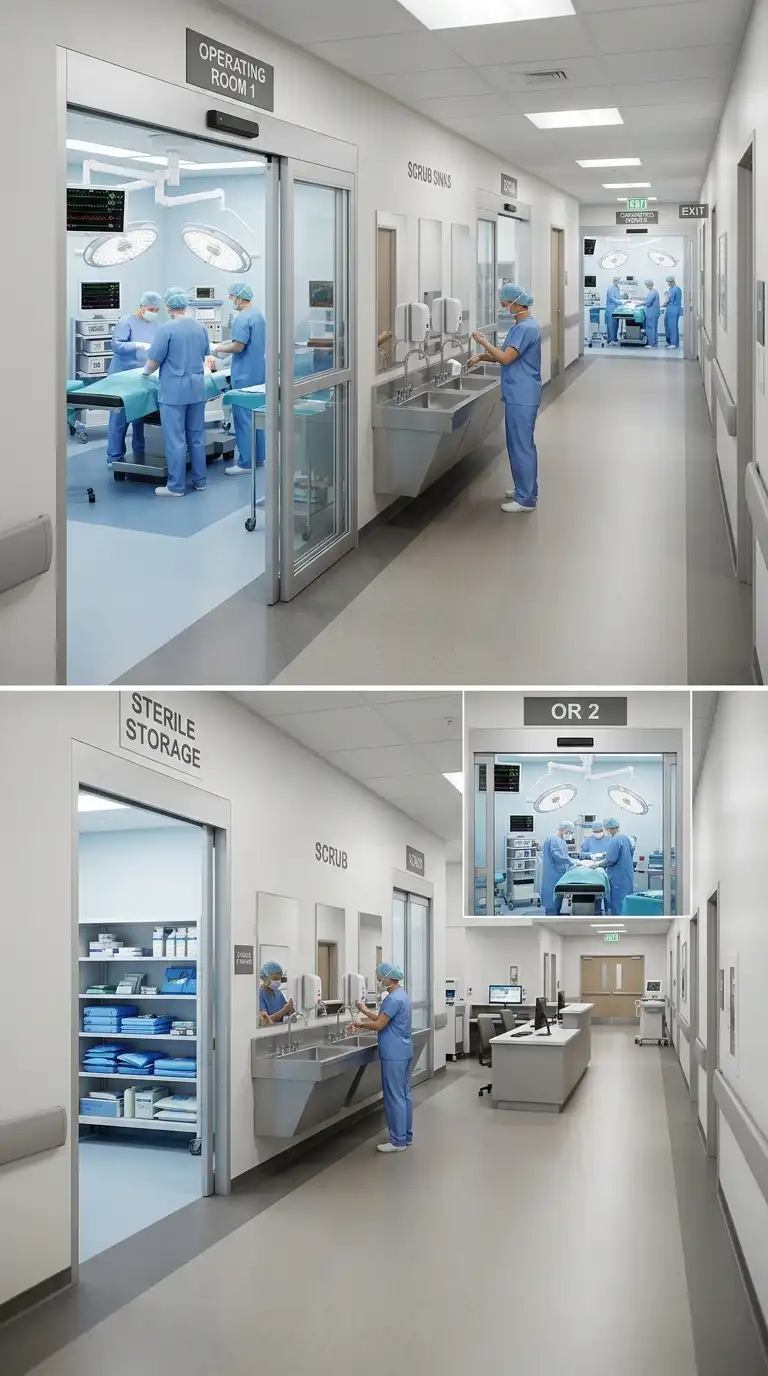
The operating suite is a cluster of operating rooms, scrub areas, and sterile storage. The operating rooms are large and windowless. The scrub area is between the ORs. The sterile storage is nearby. The operating suite is sterile, efficient, and high-tech.
This design is ideal for surgery. The emotional effect is sterile, efficient, and high-tech.
Quick Tips
- Operating rooms must be large (at least 6×6 metres).
- Scrub areas must be between ORs.
- Sterile storage must be nearby.
9. The Maternity Ward
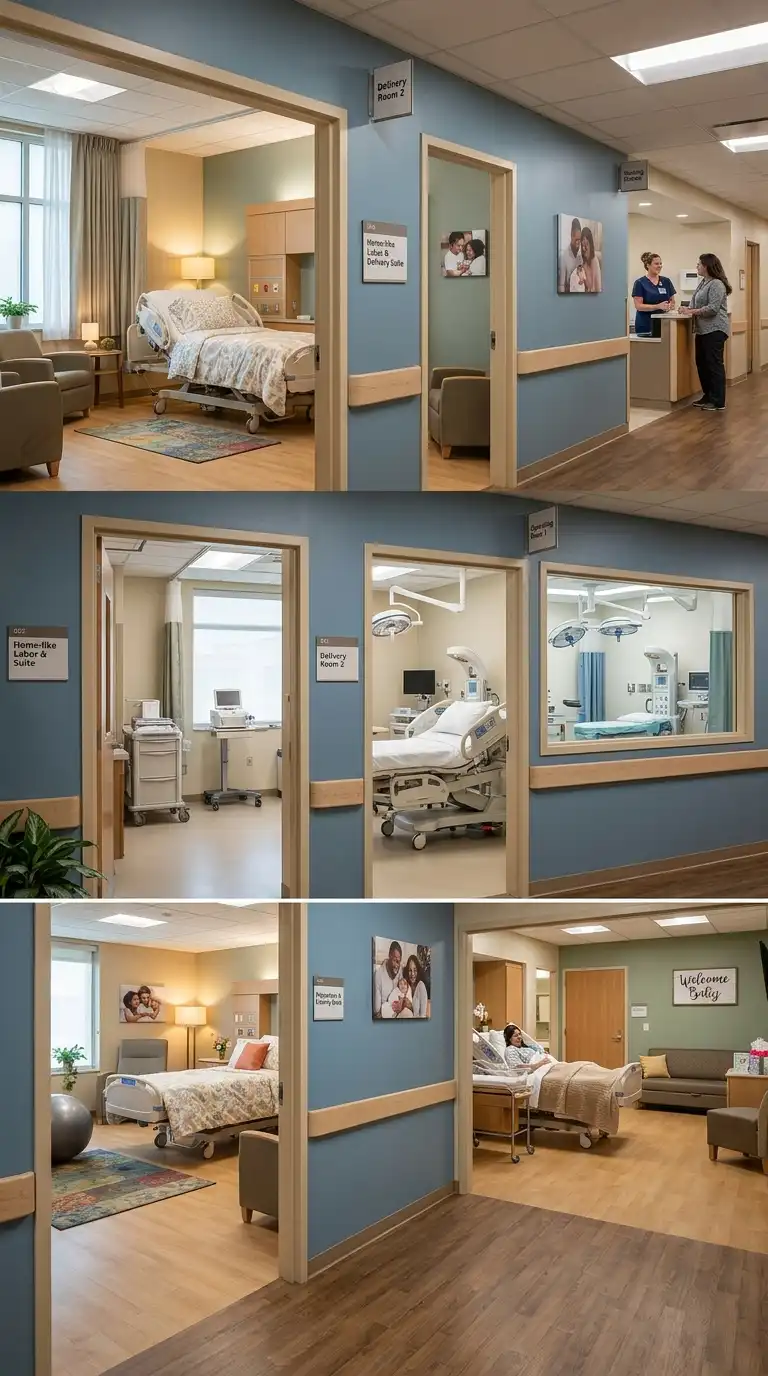
The maternity ward is designed for childbirth and postpartum care. The ward has labour rooms, delivery rooms, postpartum rooms, and a nursery. The labour rooms are large and home-like. The maternity ward is warm, home-like, and family-centred.
This design is ideal for childbirth. The emotional effect is warm, home-like, and family-centred.
Quick Tips
- Labour rooms should be home-like (not clinical).
- Delivery rooms must be adjacent to operating rooms for emergencies.
- Postpartum rooms should have space for the baby and family.
10. The Paediatric Ward
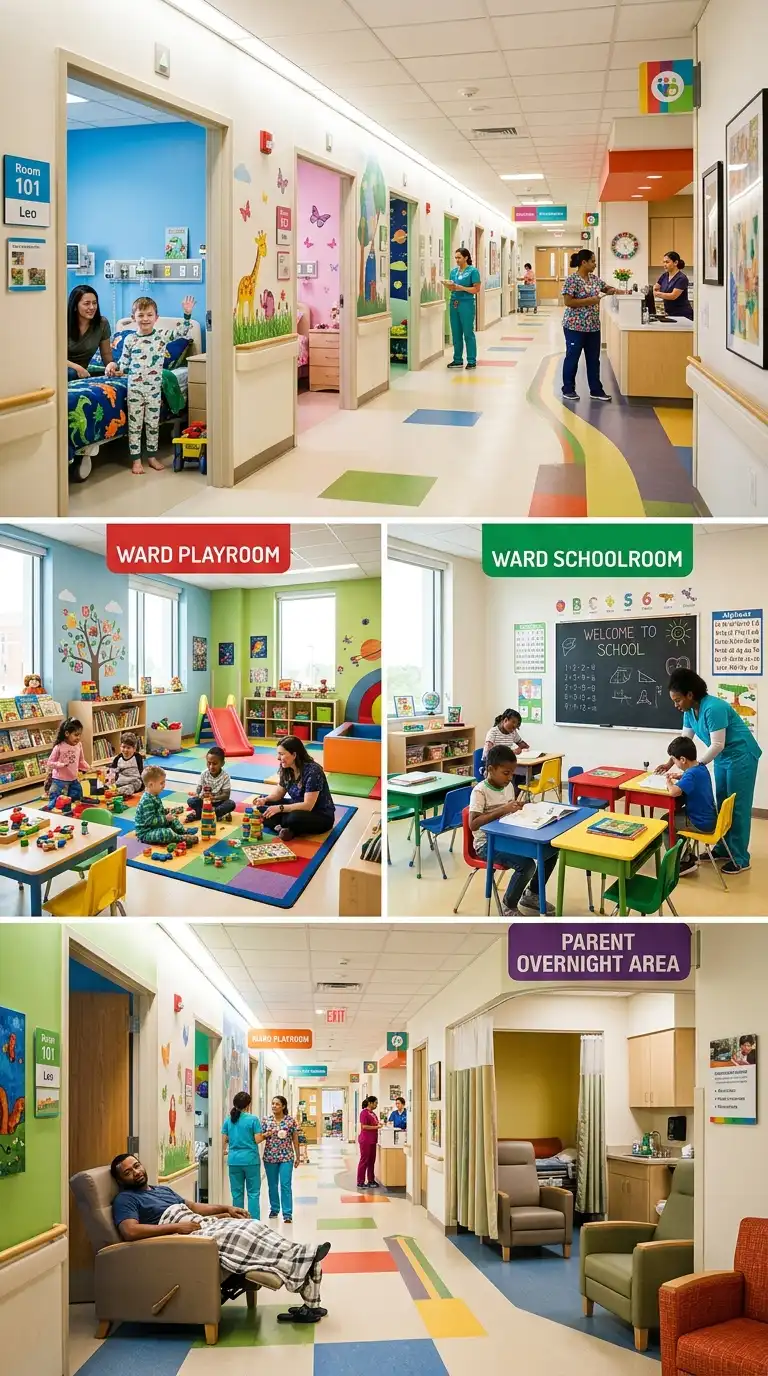
The paediatric ward is designed for children. The rooms are colourful and playful. The ward has a playroom, a schoolroom, and spaces for parents to stay. The paediatric ward is child-friendly, colourful, and family-centred.
This design is ideal for children. The emotional effect is child-friendly, colourful, and family-centred.
Quick Tips
- Patient rooms should be colourful and playful.
- A playroom and schoolroom must be provided.
- Parents must have space to stay overnight.
11. The Mental Health Unit
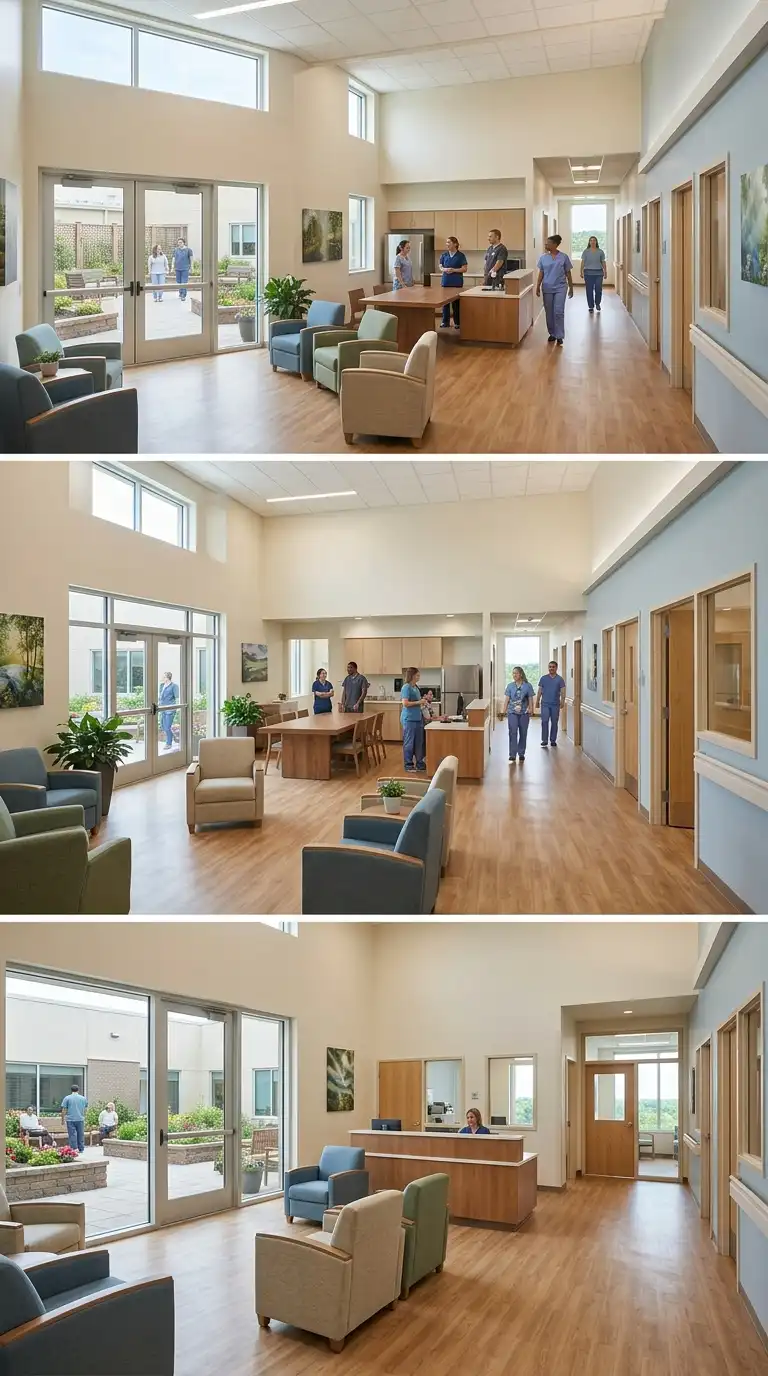
The mental health unit is designed for safety and calm. The unit has private rooms, common areas, and outdoor space. The unit is secure but not prison-like. The mental health unit is safe, calm, and therapeutic.
This design is ideal for mental health care. The emotional effect is safe, calm, and therapeutic.
Quick Tips
- The unit must be secure but not institutional.
- Private rooms must have windows with natural light.
- Outdoor space must be accessible and secure.
12. The Healing Garden
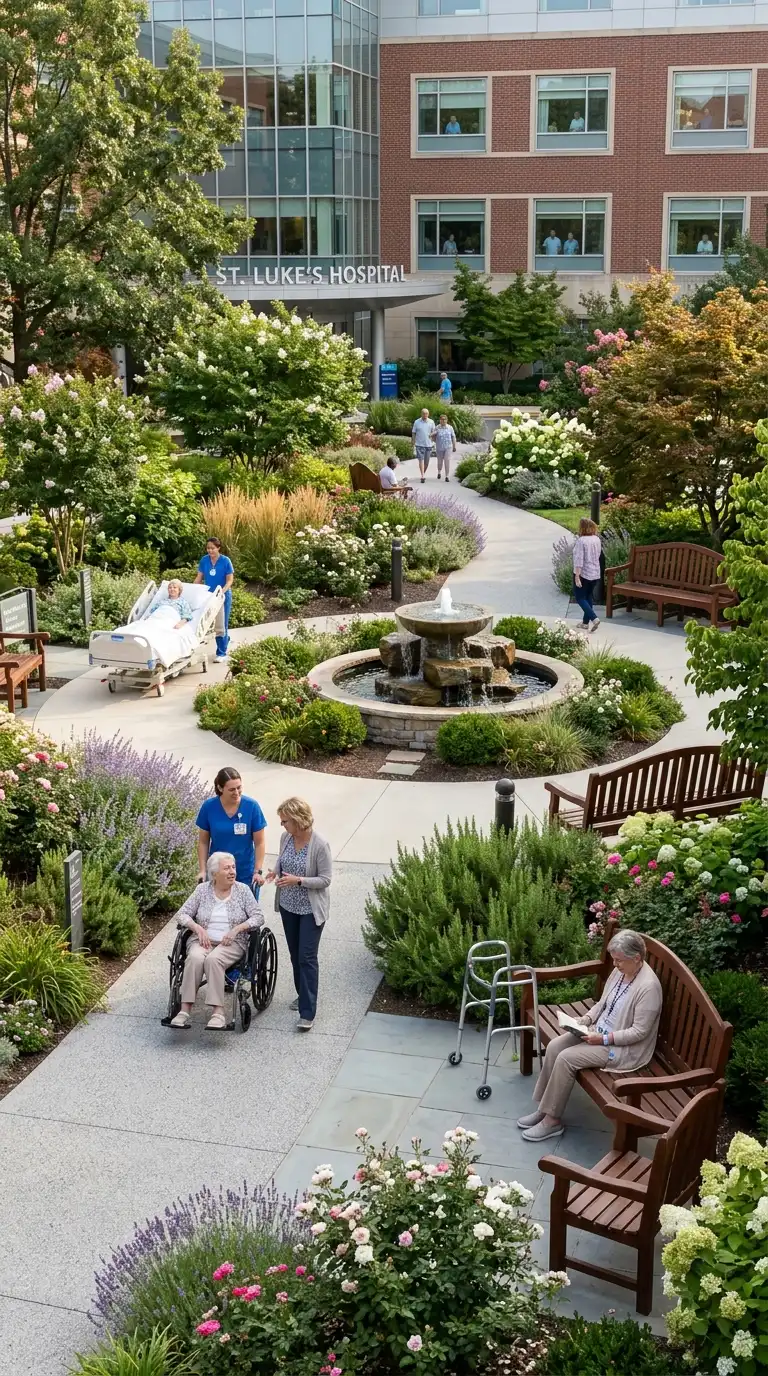
The healing garden is an outdoor space for patients, families, and staff. The garden has accessible paths, comfortable seating, shade, and plants. The healing garden reduces stress, lowers blood pressure, and speeds recovery. The healing garden is calm, restorative, and accessible.
This design is ideal for all hospitals. The emotional effect is calm, restorative, and accessible.
Quick Tips
- Paths must be wide enough for wheelchairs and beds (at least 2 metres).
- Seating must include benches with backs and armrests.
- Plants must be fragrant and non-allergenic.