Skip to content
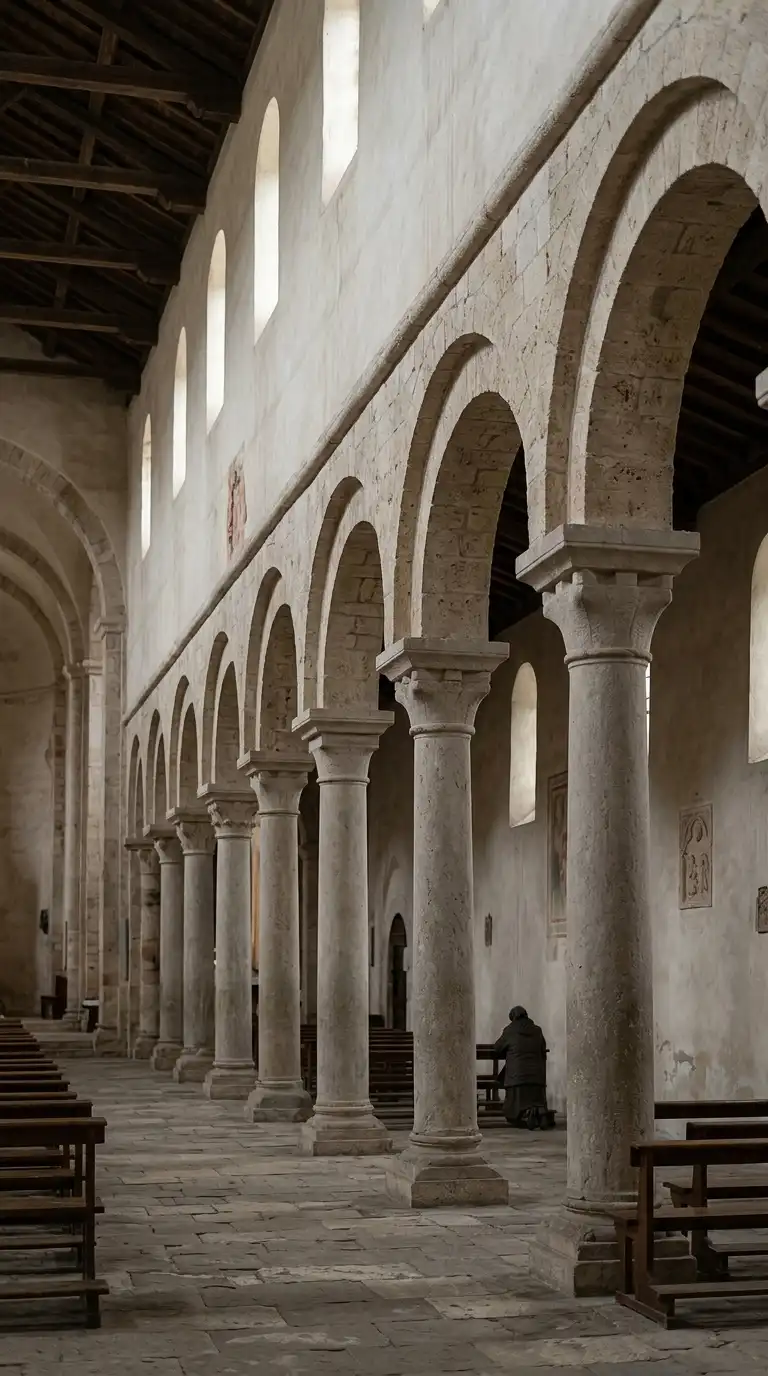
Romanesque architecture was the first pan-European style since Rome. It flourished from roughly 1000 to 1200 AD. Romanesque means “descended from Rome” — and indeed, Romanesque buildings used Roman arches, Roman vaults, and Roman concrete. But Romanesque is not Roman. It is heavier, darker, and more fortress-like. Romanesque churches are solid, defensive, and mysterious. They are the architecture of pilgrimage and faith.
These 12 Romanesque architecture ideas span churches, monasteries, and civic buildings. Each design includes defining characteristics, construction principles, and spiritual strategies.
1. The Pilgrimage Church
The pilgrimage church was built along the routes to Santiago de Compostela. The plan has a nave, side aisles, a transept, an ambulatory, and radiating chapels. The plan accommodated crowds of pilgrims moving toward the relics. The pilgrimage church is axial, processional, and pilgrim-friendly.
This design is ideal for cathedrals and large churches. The emotional effect is axial, processional, and pilgrim-friendly.
Quick Tips
- The plan must have a nave, side aisles, transept, ambulatory, and radiating chapels.
- The ambulatory must allow pilgrims to circulate without disturbing services.
- The crypt must contain relics.
2. The Stone Barrel Vault
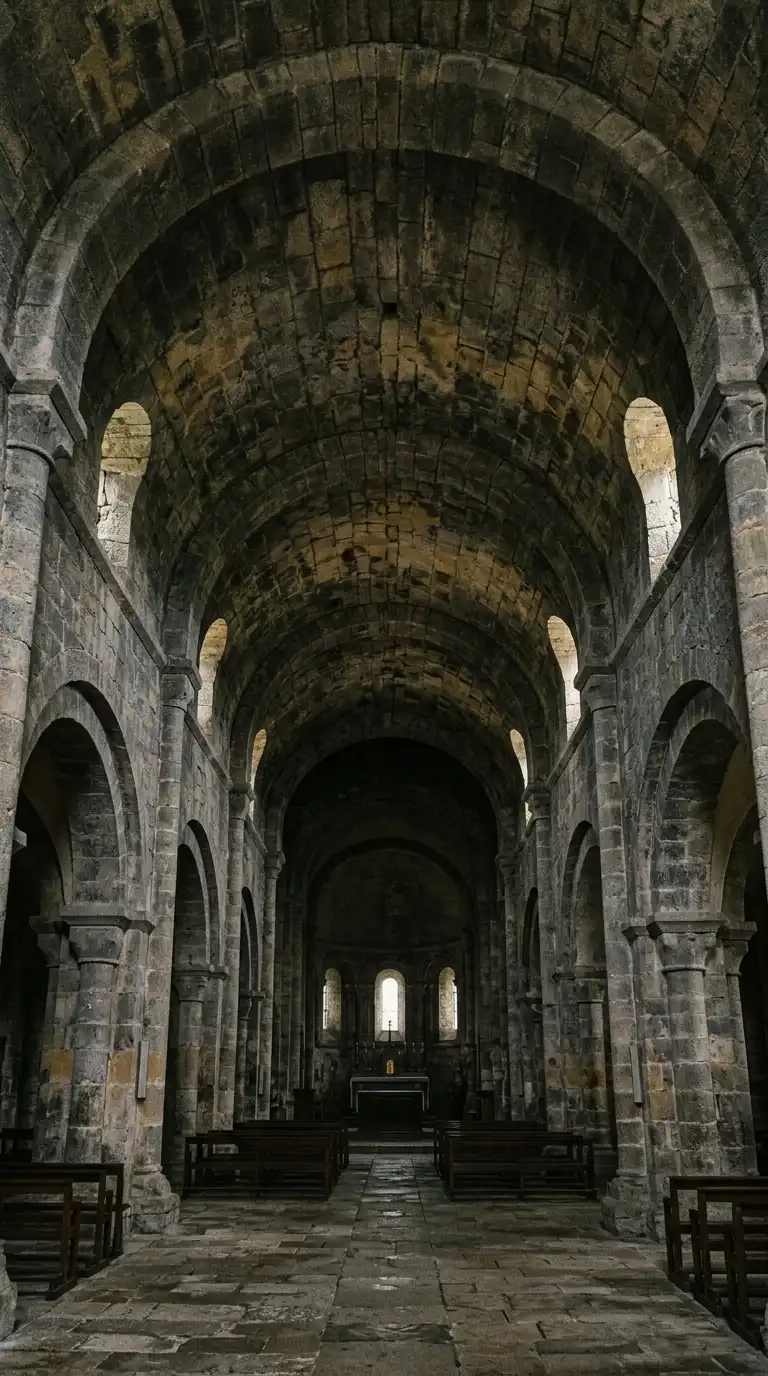
The stone barrel vault is a continuous semicircular vault of stone. It is heavy and strong. The barrel vault requires thick walls to resist the outward thrust. The barrel vault creates a dark, resonant interior. The stone barrel vault is heavy, dark, and structural.
This design is ideal for naves and crypts. The emotional effect is heavy, dark, and structural.
Quick Tips
- The vault must be a continuous semicircular arch.
- The vault must be stone.
- The walls must be thick to resist thrust.
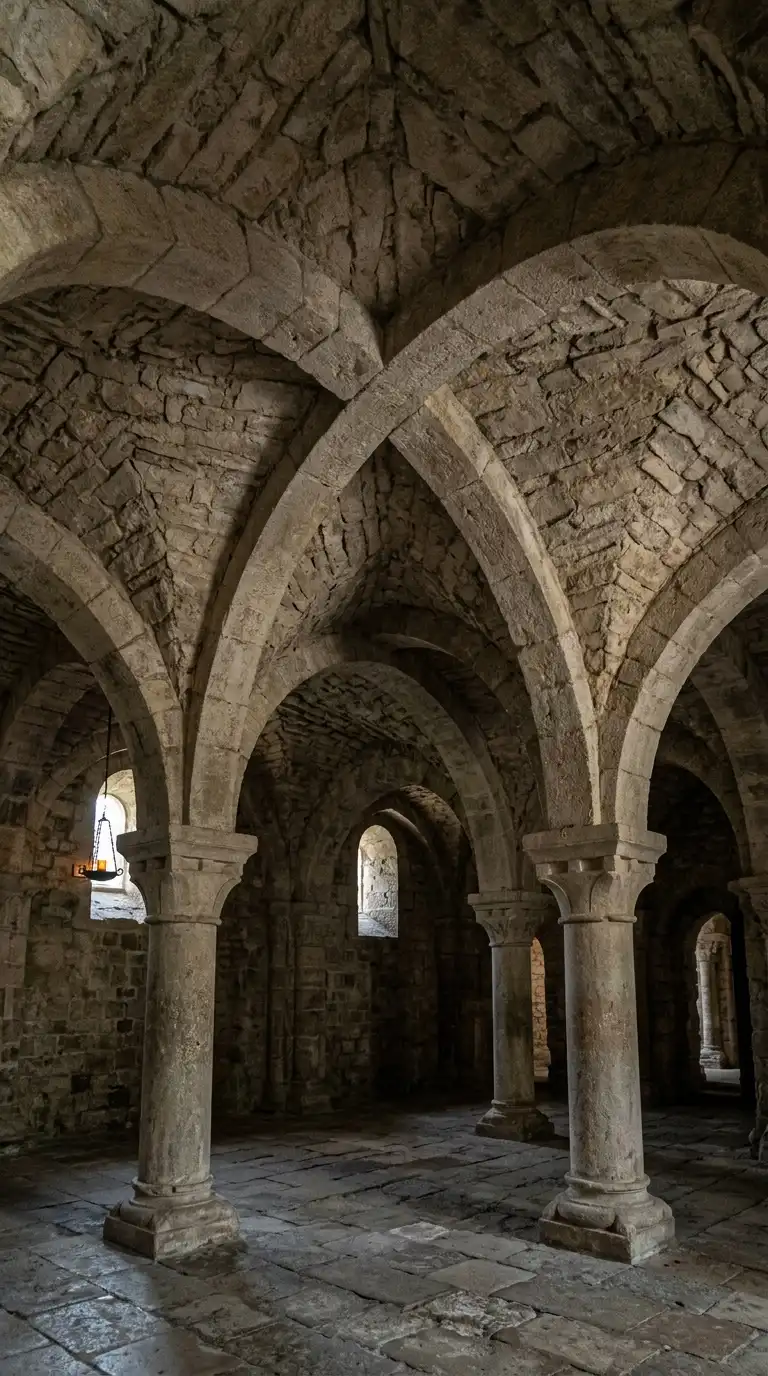
3. The Groin Vault
The groin vault is formed by two barrel vaults intersecting at right angles. The intersection creates a groin (a curved edge). The groin vault concentrates loads at the four corners. It is lighter and more efficient than a barrel vault. The groin vault is intersecting, lighter, and structural.
This design is ideal for side aisles and crypts. The emotional effect is intersecting, lighter, and structural.
Quick Tips
- Two barrel vaults must intersect at right angles.
- The groins are the curved intersections.
- Loads are concentrated at the four corners.
4. The Round Arch
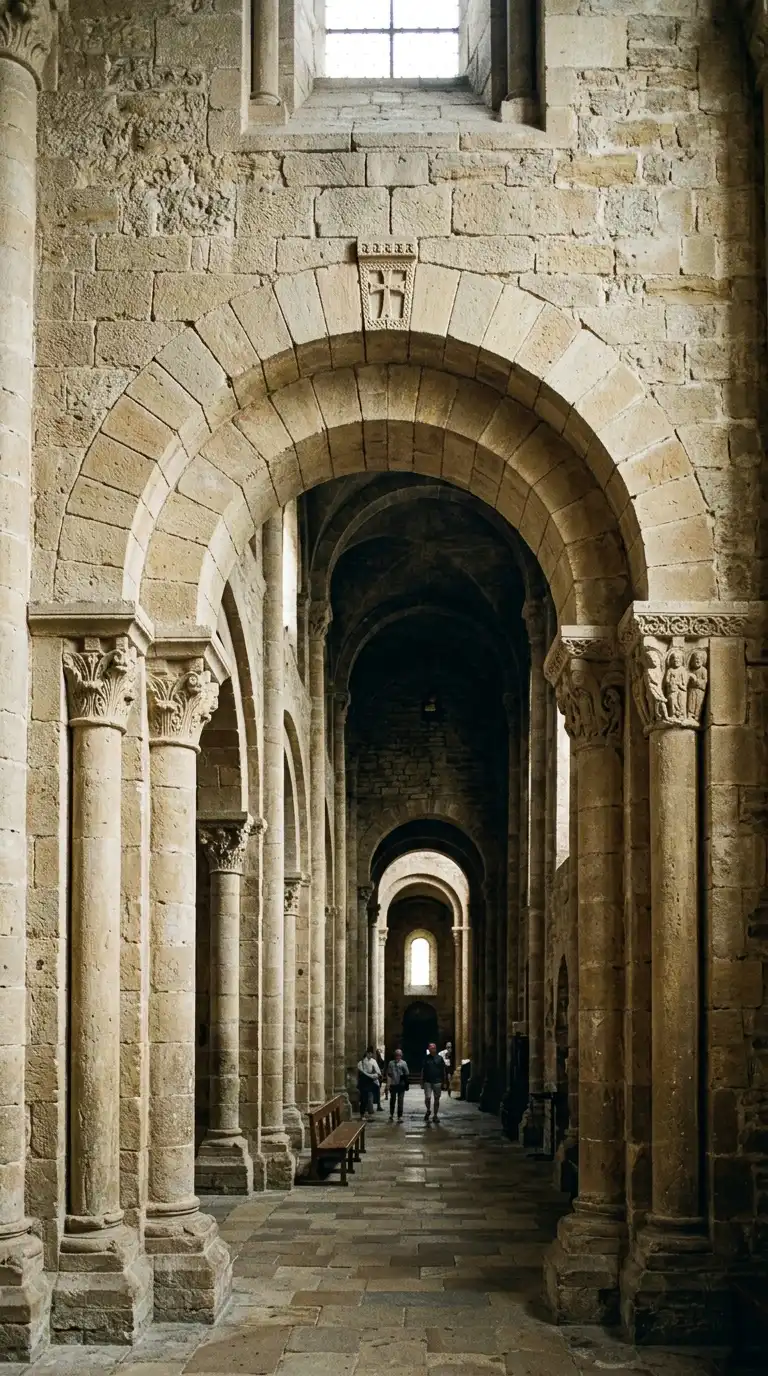
The round arch is the defining feature of Romanesque architecture. It is a perfect semicircle. The round arch is strong and stable. The round arch is used for windows, doors, arcades, and vaults. The round arch is semicircular, strong, and Roman.
This design is ideal for windows, doors, and arcades. The emotional effect is semicircular, strong, and Roman.
Quick Tips
- The arch must be a perfect semicircle.
- The voussoirs must be wedge-shaped.
- The keystone must be at the centre.
5. The Thick Stone Wall
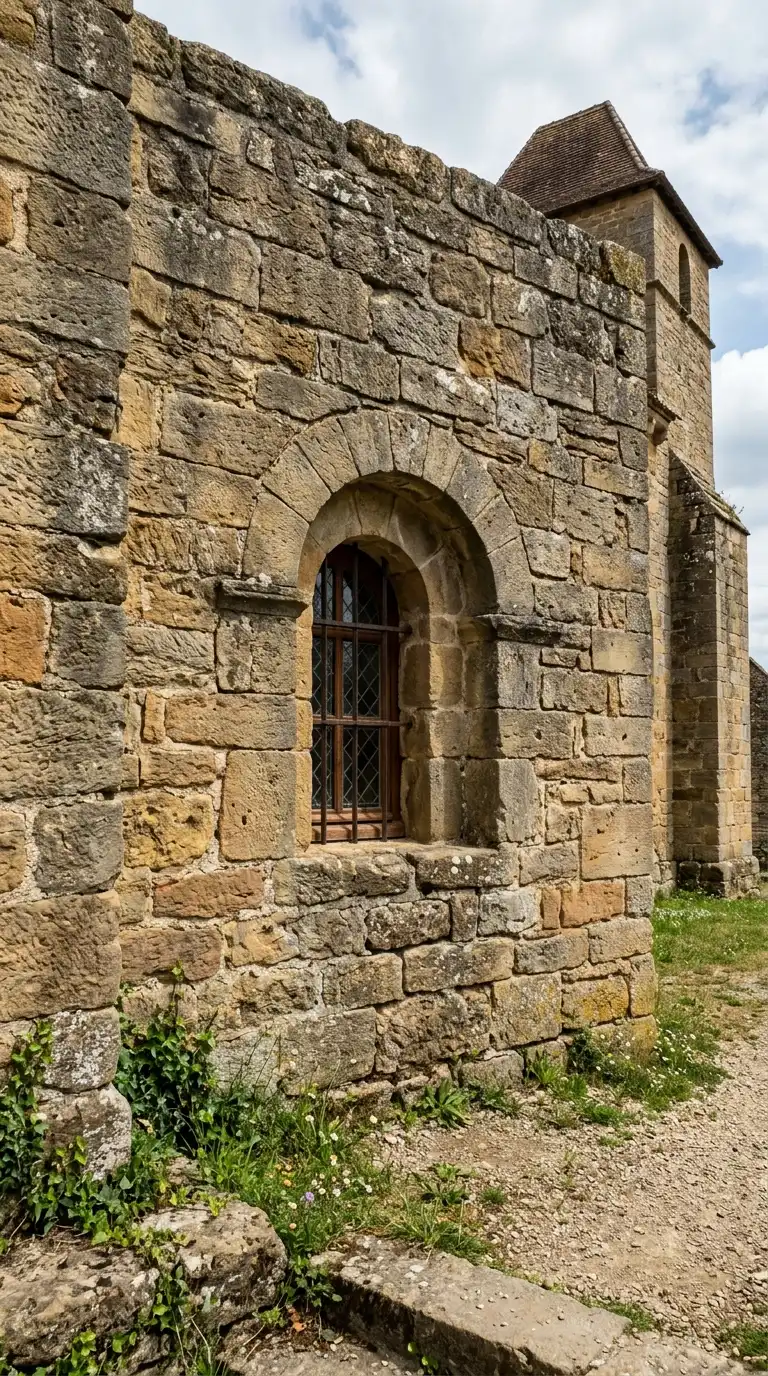
The thick stone wall is the most visible feature of Romanesque architecture. Walls are 1-3 metres thick. The walls are made of rubble stone or ashlar. The walls have small windows. The thick stone wall is massive, solid, and defensive.
This design is ideal for churches, castles, and monasteries. The emotional effect is massive, solid, and defensive.
Quick Tips
- Walls must be at least 1 metre thick.
- Windows must be small.
- The stone must be visible.
6. The Small Window
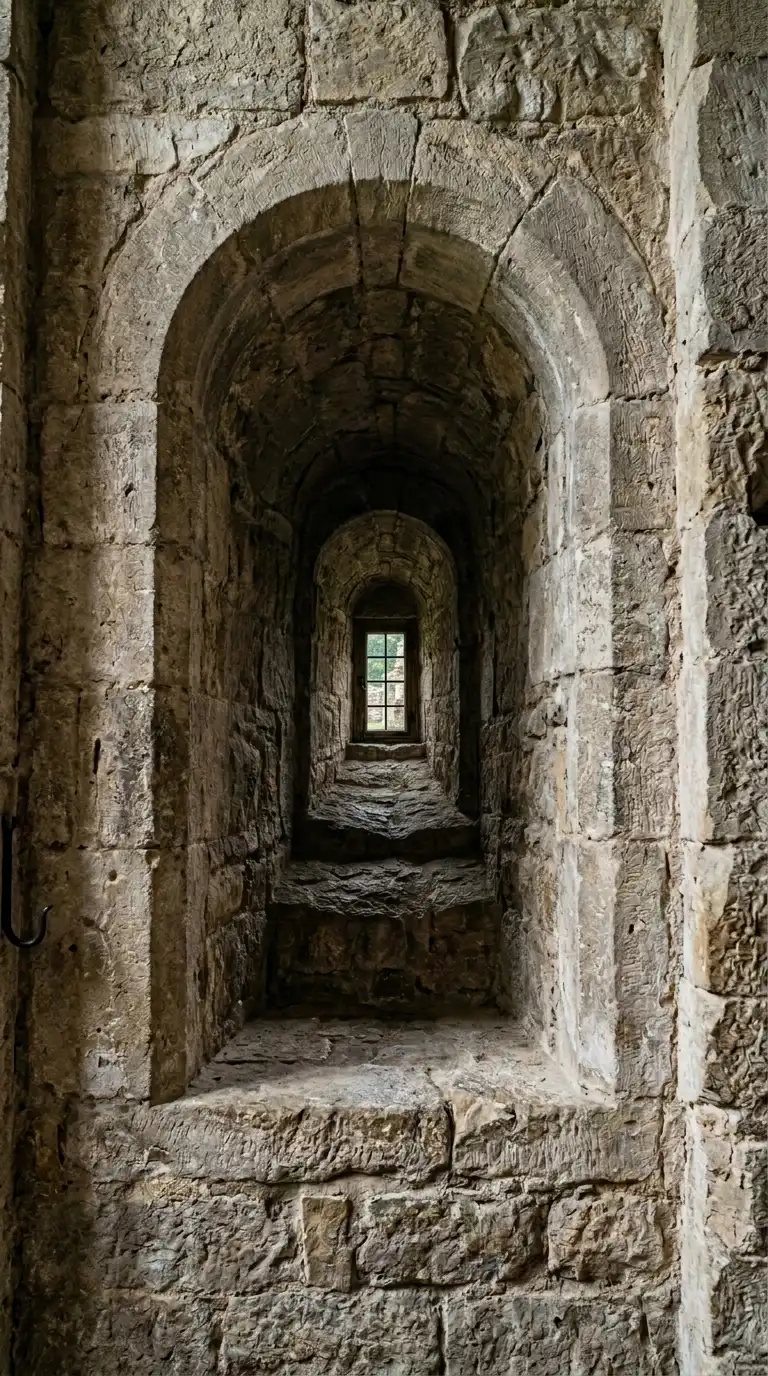
The small window is a necessity of Romanesque construction. Thick walls cannot have large openings. The small window admits little light. The interior is dark. The small window is small, round-arched, and deep-set.
This design is ideal for churches and castles. The emotional effect is small, round-arched, and deep-set.
Quick Tips
- The window must be small (less than 1 metre wide).
- The arch must be round.
- The reveal must be deep.
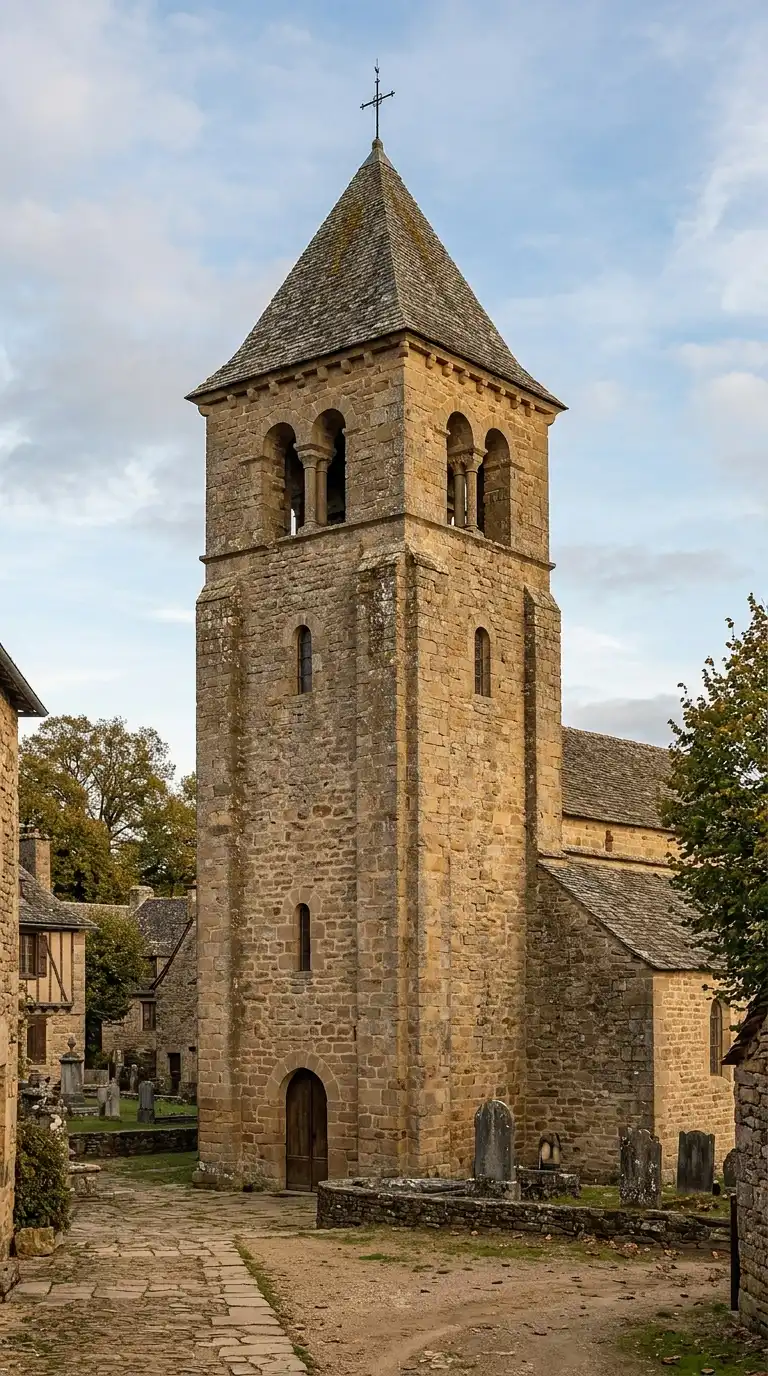
7. The Tower
The Romanesque tower is a square stone tower. It is often at the crossing (central tower) or at the west end (west towers). The tower has small windows and a pyramidal or conical roof. The Romanesque tower is square, vertical, and defensive.
This design is ideal for churches and castles. The emotional effect is square, vertical, and defensive.
Quick Tips
- The plan must be square.
- The roof must be pyramidal or conical.
- The tower must be taller than the nave.
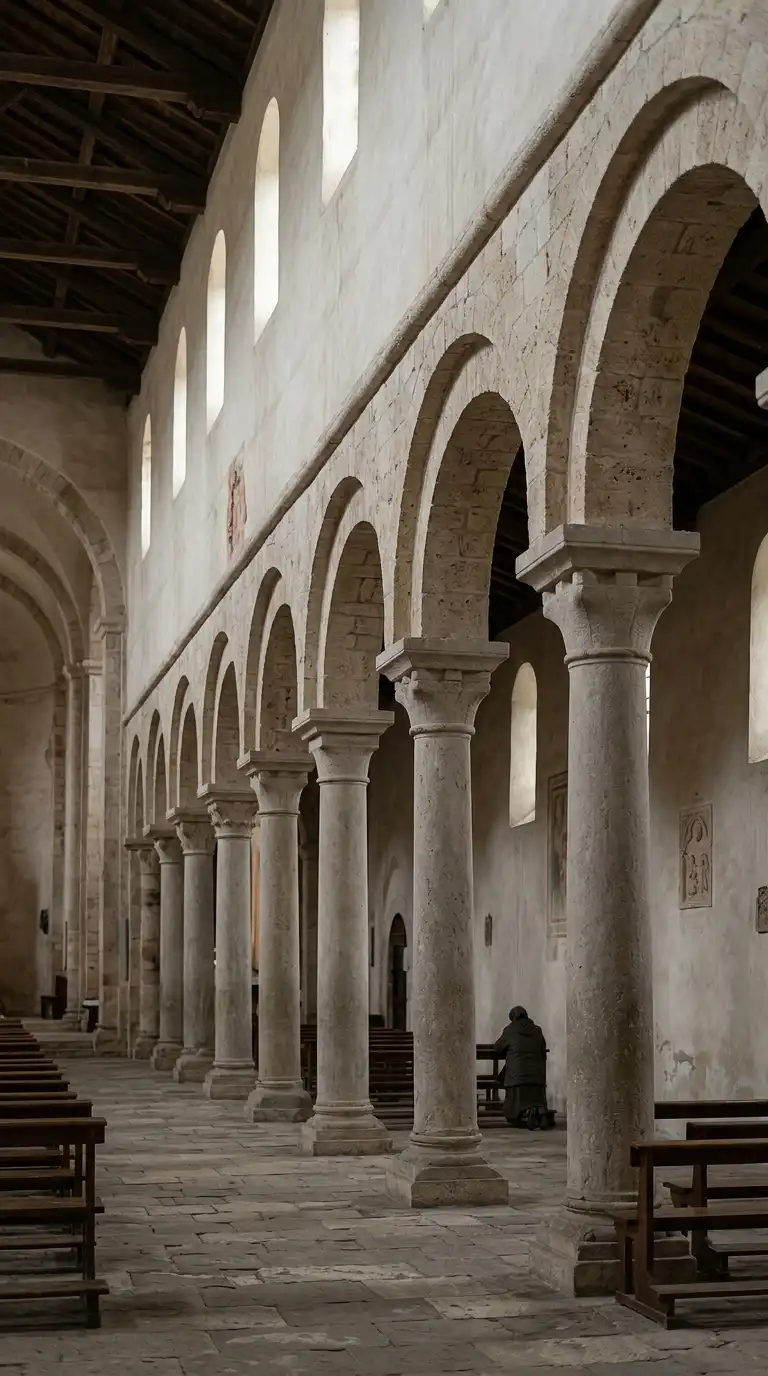
8. The Arcade
The Romanesque arcade is a row of round arches supported by columns or piers. The arcade separates the nave from the side aisles. The arcade is rhythmic, repetitive, and structural. The Romanesque arcade is rhythmic, repetitive, and structural.
This design is ideal for church interiors. The emotional effect is rhythmic, repetitive, and structural.
Quick Tips
- The arches must be round.
- The supports must be columns or piers.
- The spacing must be regular.
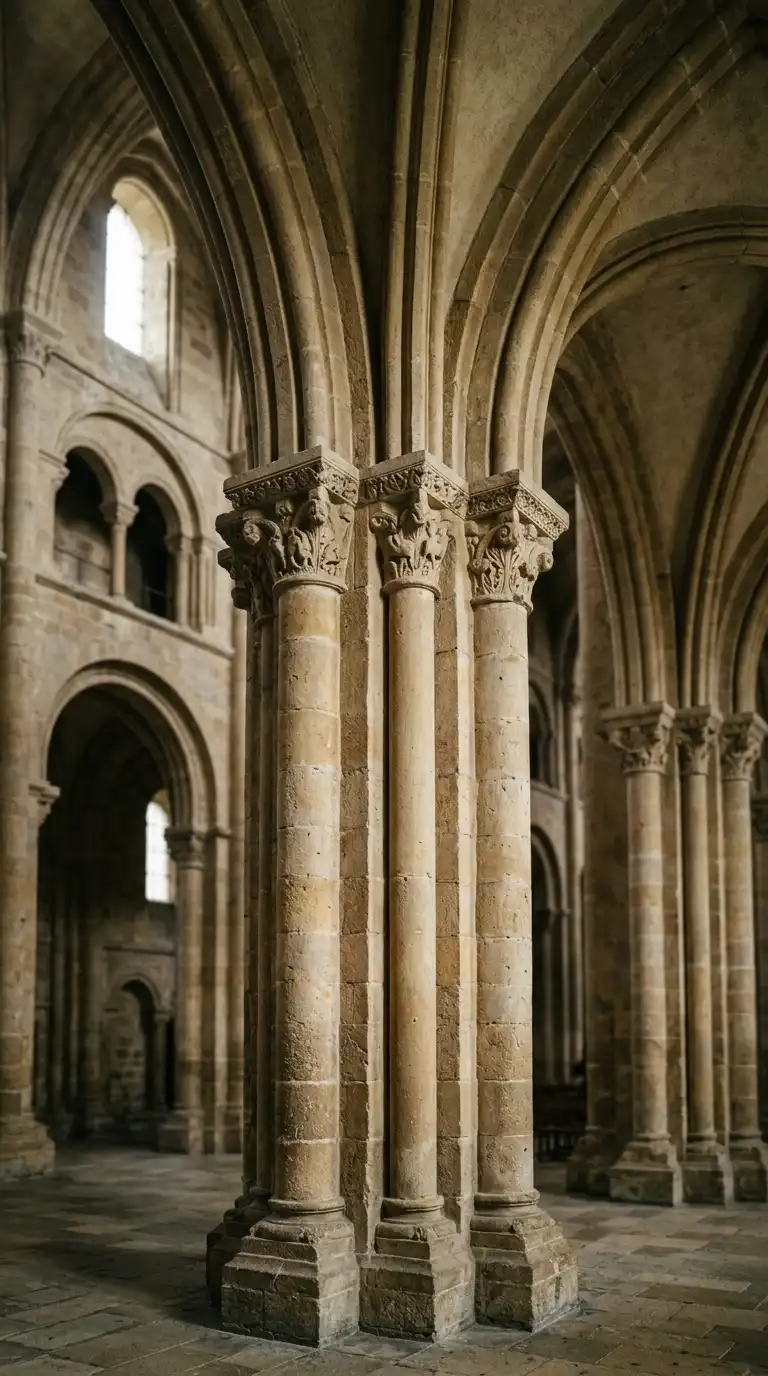
9. The Compound Pier
The compound pier is a pier with attached shafts or pilasters. The compound pier is stronger than a simple column. The shafts correspond to the ribs of the vault above. The compound pier is clustered, strong, and vertical.
This design is ideal for large Romanesque churches. The emotional effect is clustered, strong, and vertical.
Quick Tips
- The pier must have attached shafts or pilasters.
- The shafts must align with vault ribs.
- The pier must be taller than it is wide.
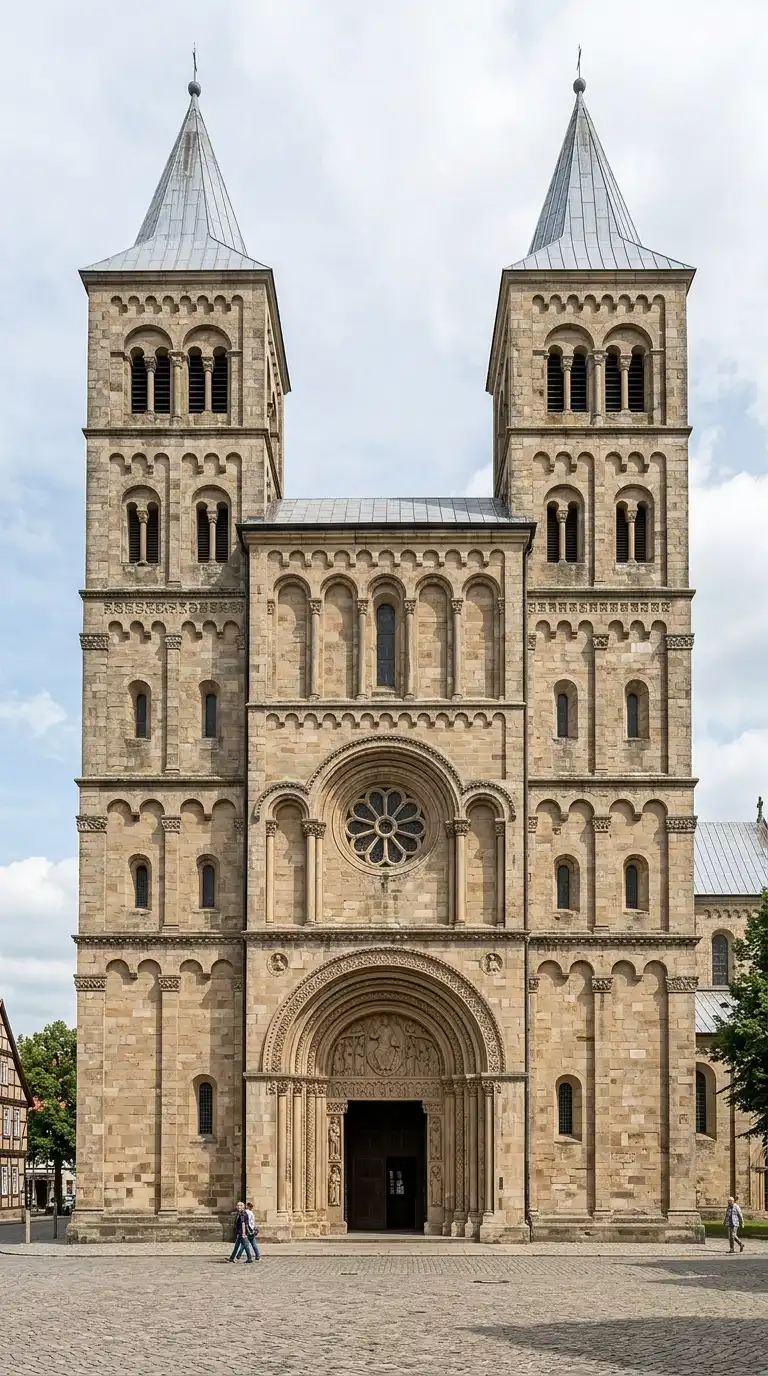
10. The Westwork
The westwork is a monumental west facade with two towers and an entrance block. The westwork is the most decorated part of the church. The westwork is monumental, symmetrical, and welcoming.
This design is ideal for German Romanesque churches. The emotional effect is monumental, symmetrical, and welcoming.
Quick Tips
- The westwork must have two towers.
- The entrance must be in the centre.
- The facade must be decorated.
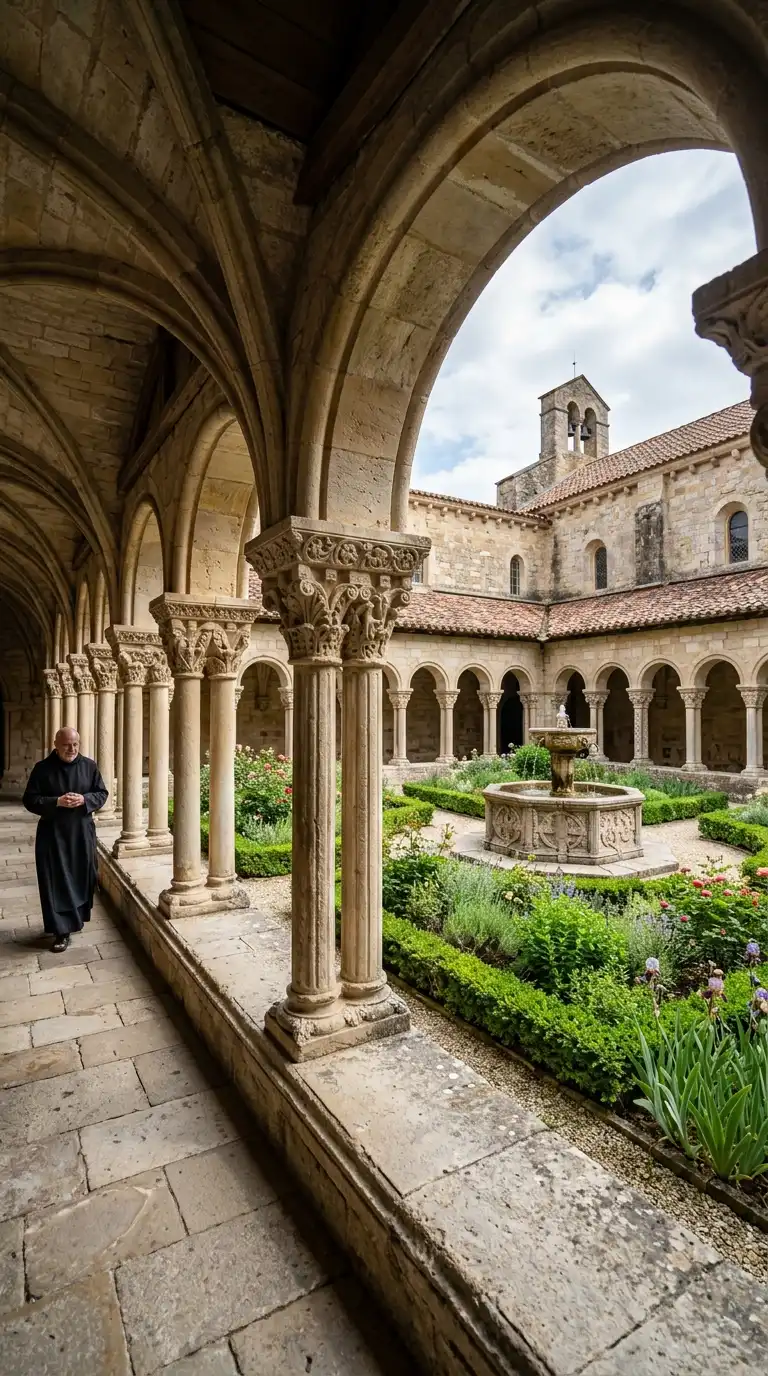
11. The Cloister
The cloister is a covered walkway around a courtyard in a monastery. The walkway has an arcade of round arches. The courtyard has a garden and a fountain. The cloister is calm, sheltered, and monastic.
This design is ideal for monasteries and cathedrals. The emotional effect is calm, sheltered, and monastic.
Quick Tips
- The cloister must be a covered walkway around a courtyard.
- The walkway must have an arcade of round arches.
- The courtyard must have a garden and fountain.
12. The Crypt
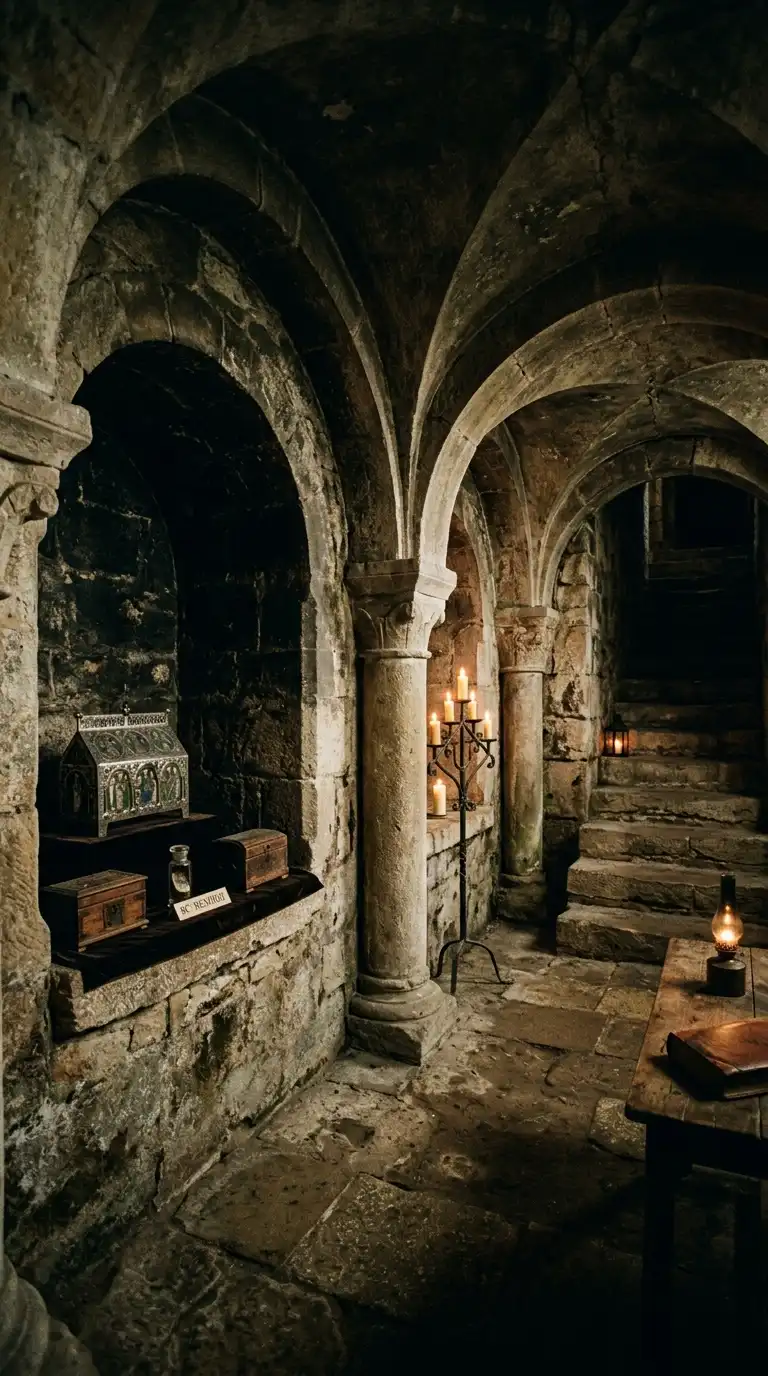
The crypt is an underground chamber below the church. The crypt contains the relics of saints. The crypt is dark, low, and mysterious. The crypt is dark, low, and mysterious.
This design is ideal for pilgrimage churches. The emotional effect is dark, low, and mysterious.
Quick Tips
- The crypt must be below the church.
- The crypt must be dark and low.
- The crypt must contain relics.