Skip to content
Antoni Gaudí (1852-1926) was the most original architect of the modern era. His work is not Gothic, not Art Nouveau, not Modernist — it is Gaudí. He used catenary arches, trencadís mosaics, and organic forms inspired by nature. Gaudí believed that nature has no straight lines. His buildings are curved, colourful, and spiritual. Seven of his works are UNESCO World Heritage sites.
These 13 Gaudí architecture designs span his career, from his early works to his unfinished masterpiece. Each design includes defining characteristics, structural principles, and artistic strategies.
1. Sagrada Família
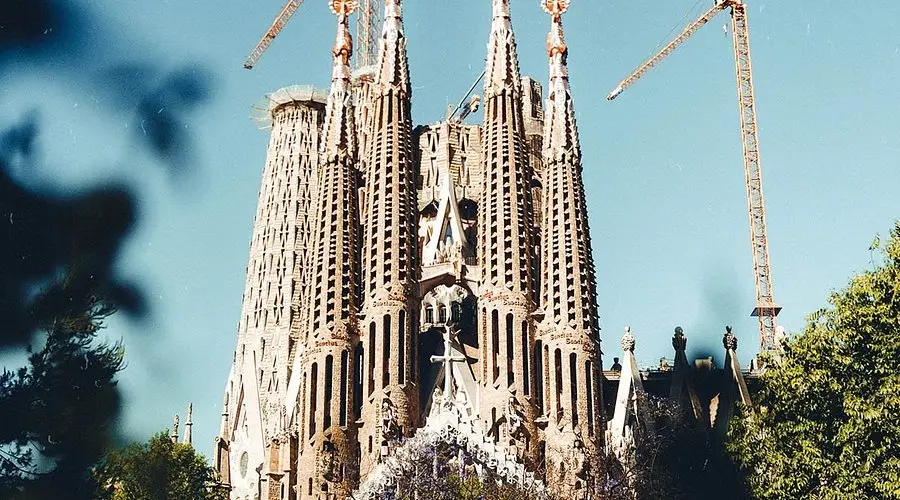
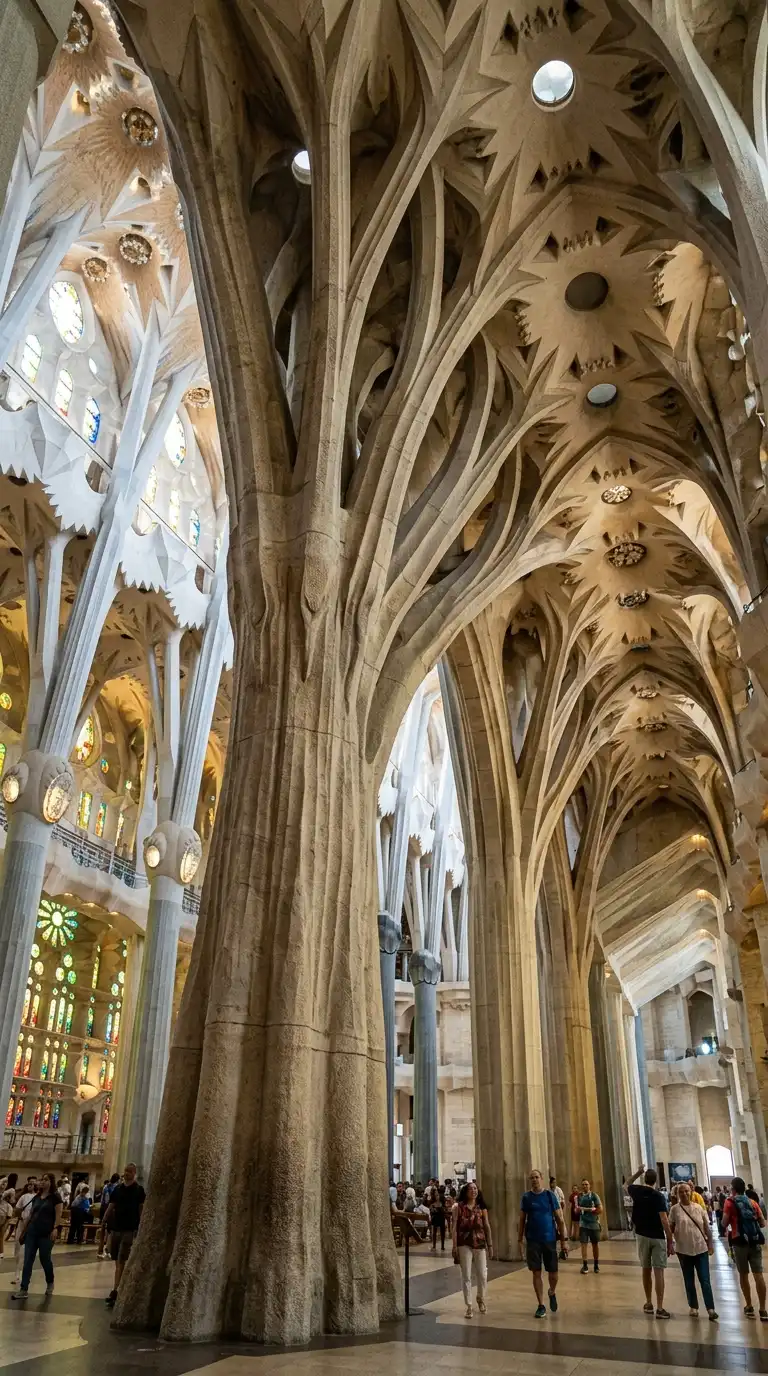
The Sagrada Família is Gaudí’s masterpiece, unfinished at his death. It is a church with 18 towers, three facades, and a forest of branching columns. The interior is like a stone forest. The columns branch like trees. Light comes through stained glass in every colour. The Sagrada Família is vertical, forest-like, and spiritual.
This design is ideal for cathedrals and pilgrimage churches. The emotional effect is vertical, forest-like, and spiritual.
Quick Tips
- The columns must branch like trees.
- The facades must be sculptural (Nativity, Passion, Glory).
- The towers must be tall (the tallest will be 172 metres).
2. Park Güell
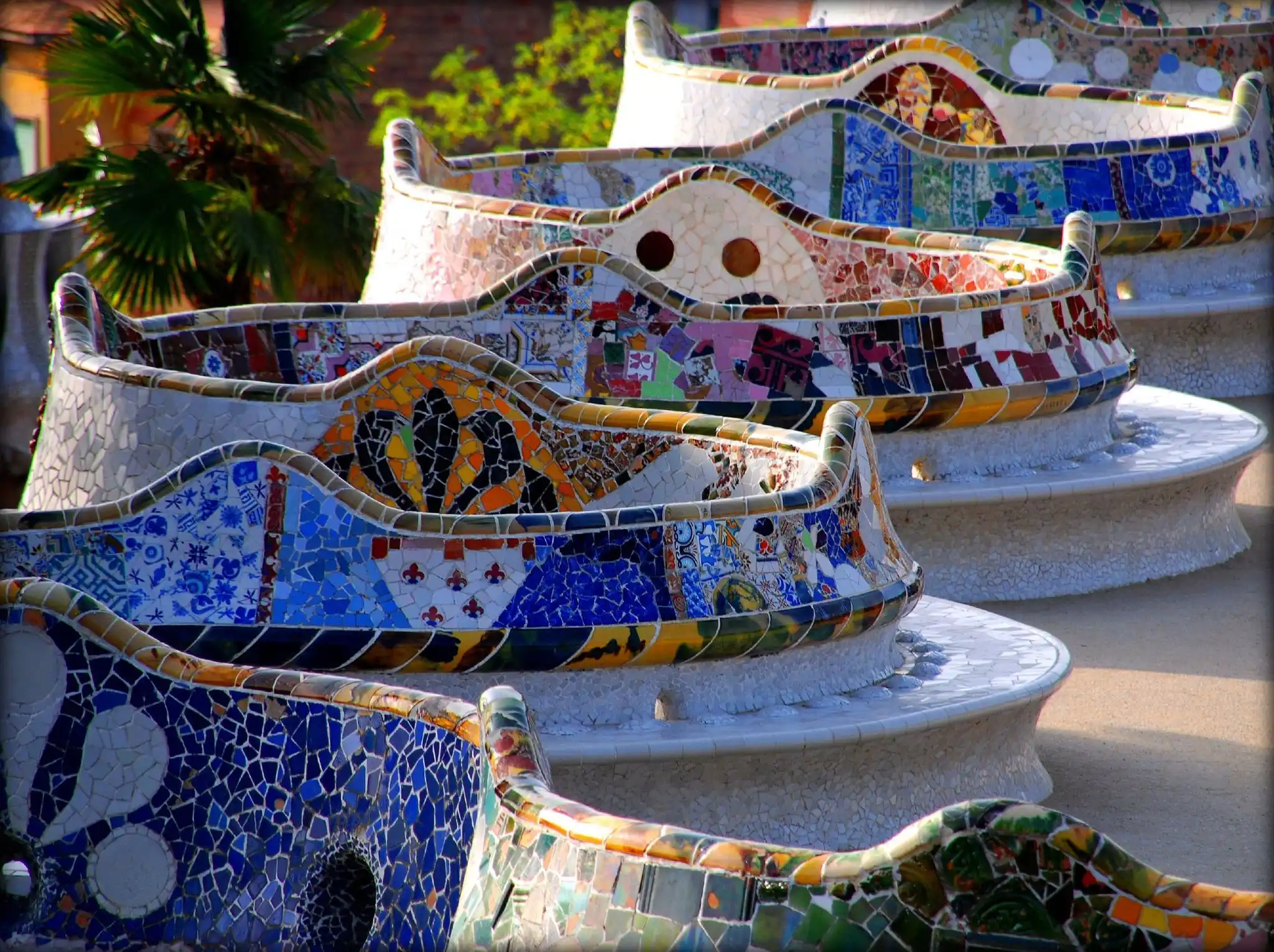
Park Güell is a public park with winding paths, mosaic benches, and gingerbread houses. The main terrace has a serpentine bench covered in trencadís mosaic. The columns in the market hall are slanted like trees. Park Güell is colourful, whimsical, and nature-inspired.
This design is ideal for public parks and gardens. The emotional effect is colourful, whimsical, and nature-inspired.
Quick Tips
- The serpentine bench must be covered in trencadís mosaic.
- The columns must be slanted like tree trunks.
- The gingerbread houses must have colourful domes.
3. Casa Batlló
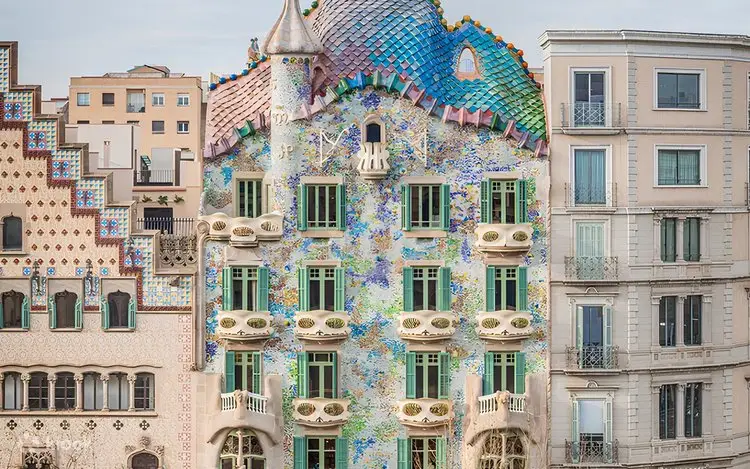
Casa Batlló is an apartment building with a facade that looks like bones and skulls. The balconies are mask-like. The roof is a dragon’s back. The interior has no straight lines. The courtyard is blue, getting darker as you go up. Casa Batlló is skeletal, dragon-like, and oceanic.
This design is ideal for apartment buildings and landmarks. The emotional effect is skeletal, dragon-like, and oceanic.
Quick Tips
- The facade must have bone-like columns and mask-like balconies.
- The roof must be a dragon’s back.
- The courtyard must be blue and tiled.
4. Casa Milà (La Pedrera)
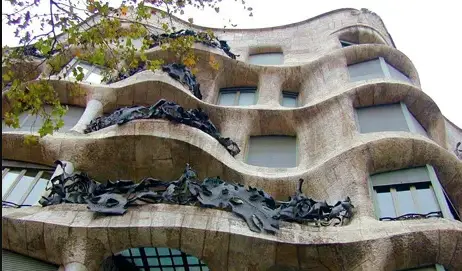
Casa Milà is an apartment building with a wave-like stone facade. The roof has sculptural chimneys that look like warriors. The interior has a catenary arch attic. There are no straight lines anywhere. Casa Milà is wavy, stone, and sculptural.
This design is ideal for apartment buildings and landmarks. The emotional effect is wavy, stone, and sculptural.
Quick Tips
- The facade must be wavy stone.
- The roof must have sculptural chimneys.
- The attic must have catenary arches.
5. Casa Vicens
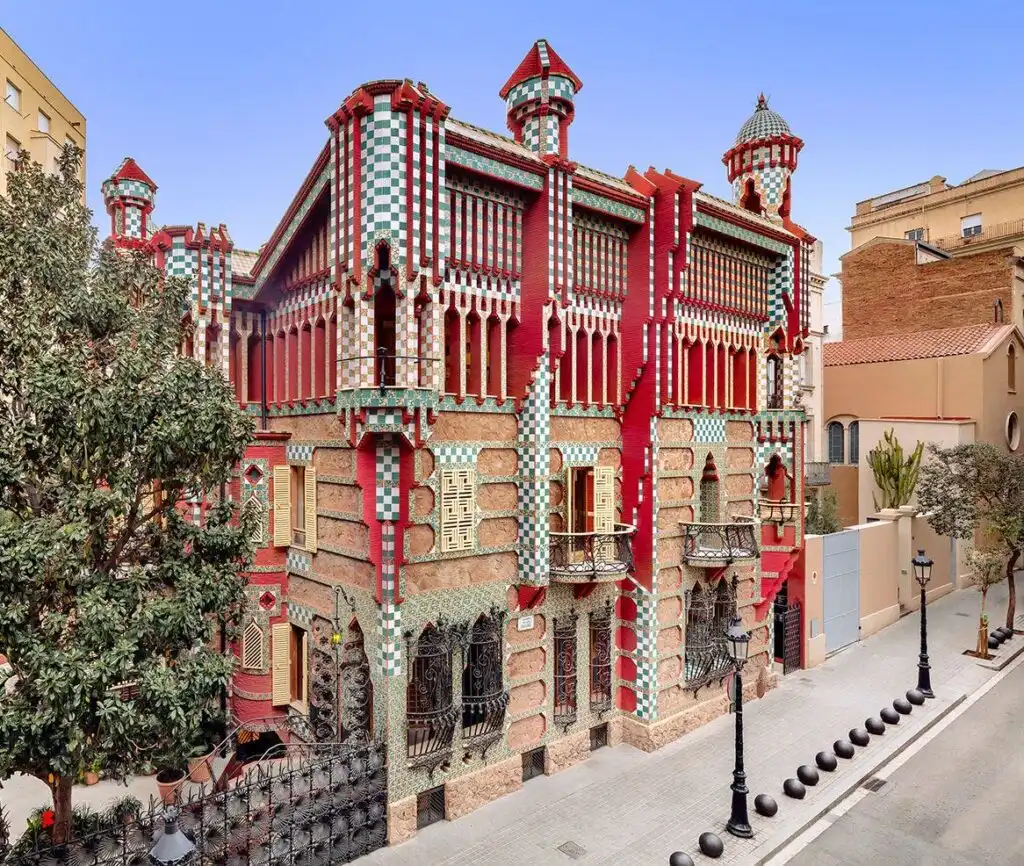
Casa Vicens was Gaudí’s first major work. It is a house with Islamic-inspired tilework. The facade has green and white tiles in a checkerboard pattern. The roof has chimneys and turrets. Casa Vicens is Moorish, colourful, and early.
This design is ideal for houses and landmarks. The emotional effect is Moorish, colourful, and early.
Quick Tips
- The facade must have checkerboard tilework.
- The tiles must be green and white.
- The roof must have chimneys and turrets.
6. El Capricho
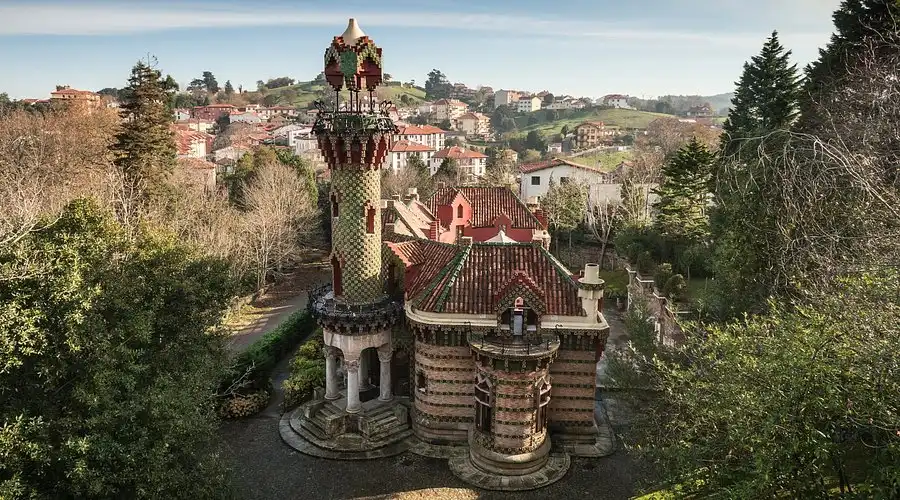
El Capricho is a summer house in northern Spain. The facade is covered in yellow and white brick. The sunflower motif appears everywhere — in brick, in tiles, in ironwork. The tower has a minaret-like top. El Capricho is sunflower-themed, brick, and playful.
This design is ideal for summer houses and landmarks. The emotional effect is sunflower-themed, brick, and playful.
Quick Tips
- The facade must be yellow and white brick.
- The sunflower motif must be repeated.
- The tower must have a minaret-like top.
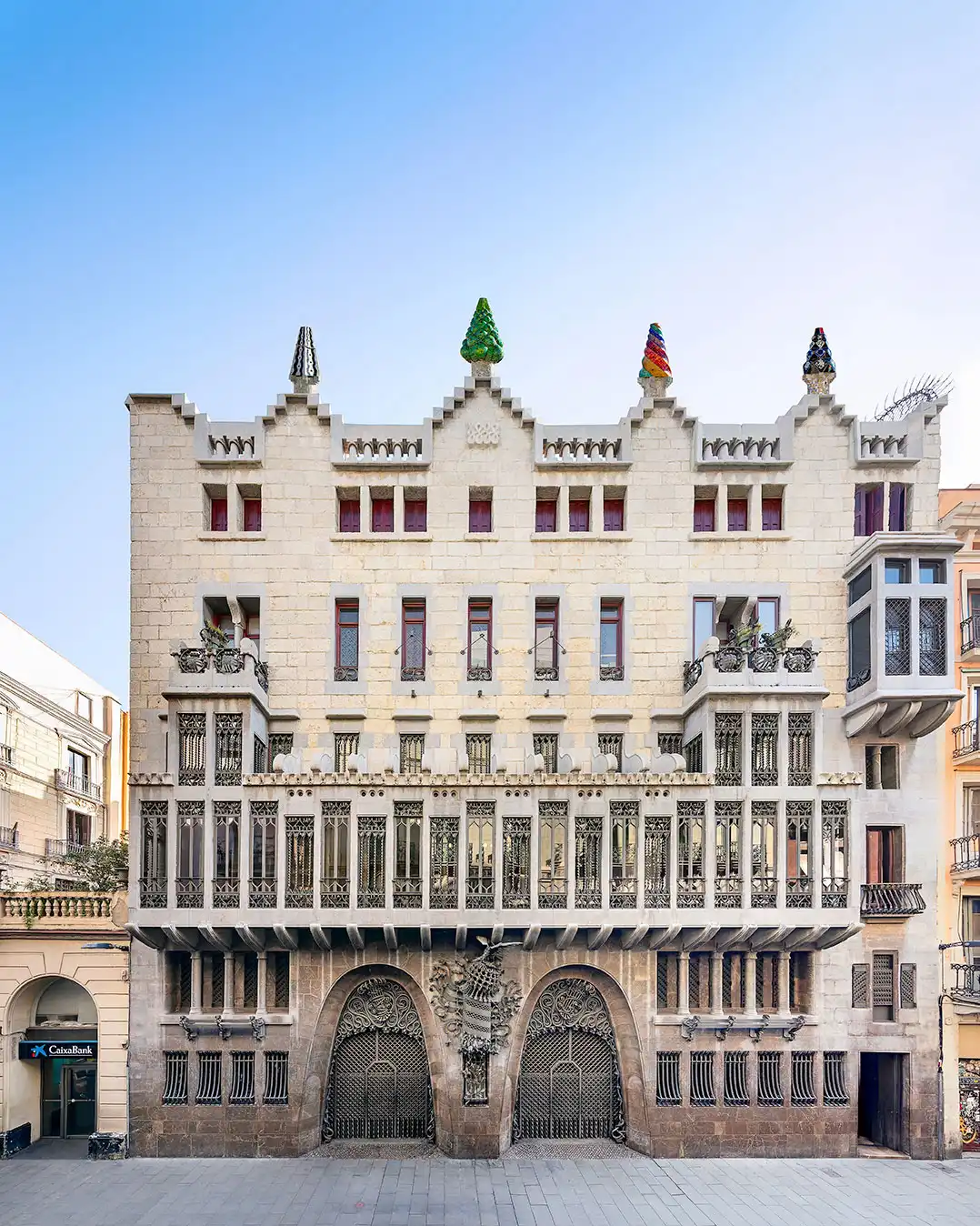
7. Palau Güell
Palau Güell is a palace for the industrialist Eusebi Güell. The facade is dark stone. The windows are large parabolic arches. The interior has a central hall with a dome. The chimneys on the roof are colourful and sculptural. Palau Güell is dark, parabolic, and palatial.
This design is ideal for palaces and landmarks. The emotional effect is dark, parabolic, and palatial.
Quick Tips
- The facade must be dark stone.
- The windows must be parabolic arches.
- The roof must have colourful sculptural chimneys.
8. Colonia Güell Crypt
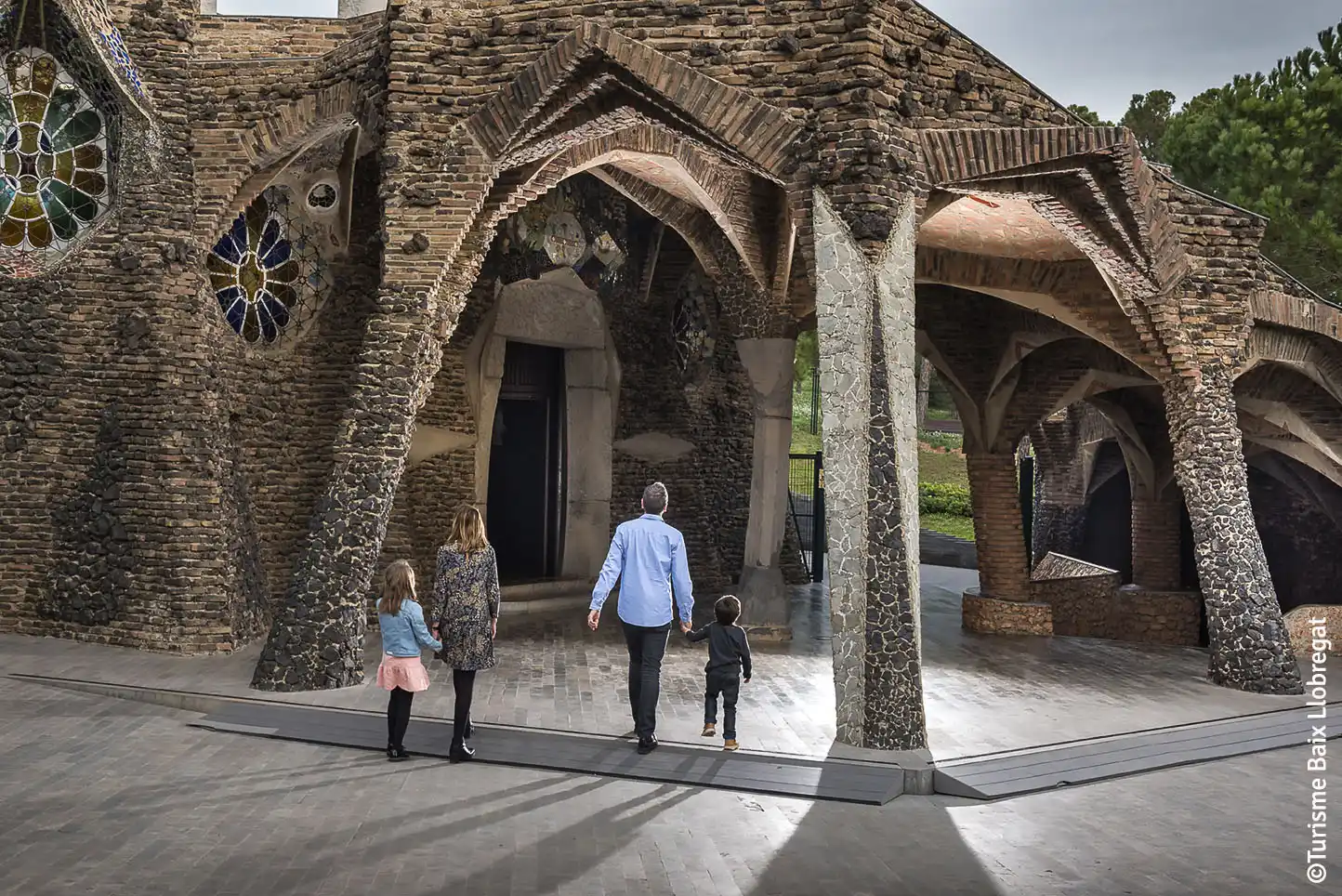
The Colonia Güell Crypt is a church that was never finished. The crypt has catenary arches and branching columns. The roof is a hyperbolic paraboloid. The crypt is structural, experimental, and unfinished.
This design is ideal for churches and experimental structures. The emotional effect is structural, experimental, and unfinished.
Quick Tips
- The arches must be catenary.
- The columns must branch.
- The roof must be a hyperbolic paraboloid.
9. The Trencadís Mosaic
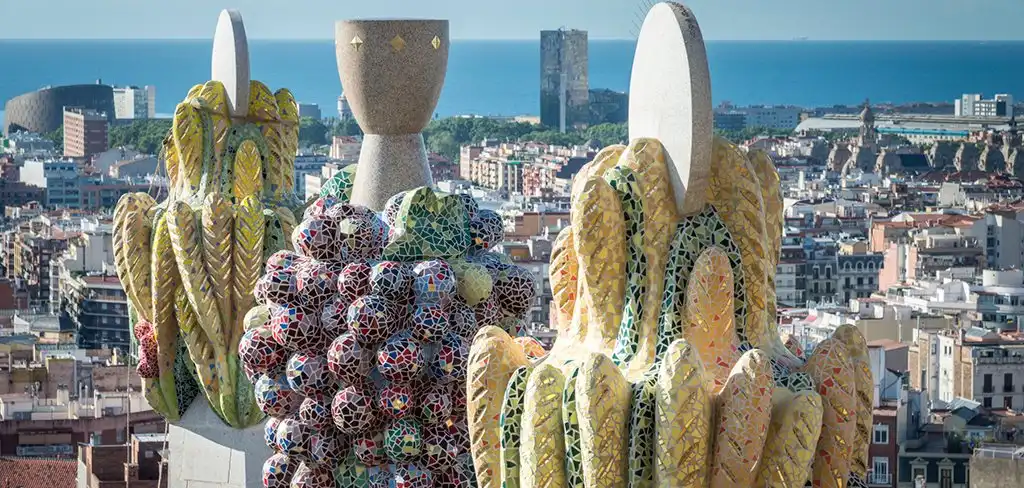
Trencadís is Gaudí’s signature technique. It is a mosaic made of broken ceramic tiles. The tiles are randomly arranged. The colours are bright. Trencadís is used on benches, columns, chimneys, and walls. Trencadís is broken, colourful, and textured.
This design is ideal for surfaces and decorations. The emotional effect is broken, colourful, and textured.
Quick Tips
- The tiles must be broken ceramic.
- The arrangement must be random.
- The colours must be bright.
10. The Catenary Arch
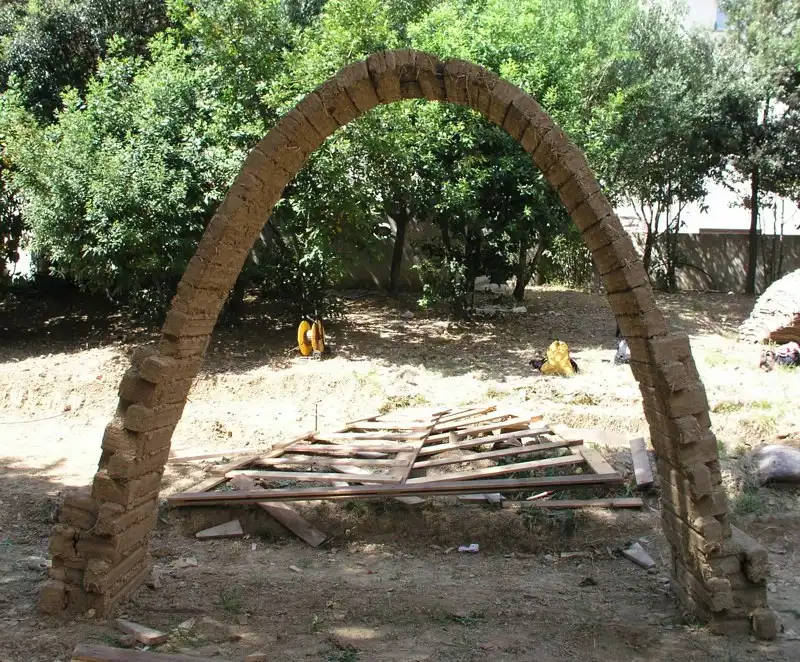
The catenary arch is the ideal structural form. It is the shape of a hanging chain. Gaudí used catenary arches in many buildings. The catenary arch is structural, efficient, and organic.
This design is ideal for arches and vaults. The emotional effect is structural, efficient, and organic.
Quick Tips
- The arch must be a true catenary curve.
- The arch must be structural.
- The arch can be used in inverted form.
11. The Branching Column
The branching column is a column that splits into branches at the top. The branches support the vault. The branching column is like a tree. The branching column is organic, structural, and forest-like.
This design is ideal for columns and vaults. The emotional effect is organic, structural, and forest-like.
Quick Tips
- The column must split into branches at the top.
- The branches must support the vault.
- The column must be stone or concrete.
12. The Hyperbolic Paraboloid
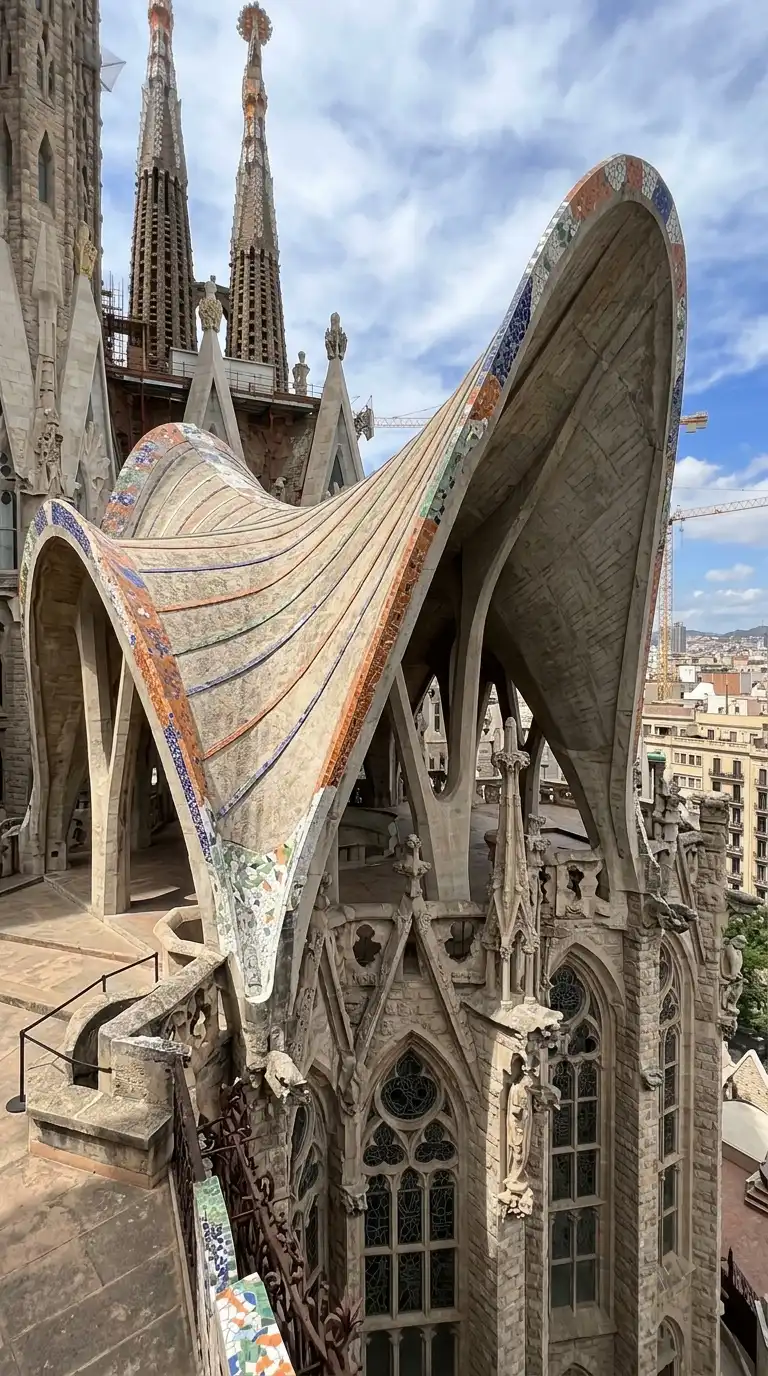
The hyperbolic paraboloid is a saddle-shaped surface. It is curved in two directions: up in one direction, down in the perpendicular direction. Gaudí used hyperbolic paraboloids in the Colonia Güell Crypt. The hyperbolic paraboloid is structural, organic, and efficient.
This design is ideal for roofs and vaults. The emotional effect is structural, organic, and efficient.
Quick Tips
- The surface must be curved in two opposite directions.
- The form must be a ruled surface.
- The form must be thin.
13. The Bell Tower
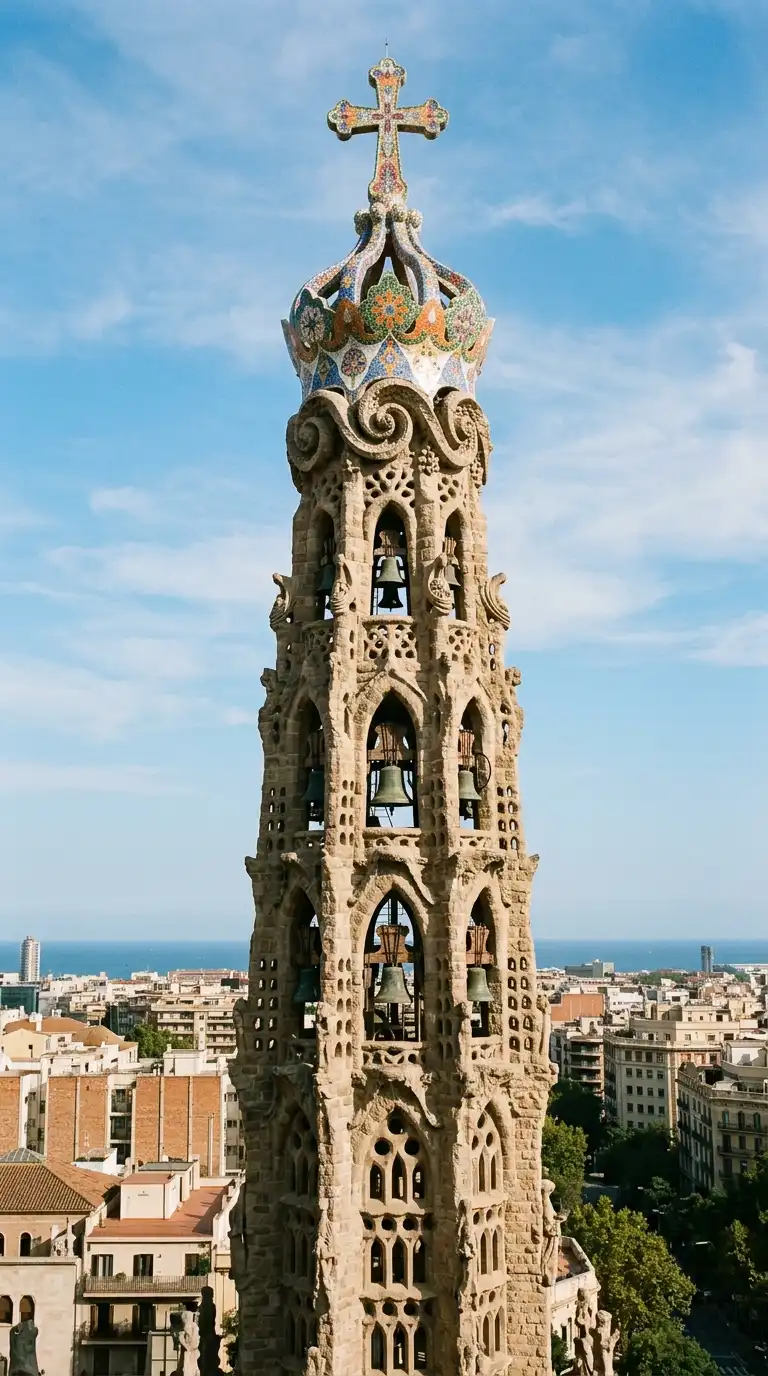
Gaudí’s bell towers are tall, slender, and perforated. They have openings for bells. The towers are often clustered. The tops are crowned with colourful mosaics. The bell towers are vertical, perforated, and colourful.
This design is ideal for church towers. The emotional effect is vertical, perforated, and colourful.
Quick Tips
- The tower must be tall and slender.
- The tower must have openings for bells.
- The top must have colourful mosaic.