 Skip to content
Tadao Ando is a Japanese architect who builds in exposed concrete. His concrete is not ordinary — it is smooth, silky, and precisely formed. The formwork marks are visible and celebrated. Ando’s architecture is silent, meditative, and deeply connected to nature. He uses light, water, and geometry to create spiritual spaces. Ando is a self-taught architect who learned by travelling and building.
These 12 Tadao Ando architecture designs span houses, churches, museums, and cultural centres. Each design includes defining characteristics, material strategies, and spatial principles.
1. The Row House in Sumiyoshi (Azuma House)
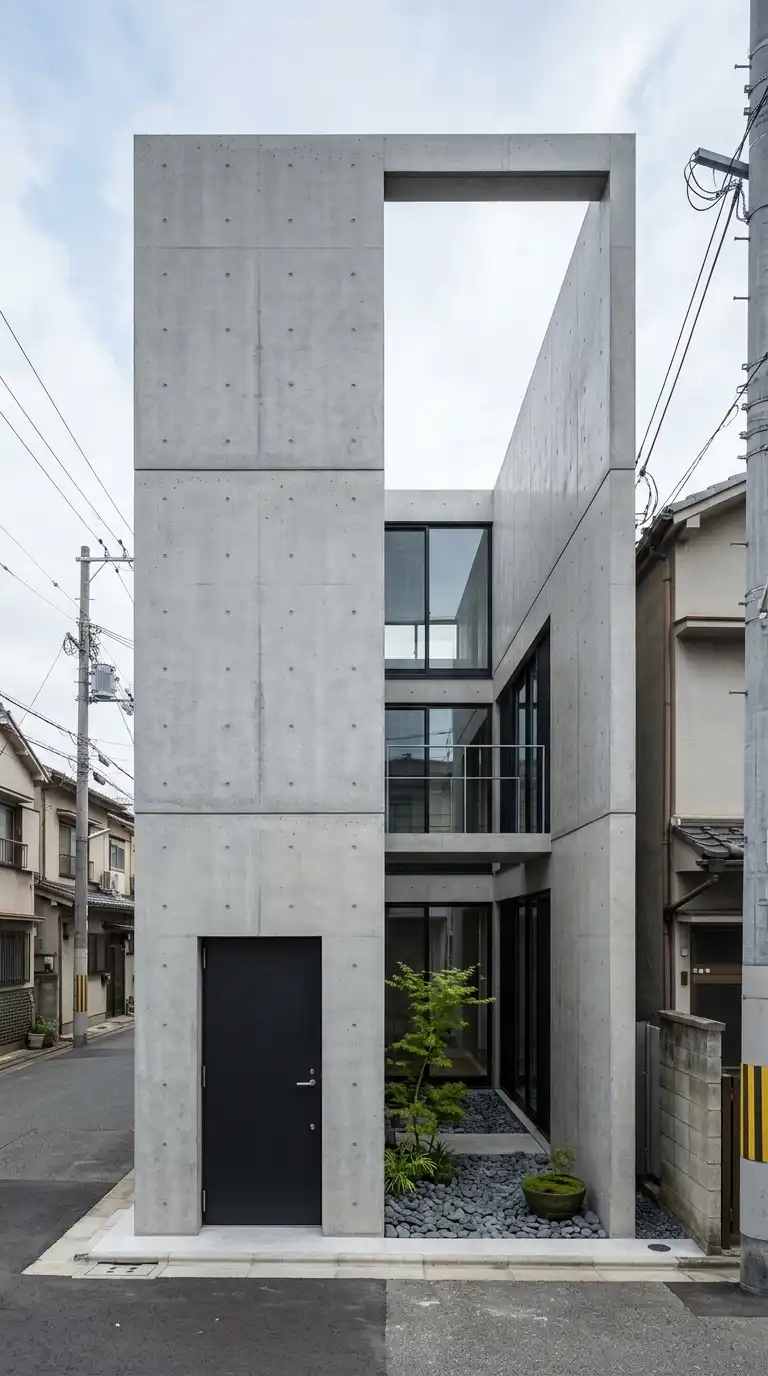
The Row House in Sumiyoshi (1976) is Ando’s first major work. It is a small concrete house in Osaka. The house has three volumes: a front volume, a courtyard, and a rear volume. The courtyard is open to the sky. The house has no windows on the exterior walls. All light comes from the courtyard. The house is silent and private.
This design is ideal for dense urban sites. The emotional effect is silent, private, and courtyard-centred.
Quick Tips
- The house must have a central courtyard open to the sky.
- Exterior walls must have no windows.
- The concrete must be smooth and board-formed.
2. The Church of the Light
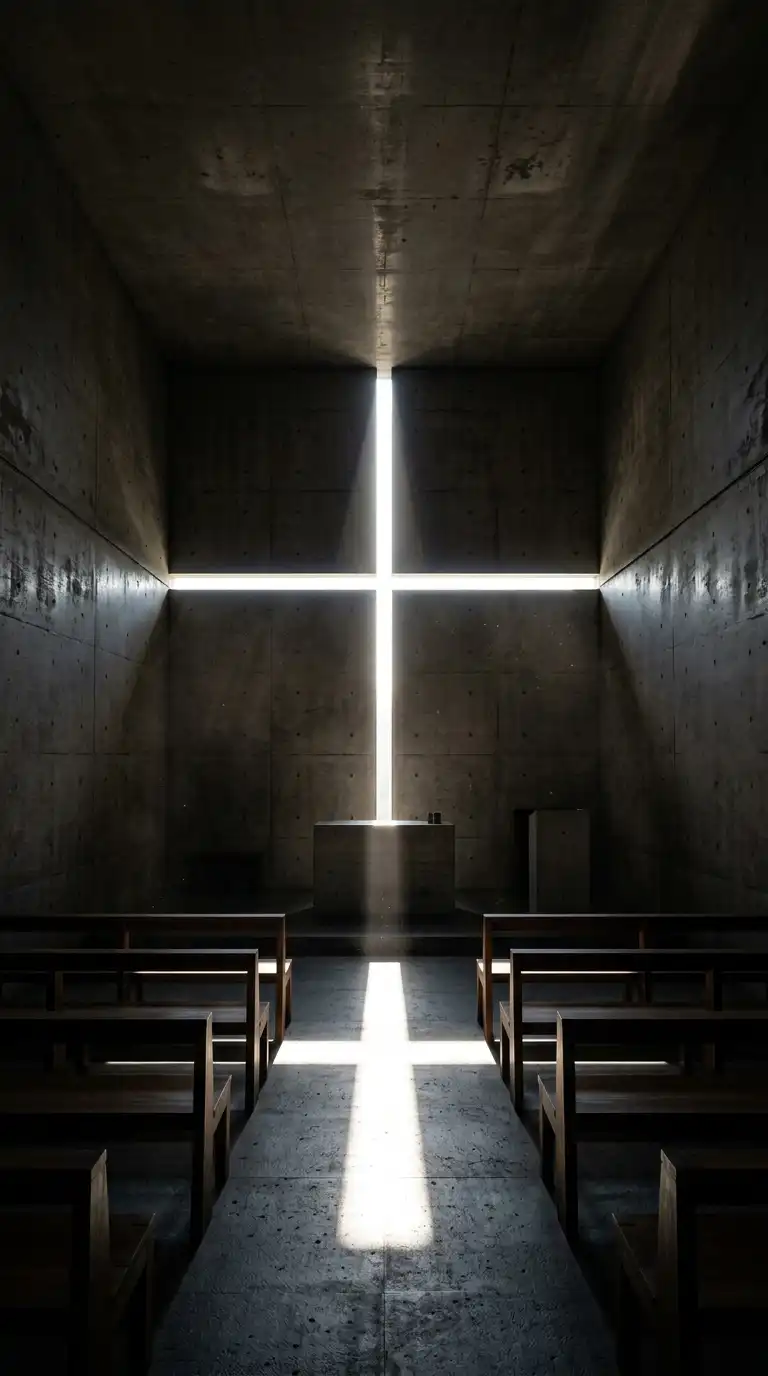
The Church of the Light (1989) is a small concrete chapel in Osaka. The chapel has a dramatic cross cut into the concrete wall behind the altar. Light enters through the cross. The cross is the only decoration. The chapel is dark, silent, and spiritual. The light cross is the focal point.
This design is ideal for spiritual spaces and meditation. The emotional effect is silent, spiritual, and light-filled.
Quick Tips
- The cross must be cut into the concrete wall.
- No other decoration is permitted.
- The chapel must be dark except for the light cross.
3. The Water Temple
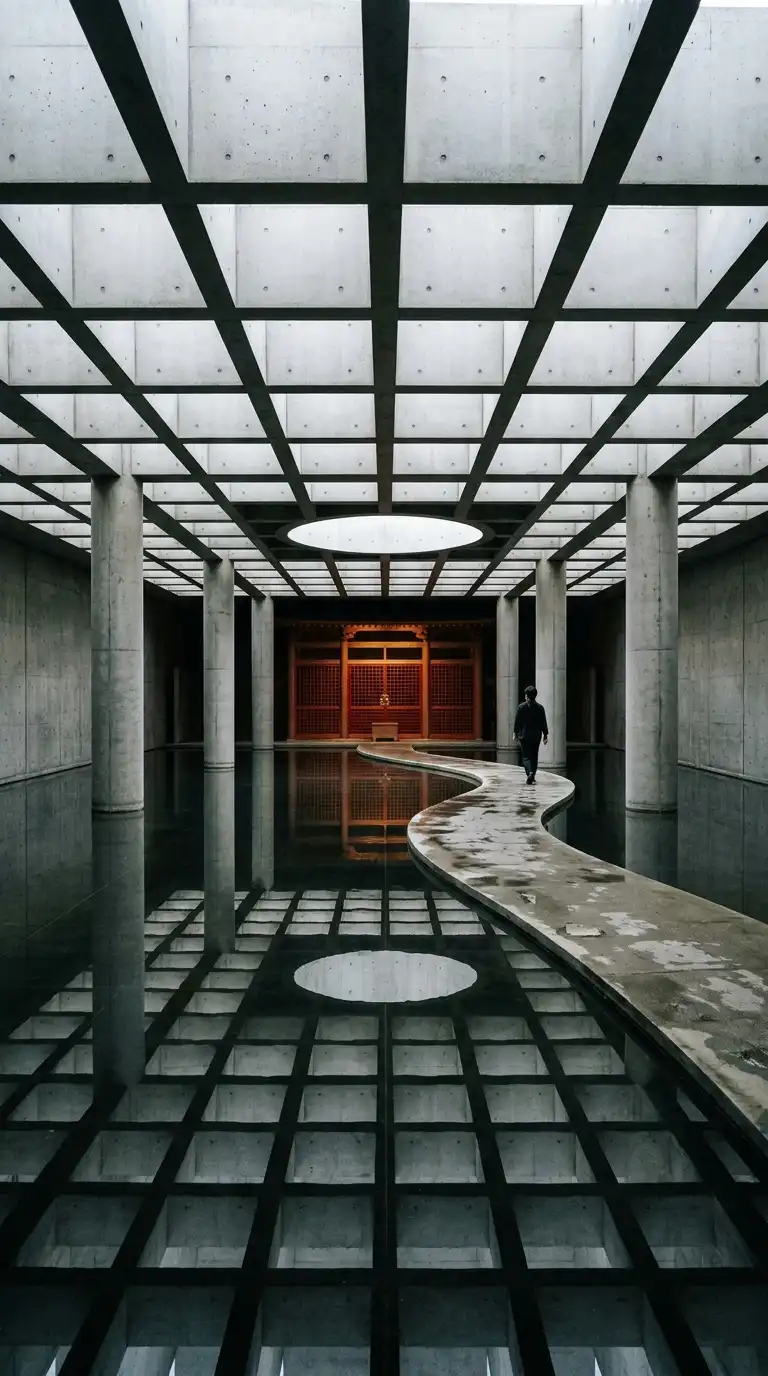
The Water Temple (1991) is a Buddhist temple on Awaji Island, Japan. The temple is approached through a lotus pond. A staircase descends into the water. The temple is below the pond. The ceiling is a grid of concrete beams reflecting in the water. The temple is silent, cool, and watery.
This design is ideal for spiritual spaces and water settings. The emotional effect is watery, subterranean, and reflective.
Quick Tips
- The temple must be approached through water.
- The temple must be below the water level.
- The ceiling must reflect in the water.
4. The Benesse House Museum
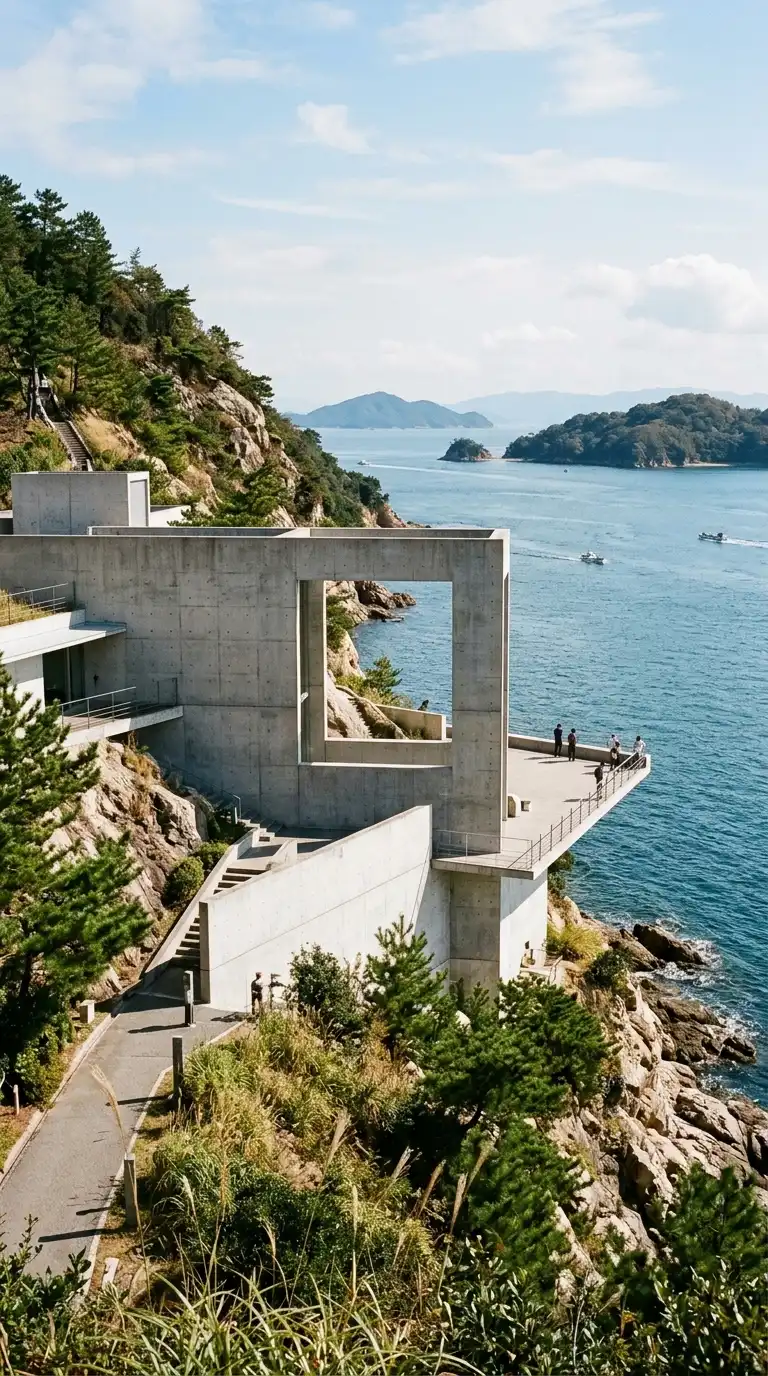
The Benesse House Museum (1992) is a museum and hotel on Naoshima Island, Japan. The building is a series of concrete volumes on a hillside. The museum has large openings framing views of the Seto Inland Sea. The building is integrated with the landscape. The concrete is smooth and precise.
This design is ideal for art museums and coastal sites. The emotional effect is concrete, coastal, and view-framing.
Quick Tips
- The building must be on a hillside overlooking water.
- Openings must frame views of the sea.
- The concrete must be smooth and board-formed.
5. The Chichu Art Museum
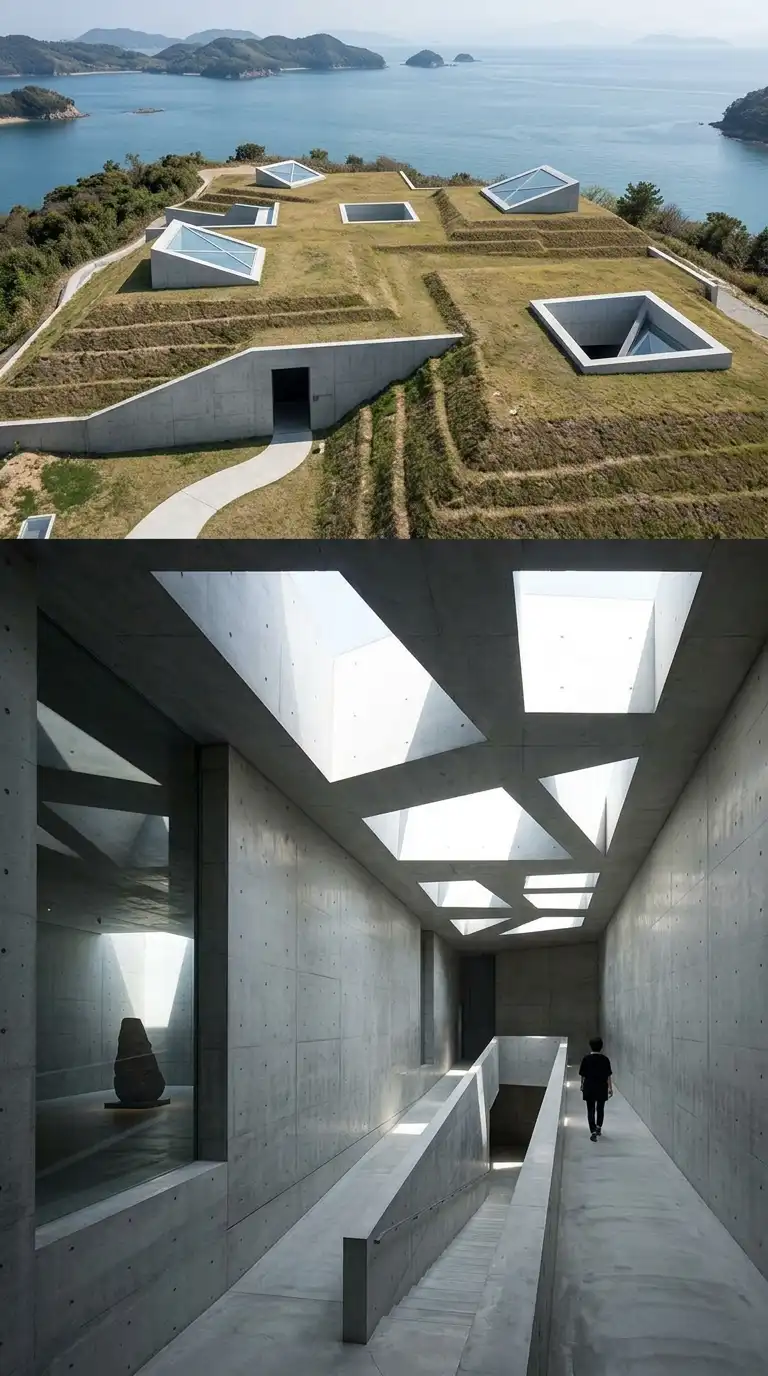
The Chichu Art Museum (2004) is an underground museum on Naoshima Island. The museum is built into the hillside. Only the geometric skylights are visible above ground. The museum is lit entirely by natural light from above. The spaces are simple geometric volumes: a square, a rectangle, a triangle.
This design is ideal for art museums and underground sites. The emotional effect is underground, geometric, and top-lit.
Quick Tips
- The museum must be underground.
- Only skylights must be visible above ground.
- Light must be from above only.
6. The 4×4 House
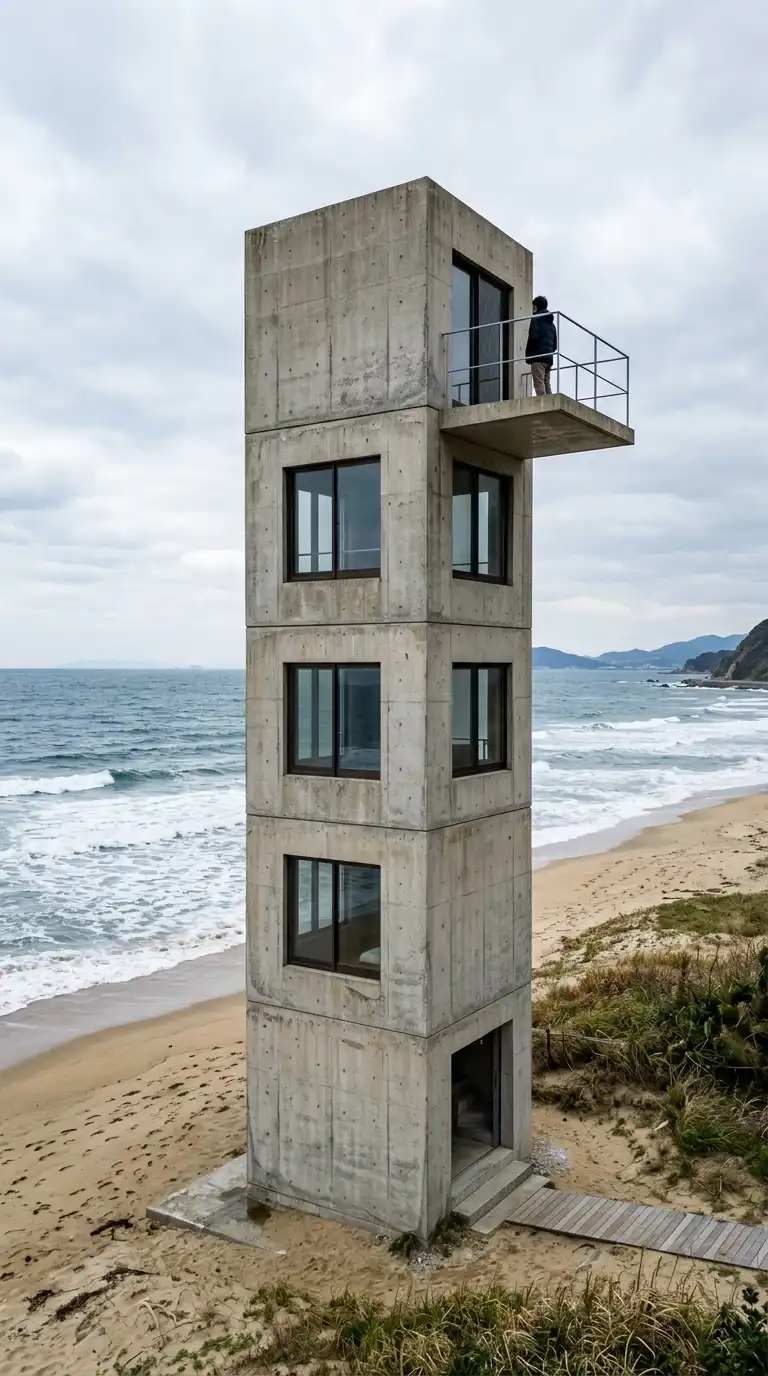
The 4×4 House (2003) is a tiny concrete house on a beach in Kobe, Japan. The house is 4 metres wide and 4 metres deep. It has four storeys. Each storey is one room. The top floor has a concrete balcony facing the sea. The house is a tower on the edge of the sea.
This design is ideal for tiny urban sites and coastal views. The emotional effect is vertical, tiny, and coastal.
Quick Tips
- The footprint must be exactly 4×4 metres.
- Each storey must be one room.
- The top floor must have a balcony facing the sea.
7. The Koshino House
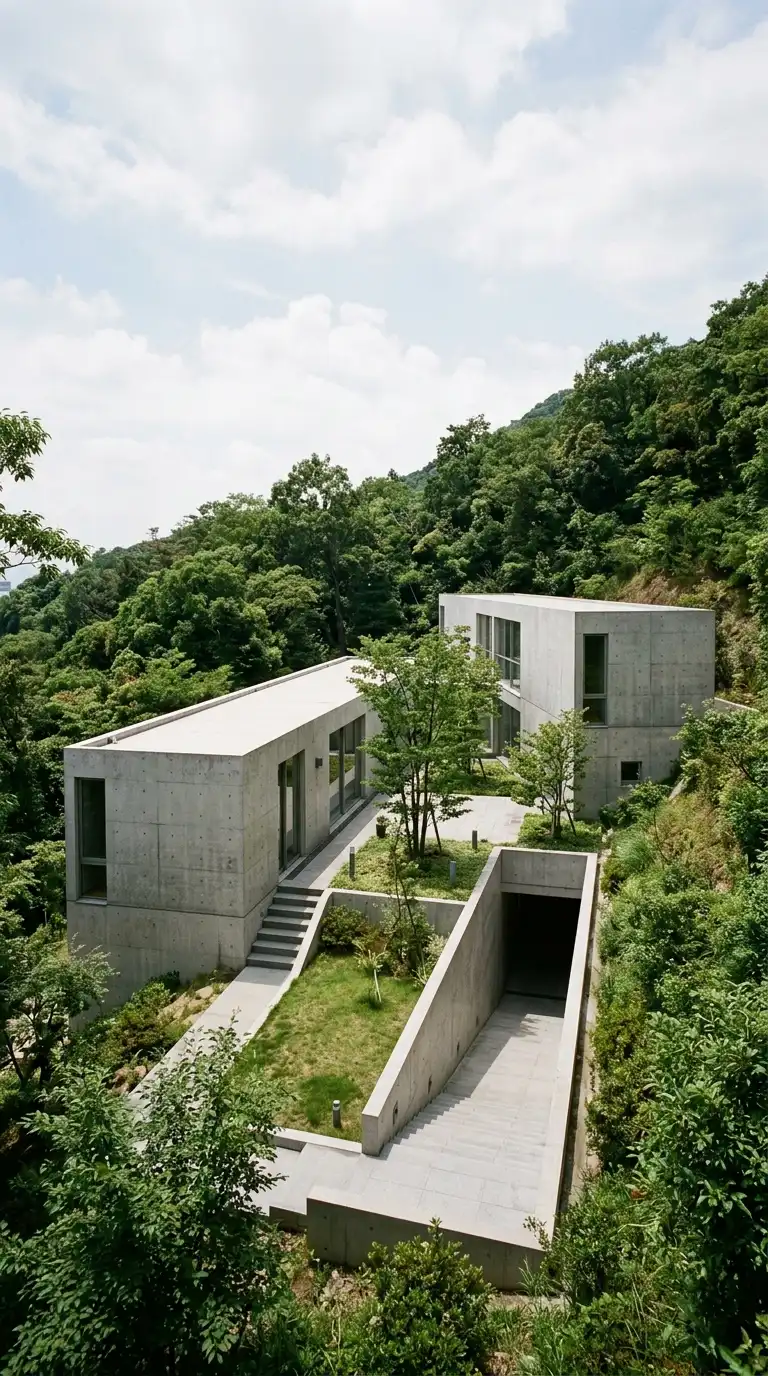
The Koshino House (1981) is a concrete house in Ashiya, Japan. The house has two parallel rectangular volumes connected by an underground passage. The volumes are separated by a courtyard. The house is integrated with a steep hillside. The concrete is smooth and board-formed.
This design is ideal for hillside sites. The emotional effect is parallel, hillside, and underground-connected.
Quick Tips
- The house must have two parallel volumes.
- The volumes must be connected by an underground passage.
- The volumes must be separated by a courtyard.
8. The Rokko Housing
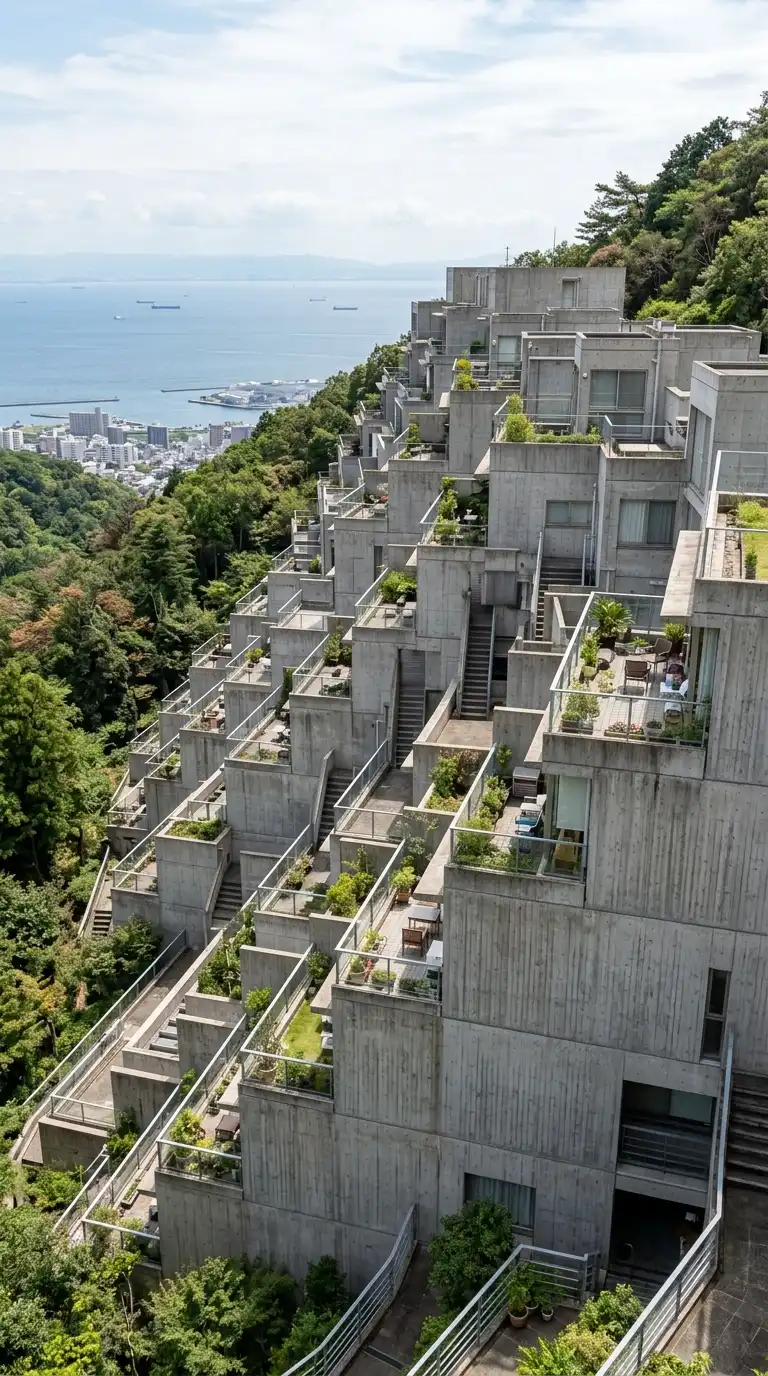
Rokko Housing (1983, 1993, 1999) is a series of apartment buildings on a steep hillside in Kobe, Japan. The buildings step down the slope. Each unit has a terrace facing the sea. The concrete is exposed and board-formed. The buildings are integrated with the hillside.
This design is ideal for steep hillside sites and housing. The emotional effect is terraced, hillside, and sea-facing.
Quick Tips
- The buildings must step down the slope.
- Each unit must have a terrace facing the sea.
- The concrete must be board-formed.
9. The Naoshima Bathhouse
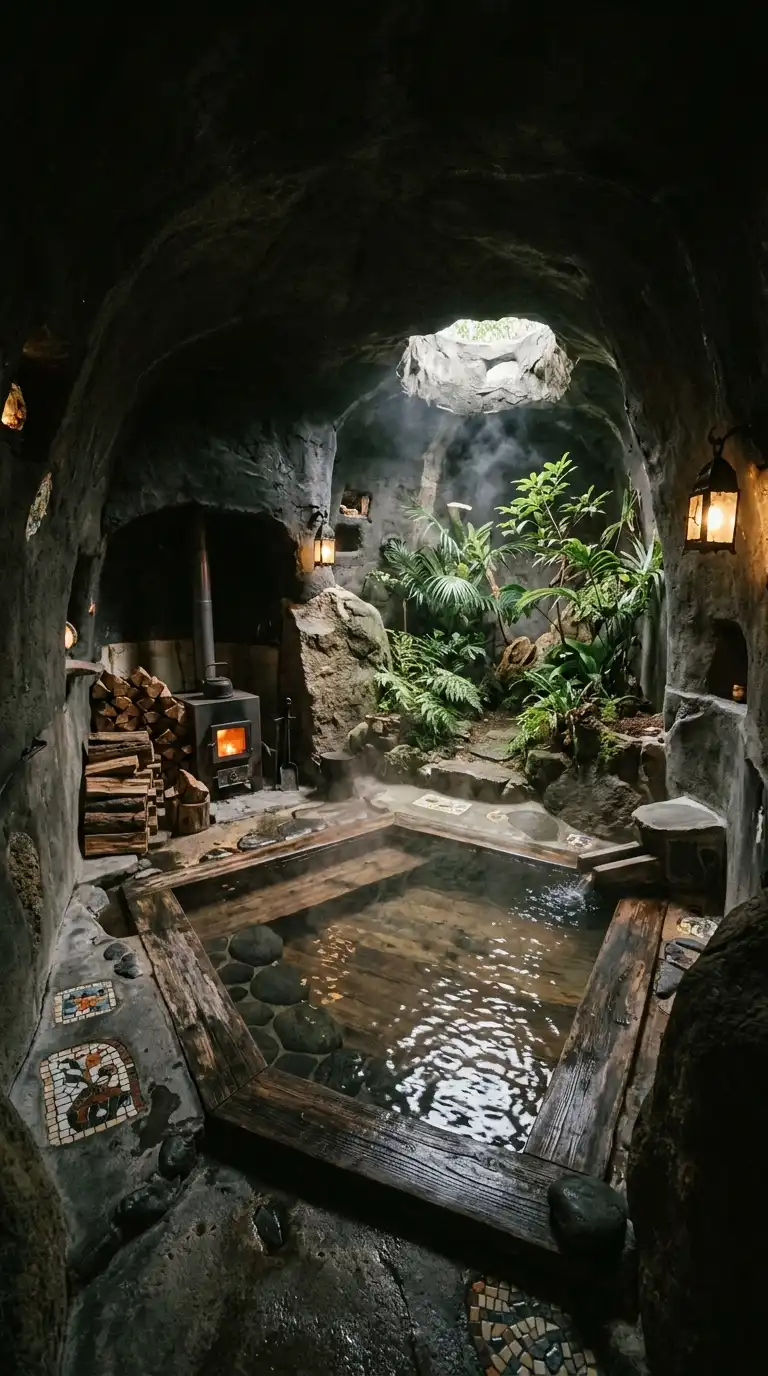
The Naoshima Bathhouse (2009) is a public bathhouse on Naoshima Island. The building is a concrete volume with a large tropical garden inside. The bathhouse is co-ed. The interior is dark and cave-like. The bath is heated by a wood-fired boiler. The bathhouse is playful and unexpected.
This design is ideal for public baths and art islands. The emotional effect is playful, cave-like, and tropical.
Quick Tips
- The building must have a tropical garden inside.
- The interior must be dark and cave-like.
- The bath must be heated by wood.
10. The Modern Art Museum of Fort Worth
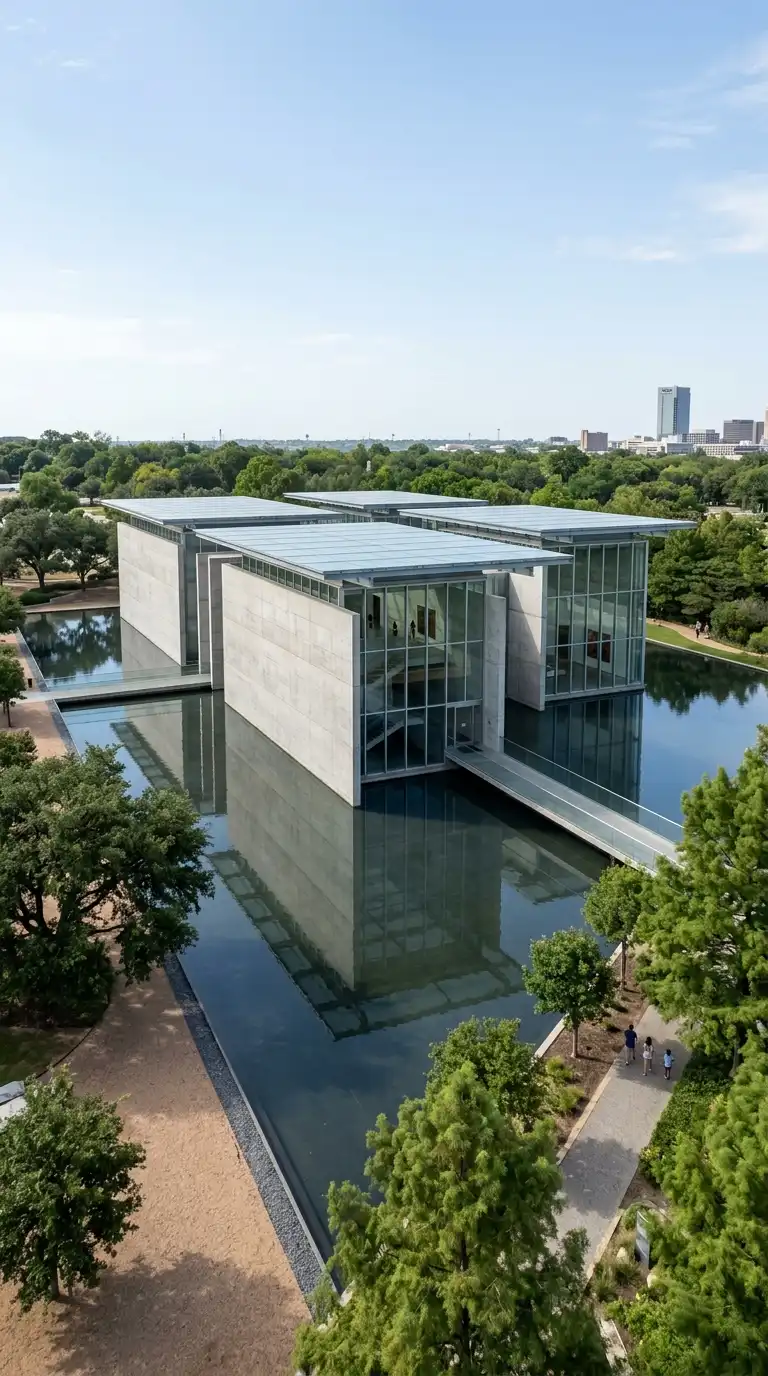
The Modern Art Museum of Fort Worth (2002) is a concrete and glass museum in Texas. The building has five concrete pavilions. The pavilions are topped with glass roofs. The concrete is smooth and board-formed. The museum is surrounded by a reflecting pool. The building floats on water.
This design is ideal for art museums and hot climates. The emotional effect is floating, glass-roofed, and water-surrounded.
Quick Tips
- The building must have concrete pavilions with glass roofs.
- The museum must be surrounded by a reflecting pool.
- The concrete must be smooth and board-formed.
11. The Pulitzer Arts Foundation
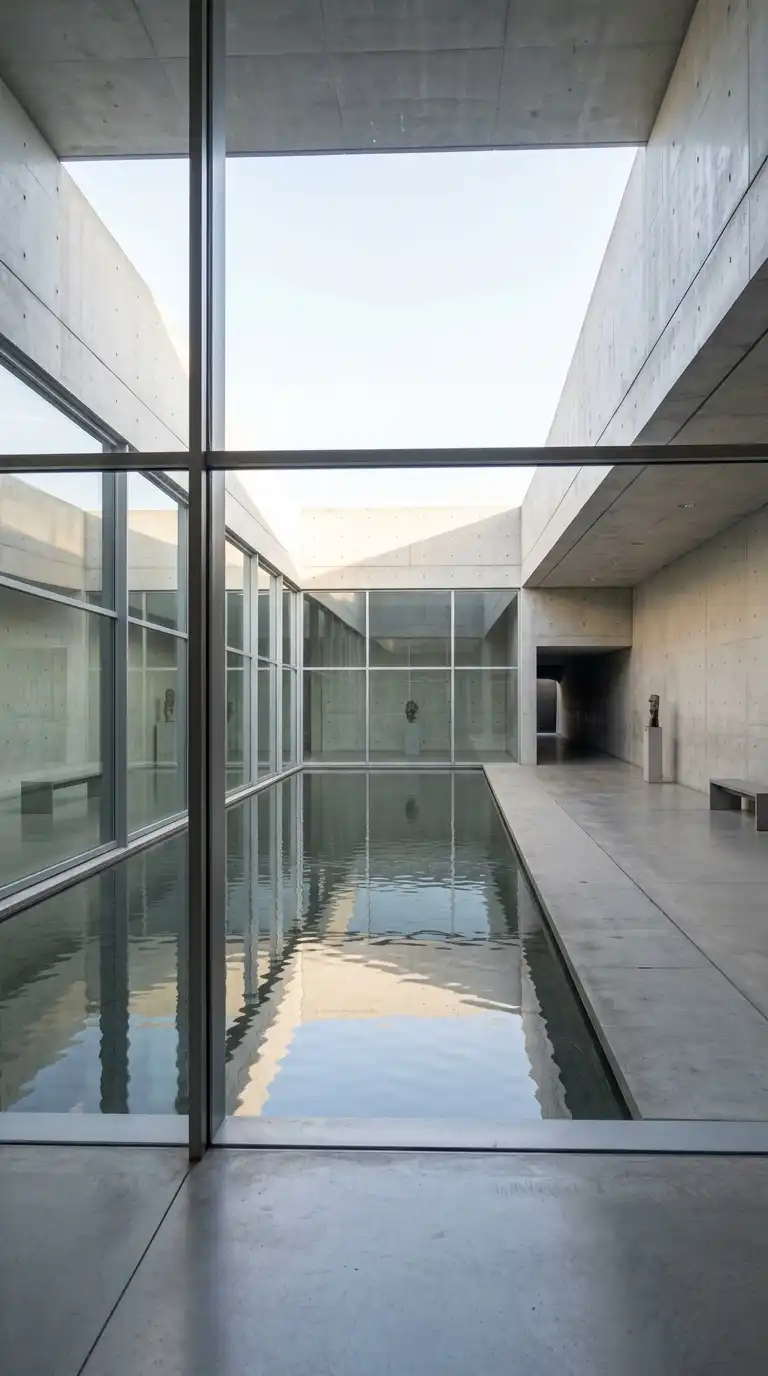
The Pulitzer Arts Foundation (2001) is an art museum in St. Louis, Missouri. The building is a single concrete volume with a large central courtyard. The courtyard is open to the sky. The museum is entered through a tunnel from the street. The interior is silent and meditative.
This design is ideal for art museums and urban sites. The emotional effect is courtyard-centred, tunnel-entered, and meditative.
Quick Tips
- The building must have a central courtyard open to the sky.
- The entrance must be a tunnel from the street.
- The interior must be silent and meditative.
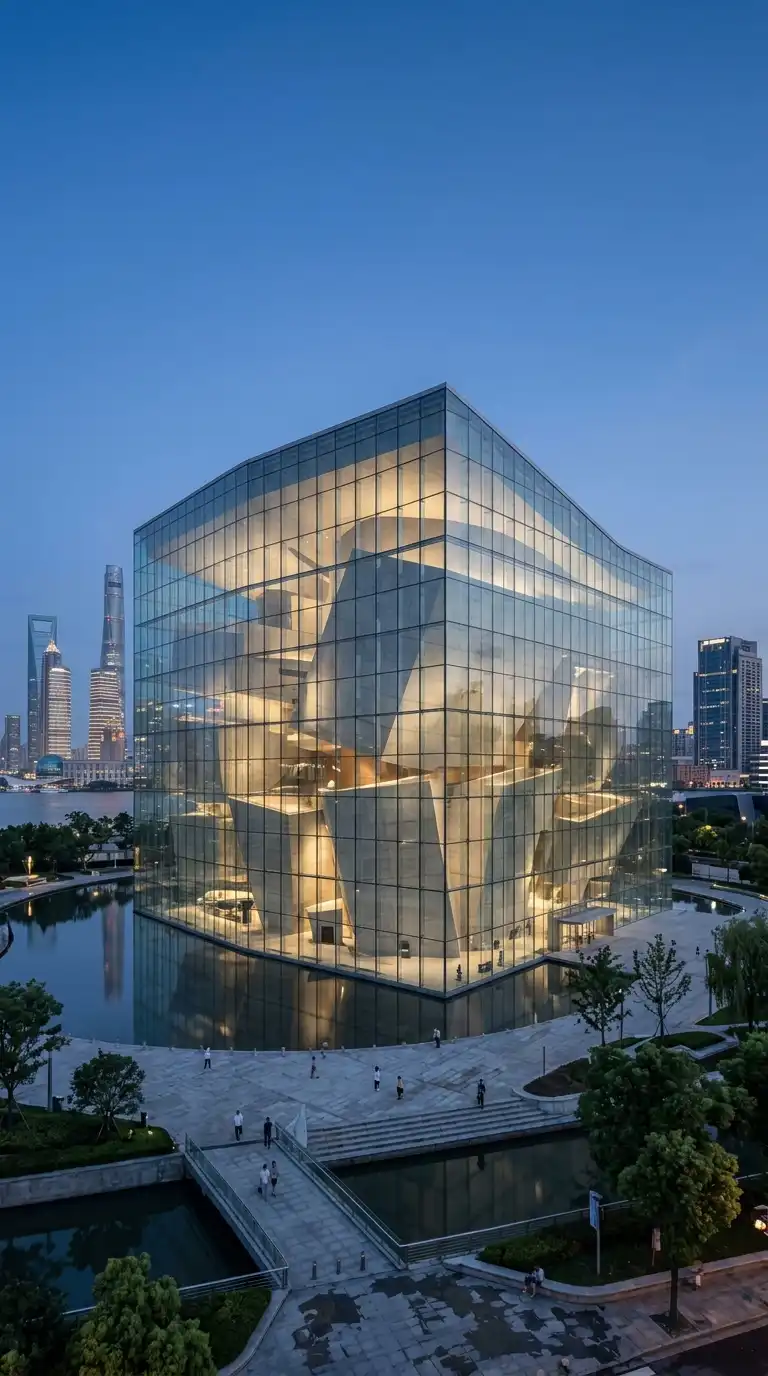
12. The Shanghai Poly Grand Theater
The Shanghai Poly Grand Theater (2014) is a concrete and glass theater in Shanghai, China. The building is wrapped in a glass curtain wall. Behind the glass is a concrete structure of angled walls. The concrete appears to float inside the glass. The theater is dramatic and modern.
This design is ideal for theaters and cultural buildings. The emotional effect is glass-wrapped, angled, and floating.
Quick Tips
- The building must be wrapped in a glass curtain wall.
- The concrete structure must be visible behind the glass.
- The concrete walls must be angled.
Final Thoughts
Tadao Ando builds in concrete. But his concrete is not cold — it is warm, silky, and precise. He uses light, water, and geometry to create spiritual spaces. A courtyard is open to the sky. A cross cut in concrete is filled with light. A lotus pond hides a temple. A reflecting pool makes a museum float. Ando’s architecture is silent. It does not shout. It waits.
These 12 Ando designs are not mutually exclusive. A row house can have a courtyard. A church can have a cross of light. A museum can be underground. The best Ando architecture is not the most complex — it is the most essential. It is concrete, light, and water. It is geometry, silence, and spirit. It is Tadao Ando.
