Skip to content
An exploded axonometric is a drawing that takes a building apart layer by layer. Floors, walls, roof, and structure float apart along a vertical or diagonal axis. The space between the layers shows how the building is assembled. The exploded axonometric is both technical and dramatic. It explains construction while creating a beautiful image.
These 13 exploded axonometric architecture ideas span houses, museums, towers, and details. Each design includes defining characteristics, drawing principles, and architectural applications.
1. The House Exploded
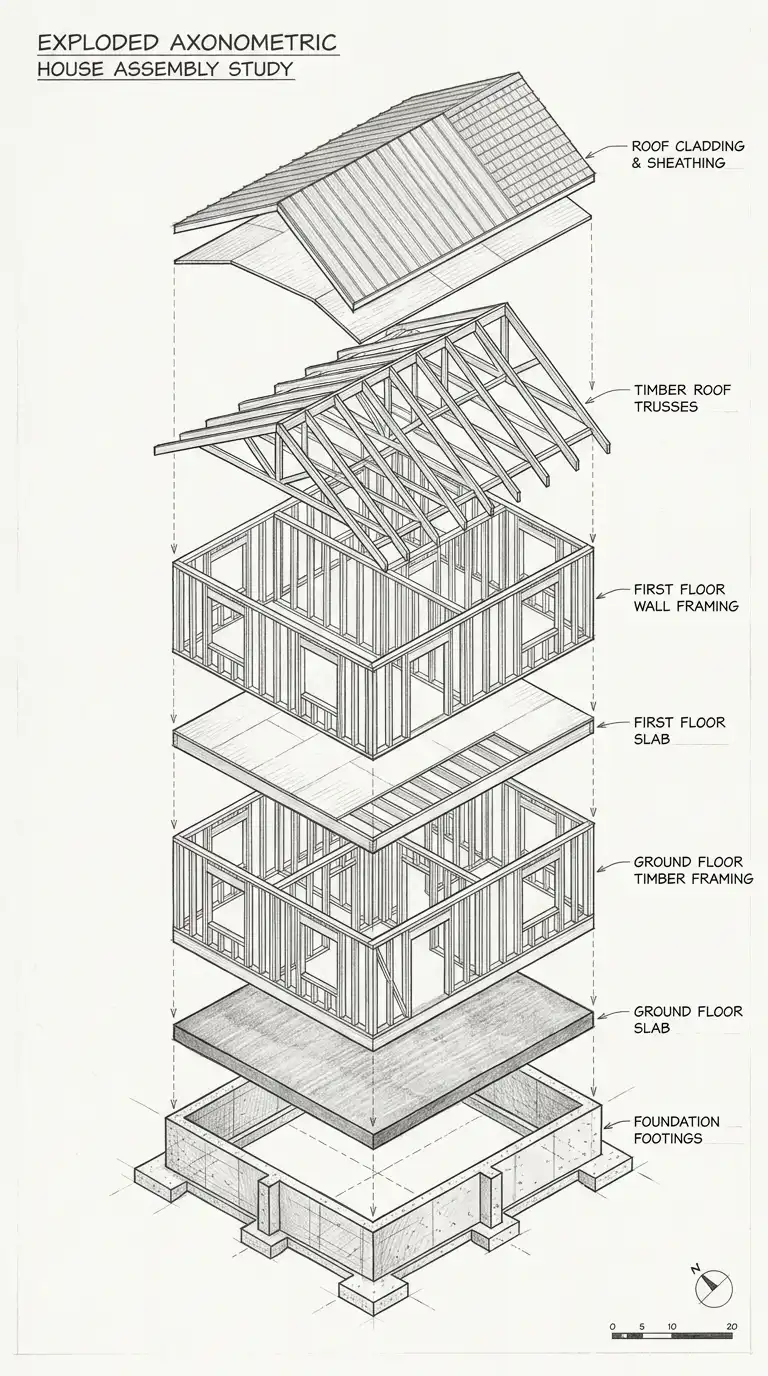
The house exploded takes a single-family house apart. Layers float vertically: foundation, ground floor slab, wall framing, first floor slab, roof structure, roof cladding. Each layer is spaced evenly. Leader lines connect each component to its position. The house exploded is educational, dramatic, and tectonic.
This drawing is ideal for construction documentation and client presentations. The emotional effect is educational, dramatic, and tectonic.
Quick Tips
- Space the layers evenly — 2-5cm between layers is typical.
- Use leader lines to connect components to their positions.
- Keep the explosion direction consistent — vertical is most common.
2. The Apartment Building Exploded
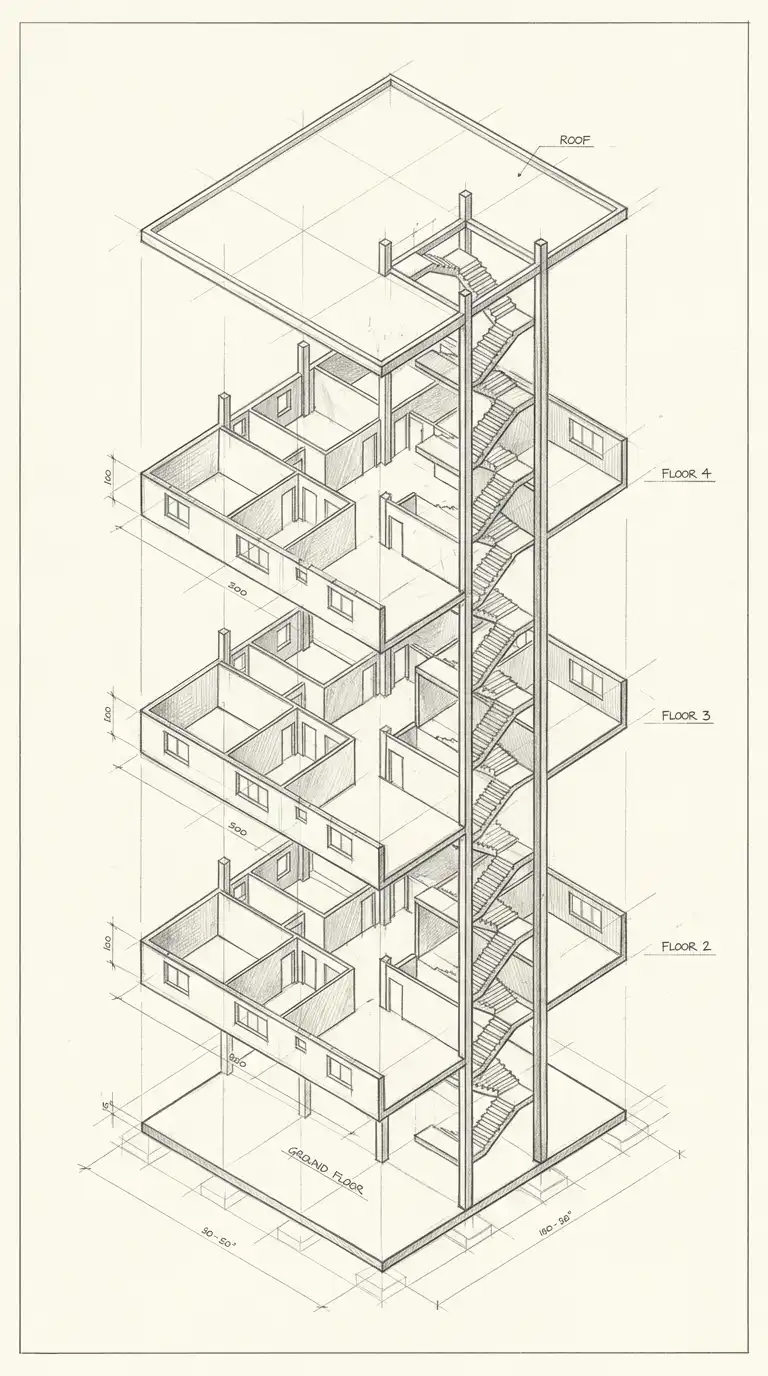
The apartment building exploded takes a multi-storey building apart. Each floor slab floats apart. The columns remain in place. The stairs are shown as a continuous element. The apartment building exploded is systematic, repetitive, and structural.
This drawing is ideal for housing projects and multi-storey buildings. The emotional effect is systematic, repetitive, and structural.
Quick Tips
- Keep columns in place; explode floor slabs only.
- Show stairs as a continuous element through all floors.
- Use a regular grid for consistency.
3. The Museum Exploded
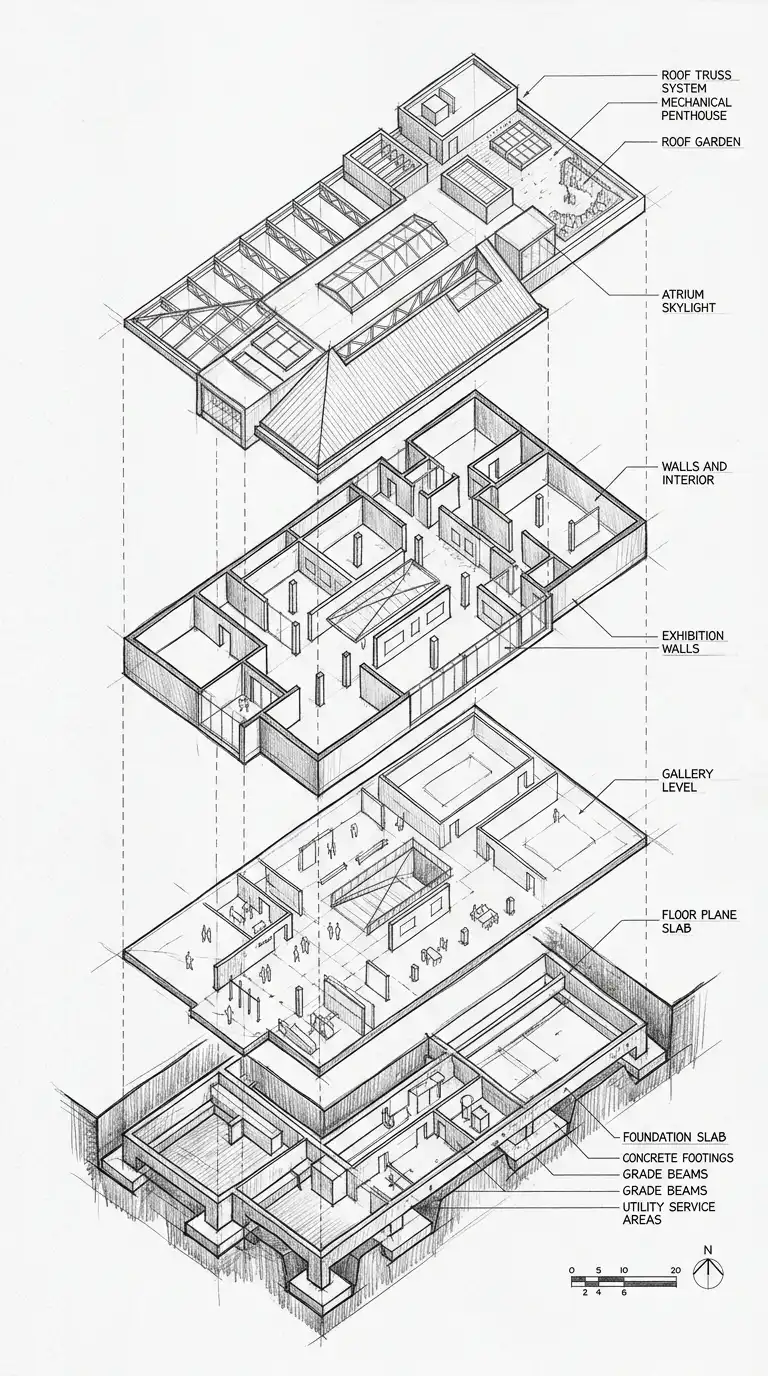
The museum exploded takes a cultural building apart. The roof floats above the walls. The walls float above the floor. The floor floats above the foundation. The museum exploded is dramatic, hierarchical, and institutional.
This drawing is ideal for museums, galleries, and cultural centres. The emotional effect is dramatic, hierarchical, and institutional.
Quick Tips
- Explode roof, walls, floor, and foundation separately.
- Show the interior galleries through the exploded layers.
- Use a diagonal explosion for drama.
4. The Tower Exploded
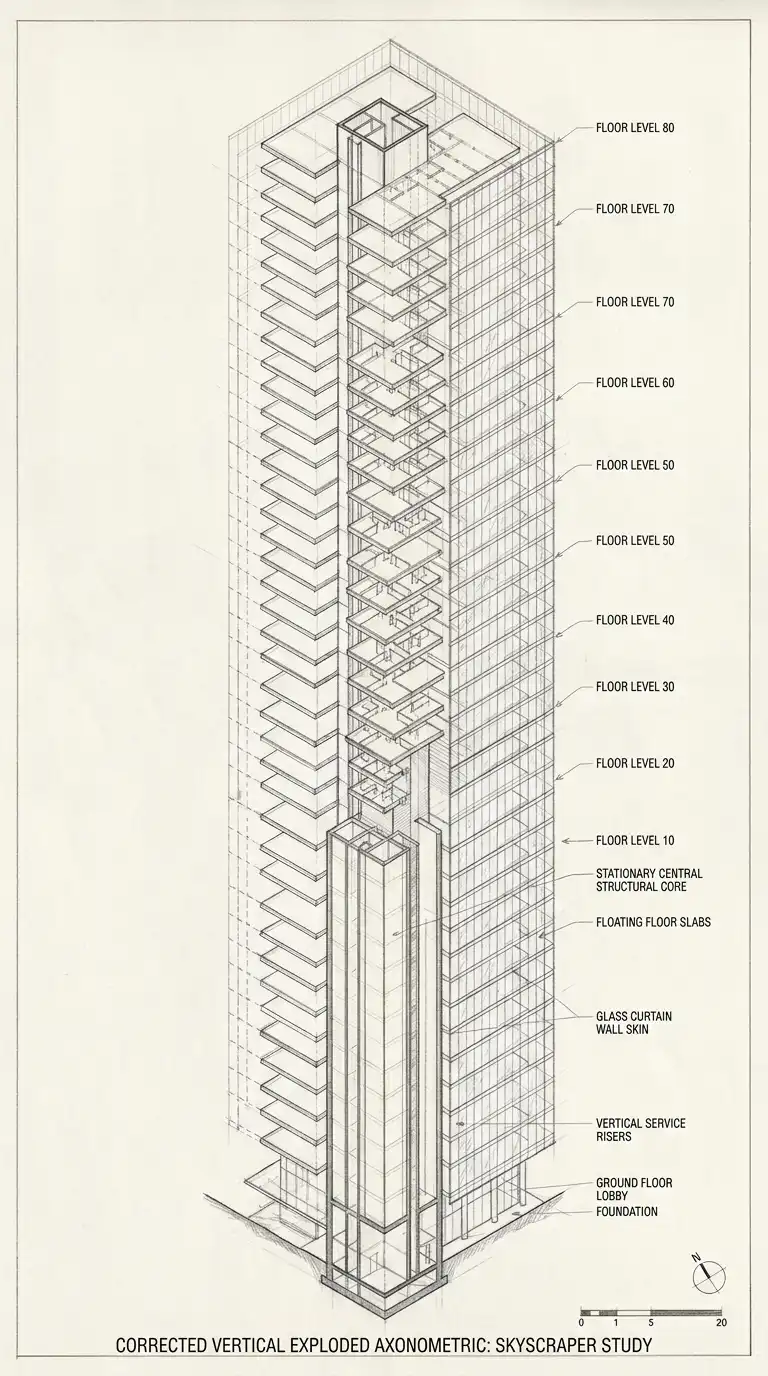
The tower exploded takes a skyscraper apart. Each floor slab floats apart. The core remains in place. The curtain wall is shown as a skin around the floors. The tower exploded is vertical, repetitive, and urban.
This drawing is ideal for skyscrapers and tall buildings. The emotional effect is vertical, repetitive, and urban.
Quick Tips
- Keep the core in place; explode floor slabs.
- Show the curtain wall as a transparent skin.
- Use a vertical explosion for height.
5. The Detail Exploded
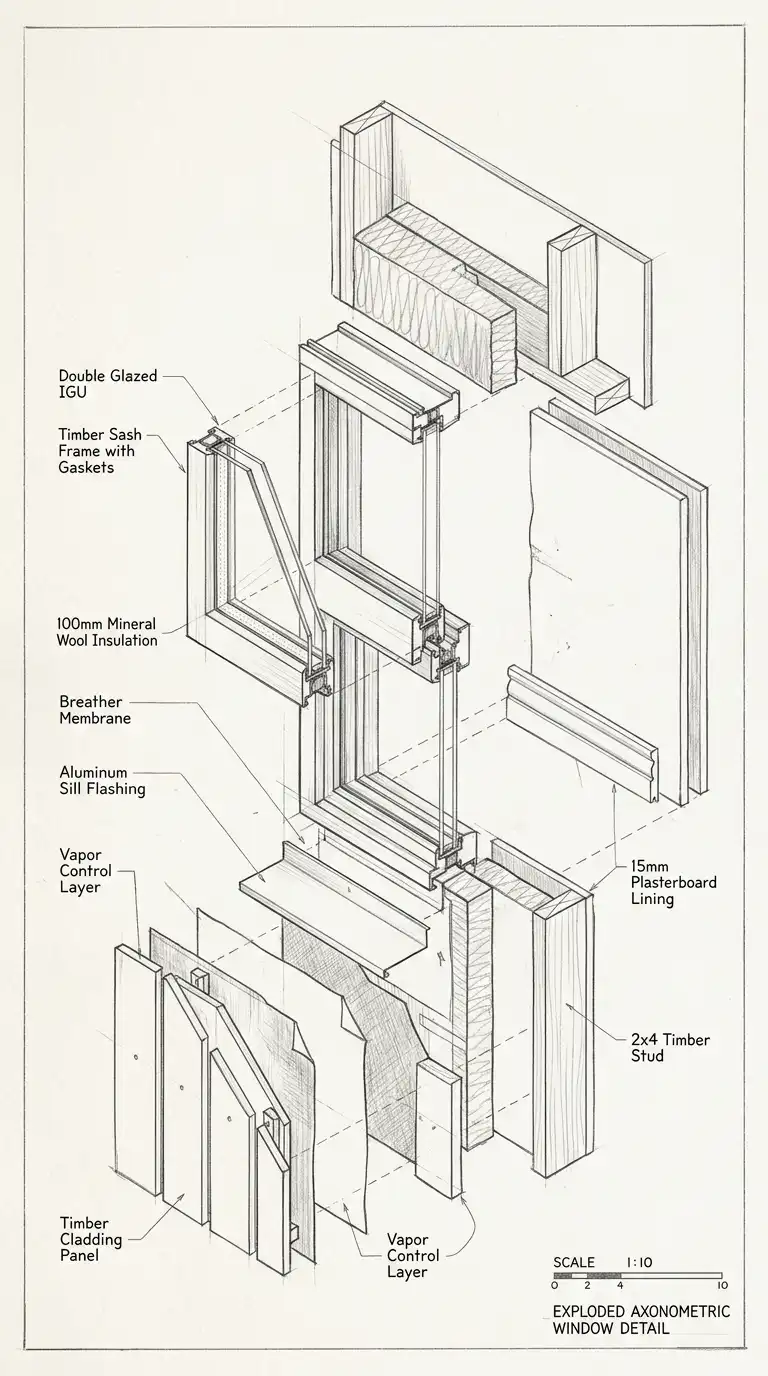
The detail exploded takes a small part of a building apart at a large scale. A window, a door, a stair, a corner. Each component — frame, glass, insulation, cladding — floats apart. The detail exploded is precise, tectonic, and educational.
This drawing is ideal for construction details and technical documentation. The emotional effect is precise, tectonic, and educational.
Quick Tips
- Draw at a large scale (1:10 or 1:5).
- Explode each component separately.
- Label every component.
6. The Structural Exploded
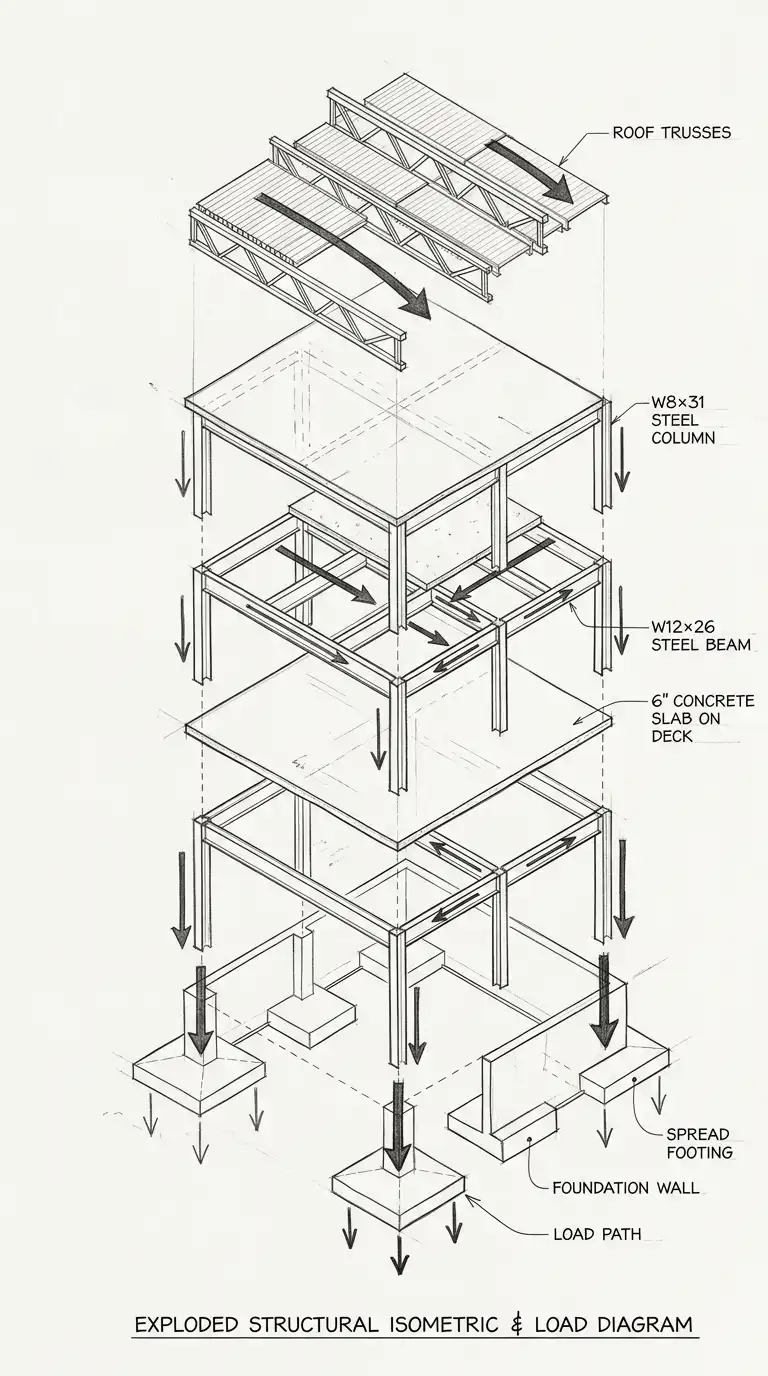
The structural exploded takes the building’s structure apart. Columns, beams, slabs, and foundations float apart. The structural exploded shows how loads are transferred from roof to foundation. The structural exploded is technical, analytical, and educational.
This drawing is ideal for engineering coordination and structural studies. The emotional effect is technical, analytical, and educational.
Quick Tips
- Show only structure — no walls, no cladding.
- Explode from roof to foundation.
- Use arrows to show load paths.
7. The Mechanical Exploded
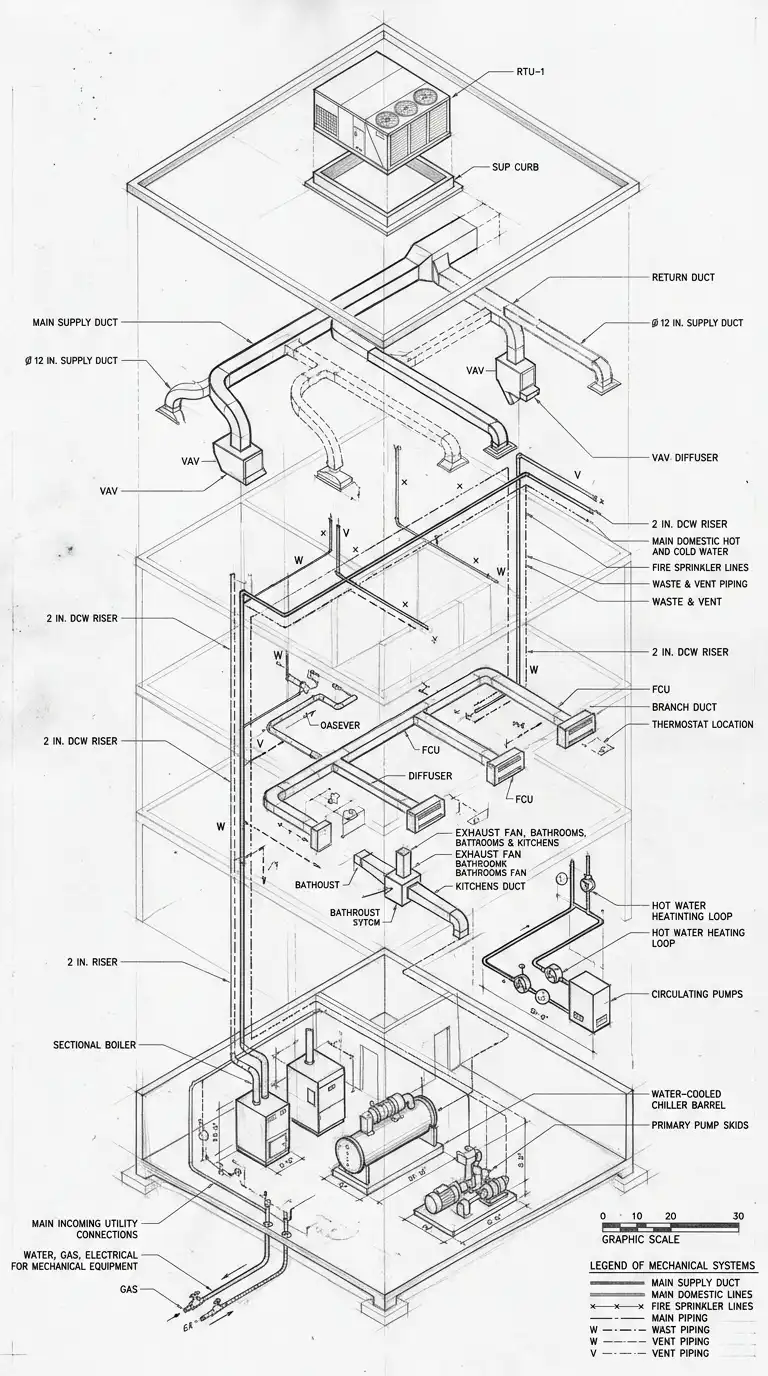
The mechanical exploded takes the building’s mechanical systems apart. Ducts, pipes, vents, and equipment float apart. The mechanical exploded shows how air, water, and heat move through the building. The mechanical exploded is technical, infrastructural, and educational.
This drawing is ideal for MEP coordination and mechanical studies. The emotional effect is technical, infrastructural, and educational.
Quick Tips
- Show only mechanical systems — no structure, no walls.
- Use different line weights for different systems (air, water, waste).
- Colour-code systems if possible.
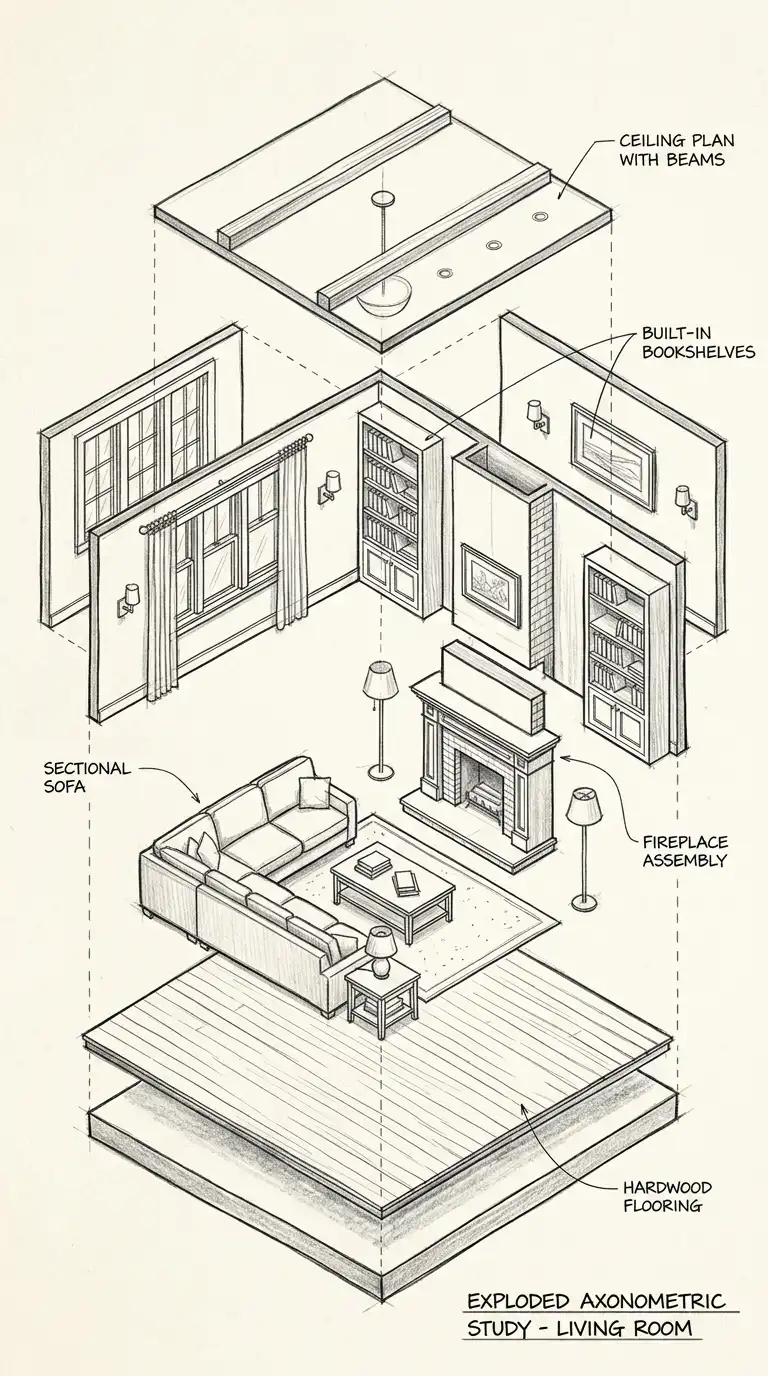
8. The Interior Exploded
The interior exploded takes a room apart. Walls, ceiling, floor, furniture, and lighting float apart. The interior exploded shows how a space is assembled. The interior exploded is spatial, tectonic, and domestic.
This drawing is ideal for interior design and residential projects. The emotional effect is spatial, tectonic, and domestic.
Quick Tips
- Show walls, ceiling, floor, furniture, and lighting.
- Explode vertically or diagonally.
- Keep the explosion consistent.
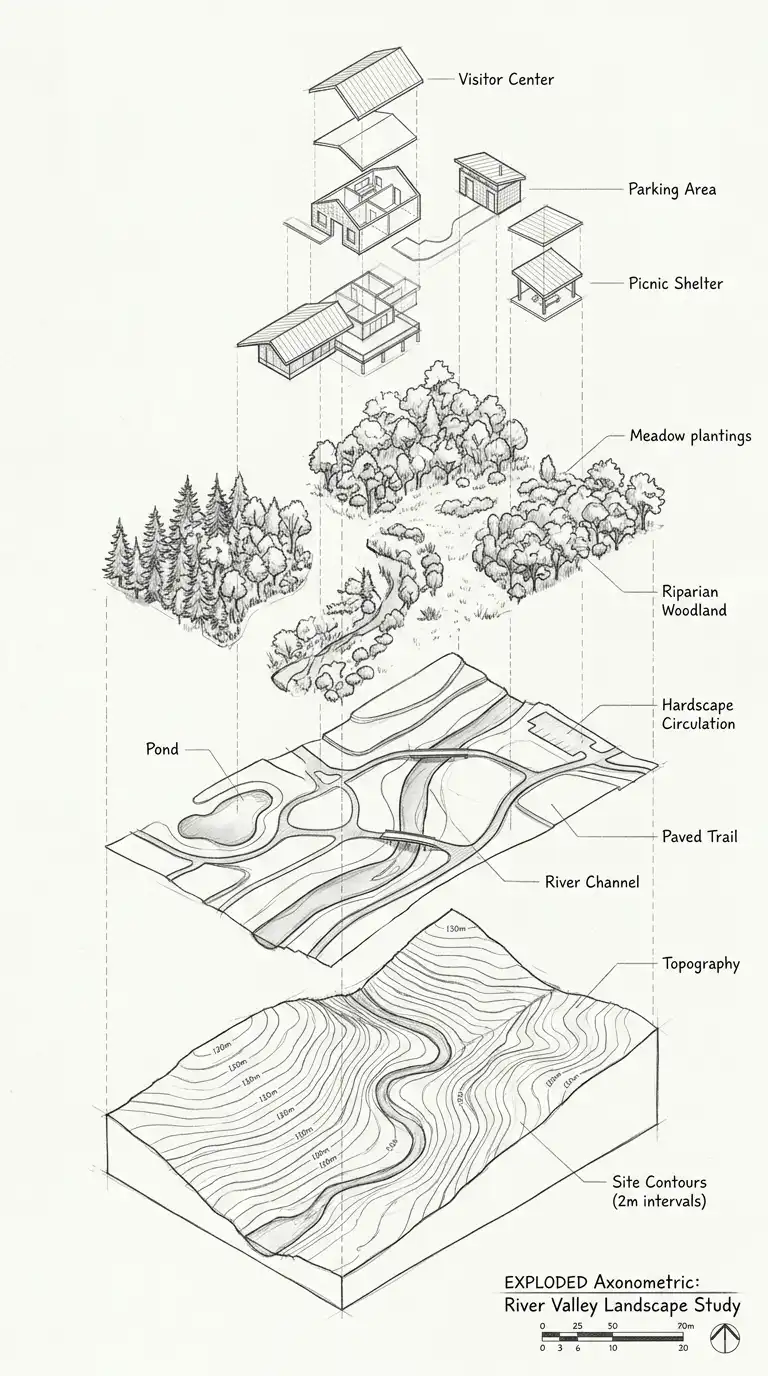
9. The Landscape Exploded
The landscape exploded takes a site apart. Contour lines, trees, paths, buildings, and water features float apart. The landscape exploded shows how the site is organised. The landscape exploded is topographic, ecological, and site-specific.
This drawing is ideal for landscape architecture and site planning. The emotional effect is topographic, ecological, and site-specific.
Quick Tips
- Show contour lines, trees, paths, buildings, and water.
- Explode vertically.
- Keep the site recognisable.
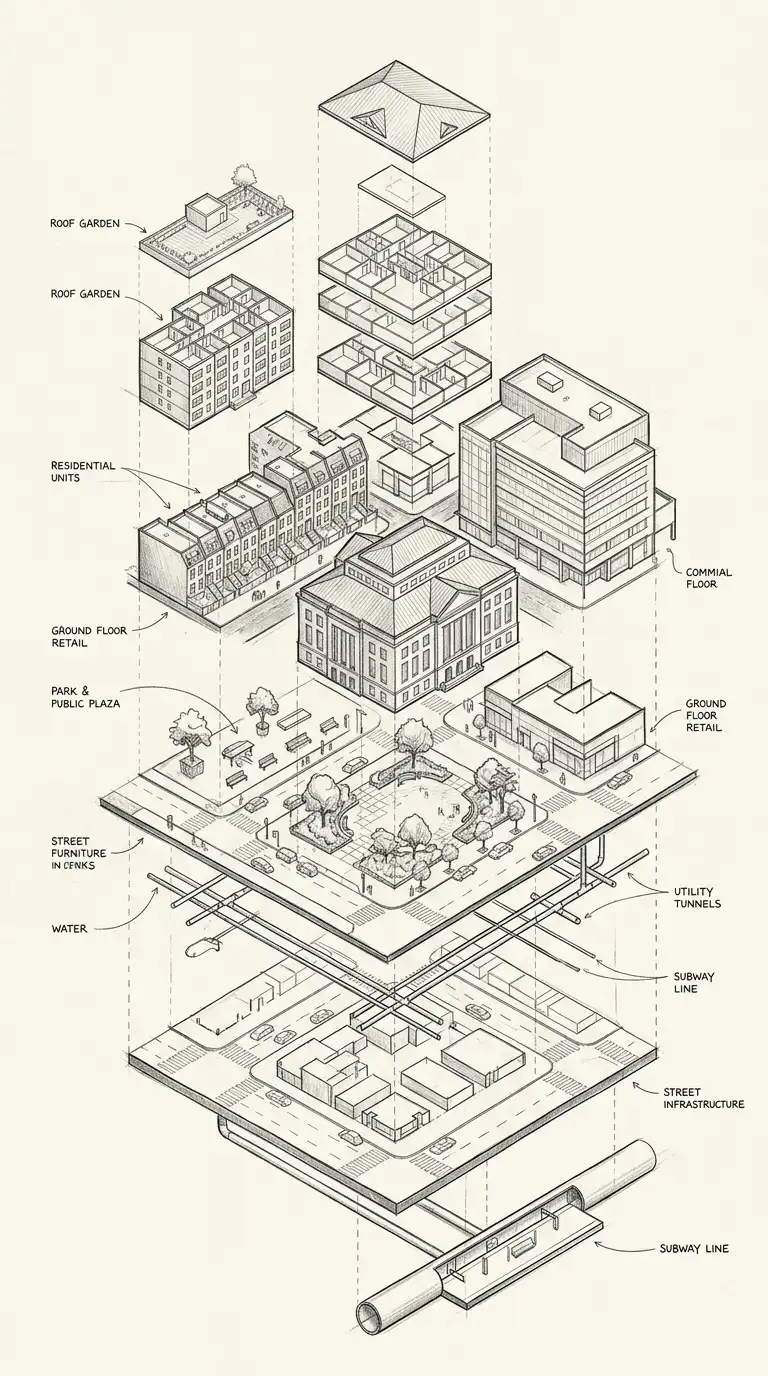
10. The Urban Exploded
The urban exploded takes a city block apart. Buildings, streets, parks, and infrastructure float apart. The urban exploded shows how the city is organised. The urban exploded is urban, systematic, and analytical.
This drawing is ideal for urban design and master planning. The emotional effect is urban, systematic, and analytical.
Quick Tips
- Show buildings, streets, parks, and infrastructure.
- Explode vertically.
- Keep the block recognisable.
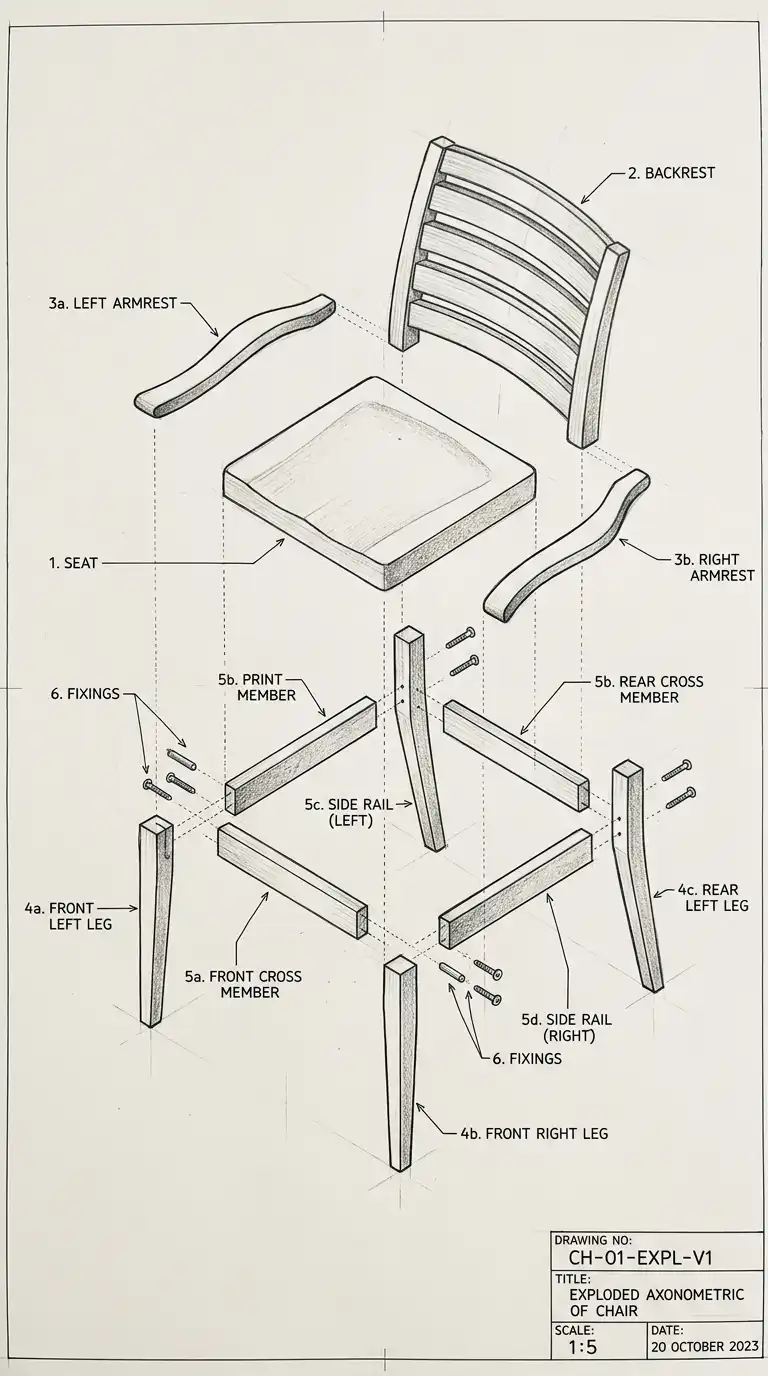
11. The Product Exploded
The product exploded takes a building component apart. A chair, a window, a door, a light fixture. Each part floats apart. The product exploded is precise, manufactured, and tectonic.
This drawing is ideal for furniture design and product design. The emotional effect is precise, manufactured, and tectonic.
Quick Tips
- Draw at a large scale (1:5 or 1:2).
- Explode each part separately.
- Label every part.
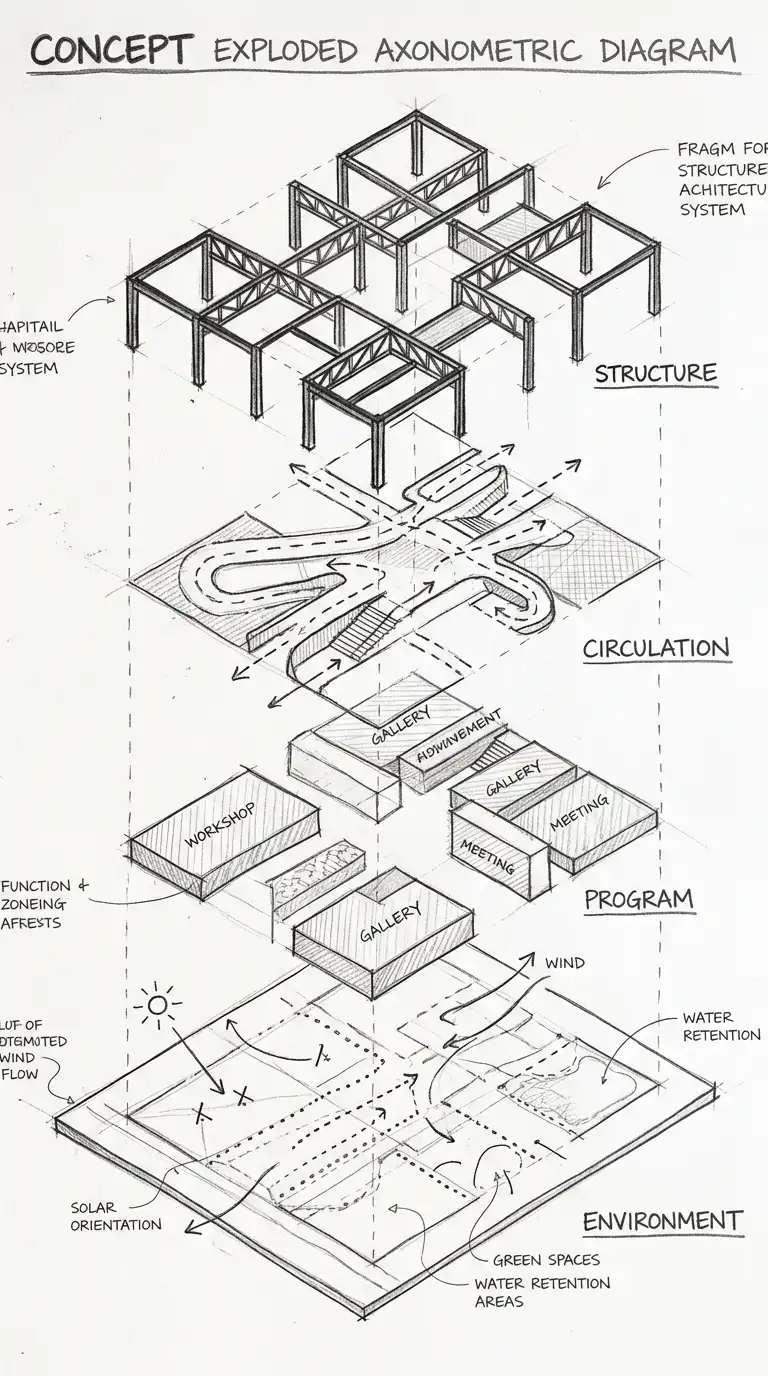
12. The Concept Exploded
The concept exploded takes a design idea apart. Layers of program, circulation, structure, and environment float apart. The concept exploded shows the thinking behind the building. The concept exploded is diagrammatic, analytical, and conceptual.
This drawing is ideal for early design stages and concept presentations. The emotional effect is diagrammatic, analytical, and conceptual.
Quick Tips
- Show program, circulation, structure, and environment as layers.
- Use different colours or line weights for each layer.
- Keep the drawing abstract.
13. The Composite Exploded
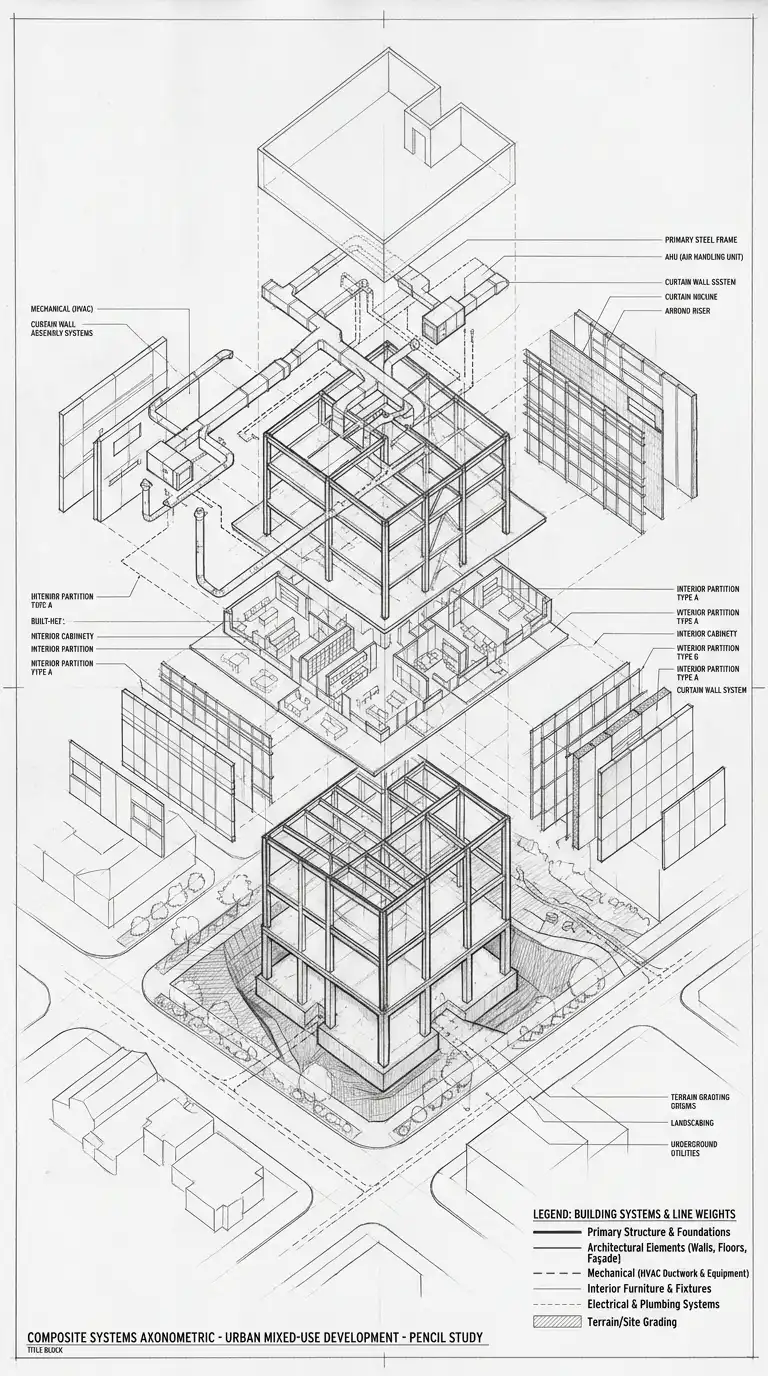
The composite exploded combines multiple exploded drawings into one. Structure, mechanical, interior, and site are all exploded together. The composite exploded is complex, dense, and comprehensive.
This drawing is ideal for large projects and comprehensive documentation. The emotional effect is complex, dense, and comprehensive.
Quick Tips
- Use different line weights or colours for different systems.
- Keep the explosion direction consistent.
- Include a legend explaining each system.