Skip to content
A stair is not just a way to get from one floor to another. It is a spatial event. A great stair can be dramatic, sculptural, light, or monumental. It can be the centre of a building. It can be hidden. It can be celebrated. The stair is one of the most expressive elements in architecture.
These 15 stair design architecture ideas span residential, public, and monumental stairs. Each design includes defining characteristics, structural principles, and spatial strategies.
1. The Cantilevered Stair
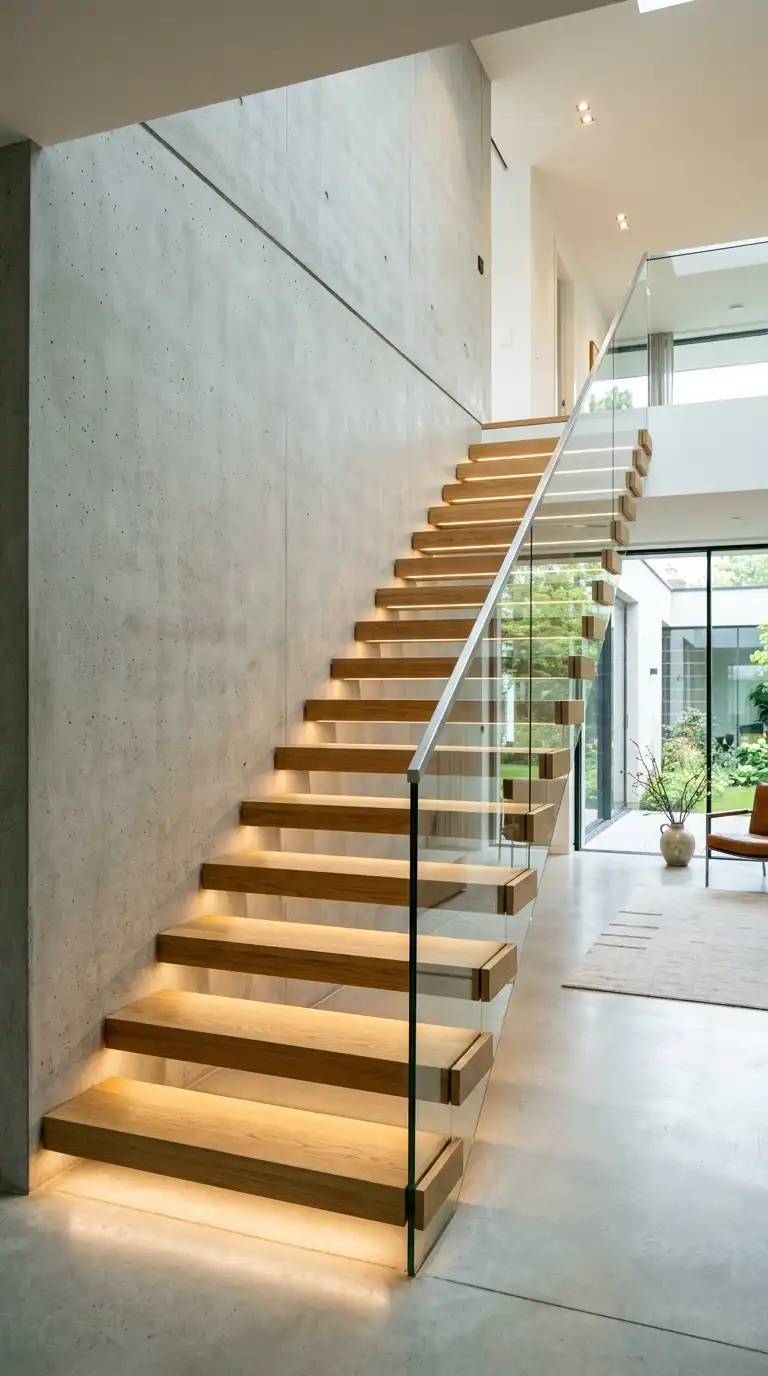
The cantilevered stair has treads that project from a wall with no visible supports. Each tread is anchored into the wall. The treads appear to float. The cantilevered stair is light, dramatic, and floating.
This design is ideal for modern houses and lofts. The emotional effect is light, dramatic, and floating.
Quick Tips
- Each tread must be structurally anchored into a wall.
- Use a glass or metal railing to maintain the floating effect.
- Light the treads from below to emphasise the floating.
2. The Spiral Stair
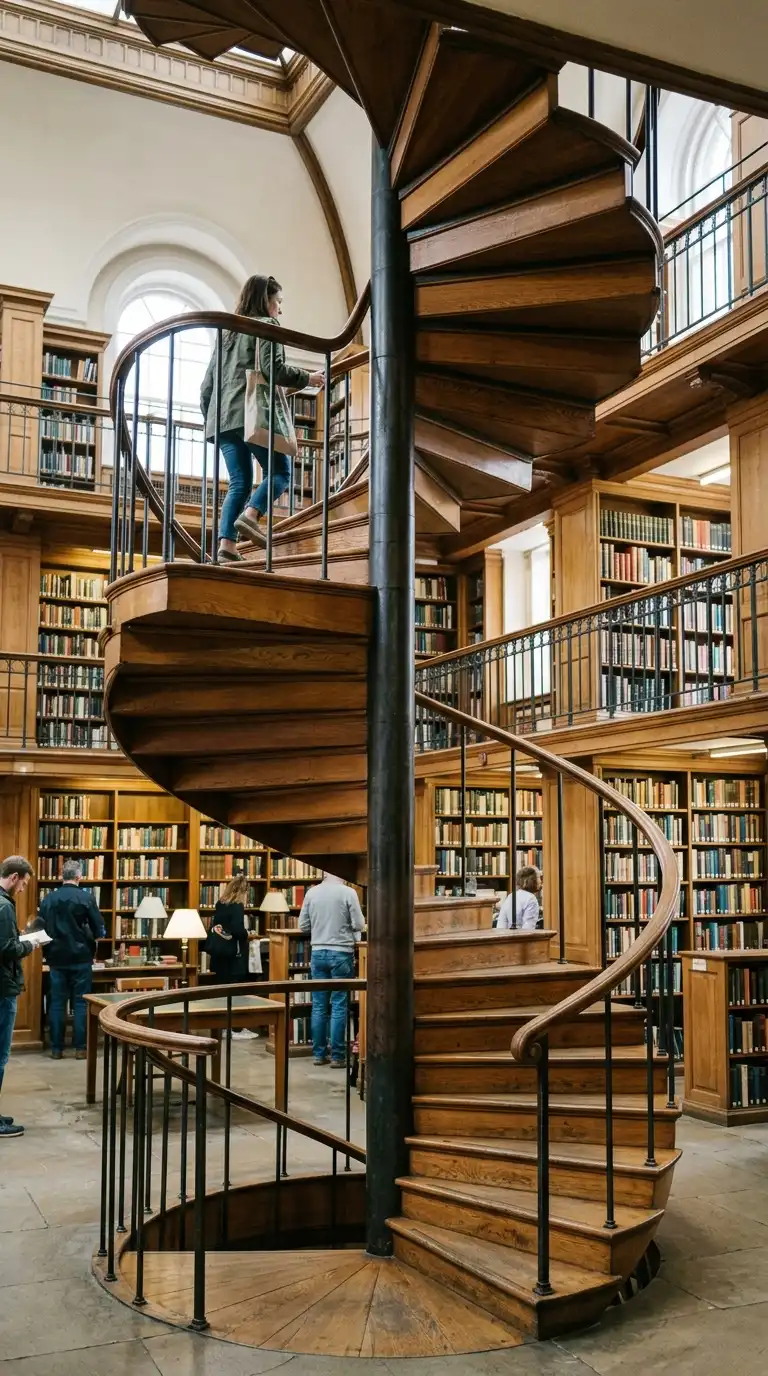
The spiral stair winds around a central column. The treads are wedge-shaped. The spiral stair is compact and efficient. The spiral stair is sculptural, circular, and space-saving.
This design is ideal for tight spaces and towers. The emotional effect is sculptural, circular, and space-saving.
Quick Tips
- The central column must be structural.
- Treads must be wedge-shaped (narrow at the centre, wide at the edge).
- The spiral must have a consistent radius.
3. The Floating Stair
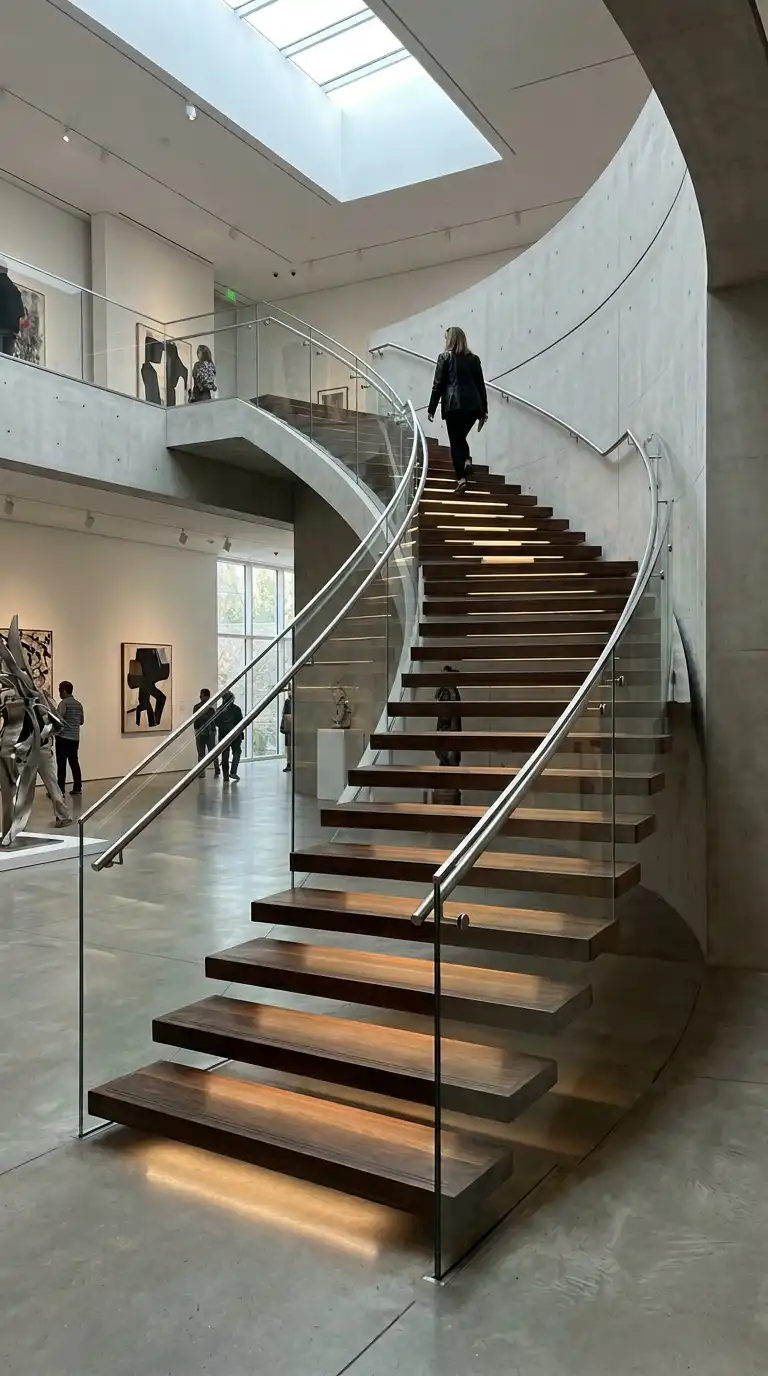
The floating stair has no visible support at all. The treads are cantilevered from a wall or suspended from above. The stair appears to float in space. The floating stair is weightless, dramatic, and impossible-looking.
This design is ideal for contemporary houses and galleries. The emotional effect is weightless, dramatic, and impossible-looking.
Quick Tips
- Treads can be cantilevered from a wall or suspended from above.
- The handrail must be minimal (glass or thin metal).
- Light the stair from above and below.
4. The Monumental Stair
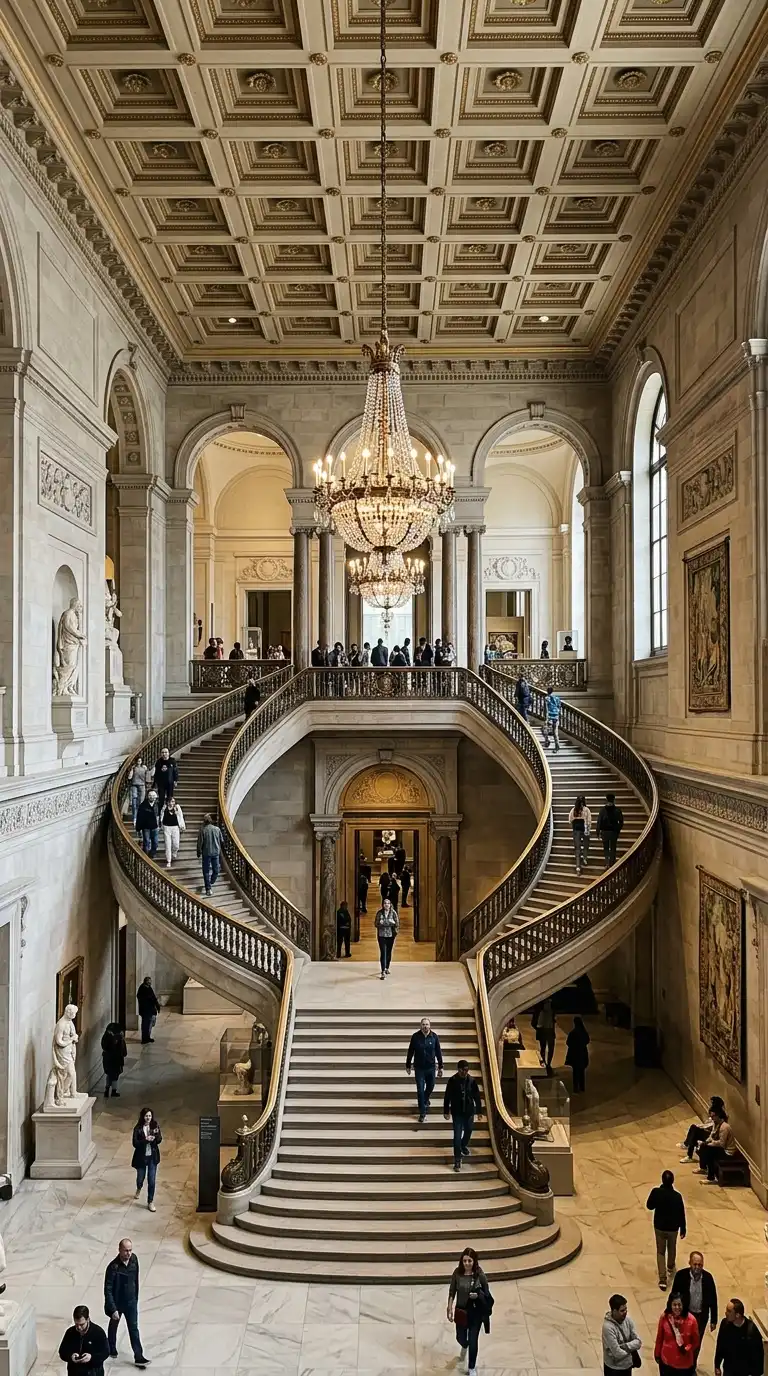
The monumental stair is wide, grand, and ceremonial. It is often in a public building — a courthouse, a museum, a capitol. The stair splits into two flights that curve around an open centre. The monumental stair is grand, symmetrical, and ceremonial.
This design is ideal for public buildings and grand entrances. The emotional effect is grand, symmetrical, and ceremonial.
Quick Tips
- The stair must be wide (at least 3 metres).
- The stair should split into two flights curving around an open centre.
- The ceiling above should be high and decorated.
5. The Dogleg Stair
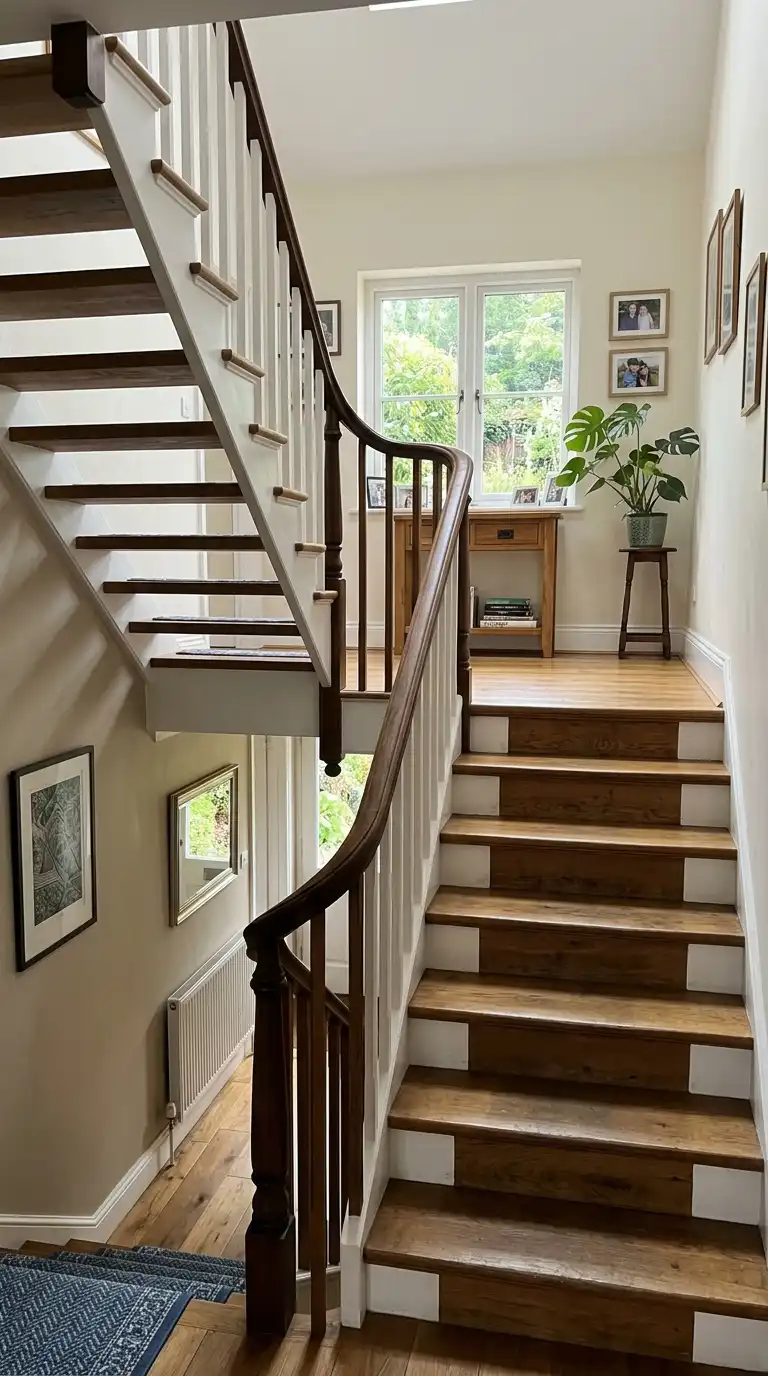
The dogleg stair is a straight stair with a 180-degree turn at a landing. The stair goes up, turns, and continues up. The dogleg stair is efficient and compact. The dogleg stair is efficient, turning, and space-saving.
This design is ideal for houses and apartments. The emotional effect is efficient, turning, and space-saving.
Quick Tips
- The landing must be at least as deep as the tread width.
- The turn must be 180 degrees.
- The handrail must be continuous through the turn.
6. The Winder Stair
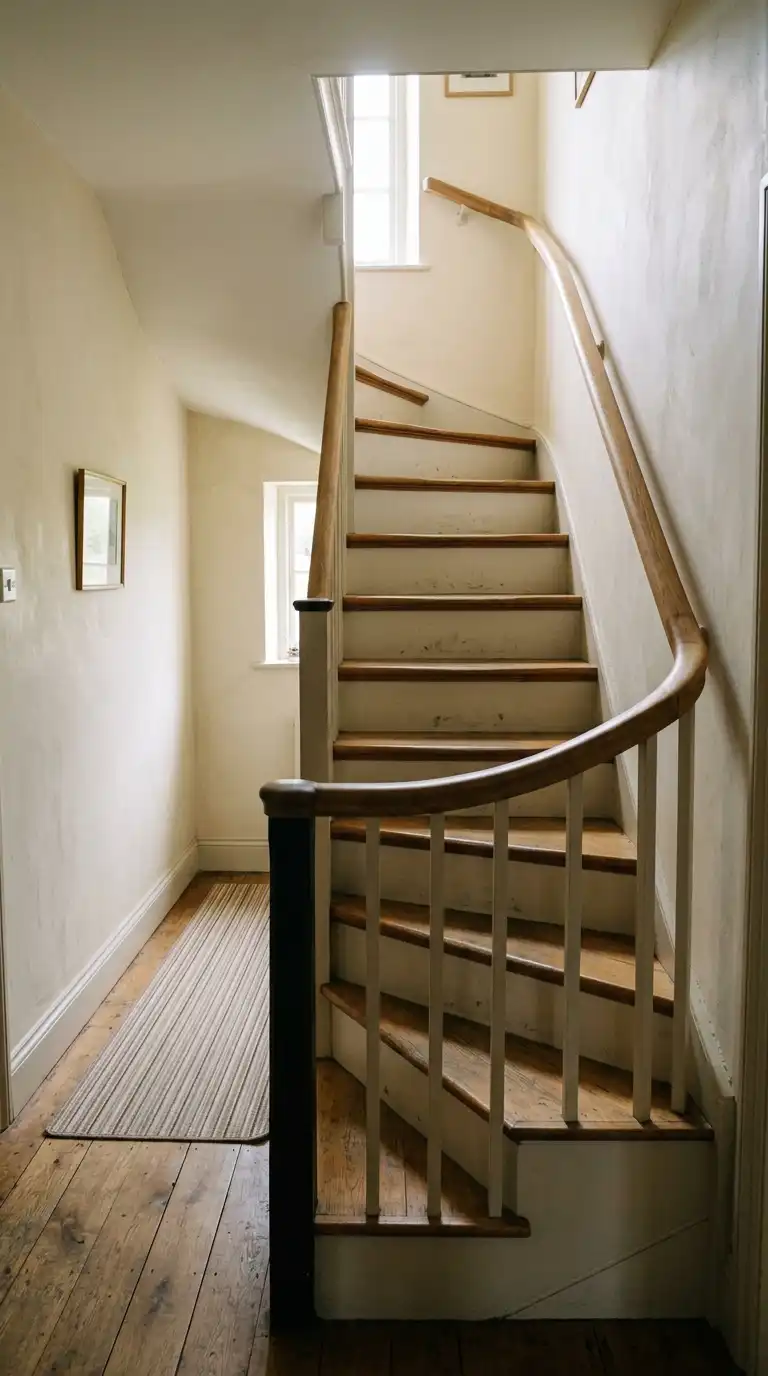
The winder stair has treads that are wider on one side than the other, allowing the stair to turn without a landing. The winder stair is compact and efficient. The winder stair is turning, compact, and space-saving.
This design is ideal for tight spaces and small houses. The emotional effect is turning, compact, and space-saving.
Quick Tips
- The narrowest part of the tread must be at least 150mm wide.
- The widest part of the tread must be at least 250mm wide.
- The turn must be gradual, not sharp.
7. The Open Riser Stair
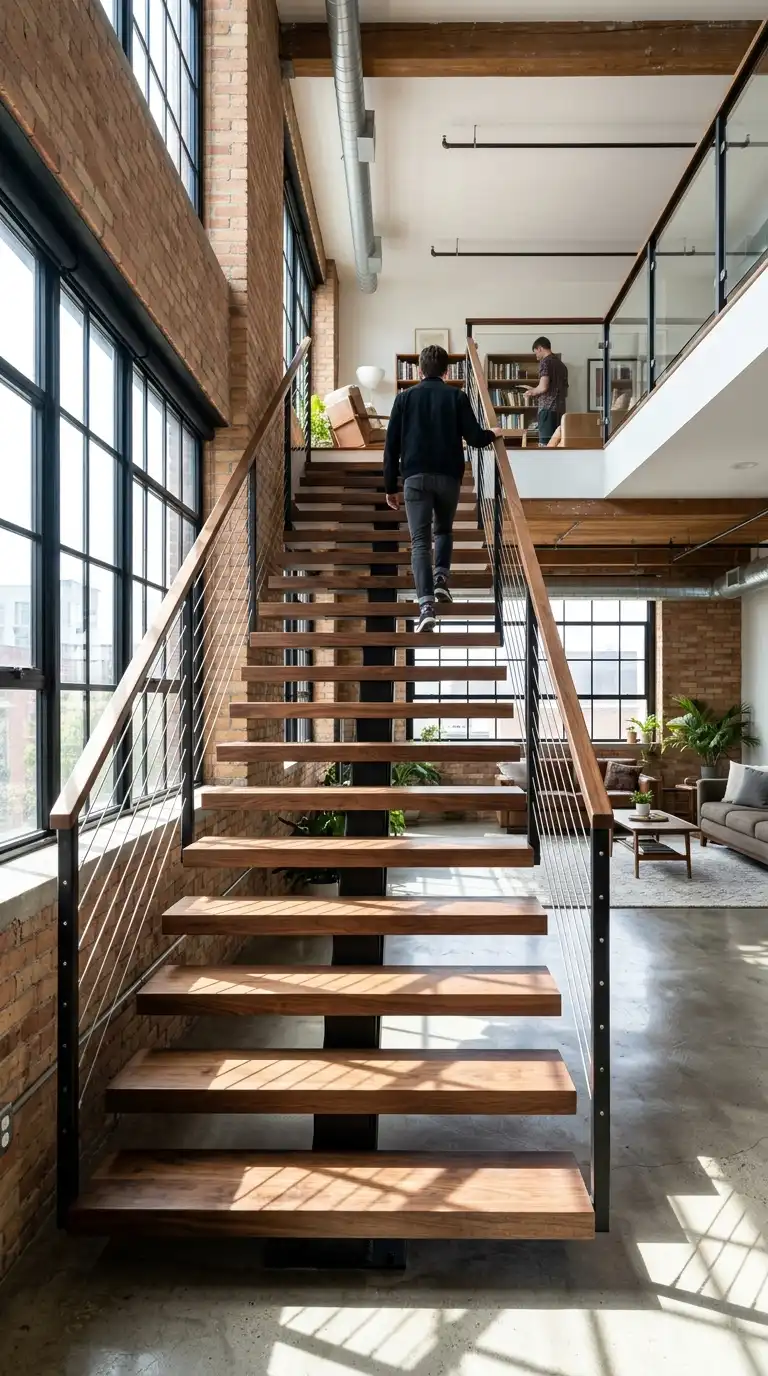
The open riser stair has no vertical risers between treads. You can see through the stair. The open riser stair is light, transparent, and modern.
This design is ideal for modern houses and lofts. The emotional effect is light, transparent, and modern.
Quick Tips
- There must be no risers between treads.
- The gap between treads must be less than 100mm for safety.
- The treads must be thick enough for strength.
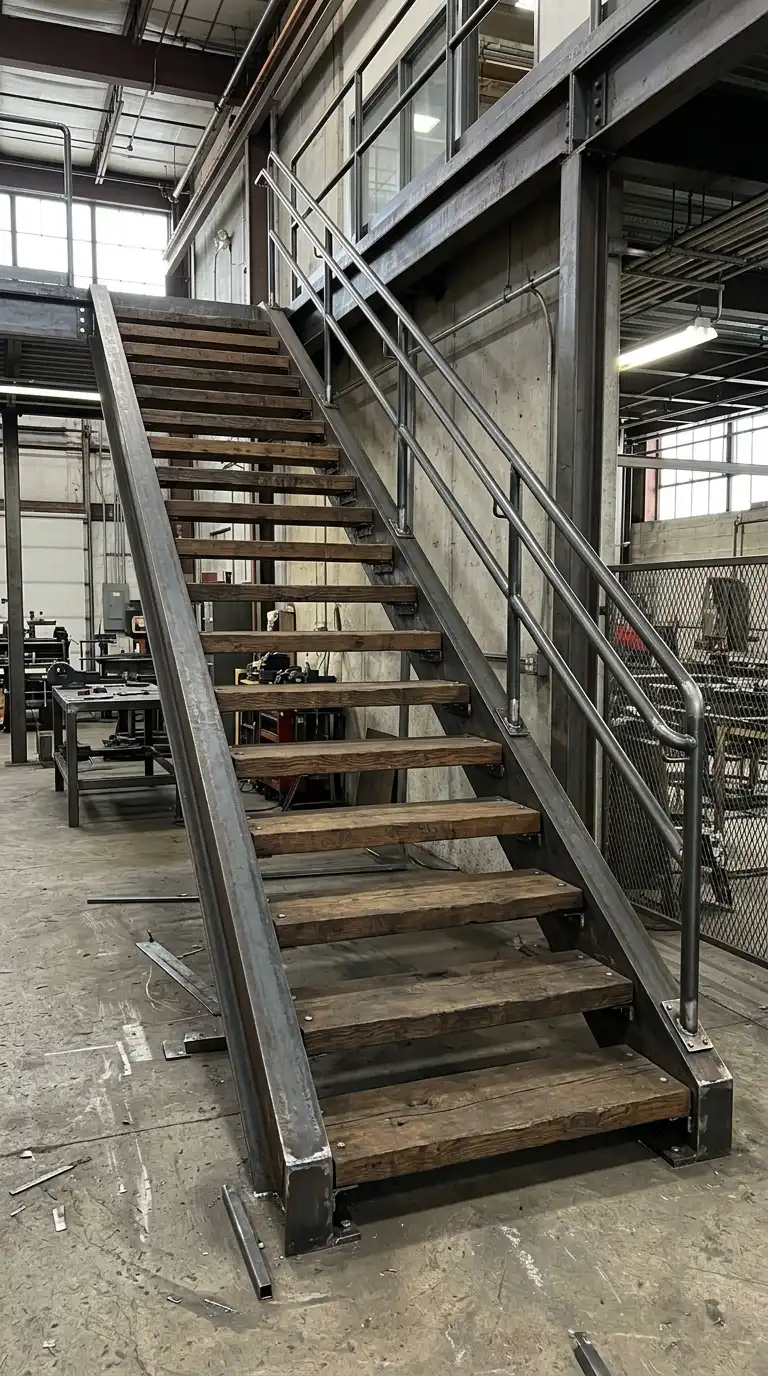
8. The Steel Stringer Stair
The steel stringer stair has two steel beams (stringers) supporting the treads. The stringers are visible. The treads are wood, metal, or concrete. The steel stringer stair is industrial, structural, and honest.
This design is ideal for industrial buildings and modern houses. The emotional effect is industrial, structural, and honest.
Quick Tips
- The stringers must be visible.
- The treads can be wood, metal, or concrete.
- The handrail can be attached to the stringer.
9. The Timber Stair
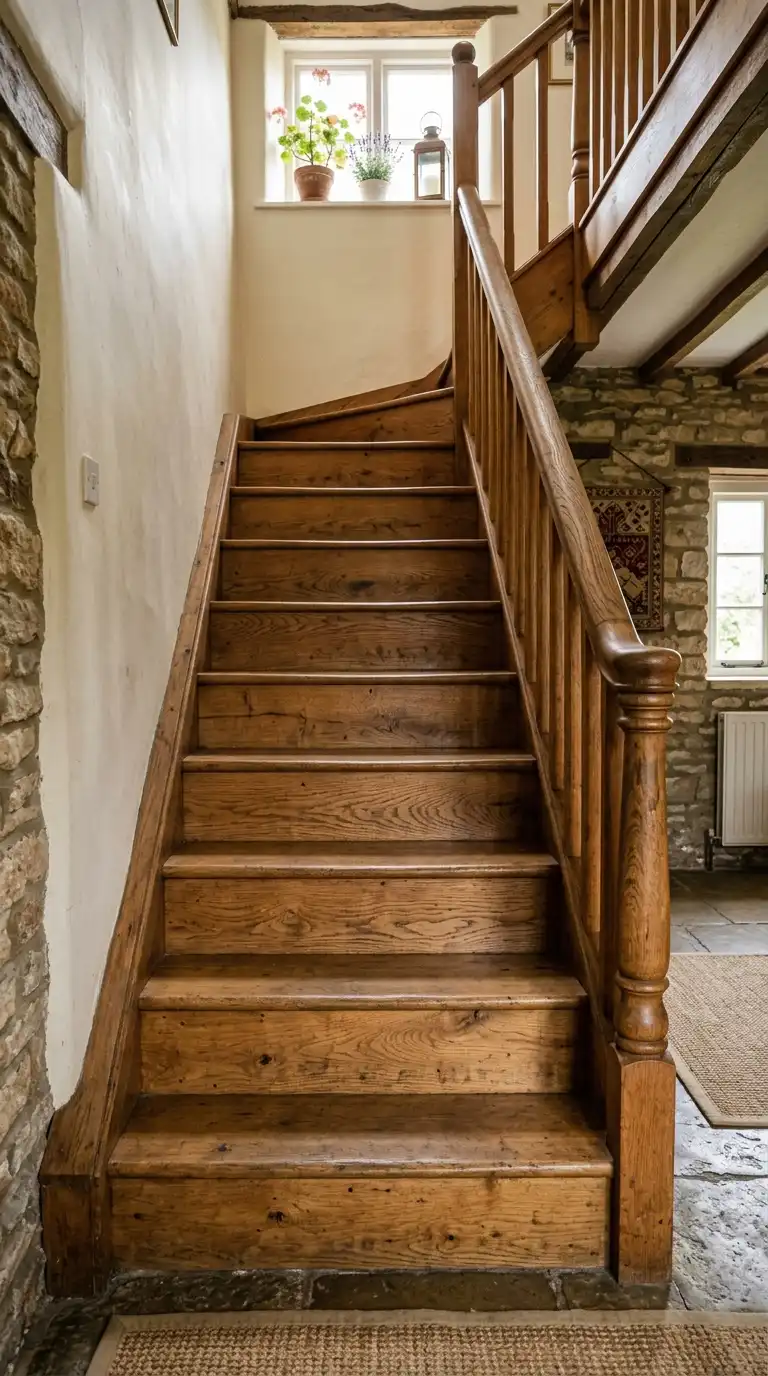
The timber stair is made entirely of wood — treads, risers, stringers, and handrail. The wood is exposed and finished. The timber stair is warm, natural, and crafted.
This design is ideal for houses and cottages. The emotional effect is warm, natural, and crafted.
Quick Tips
- All components must be wood.
- The wood grain should be visible.
- The handrail must be comfortable to grip.
10. The Concrete Stair
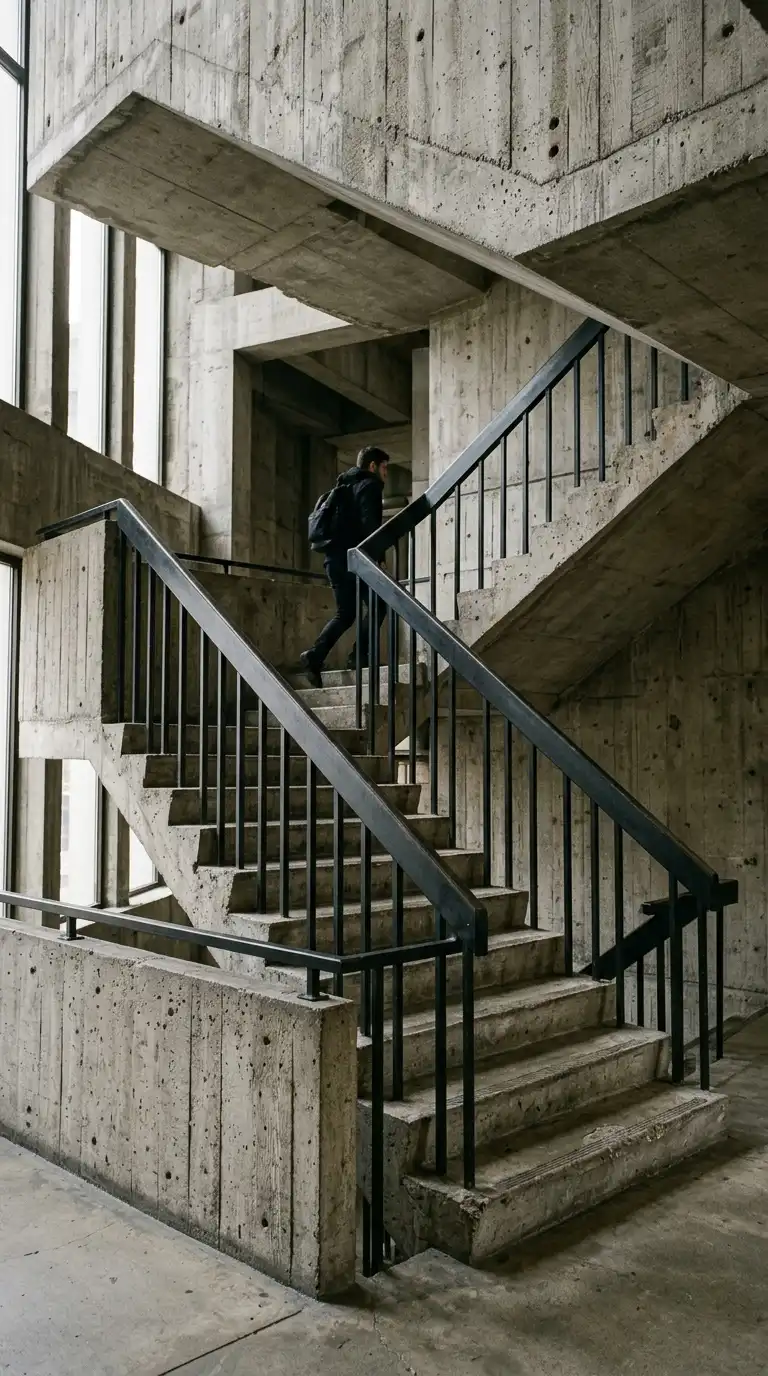
The concrete stair is cast in place or precast. The stair is monolithic and heavy. The concrete stair is solid, brutal, and permanent.
This design is ideal for brutalist buildings and public spaces. The emotional effect is solid, brutal, and permanent.
Quick Tips
- The stair can be cast in place or precast.
- Formwork marks can be visible.
- The handrail can be steel or wood.
11. The Glass Stair
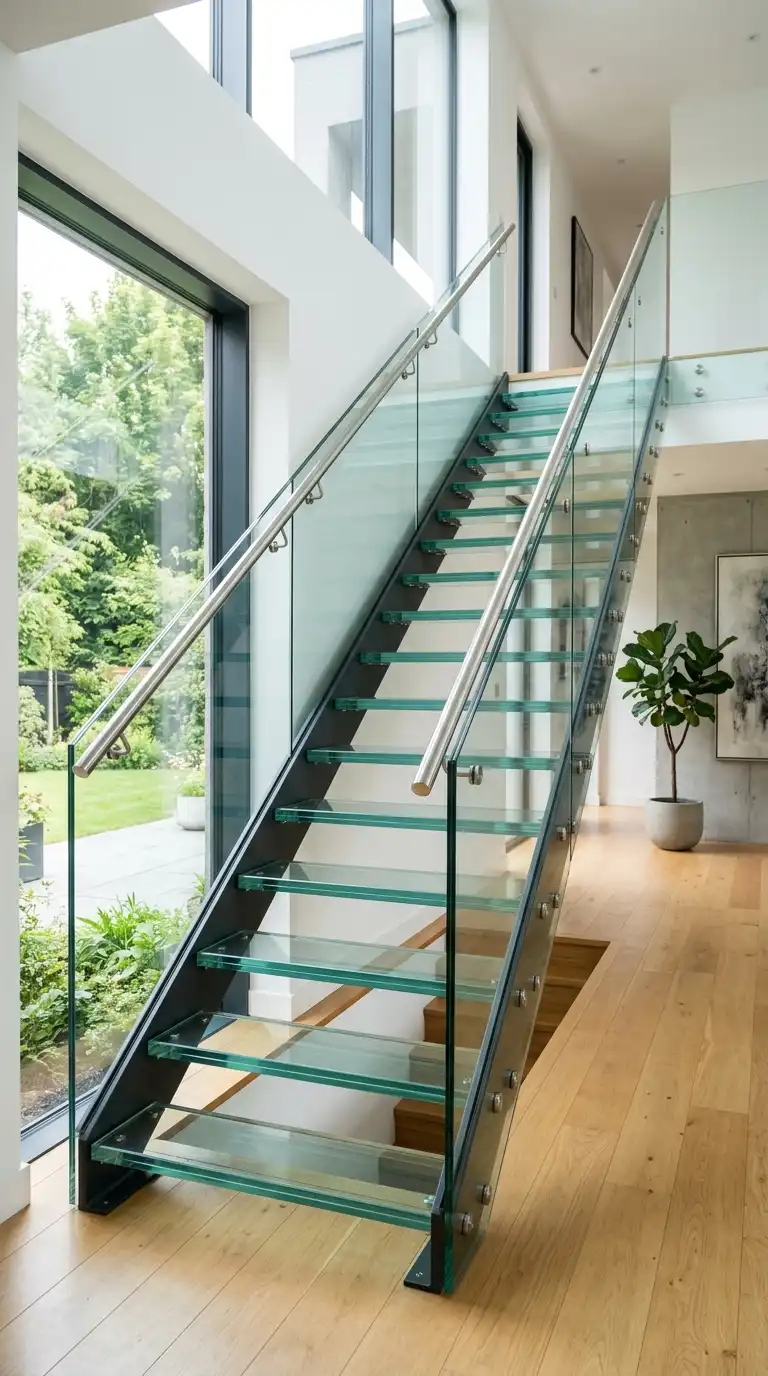
The glass stair has glass treads and a glass handrail. The stair is transparent and fragile-looking. The glass stair is light, transparent, and modern.
This design is ideal for high-end retail and contemporary houses. The emotional effect is light, transparent, and modern.
Quick Tips
- Glass treads must be laminated for safety.
- Glass must be at least 25mm thick.
- The handrail can be glass or metal.
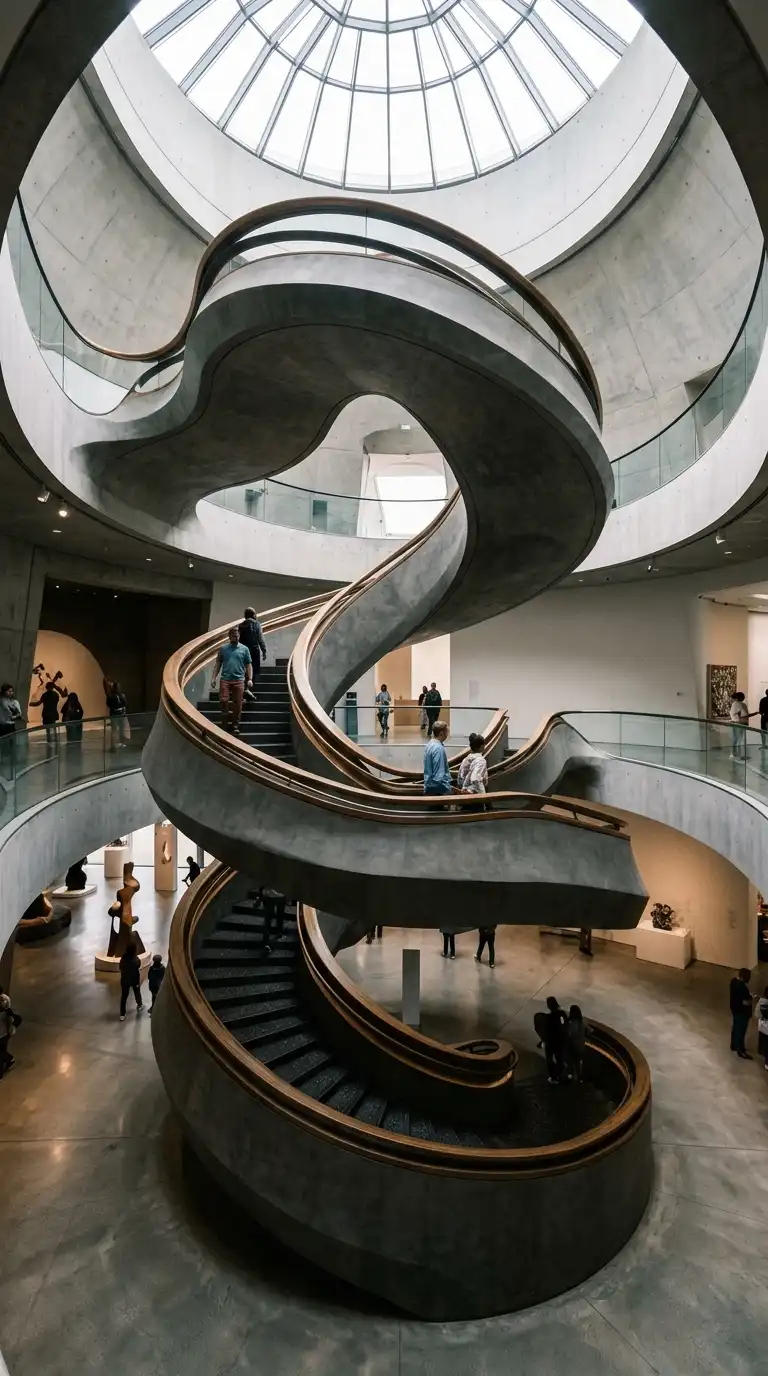
12. The Sculptural Stair
The sculptural stair is a work of art. The form is organic, curving, and non-rectilinear. The stair is the focal point of the building. The sculptural stair is organic, sculptural, and dramatic.
This design is ideal for museums, galleries, and luxury houses. The emotional effect is organic, sculptural, and dramatic.
Quick Tips
- Avoid straight lines and right angles.
- The form should be organic and curving.
- The stair should be the focal point.
13. The Library Stair
The library stair is a stair integrated with bookcases. The bookcases line the walls. The stair winds up through the books. The library stair is literary, intimate, and bookish.
This design is ideal for libraries and private houses. The emotional effect is literary, intimate, and bookish.
Quick Tips
- Bookcases must line the walls.
- The stair must wind through the books.
- A reading nook can be at the landing.

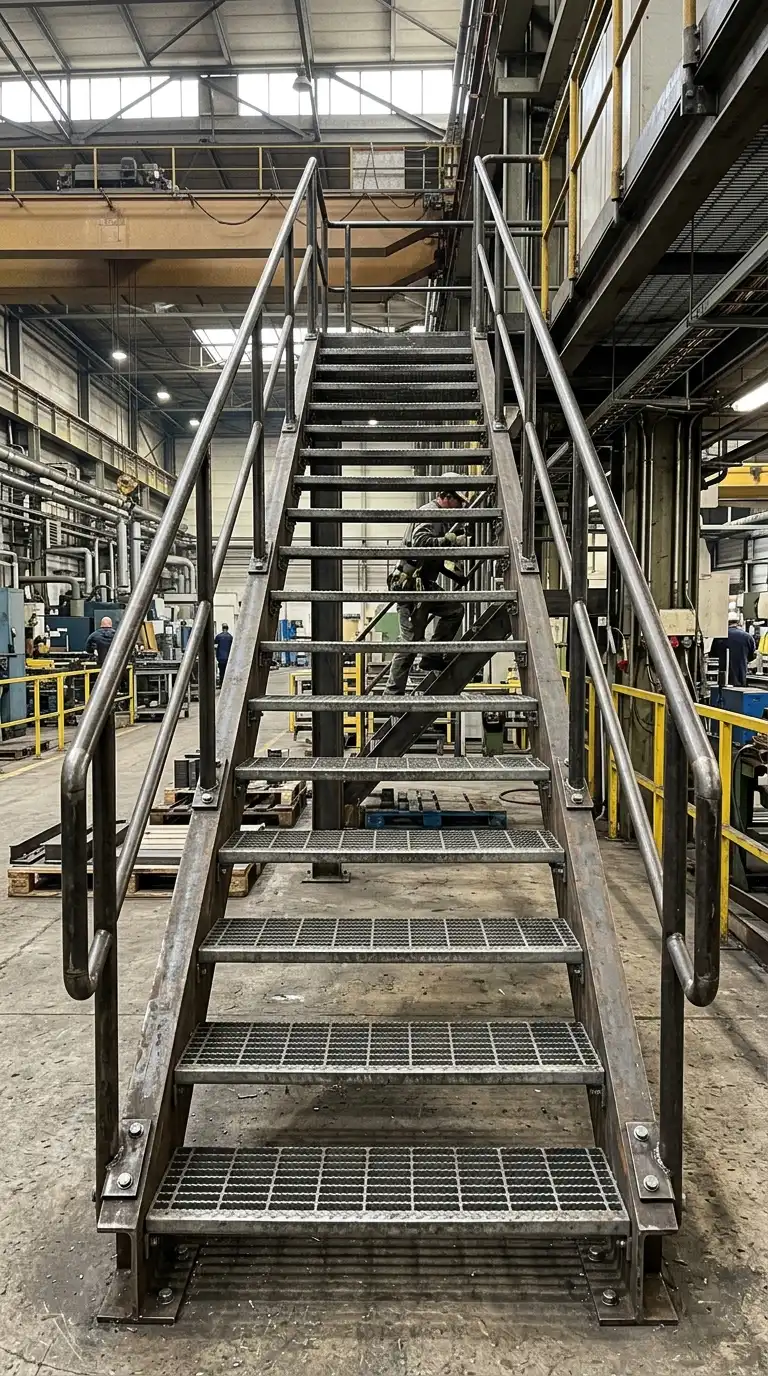
14. The Industrial Stair
The industrial stair is made of steel and metal grating. The treads are open grating. The stair is raw, utilitarian, and industrial. The industrial stair is raw, utilitarian, and industrial.
This design is ideal for factories, warehouses, and industrial-style lofts. The emotional effect is raw, utilitarian, and industrial.
Quick Tips
- Treads must be metal grating.
- The structure must be steel.
- No finishes — leave raw.
15. The Secret Stair
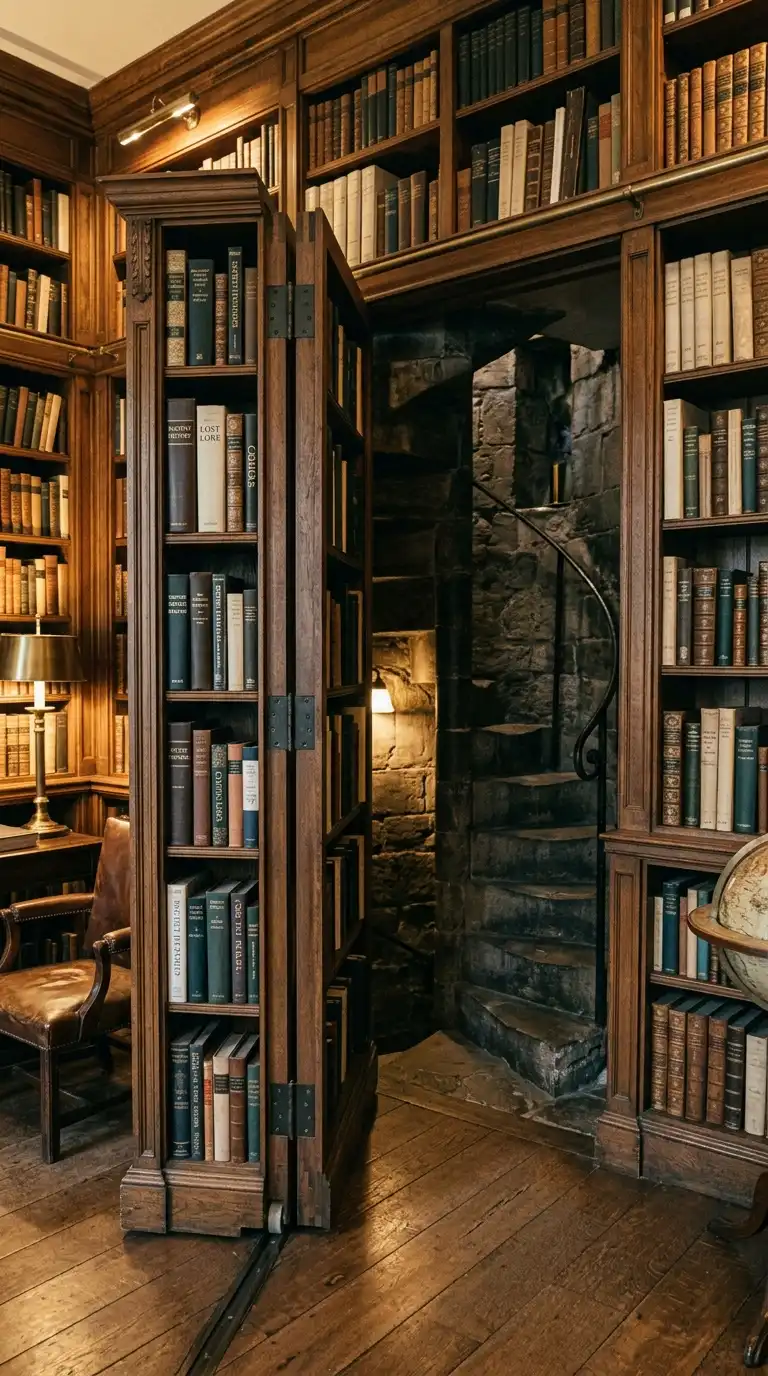
The secret stair is hidden behind a bookcase, a panel, or a mirror. The stair is invisible when closed. The secret stair is hidden, surprising, and playful.
This design is ideal for houses, libraries, and speakeasies. The emotional effect is hidden, surprising, and playful.
Quick Tips
- The entrance must be disguised as a bookcase, panel, or mirror.
- The stair must be invisible when closed.
- The mechanism must be smooth and quiet.