 Skip to content
A church is not just a building for worship. It is a symbol of faith, a gathering place for community, and a work of art. Church architecture has evolved over two millennia, from the Roman basilica to the Gothic cathedral to the contemporary megachurch. Each era has found new ways to express the sacred through space, light, and material.
These 15 church architecture designs span history and geography, from ancient to contemporary. Each design includes defining characteristics, liturgical principles, and architectural strategies.
1. The Basilica Plan Church
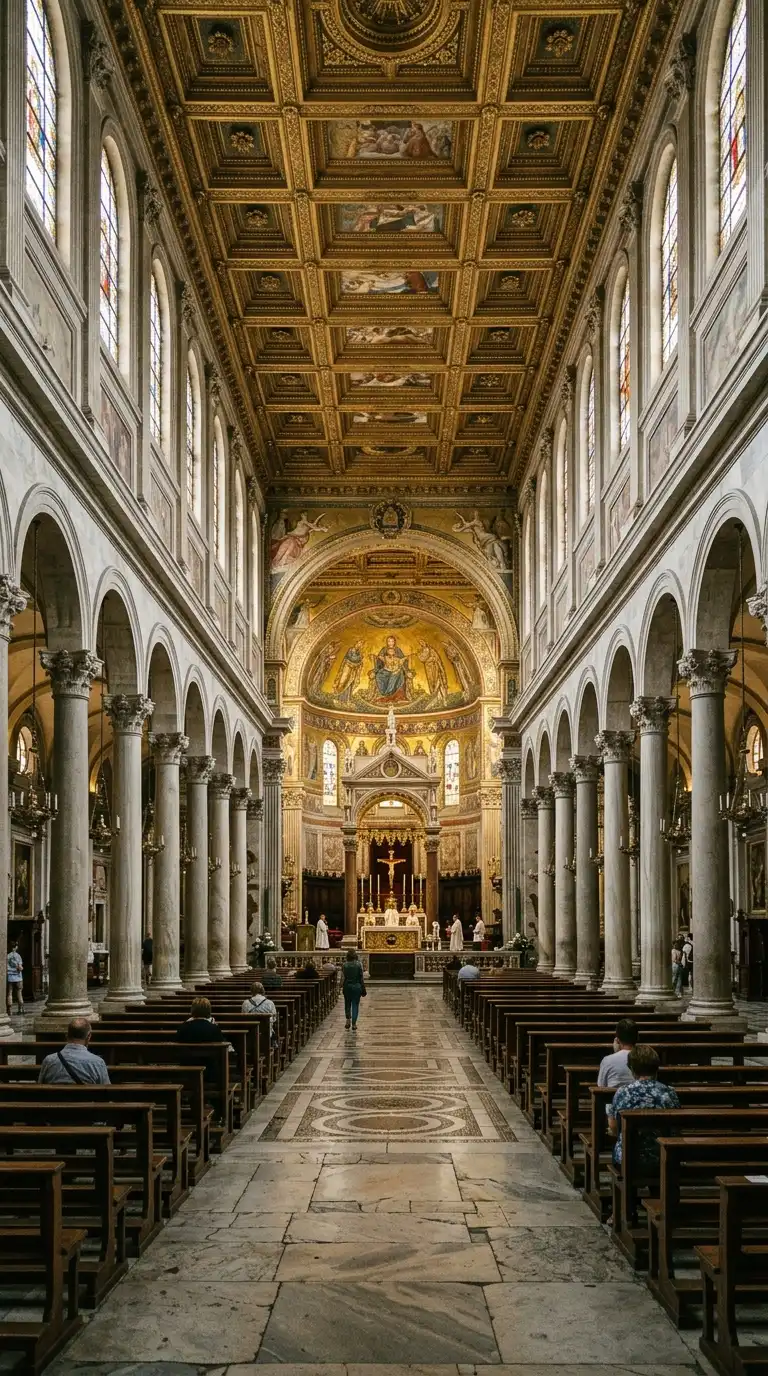
The basilica plan is the earliest Christian church form. Adapted from the Roman law court, the basilica is a long rectangle with a central nave and lower side aisles. The nave is lit by a clerestory. The apse at the end holds the altar. The basilica is axial, hierarchical, and processional.
This design is ideal for traditional Catholic and Anglican churches. The emotional effect is axial, hierarchical, and processional.
Quick Tips
- The plan must be a long rectangle with a central nave and side aisles.
- The nave must be higher than the aisles with a clerestory.
- An apse must be at the far end.
2. The Central Plan Church
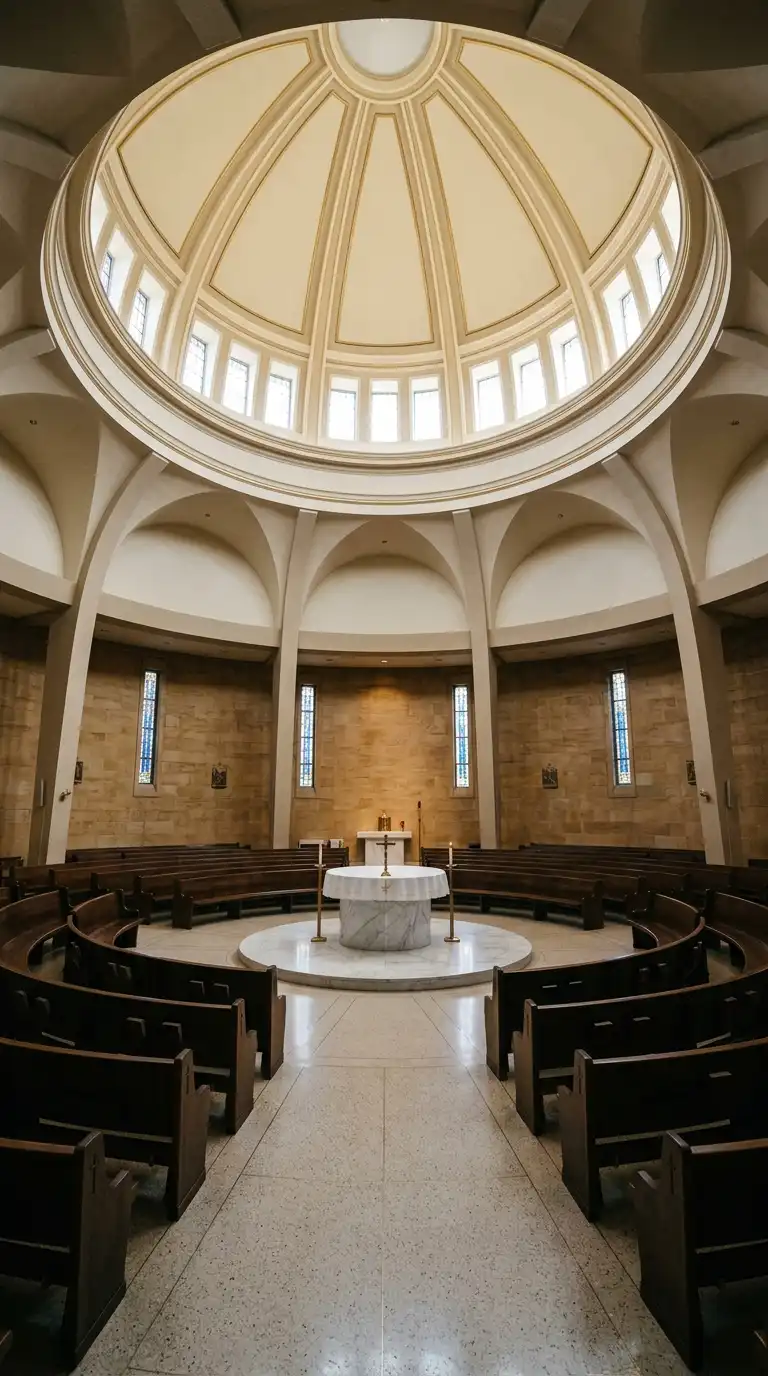
The central plan church is centred on a dome. The plan is circular, octagonal, or Greek cross. The altar is in the centre. The congregation surrounds the altar. The central plan emphasises the unity of the congregation and the centrality of the Eucharist.
This design is ideal for baptisteries, chapels, and modern churches. The emotional effect is centralised, unified, and domed.
Quick Tips
- The plan must be circular, octagonal, or Greek cross.
- The altar must be in the centre.
- A dome must cover the centre.
3. The Gothic Cathedral
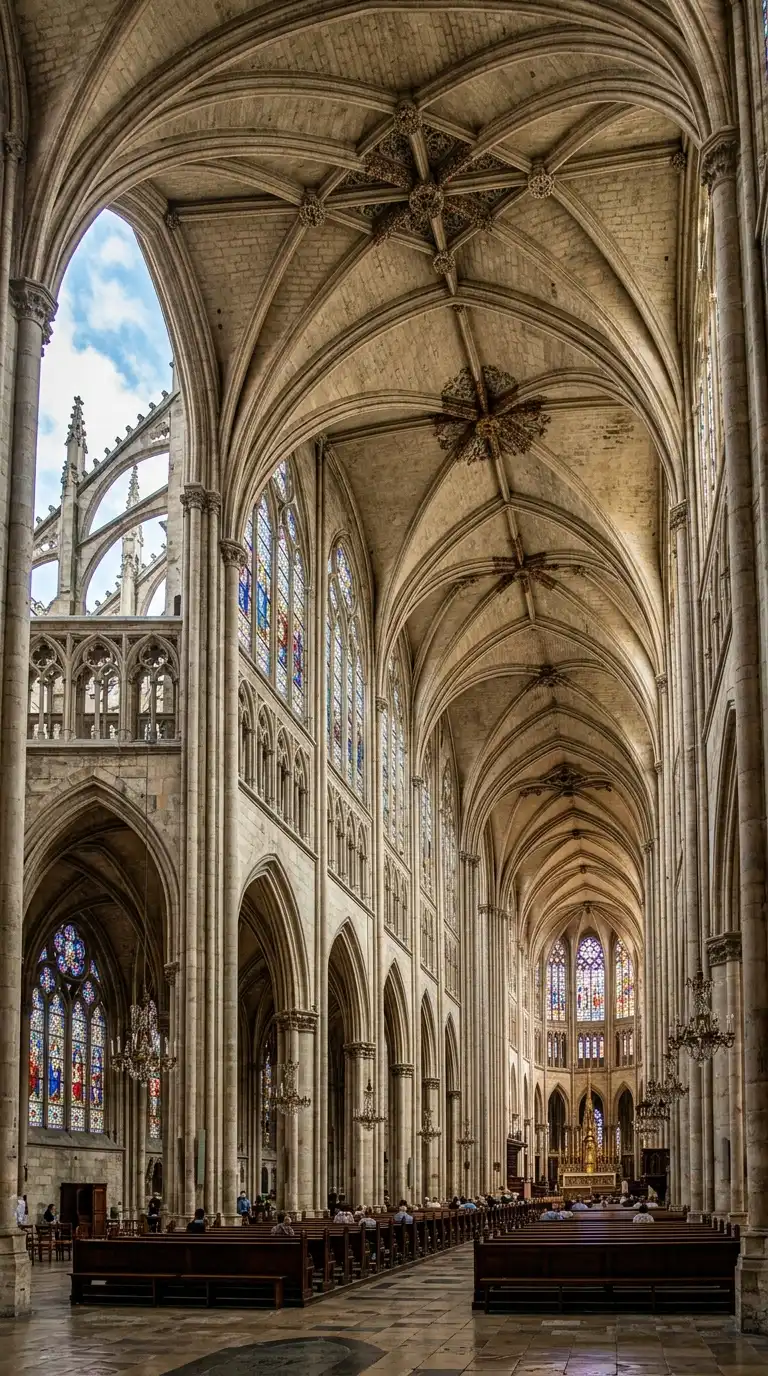
The Gothic cathedral is the most dramatic church form. The pointed arch, the ribbed vault, and the flying buttress allow unprecedented height and light. The walls are filled with stained glass. The cathedral reaches toward heaven. The Gothic cathedral is vertical, luminous, and awe-inspiring.
This design is ideal for Catholic cathedrals and large parish churches. The emotional effect is vertical, luminous, and awe-inspiring.
Quick Tips
- The plan must have a central nave, side aisles, and a transept.
- The nave must be tall with pointed arches and ribbed vaults.
- Flying buttresses must support the upper walls.
4. The Renaissance Church
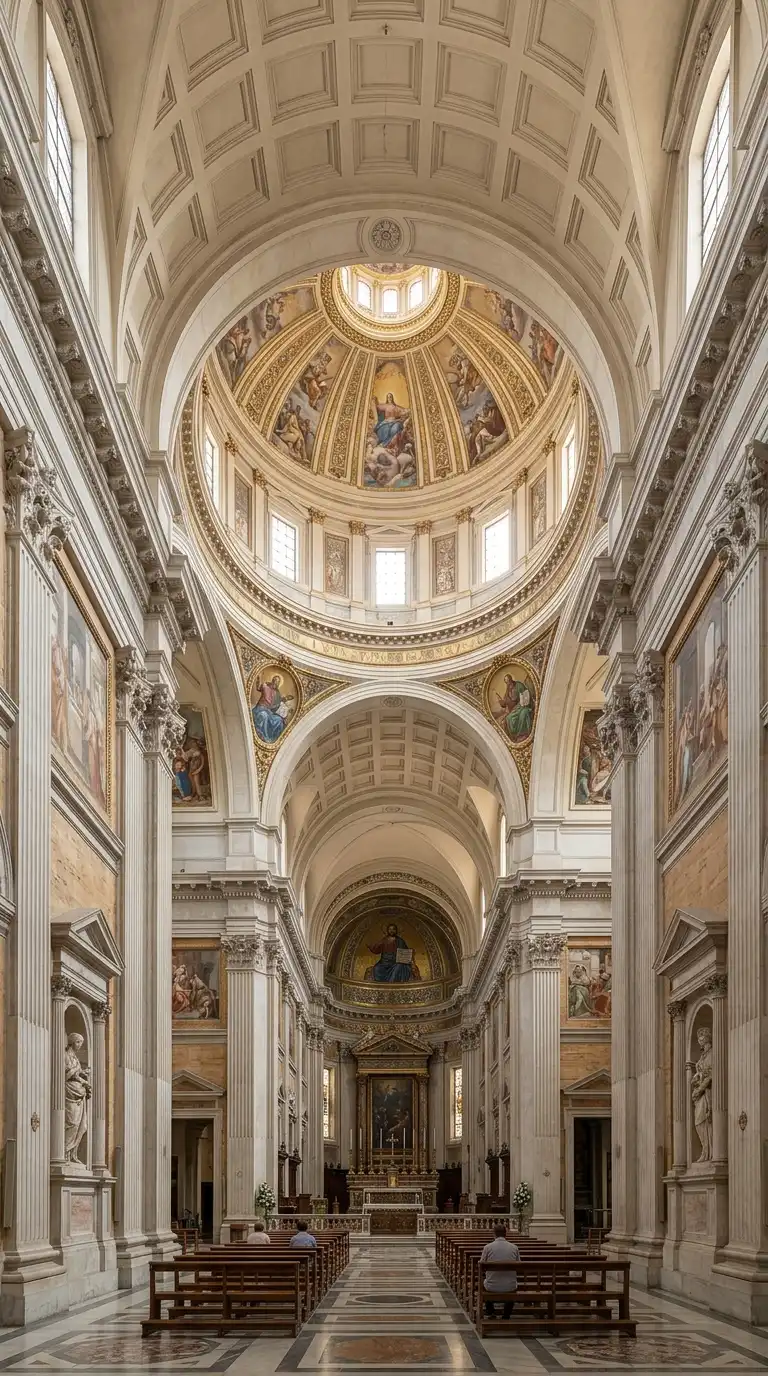
The Renaissance church returns to classical proportions. The plan is a Latin cross with a dome at the crossing. The facade is a temple front with columns and a pediment. The interior is light, calm, and mathematically ordered. The Renaissance church is rational, harmonious, and classical.
This design is ideal for Catholic churches in the classical tradition. The emotional effect is rational, harmonious, and classical.
Quick Tips
- The plan must be a Latin cross with a dome at the crossing.
- The facade must be a temple front with columns and a pediment.
- The interior must be light and calm.
5. The Baroque Church
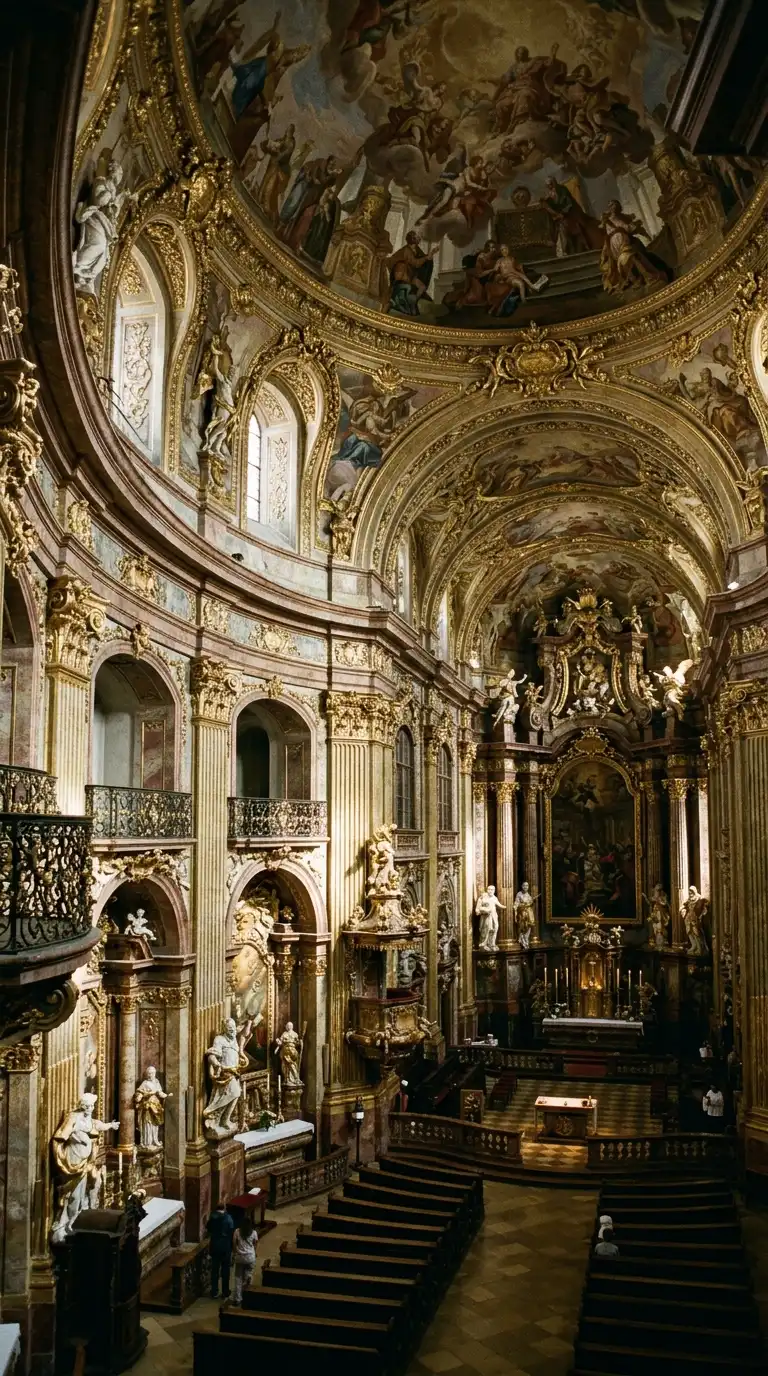
The Baroque church is dramatic, emotional, and theatrical. The plan is oval or curved. The walls undulate. Light is dramatic, with hidden sources and deep shadows. The decoration is rich, with gilding, painting, and sculpture. The Baroque church is overwhelming, glorious, and emotional.
This design is ideal for Catholic churches in the Baroque tradition. The emotional effect is dramatic, emotional, and overwhelming.
Quick Tips
- The plan must be oval or curved — not rectangular.
- Light must be dramatic, with hidden sources.
- Decoration must be rich, with gilding and sculpture.
6. The Modernist Church
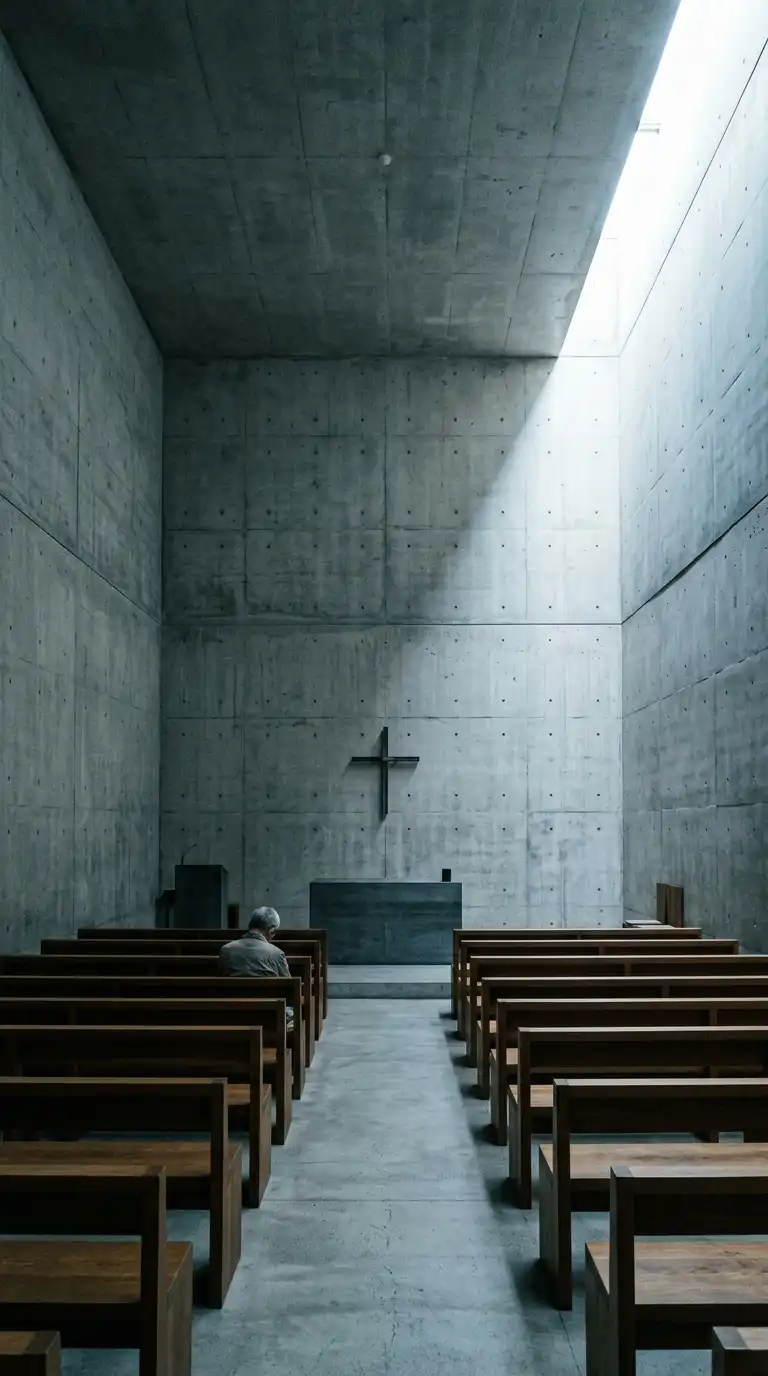
The modernist church strips away ornament to focus on space, light, and material. The form is simple — a cube, a circle, a tent. Light enters from above or through narrow slits. The material is exposed concrete, stone, or wood. The modernist church is honest, spiritual, and essential.
This design is ideal for contemporary Catholic and Protestant churches. The emotional effect is honest, spiritual, and essential.
Quick Tips
- Ornament must be eliminated.
- The form must be simple — a cube, a circle, or a tent.
- Light must be the primary spiritual element.
7. The Chapel in the Round
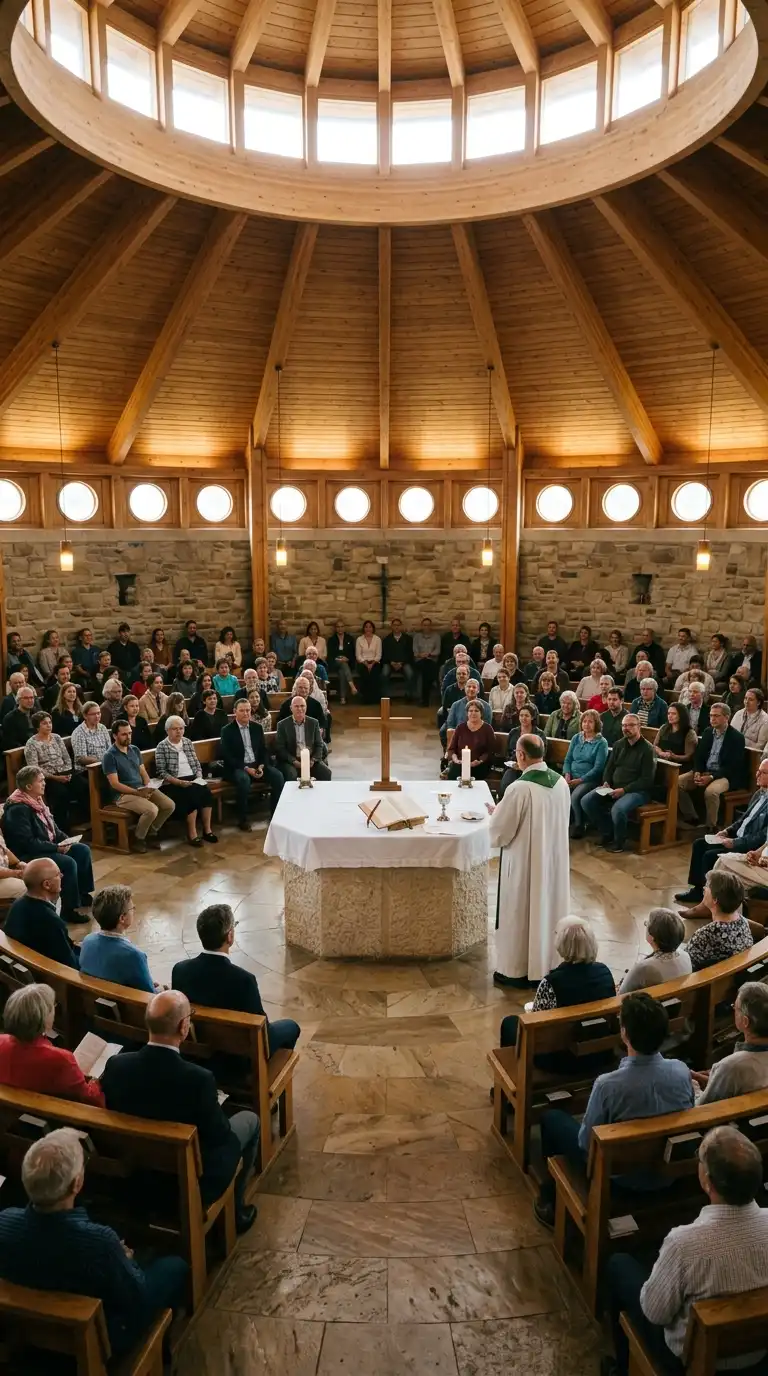
The chapel in the round has seating arranged around a central altar. The congregation surrounds the altar. The chapel in the round emphasises the priesthood of all believers and the community of worship. The chapel in the round is intimate, communal, and participatory.
This design is ideal for Protestant churches and contemporary Catholic chapels. The emotional effect is intimate, communal, and participatory.
Quick Tips
- Seating must surround the altar.
- The altar must be in the centre.
- The plan must be circular or octagonal.
8. The A-Frame Church
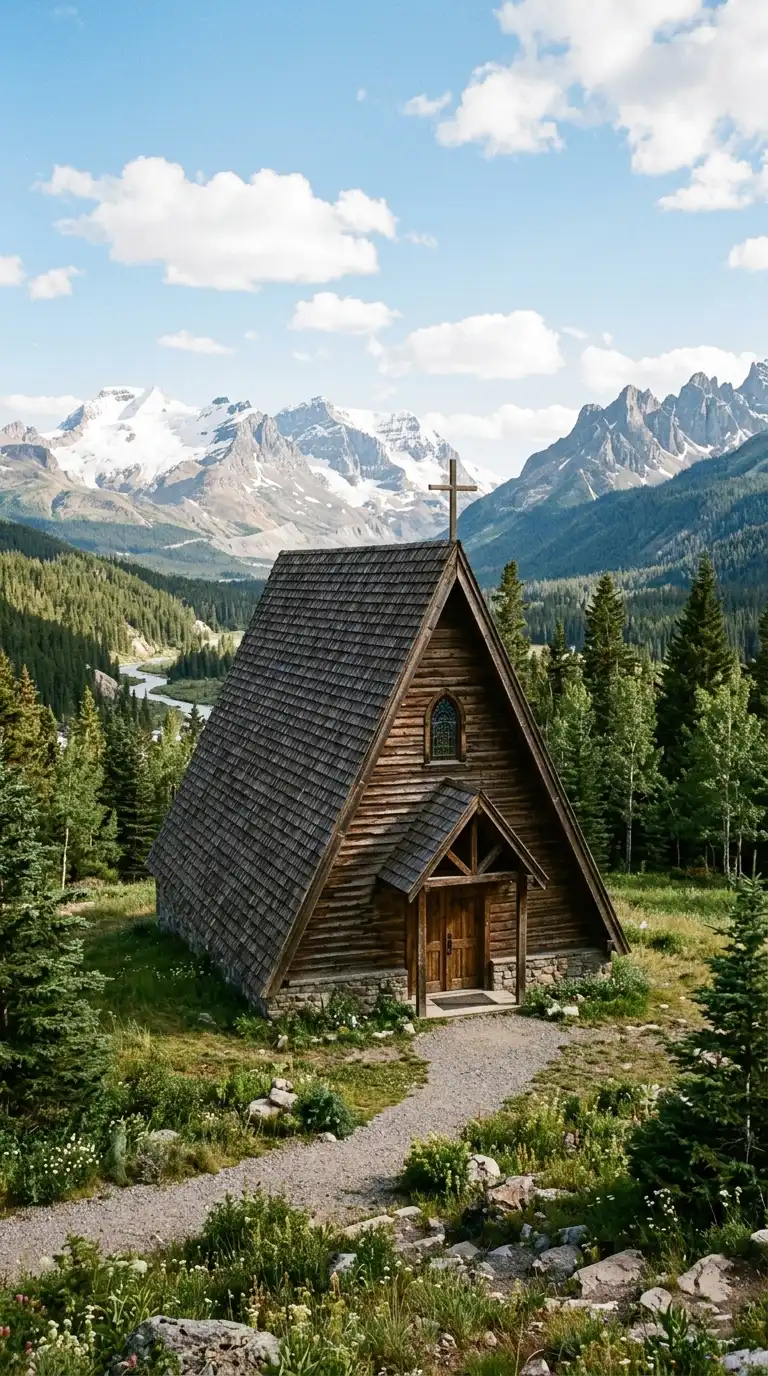
The A-frame church is shaped like a tent or an A. The roof is steep and reaches the ground. The walls are the roof. The A-frame is dramatic, sheltering, and tent-like. It recalls the tabernacle of the Israelites.
This design is ideal for mountain churches and camp chapels. The emotional effect is tent-like, sheltering, and dramatic.
Quick Tips
- The roof must be steep and reach the ground.
- The walls must be the roof — no separate walls.
- The form must be an A or a tent.
9. The Hall Church
The hall church has a wide, open interior with no columns. The roof is a single, continuous vault. The hall church is spacious, flexible, and unobstructed. It is ideal for megachurches and multi-purpose spaces.
This design is ideal for Protestant megachurches and community churches. The emotional effect is spacious, flexible, and unobstructed.
Quick Tips
- There must be no columns in the worship space.
- The roof must be a single, continuous vault.
- The space must be wide and open.
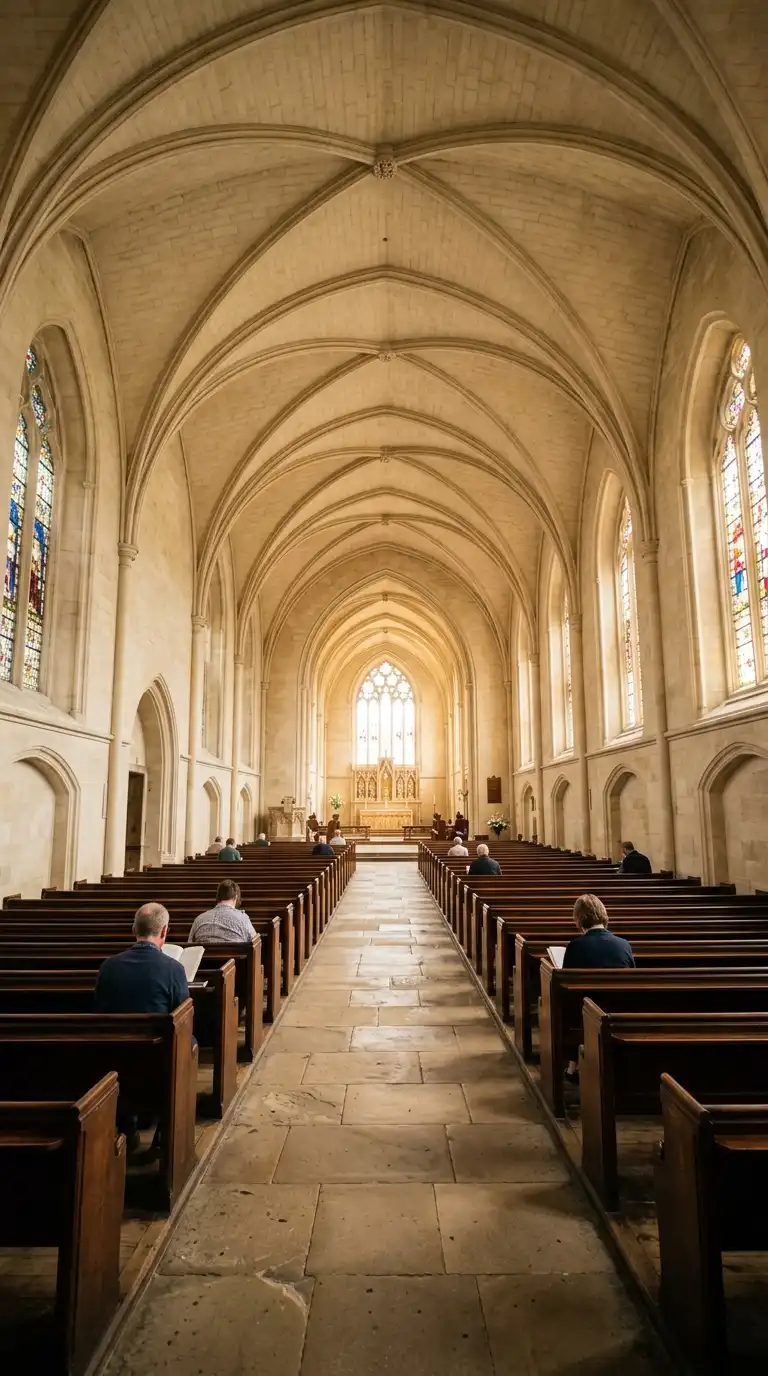
10. The Church with a Campanile
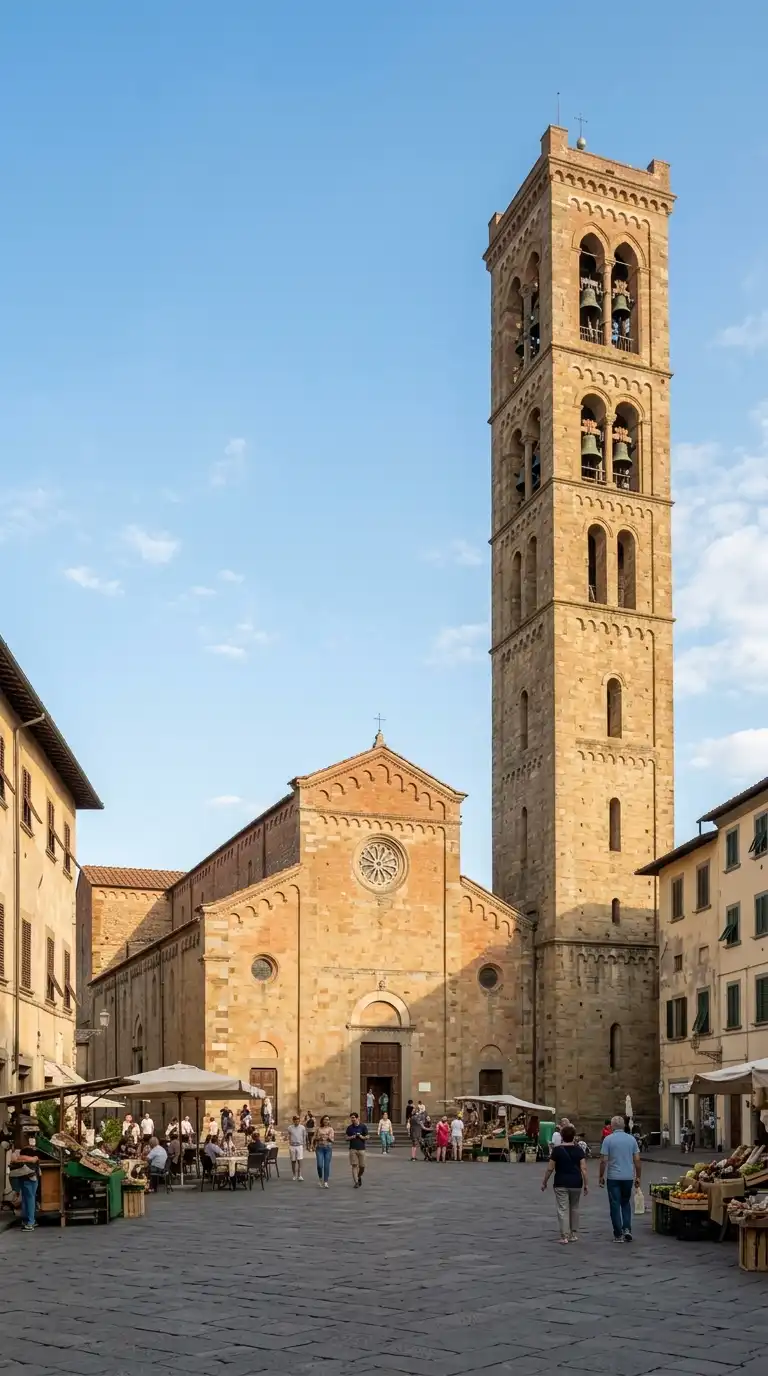
The campanile is a free-standing bell tower. The church and the tower are separate buildings. The campanile is tall, vertical, and visible from afar. The campanile calls the faithful to worship.
This design is ideal for Italian churches and urban sites. The emotional effect is vertical, calling, and free-standing.
Quick Tips
- The tower must be free-standing, not attached to the church.
- The tower must be taller than the church.
- The tower must have bells.
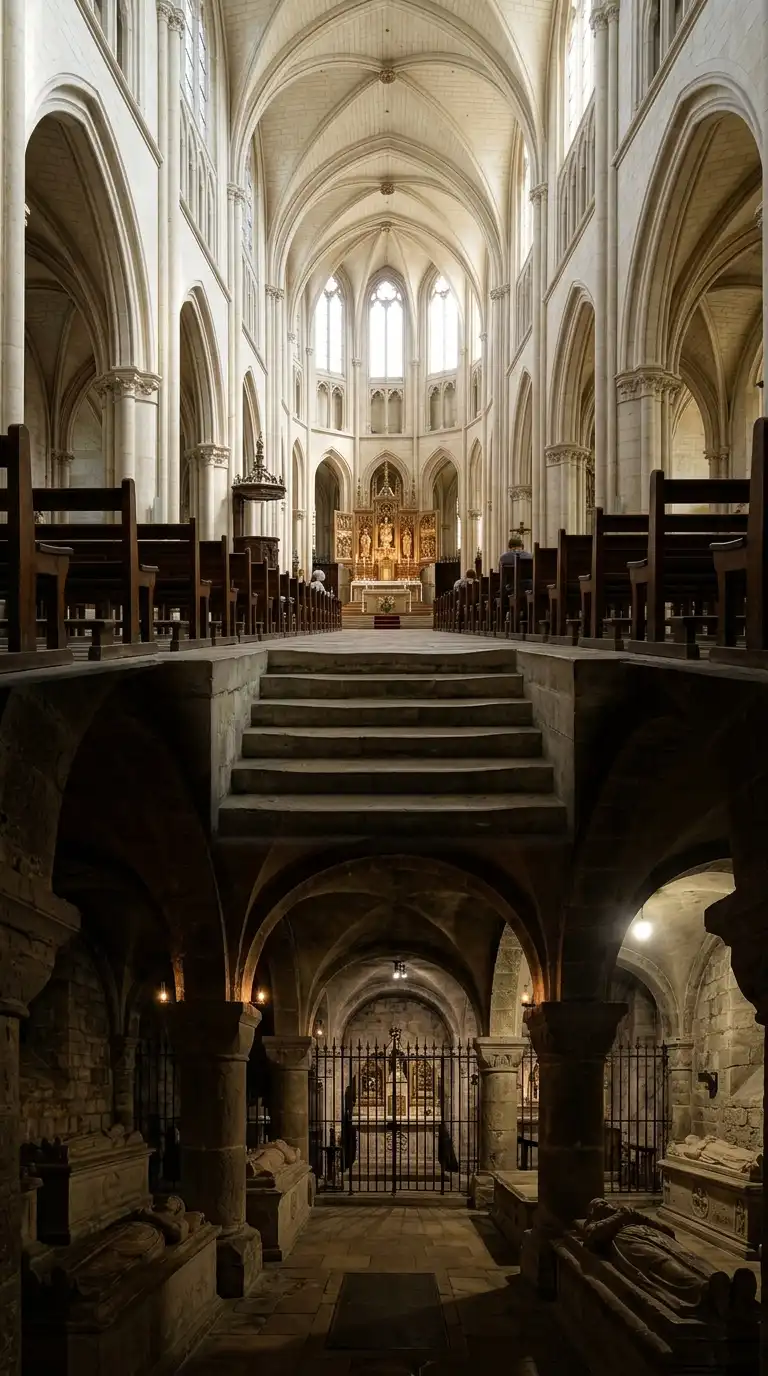
11. The Church with a Crypt
The crypt is a lower level, often below the altar. The crypt contains tombs or relics. The crypt is dark, low, and ancient. The church above is light, high, and alive. The contrast between crypt and church is the contrast between death and resurrection.
This design is ideal for pilgrimage churches and historic cathedrals. The emotional effect is dark, ancient, and contrasting.
Quick Tips
- The crypt must be below the altar.
- The crypt must be dark and low.
- The church above must be light and high.
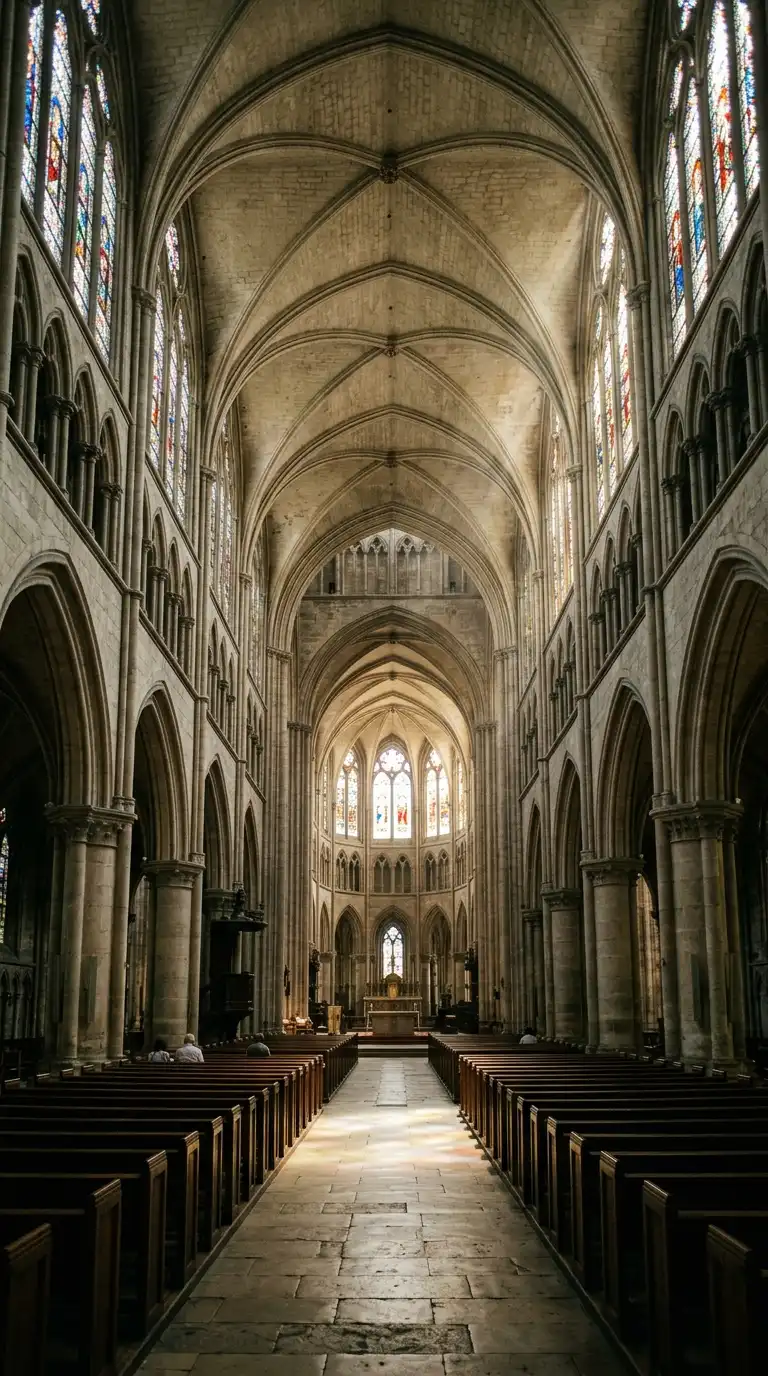
12. The Church with a Clerestory
The clerestory is a band of high windows above the aisles. The clerestory brings light into the centre of the nave. The clerestory is the source of light in a basilica-plan church. The clerestory is high, luminous, and heavenly.
This design is ideal for basilica-plan churches. The emotional effect is high, luminous, and heavenly.
Quick Tips
- The clerestory must be above the aisles.
- The windows must be high, near the ceiling.
- The light must fall on the centre of the nave.
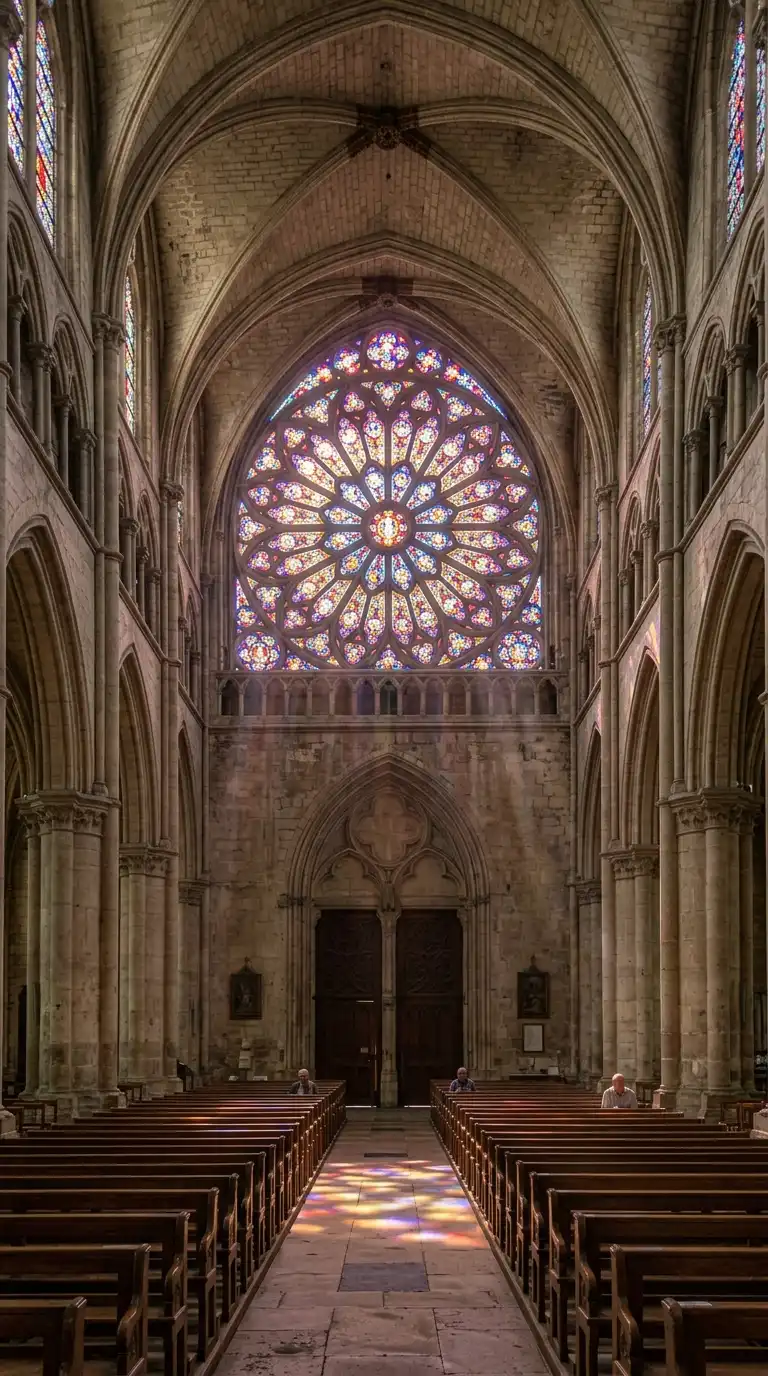
13. The Church with a Rose Window
The rose window is a large circular window filled with stained glass. The rose window is on the west facade, above the entrance. The rose window is the most decorative element of the Gothic church. The rose window is radiant, colourful, and symbolic.
This design is ideal for Gothic and Gothic Revival churches. The emotional effect is radiant, colourful, and symbolic.
Quick Tips
- The window must be circular.
- The window must be on the west facade, above the entrance.
- The window must be filled with stained glass.
14. The Church with a Narthex
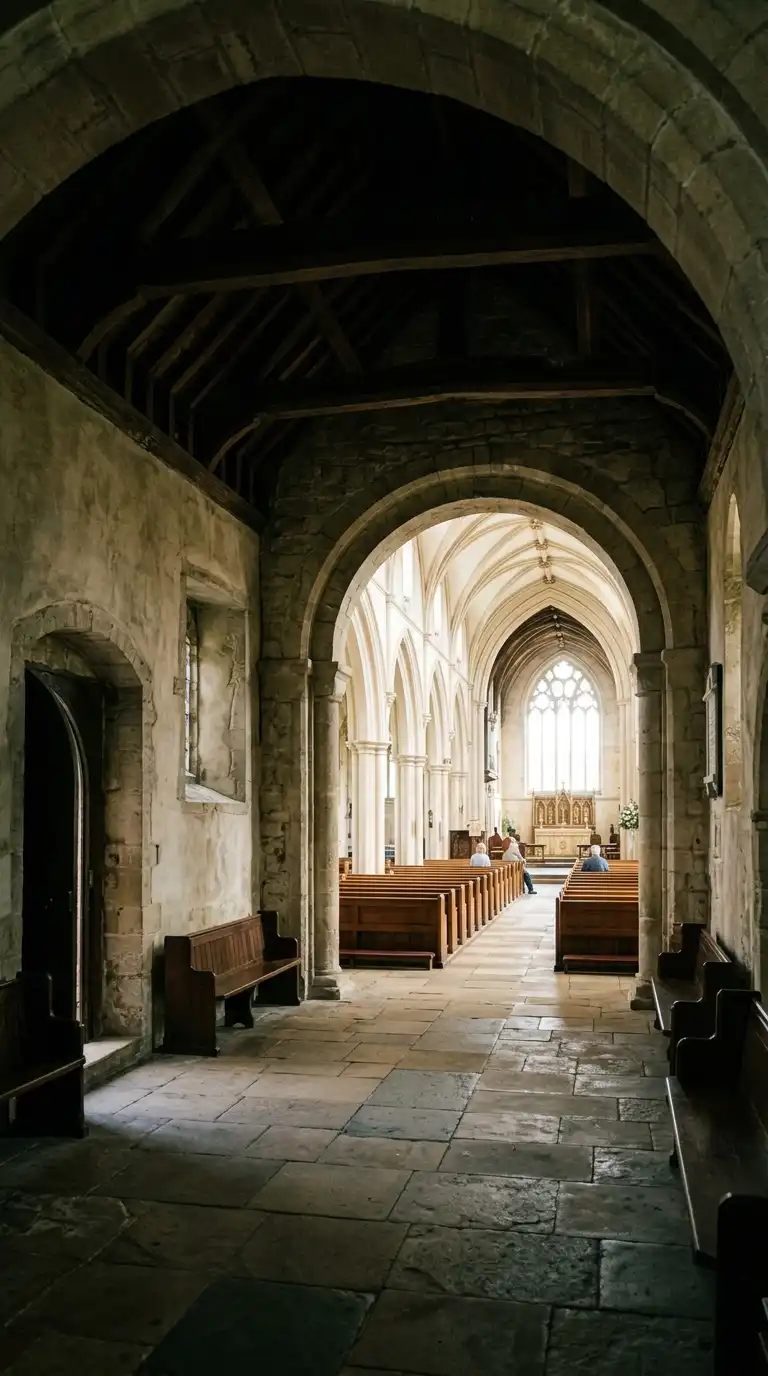
The narthex is an entrance porch or vestibule at the west end of the church. The narthex is a transition space — from the world into the church. The narthex is where catechumens and penitents once stood. The narthex is dark, low, and preparatory.
This design is ideal for traditional Catholic and Orthodox churches. The emotional effect is transitional, preparatory, and dark.
Quick Tips
- The narthex must be at the west end of the church.
- The narthex must be darker and lower than the nave.
- The narthex must be a transition space.
15. The Church as Landscape
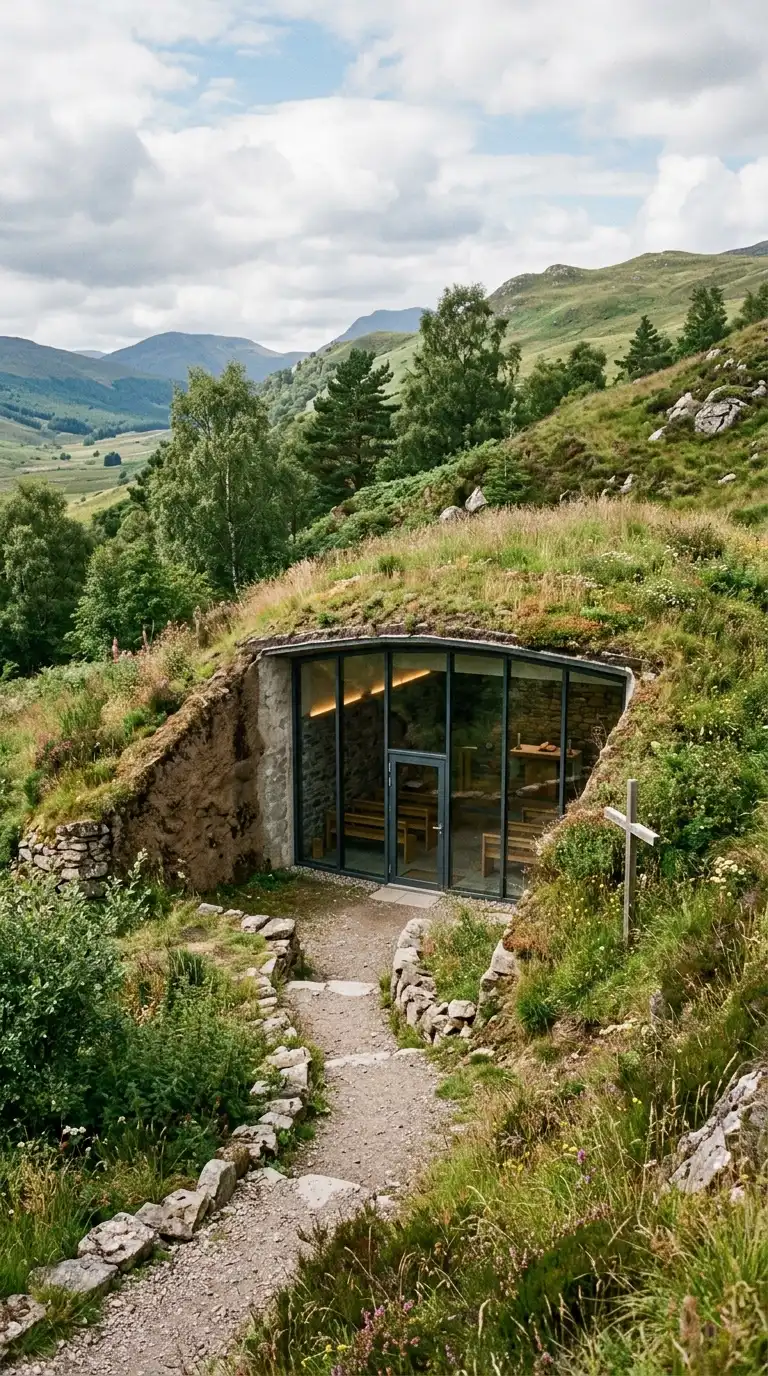
The church as landscape is integrated into the land. The roof is planted. The walls are earth. The church is buried or partially buried. The church emerges from the ground. The church is humble, earth-bound, and ecological.
This design is ideal for contemporary churches in natural settings. The emotional effect is humble, earth-bound, and ecological.
Quick Tips
- The roof must be planted.
- The walls must be earth or concrete.
- The church must emerge from the ground.
Final Thoughts
Church architecture is the architecture of faith. A basilica is axial and processional. A central plan is unified and domed. A Gothic cathedral is vertical and luminous. A Renaissance church is rational and classical. A Baroque church is dramatic and emotional. A modernist church is honest and essential. A chapel in the round is intimate and communal. An A-frame church is tent-like and sheltering. A hall church is spacious and flexible. A campanile calls the faithful. A crypt is dark and ancient. A clerestory is high and heavenly. A rose window is radiant and colourful. A narthex is transitional and preparatory. A church as landscape is humble and earth-bound.
These 15 church designs are not mutually exclusive. A Gothic cathedral can have a rose window and a crypt. A Renaissance church can have a campanile. A modernist church can be a chapel in the round. The best church architecture is not the most decorated — it is the most appropriate. It serves the liturgy, shelters the congregation, and lifts the spirit toward God. It is not just a building — it is a house of God, a gate of heaven.
