16 Small pooja room in living room ideas
Small pooja room in living room ideas focus on the seamless integration of a sacred sanctuary within a modern social space. In compact homes, the challenge is to create a sense of “sthal” (place) that feels private and respected without disrupting the flow of the lounge. By utilizing architectural “jaali” screens, floating wall-mounted units, and strategic corner placement, you can establish a serene prayer nook that harmonizes with your interior decor. Here are 16 ideas to incorporate a divine space into your small living room.
See also: 17 Small Dining and Living Room Combo Ideas
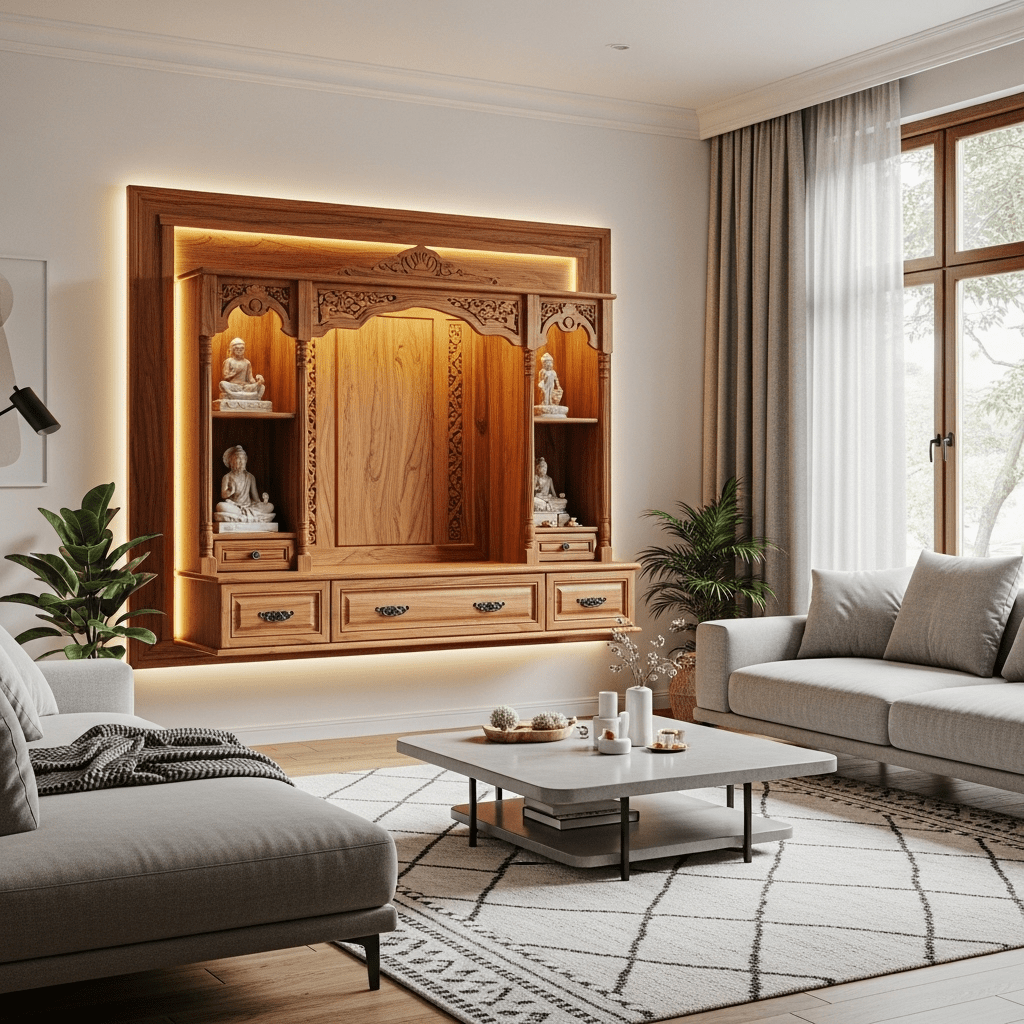
1. The Floating Wooden Mandir
Install a sleek, wall-mounted wooden cabinet with integrated LED lighting. By keeping the unit off the floor, you maintain the “airiness” of the living room while providing a dedicated, elevated platform for deities.
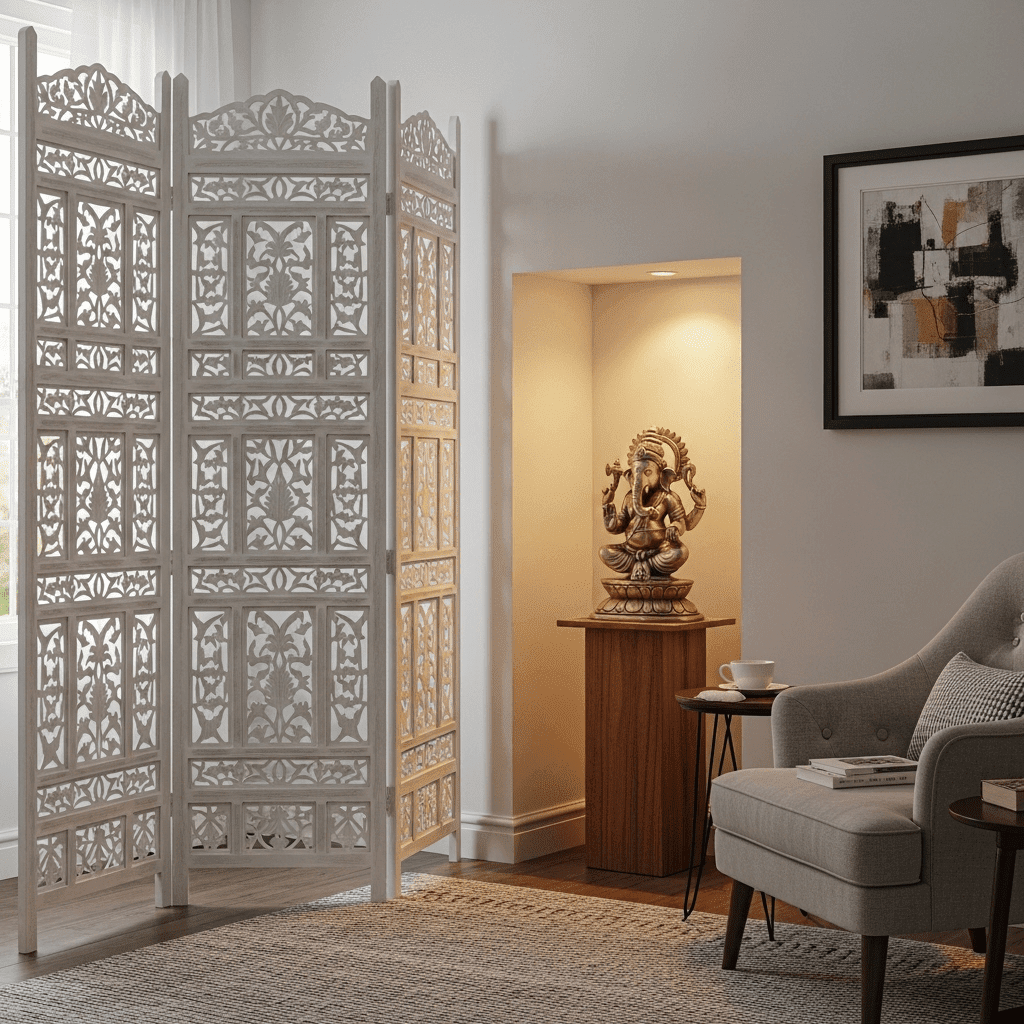
2. The Intricate Jaali Screen Divider
Use a laser-cut “jaali” (lattice) partition in wood or white polymer to carve out a corner. The screen provides the necessary privacy for prayer while allowing light and air to pass through, ensuring the living room doesn’t feel closed in.
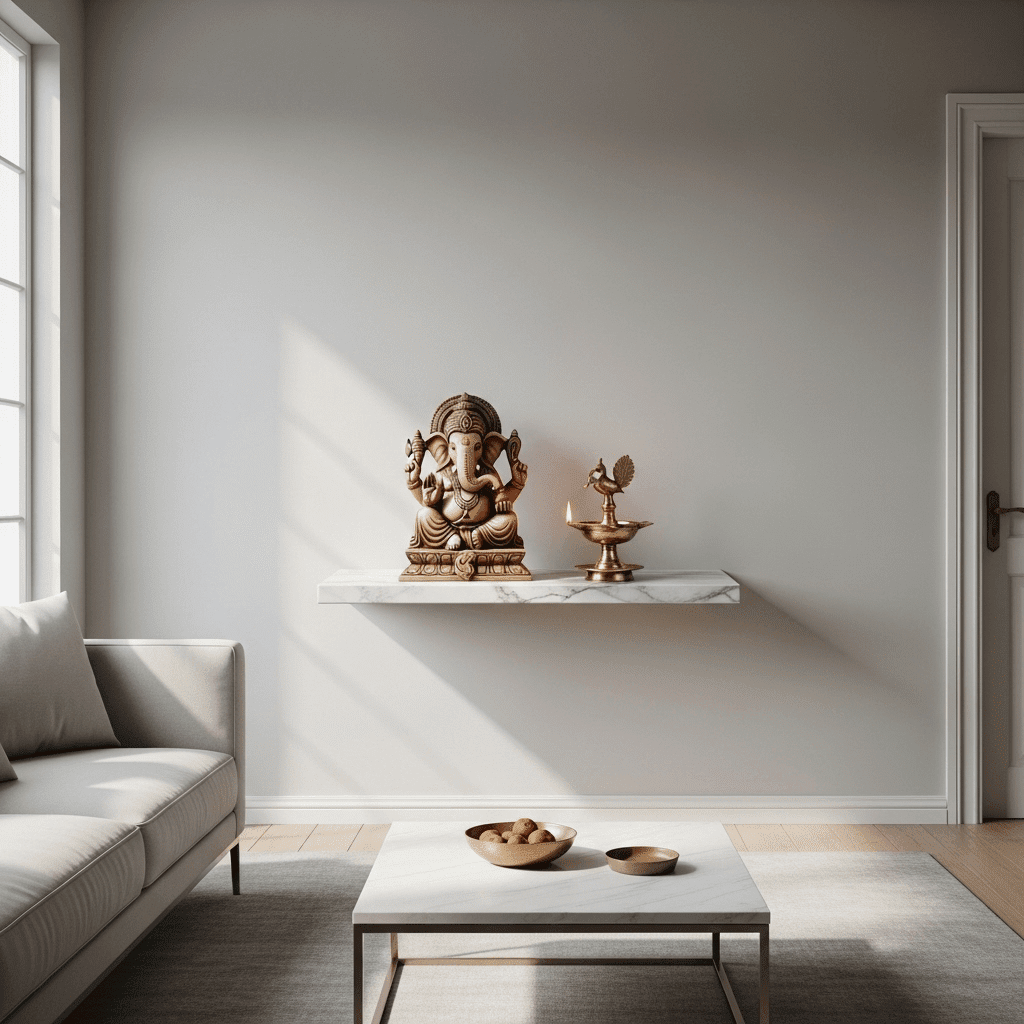
3. The Minimalist Floating Shelf
For an ultra-modern look, use a single thick slab of marble or polished wood as a floating altar. This “less is more” approach works perfectly in tiny apartments where a full cabinet would be too bulky.
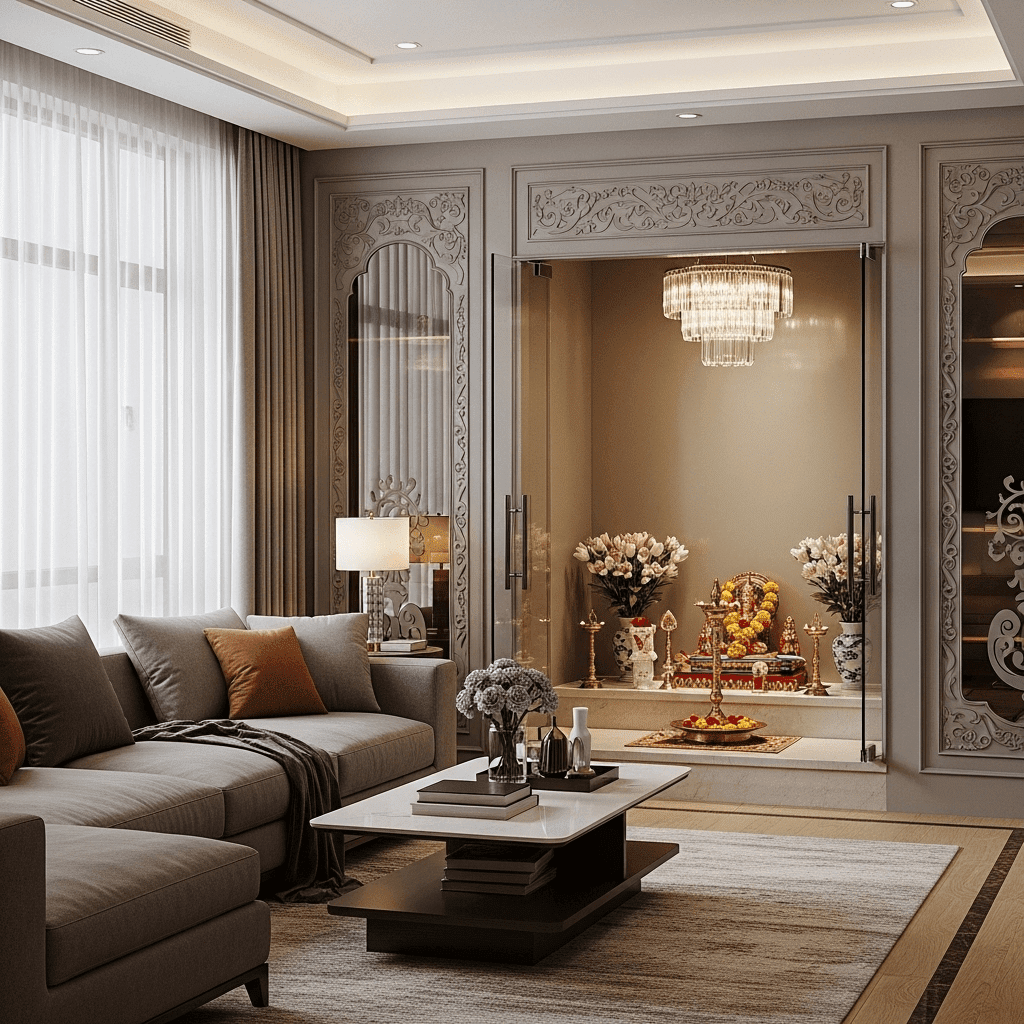
4. The Glass-Door Sanctuary
Enclose a small alcove with clear or frosted glass doors. Glass provides a physical boundary that protects the sacred space from dust and noise while maintaining a visual connection to the rest of the room.
See also: 12 Small Wash Basin Ideas in Living Room
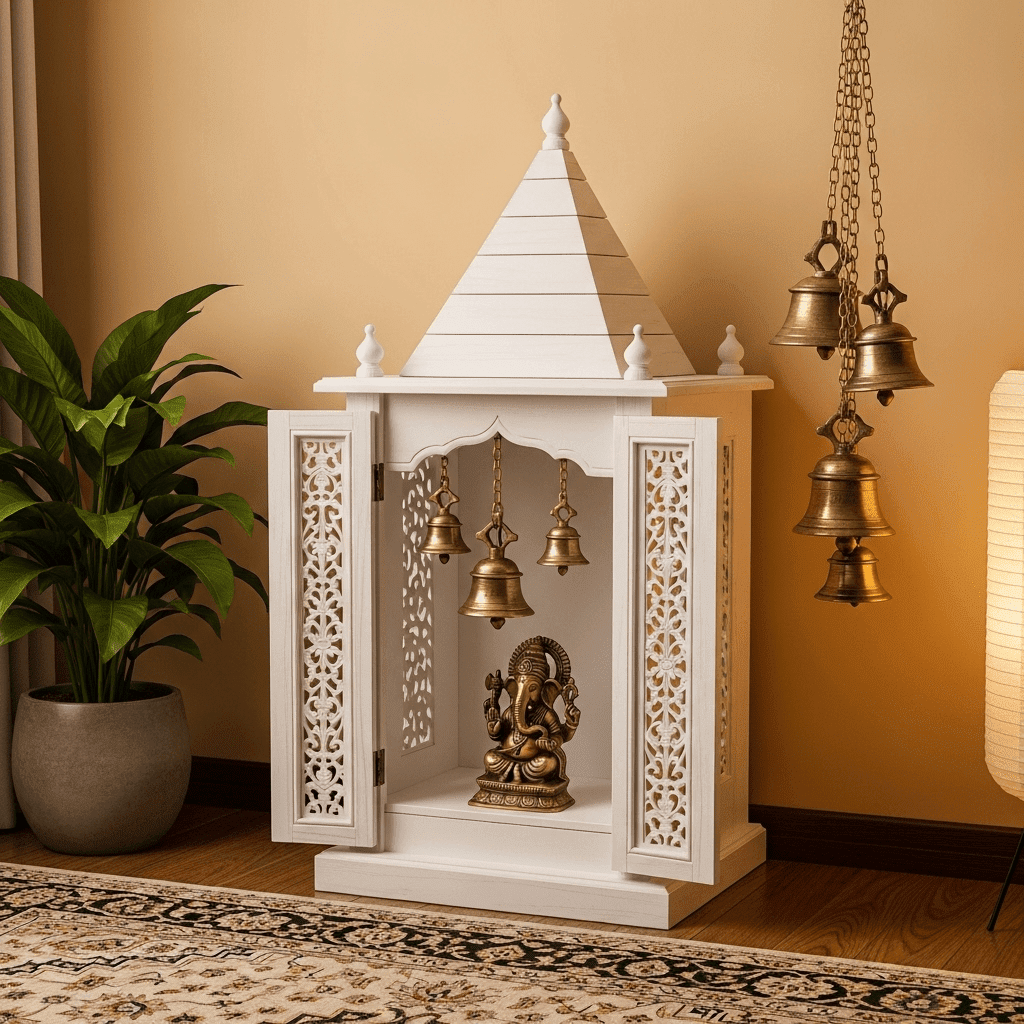
5. The Corner Pyramid Design
Incorporate a traditional “shikhar” (pyramid top) design into a corner unit. Utilizing a corner allows you to place the pooja room in a Vastu-compliant direction without obstructing the main walking paths.
6. The Backlit Om Feature Wall
Create a focal point by installing a backlit “Om” or “Swastika” motif on the wall behind your prayer shelf. The soft glow serves as a nightlight and adds a spiritual aura to the entire living area.

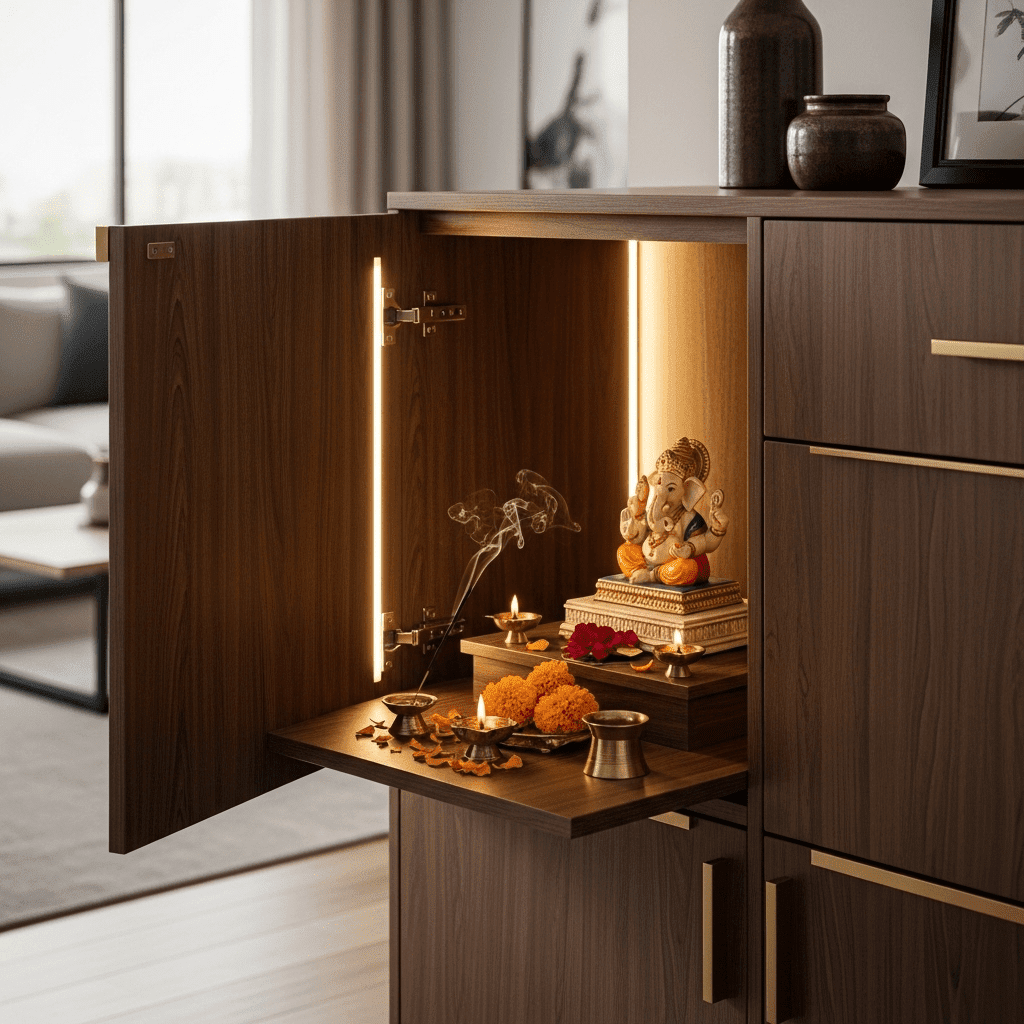
7. The Hidden Cabinet Reveal
Modify a section of your media console or a tall bookshelf to house the pooja space. With doors that match the rest of the cabinetry, the mandir remains hidden during social gatherings and is revealed only during prayer time.
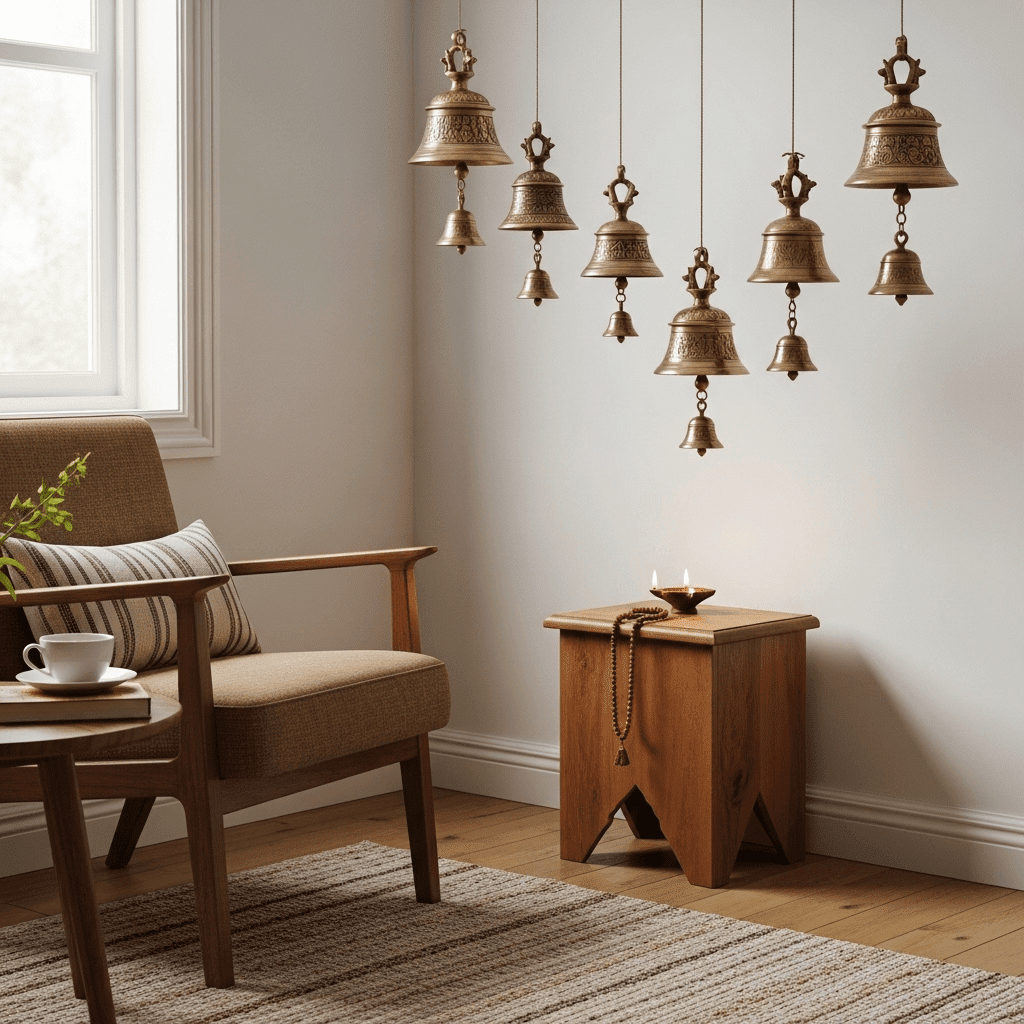
8. The Ornate Brass Bell Hanging
Hang a series of small brass bells from the ceiling over your prayer area. This vertical element defines the “sacred zone” without the need for walls, adding a traditional temple-like feel to a modern home.
9. The Marble-Clad Nook
Line a small wall niche with white marble or marble-patterned tiles. The cool, reflective surface of the stone instantly elevates the space, making the small prayer area feel like a high-end temple.
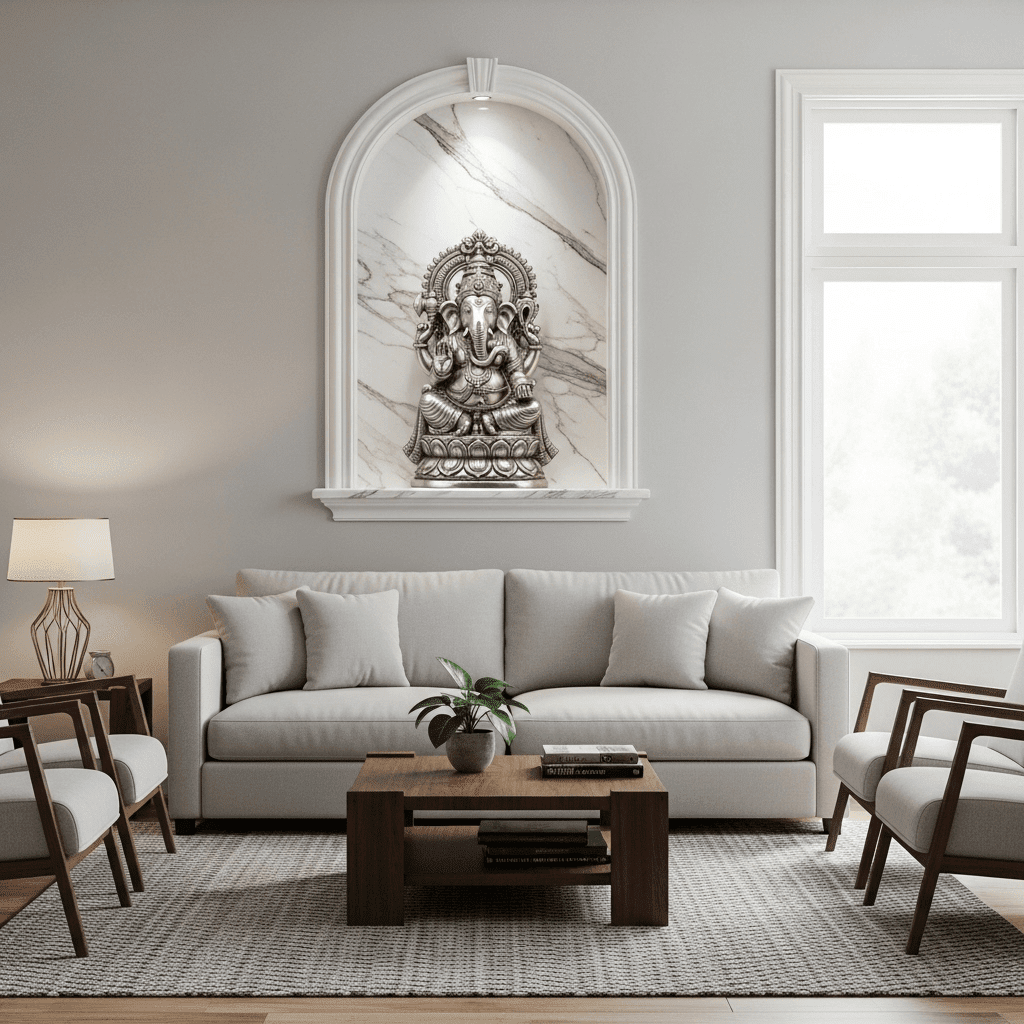
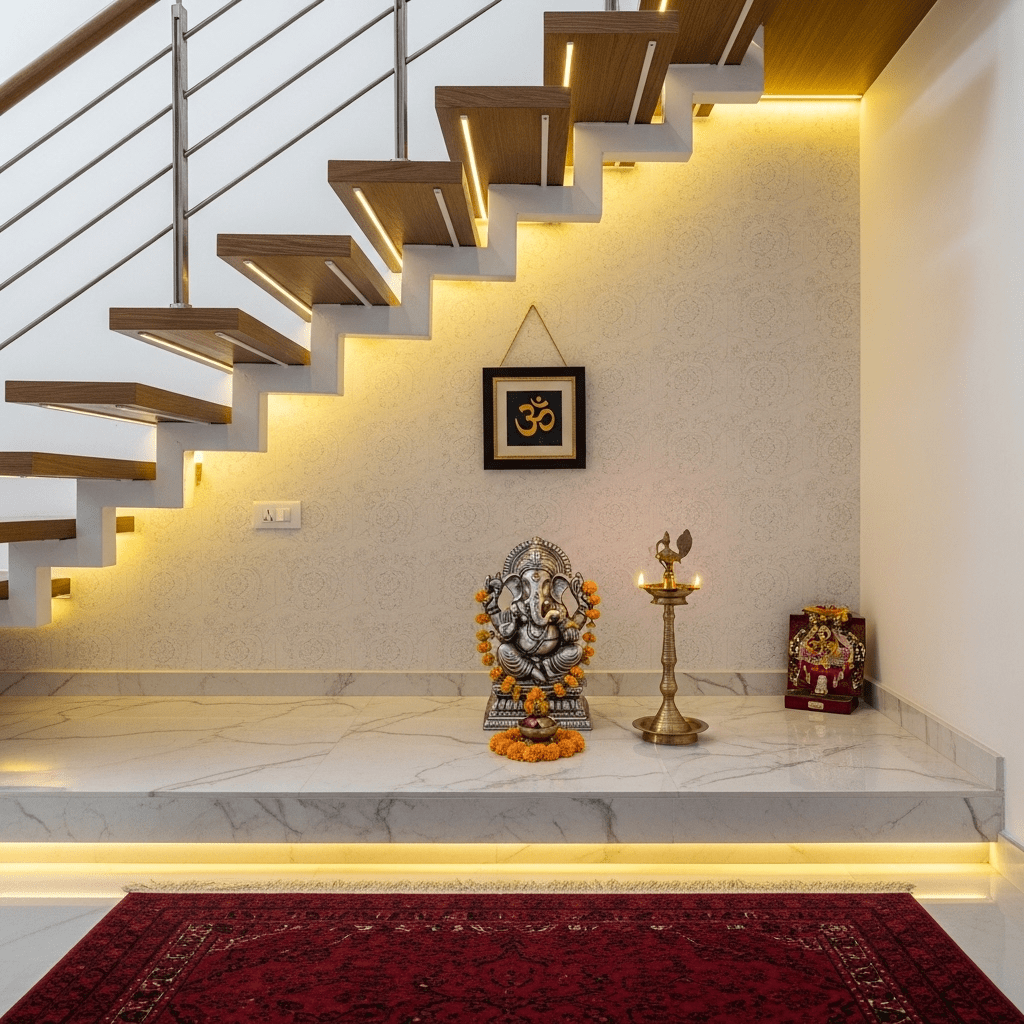
10. The Pedestal Under the Stairs
If your living room has an open staircase, utilize the space underneath for a low-profile pooja unit. This “dead space” is often the perfect size for a quiet, tucked-away mandir.
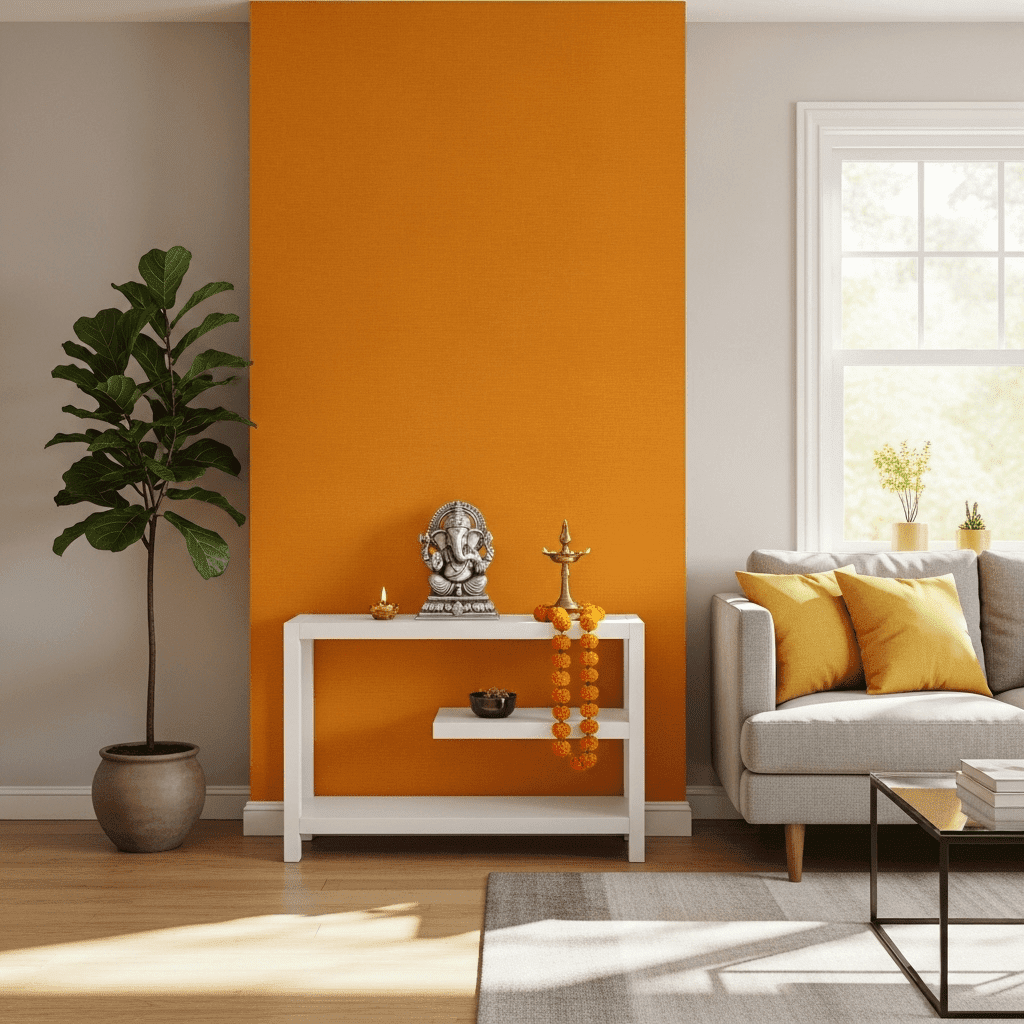
11. The Contrast Backdrop Panel
Place a vibrant wallpaper or a dark wood panel behind a white marble altar. The contrast makes the sacred space “pop” and defines it as a distinct architectural element within the lounge.
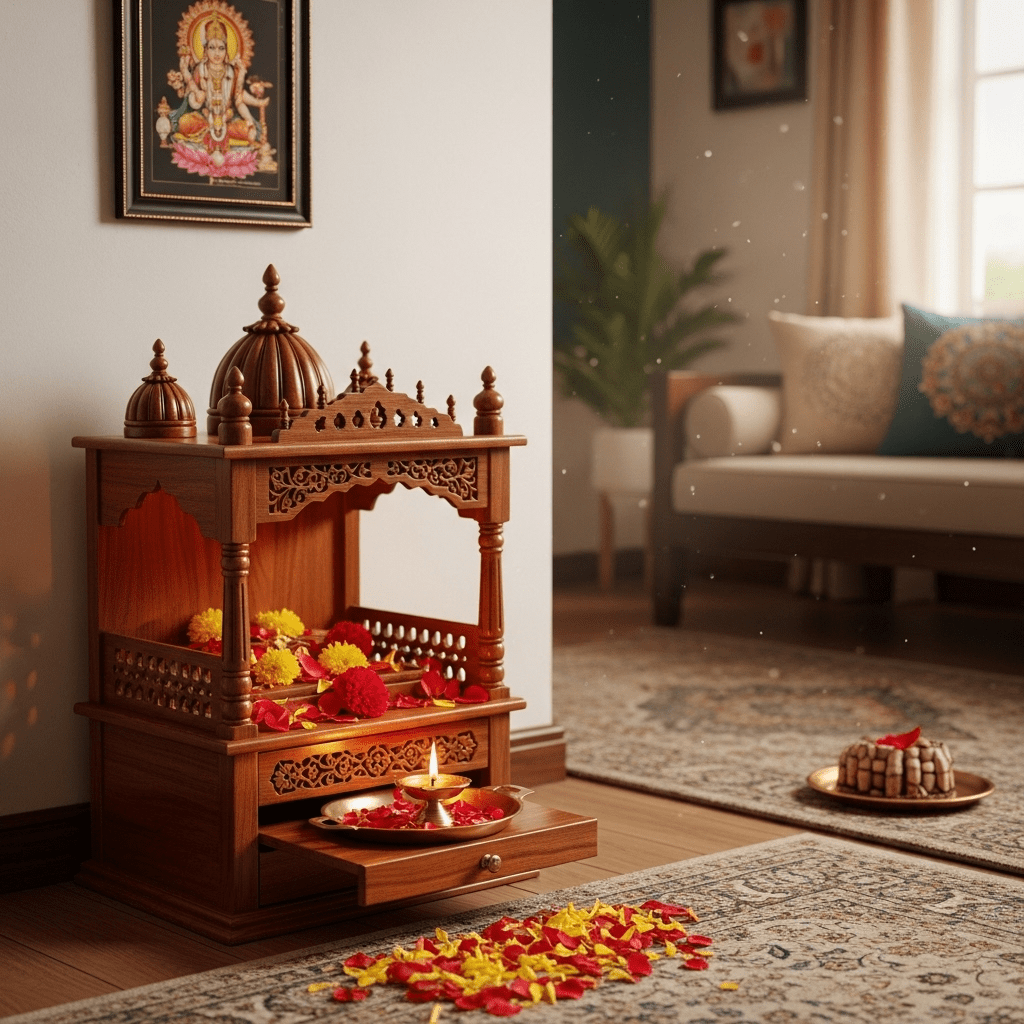
12. The Pull-Out Agarbatti Drawer
Choose a unit with a pull-out tray or drawer. This provides extra space for holding a prayer book or lighting incense without the need for a larger, permanent table surface.
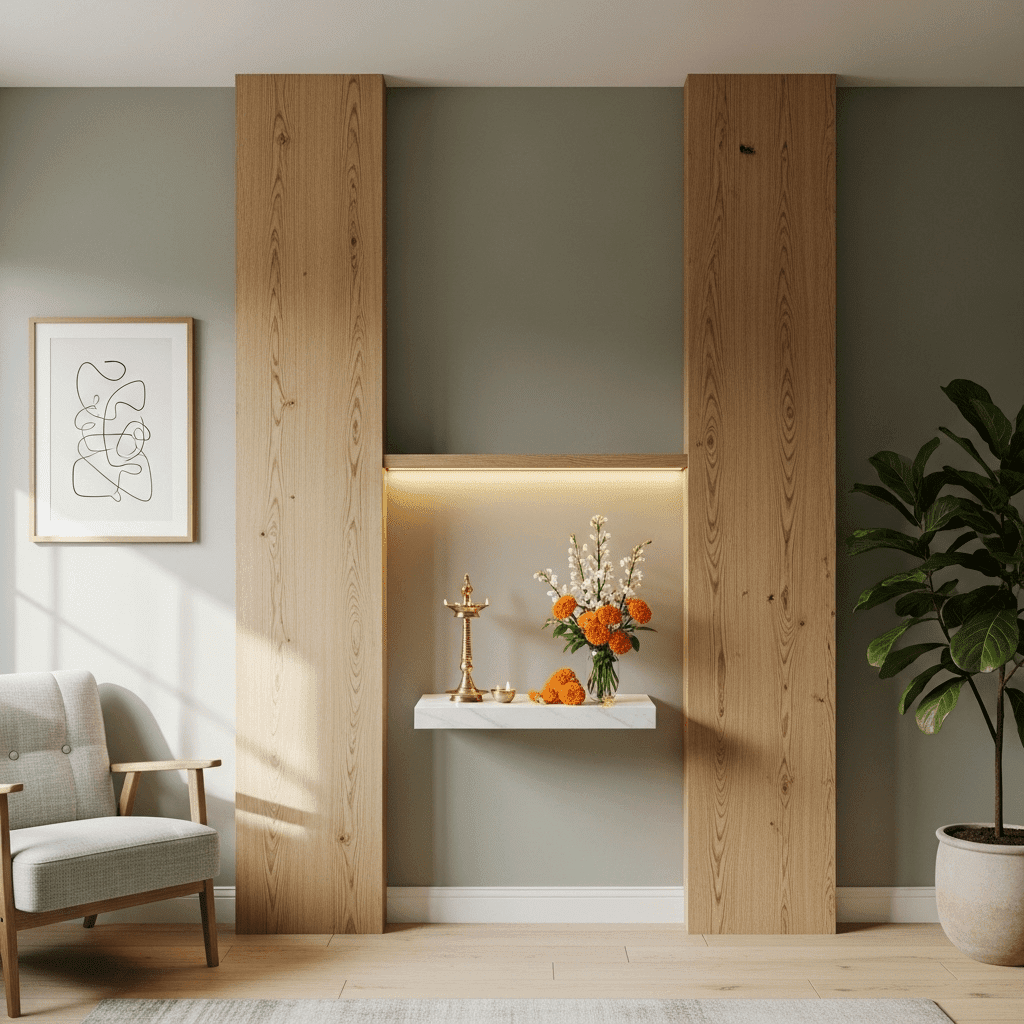
13. The Vertical Plywood “Wings”
Use two vertical plywood panels to flank a wall-mounted idol. These “wings” provide a sense of enclosure and protection for the deity while maintaining a very slim profile against the wall.
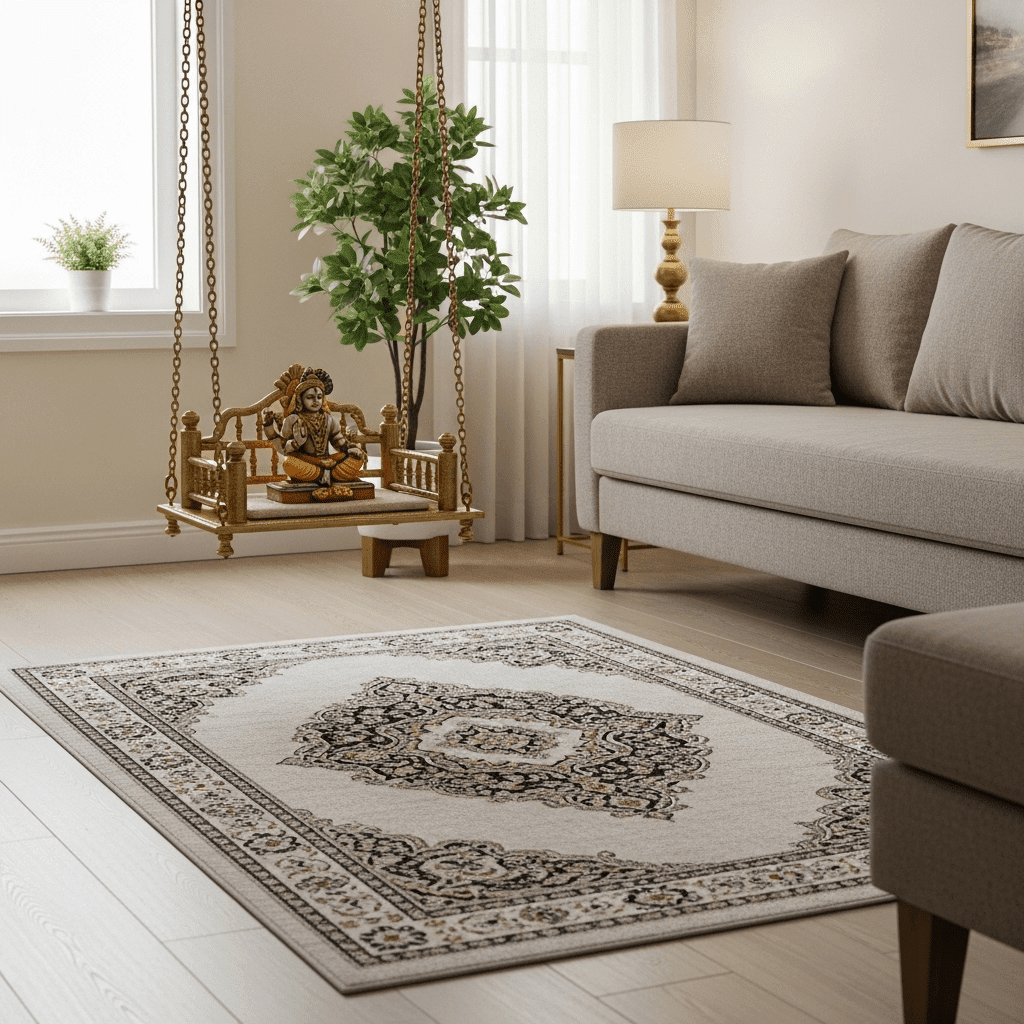
14. The Hanging “Jhoola” Mandir
Install a small hanging “jhoola” (swing) for the idol. Suspending the mandir from the ceiling adds a whimsical, traditional touch and keeps the floor area completely clear for cleaning.
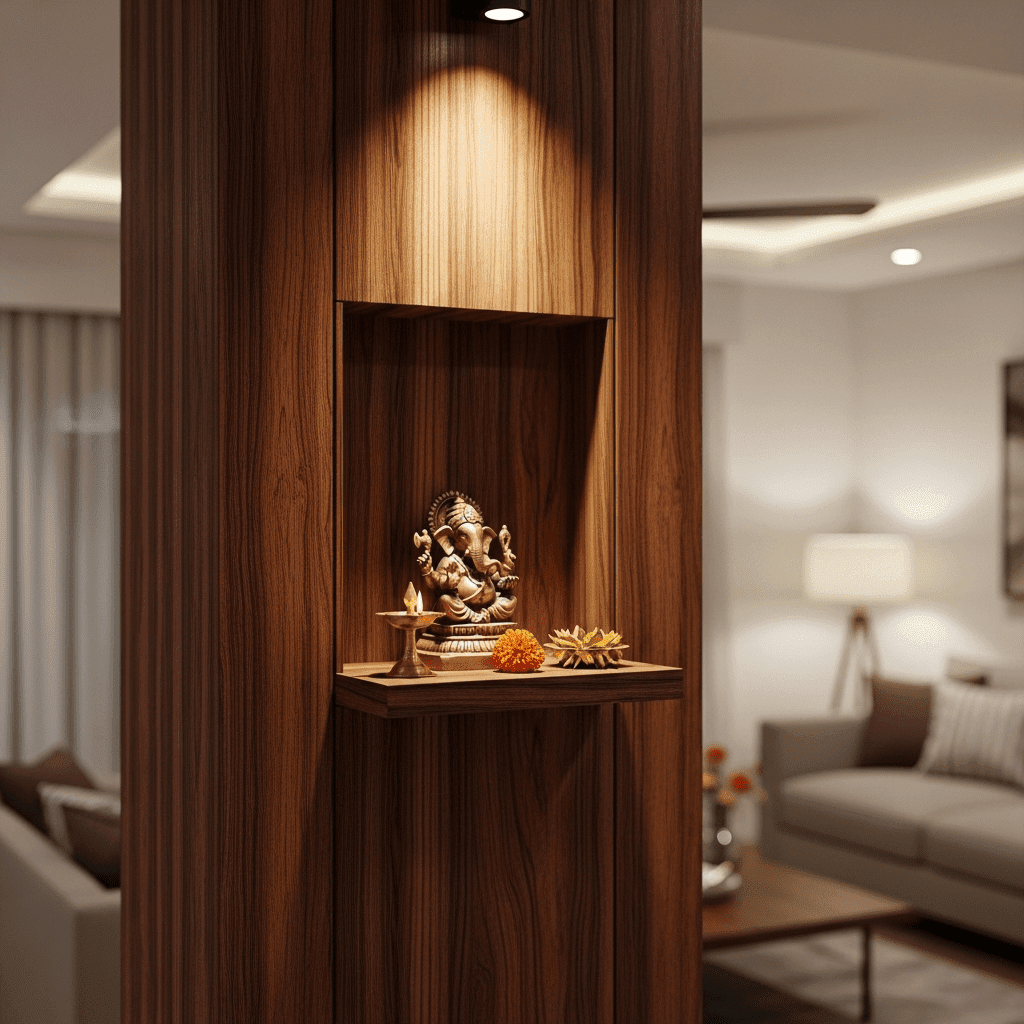
15. The Pillar-Integrated Altar
If your living room has a structural pillar, use one side of it to mount your pooja shelf. Wrapping the pillar in wood or stone can turn a structural necessity into a beautiful spiritual focal point.
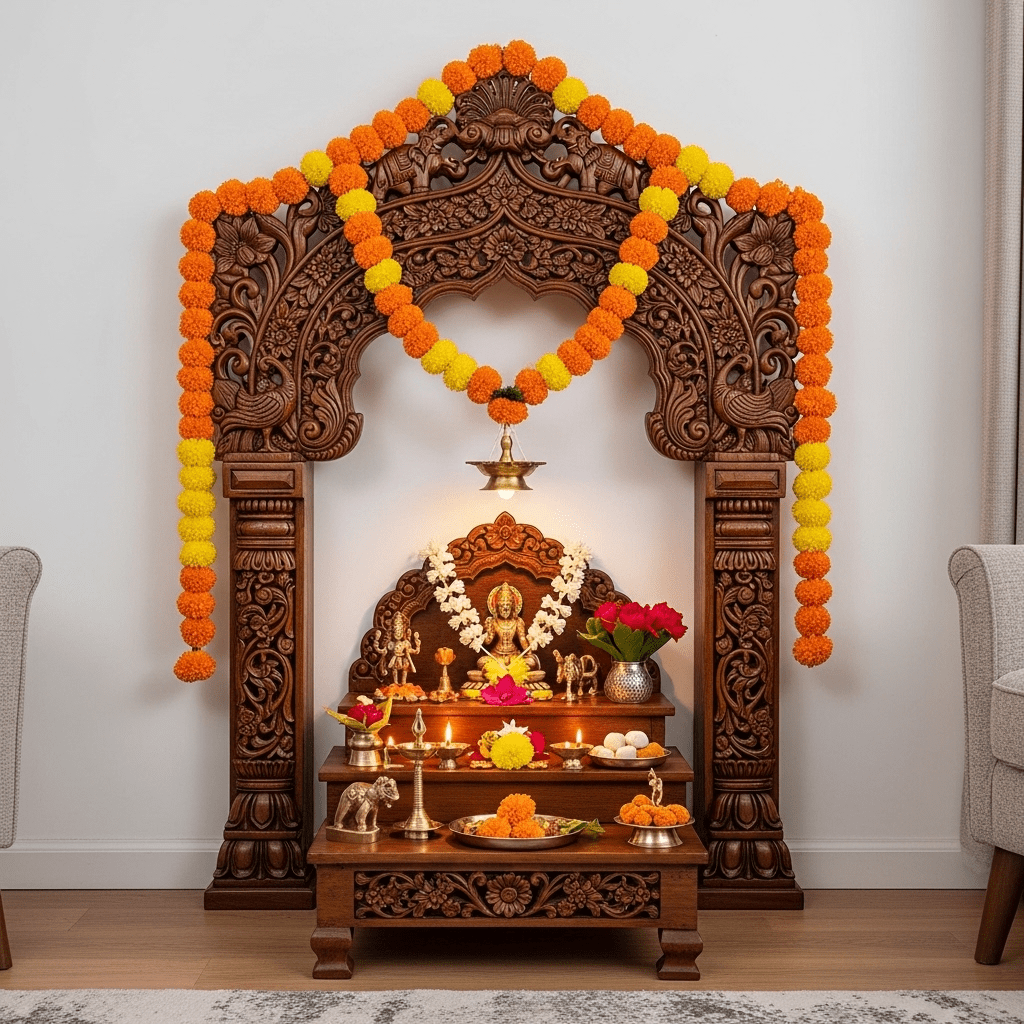
16. The Traditional Toran Frame
Frame a simple wall-mounted shelf with a permanent wooden or brass “toran” (archway). This traditional framing device signals the entrance to a sacred space even if there are no doors or walls.
Conclusion
Integrating a pooja room into a small living room is about finding the balance between devotion and design. By choosing materials that complement your existing furniture—like matching woods or stones—and utilizing vertical space, you can create a prayer nook that is both a spiritual refuge and a stylish architectural feature. Focus on warm, indirect lighting to ensure your sacred space remains a peaceful anchor in your home.