
An architecture portfolio is more than a collection of drawings and renderings. It is your visual resume, your design manifesto, and the single most important tool for landing a job, securing a client, or gaining admission to graduate school. Yet most architecture portfolios fail because they look like everyone else’s: the same projects, the same renderings, the same sterile layouts.
A great portfolio tells a story. It shows not just what you designed, but how you think, how you solve problems, how you move from a vague client brief to a built building. Whether you are a student, a recent graduate, or a practising architect looking to pivot, these 9 architecture portfolio ideas will help your work stand out.
1. The Process-First Portfolio
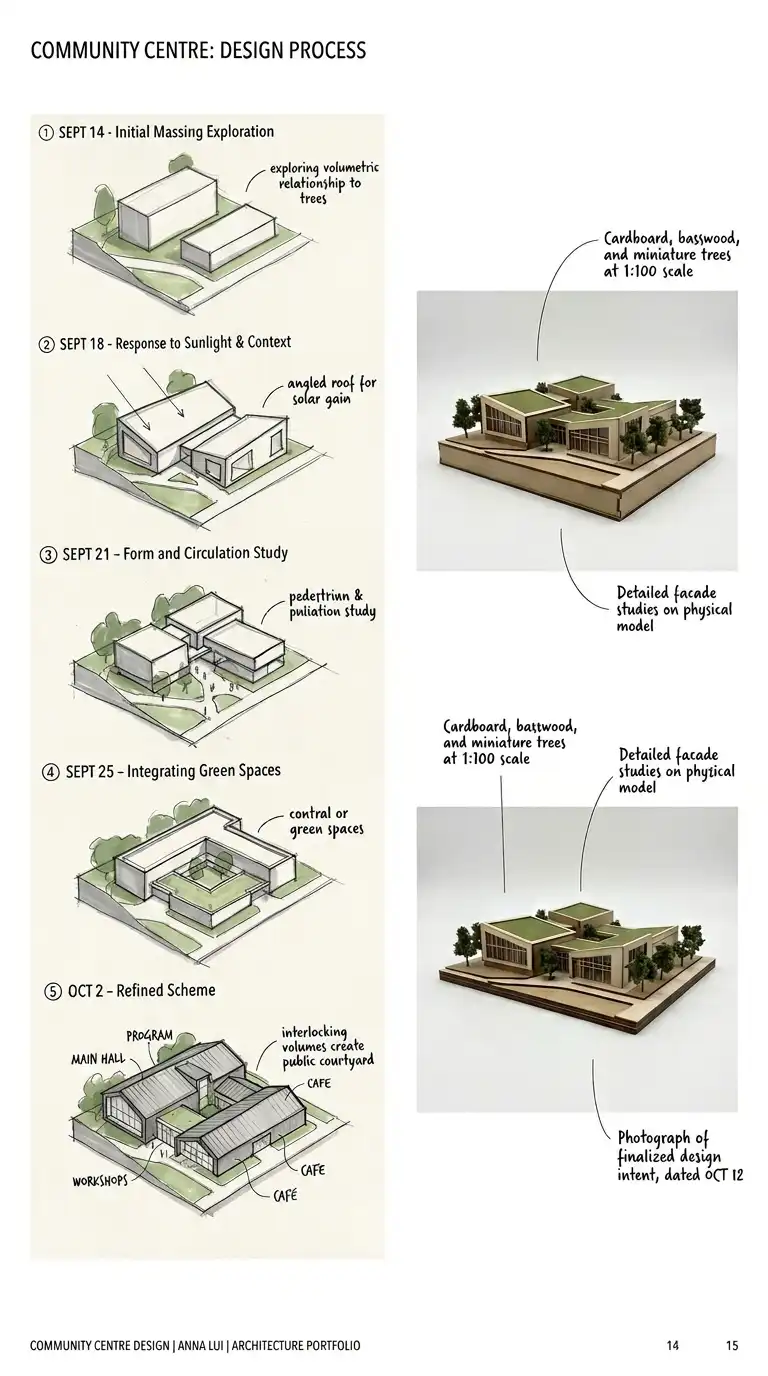
Most portfolios show only final results: beautiful renderings, polished floor plans, dramatic photographs. The process-first portfolio does the opposite. It dedicates significant space to sketches, study models, diagram studies, and alternative schemes that were abandoned along the way.
This approach demonstrates how you think, not just what you produced. Include scans of your conceptual massing sketches, photographs of physical study models at 1:100 or 1:200 scale, and side-by-side comparisons of three or four early options before showing the final scheme. Clients and employers value process because it proves you can explore multiple solutions, not just the first idea that came to mind.
Quick Tips
- Dedicate at least two pages per project to process work before showing final drawings.
- Include handwritten notes on sketches to show your thinking in real time.
- Scan sketches at high resolution (300dpi minimum) so line weights remain visible.
2. The Narrative Portfolio
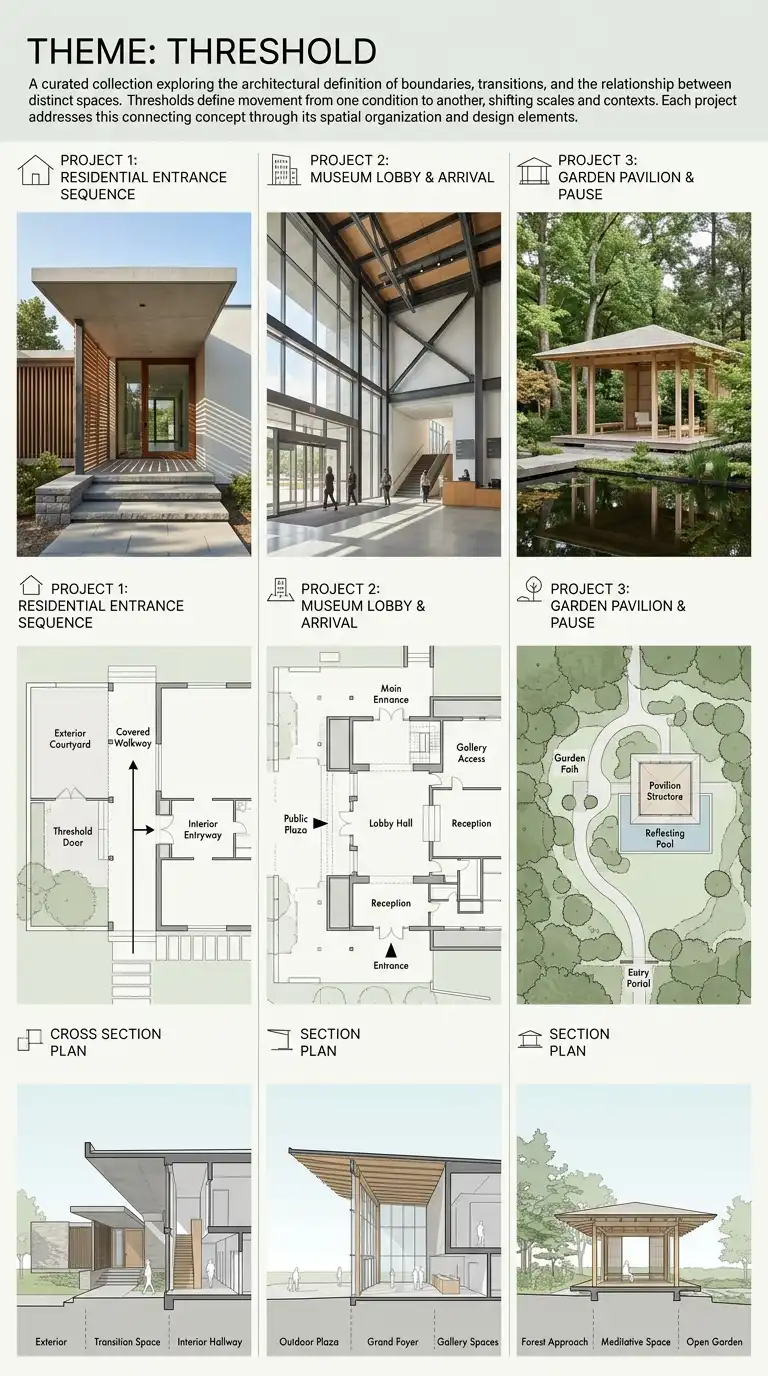
Every building tells a story. The narrative portfolio organises projects around themes rather than chronology or project type. A single portfolio might explore “Light and Shadow” across five very different projects, or “Adaptive Reuse” through a factory conversion, a church renovation, and a residential addition.
This structure demonstrates conceptual depth. It shows that you think about architecture as more than just problem-solving — that you understand the poetic, experiential, and cultural dimensions of the discipline. Choose a narrative thread that genuinely connects your work. Do not force unrelated projects into a theme just for the sake of cohesion.
Quick Tips
- Write a one-paragraph introduction for each thematic section explaining the connecting idea.
- Use consistent visual language across projects within the same theme.
- Keep the narrative subtle. Let the work speak first, then support it with text.
3. The One-Project Deep Dive Portfolio
Instead of showing ten projects superficially, the one-project deep dive portfolio shows a single project in exhaustive detail. This approach is risky but memorable. It proves you can sustain intellectual and creative energy over a long period and that you understand every aspect of architectural production.
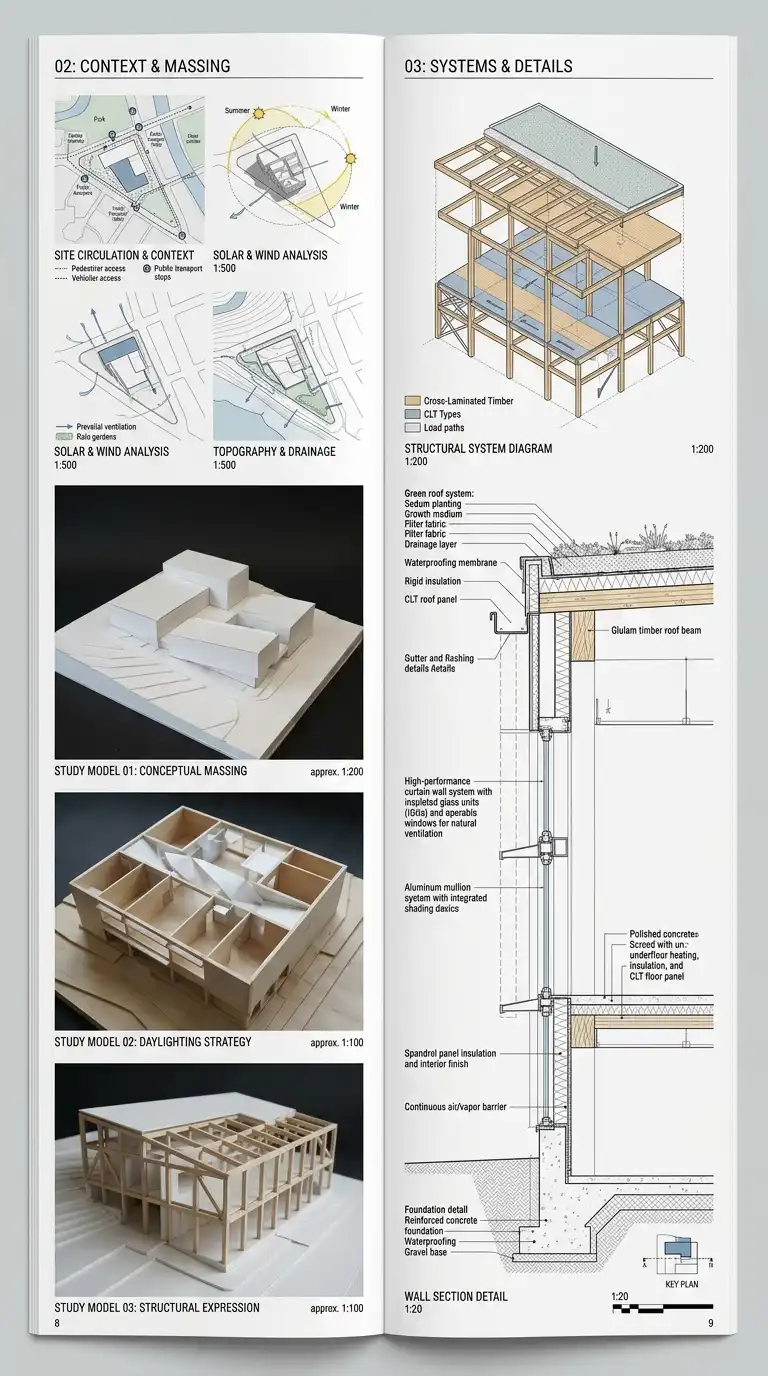
A deep dive might include: site analysis diagrams, climate studies, programmatic research, conceptual sketches, physical study models, structural and environmental strategies, detailed floor plans at multiple scales, wall sections and details, material samples photographed, construction photographs, and post-occupancy analysis. The project must be substantial enough to warrant this attention — a small residential addition likely will not sustain 30 pages.
Quick Tips
- Choose a project that genuinely interests you. Your enthusiasm will show.
- Include failures and revisions alongside successes. Honesty builds credibility.
- End with lessons learned. What would you do differently next time?
4. The Hybrid Physical-Digital Portfolio
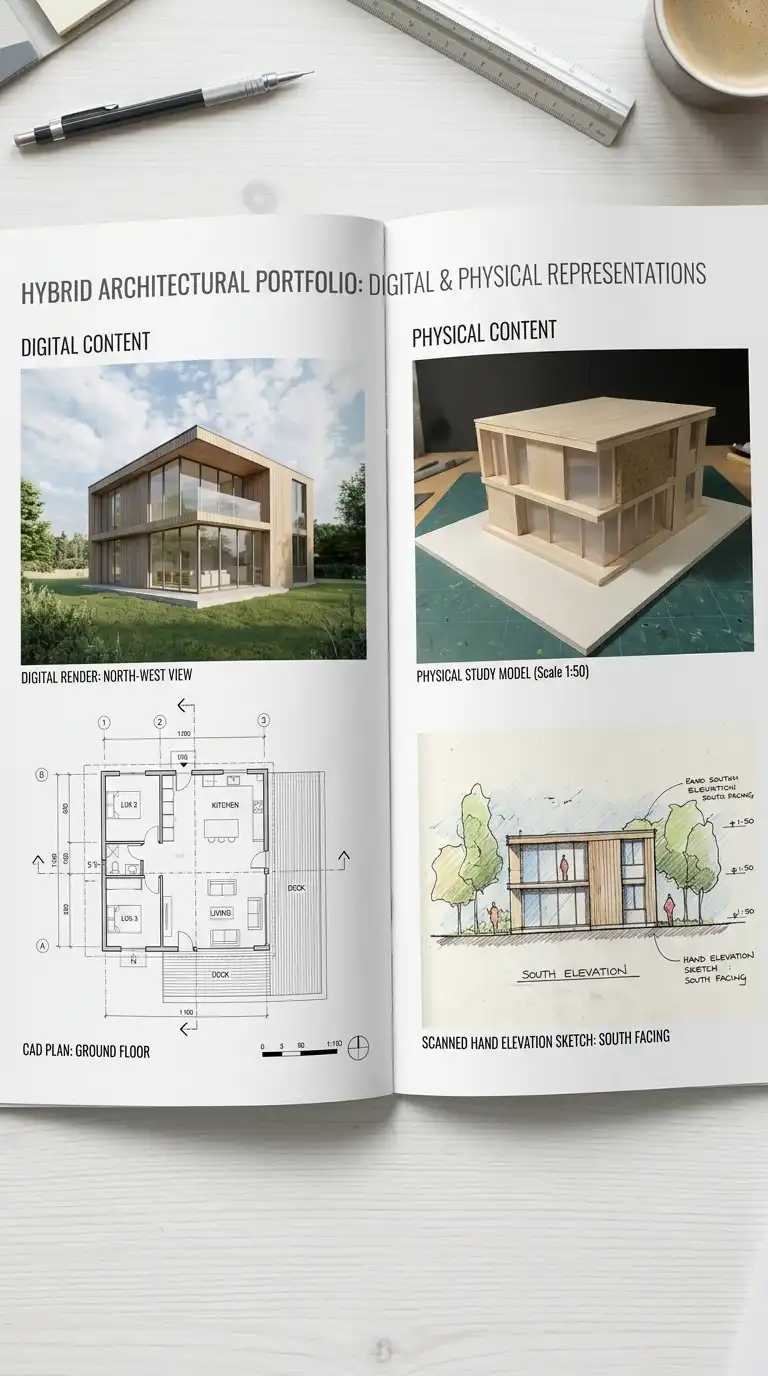
Architecture exists in the physical world, but most portfolios exist entirely on screens. The hybrid physical-digital portfolio acknowledges this contradiction by including photographs of physical models, material samples, and hand drawings alongside digital renderings and CAD drawings.
This approach demonstrates craft and material understanding — qualities that are increasingly rare and increasingly valued. Include close-up photographs of study models showing hand cutting and assembly. Photograph material samples against neutral backgrounds. Scan hand drawings at high resolution. The contrast between the precision of digital work and the tactility of physical work creates visual interest and demonstrates range.
Quick Tips
- Photograph models with consistent lighting — soft, diffused daylight is best.
- Include a small material sample board photographed flat as a portfolio page.
- Use the same layout grid for both physical and digital content to create cohesion.
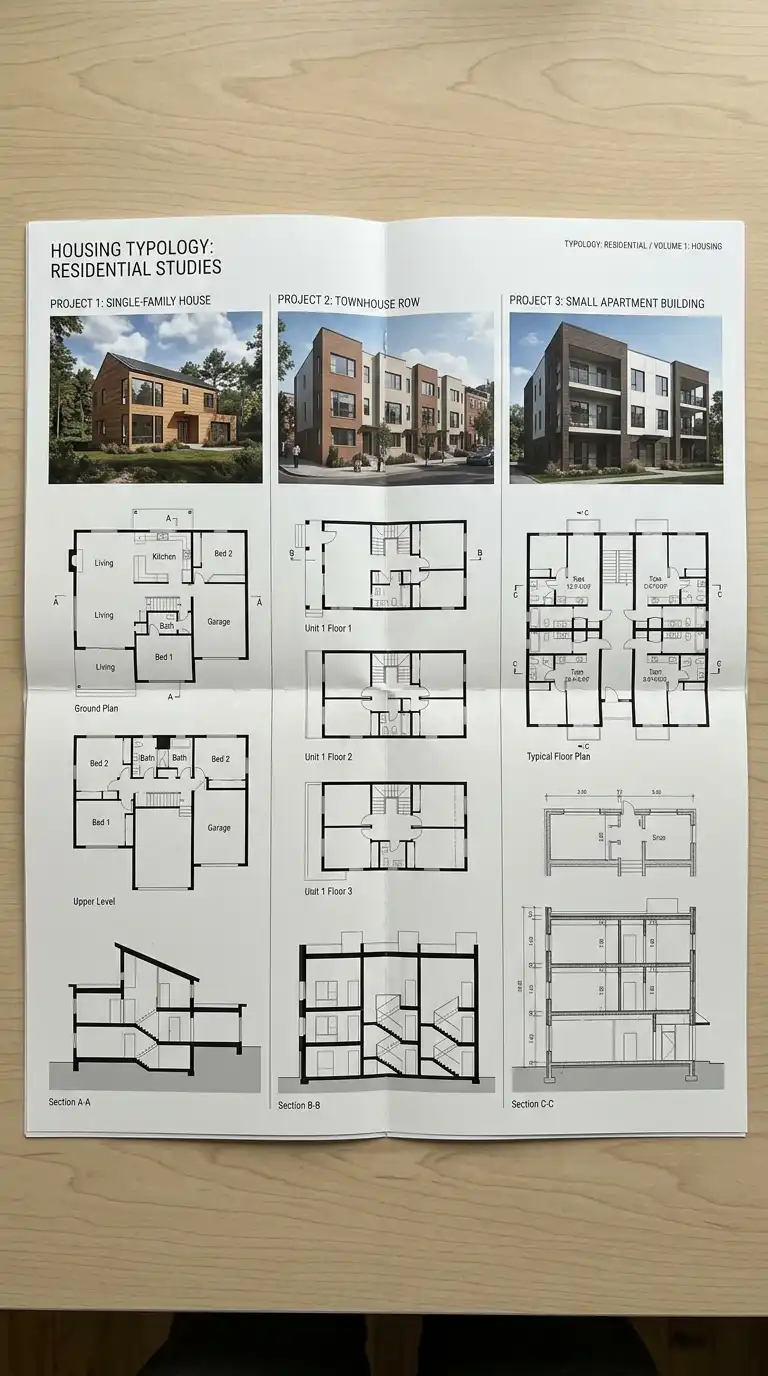
5. The Typology Portfolio
A typology portfolio organises work by building type: houses, schools, museums, offices, public spaces. This structure is traditional but effective, especially when applying to firms that specialise in a particular typology. A residential firm wants to see houses. A museum practice wants to see cultural projects.
The typology portfolio demonstrates depth within a category. Instead of one house, show three or four. Instead of a single school, show a primary school, a secondary school, and a university building. This proves you understand the specific demands of that building type — programme, circulation, scale, materiality — and can adapt your design approach across variations.
Quick Tips
- Lead with your strongest typology, even if it is not the most recent project.
- Group similar typologies together — all houses, then all civic, then all commercial.
- Use consistent page layout within each typology section so the viewer focuses on the work.
6. The Research-Led Portfolio
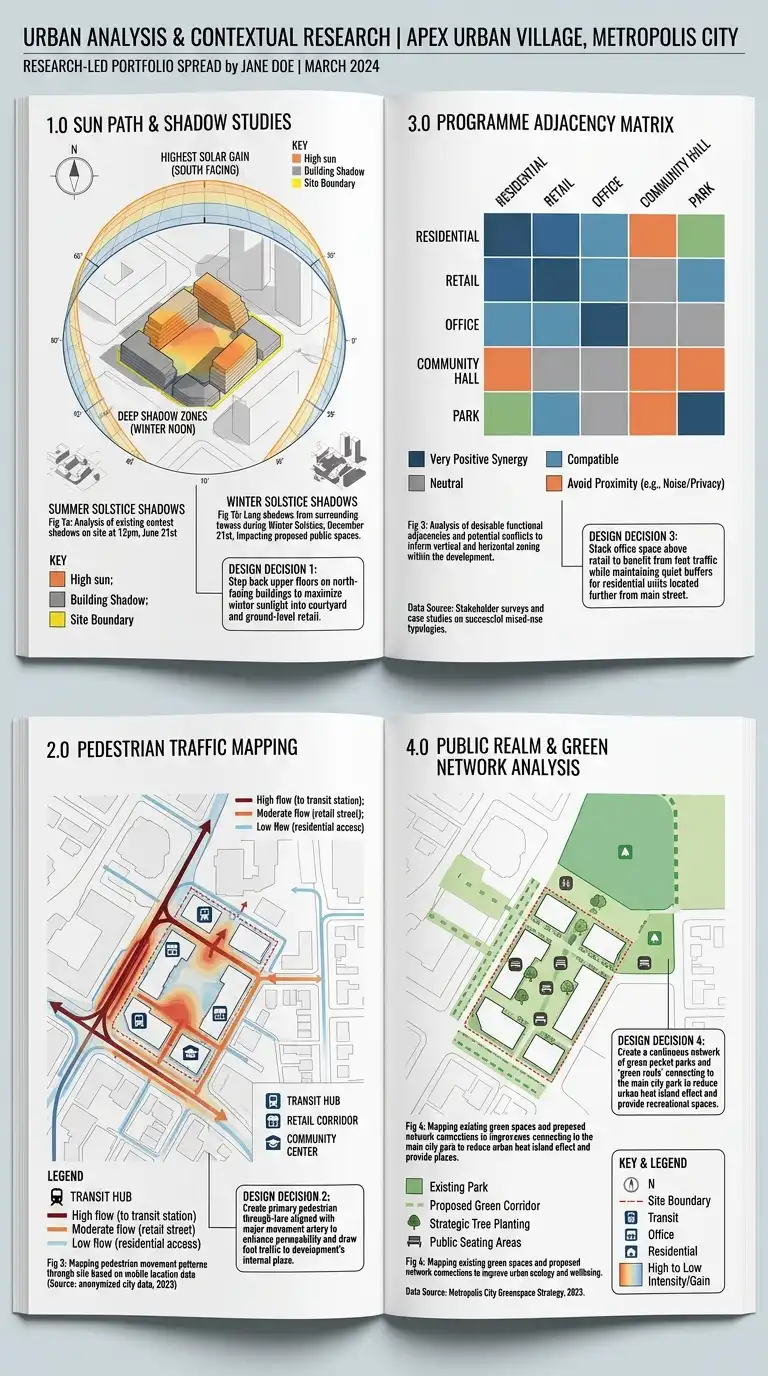
For academic positions, competitive graduate school applications, or design research roles, the research-led portfolio foregrounds your investigative work. It includes not just design projects but also analytical diagrams, precedent studies, urban analyses, environmental simulations, and written research abstracts.
This portfolio type proves you can think critically about architecture, not just produce it. Include diagrams showing daylight studies, wind analysis, pedestrian traffic mapping, or programme adjacency matrices. Show how research directly informed design decisions with annotated diagrams connecting analysis to outcome. For academic portfolios, include a research statement and publication list alongside design work.
Quick Tips
- Label all diagrams clearly. Research is useless if the viewer cannot understand it.
- Show the research method, not just the findings. How did you collect and analyse data?
- Connect every research output to a design outcome. Unconnected research looks academic in the pejorative sense.
7. The Construction-Focused Portfolio
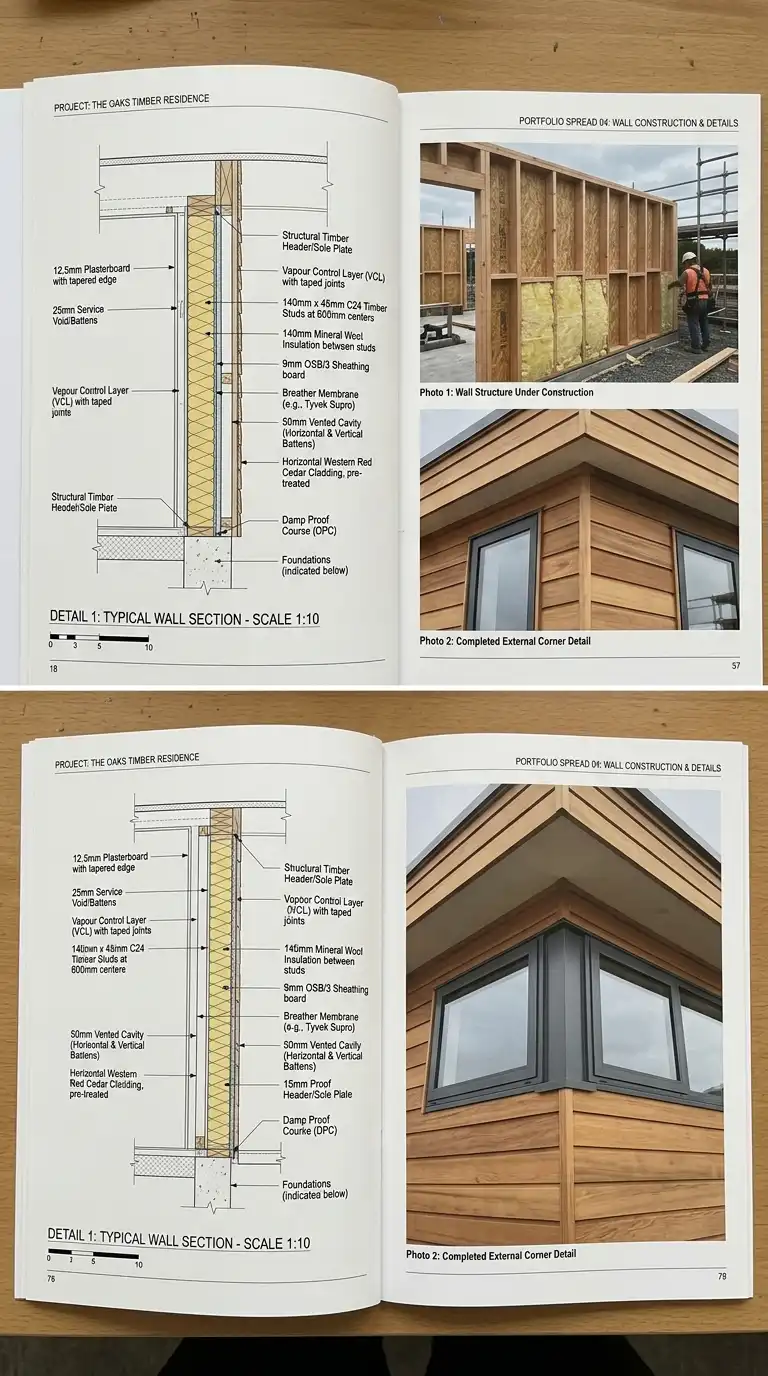
Many architecture portfolios emphasise conceptual design but show little understanding of how buildings are actually built. The construction-focused portfolio does the opposite. It dedicates significant space to wall sections, detail drawings, material specifications, and construction photographs.
This approach is particularly effective for applying to practice-oriented firms, technical roles, or positions in construction administration. Include wall sections at 1:5 or 1:10 scale with annotated material layers. Show photographs of details under construction alongside the final built condition. Include shop drawing reviews, RFI responses, or material sample boards. This portfolio proves you can design buildable architecture.
Quick Tips
- Include at least one full wall section for every project.
- Annotate material layers with standard construction notation — leader lines and labels.
- Show the same detail at different scales: a 1:20 section, a 1:5 detail, and a photograph.
8. The Collaborative Portfolio
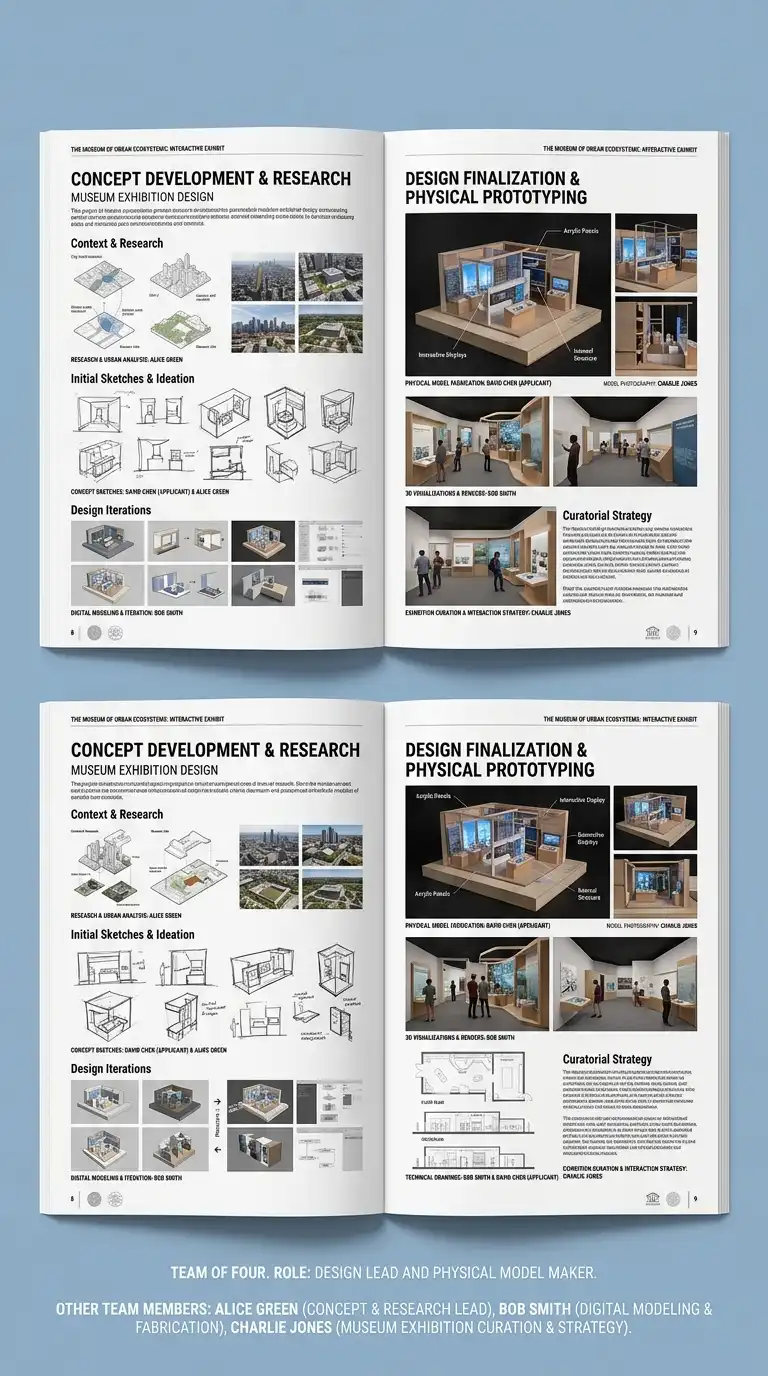
Architecture is rarely a solo endeavour. The collaborative portfolio shows your role within team projects clearly and honestly. It demonstrates that you can work with others — a skill employers value as much as design talent.
For each collaborative project, state the team size, your specific role (design lead, project manager, modeller, renderer, researcher), and the contributions of others where relevant. Include diagrams or notes that show the division of work. Never present team work as solo work. The architecture community is small, and dishonesty will be discovered.
Quick Tips
- Use a consistent credit line on every page of every collaborative project.
- Show process work that reveals your specific contribution, not just final outputs.
- If you led the team, say so. If you were a supporting team member, be equally proud.
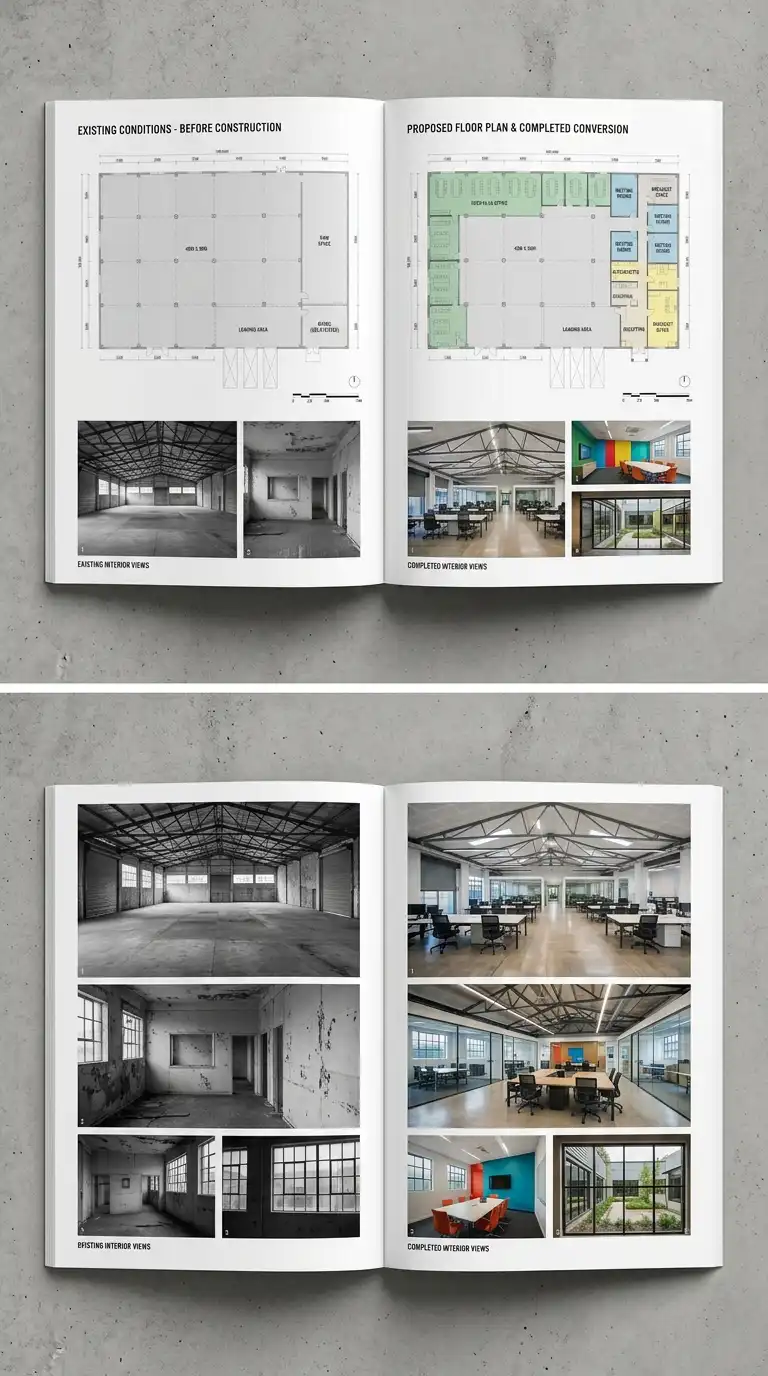
9. The Before-and-After Portfolio
For architects working in renovation, adaptive reuse, or historic preservation, the before-and-after portfolio is the most persuasive format. It shows existing conditions alongside proposed interventions, making the architect’s value immediately visible.
For each project, dedicate space to measured drawings or photographs of the existing building. Show what was wrong, inadequate, or underperforming. Then show your intervention: new plans overlaid on existing, section cuts revealing added spaces, photographs of the completed work. The contrast between before and after demonstrates your problem-solving ability more effectively than any written description.
Quick Tips
- Use consistent orientation and scale for before and after drawings so comparison is easy.
- Highlight the intervention with colour or line weight while keeping existing conditions in grey.
- Include at least one photograph of the completed project from the same angle as a before photograph.
Final Thoughts
An architecture portfolio is never finished. It evolves as you evolve, as your skills grow, as your design thinking deepens. The best portfolios are honest about strengths, honest about limitations, and honest about the collaborative nature of architectural work.
Whether you choose the process-first approach, the narrative structure, the deep dive, or any of the other ideas above, the key principle is the same: let the work speak, but help it speak clearly. Good design deserves good presentation. Your portfolio is the first building you show the world. Make it well.
IMPORTANT DISCLAIMER: All portfolio strategies and presentation techniques described in this post are for informational and educational purposes only. Portfolio content must be the original work of the applicant unless clearly attributed to others. Copyright of drawings, photographs, and other portfolio materials remains with their respective creators. Always verify submission requirements with specific employers, schools, or clients before submitting any portfolio.