
9 Small Bedroom with Wardrobe Interior Designs
A small bedroom presents unique challenges when it comes to incorporating a wardrobe. You need storage that is functional, spacious, and visually unobtrusive all at once. The key is to maximize every inch of available space while keeping the room feeling open and airy. From floor-to-ceiling units and sliding doors to mirrored panels and corner configurations, here are nine small bedroom with wardrobe interior designs to inspire your next project.
1. Floor-to-Ceiling Wardrobe with Integrated Handles
A floor-to-ceiling wardrobe maximizes vertical storage in a small bedroom. The continuous surface from floor to ceiling draws the eye upward, making the room feel taller and more spacious. Integrated handles or push-to-open mechanisms eliminate protruding hardware, maintaining a clean, seamless appearance. Choose a matte finish in a light color like white, cream, or light gray to reflect light and prevent the unit from feeling heavy. Use the top shelves for out-of-season clothing or luggage and keep everyday essentials at eye level.

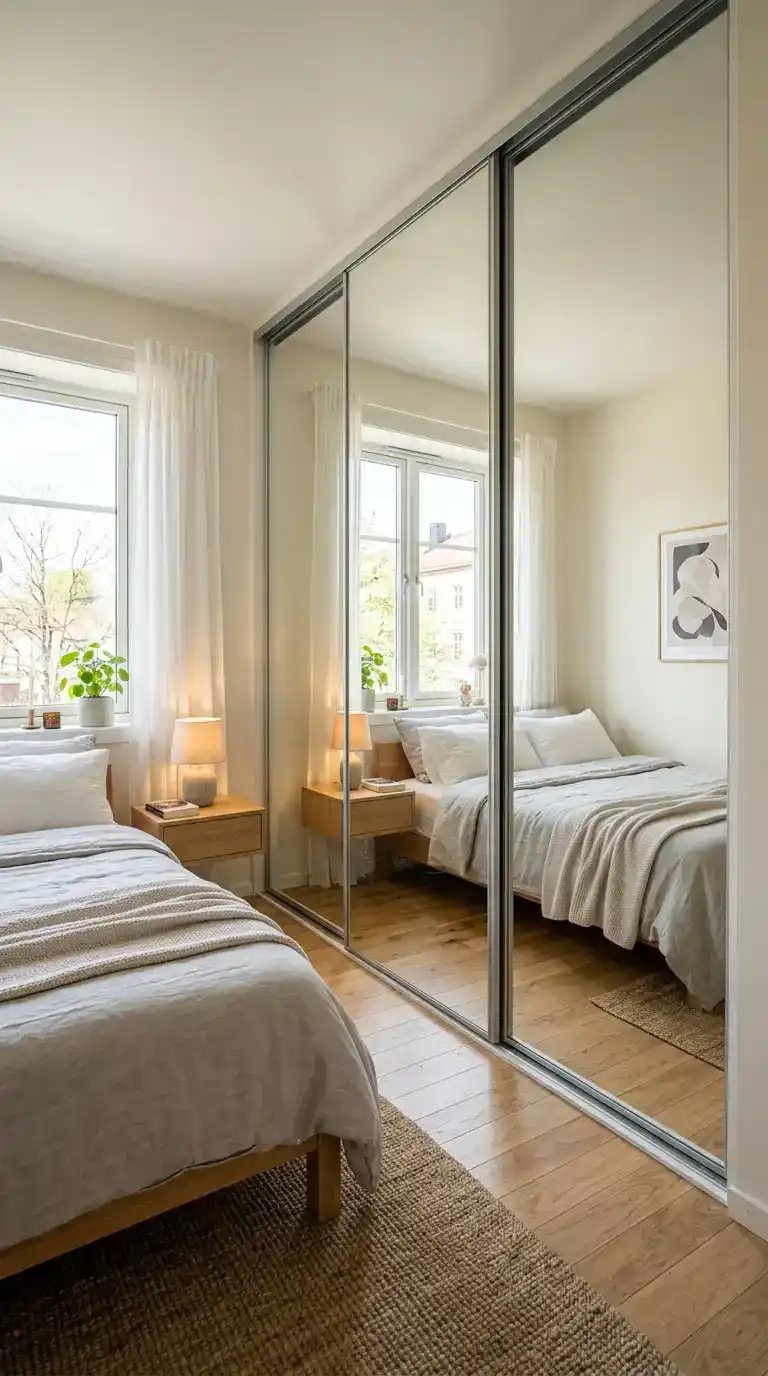
2. Sliding Door Wardrobe with Mirrored Panels
Sliding doors are ideal for small bedrooms because they require no swing space. Mirrored panels serve a dual purpose: they reflect light around the room, making the space feel larger and brighter, and they function as a full-length dressing mirror. Choose frameless mirrors for a clean, contemporary look or slim metal frames for added definition. The sliding mechanism allows you to place furniture close to the wardrobe without blocking access. Pair with light-colored walls and bedding to maximize the light-enhancing effect.
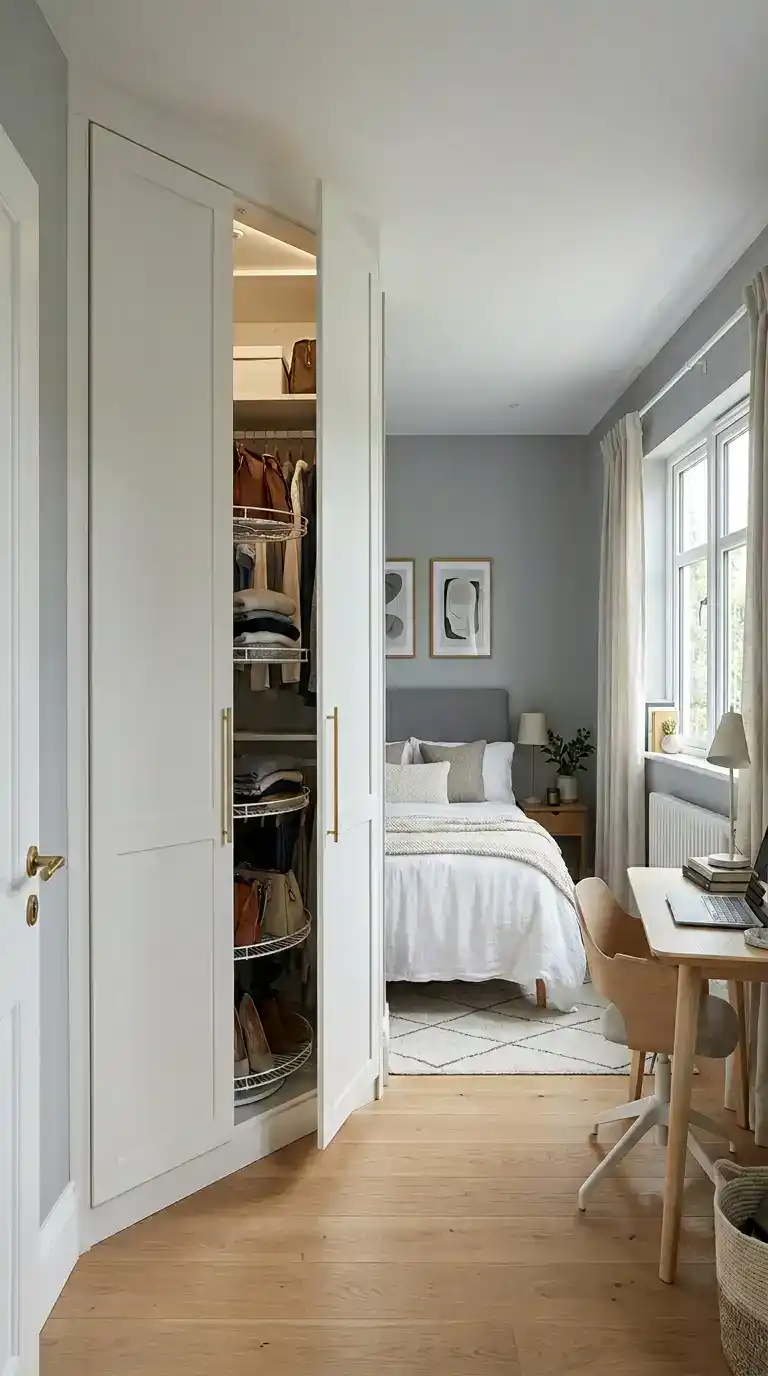
3. Corner Wardrobe with Angled Doors
A corner wardrobe makes use of often-wasted space in small bedrooms. The angled doors meet at a 45-degree angle, creating a flat front that sits flush with the room’s geometry. This design softens the visual impact of the corner unit while maximizing interior storage. Use hinged doors on a diagonal front for easy access, or opt for sliding doors on an L-shaped configuration. Inside, install a rotating carousel or pull-out racks to make corner storage fully accessible.
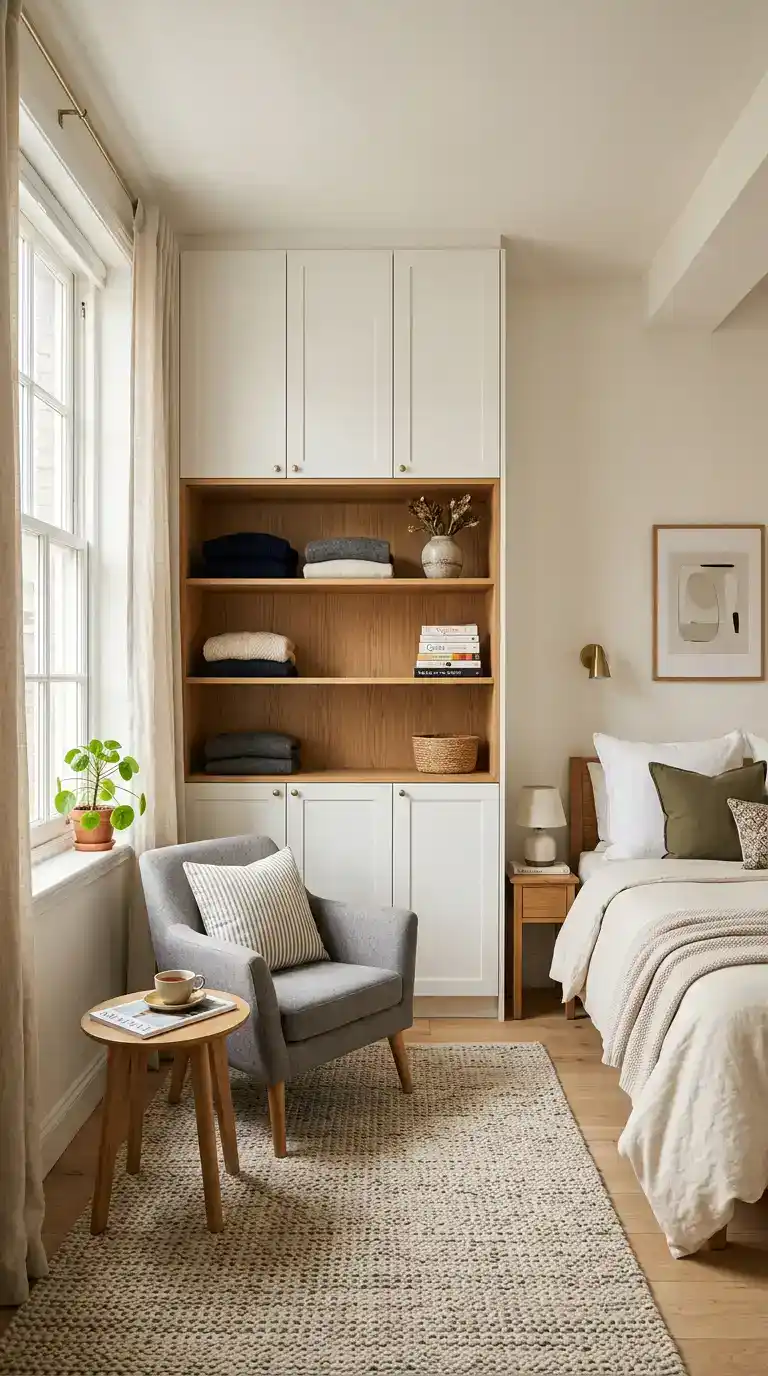
4. Wardrobe with Open and Closed Sections
Combine closed cabinets with open shelving to create a wardrobe that feels less bulky. Use the closed sections to hide everyday clothing and the open sections to display accessories, books, or folded items. This approach breaks up the expanse of cabinetry and adds visual interest. Position open shelves at eye level for easy access, and use matching baskets or boxes to keep the display tidy. This design works especially well in small bedrooms where a solid wall of cabinets might feel overwhelming.
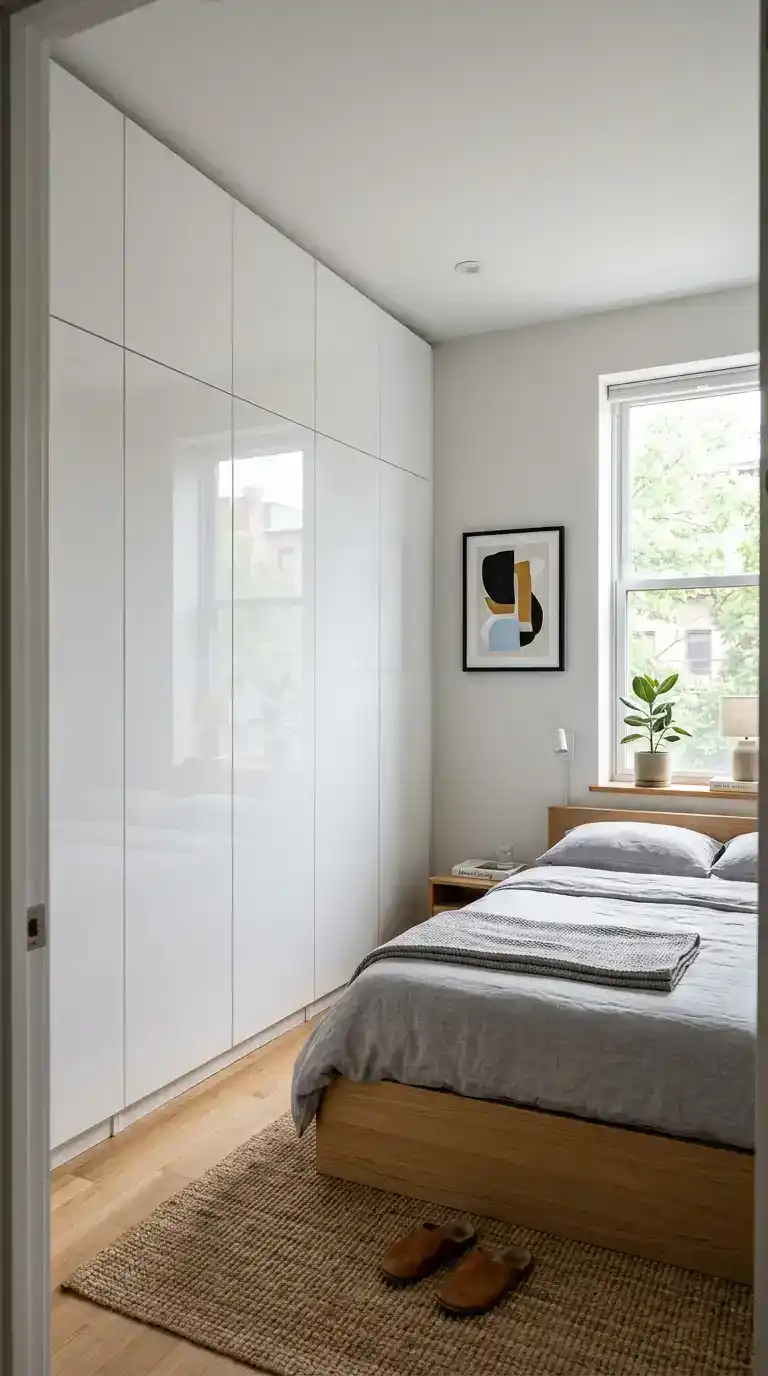
5. Handleless High-Gloss Wardrobe
High-gloss finishes reflect light, making a small bedroom feel larger and brighter. A handleless design with push-to-open mechanisms maintains a sleek, uncluttered surface. Choose a light color like white or soft gray for maximum reflectivity, or opt for a bold color like navy or charcoal for a dramatic focal point. The glossy surface is easy to clean and resists fingerprints, making it practical for daily use. Pair with matte walls to create contrast and prevent the room from feeling too shiny.
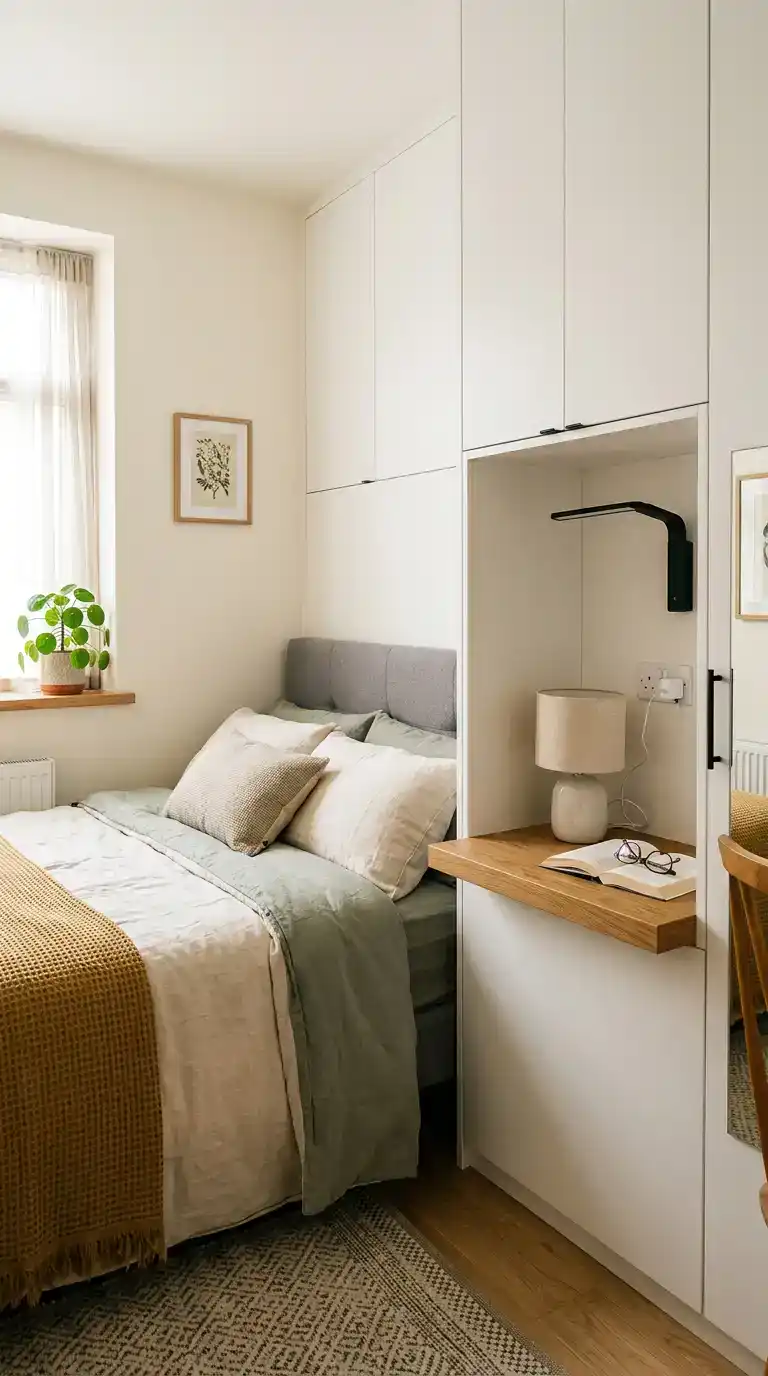
6. Wardrobe with Bedside Niche
Incorporate a bedside niche into your wardrobe design by extending the wardrobe to include a shelf or cubby beside the bed. This eliminates the need for a separate nightstand and creates a cohesive, custom look. Add a built-in reading light and an electrical outlet for charging devices. Use the niche for a lamp, alarm clock, books, or a glass of water. This design is perfect for very small bedrooms where every inch counts.
7. Wardrobe with Curtain Instead of Doors
For a soft, flexible alternative to traditional doors, use a floor-to-ceiling curtain to conceal your wardrobe. A curtain takes up no swing space, adds texture and warmth, and is budget-friendly. Choose a light, airy fabric like linen or cotton in a neutral color to keep the room feeling open. Mount a tension rod or a track from the ceiling. The curtain can be drawn open to reveal the wardrobe and closed to hide clutter when guests visit. This is an excellent solution for renters or temporary spaces.

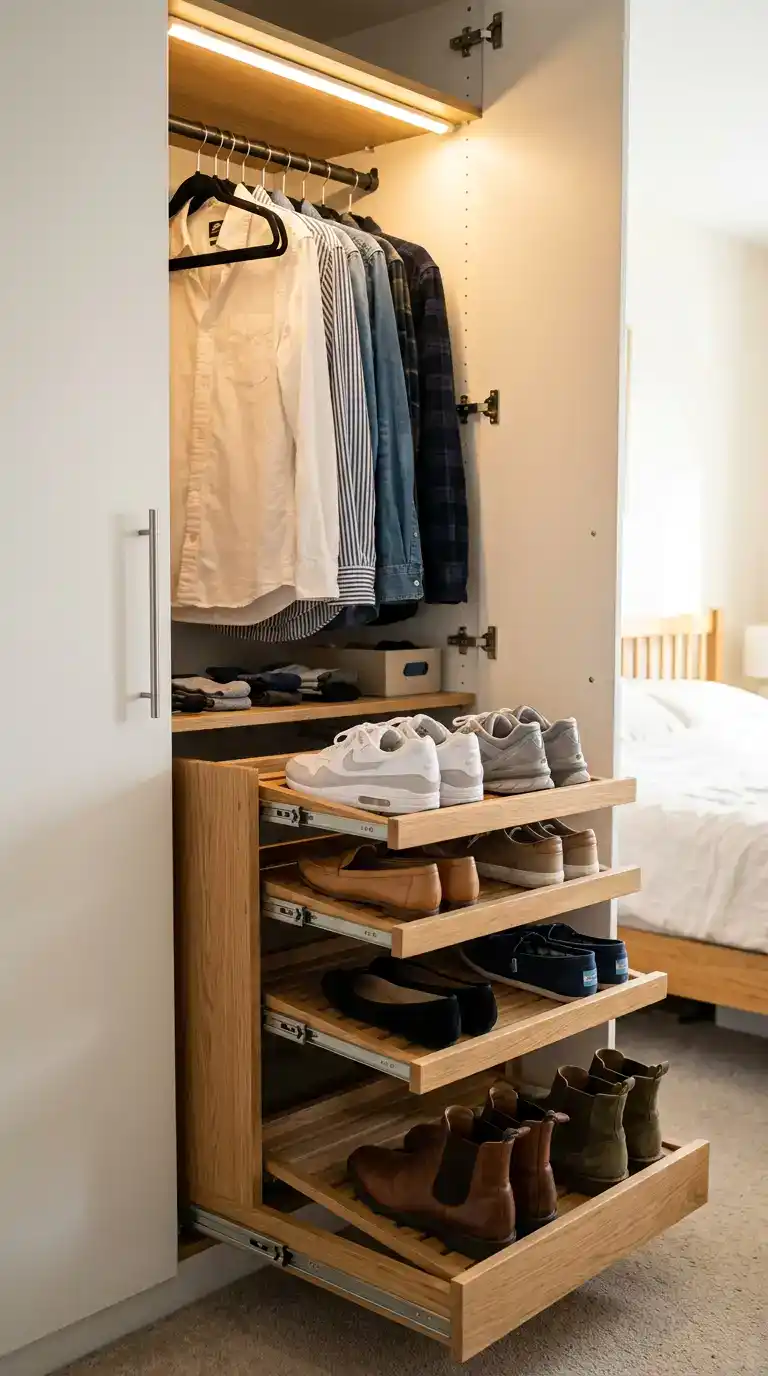
8. Wardrobe with Pull-Out Shoe Rack
Maximize the interior of a small wardrobe with a pull-out shoe rack. Install a narrow pull-out unit at the base of the wardrobe with angled shelves to display shoes attractively. The rack slides out for easy access and tucks away when not in use. Use the space above the shoe rack for hanging clothes and shelves for folded items. This design keeps shoes organized and off the floor, making the most of every inch of vertical space.
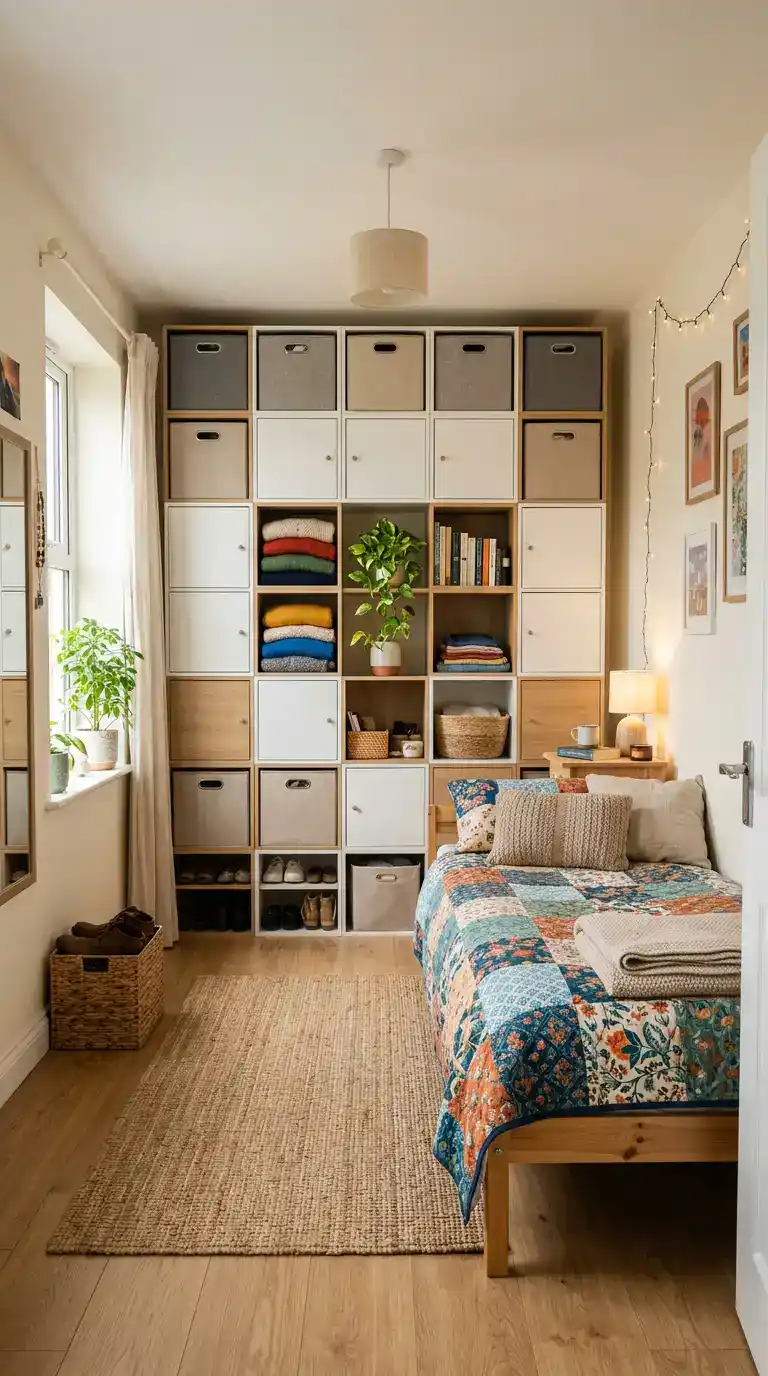
9. Modular Cube Wardrobe
Use modular cube storage units to create a customizable, budget-friendly wardrobe. Stack cubes in a configuration that fits your space, using a mix of open cubes and fabric bins or doors. The open cubes can display folded items, books, or accessories, while the bins hide less visually appealing items. Modular systems are flexible and can be reconfigured as your needs change. This is an excellent solution for renters or for those who want a wardrobe that can adapt over time.
Conclusion
Designing a wardrobe for a small bedroom requires creativity, careful planning, and a focus on maximizing every inch of space. Whether you choose a floor-to-ceiling unit with integrated handles, sliding mirrored doors, a corner configuration, open and closed sections, a high-gloss handleless design, a bedside niche, a curtain instead of doors, a pull-out shoe rack, or a modular cube system, the goal is to create storage that is functional, visually unobtrusive, and tailored to your needs. Light colors, reflective surfaces, and streamlined hardware help keep the room feeling open and airy. With these nine small bedroom wardrobe designs, you can achieve both style and practicality in even the tightest spaces.


