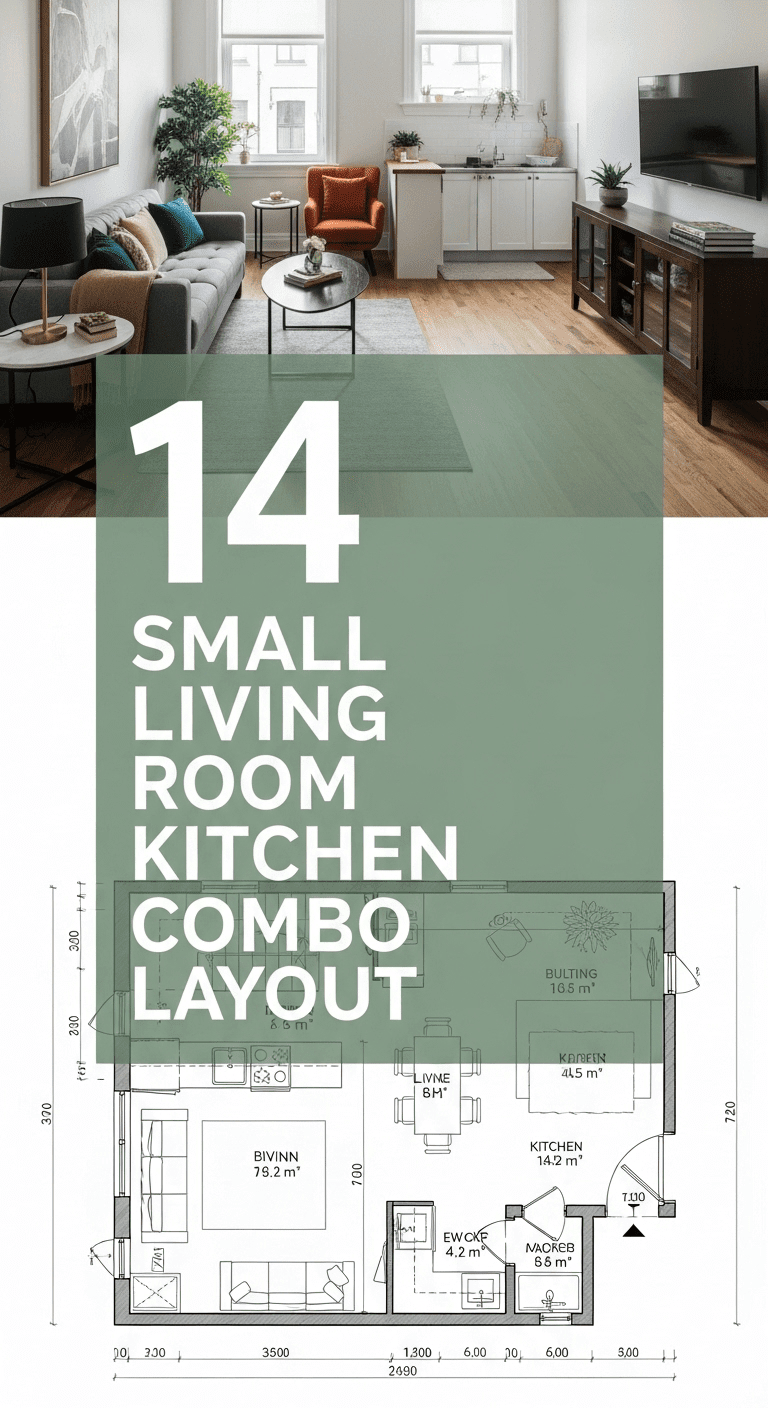
14 Small Living Room and Kitchen Combo Ideas: Seamless Open-Plan Living
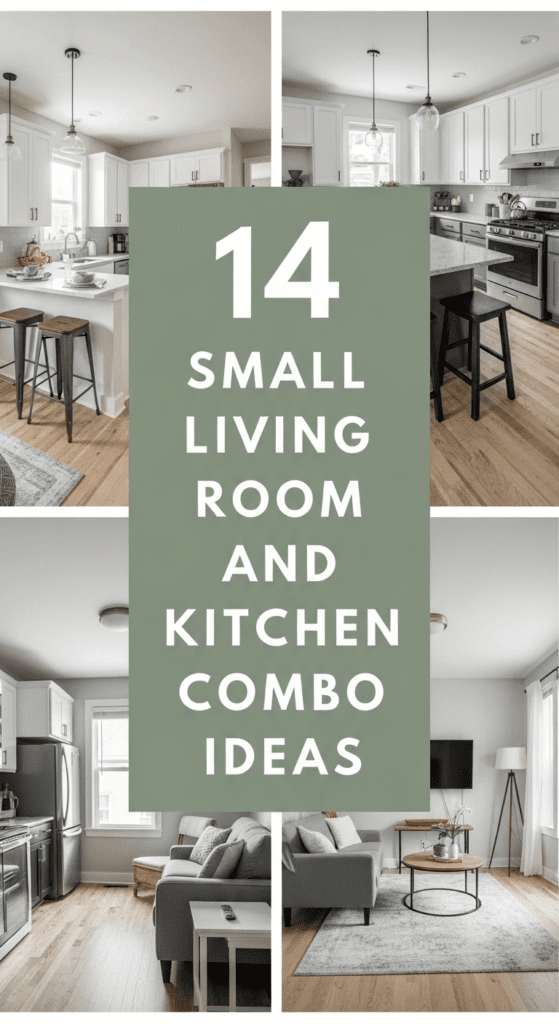
Small living room and kitchen combo ideas center on the concept of “fluidity.” In an open-plan studio or a compact apartment, these two high-traffic areas must work in harmony to prevent the home from feeling like a cluttered workspace. By using consistent materials, strategic “island” placement, and visual anchors like rugs and lighting, you can create a unified space that feels sophisticated and easy to navigate. Here are 14 ideas to help you master the combo layout.
See also: 12 Modern Living Room Center Table Ideas
1. The Peninsula Partition
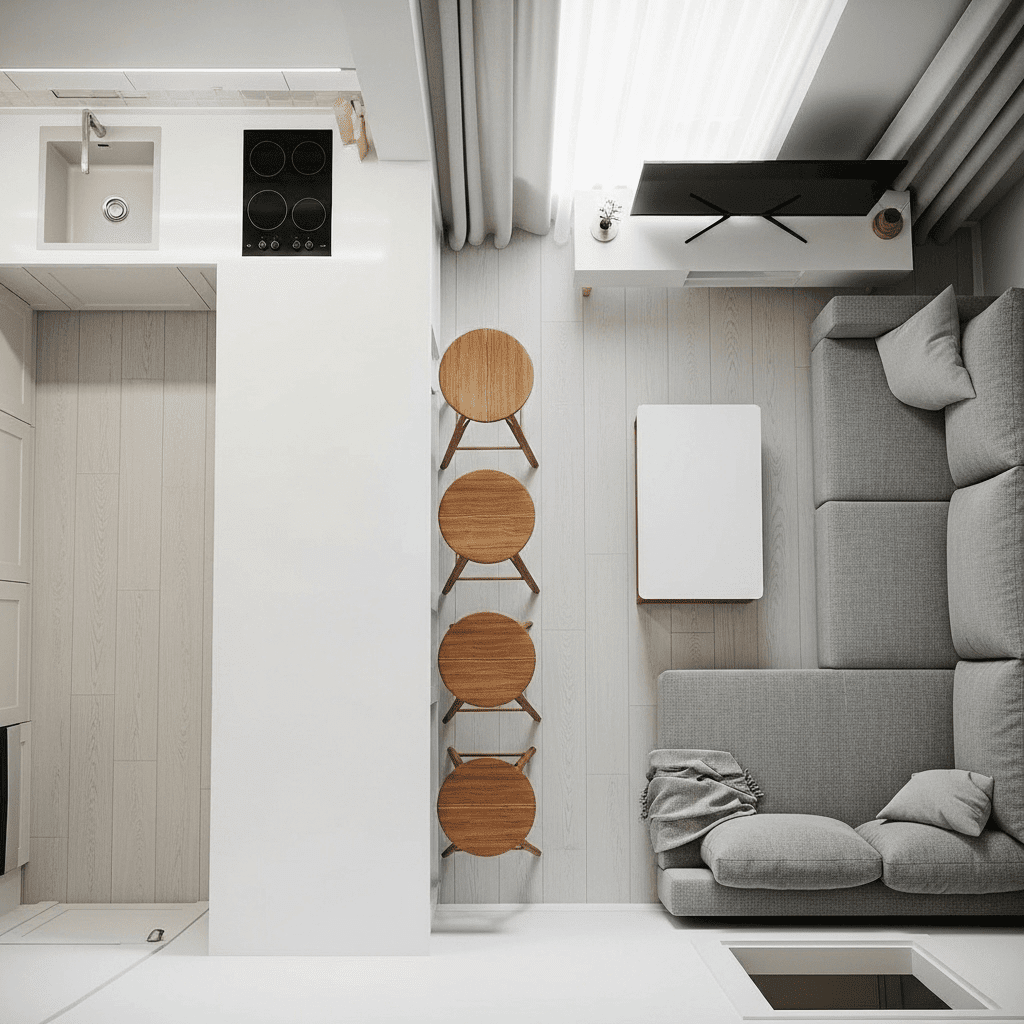
Use a kitchen peninsula with bar stools to create a physical boundary between the cooking and lounging areas. This provides extra counter space and a casual dining spot without the need for a separate table.
See also: Living Room Center Table Decoration
2. The Back-to-Back Sofa Layout
Position the back of your sofa directly against the edge of the kitchen zone. This clear “visual wall” tells the eye exactly where the kitchen ends and the relaxation area begins.
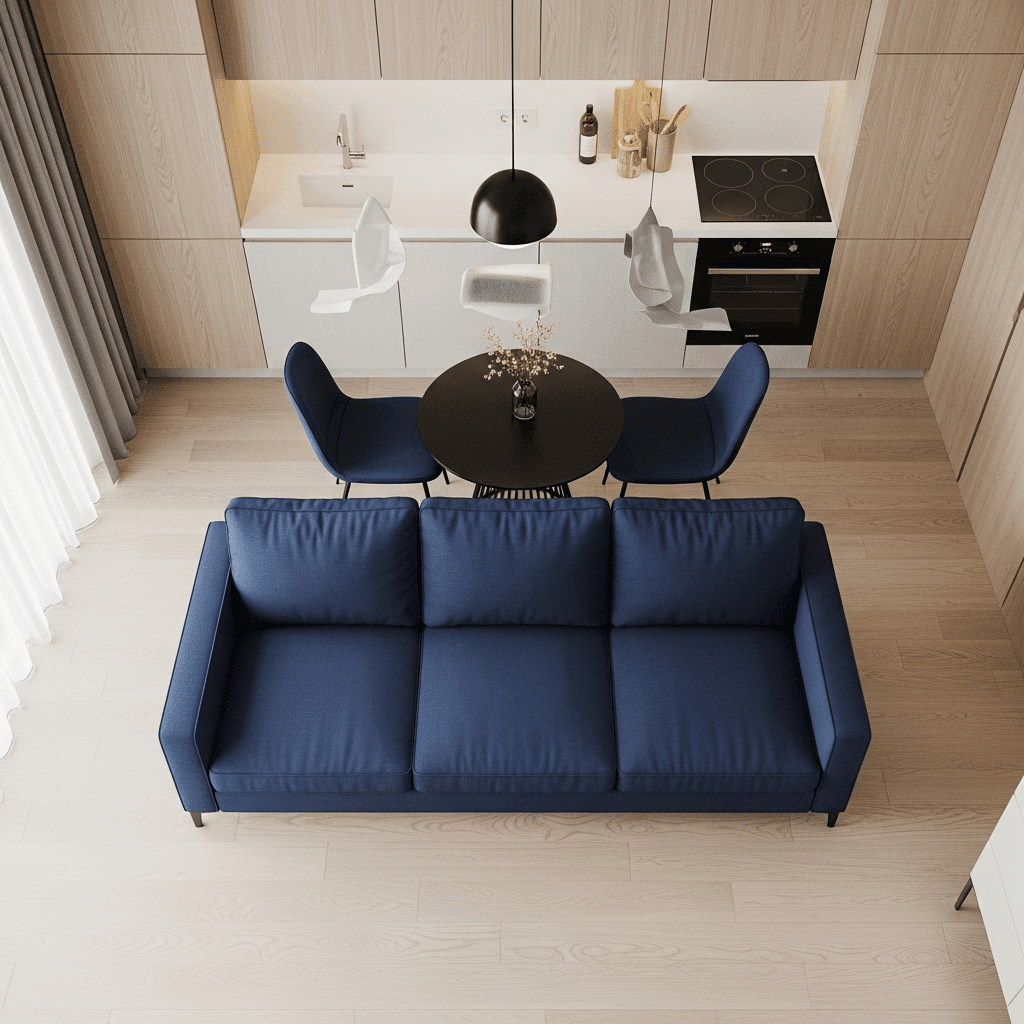
3. Unified “Mono-Floor” Strategy
Use the same flooring—such as light oak planks or large-format tiles—throughout both the kitchen and living area. This lack of a visual break makes the combined footprint feel significantly larger.
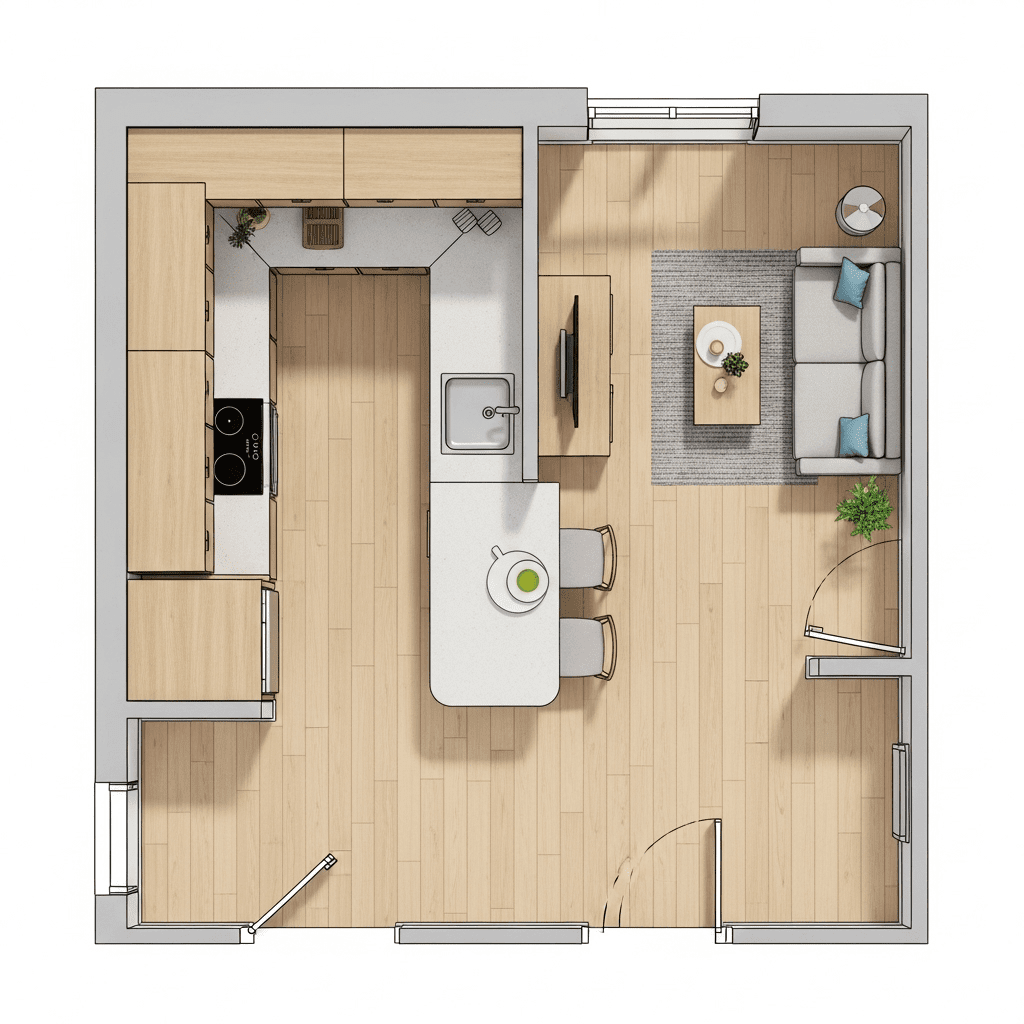
4. The Center-Point Rug Anchor
Place a large, high-texture rug in the living area while leaving the kitchen floor bare. This “islands” the living room, giving it a distinct identity within the open room.
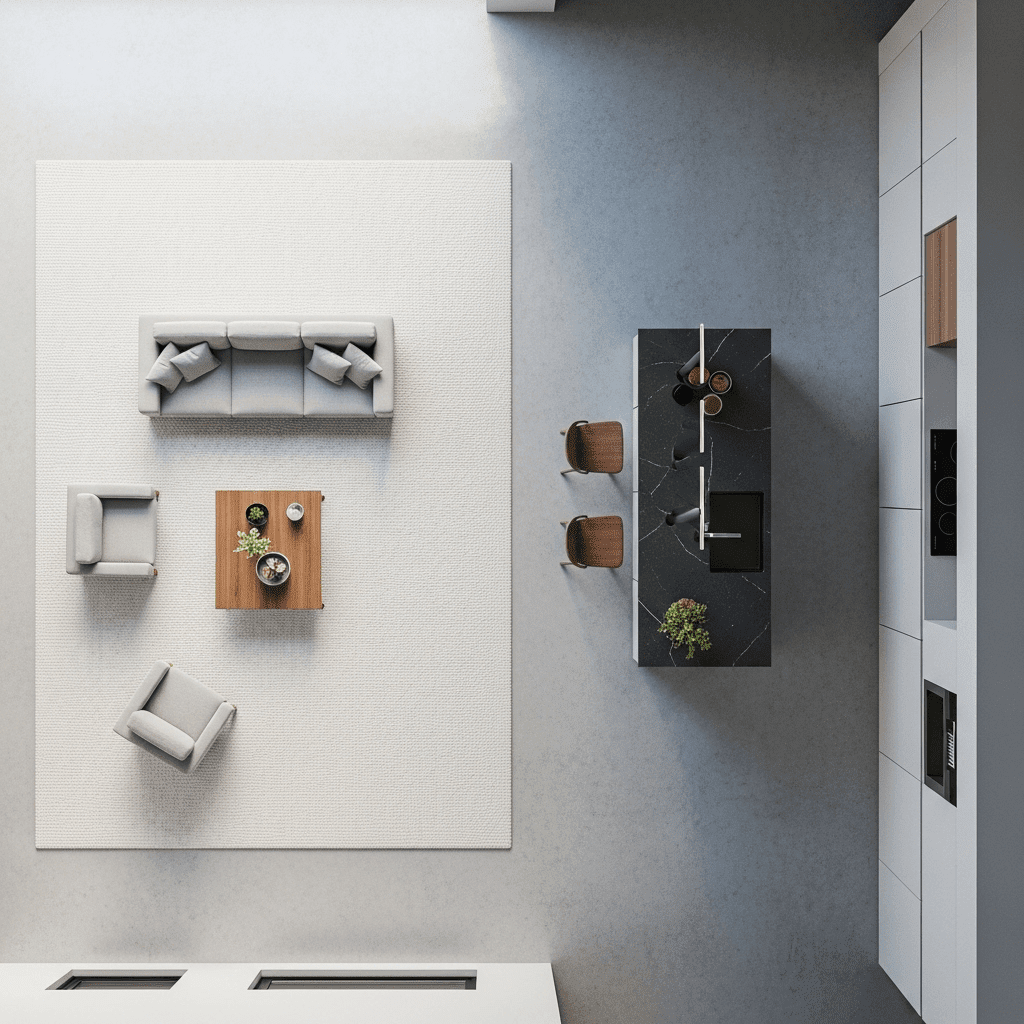
5. Hidden “Appliance Garage”
In a small combo, kitchen clutter can make the living room feel messy. Use “pocket doors” or cabinets to hide small appliances like toasters and coffee makers when not in use.
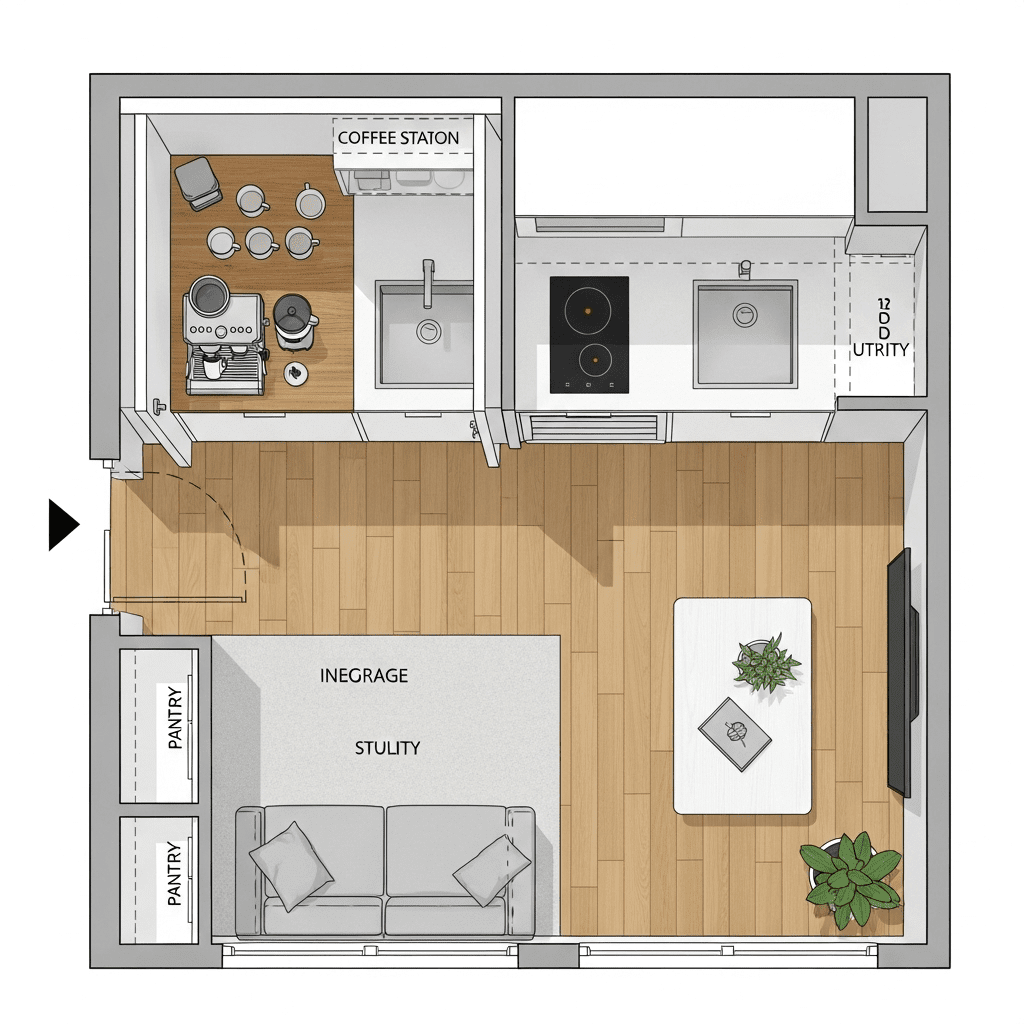
6. The Pedestal Dining Bridge
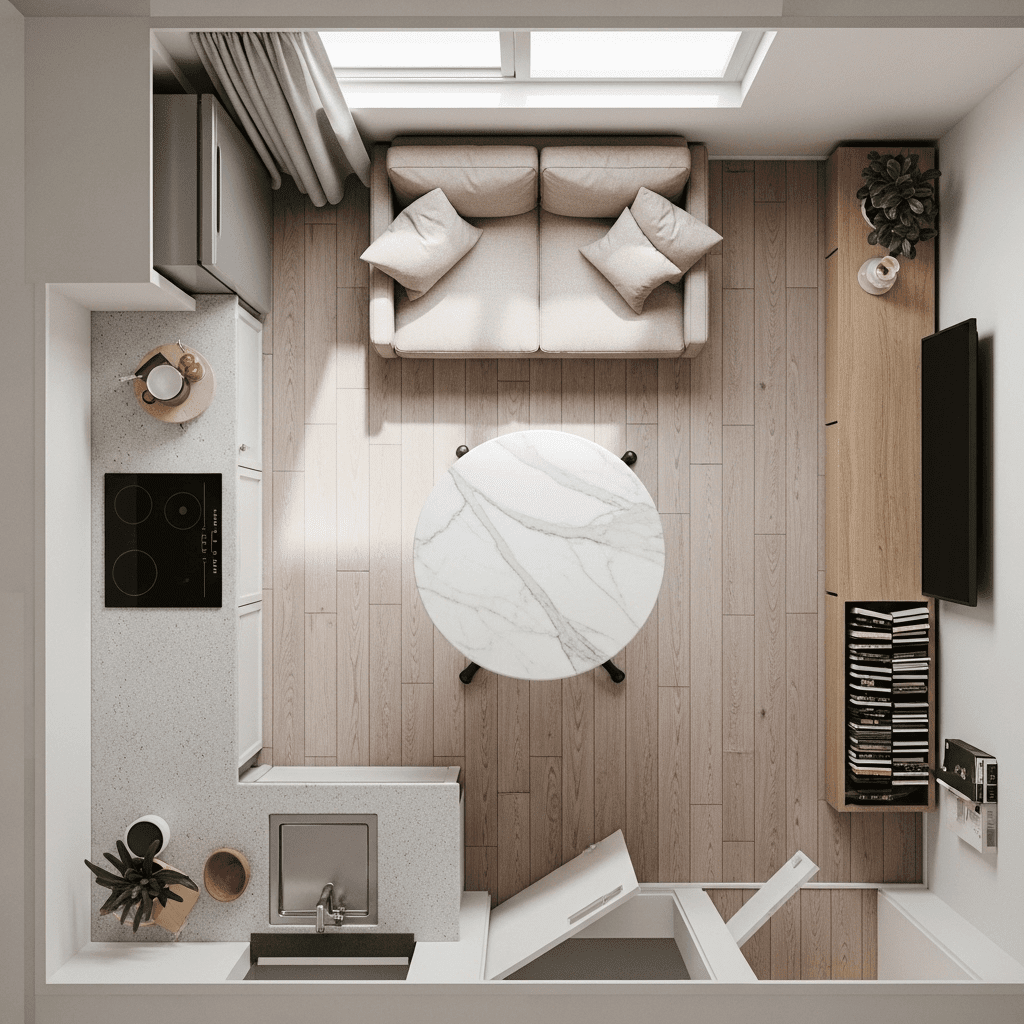
Place a small round pedestal table between the kitchen and the sofa. This acts as a “bridge” that functions for both dining and as a transition point between the two spaces.
7. Integrated Color Palette
Choose kitchen cabinets that match the color of your living room walls or furniture. This “camouflage” technique makes the kitchen feel like a built-in furniture piece rather than a separate utility room.
8. The Floating Island Cart
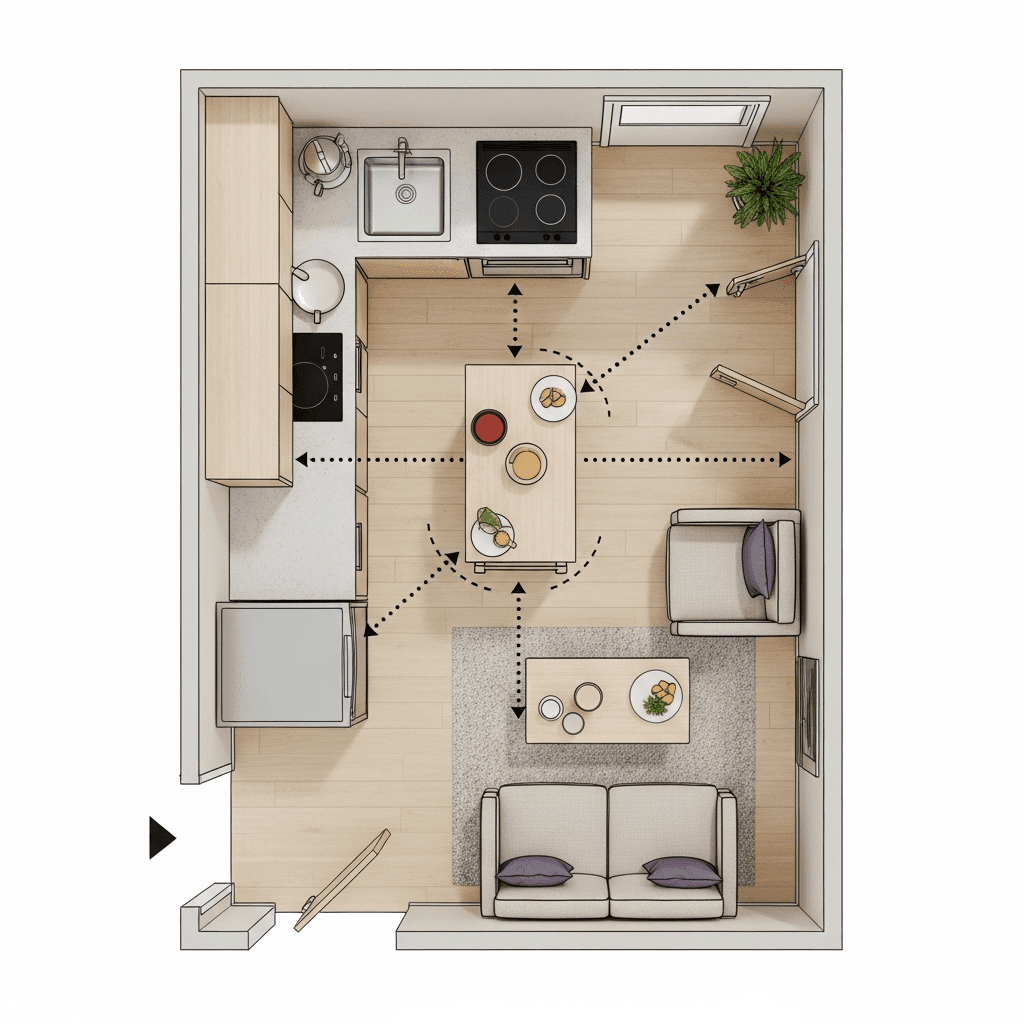
If there isn’t room for a built-in island, use a small butcher-block cart on wheels. You can move it to the center for prep or push it against the wall to open up the floor for the living area.
9. Vertical Storage Continuity
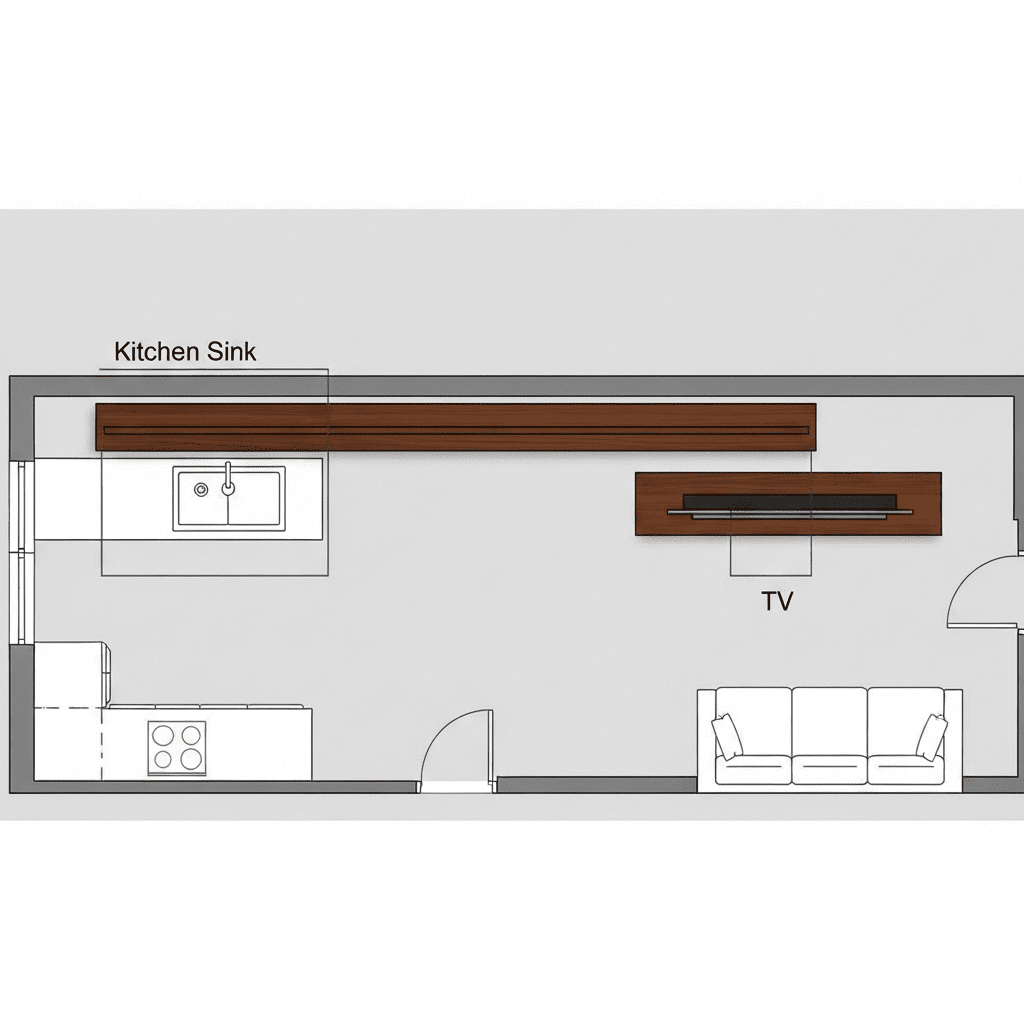
Run a series of floating shelves across the entire main wall, spanning from the kitchen backsplash all the way into the living area to tie the two zones together horizontally.
10. Lighting Level Zoning
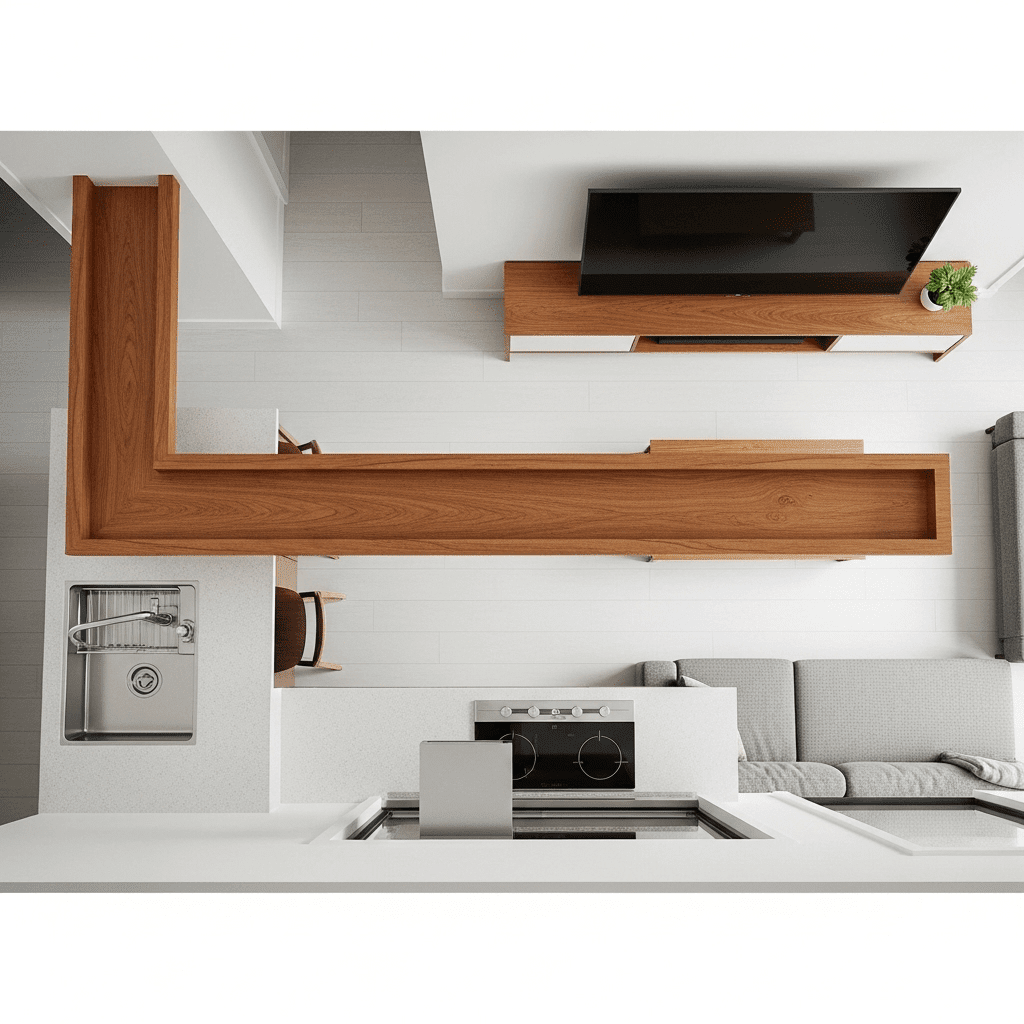
Hang a dramatic pendant over the kitchen counter and use a low-profile floor lamp in the living room. Different “lighting heights” create invisible rooms without the need for walls.
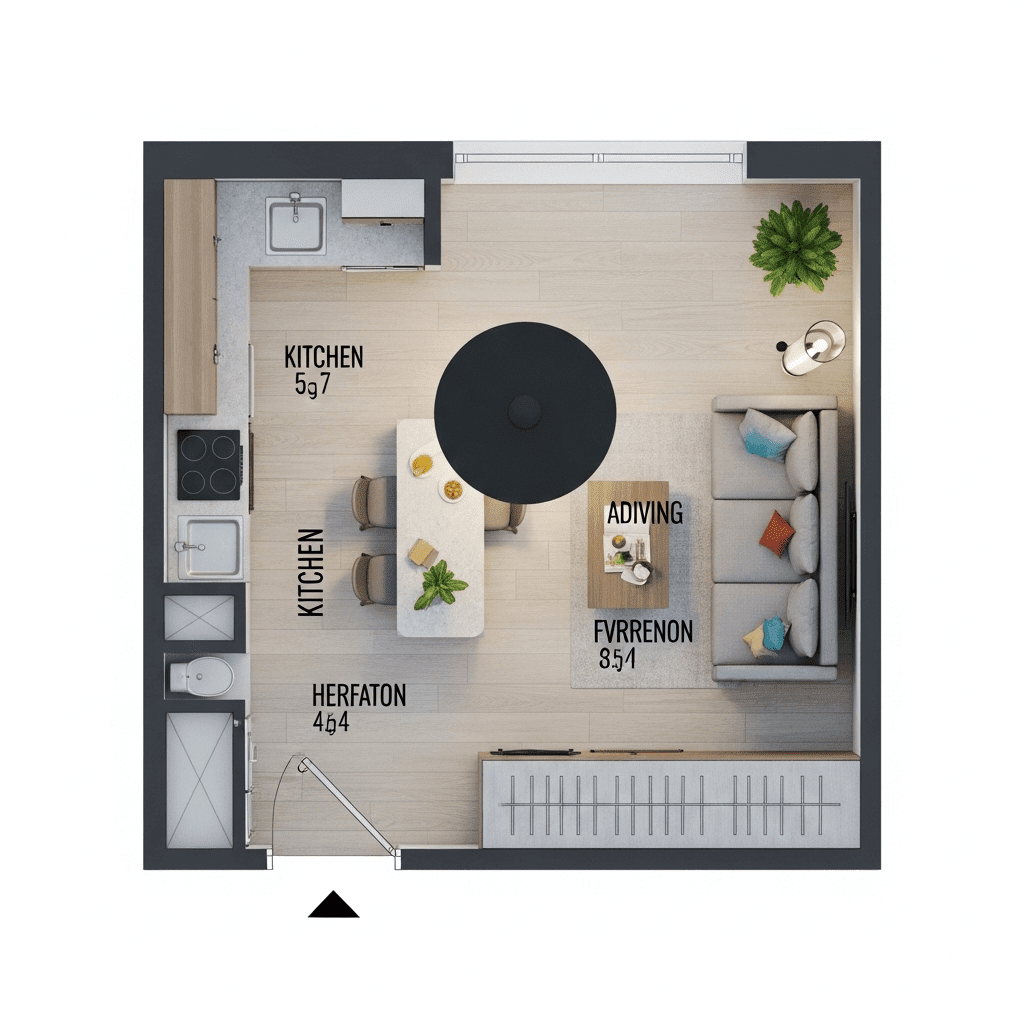
11. The Window Seat Dining Nook
If the combo room has a window, build a banquet seat under it. This provides a dining spot that takes up zero floor space, leaving more room for a full-sized sofa.
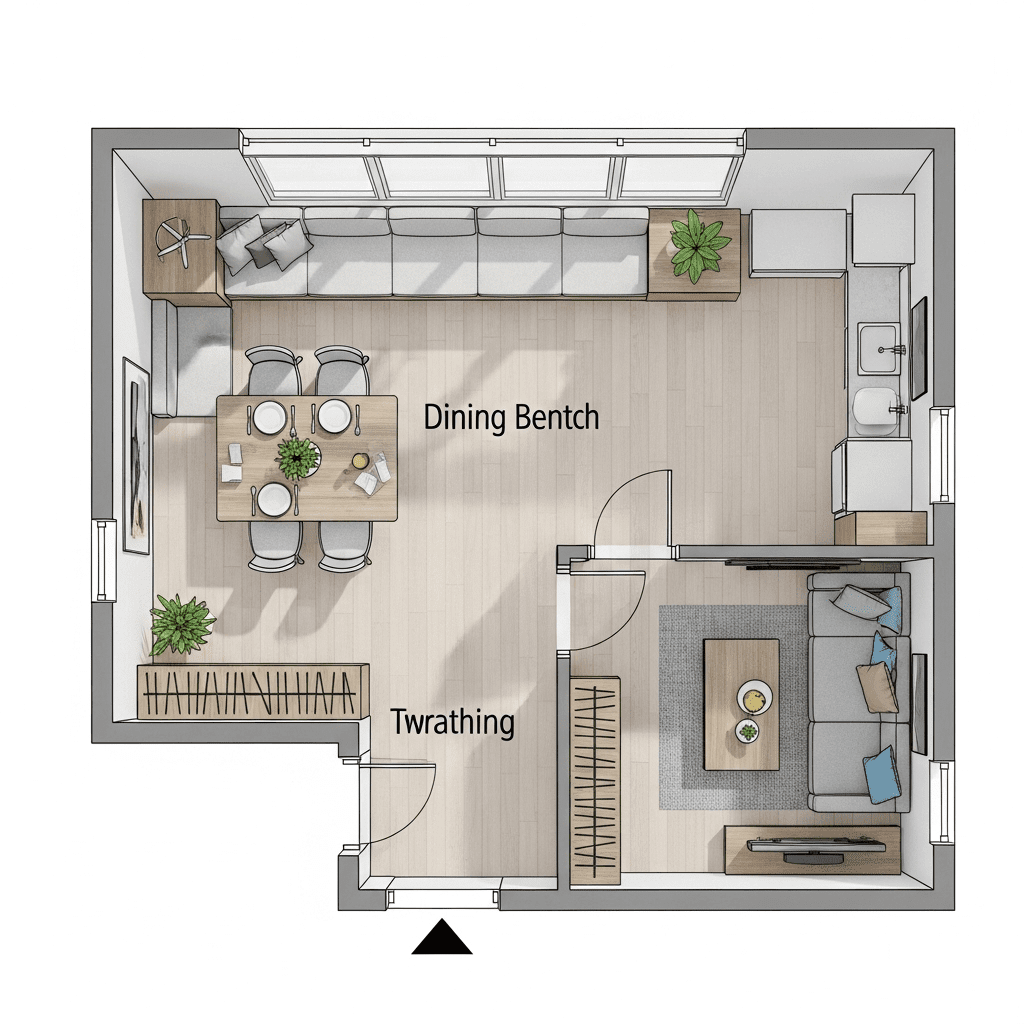
12. Mirrored Backsplash Expansion
Use a mirrored backsplash in the kitchen. It reflects the living area and the windows, making the kitchen side of the room feel deep and airy rather than closed-in.
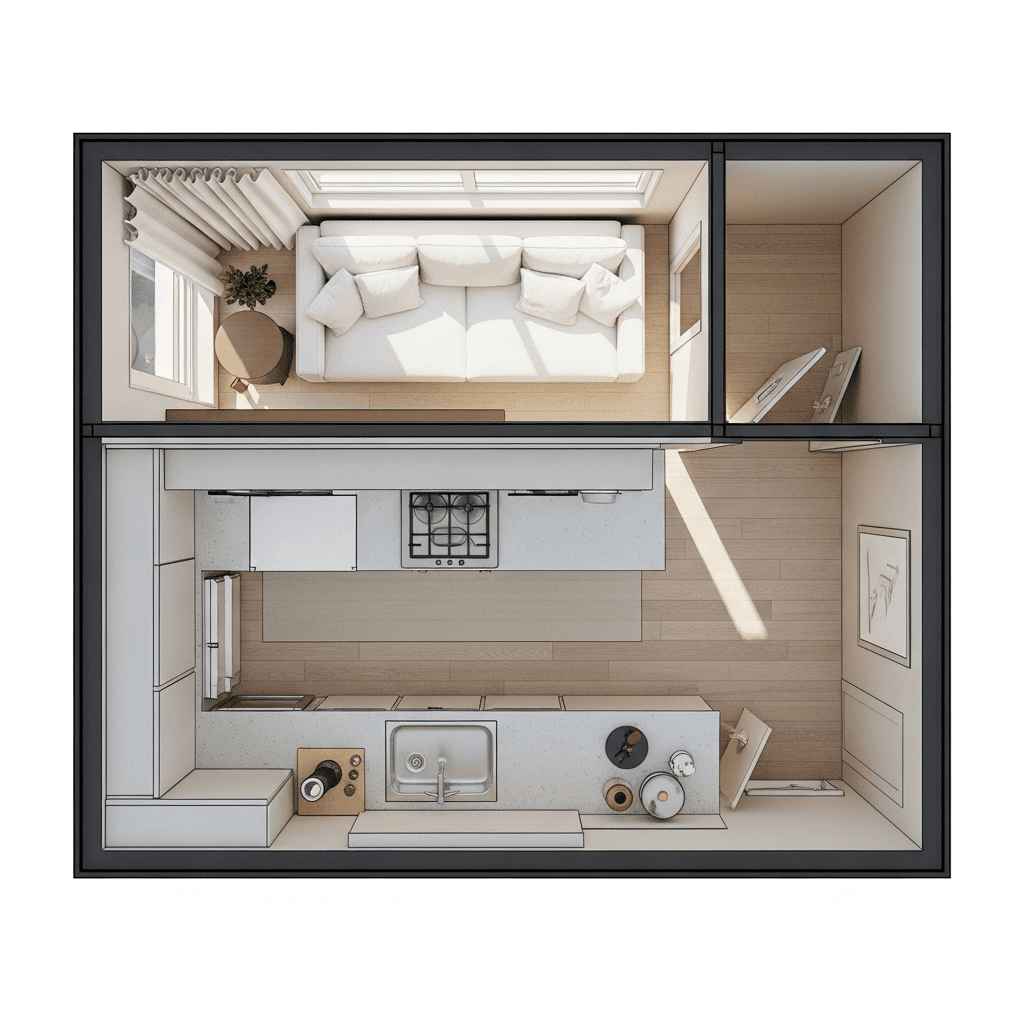
13. High-Gloss Finishes
Use high-gloss cabinetry in the kitchen to bounce light back toward the living area. This increases the overall brightness of the entire open-plan space.
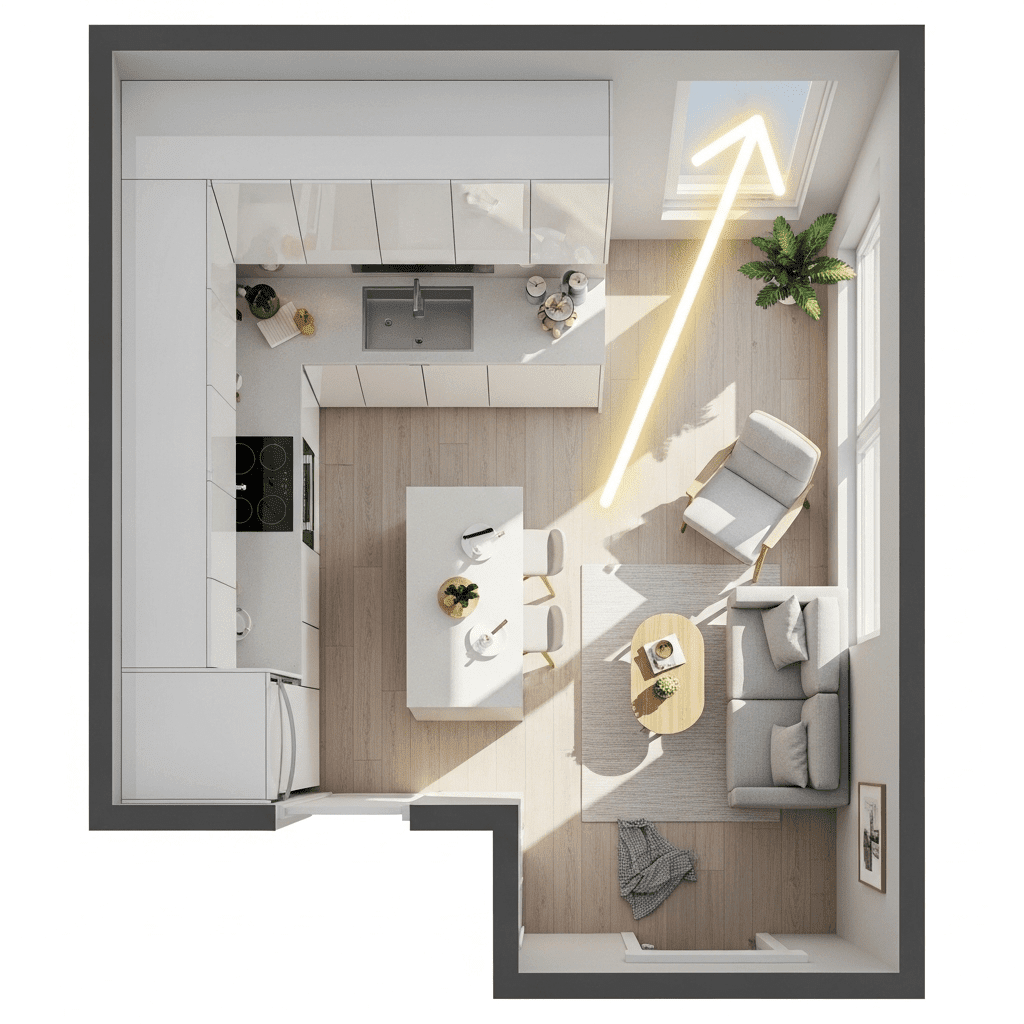
14. Low-Profile Armless Seating
In the living zone of a combo, use armless chairs or a low-back sofa. This ensures that someone in the kitchen can still see and interact with someone in the living room without an “obstacle.”
Conclusion
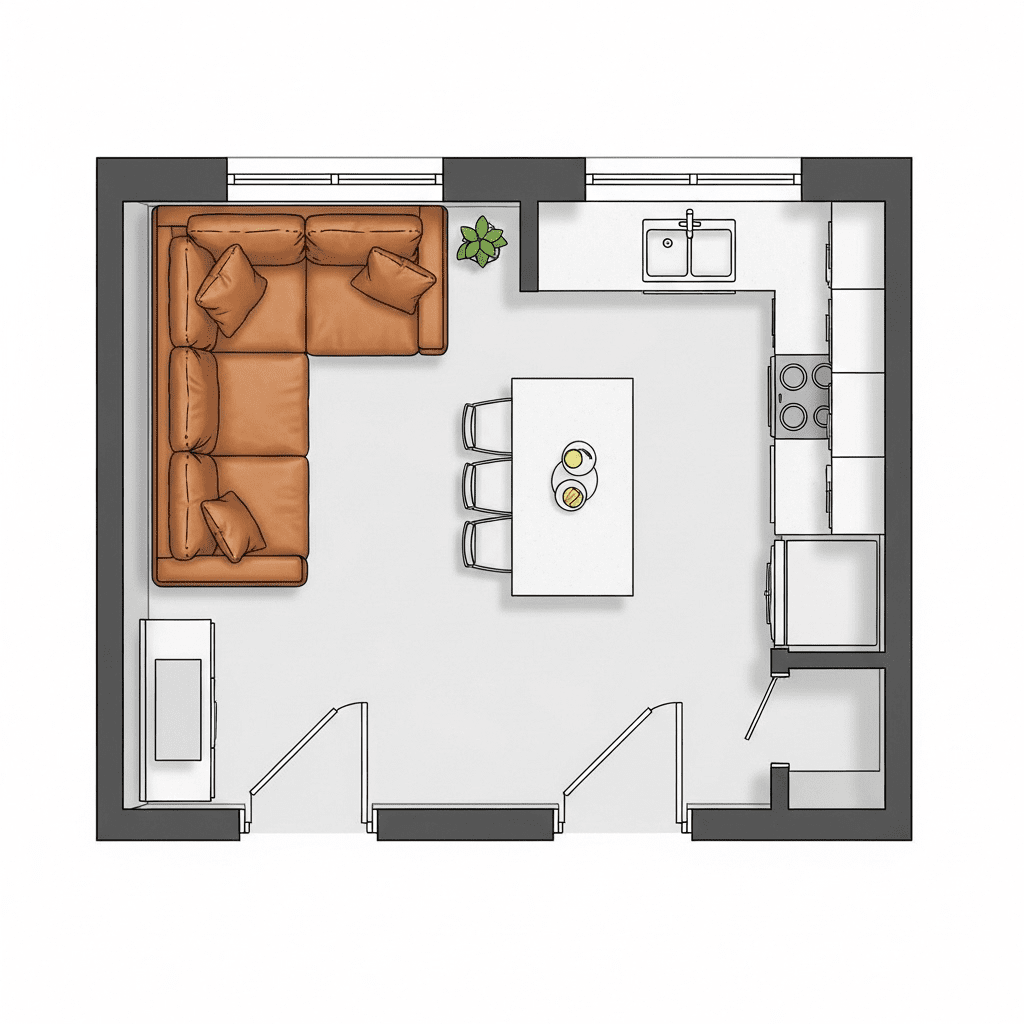
Creating a successful kitchen and living room combo is an exercise in editing. By looking at the space through a “top view plan,” you can ensure that walkways are wide enough for two people to pass and that the “zones” are clearly defined. Focus on a cohesive color story and keep surfaces clear to maintain a sense of calm in your multi-functional home.