
Master bedroom false ceiling designs: 14 ways to elevate your overhead aesthetic
Master bedroom false ceiling designs are the “fifth wall” of interior architecture, providing a unique opportunity to integrate ambient lighting and structural depth. When planning a false ceiling for a master bedroom, you can go beyond basic flat surfaces to include recessed trays, suspended islands, or intricate wood paneling that defines the room’s character. These designs not only hide unsightly wiring and HVAC ducts but also act as a canvas for indirect “cove” lighting, which is essential for creating a restful, glare-free environment. These fourteen ideas range from minimalist modern to ornate luxury, ensuring your sanctuary feels finished from floor to ceiling.
See also: 14 Long Narrow Living Room With Bed Ideas
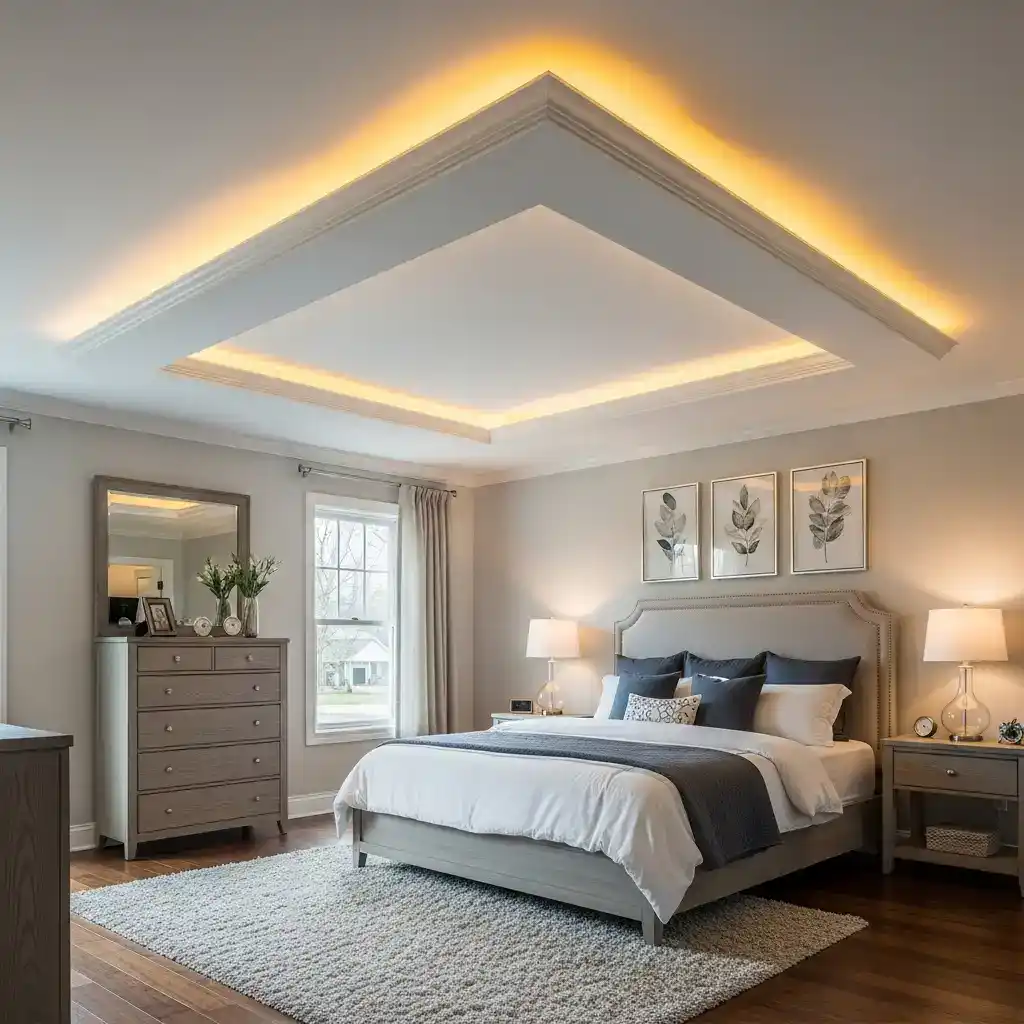
1. The Classic Tray Ceiling with Cove Lighting
A recessed “tray” is the most popular choice for a master suite. By raising the central part of the ceiling, the room feels taller, and the hidden LED strips along the perimeter cast a soft, ethereal glow that is perfect for winding down.
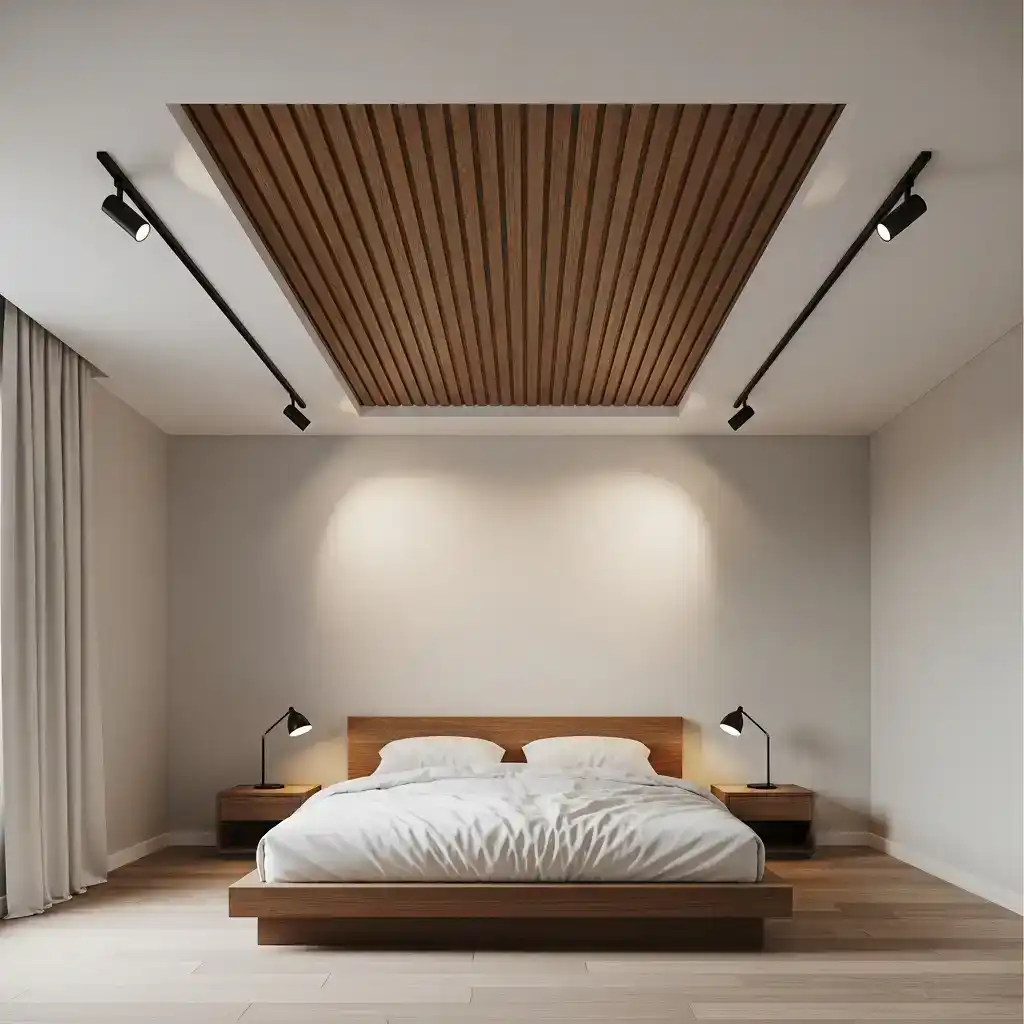
2. Modern Wooden Slat Inlay
Incorporate a series of parallel wooden slats into a recessed section of the ceiling. This adds a warm, organic texture to the room and provides a sophisticated “resort” vibe that breaks up an all-white space.
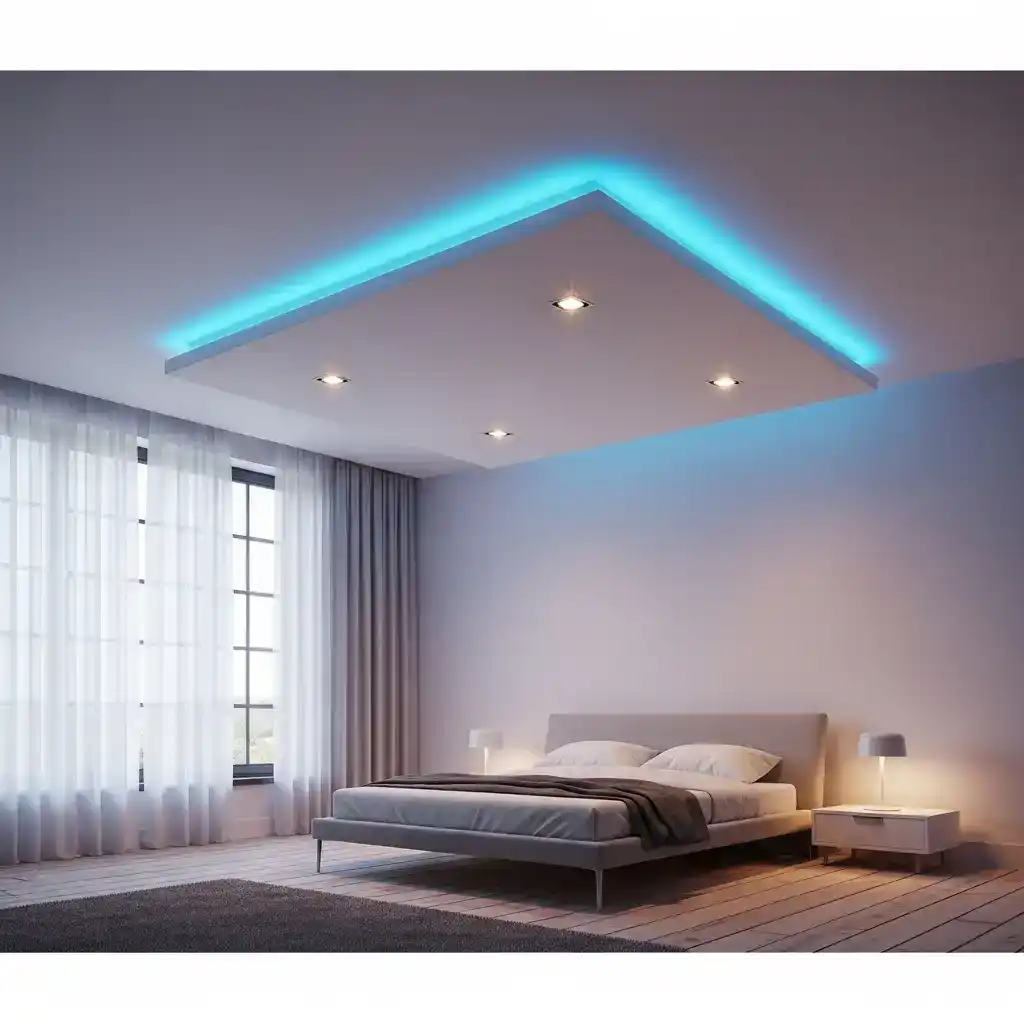
3. The Floating Island Design
A “floating” ceiling involves a suspended central slab that is smaller than the room’s footprint. This creates a dramatic shadow-line around the entire perimeter, making the ceiling appear to hover weightlessly above the bed.
See also: 13 Long Narrow Living Room Layout With Balcony Ideas
4. Luxurious Coffered Panels
For a traditional or executive look, use a grid of deep beams to create “coffers.” This architectural detail adds immense weight and grandeur to the room, especially when the interior of the squares is painted a contrasting color.

5. Circular Drop Ceiling for Flow
Softened edges can make a bedroom feel more intimate. A circular or oval false ceiling positioned directly over the bed draws the eye inward and provides a perfect anchor for a central chandelier.

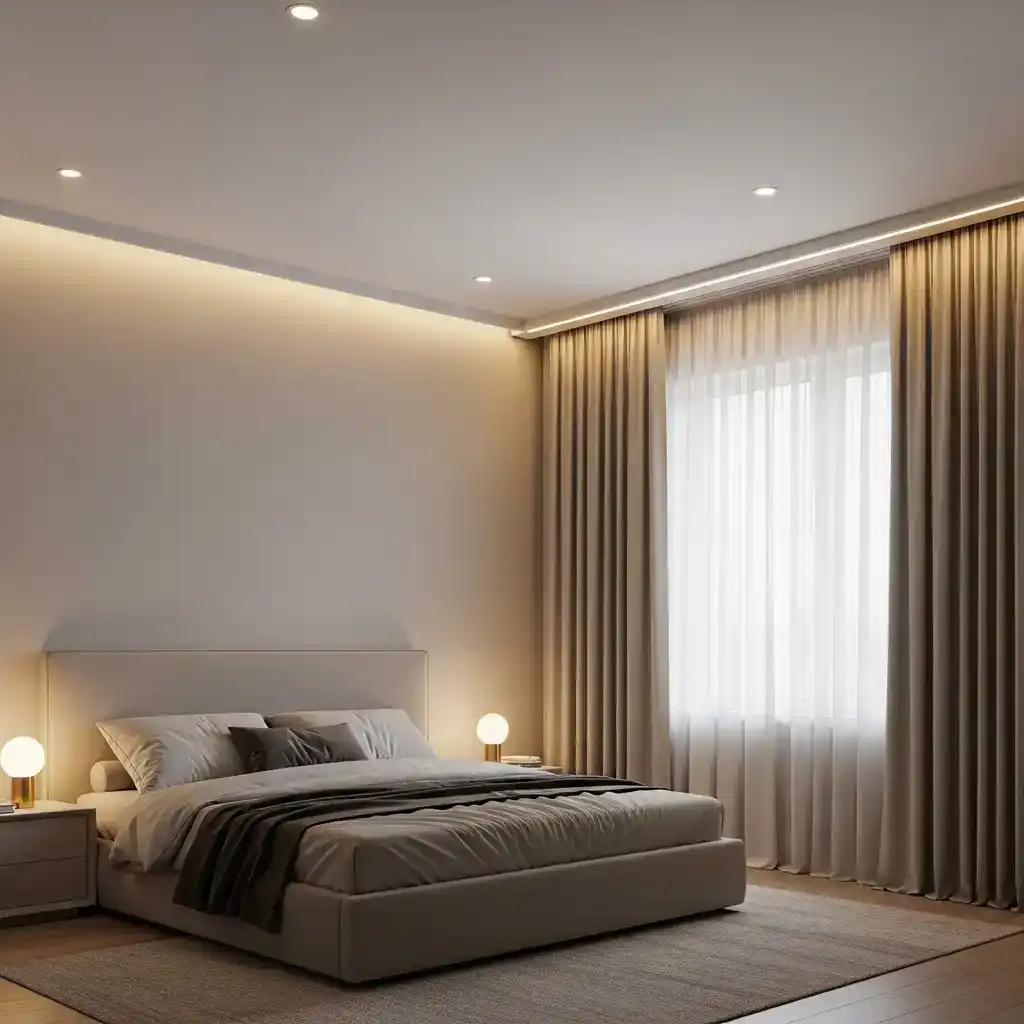
6. Minimalist Perimeter “Pelmet” Lighting
If you prefer a clean, flat ceiling, install a perimeter “pelmet” or border. This keeps the center of the ceiling simple while allowing for curtains to be hidden in a recessed track and lighting to wash down the walls.
7. Geometric Gypsum Cut-outs
Use gypsum board to create overlapping geometric shapes or “honeycomb” patterns. This 3D approach adds a modern art element to the room, turning the ceiling into the primary decorative feature.
8. Mirror-Inlay Glamour
For a high-end, reflective aesthetic, incorporate a mirror or reflective glass panel into the center of a tray ceiling. It doubles the perceived height of the room and adds a touch of Hollywood Regency glamour.

9. Vaulted Wood-Plank Ceiling
If your master suite has a pitched roof, use white-washed or natural wood planks to follow the incline. This “farmhouse luxury” look adds height and a cozy, rustic charm that feels incredibly expansive.

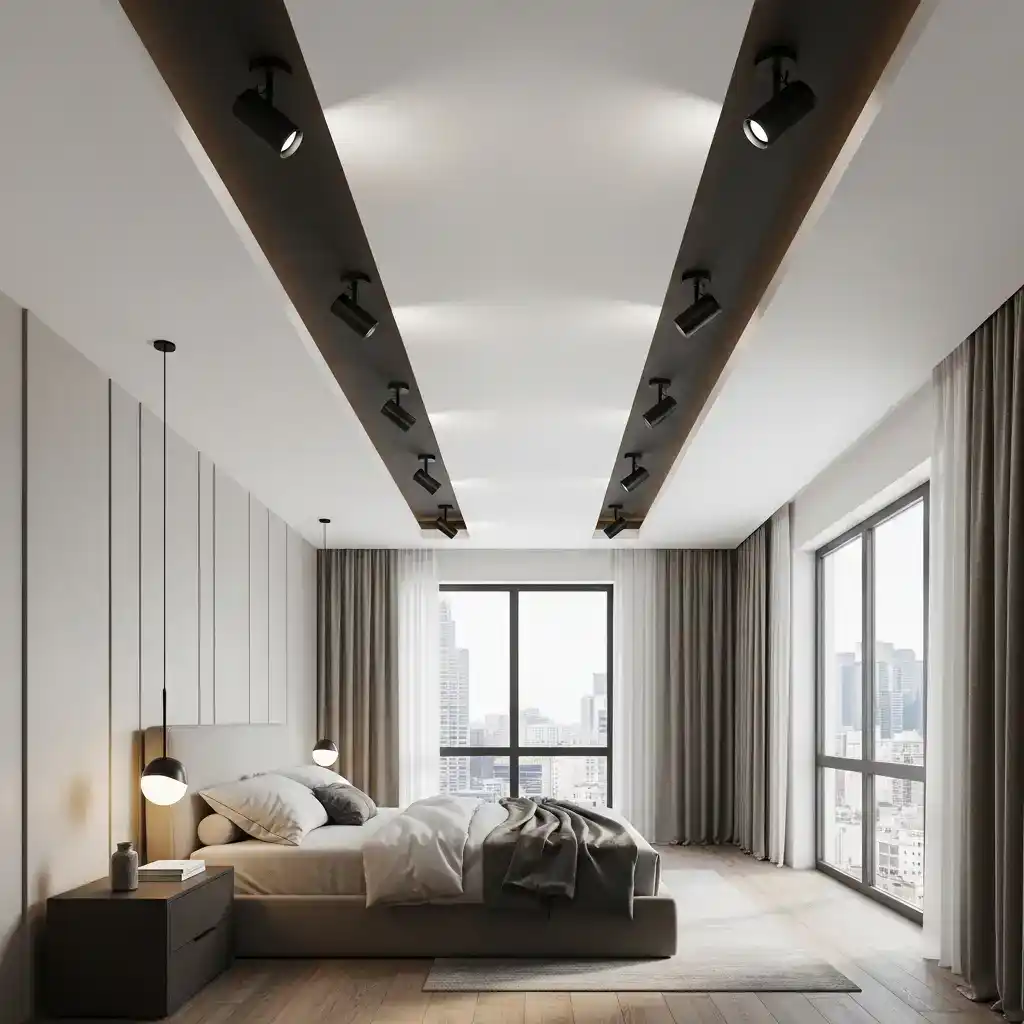
10. The “Trench” Lighting Detail
Instead of a raised section, create a narrow, deep “trench” or groove that runs across the ceiling. Placing lights inside these black-painted channels creates a sleek, industrial, and masculine look.
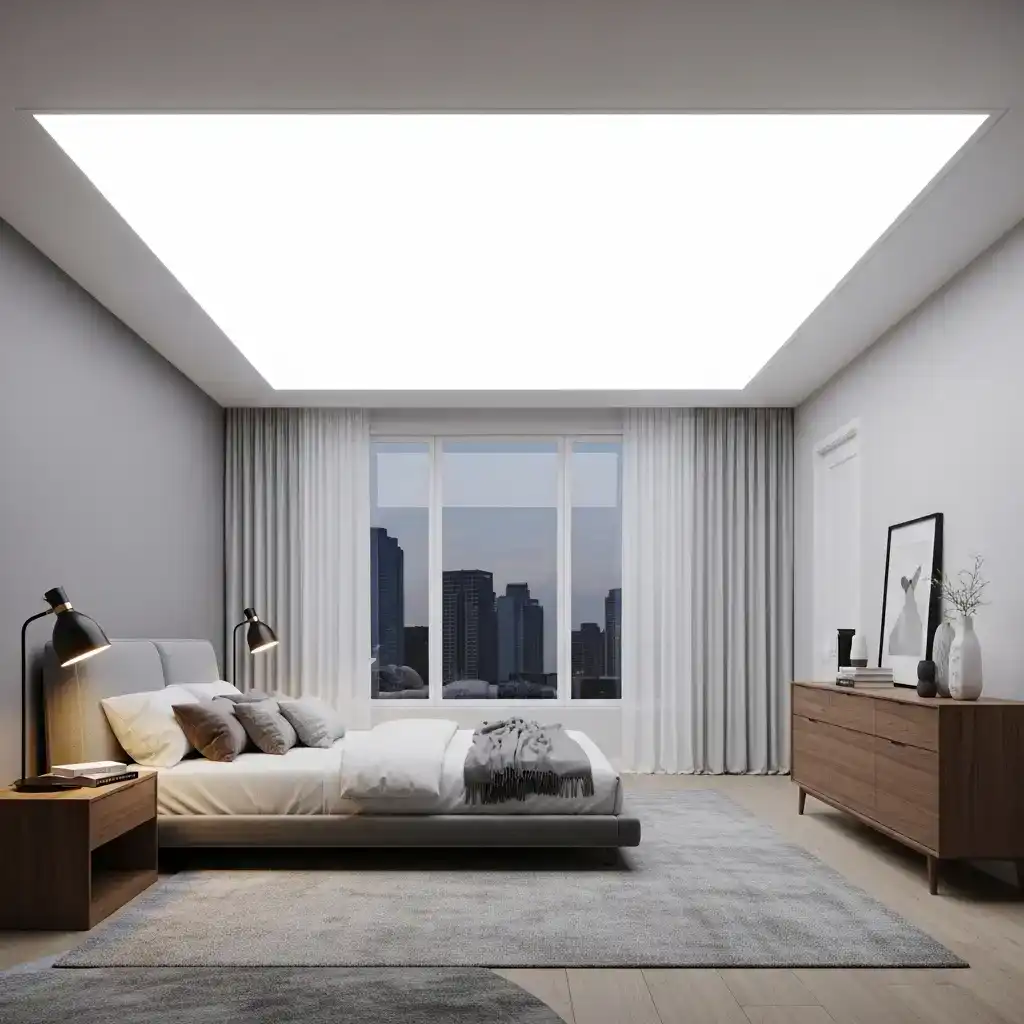
11. Stretched Fabric “Sky” Ceiling
Utilize a translucent “stretch ceiling” material that can be back-lit uniformly. This creates a soft “skylight” effect, bathing the room in a perfectly even, shadowless light that mimics an overcast day.
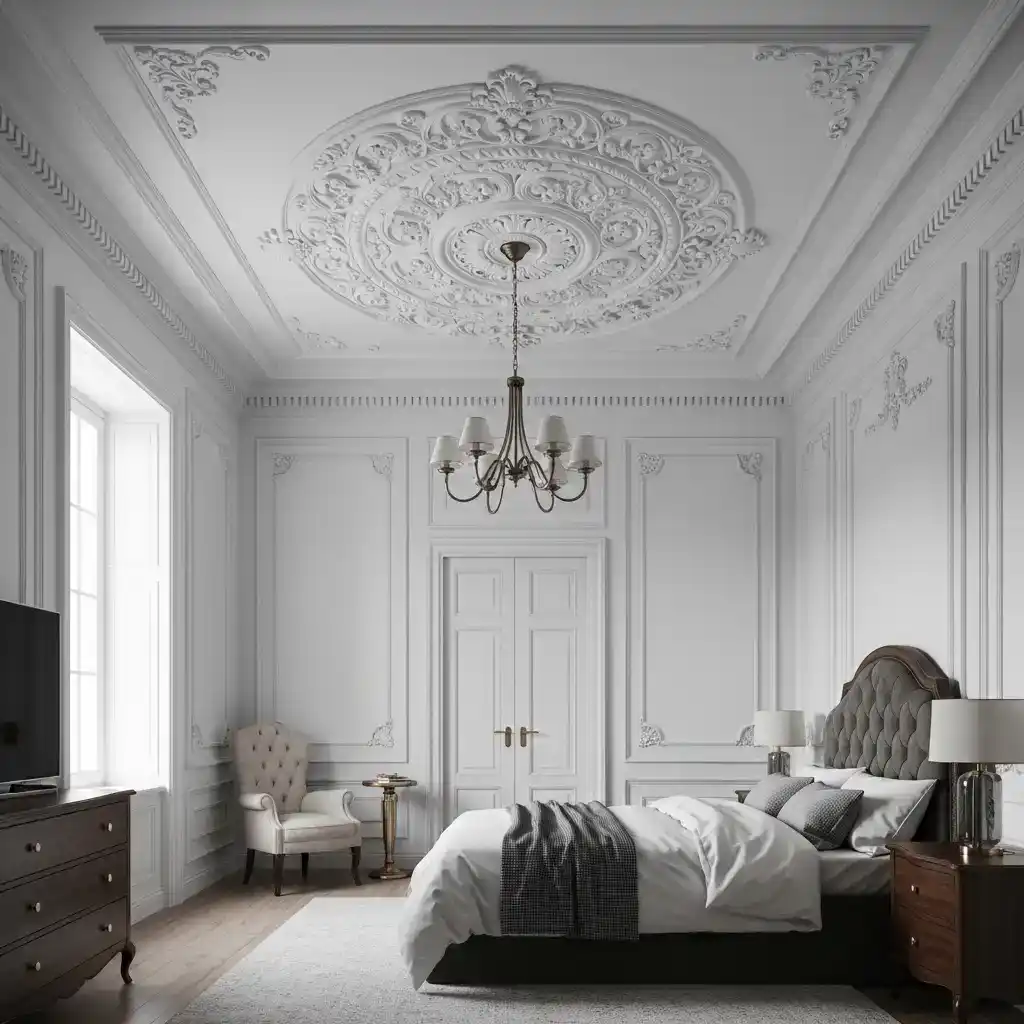
12. Ornate Crown Molding and Medallions
In traditional suites, use deep, decorative crown molding to transition from the wall to the ceiling. A central ornate medallion around the light fixture adds a historical, “period-home” elegance.
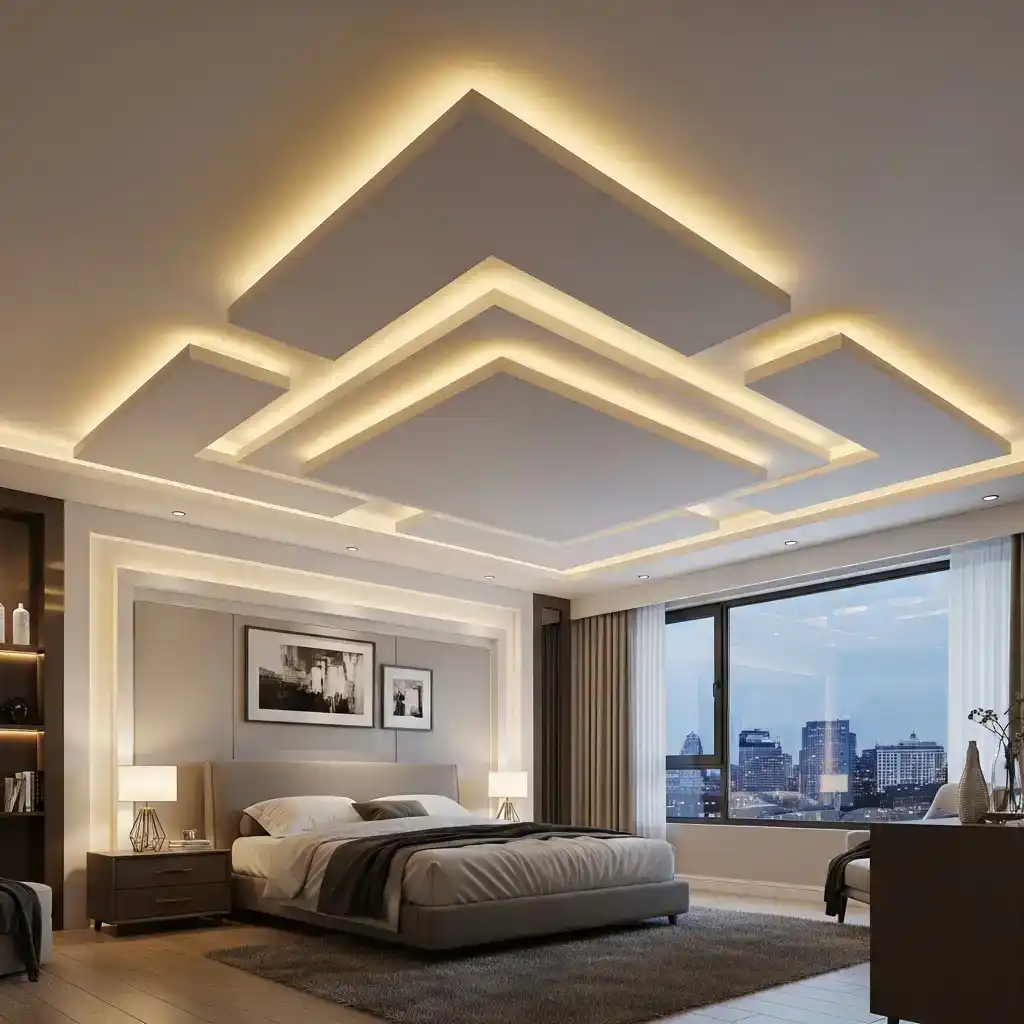
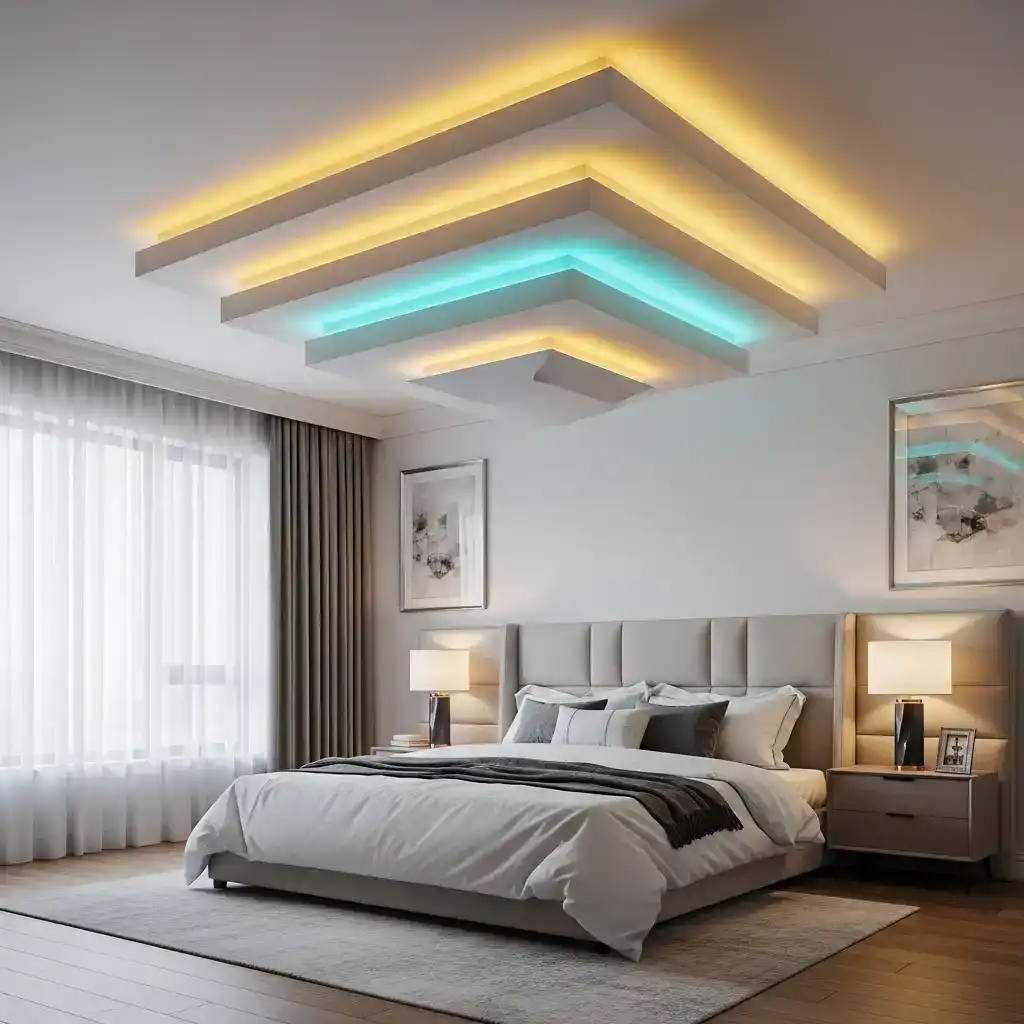
13. Layered Step Ceiling
A “step” ceiling features multiple levels of recessed borders, creating a staircase effect. This adds significant architectural depth and allows for multiple tiers of lighting for different moods.
14. Integrated Wallpaper Ceiling
Wallpaper the interior of a tray ceiling with a subtle pattern or a bold mural. This “fifth wall” approach adds unexpected color and texture without cluttering the main walls of the room.

Conclusion
Selecting one of these 14 master bedroom false ceiling designs ensures your private suite feels architecturally complete. By considering how light interacts with the levels and materials of your ceiling, you can control the mood of the room—turning it into a bright, airy space by day and a moody, glowing sanctuary by night. A well-designed ceiling is the final layer of luxury that transforms a simple bedroom into a masterfully designed suite.


