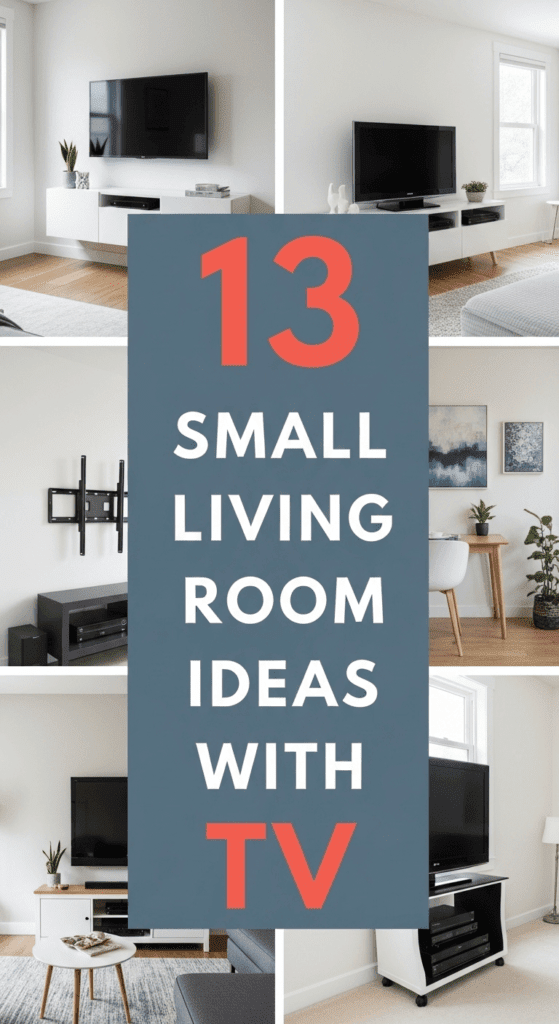
13 Small living room ideas with tv
Small living room ideas with tv often revolve around the strategic placement of the screen to ensure it remains a functional entertainment hub without overwhelming the room’s limited aesthetic. In a compact lounge, the goal is to integrate the television into the existing decor, whether through wall-mounting, camouflaging it among art, or using slim-profile furniture. By treating the TV as one element of a larger design—rather than the sole focus—you can maintain a sophisticated atmosphere while enjoying a cinematic experience. Here are 13 ideas to help you balance tech and style in a tight space.
See also: 13 Small Living Room Ideas With TV
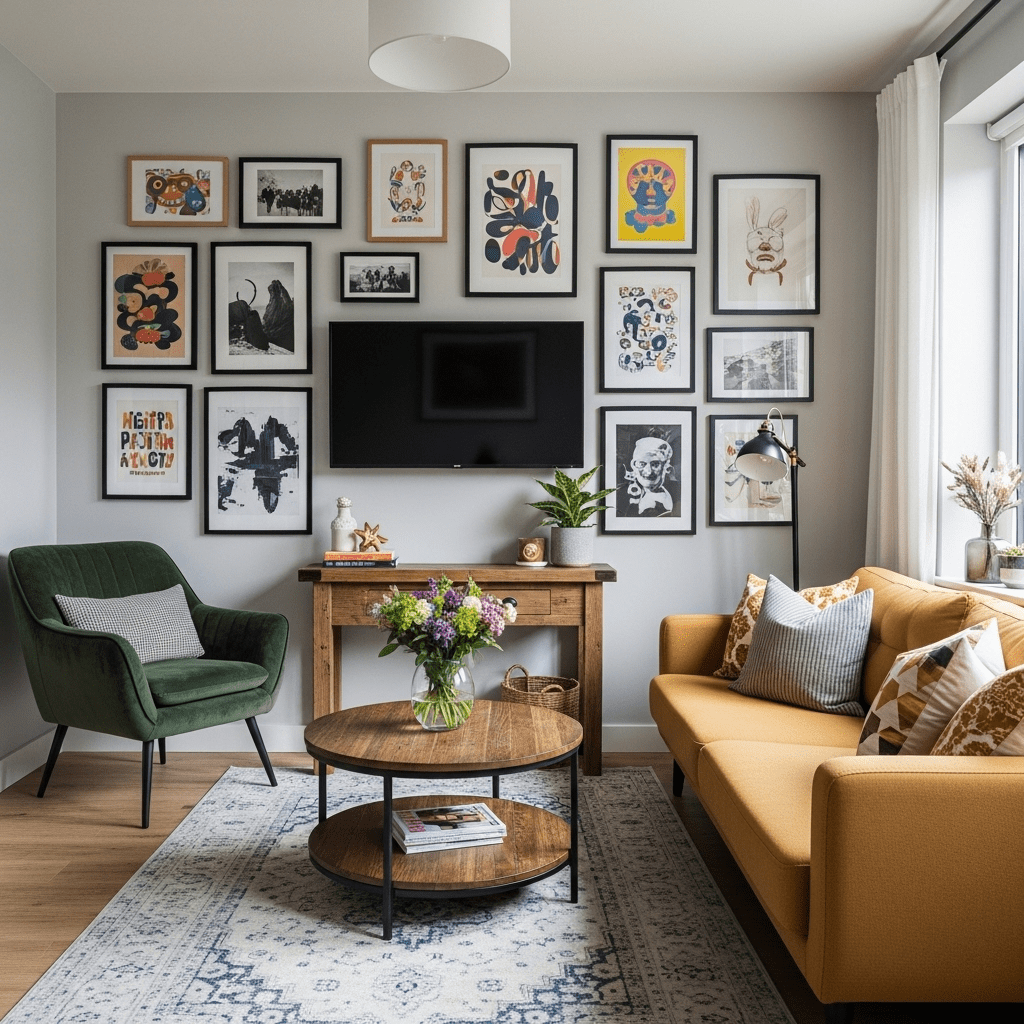
1. The Gallery Wall Camouflage
Surround your wall-mounted TV with a collection of framed art and photographs. This “hides” the black rectangle of the screen among other visual elements, preventing it from dominating the wall when turned off.
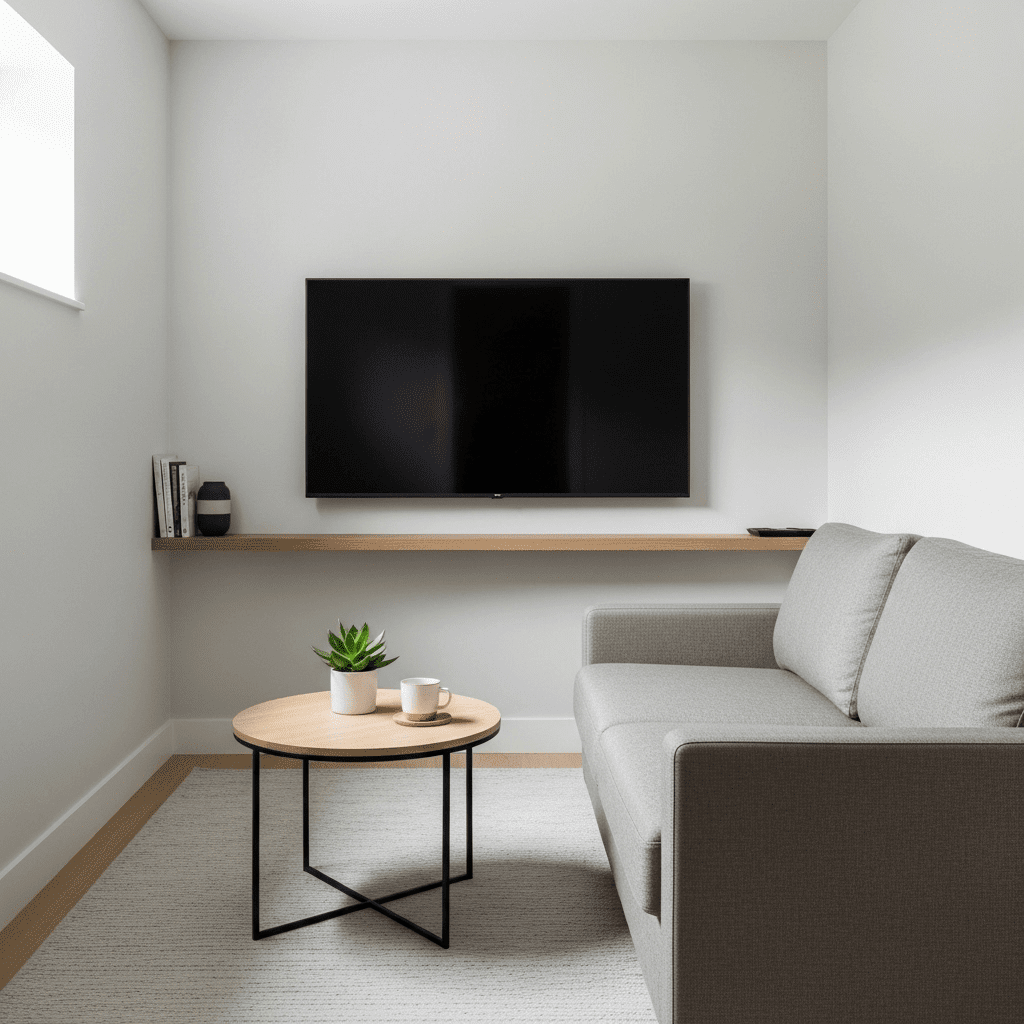
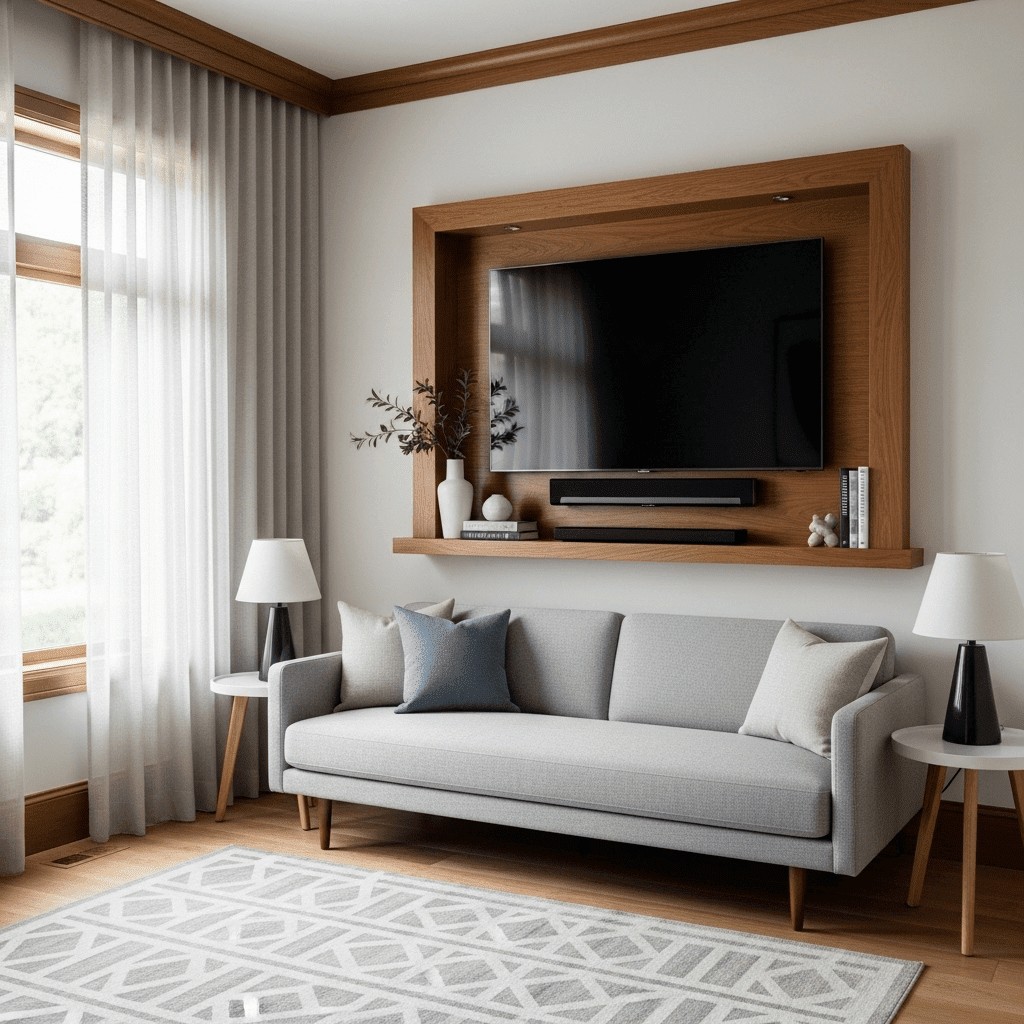
2. The Floating Media Shelf
Eliminate the floor-consuming TV stand in favor of a single floating wooden shelf. This keeps the floor area clear, which instantly makes a narrow or square room feel more open and airy.
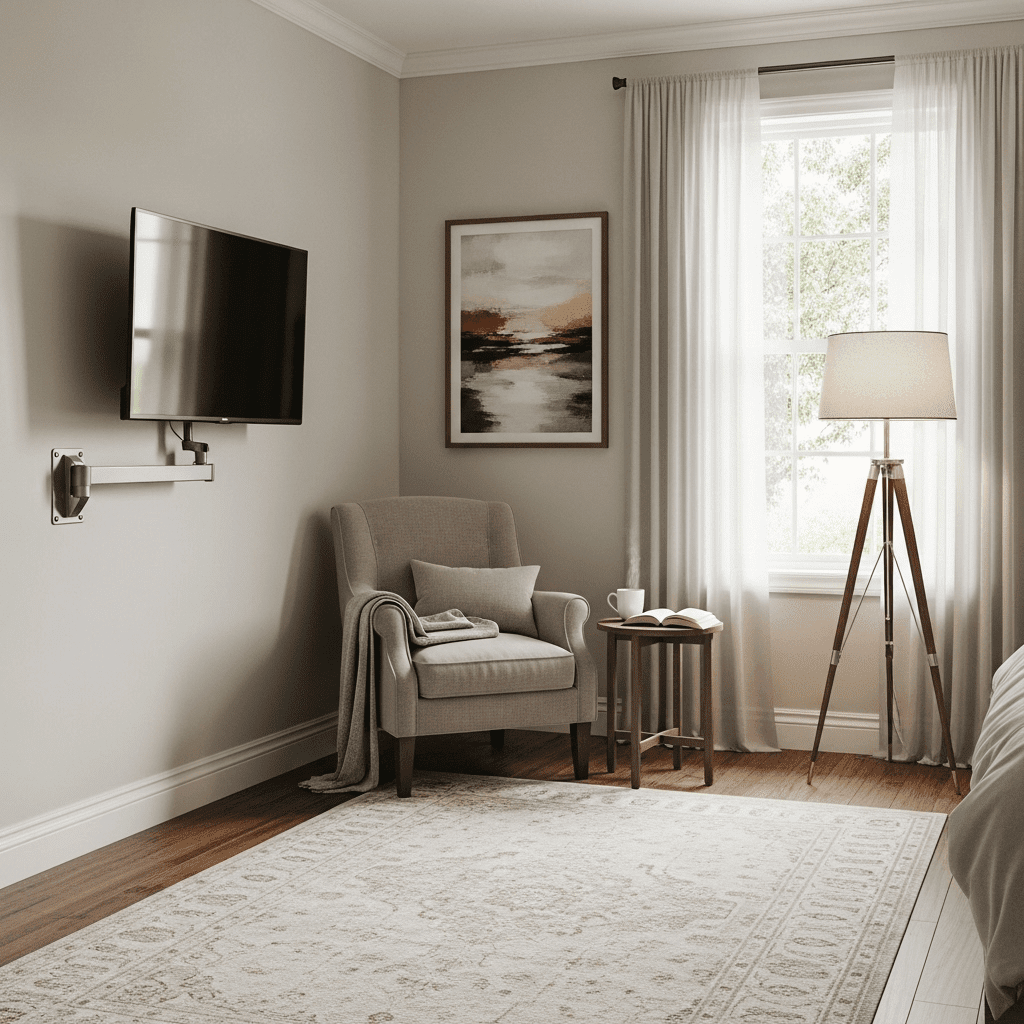
3. Corner Mounting for Flow
Position the TV on a swivel mount in a corner. This allows you to tuck the screen away when not in use and angle it perfectly for viewing, leaving the main walls free for larger furniture or windows.
See also: 13 Small Play Area in Living Room Designs
4. The Built-in Niche
Create a recessed niche in the wall specifically for the TV. This “flush” look keeps the screen from protruding into the room’s walking paths and makes the technology feel like a permanent part of the architecture.
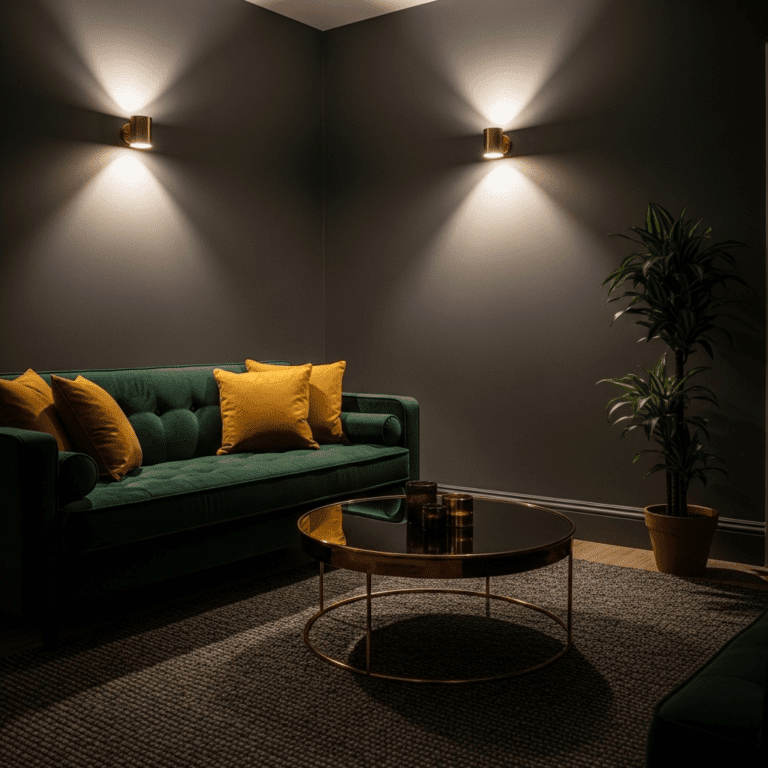
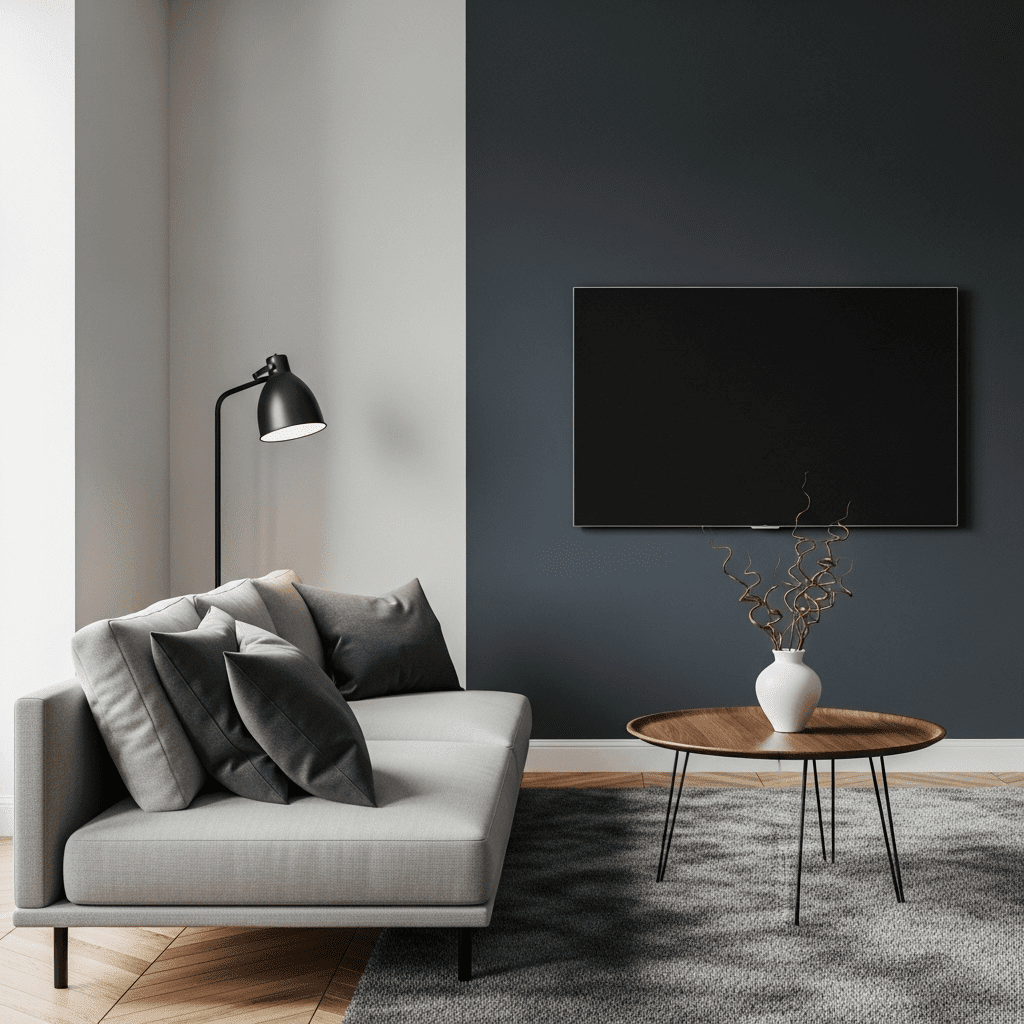
5. Dark Accent Wall Integration
Paint the wall behind the TV a dark, moody shade like charcoal or navy. The dark background helps the screen blend in seamlessly, reducing the visual “starkness” of a large monitor in a small space.
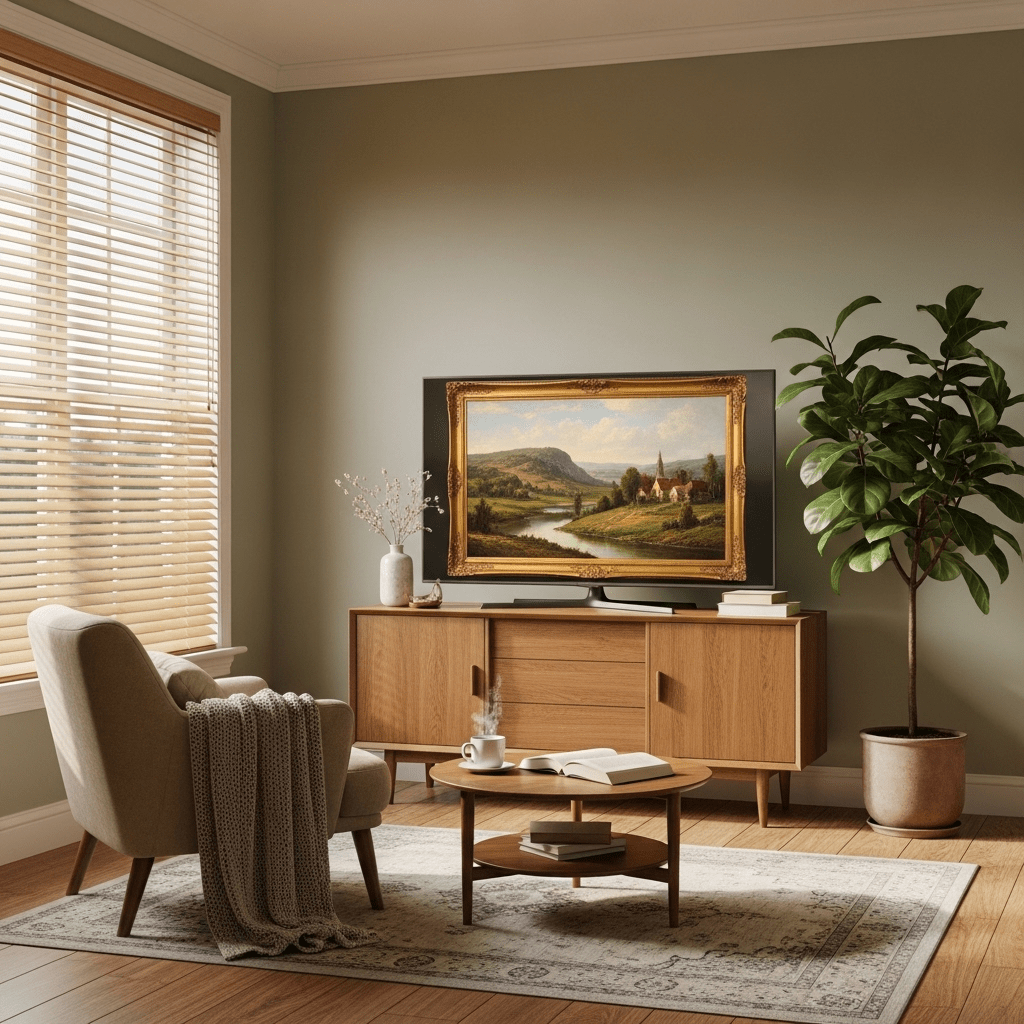
6. The “Samsung Frame” Art Mode
Use a slim-profile “Frame” TV that displays high-resolution art when not in use. Paired with a decorative bezel, it functions exactly like a piece of decor, eliminating the “tech” feel entirely.
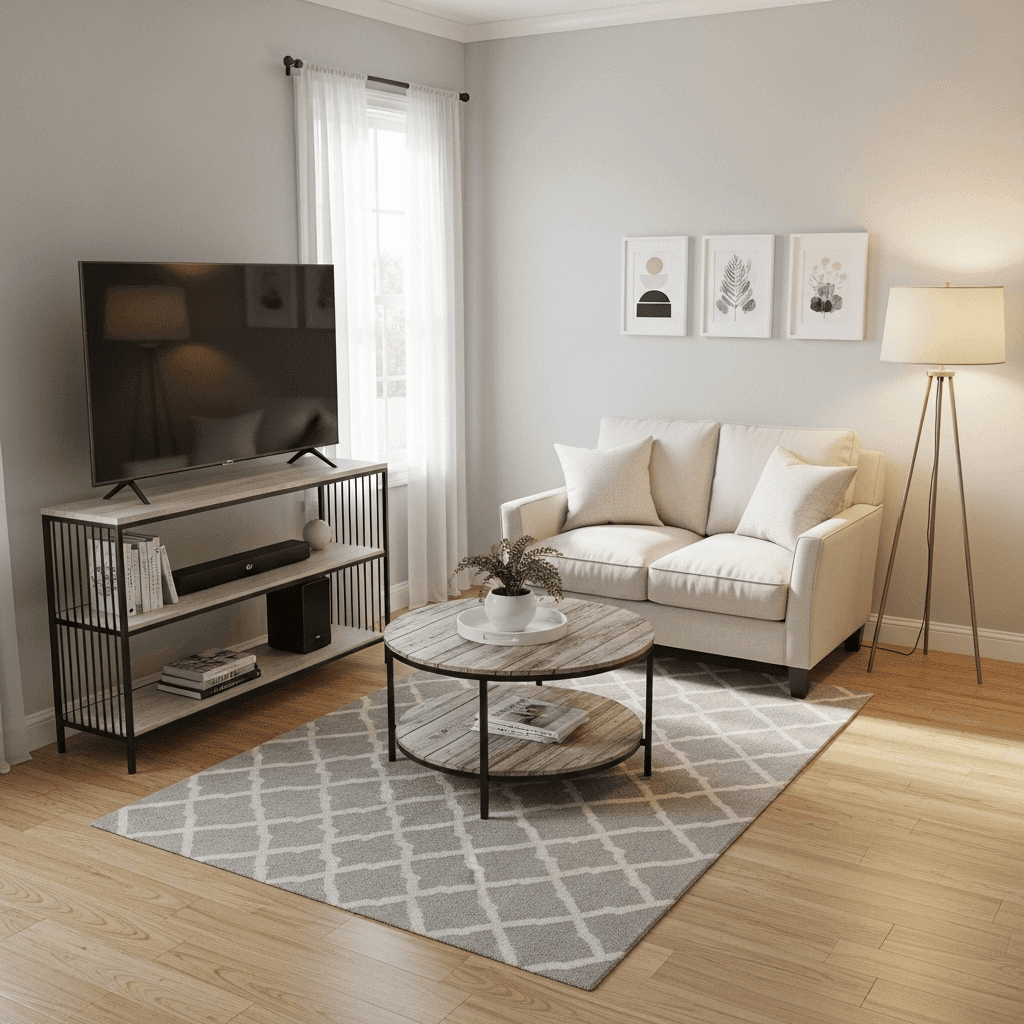
7. Slim Console Table Base
If you prefer a stand, choose a console table with very thin metal legs and an open base. The “see-through” nature of the furniture ensures that the floor and wall remain visible, maintaining a sense of space.
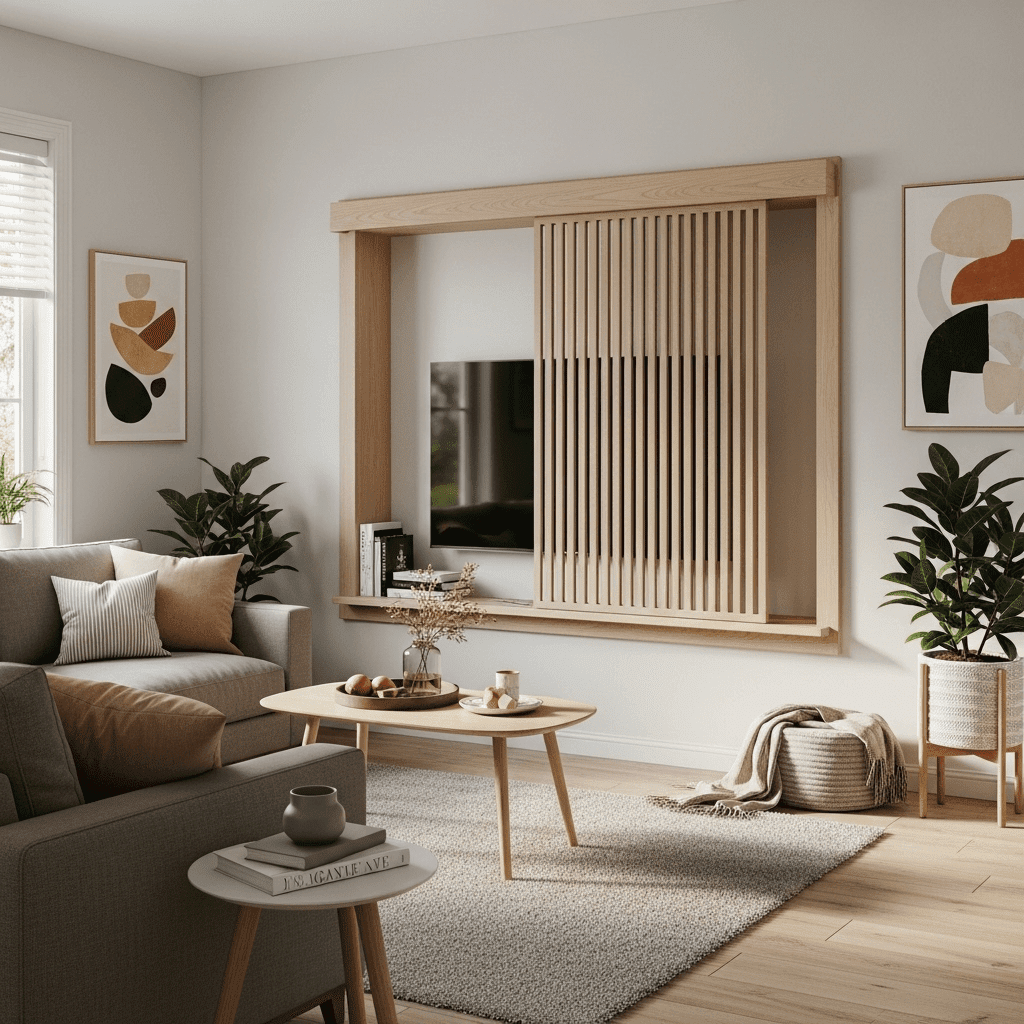
8. The Sliding Barn Door Hideaway
Install a sliding wooden panel or “barn door” that can be pulled across the TV. This is an excellent solution for multi-purpose rooms where you want to completely hide the electronics during social gatherings.
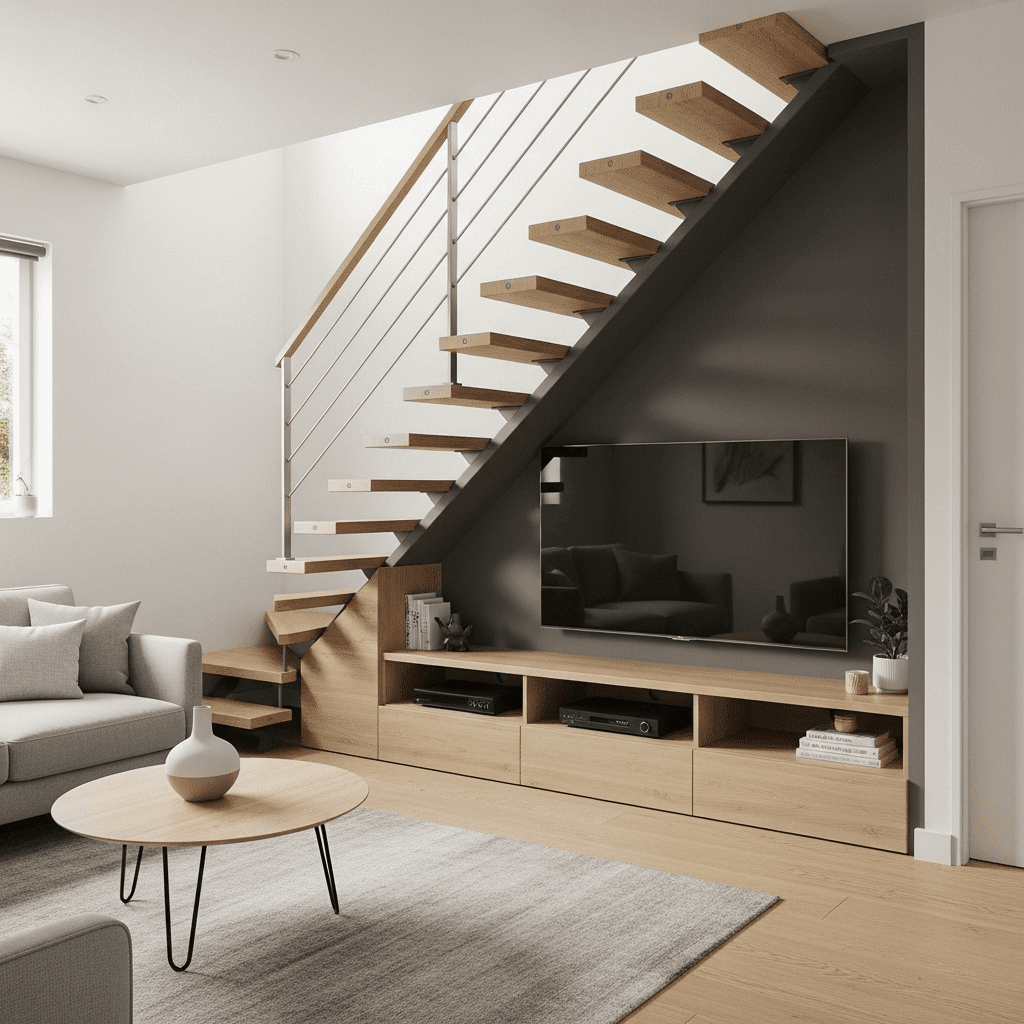
9. Under-Stair Entertainment Hub
Utilize the often-wasted space under a staircase to create a custom media center. This keeps the TV out of the main living area’s central flow while maximizing every inch of the floor plan.
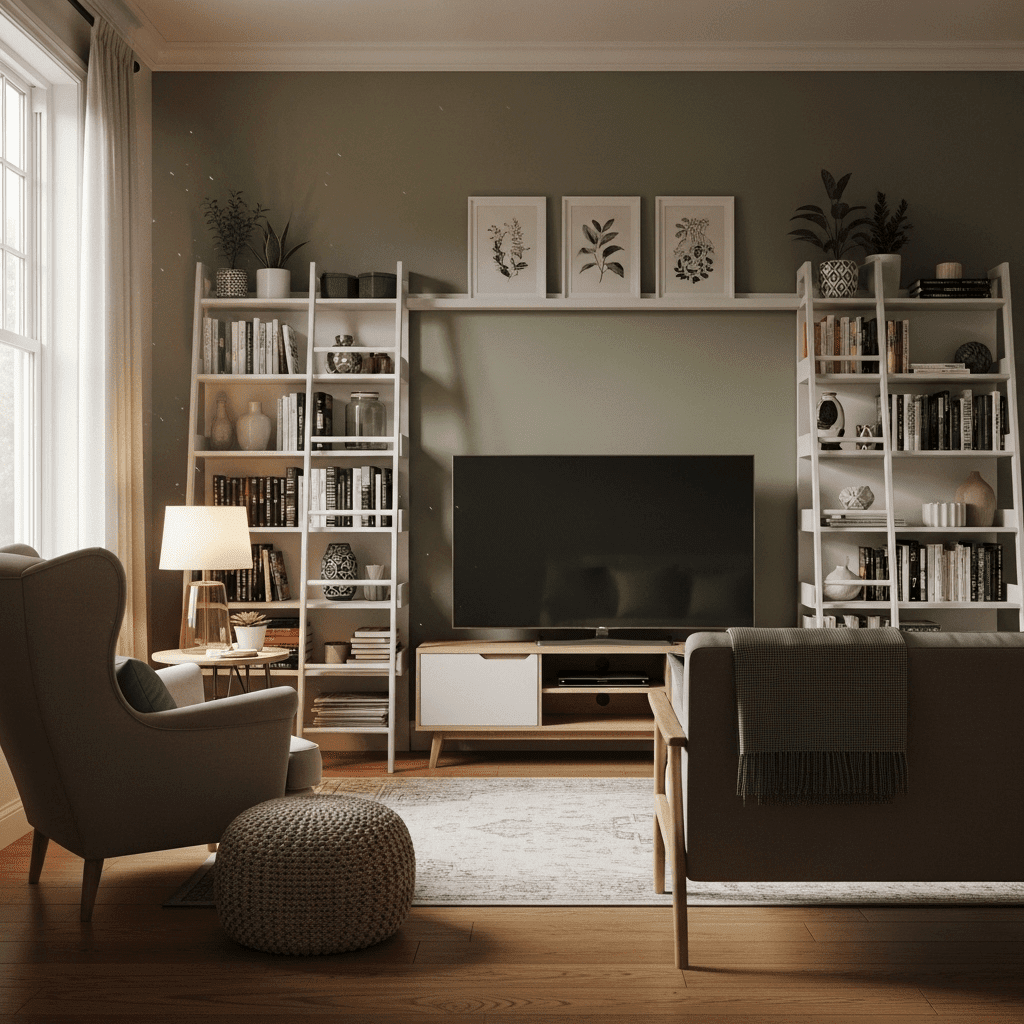
10. Vertical Storage Framing
Flank the TV with tall, narrow bookshelves. This vertical framing draws the eye upward and provides storage for books and decor, making the TV feel like a curated part of a library wall.
11. The Window-Adjacent Pivot
Place the TV on a low unit perpendicular to a window. This minimizes glare while allowing you to enjoy natural light and entertainment simultaneously without blocking the view.
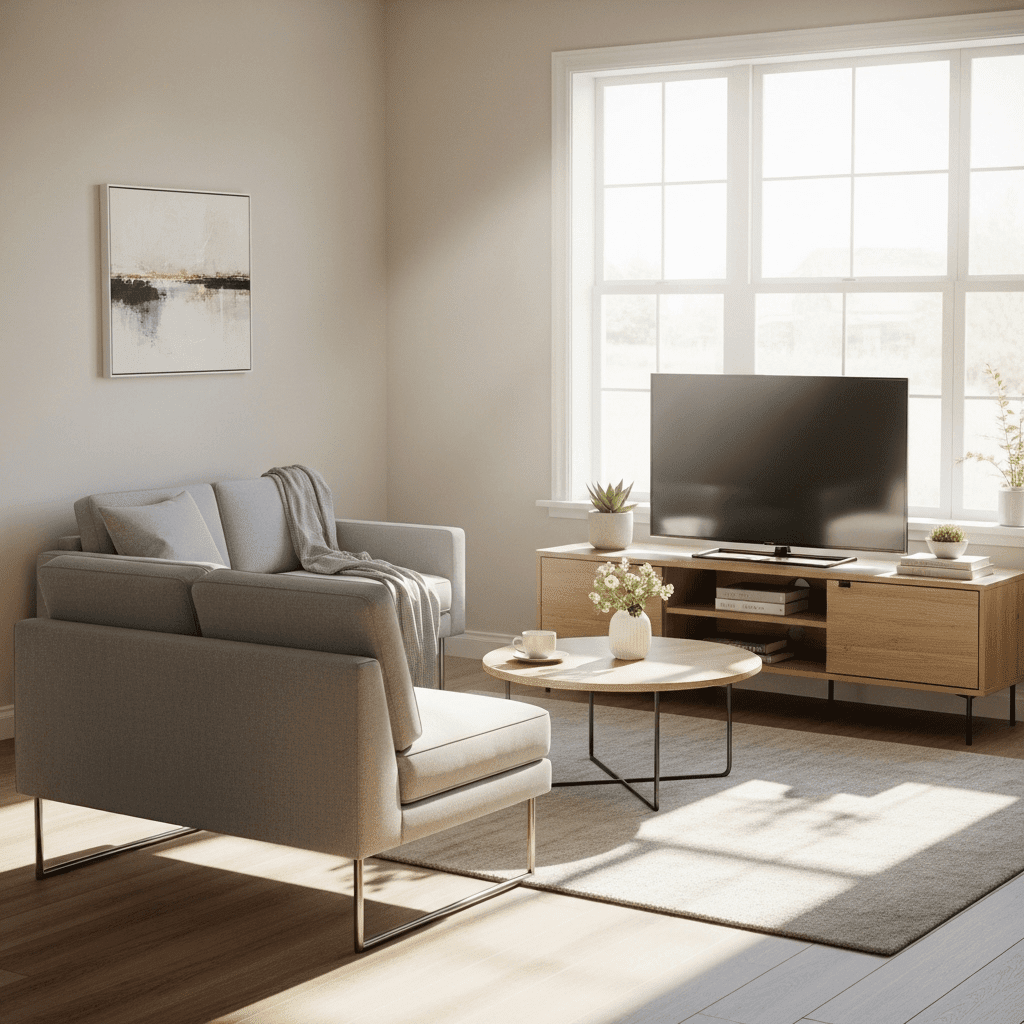
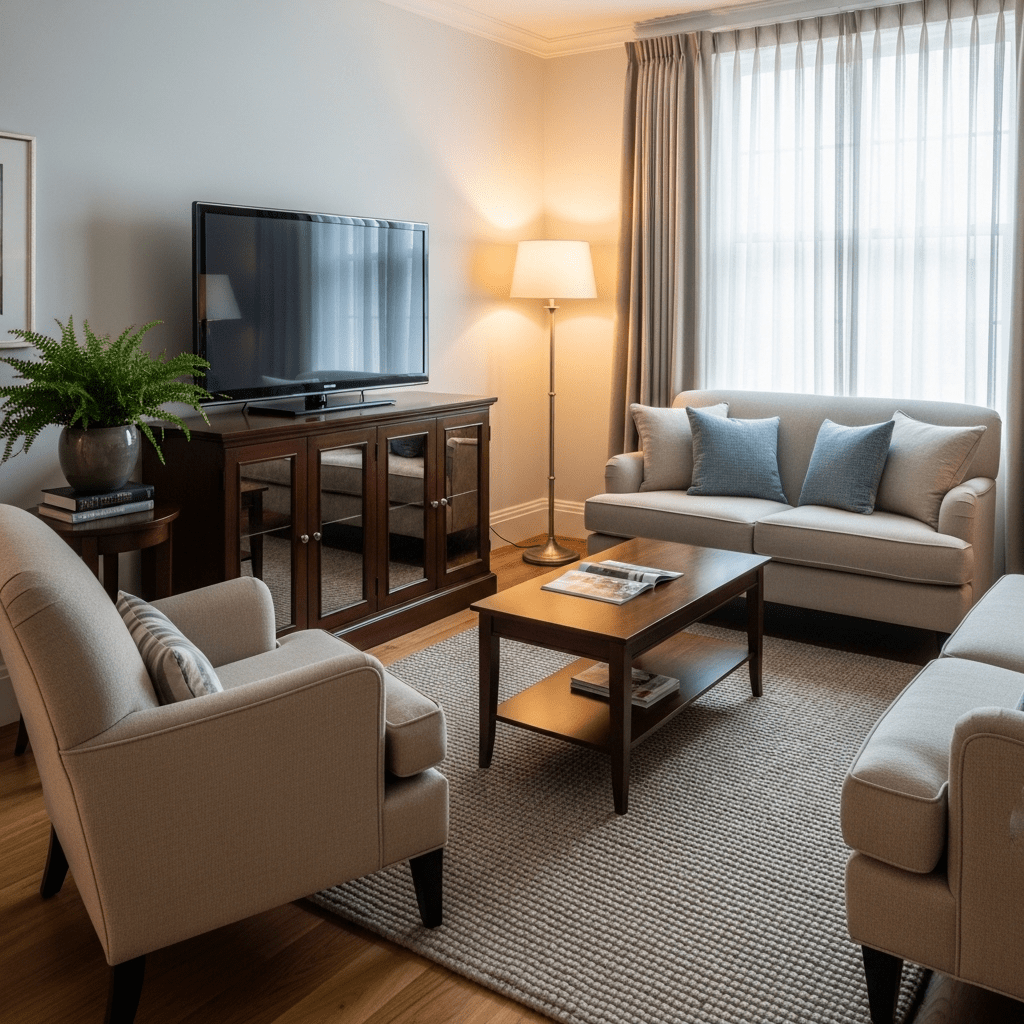
12. Mirrored Media Cabinet
Use a media cabinet with mirrored door fronts. The reflection of the floor and rug back into the room helps negate the bulkiness of the cabinet, making the furniture feel “invisible.”
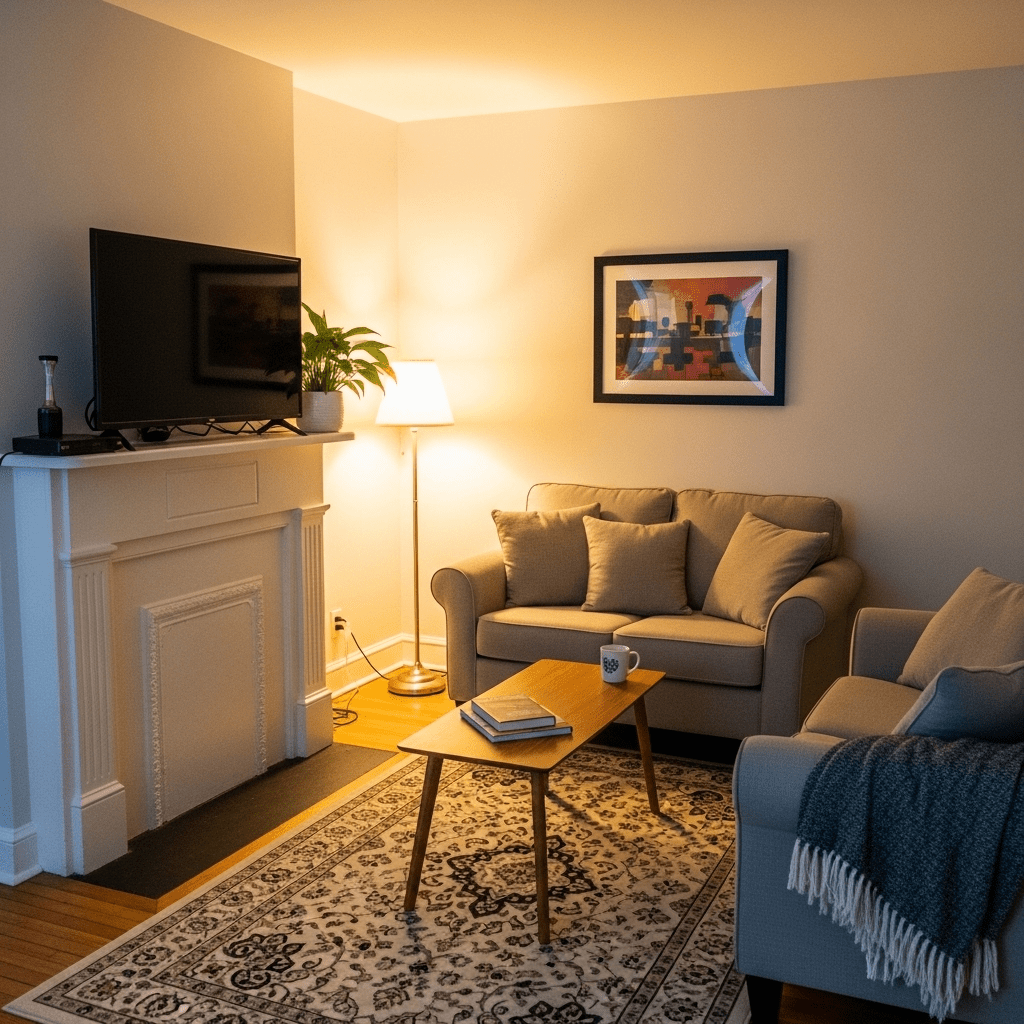
13. Above-Fireplace Consolidation
Mount the TV directly above the fireplace mantel. Consolidating the two major focal points into one vertical stack saves wall space and allows you to arrange all furniture toward a single direction.
Conclusion
Integrating a TV into a small living room is a design exercise in balance and camouflage. By utilizing wall-mounting, dark backgrounds, or multifunctional furniture, you can enjoy your favorite shows without letting the screen dictate the room’s entire personality. Focus on keeping the surrounding areas clutter-free to ensure the tech adds to your lifestyle rather than detracting from your decor. Would you like me to suggest specific color palettes that work best with media-focused rooms?