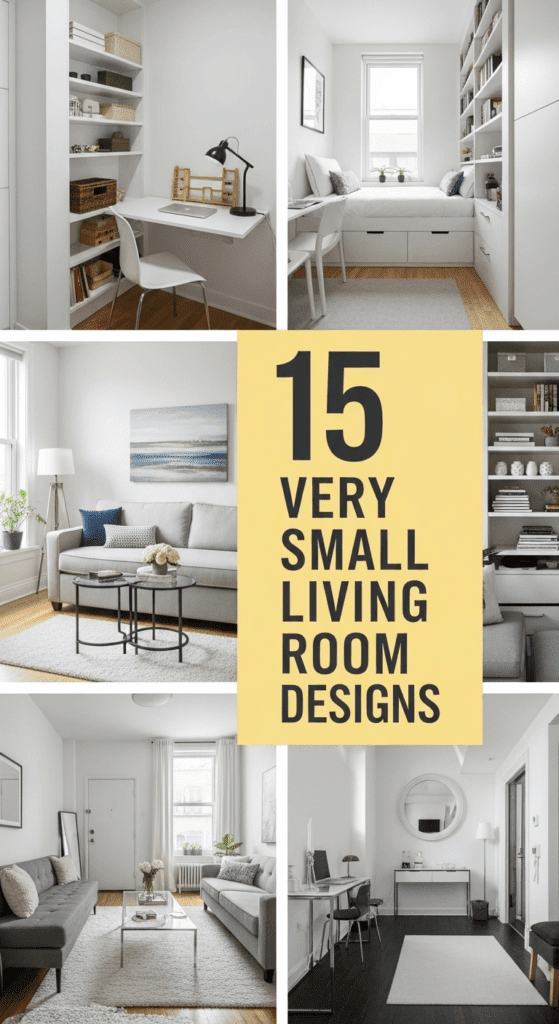
15 Very small living room designs
Very small living room designs demand a strategic approach to “micro-living,” where every square inch is optimized to balance high-end aesthetics with essential functionality. In a truly compact floor plan, the goal is to eliminate visual clutter by choosing “leggy” furniture that exposes the floor and utilizing vertical real estate for storage and decor. By embracing a light-reflective color palette and multifunctional pieces, you can transform a tiny footprint into a sophisticated lounge that feels intentional rather than cramped. Here are 15 designs to help you master the art of the very small living room.
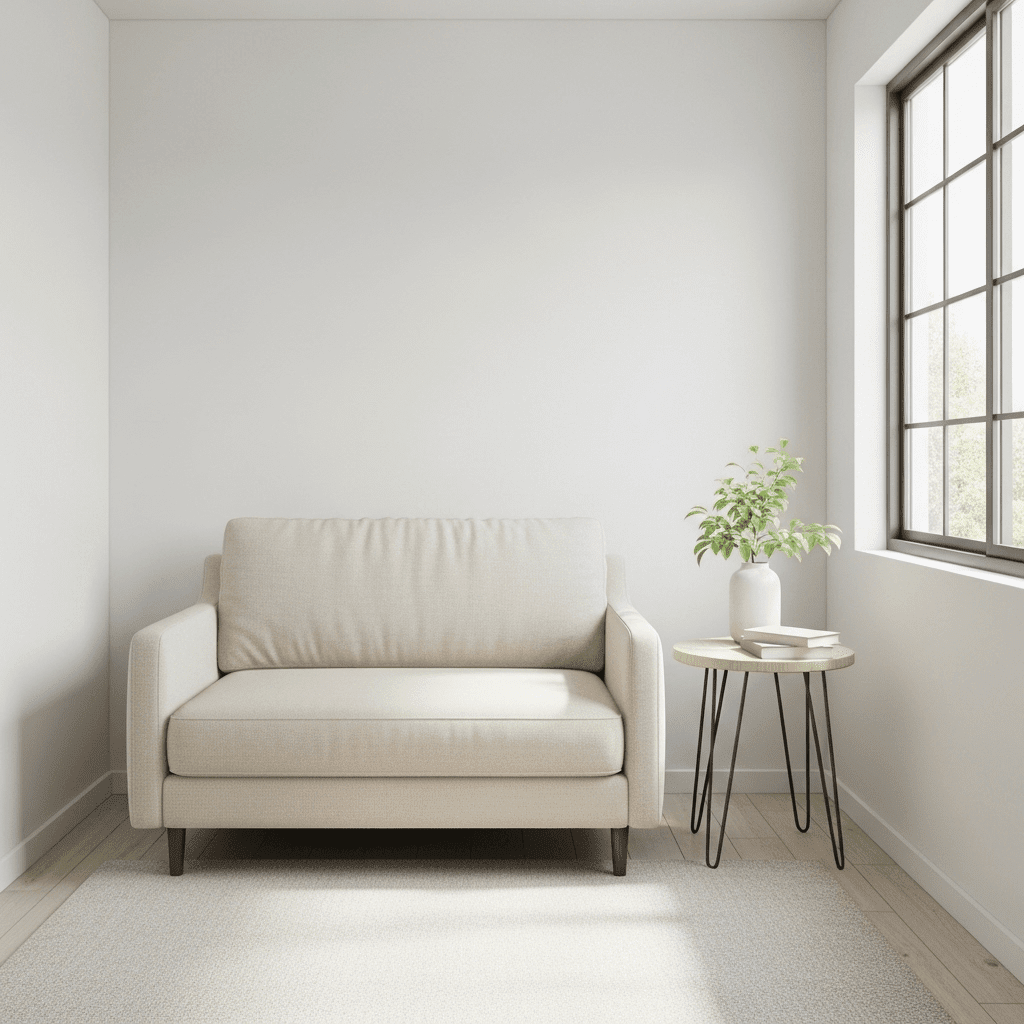
1. The Armless Loveseat Layout
Opt for an armless sofa to save precious inches on either side. Without bulky armrests, the piece occupies less visual and physical space, allowing it to fit into tight alcoves or narrow walls without feeling squeezed.
2. The Transparent “Ghost” Coffee Table
Use a clear acrylic or glass coffee table to maintain an open line of sight. Because the furniture is transparent, the eye perceives the floor area as unoccupied, which prevents the center of the room from feeling “blocked.”
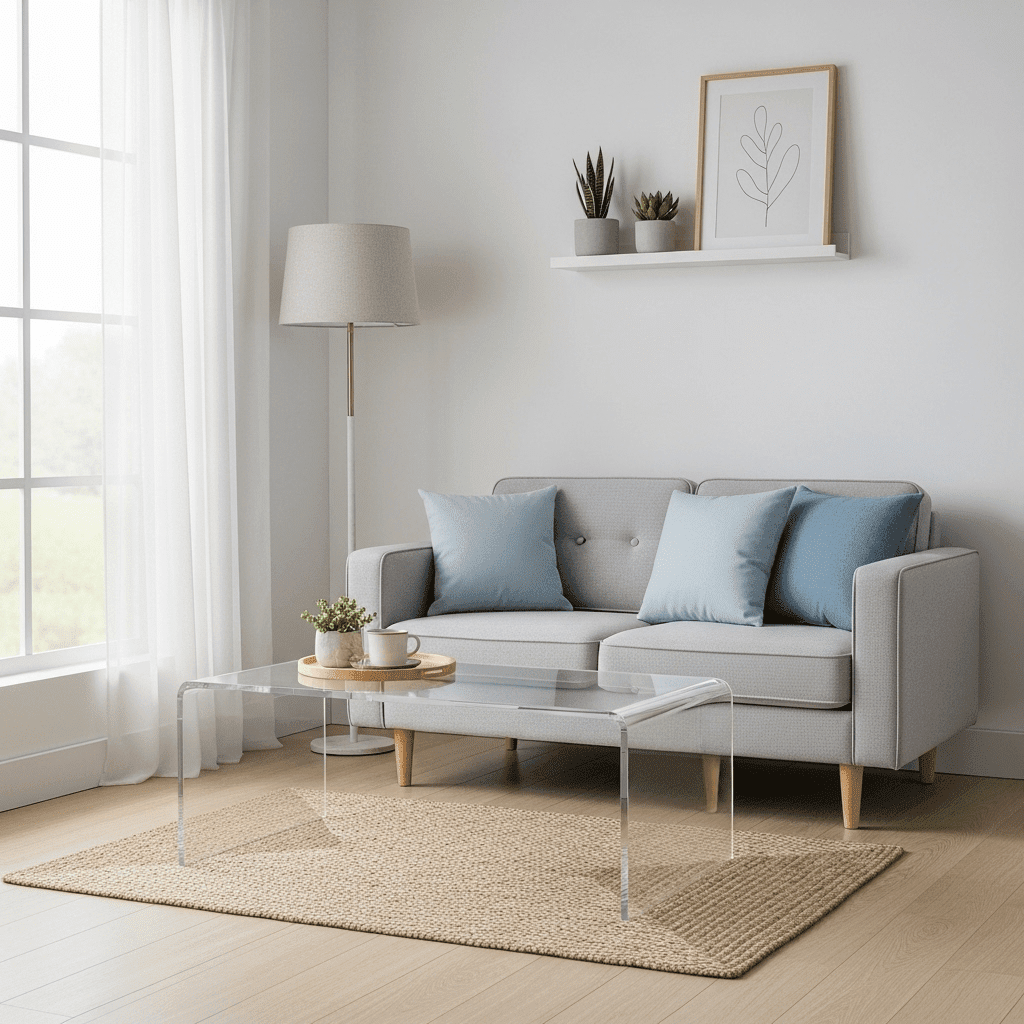
3. Vertical Mirror Panels
Install floor-to-ceiling mirror panels on one wall. This classic design trick creates the illusion of a “doorway” into another room, effectively doubling the perceived depth of a very small space.
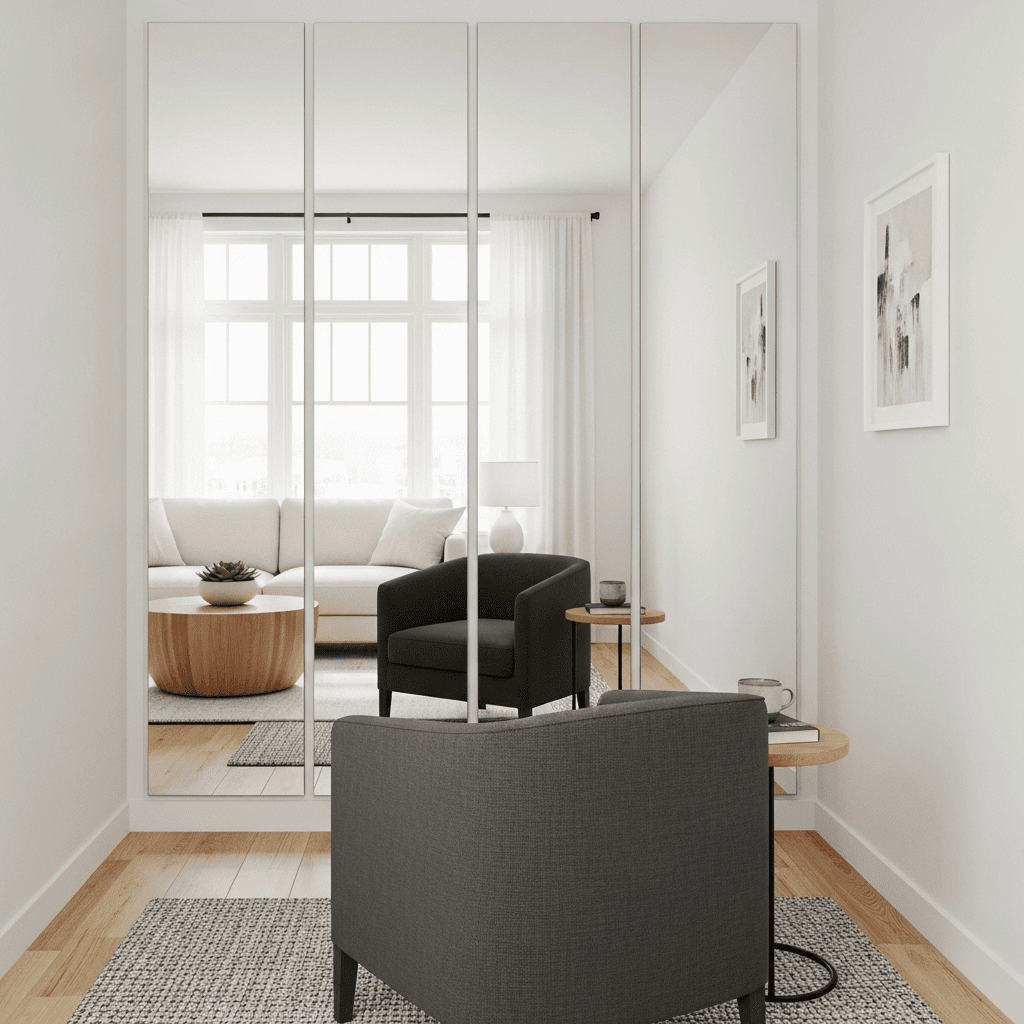
4. Floating Shelves as Media Units
Replace a heavy TV stand with a single, long floating shelf. Elevating the storage off the floor creates a sense of “weightlessness” and provides a clean, minimalist look for your electronics.
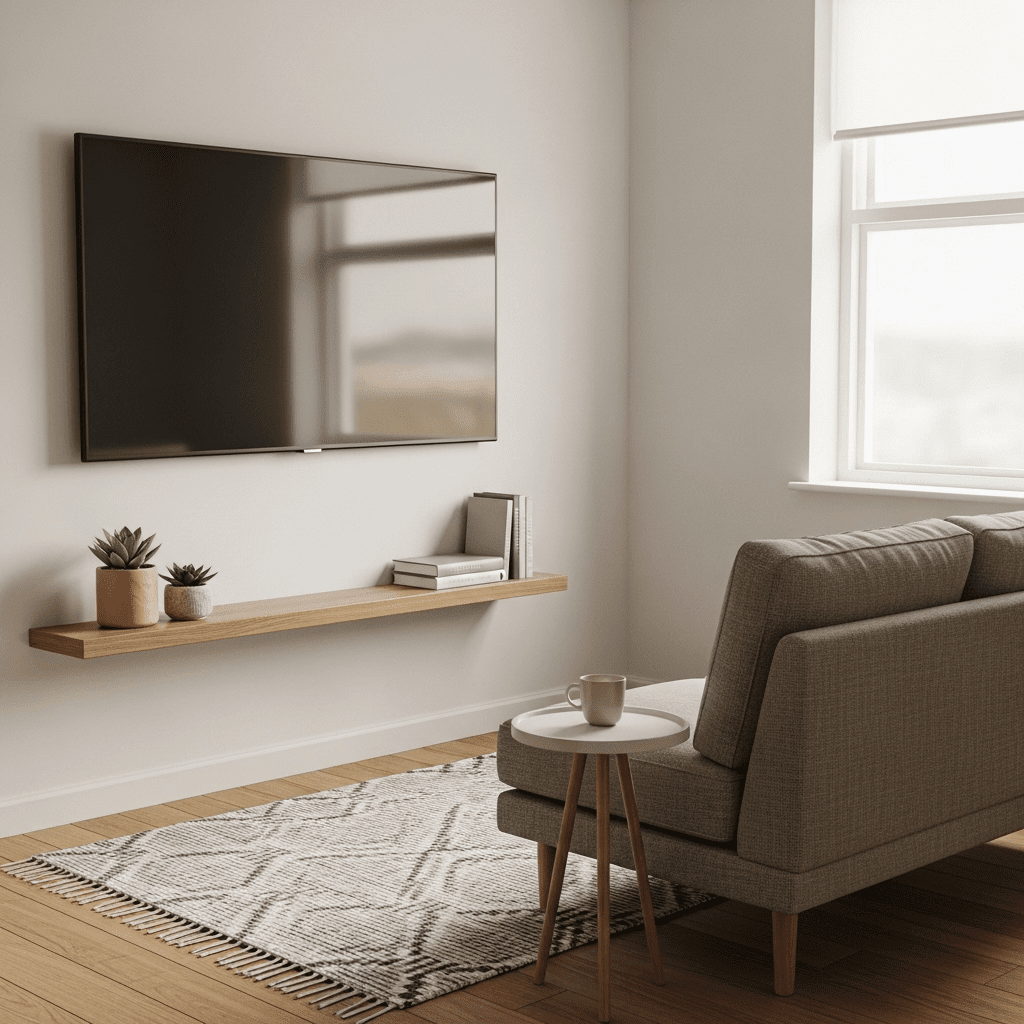
5. The Corner “L” Sectional
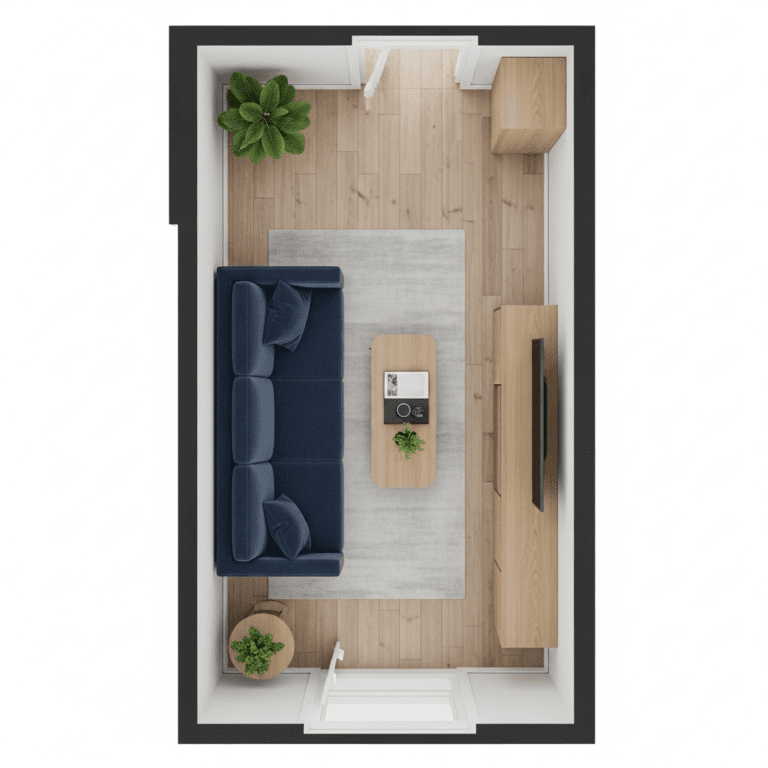
Tuck a small-scale sectional sofa into the far corner of the room. This uses the most efficient seating geometry, leaving the rest of the floor open for a walkway or a small accent rug.
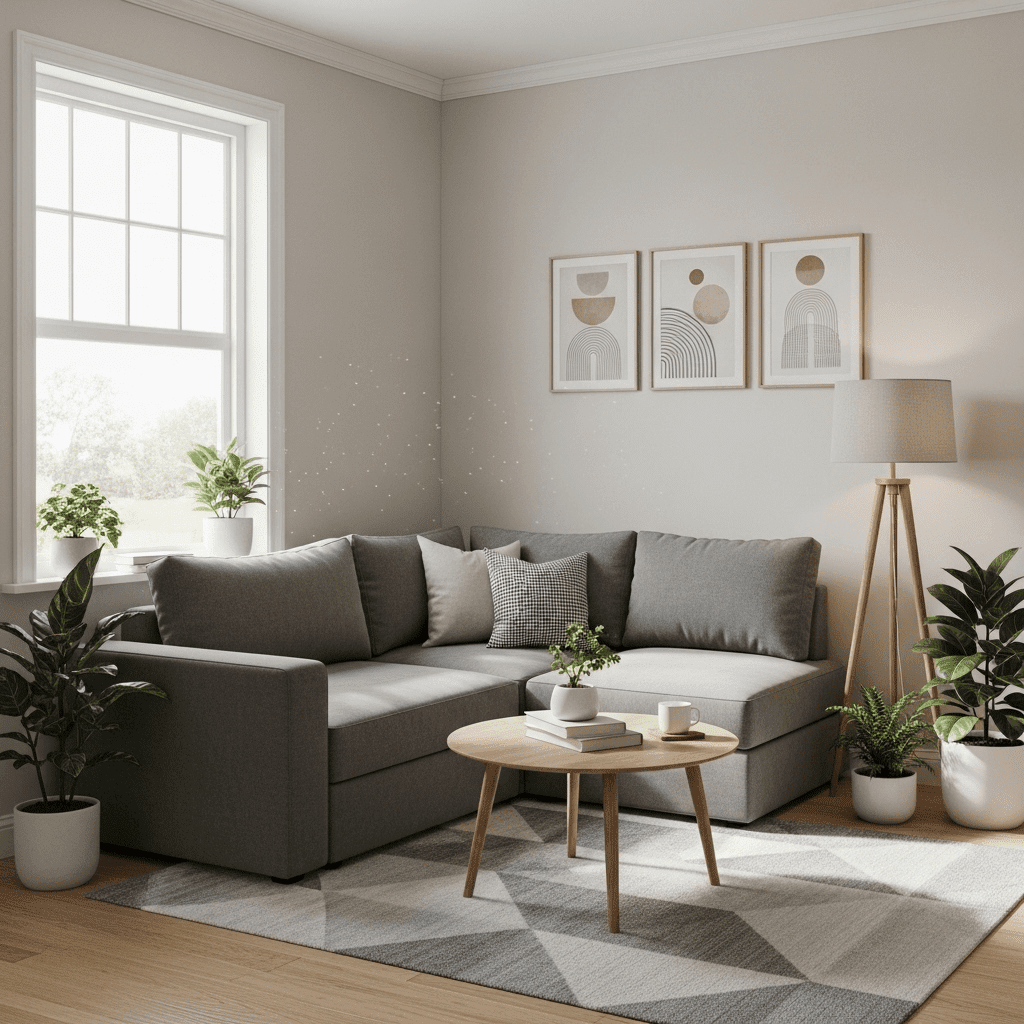
6. Swing-Arm Sconce Lighting
Eliminate floor lamps that take up valuable legroom by installing swing-arm wall sconces. These provide adjustable task lighting for reading while keeping your side tables and floors completely clear.
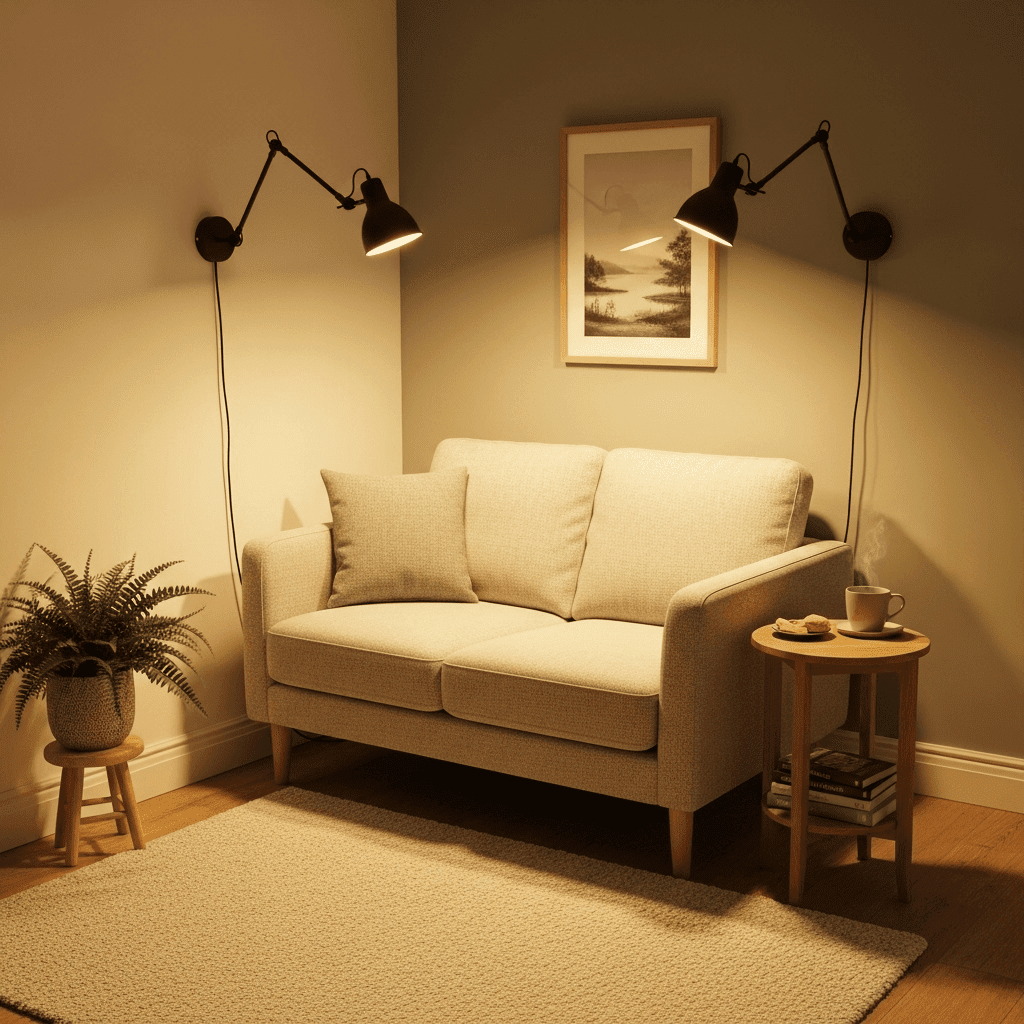
7. The C-Table Workspace
Incorporate a C-shaped table that slides its base under the sofa. This provides a stable surface for a laptop or coffee without requiring a permanent footprint in the middle of the room.
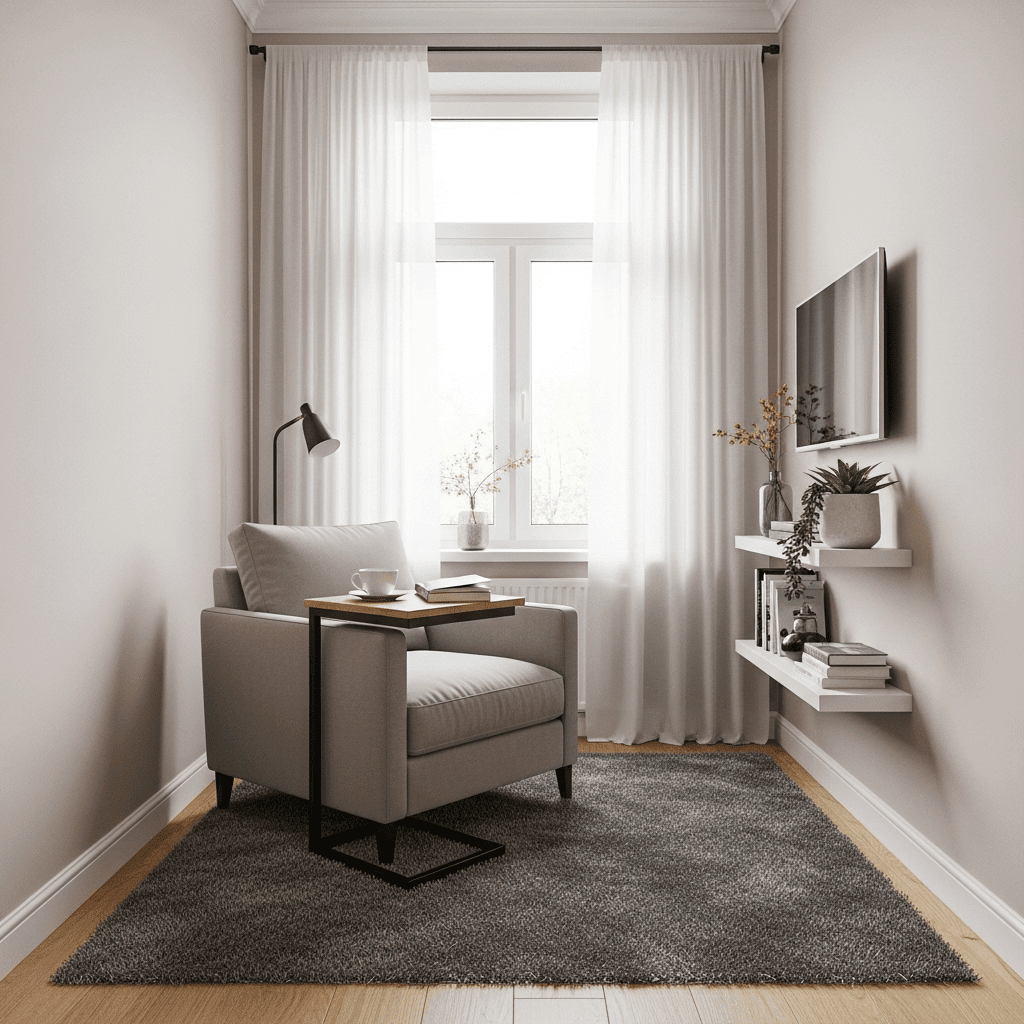
8. Monochrome Texture Layering
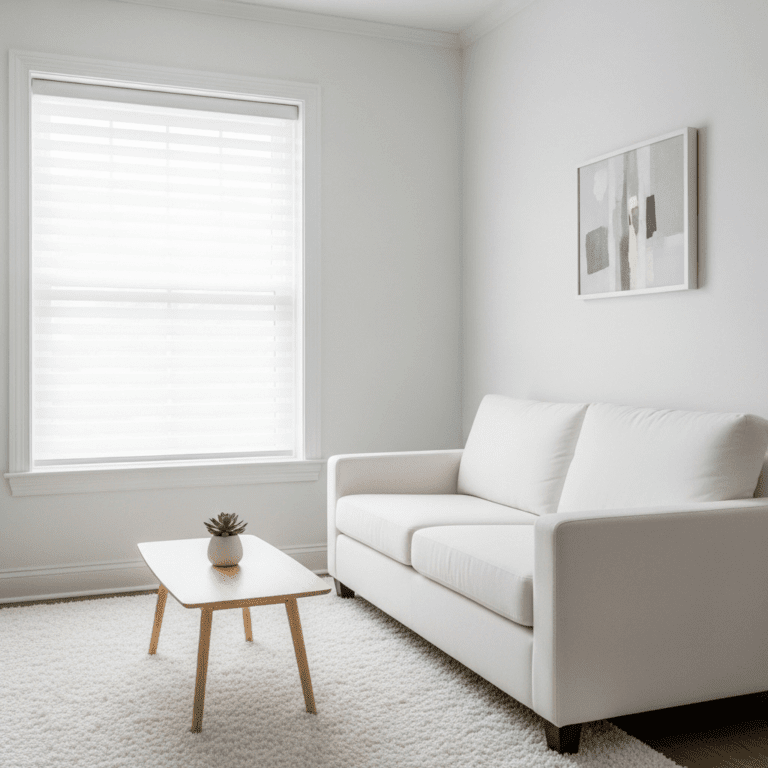
Use a “tone-on-tone” color scheme, such as various shades of beige or light gray. Limiting the color contrast prevents the room from looking “choppy,” making the boundaries of the walls feel further away.
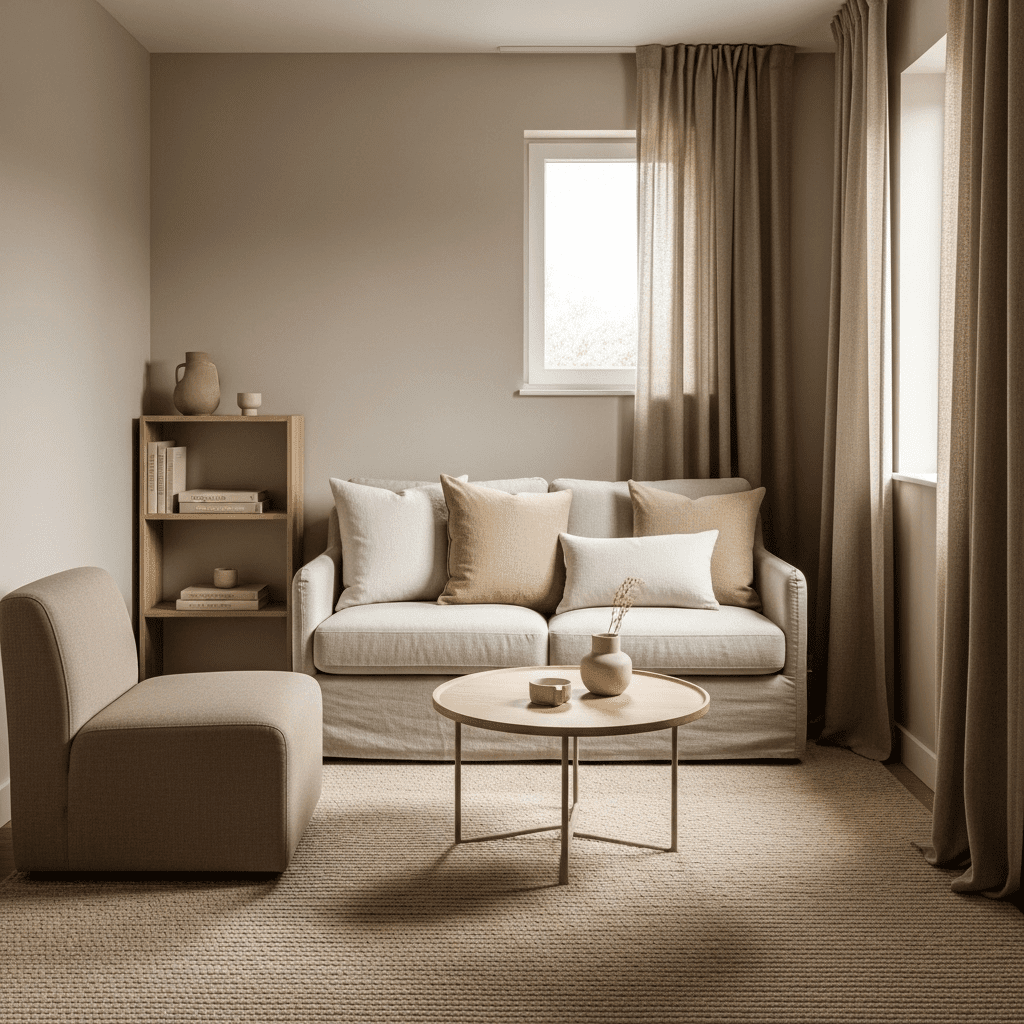
9. Nested Side Tables
Choose a set of nesting tables that can be stacked when not in use. This provides flexible surface area for guests while maintaining a single, small footprint for daily life.
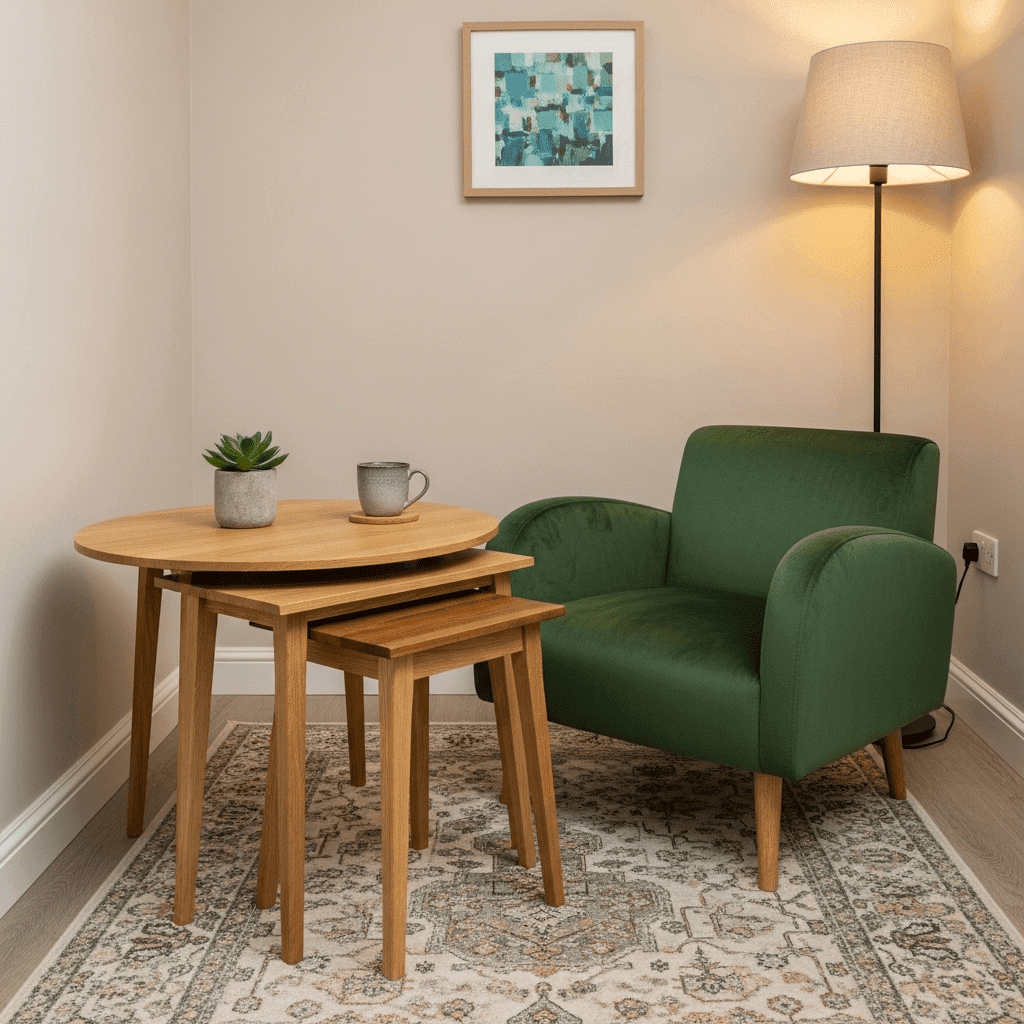
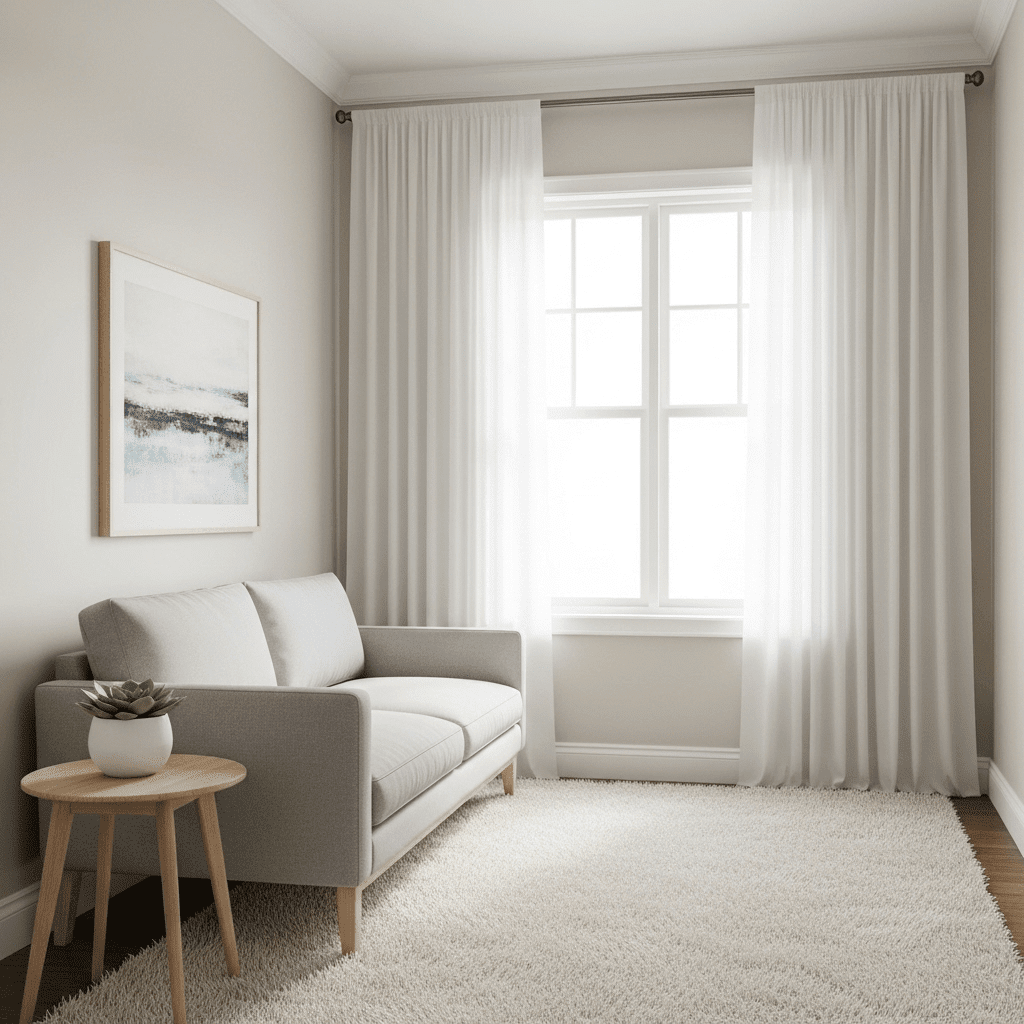
10. Floor-to-Ceiling Drapery
Hang curtains from the very top of the ceiling to the floor. These long vertical lines draw the eye upward, making a very small room feel significantly loftier and more expensive.
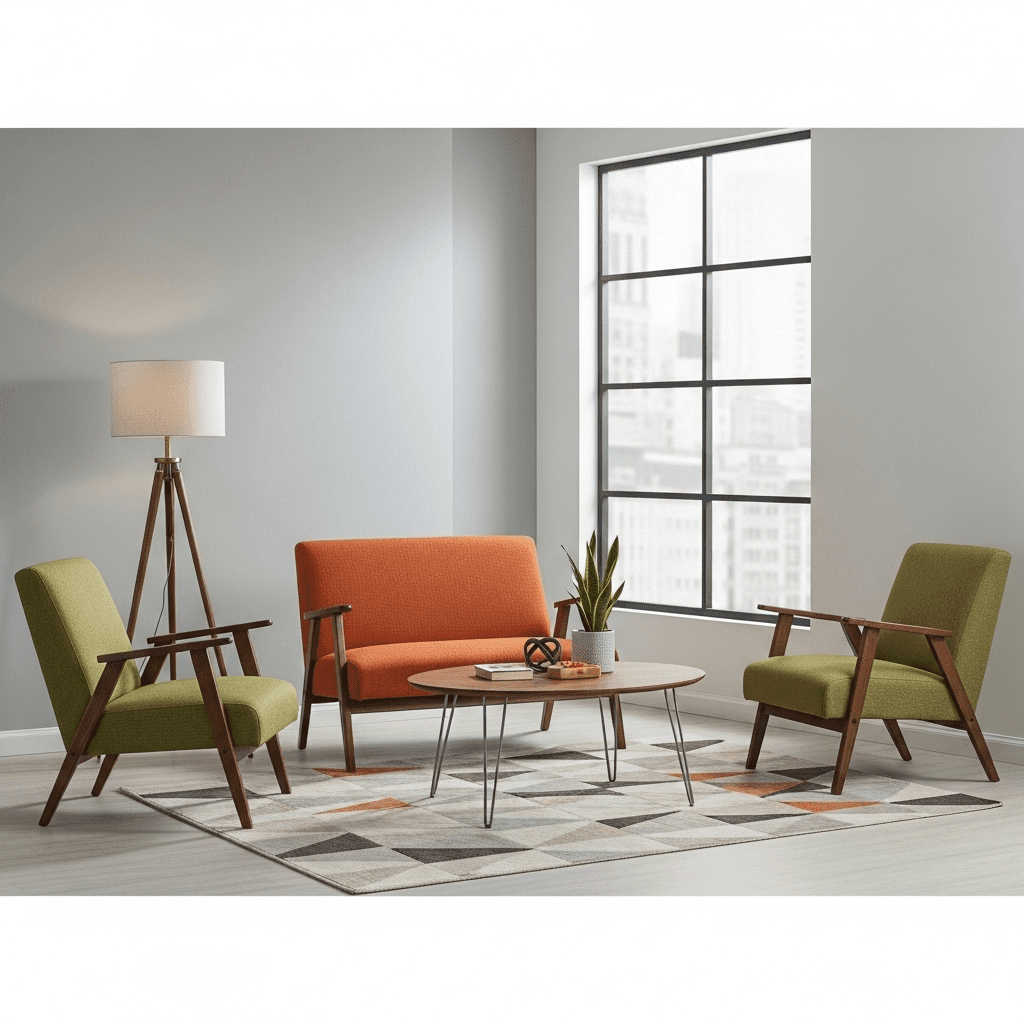
11. The “Leggy” Furniture Rule
Ensure that every piece of furniture, from the sofa to the sideboard, has tall, thin legs. Being able to see the floor continue under the furniture prevents the room from feeling “filled up.”
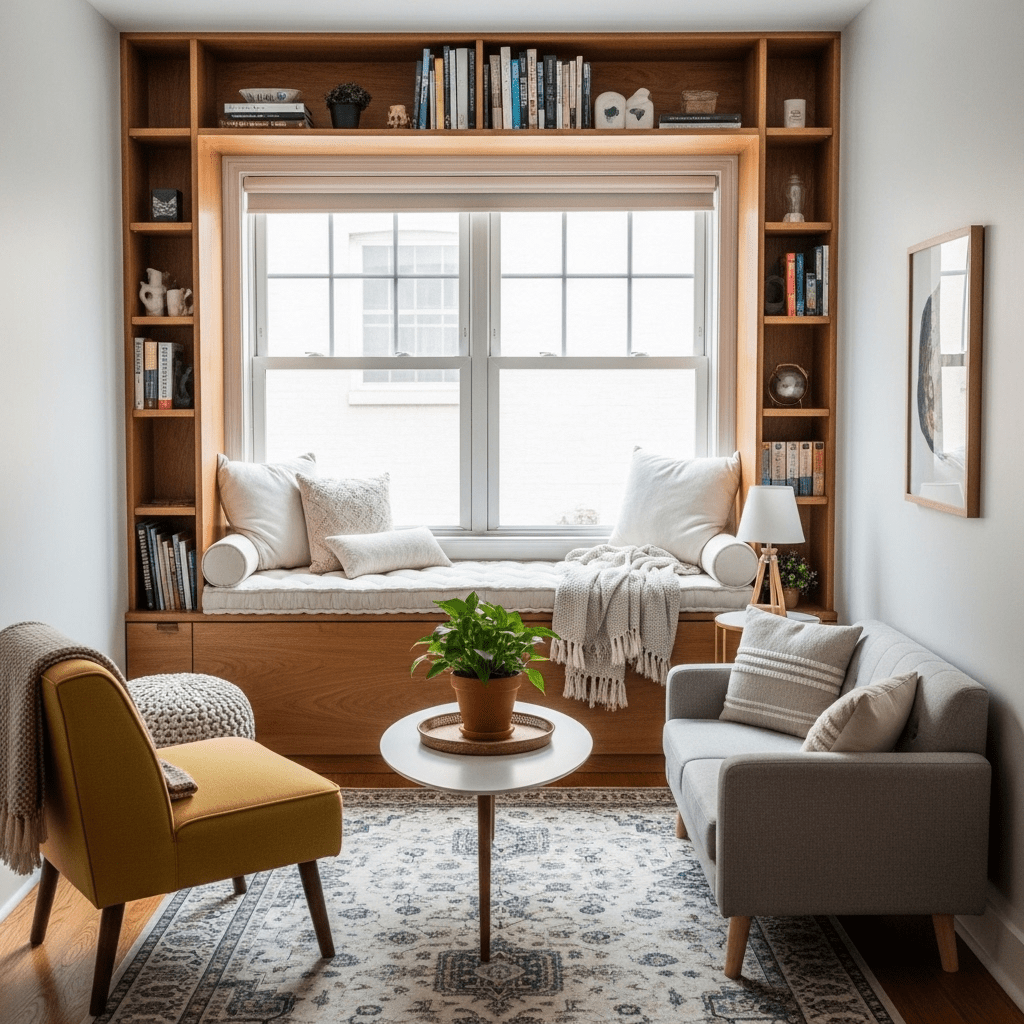
12. Built-in Window Seating
Convert a window ledge into a built-in bench with storage underneath. This utilizes the “dead space” under the window for extra seating and hides clutter away from view.
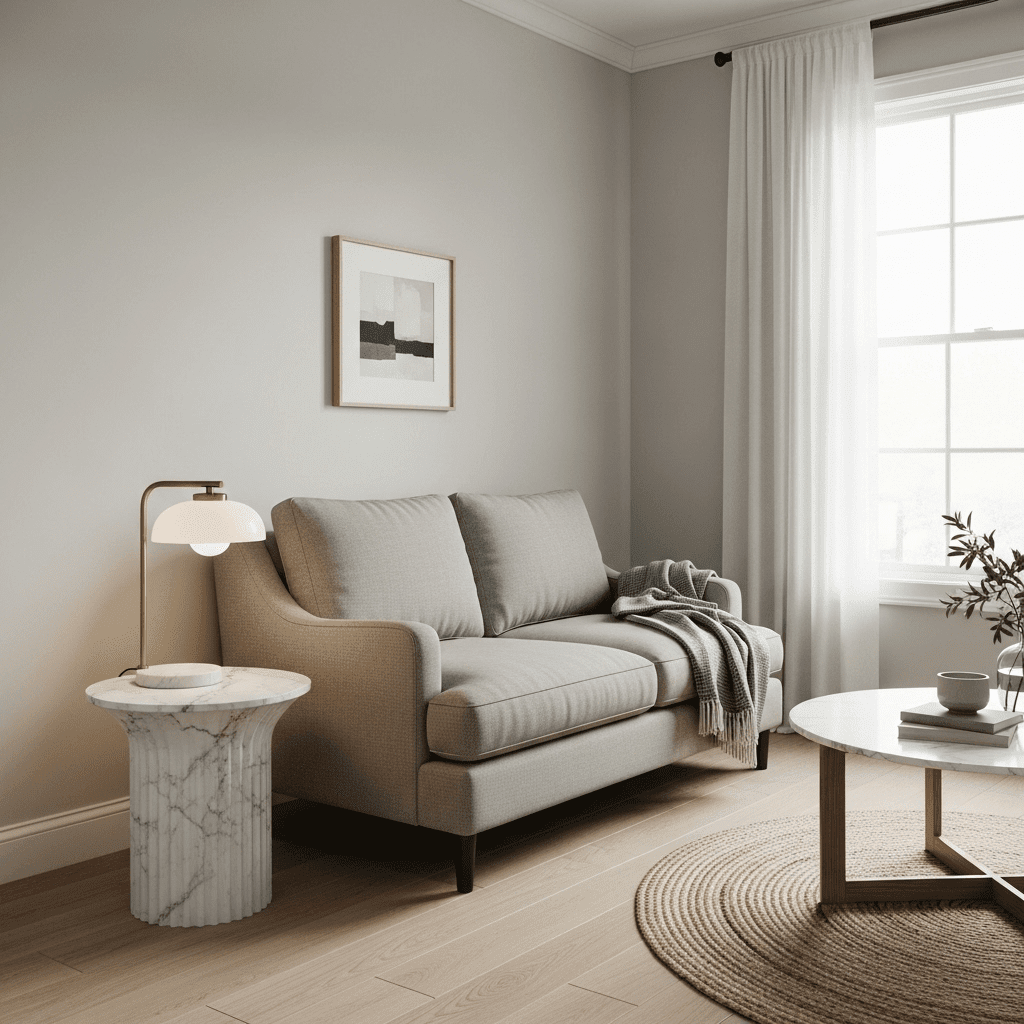
13. Minimalist Pedestal Tables
Use a small round pedestal table instead of a square one. The single central leg takes up less floor space and makes it easier to navigate around in a tight layout.
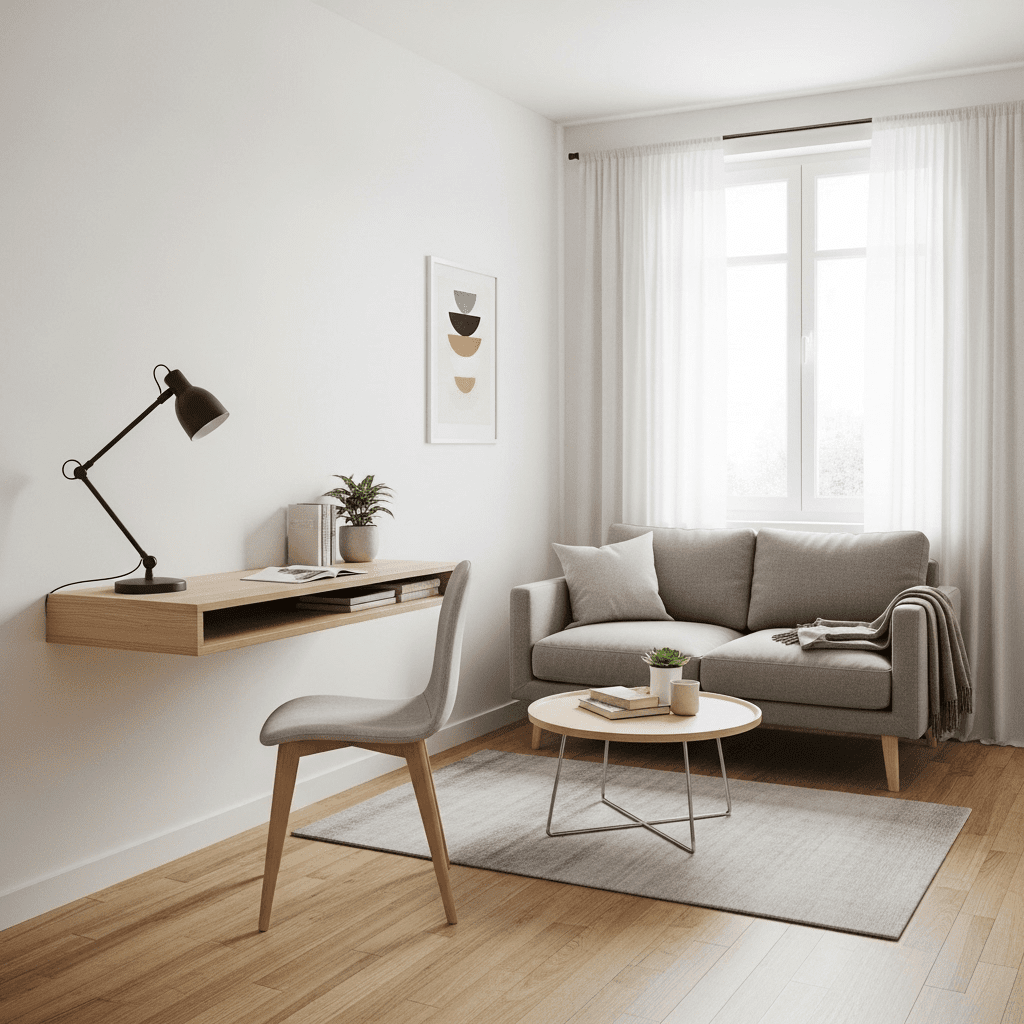
14. Wall-Mounted Desk Nook
If you need a home office, install a floating “laptop bar” along one wall. It provides a functional workspace that doesn’t interfere with the living room’s social flow.
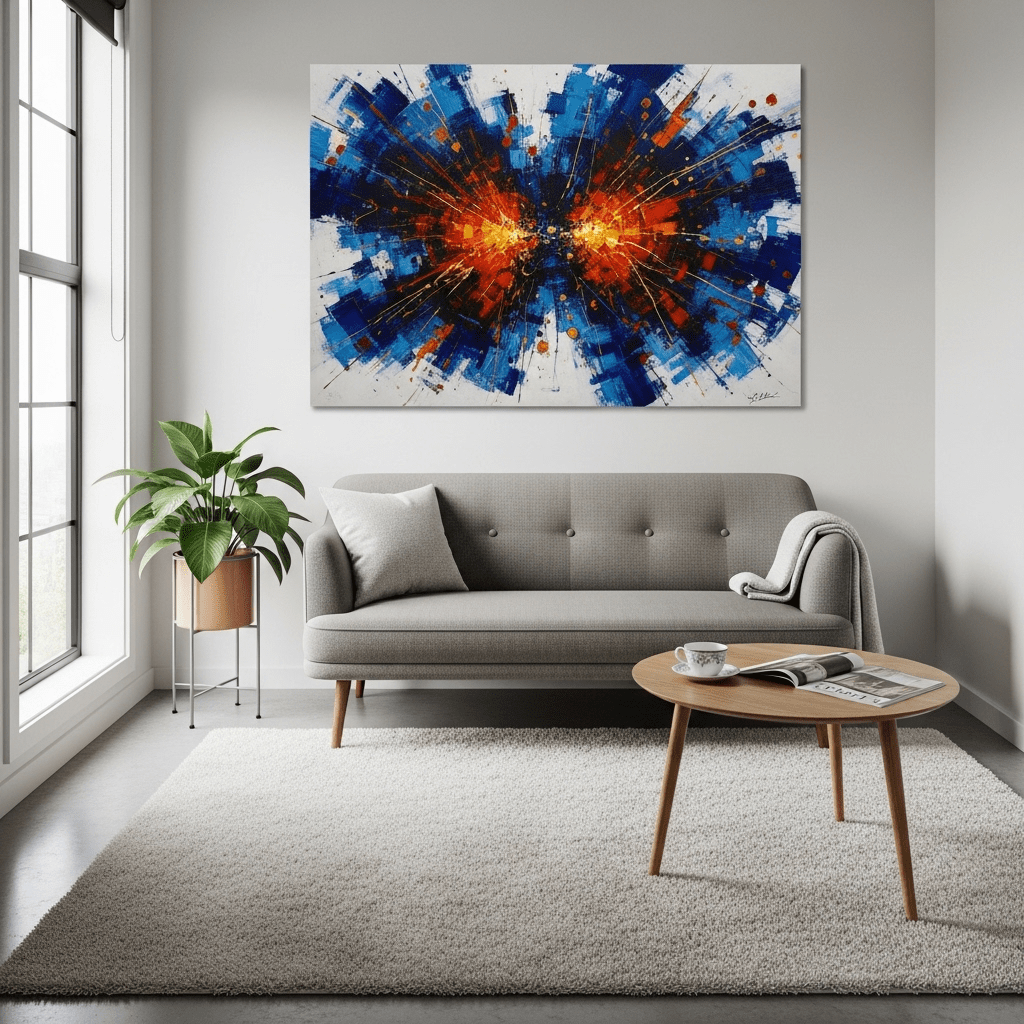
15. Single Oversized Art Piece
Decorate with one large, impactful piece of art rather than many small ones. A single large focal point gives the room a sense of “grandeur” and scale that makes it feel like a designed gallery.
Conclusion
Designing for a very small living room is a lesson in edited elegance. By choosing transparent materials, wall-mounted solutions, and furniture with high legs, you can ensure that your home feels open, airy, and curated. Focus on a unified color palette to keep the space feeling calm and cohesive. Would you like me to focus on a specific style, like Scandinavian or Industrial, for your next set of ideas?