10 Core Strengthening Exercises for Kids Occupational Therapy
Core strength is the foundation of nearly every movement a child makes. From sitting upright at a desk to writing, running, jumping, and even concentrating, a strong core supports posture, balance, coordination, and fine motor skills. In occupational therapy, core strengthening exercises are essential for children with low muscle tone, developmental delays, sensory processing disorders, or conditions like ADHD and autism that affect body awareness and focus. Here are ten effective core strengthening exercises for kids that are fun, engaging, and easy to do at home or in a therapy setting.
1. Animal Walks
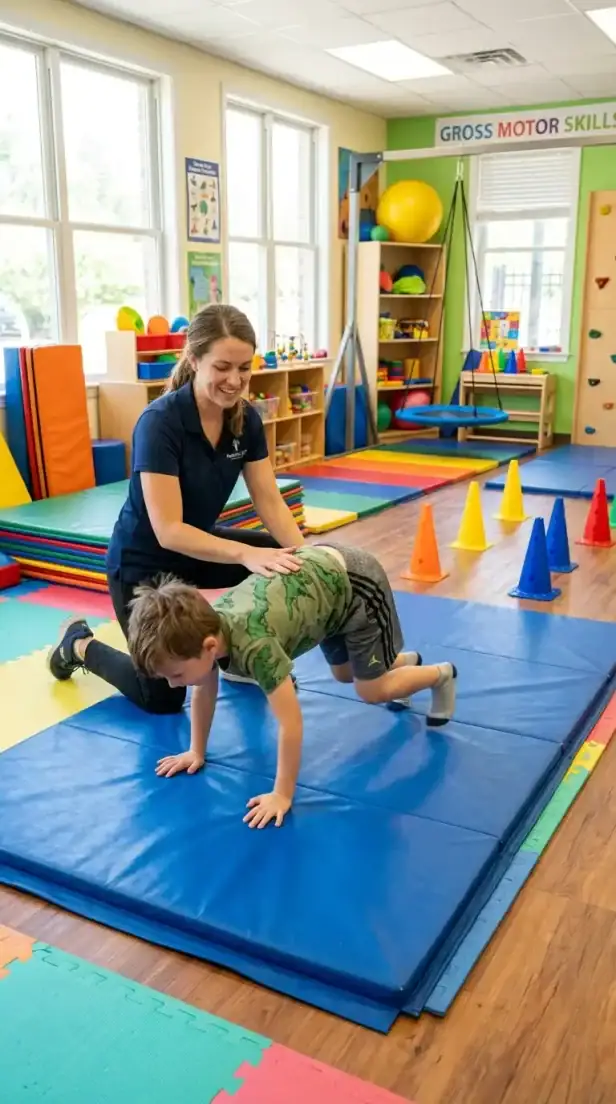
Animal walks are playful exercises that engage the entire core while building strength and body awareness. Have your child crawl like a bear on hands and feet with hips lifted, walk like a crab on hands and feet with belly facing up, or hop like a frog in a deep squat position. These movements require the abdominal and back muscles to work hard to maintain stability. Bear walks are especially effective for shoulder and hip stability. Perform animal walks for 30 to 60 seconds at a time.
2. Superman Pose
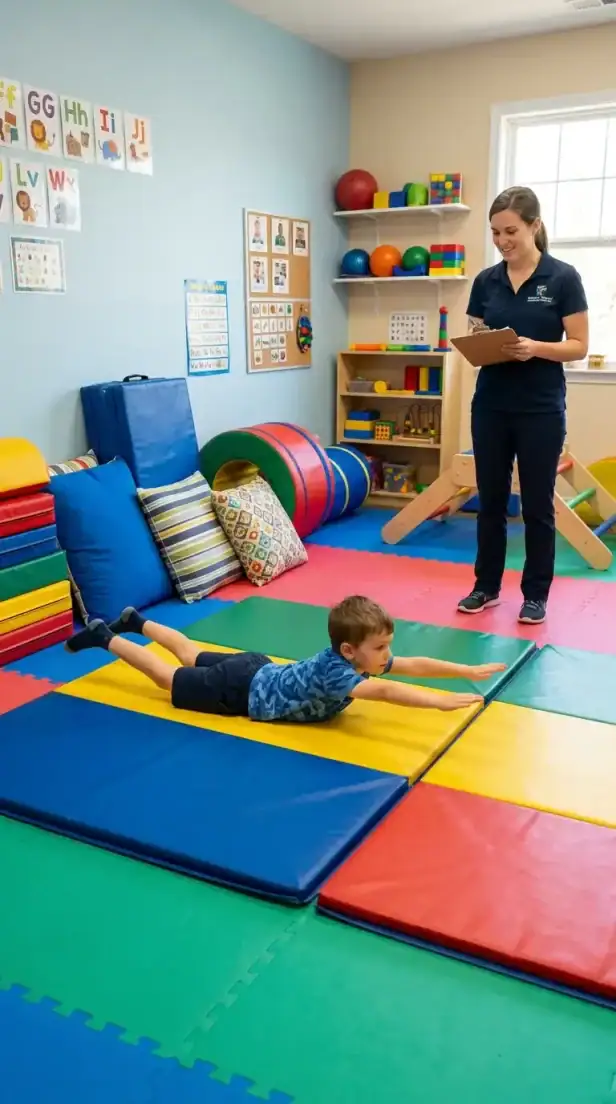
The Superman pose targets the lower back, glutes, and shoulder muscles, which are crucial for maintaining an upright posture. Have your child lie on their stomach with arms stretched forward and legs straight. Ask them to lift both arms and legs off the floor simultaneously, keeping their neck in a neutral position. They should look like Superman flying through the air. Hold the pose for 5 to 10 seconds, then rest. Repeat 5 to 10 times. This exercise is excellent for children who slouch or have poor postural endurance.
3. Wheelbarrow Walking
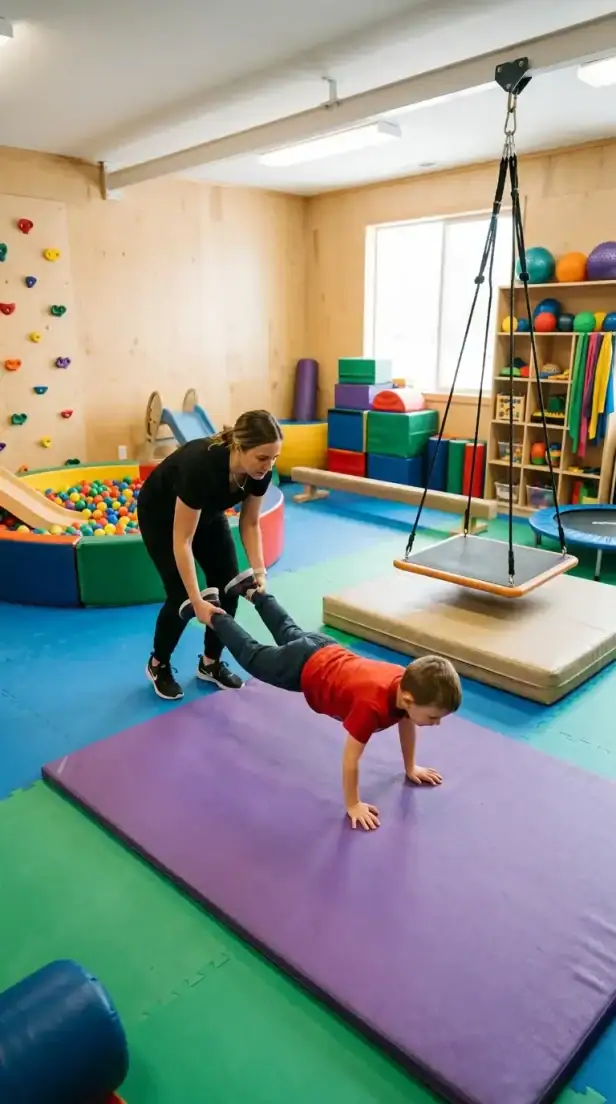
Wheelbarrow walking strengthens the arms, shoulders, and core while also building upper body stability. Hold your child by their ankles while they walk on their hands across the floor. Their body should remain straight like a plank. Start with short distances and increase as strength improves. This exercise is excellent for building the shoulder stability needed for fine motor tasks like writing and cutting. It also provides proprioceptive input, which can be calming for children with sensory needs.
4. Plank Pose
The plank pose is a classic core-strengthening exercise that targets the entire abdominal wall, lower back, and shoulders. Have your child lie on their stomach, then prop themselves up on their forearms and toes. Their body should form a straight line from head to heels. Start by holding the pose for 10 to 15 seconds and gradually increase duration. For younger children or beginners, modify the pose by allowing them to rest on their knees instead of their toes. Make it fun by placing a small toy just out of reach to encourage them to hold the pose longer.
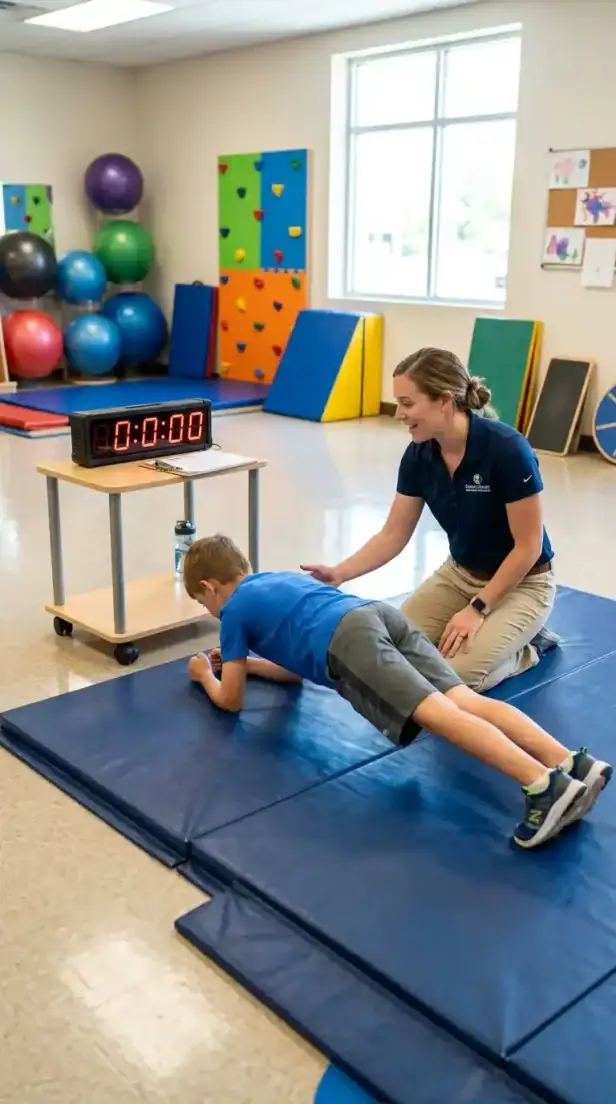
5. Crunches with a Twist
Basic crunches strengthen the rectus abdominis, while adding a twist engages the oblique muscles on the sides of the torso. Have your child lie on their back with knees bent and feet flat on the floor. Ask them to place their hands behind their head. As they curl up, they should twist their torso to bring one elbow toward the opposite knee. Alternate sides. Perform 10 to 15 repetitions. This exercise is especially helpful for children who have difficulty with rotational movements needed for sports and daily activities.
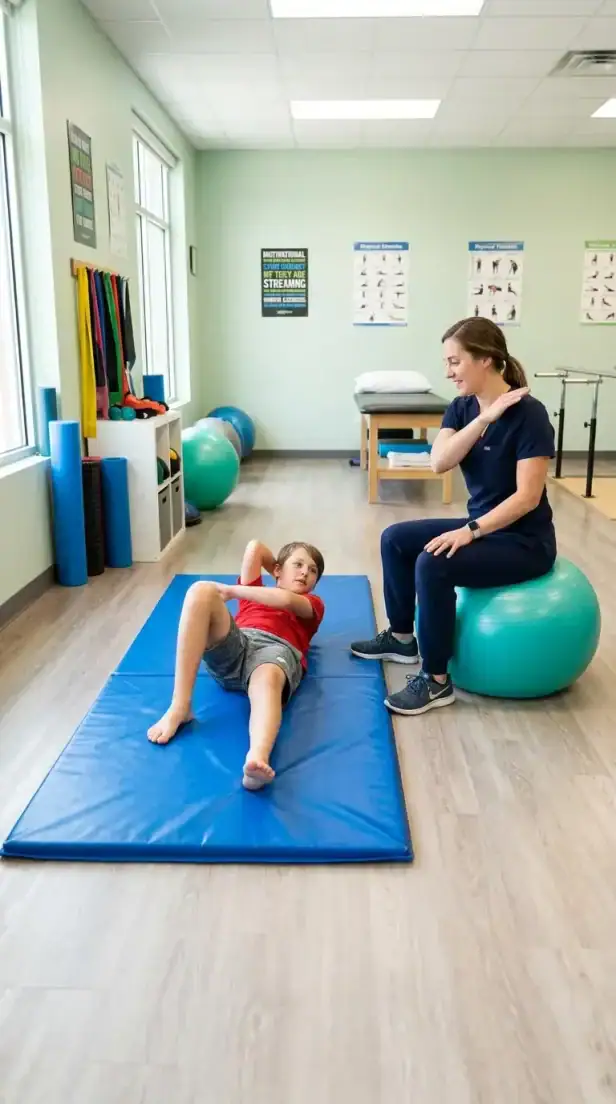
6. Bridge Pose
The bridge pose strengthens the glutes, lower back, and abdominal muscles. Have your child lie on their back with knees bent and feet flat on the floor, hip-width apart. Ask them to press through their heels to lift their hips off the floor, creating a straight line from shoulders to knees. Hold the pose for 5 to 10 seconds, then lower slowly. Repeat 10 to 15 times. To increase difficulty, have them lift one foot off the floor while holding the bridge or place a soft ball between their knees to squeeze during the lift.
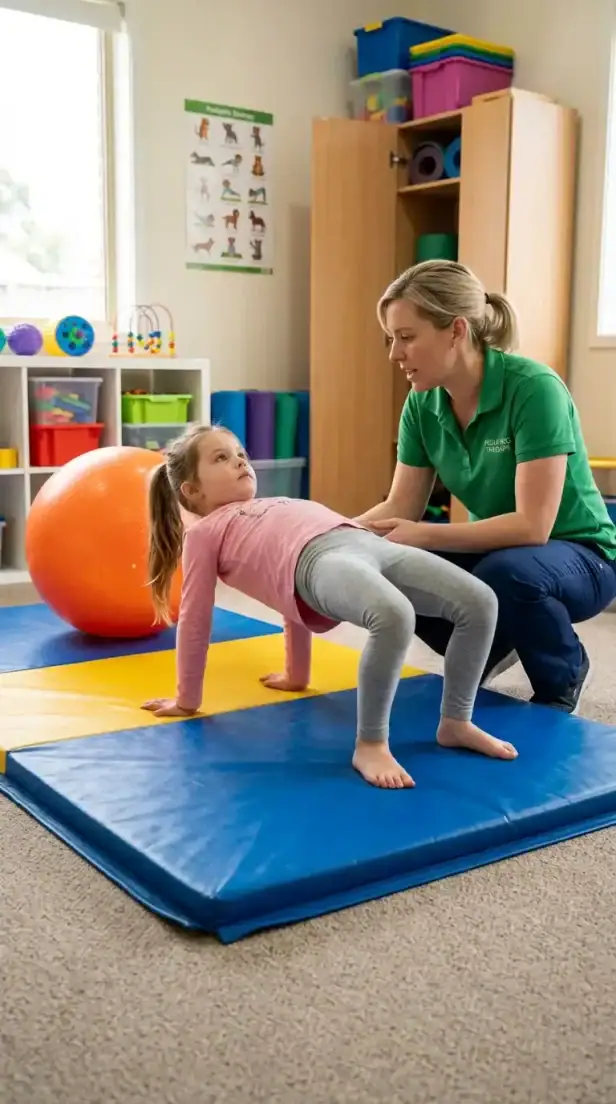
7. Log Rolls
Log rolls are a simple but effective whole-body exercise that engages the core while providing calming vestibular input. Have your child lie flat on their back with arms stretched above their head and legs straight together. Ask them to roll slowly from their back to their tummy and back again, keeping their body as straight as a log. Perform 5 to 10 rolls in each direction. This exercise strengthens the deep abdominal muscles that stabilize the spine and improves body awareness. It is also very calming for children who need sensory regulation.
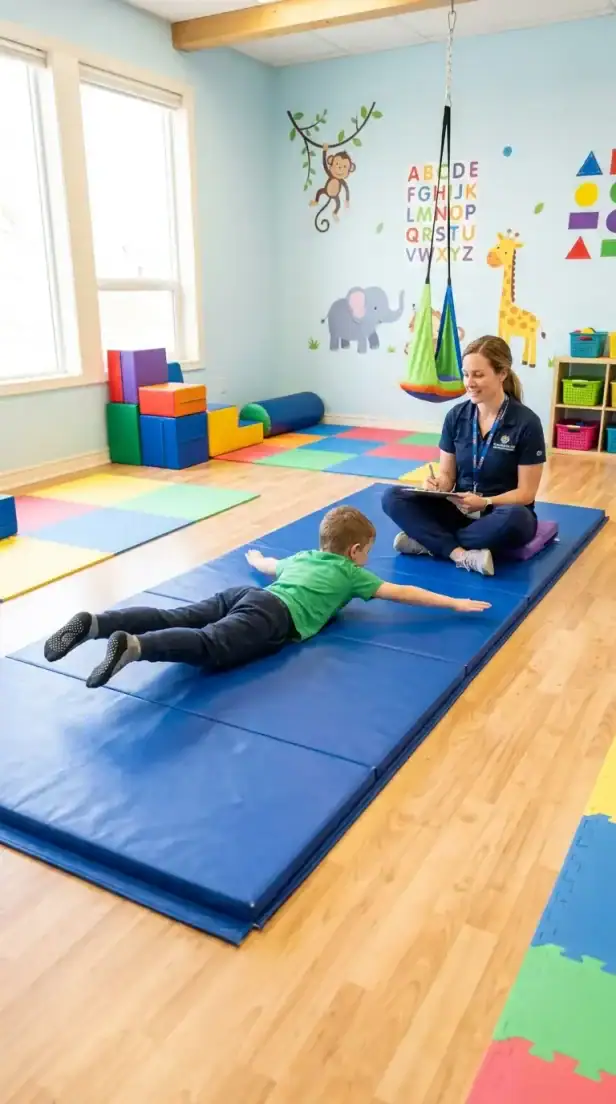
8. Sitting on an Exercise Ball
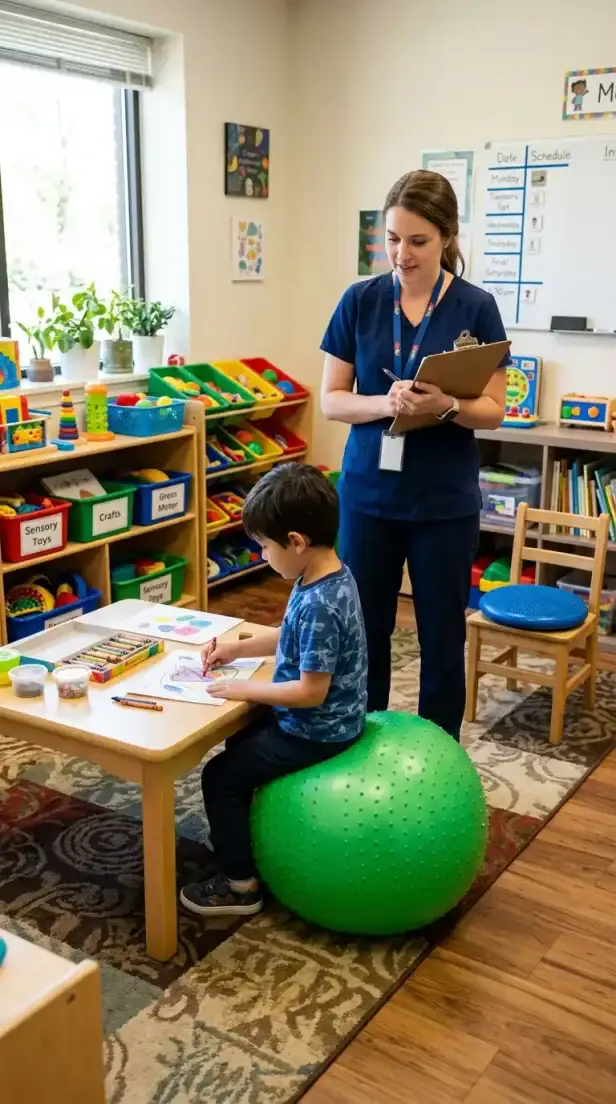
Using an exercise ball as a chair engages the core muscles constantly as the child works to maintain balance. Have your child sit on a therapy ball at a desk or table while doing homework, drawing, or eating a snack. Their feet should be flat on the floor. The unstable surface forces the abdominal and back muscles to activate continuously. Start with 5 to 10 minutes and gradually increase duration. This is especially beneficial for children who have difficulty sitting still, as the gentle movement can be organizing for the sensory system.
9. Scooter Board Pull
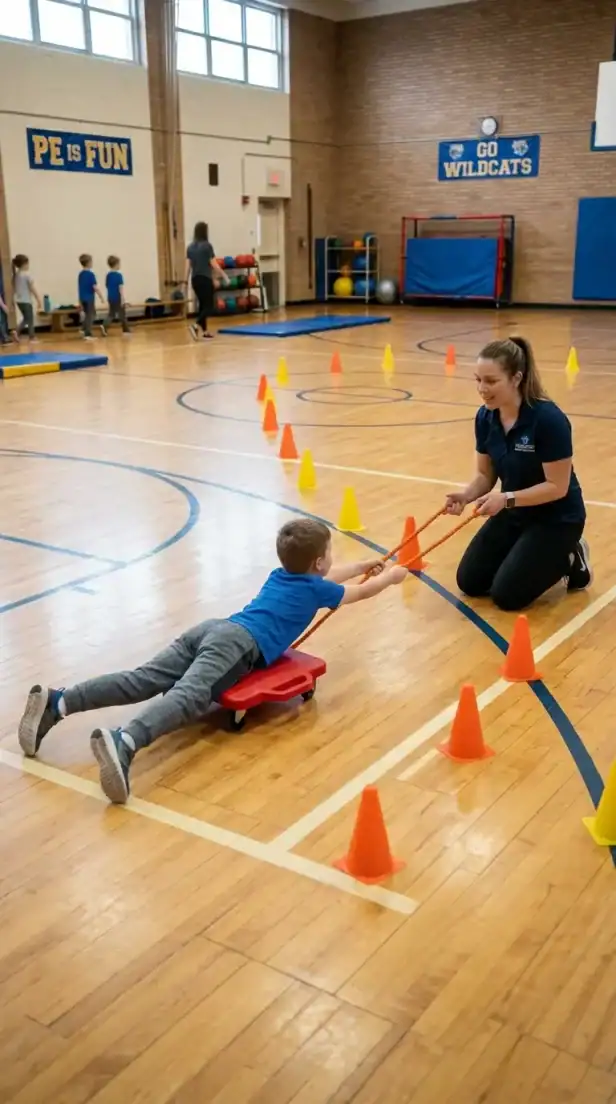
The scooter board pull strengthens the core, arms, and shoulders while also being highly motivating for children. Have your child lie on their stomach on a scooter board. Attach a rope to the front of the scooter board. Ask the child to pull themselves forward using only their arms while keeping their legs straight and lifted slightly off the floor. The core must work hard to stabilize the body while the arms pull. Perform for short distances across the room. This exercise also provides excellent proprioceptive input.
10. Bird Dog Pose
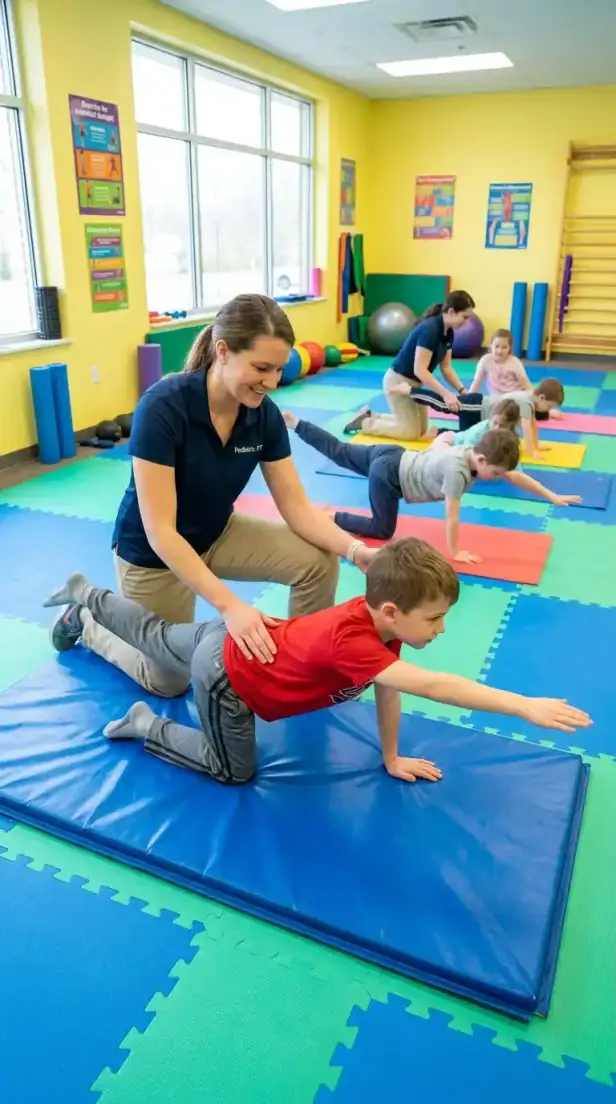
The bird dog pose improves balance and strengthens the entire posterior chain, including the lower back, glutes, and shoulders. Have your child start on their hands and knees with their back flat. Ask them to extend one arm forward and the opposite leg backward simultaneously, keeping their hips level. Hold for 3 to 5 seconds, then return to the starting position. Alternate sides. Perform 10 to 15 repetitions on each side. This exercise challenges coordination and stability and is excellent for children who have difficulty with cross-lateral movements.
Conclusion
Core strength is essential for a child’s ability to sit upright, focus, write, play sports, and move with coordination and confidence. For children with low muscle tone, developmental delays, or sensory processing challenges, specific core-strengthening exercises can make a profound difference in their daily functioning. These ten exercises—animal walks, Superman pose, wheelbarrow walking, plank pose, crunches with a twist, bridge pose, log rolls, sitting on an exercise ball, scooter board pull, and bird dog pose—are fun, engaging, and easy to incorporate into home or therapy routines. Always consult with an occupational therapist before starting a new exercise program, and encourage consistency and positive reinforcement to keep children motivated. With regular practice, these exercises can help build the strong foundation every child needs to thrive.