9 Money Management Activities Occupational Therapy
Money management is a critical life skill that enables independence, self-sufficiency, and participation in the community. For individuals with cognitive impairments, developmental disabilities, traumatic brain injuries, dementia, or mental health conditions, managing money can be challenging. Occupational therapy addresses these challenges by breaking down money management into teachable, achievable skills. From coin identification and counting to budgeting, making change, and using digital payment systems, these nine money management activities help clients build the financial competence they need for daily living.
1. Coin Identification and Sorting
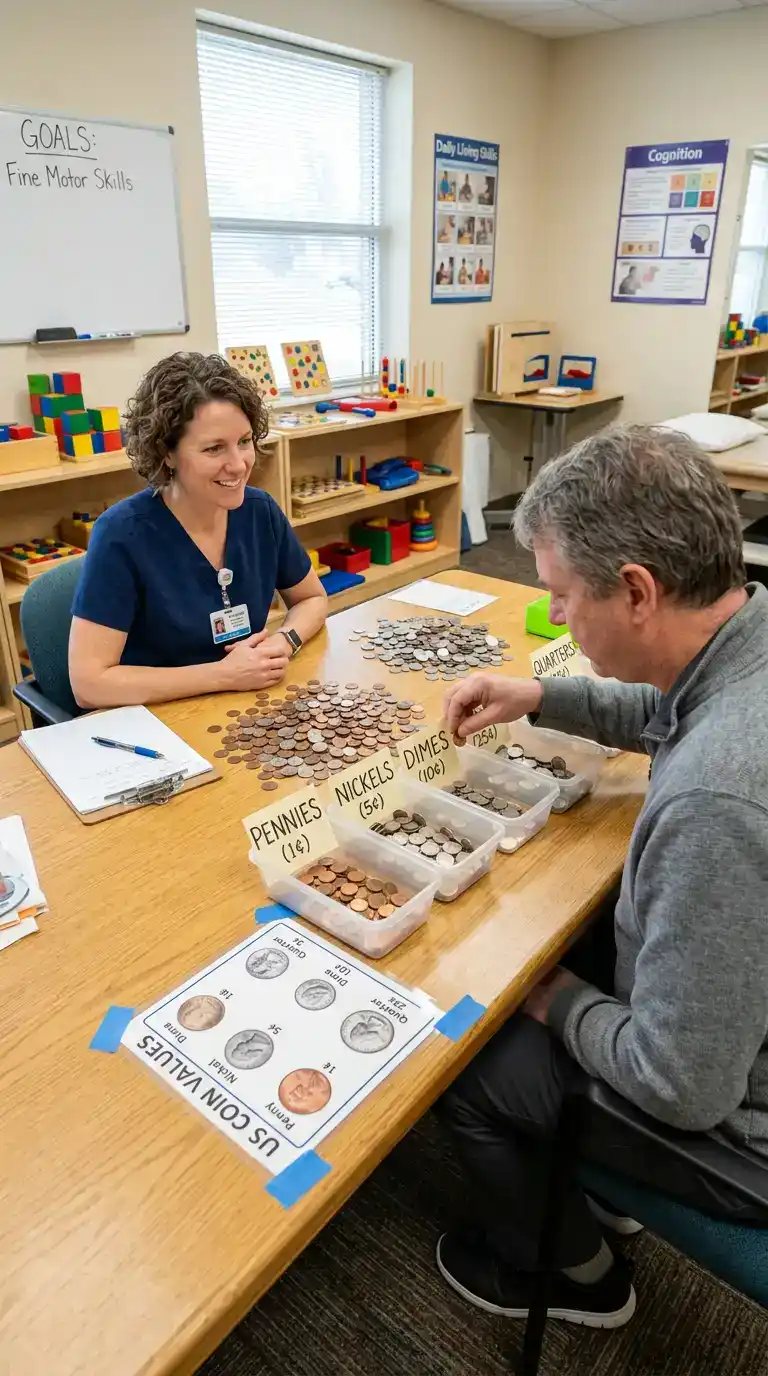
Before individuals can use money, they must be able to identify it. This activity builds visual discrimination and memory skills. Provide a collection of real or realistic play coins: pennies, nickels, dimes, and quarters. Have the client sort them into separate containers by type. For added challenge, use coins of different eras or from different countries. Ask the client to name each coin and state its value. This foundational skill is essential for all other money management tasks.
2. Counting Mixed Coins
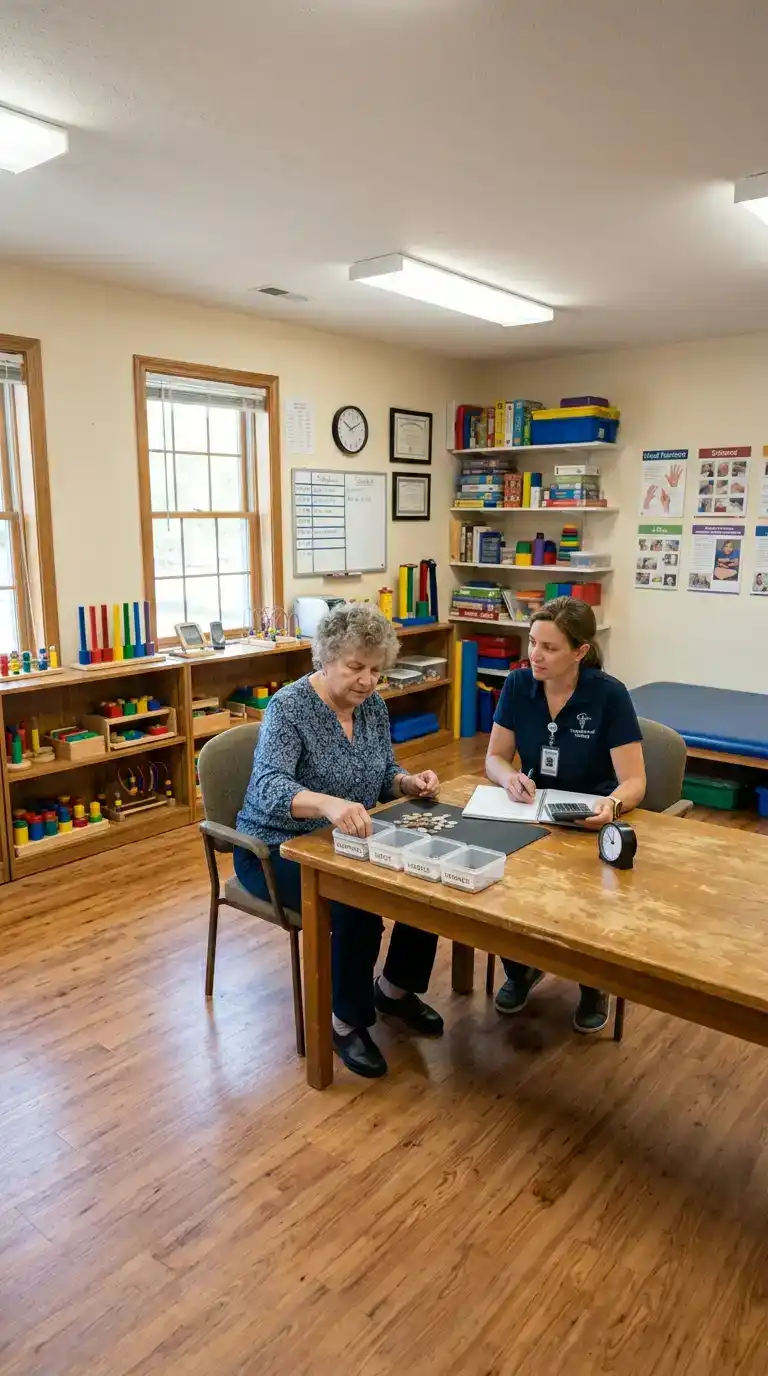
Once a client can identify coins, the next step is counting their total value. Provide a collection of mixed coins and ask the client to count the total amount. Start with small totals under one dollar, then progress to larger amounts. Use real coins or high-quality replicas. For clients with visual impairments, use large-print or tactile coins. This activity builds addition skills, working memory, and attention to detail.
3. Making Exact Change
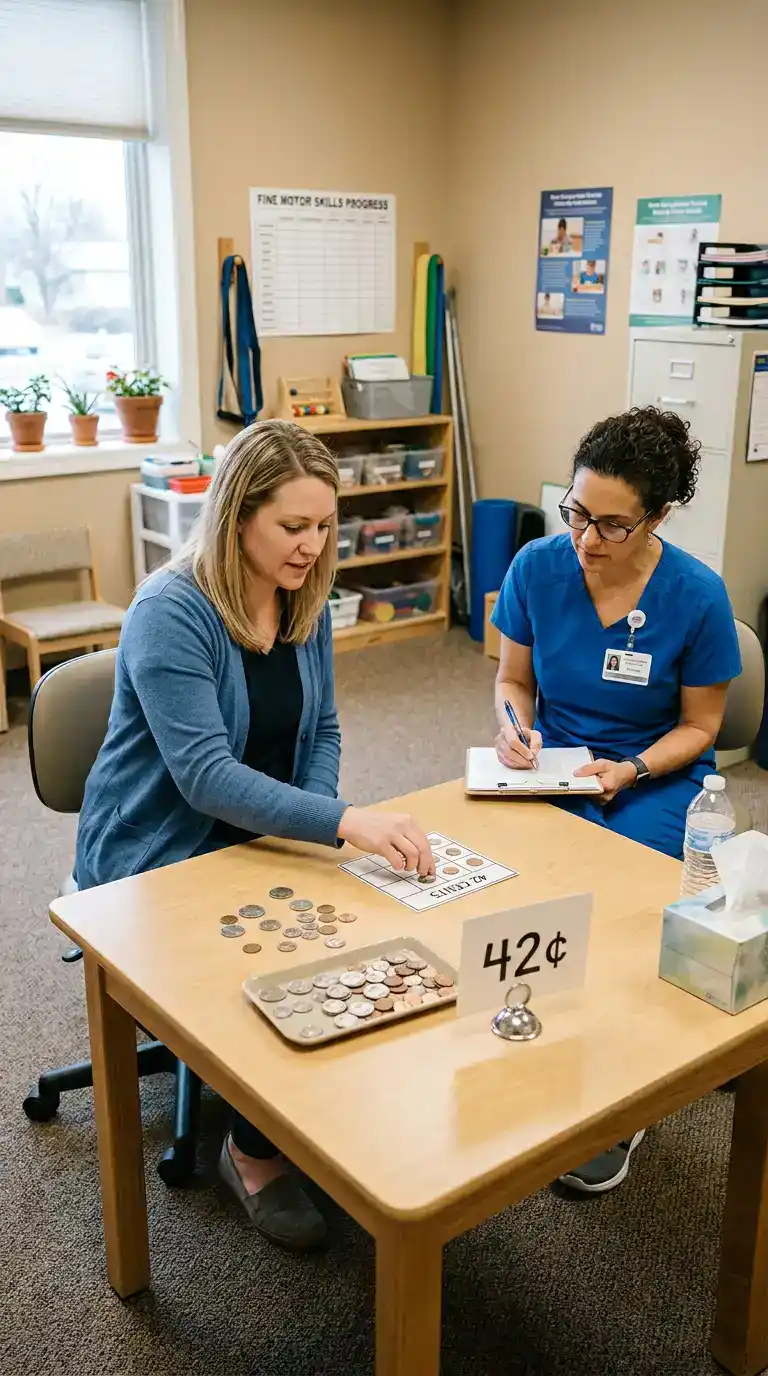
This activity teaches clients to select the correct coins to match a specific amount. Present a price tag or state an amount, such as 37 cents. Ask the client to provide the exact change using coins. Provide a variety of coins and allow the client to find multiple solutions. For example, 37 cents can be made with one quarter, one dime, and two pennies, or three dimes and seven pennies. This builds problem-solving, flexibility, and number sense.
4. Counting Paper Currency
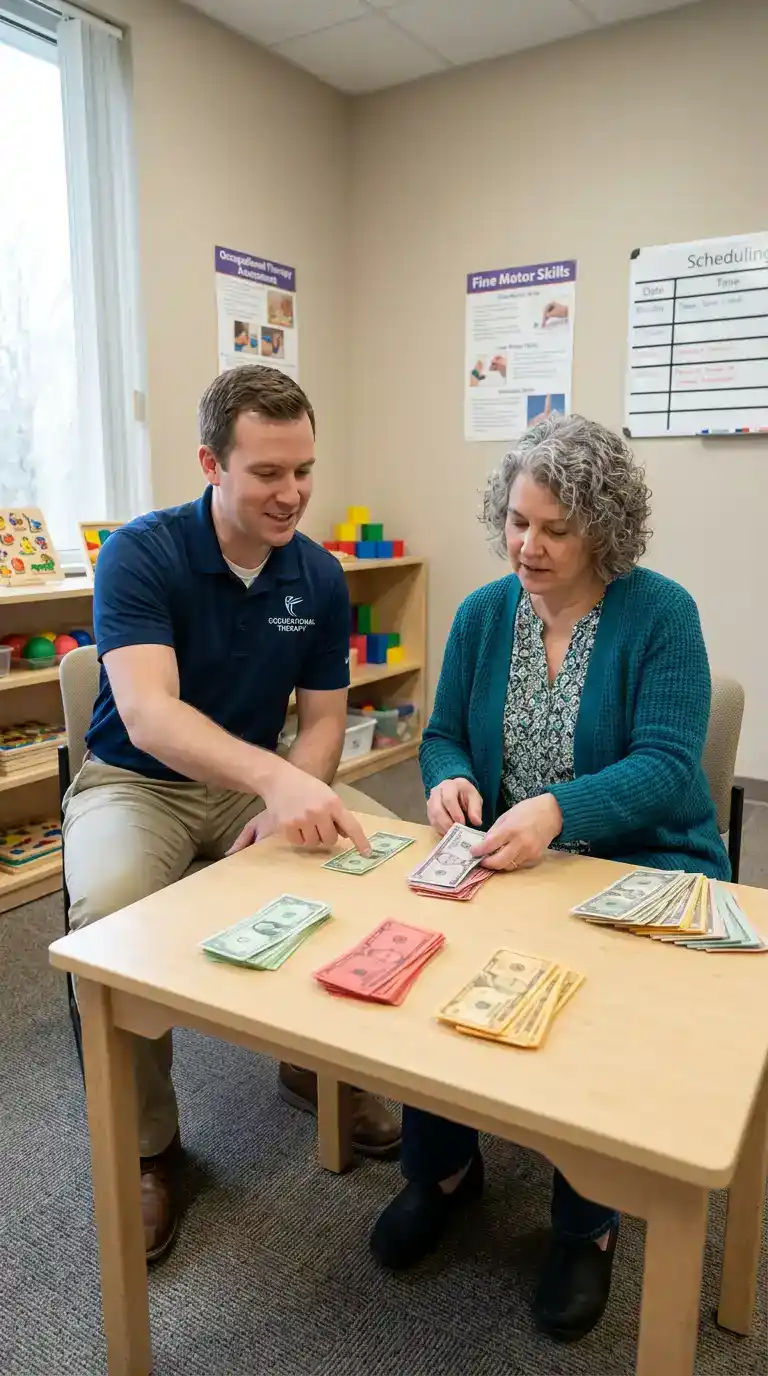
Paper currency adds another layer of complexity, including bill identification and skip counting by ones, fives, tens, twenties, fifties, and hundreds. Provide a stack of real or realistic play bills. Ask the client to sort them by denomination, then count a stack of mixed bills to find the total value. For clients with visual impairments, use bills of different sizes or tactile markers. This activity builds skip counting, visual scanning, and attention.
5. Paying for Purchases
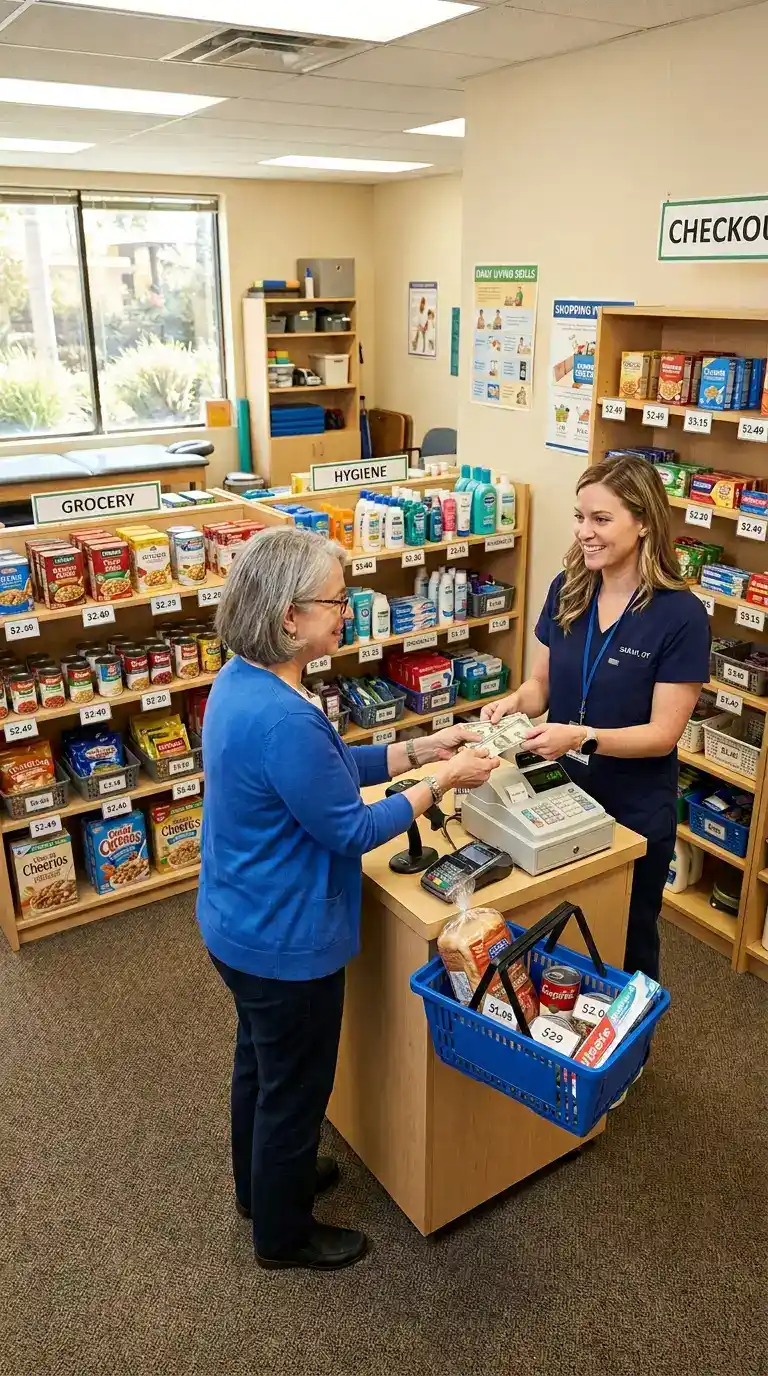
This activity simulates a real-world transaction. Provide a collection of items with price tags, such as grocery items, school supplies, or clothing. Give the client a set amount of money in coins and bills. Ask the client to select an item, count the cost, and hand over the correct amount. The therapist acts as the cashier. For higher-level clients, add sales tax or ask for a specific bill larger than the purchase amount to practice receiving change.
6. Calculating and Receiving Change
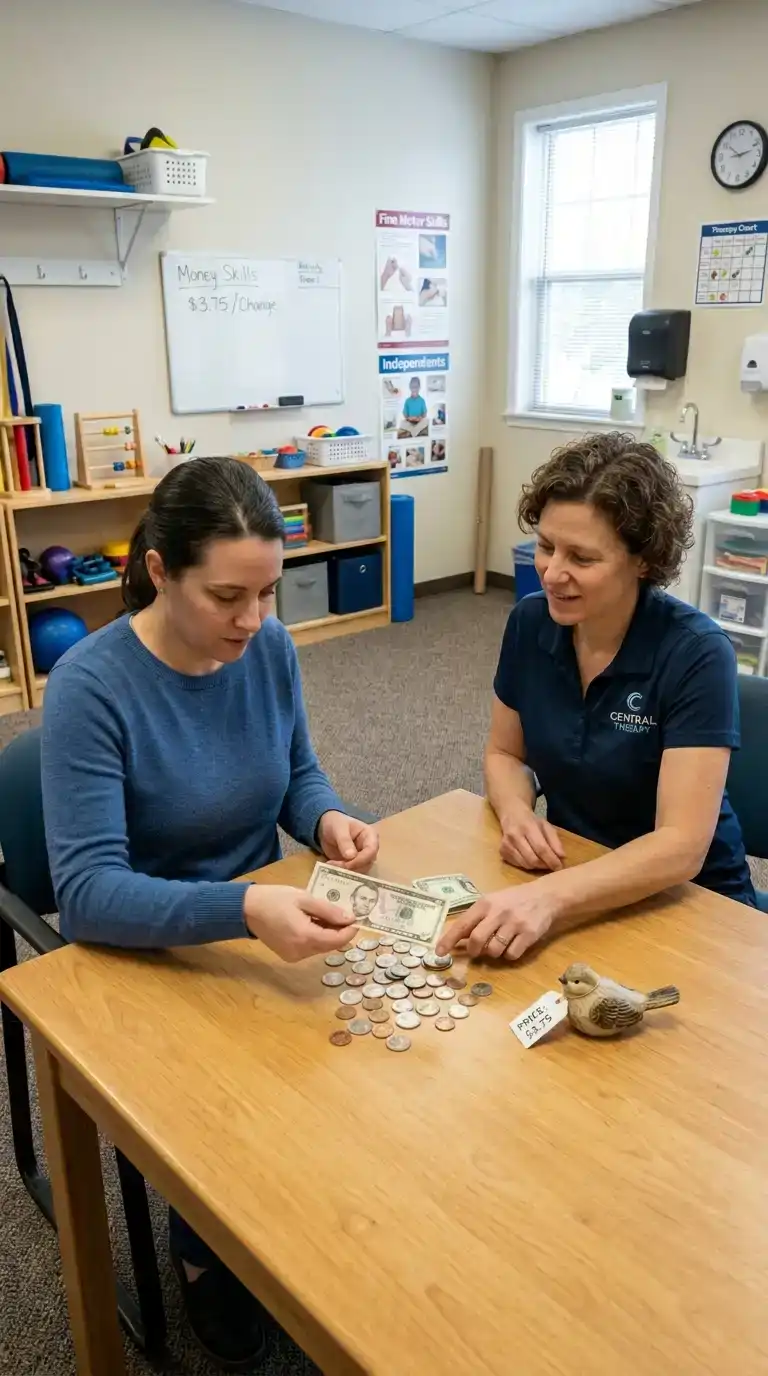
Making change requires subtraction, mental math, and understanding of place value. This activity can be done with real money or with paper and pencil first, then with actual coins and bills. Present a purchase amount and the amount the client pays with. Ask the client to calculate the change due. For higher-level clients, ask them to count back the change as a cashier would. This skill is essential for independent shopping.
7. Creating and Following a Budget
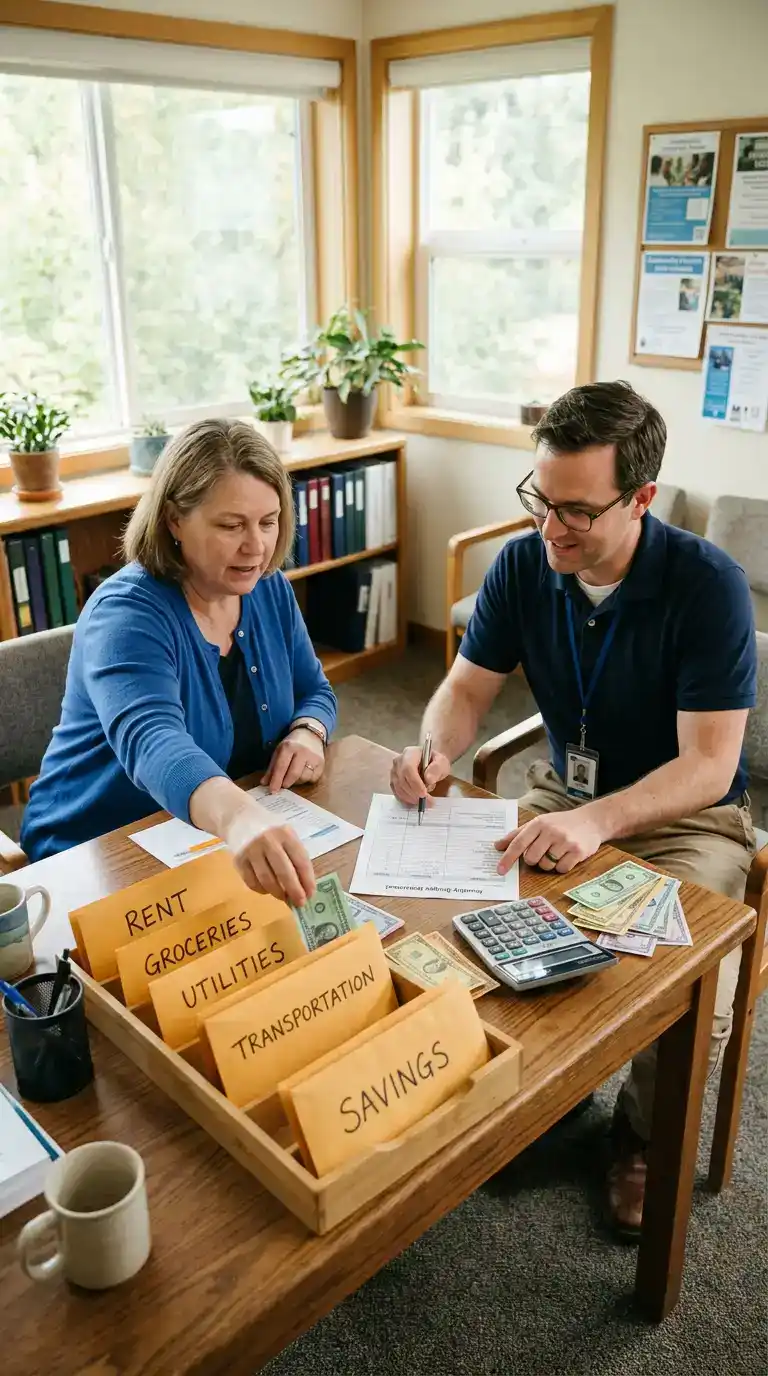
Budgeting is a higher-level money management skill that requires planning, organization, and impulse control. Provide a sample monthly budget worksheet with categories for rent, utilities, groceries, transportation, entertainment, and savings. Give the client a monthly income amount. Ask the client to allocate money to each category. For clients with executive function deficits, use pictures or simplified categories. This activity builds planning, prioritization, and self-regulation.
8. Grocery Shopping on a Budget
This activity combines budgeting with actual shopping. Provide grocery store flyers or a list of items with prices. Give the client a budget, such as 50 dollars. Ask the client to select items from the flyer to purchase without exceeding the budget. For higher-level clients, add sales tax, coupons, or bulk discounts. This activity builds planning, decision-making, inhibition control, and real-world application.

9. Using Digital Payment Systems
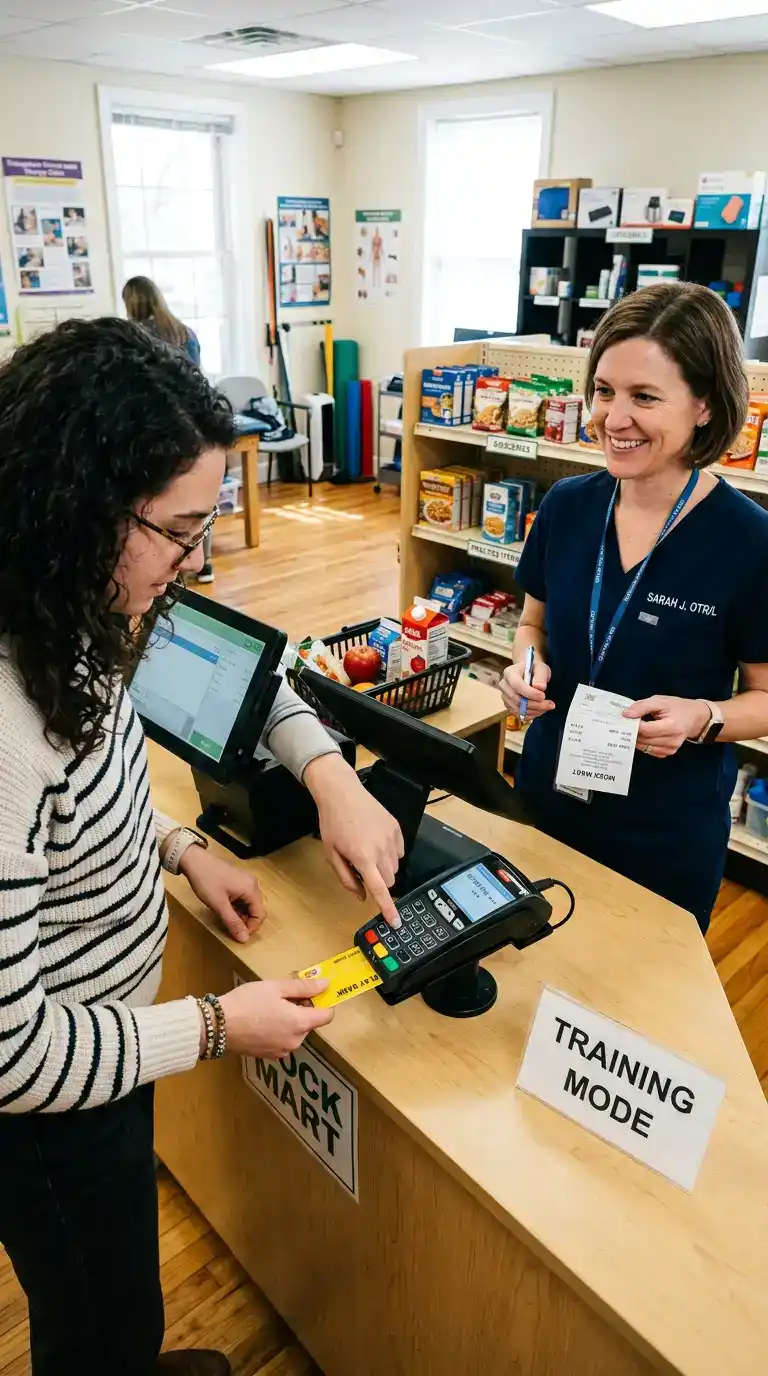
Increasingly, money management involves digital tools. This activity teaches clients to use debit cards, credit cards, mobile payment apps, and online banking. Use play money and a mock point-of-sale system, or use a therapy-only digital simulator. Teach clients to swipe or tap a card, enter a PIN, check a balance, and verify a transaction. For higher-level clients, teach online bill pay and mobile check deposit. This skill is essential for full community participation in the modern world.
Adapting Activities for Different Populations
For clients with dementia or memory impairment, focus on familiar coins and bills. Use large-print labels and repeat activities frequently. For clients with developmental disabilities, use real money rather than play money for greater transfer. Break tasks into very small steps and provide hand-over-hand assistance. For clients with visual impairments, use tactile coins, enlarged bills, and high-contrast materials. For clients with aphasia or cognitive-communication disorders, use picture-based worksheets and allow pointing instead of verbal responses.
Documenting Progress
Document the client’s accuracy, independence level, and speed. For coin identification, note which coins are consistently correct and which are problematic. For making change, note whether errors are due to calculation difficulty or attention. For budgeting, note whether the client prioritizes needs over wants and whether they can stay within the budget. Use this data to adjust treatment goals and to provide feedback to families and caregivers.
Conclusion
Money management is a cornerstone of independent living. Without these skills, individuals may be vulnerable to financial exploitation, unable to meet basic needs, or dependent on others for daily purchases. Occupational therapy addresses money management through graded, meaningful activities that build from simple coin identification to complex budgeting and digital payments. These nine activities—coin identification, counting mixed coins, making exact change, counting paper currency, paying for purchases, calculating and receiving change, creating and following a budget, grocery shopping on a budget, and using digital payment systems—provide a comprehensive framework for building financial competence. With patience, repetition, and real-world practice, clients can achieve the money management skills they need to live with dignity and independence.