10 Knee Exercises Strengthening Physical Therapy
The knee is one of the largest and most complex joints in the human body, bearing significant weight and enabling walking, running, climbing, and squatting. Knee pain and injuries are common, resulting from arthritis, ligament tears (such as ACL or MCL tears), meniscus injuries, patellofemoral pain syndrome, or post-surgical recovery. Strengthening the muscles around the knee—particularly the quadriceps, hamstrings, glutes, and calves—provides stability, reduces pain, and prevents further injury. Physical therapy is the cornerstone of conservative knee treatment and post-surgical rehabilitation. Here are ten effective knee strengthening exercises used in physical therapy.
1. Quad Sets
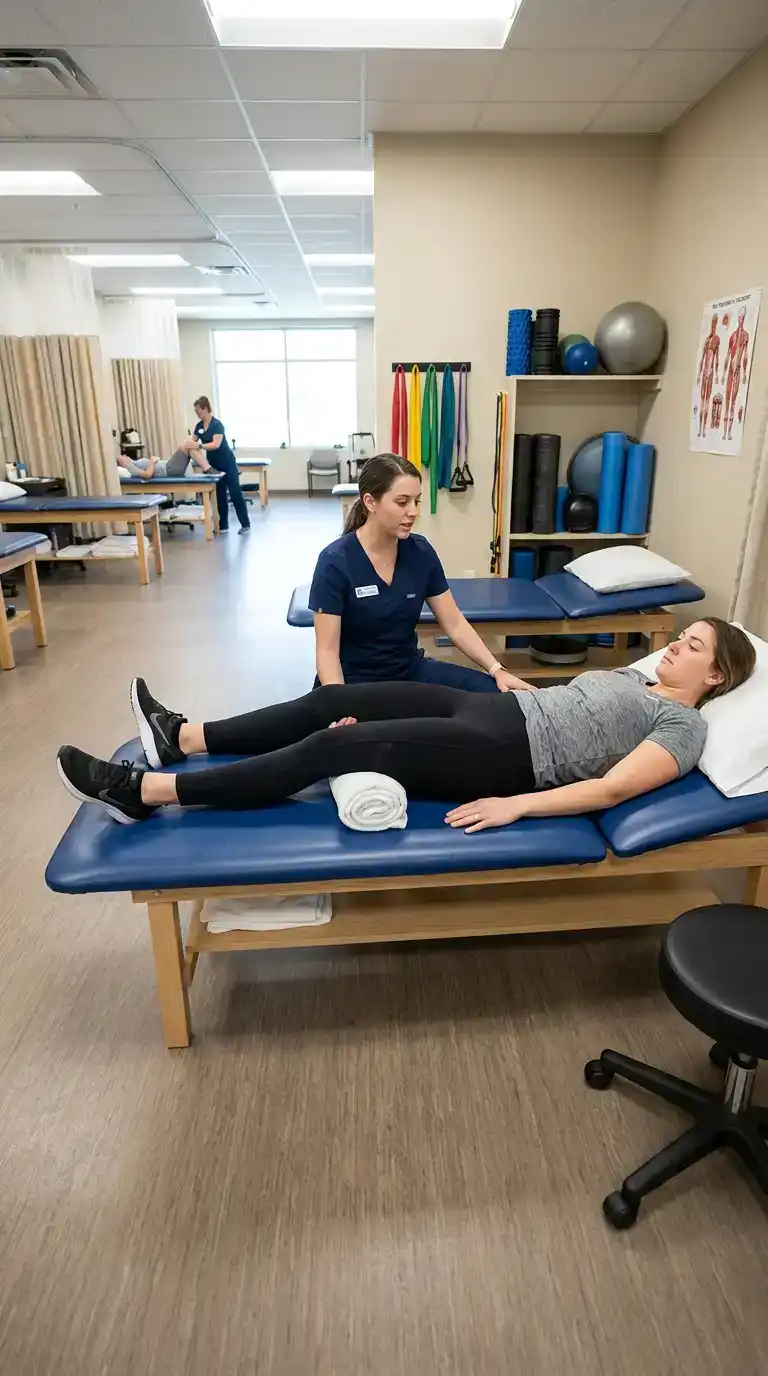
The quad set is often the first exercise prescribed after a knee injury or surgery. It activates the quadriceps muscle without moving the knee joint. Sit or lie on your back with your injured leg straight. Place a small rolled towel under your knee for slight flexion. Tighten your thigh muscle, pressing the back of your knee down into the towel. You should see your kneecap slide slightly upward. Hold for 5 to 10 seconds, then relax completely. Perform 3 sets of 10 to 15 repetitions. This exercise is essential for preventing muscle atrophy after immobilization.
2. Straight Leg Raise
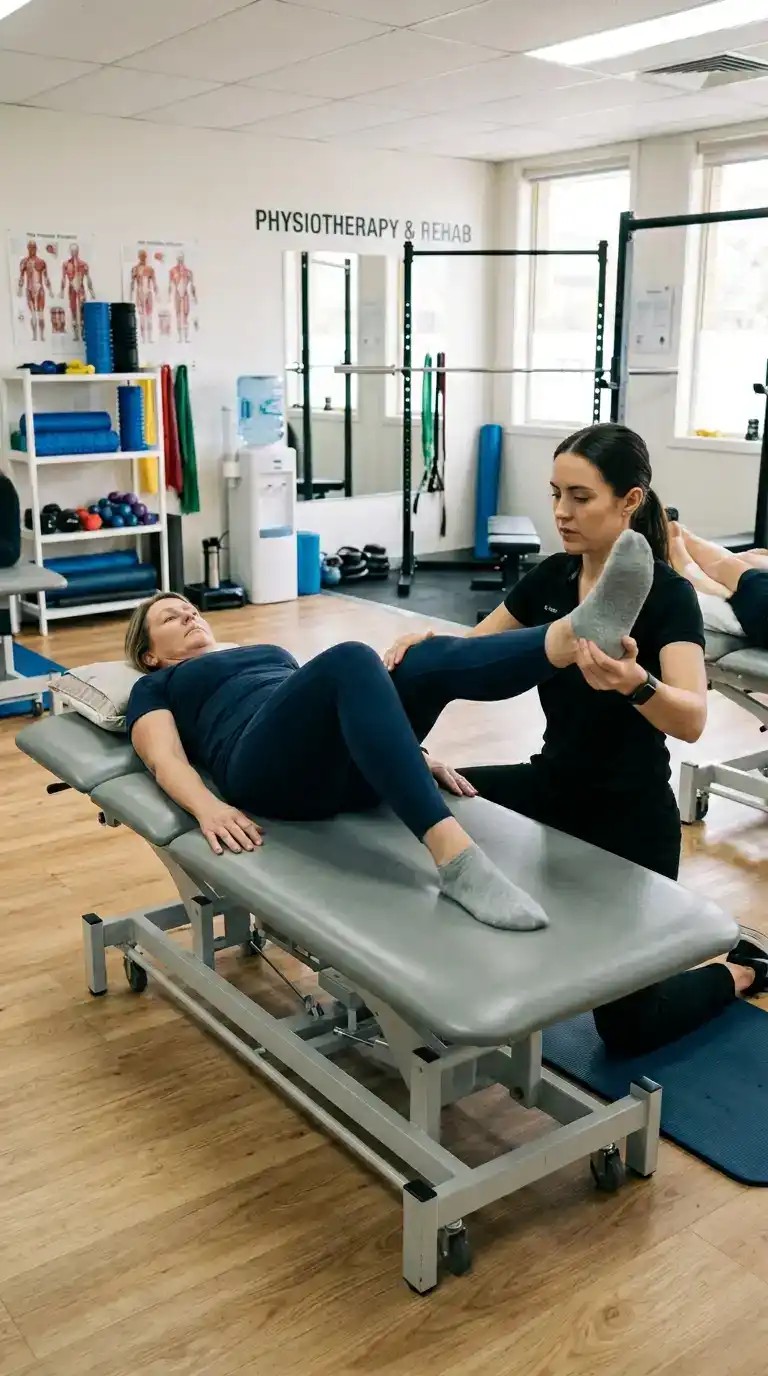
The straight leg raise strengthens the quadriceps and hip flexors without bending the knee, making it safe for many post-operative patients. Lie on your back with your uninjured knee bent and foot flat on the floor. Keep your injured leg straight. Tighten your thigh muscle, then slowly lift your straight leg to the height of your bent knee. Hold for 2 to 3 seconds, then lower slowly. Do not allow your back to arch. Perform 3 sets of 10 to 15 repetitions. Add ankle weights gradually as strength improves.
3. Short Arc Quad
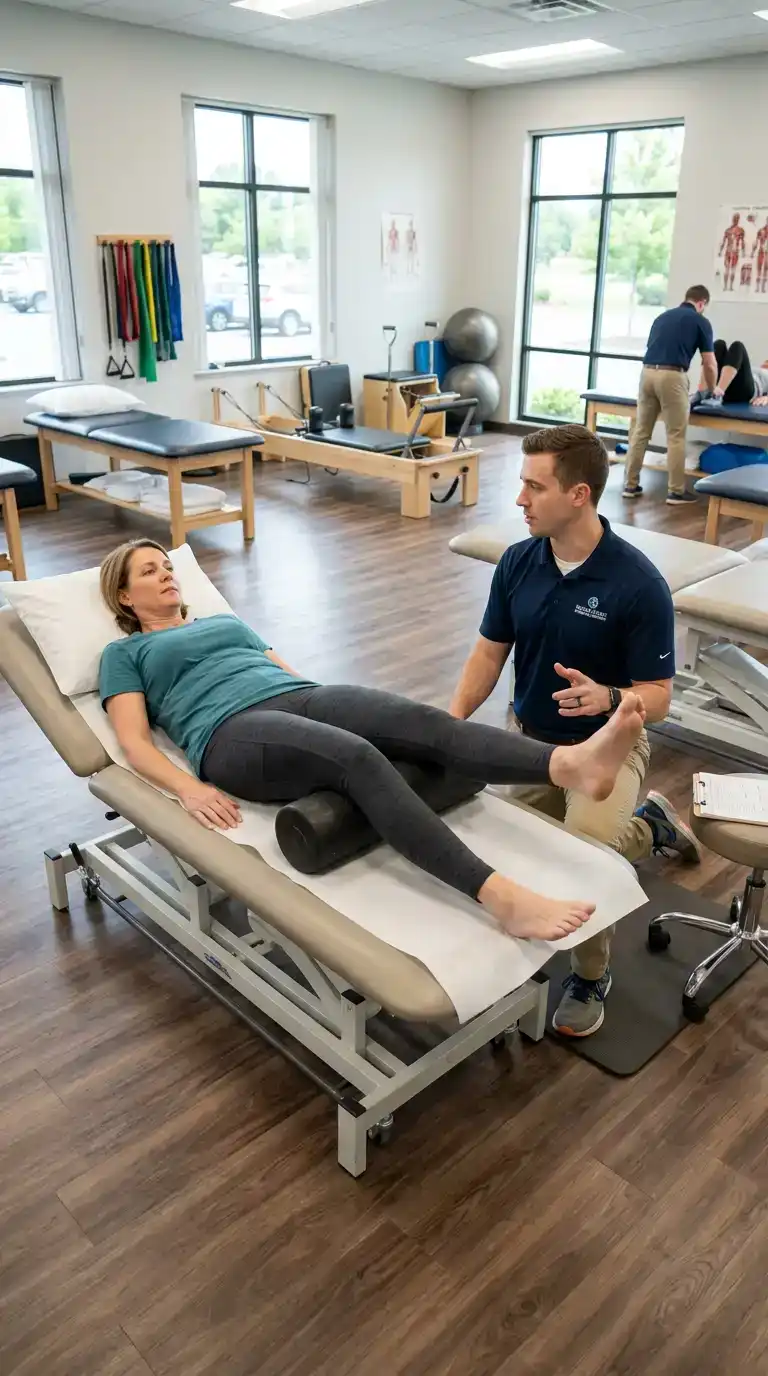
The short arc quad strengthens the quadriceps through the final degrees of extension, which is often the weakest range after injury or surgery. Lie on your back with a rolled towel or a foam roller under your injured knee. Place a small ball or a rolled towel under your ankle for comfort. Straighten your knee by lifting your foot off the table, keeping your knee on the roller. Pause at the top, then lower slowly. Perform 3 sets of 10 to 15 repetitions. This exercise is especially important for restoring the ability to lock the knee fully.
4. Heel Slides
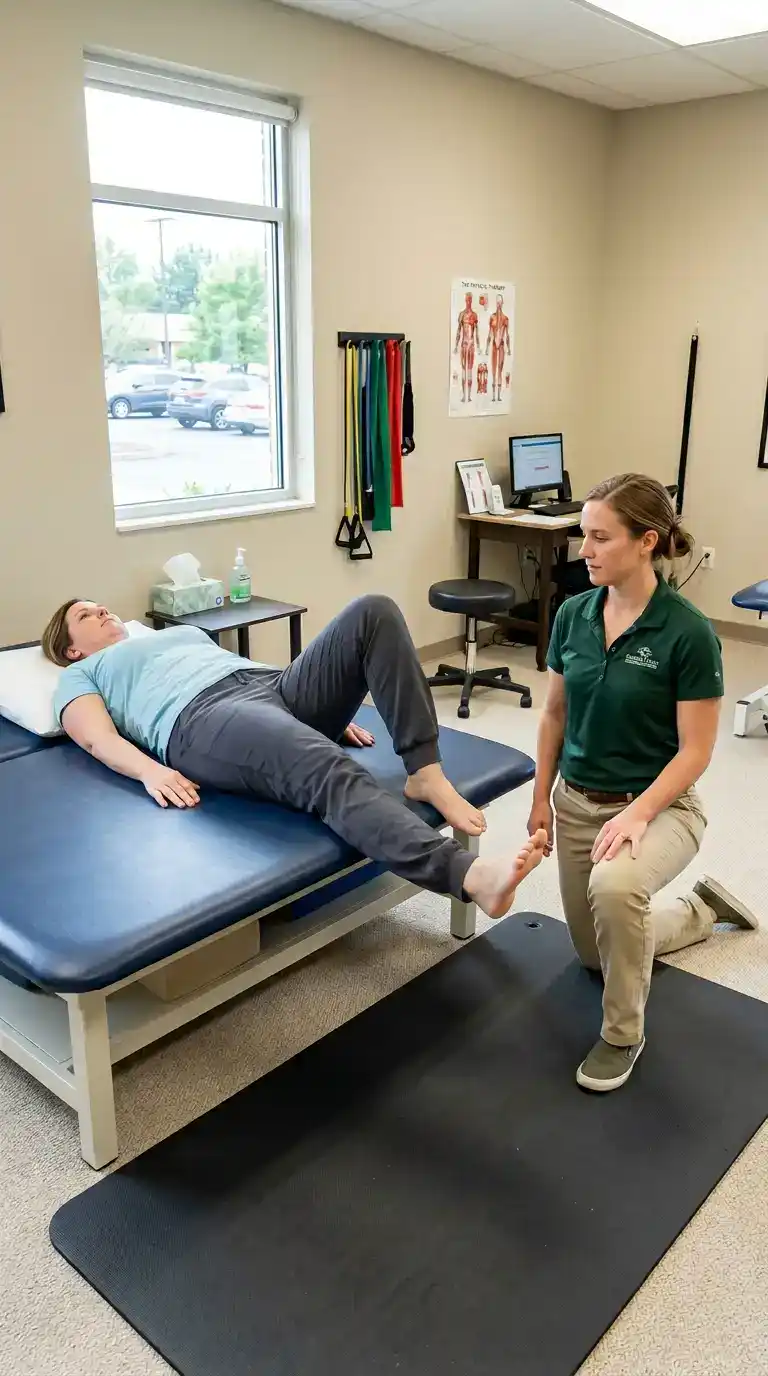
Heel slides improve knee flexion range of motion, which is often limited after injury or surgery. Lie on your back with your legs straight. Slowly slide the heel of your injured leg toward your buttocks, bending your knee as far as comfortable. Hold for 2 to 3 seconds, then slowly slide back to the starting position. Perform 3 sets of 10 to 15 repetitions. Use a towel under your heel to reduce friction. This exercise is essential for restoring the ability to climb stairs, squat, and sit.
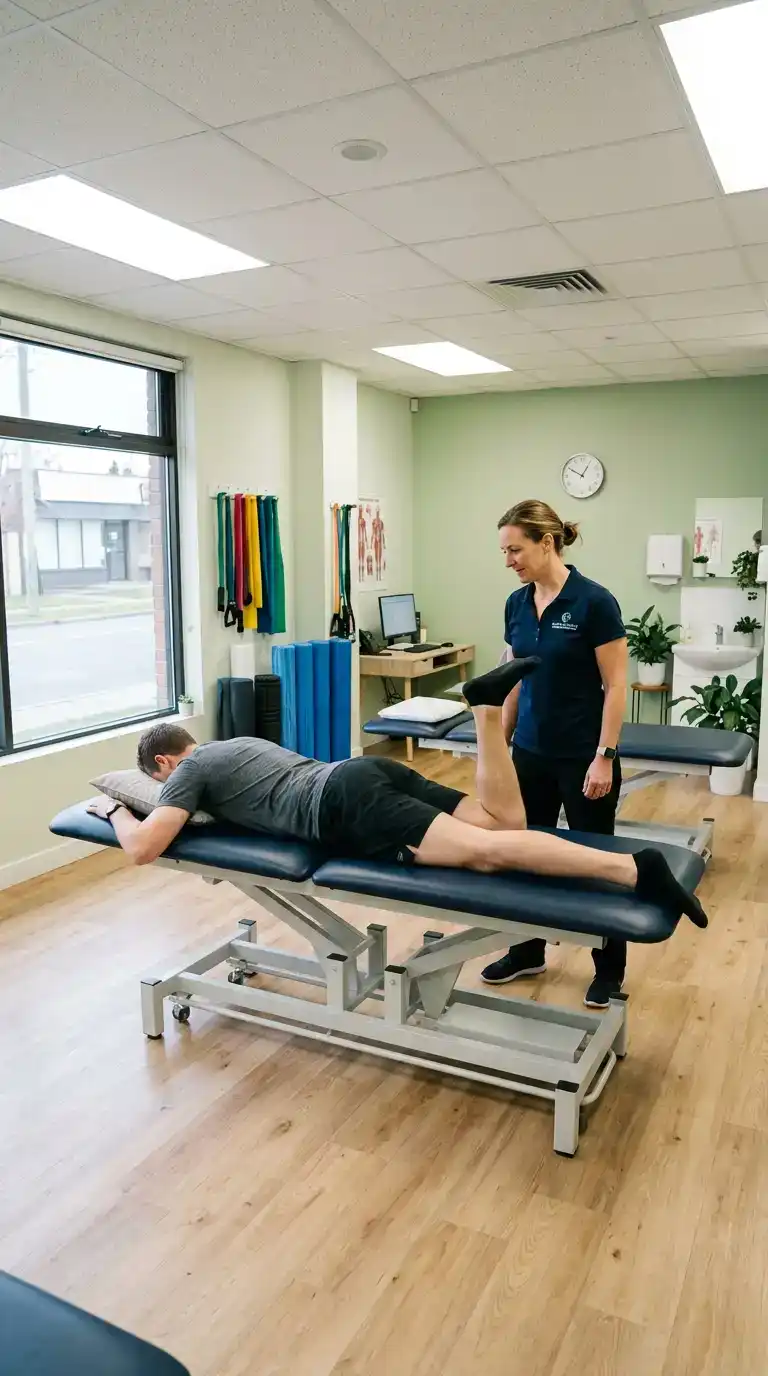
5. Prone Hamstring Curls
Strong hamstrings are essential for knee stability and for preventing ACL injuries. Lie on your stomach with your legs straight. Slowly bend your injured knee, bringing your heel toward your buttocks. Keep your hips pressed into the table. Pause at the top, then lower slowly. Perform 3 sets of 10 to 15 repetitions. Add ankle weights gradually as strength improves. This exercise also improves knee flexion strength needed for running and jumping.
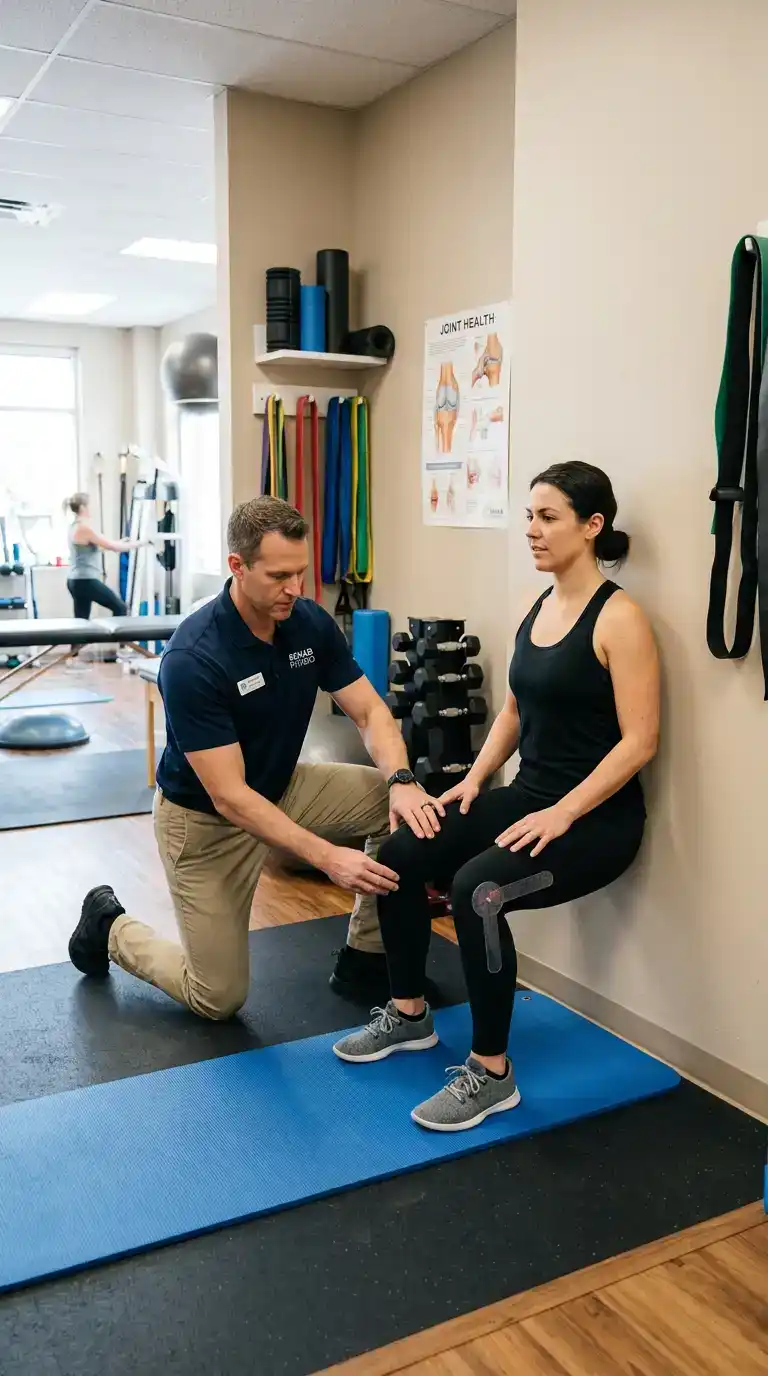
6. Wall Sits
Wall sits build isometric strength in the quadriceps, glutes, and core without joint movement. Stand with your back against a wall, feet shoulder-width apart and about 12 to 18 inches from the wall. Slowly slide your back down the wall until your knees are bent to about 90 degrees. Hold this position for 15 to 30 seconds, then slide back up. Perform 3 sets. This exercise is excellent for building endurance for activities like skiing, hiking, and prolonged squatting.
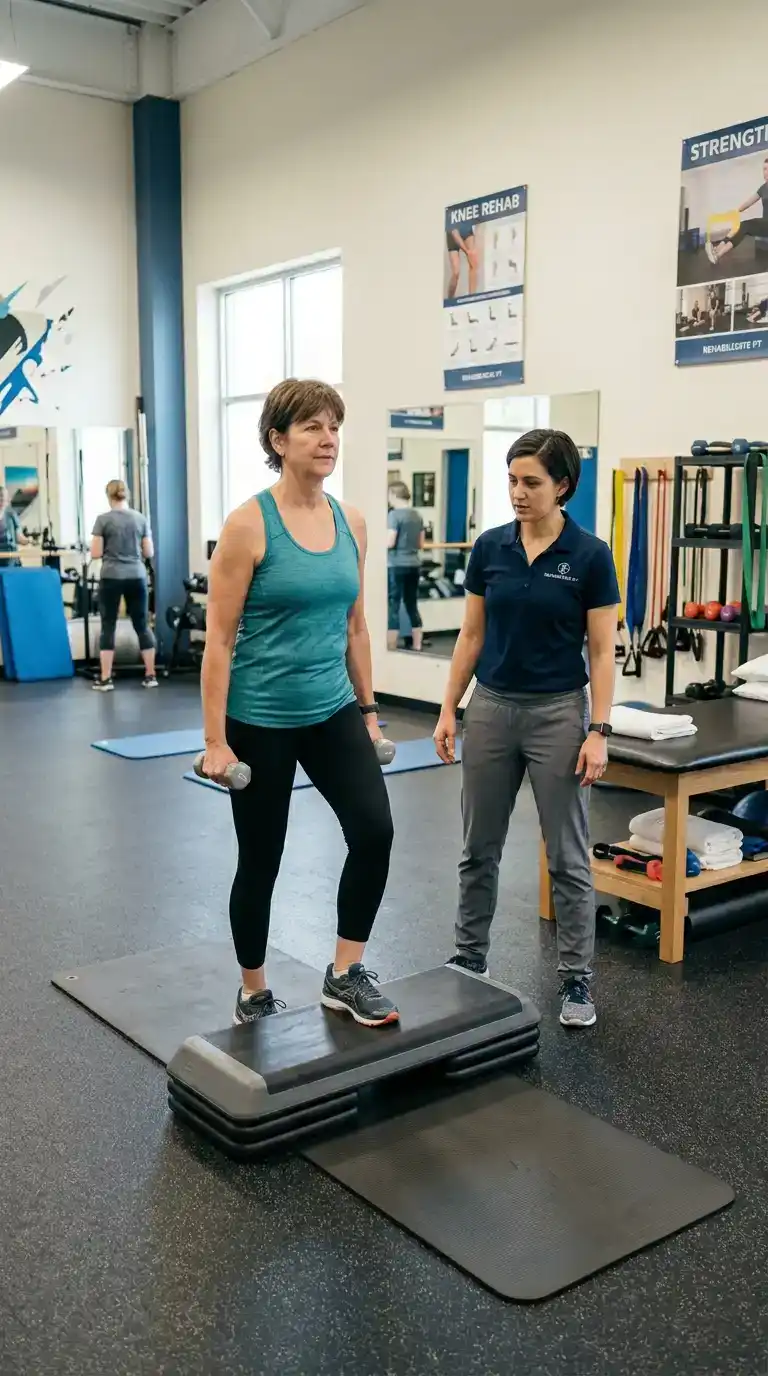
7. Step-Ups
Step-ups build functional strength for climbing stairs, stepping onto curbs, and getting into vehicles. Use a low step or platform about 4 to 6 inches high. Place your injured foot on the step. Step up onto the step, bringing your other foot to meet it. Step back down with the same foot first. Keep your knee aligned over your second toe. Do not let your knee cave inward. Perform 3 sets of 10 to 15 repetitions. As strength improves, increase step height or add hand weights.
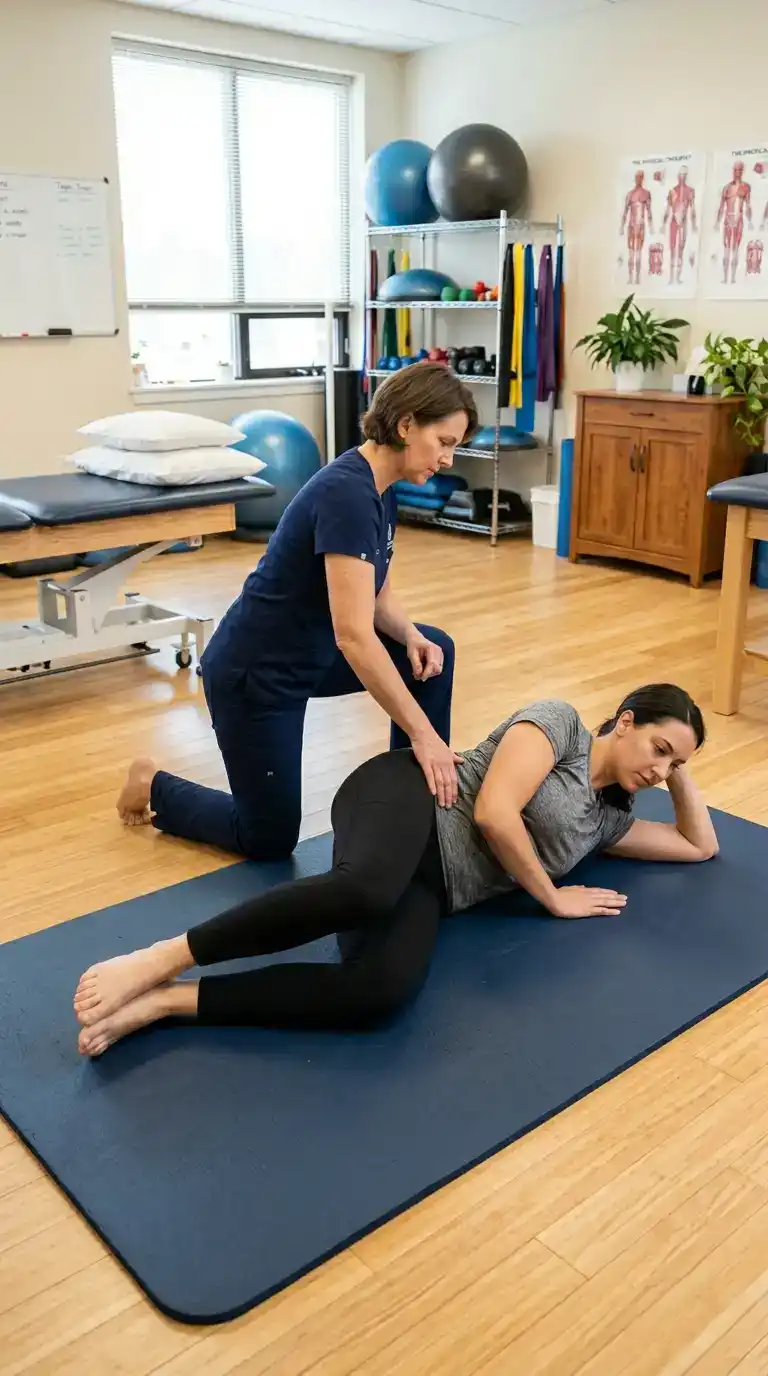
8. Clamshells
Clamshells strengthen the gluteus medius, which stabilizes the hip and knee during weight-bearing activities. Lie on your side with your hips and knees bent to about 45 degrees, feet stacked. Keep your feet touching. Slowly lift your top knee toward the ceiling, keeping your feet together. Do not roll your hips back. Pause at the top, then lower slowly. Perform 3 sets of 10 to 15 repetitions on each side. Weak glutes are a major contributor to knee pain, especially patellofemoral pain syndrome.
9. Calf Raises
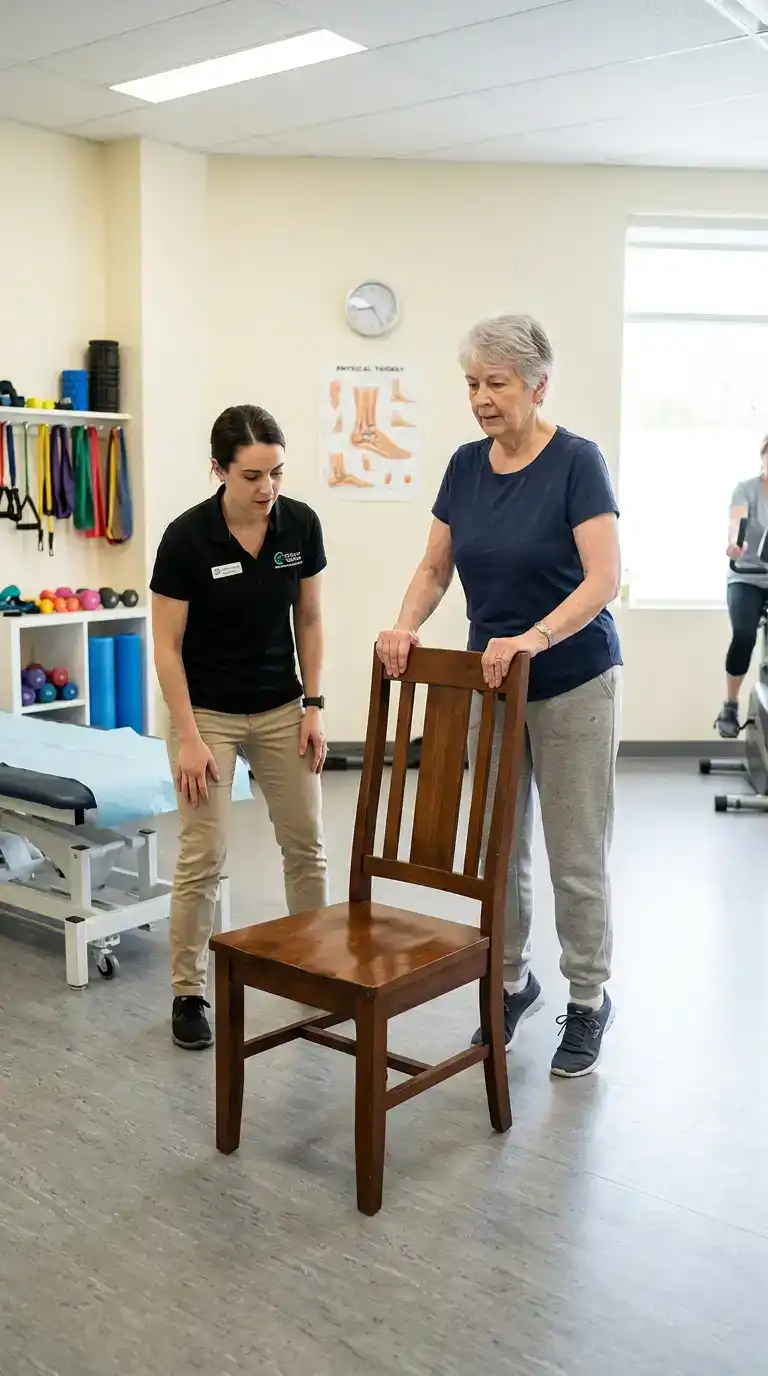
Calf raises strengthen the gastrocnemius and soleus muscles, which support the knee and ankle during walking and running. Stand behind a chair or wall for balance. Rise up onto your toes, lifting your heels off the floor. Hold for 2 seconds, then lower slowly. Perform 3 sets of 10 to 15 repetitions. For increased difficulty, perform single-leg calf raises. Strong calves reduce impact forces transmitted to the knee during gait.
10. Terminal Knee Extension with Resistance Band
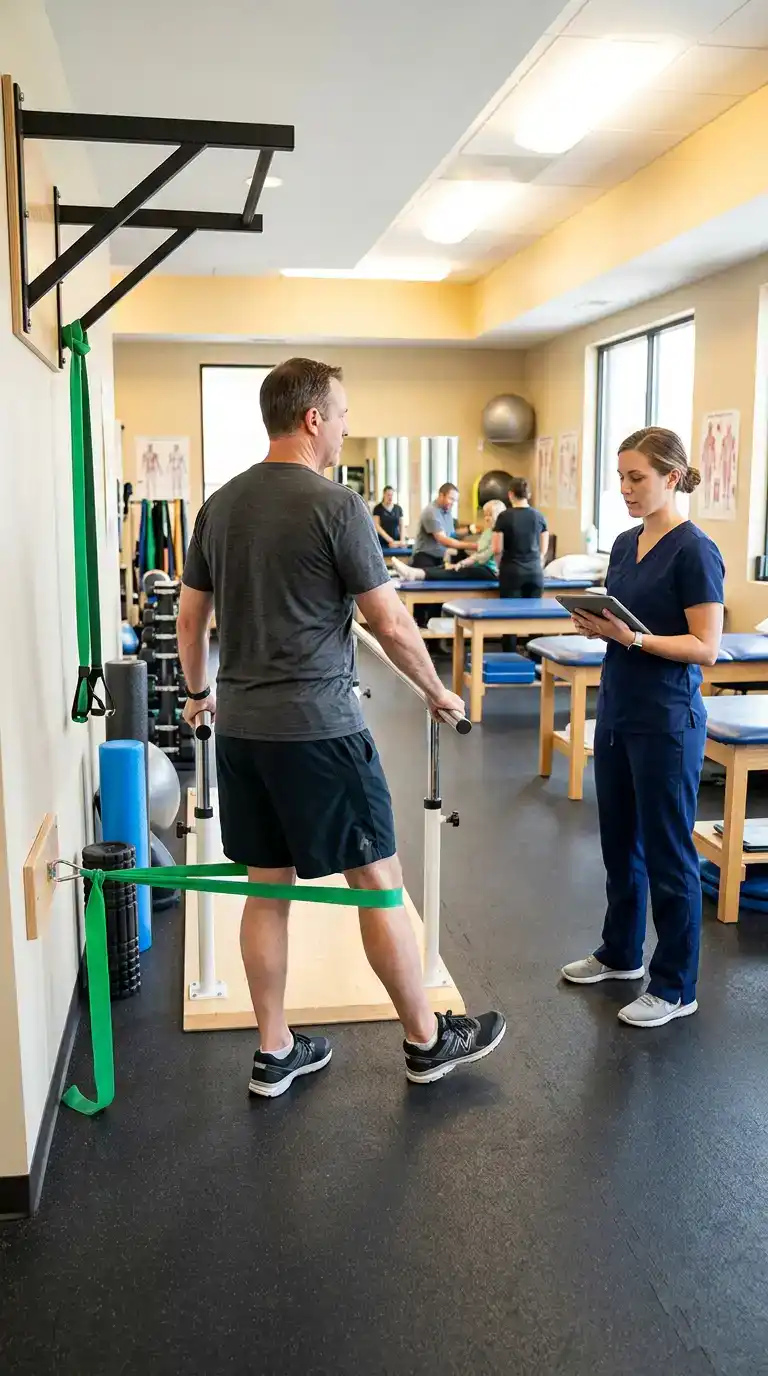
This exercise strengthens the quadriceps through the critical final degrees of extension. Anchor a resistance band around a heavy table leg or a squat rack. Loop the other end around the back of your injured knee while standing facing away from the anchor. Step forward until you feel tension on the band. Slowly straighten your knee against the band’s resistance, fully extending your leg. Pause at the top, then return slowly. Perform 3 sets of 10 to 15 repetitions. This exercise is excellent for sports-specific training and for restoring full extension after injury.
Important Safety Guidelines
Before beginning any knee exercise program, consult with a physical therapist or orthopedic doctor. Different conditions require different approaches. For example, a patellofemoral pain patient needs different exercises than an ACL reconstruction patient. Pain should not exceed 2 out of 10 during exercises. Ice the knee after exercise to reduce inflammation. Progress resistance, repetitions, and sets gradually over several weeks. If you experience sharp pain, giving way, locking, or catching, stop immediately and consult your therapist.
Conclusion
The knee is essential for nearly every lower body movement, from walking and climbing stairs to running and jumping. Weakness in the muscles surrounding the knee leads to instability, pain, and increased risk of injury. Physical therapy offers a path to recovery and prevention through targeted strengthening exercises. These ten exercises—quad sets, straight leg raise, short arc quad, heel slides, prone hamstring curls, wall sits, step-ups, clamshells, calf raises, and terminal knee extension with resistance band—form a comprehensive knee strengthening program. Consistency is key. Perform these exercises daily as prescribed by your therapist, and be patient with your progress. The knee is a complex joint, and building strength takes time. With dedication and proper guidance, you can restore stability, reduce pain, and return to the activities you love.