7 Multi-Step Activities Occupational Therapy Ideas
Multi-step activities are a cornerstone of occupational therapy for individuals who struggle with executive function, sequencing, working memory, attention, and task completion. These activities require the brain to plan, organize, sequence, remember, and execute a series of actions in the correct order. For children and adults with autism, ADHD, traumatic brain injury, stroke, or developmental delays, practicing multi-step tasks builds the cognitive foundation needed for independent living. Here are seven multi-step occupational therapy activities that can be adapted for various skill levels and settings.
1. Making a Sandwich
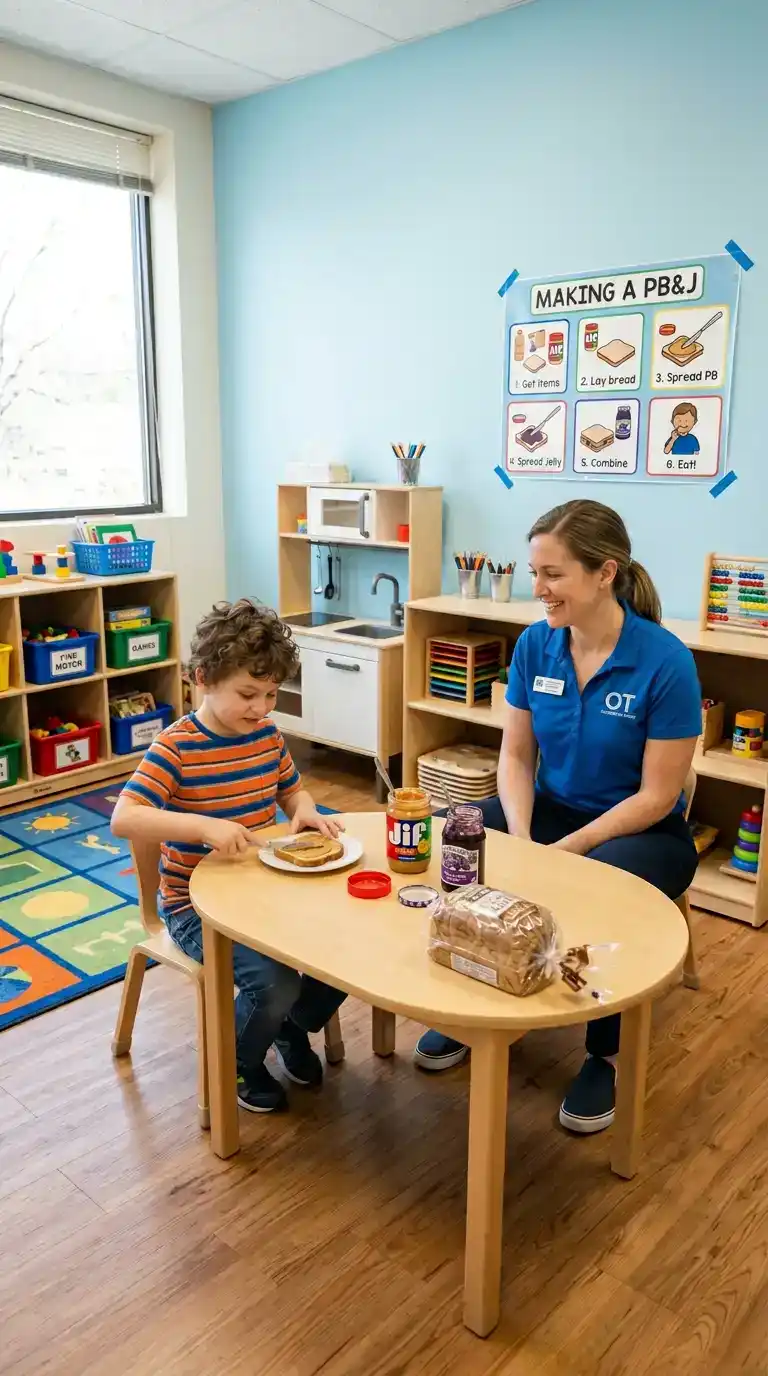
This classic activity requires sequencing, fine motor skills, bilateral coordination, and safety awareness. The individual must gather ingredients (bread, spread, filling), open containers, spread condiments, layer fillings, close the sandwich, and clean up. Break down steps as needed and use visual aids. This task also builds independence in daily living skills.
2. Folding Laundry
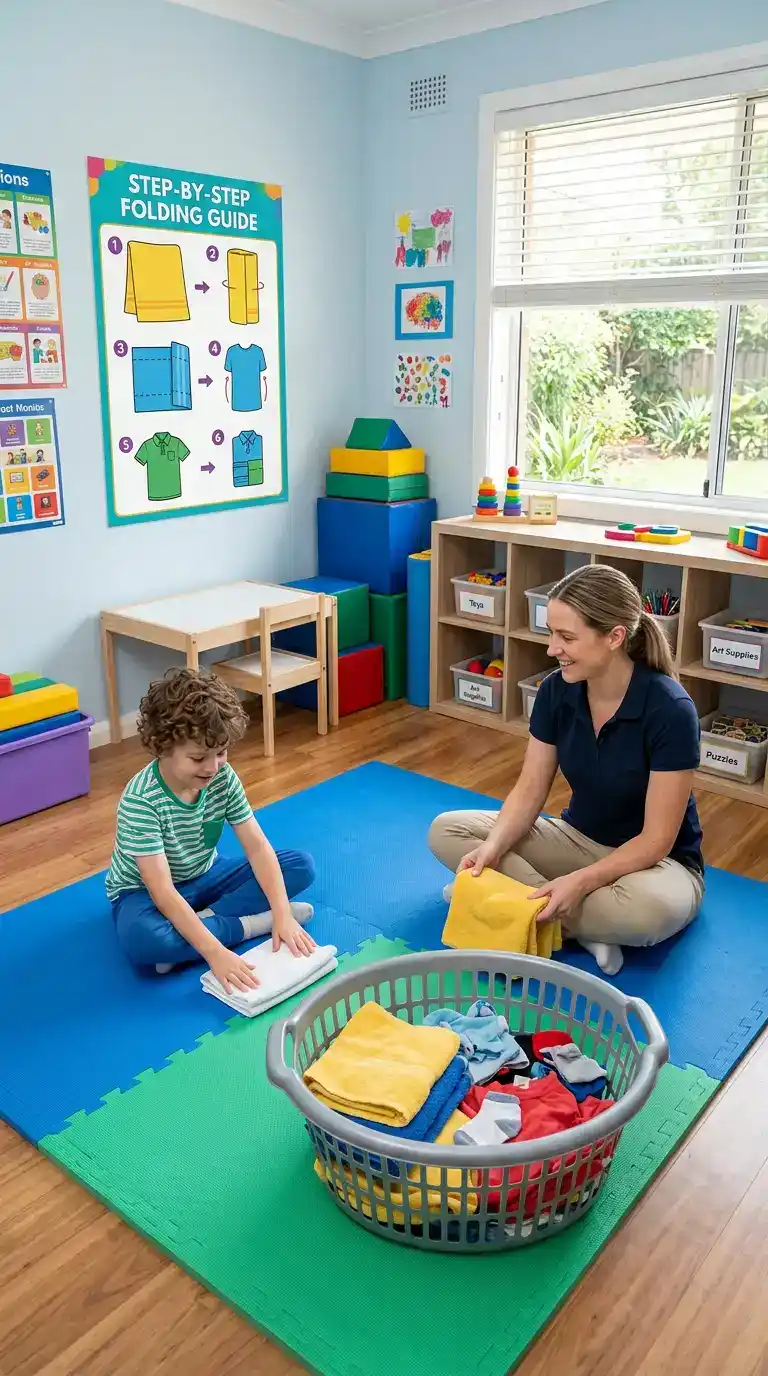
Folding laundry involves multiple steps: sorting clothes by type, shaking out each item, folding according to specific patterns, stacking, and putting away. This activity builds bilateral coordination, visual-spatial skills, sequencing, and sustained attention. Use towels, t-shirts, socks, and pants of varying sizes. Create a visual folding guide if needed.
3. Setting a Table
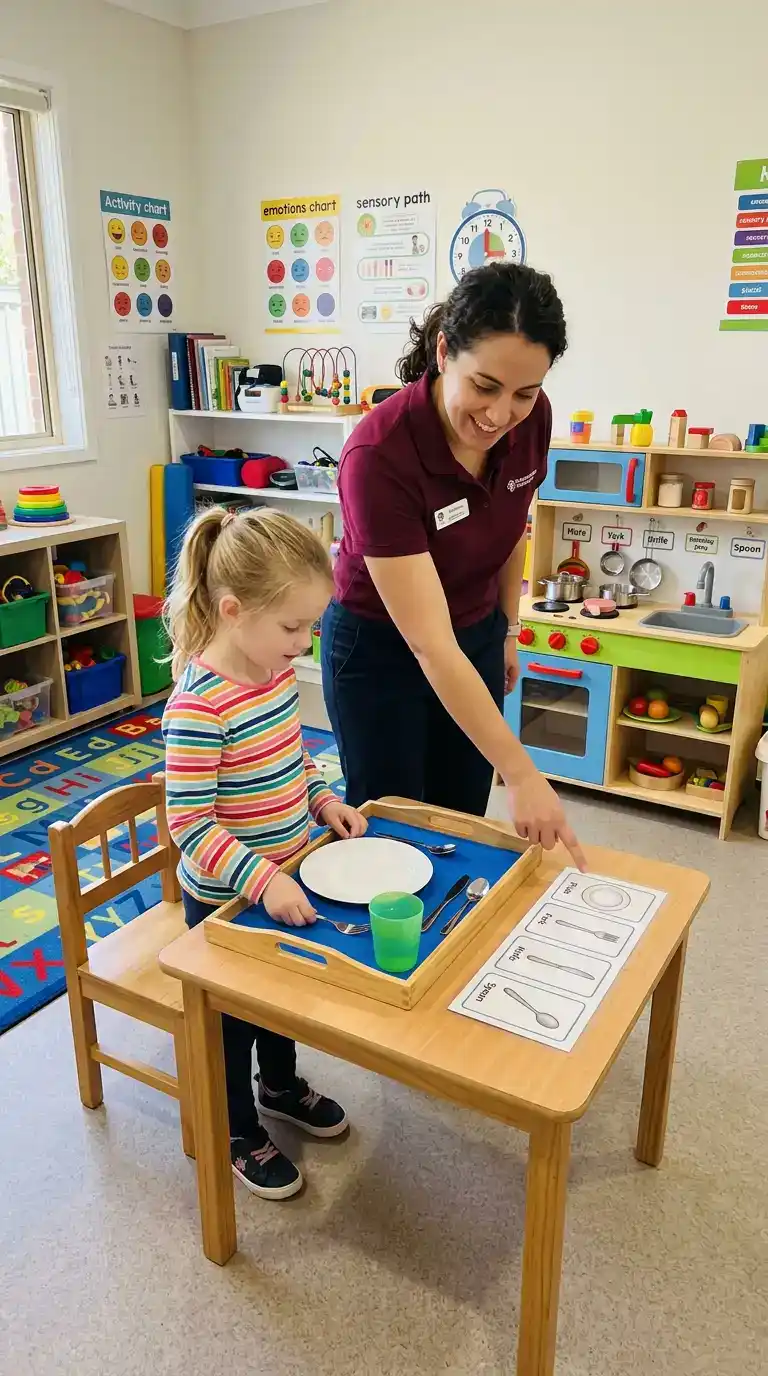
Setting a table requires sequencing, spatial awareness, and memory. Steps include placing a placemat, positioning the plate, adding fork on the left, knife and spoon on the right, napkin above or on the plate, and glass above the knife. This activity can be adapted with picture cards or verbal prompts. It also builds social participation skills for mealtime routines.
4. Completing a Multi-Step Craft Project
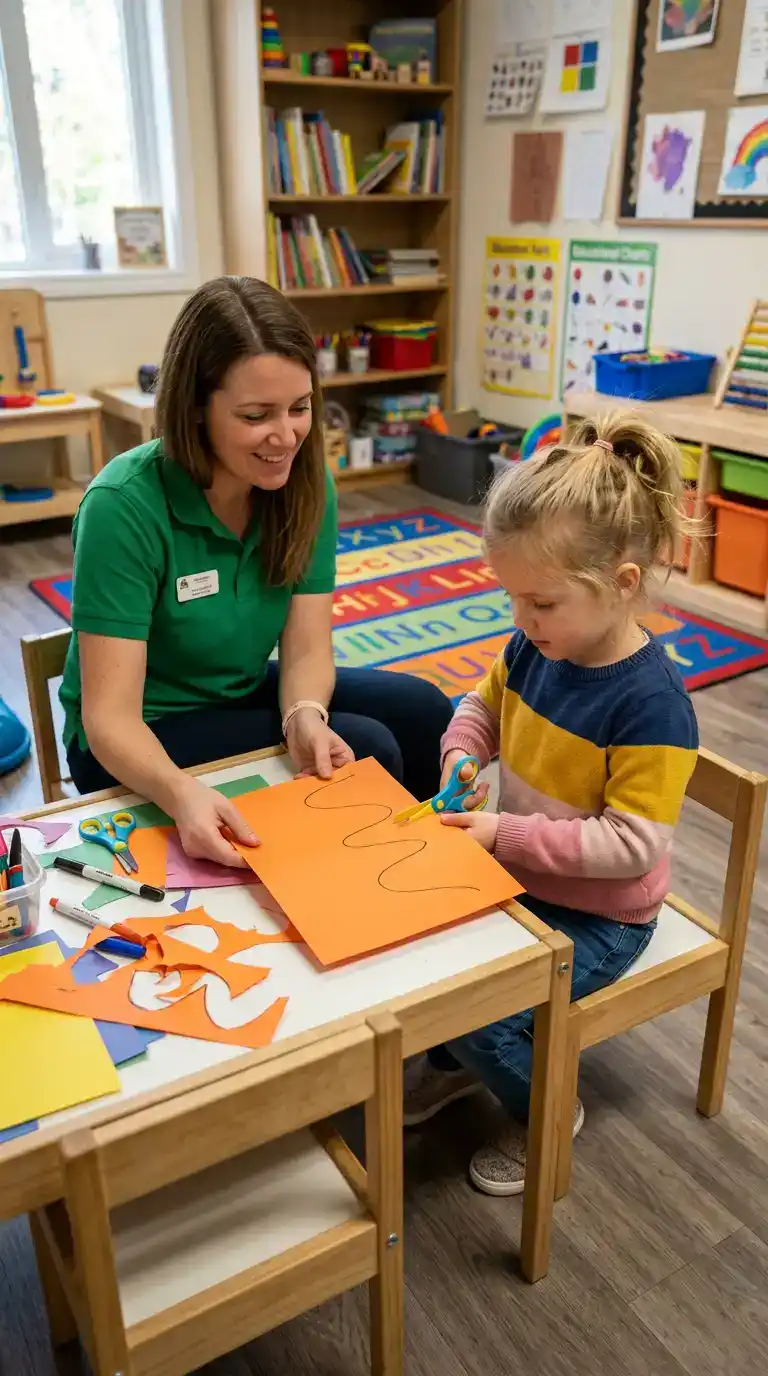
Crafts like making a paper chain, assembling a model, or creating a greeting card require following sequential instructions. Steps might include gathering materials, cutting, folding, gluing, assembling, and decorating. This activity builds fine motor skills, visual-motor integration, sequencing, and frustration tolerance. Choose crafts with 4 to 8 steps based on the individual’s level.

5. Washing and Drying Dishes
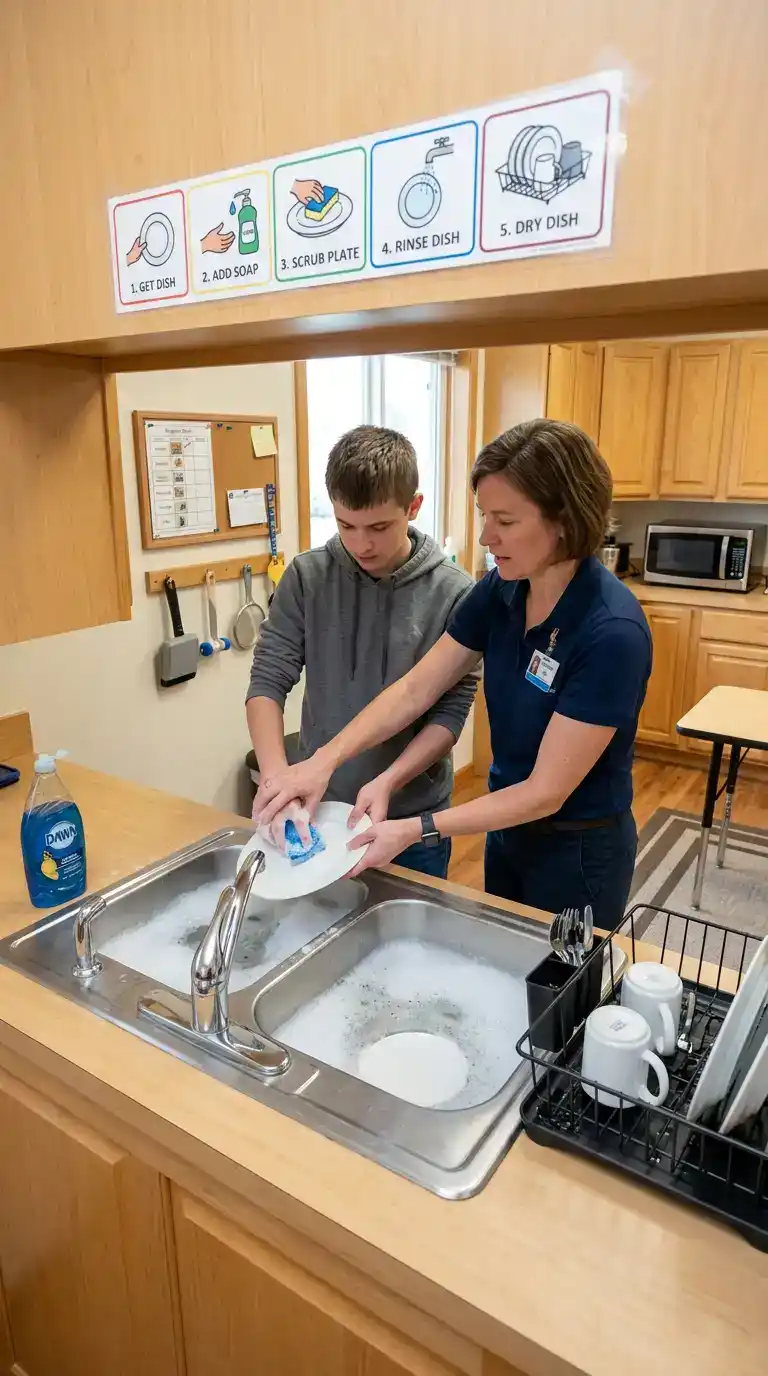
This practical life skill requires multiple steps: rinsing, applying soap, scrubbing, rinsing again, drying, and putting away. It builds fine motor strength, bilateral coordination, sequencing, and task persistence. Use plastic dishes for safety. This activity is especially valuable for adolescents and adults transitioning to independent living.
6. Getting Dressed
Dressing involves complex sequencing, body awareness, and motor planning. Steps vary by clothing type but generally include putting on underwear, pants, shirt, socks, and shoes in the correct order. This activity can address buttoning, zipping, and tying as additional fine motor challenges. Use adaptive clothing or tools as needed.

7. Following a Written or Picture Recipe
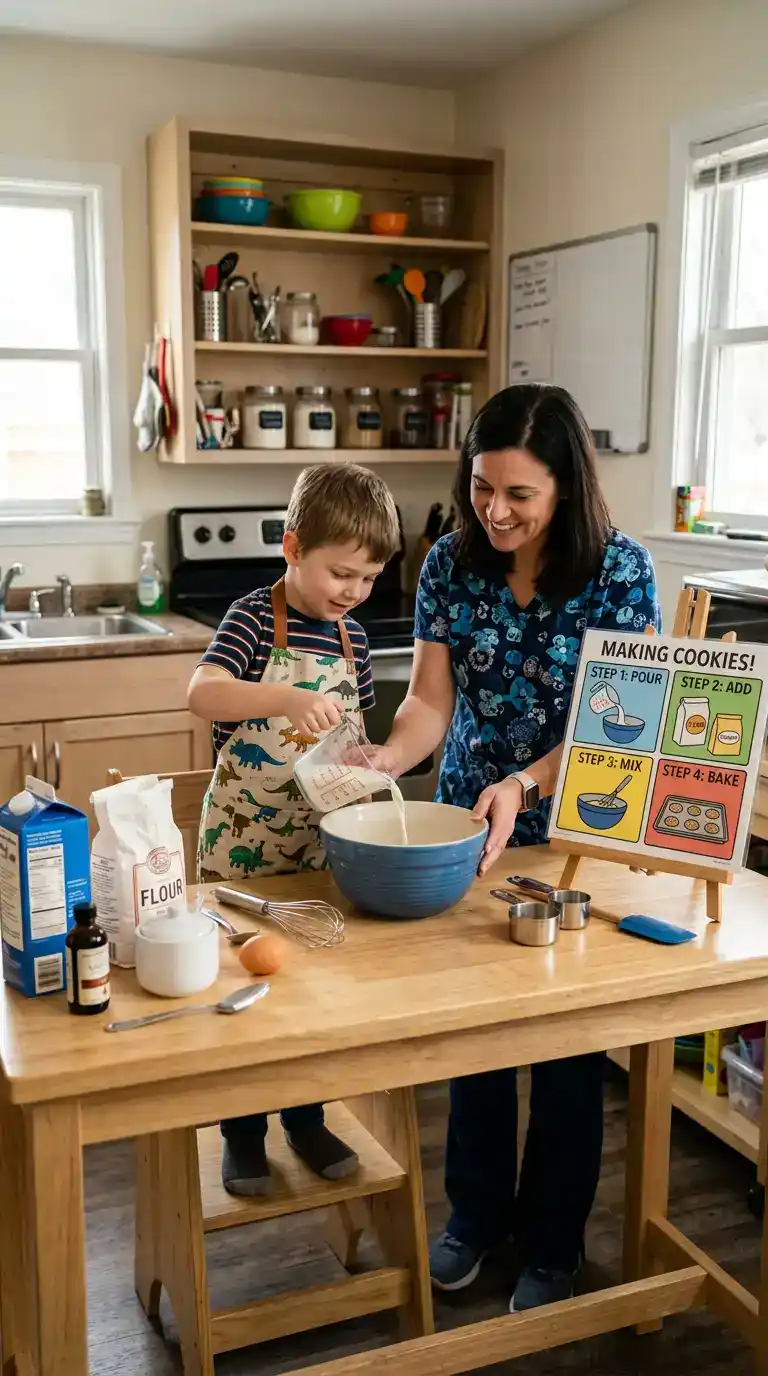
Cooking a simple recipe like instant oatmeal, a smoothie, or no-bake cookies requires reading or interpreting a visual recipe, gathering ingredients and tools, sequencing steps, measuring, mixing, and cleaning up. This activity builds reading comprehension, math skills (measuring), safety awareness, and task completion. Use picture-based recipes for pre-readers or individuals with aphasia.
Adapting Multi-Step Activities for Different Populations
For children with attention deficits: Reduce the number of steps, use visual schedules, and provide frequent reinforcement. Break tasks into smaller chunks and celebrate each completed step. Use timers to create a sense of urgency and structure.
For adults with stroke or brain injury: Use written or picture checklists, allow extra time, and provide adaptive equipment as needed. Focus on tasks that are meaningful for their daily living goals. Repeat tasks across multiple sessions to build procedural memory.
For individuals with autism: Use consistent routines, visual supports, and social stories. Some individuals may benefit from video modeling showing the task being completed. Be sensitive to sensory issues (e.g., textures of foods or fabrics) and offer alternatives when possible.
For elderly adults with dementia: Simplify tasks to 2 to 4 steps, use familiar activities from their past (e.g., folding handkerchiefs, setting a familiar table), and provide hand-over-hand assistance. Focus on engagement and success rather than independent completion.
Conclusion
Multi-step activities are powerful tools in occupational therapy for building executive function, sequencing, memory, attention, and independence. Whether making a sandwich, folding laundry, setting a table, completing a craft, washing dishes, getting dressed, or following a recipe, these tasks translate directly to real-world functioning. The key is to grade the activity appropriately for the individual’s current level, break tasks into manageable chunks, use visual supports, and provide consistent practice. With repetition and support, clients can generalize these skills to home, school, work, and community settings.