7 Acne Red Light Therapy Before and After
Acne is one of the most common skin conditions, affecting millions of people worldwide. While traditional treatments include topical creams, oral medications, and chemical peels, red light therapy has emerged as a non-invasive, painless alternative with promising results. Red light therapy (RLT) uses specific wavelengths of red and near-infrared light to penetrate the skin, reduce inflammation, kill acne-causing bacteria (when combined with blue light), and accelerate healing. Unlike harsh acne treatments that can cause dryness, peeling, or irritation, RLT is gentle and suitable for all skin types. Here is what you need to know about acne red light therapy, including typical before and after outcomes based on clinical research.
1. Active Inflammatory Acne (Papules and Pustules)
Before Treatment: Active inflammatory acne lesions including papules (small red bumps) and pustules (white-headed bumps) are present on the face, chest, or back. The skin shows areas of erythema (redness) and swelling around each lesion. These lesions are tender to the touch and may be painful. The individual may have tried topical treatments with limited success or unacceptable side effects. The skin texture is uneven due to the raised lesions.
After Treatment: After 4 to 8 weeks of consistent treatment (3 to 5 times per week), active inflammatory lesions are often significantly reduced. Red light therapy has potent anti-inflammatory effects that calm redness and swelling. When combined with blue light (which kills Cutibacterium acnes bacteria), results are even more dramatic. Users report fewer new breakouts and faster healing of existing lesions. The skin becomes less painful and less red overall. The number of active lesions typically decreases by 40 to 70 percent in clinical studies.
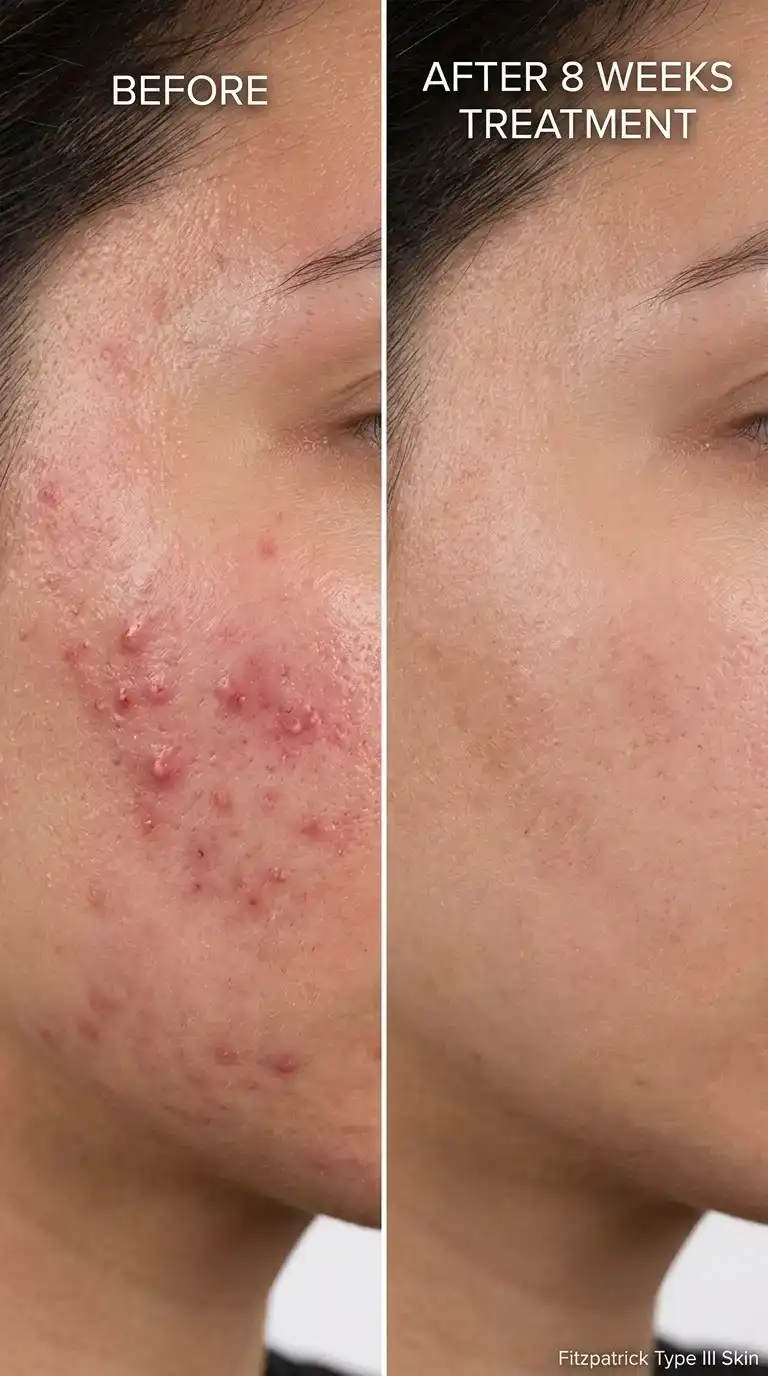
2. Cystic Acne
Before Treatment: Deep, painful, inflamed cysts are present beneath the skin’s surface. These lesions are large (often 5 to 10 mm or more), feel hard to the touch, and do not come to a head. Cystic acne is difficult to treat with topical products and often leads to scarring. The individual may have tried oral antibiotics or isotretinoin with mixed results. The cysts may be red or purple and can be tender even without touching.
After Treatment: After 8 to 12 weeks of consistent treatment, cystic acne lesions may become less frequent, less severe, and faster to resolve. While red light therapy alone may not eliminate severe cystic acne, it can be an effective adjunctive treatment. The anti-inflammatory effects help reduce the size, pain, and duration of cysts. New cysts may be smaller and less inflamed. For best results, combine RLT with appropriate medical therapy prescribed by a dermatologist. Users often report that existing cysts flatten more quickly and that new cysts are less painful.
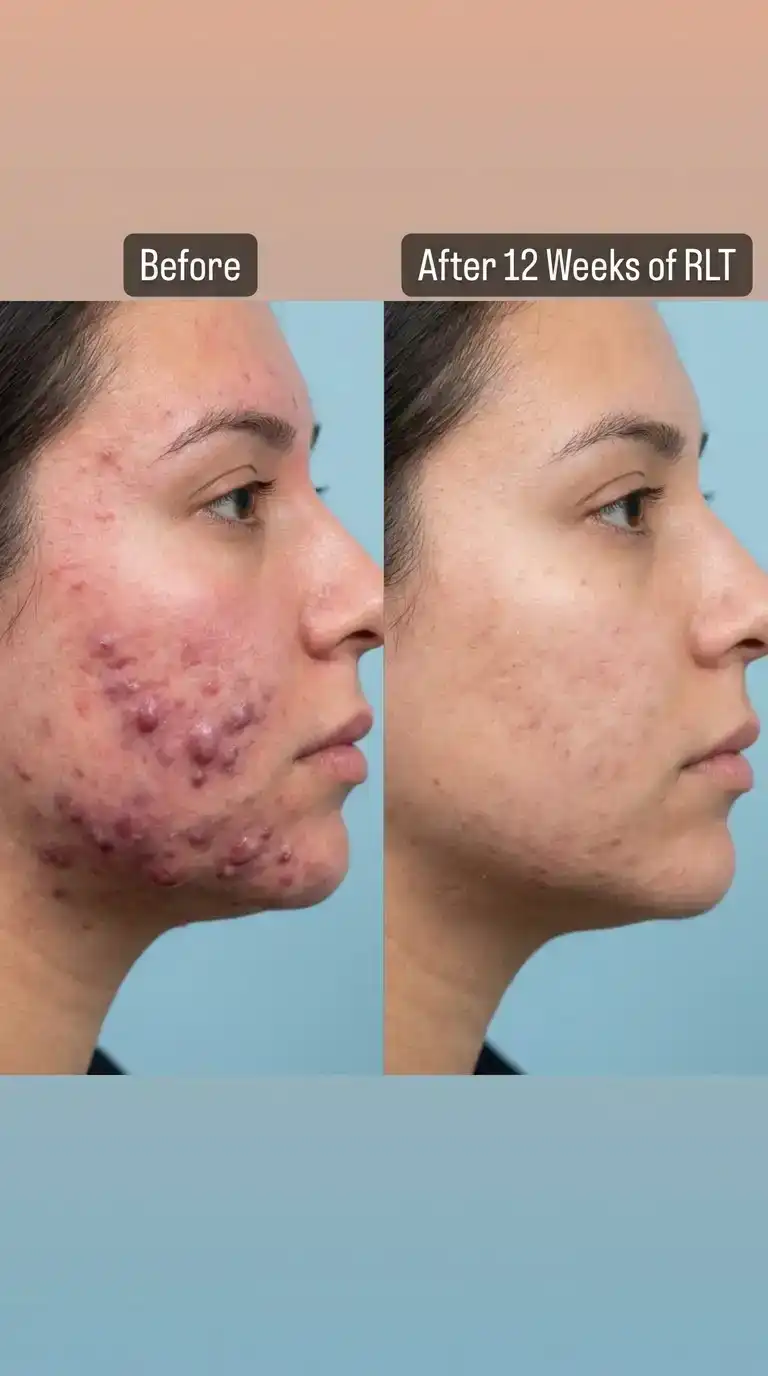
3. Comedonal Acne (Blackheads and Whiteheads)
Before Treatment: Comedonal acne is characterized by open comedones (blackheads) and closed comedones (whiteheads). These non-inflammatory lesions are most common on the forehead, nose, and chin. The skin may feel rough or bumpy to the touch. Comedones are caused by clogged hair follicles. Unlike inflammatory acne, there is typically no redness or swelling around these lesions.
After Treatment: After 6 to 10 weeks of treatment, many users report improvement in skin texture and reduction in comedones. Red light therapy increases cellular turnover, helping to clear clogged pores. While blue light targets bacteria, red light addresses inflammation and promotes healing. The skin becomes smoother, and the number of visible blackheads and whiteheads decreases. Regular exfoliation complements RLT for comedonal acne. Results are generally modest but noticeable, with many users reporting that their skin feels less congested.
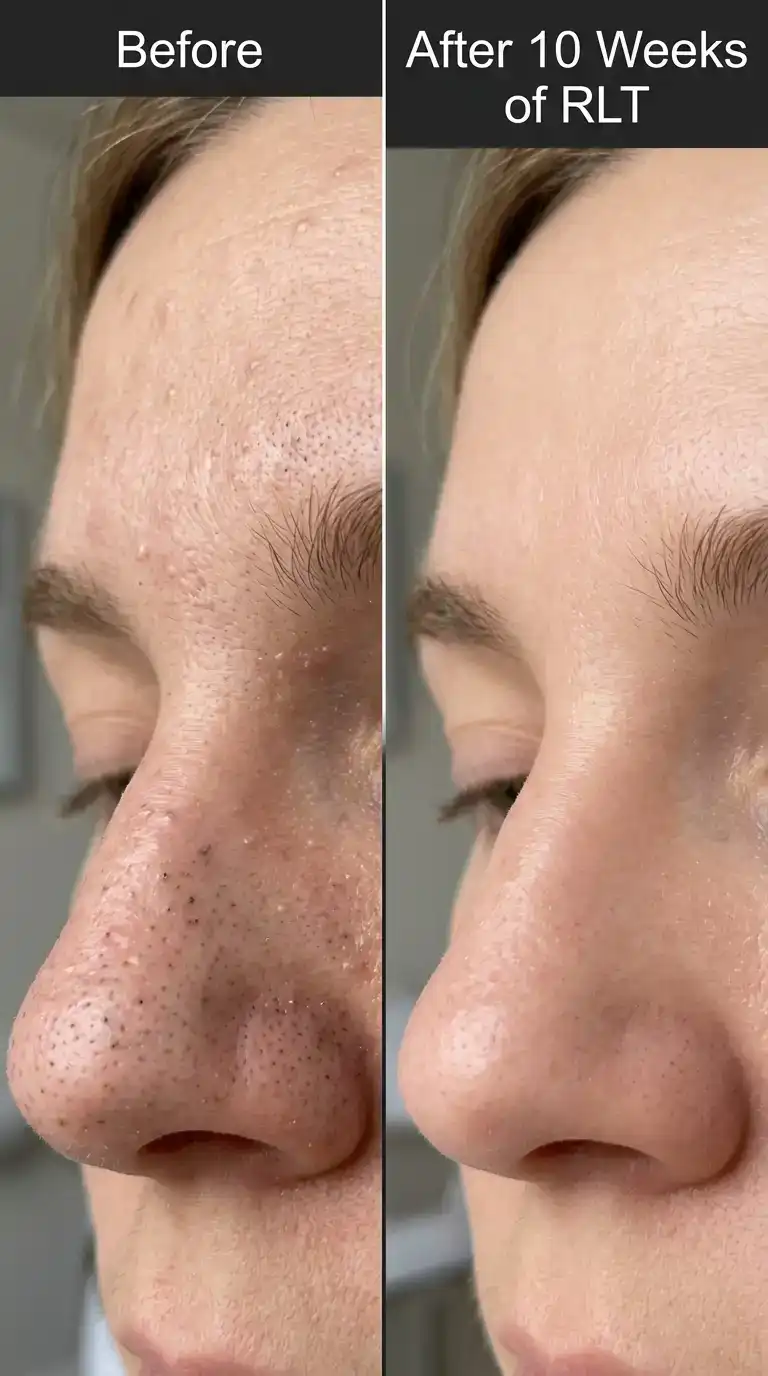
4. Post-Inflammatory Erythema (Red Marks)
Before Treatment: After acne lesions heal, they often leave behind red or pink marks known as post-inflammatory erythema (PIE). These flat, red marks can persist for weeks or months after the active acne has resolved. PIE is caused by damaged blood vessels beneath the skin. Unlike hyperpigmentation, PIE blanches (turns white) when pressed. These marks are often more distressing to patients than the active acne itself.
After Treatment: After 6 to 10 weeks of consistent treatment, post-inflammatory erythema often fades more quickly than it would naturally. Red light therapy has been shown to reduce inflammation and promote vascular healing. The red marks become lighter, smaller, and less noticeable over time. Users report faster resolution of redness after breakouts. In clinical studies, RLT has been shown to reduce erythema by 30 to 50 percent compared to untreated skin.
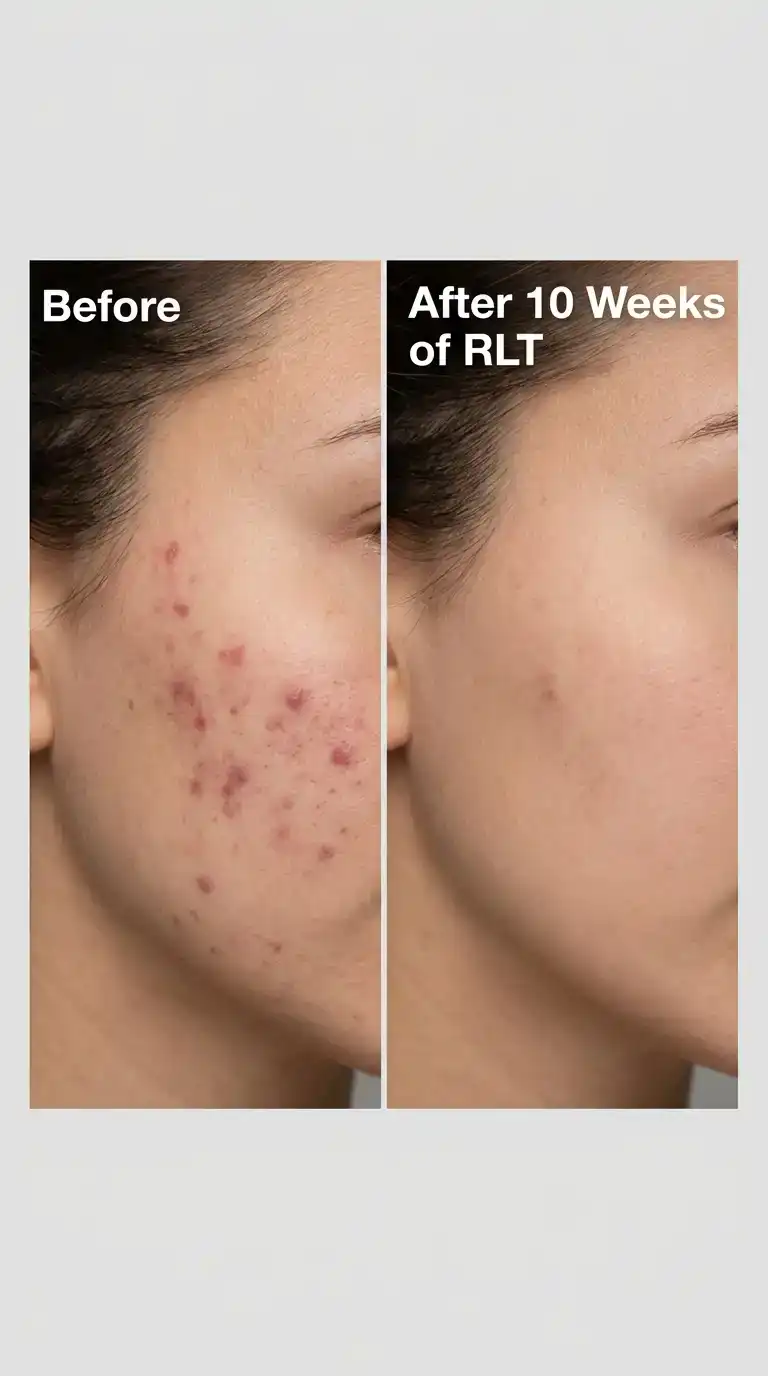
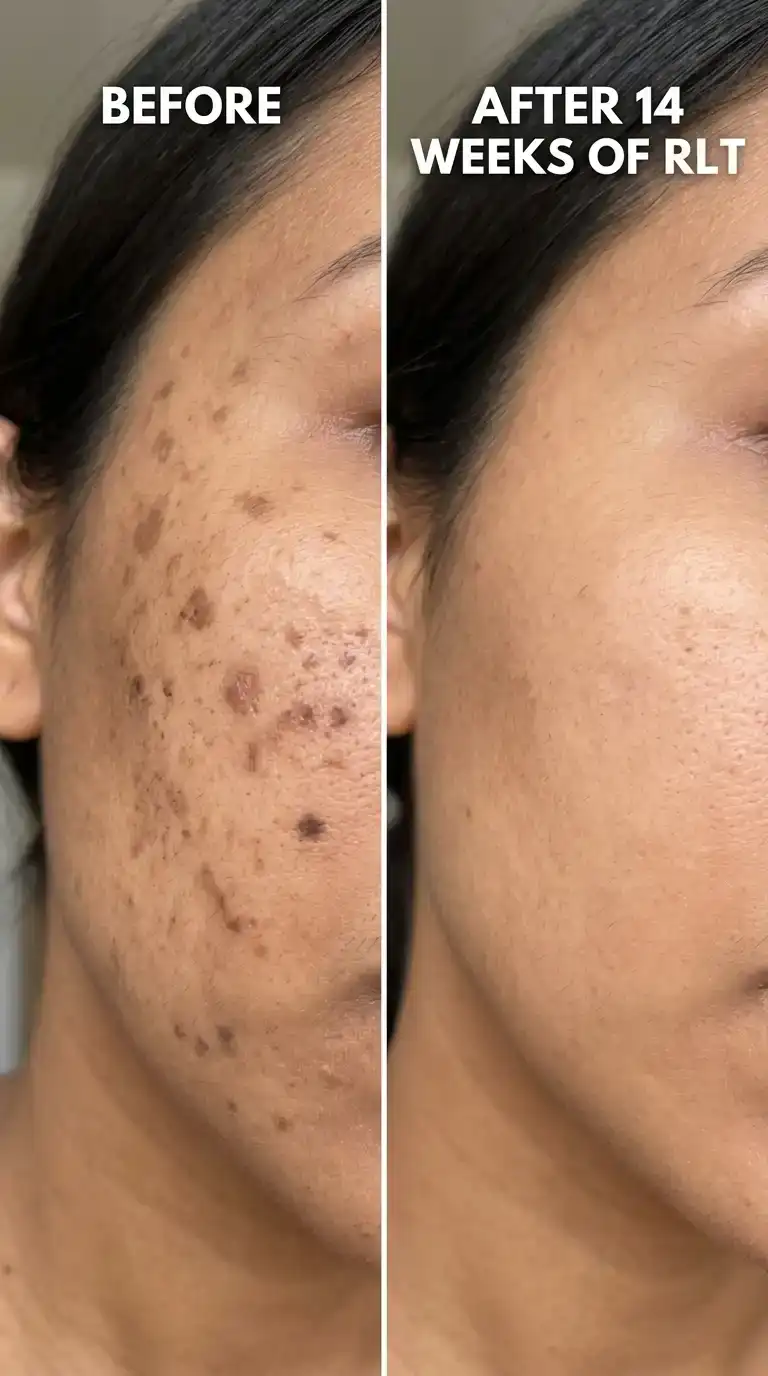
5. Post-Inflammatory Hyperpigmentation (Dark Marks)
Before Treatment: After acne lesions heal, they may leave behind dark brown or black marks known as post-inflammatory hyperpigmentation (PIH). These flat, dark marks are more common in darker skin tones (Fitzpatrick Types IV-VI). PIH can persist for months or even years without treatment. Unlike erythema, PIH does not blanch when pressed. These marks are caused by excess melanin production in response to inflammation.
After Treatment: After 10 to 14 weeks of treatment, post-inflammatory hyperpigmentation often fades more quickly than it would naturally. Red light therapy increases cellular turnover, helping to shed pigmented cells and replace them with healthy new cells. It does not bleach the skin like hydroquinone but rather accelerates the skin’s natural renewal process. The dark spots become lighter, smaller, and less distinct over time. Sun protection is essential during treatment to prevent further pigmentation.
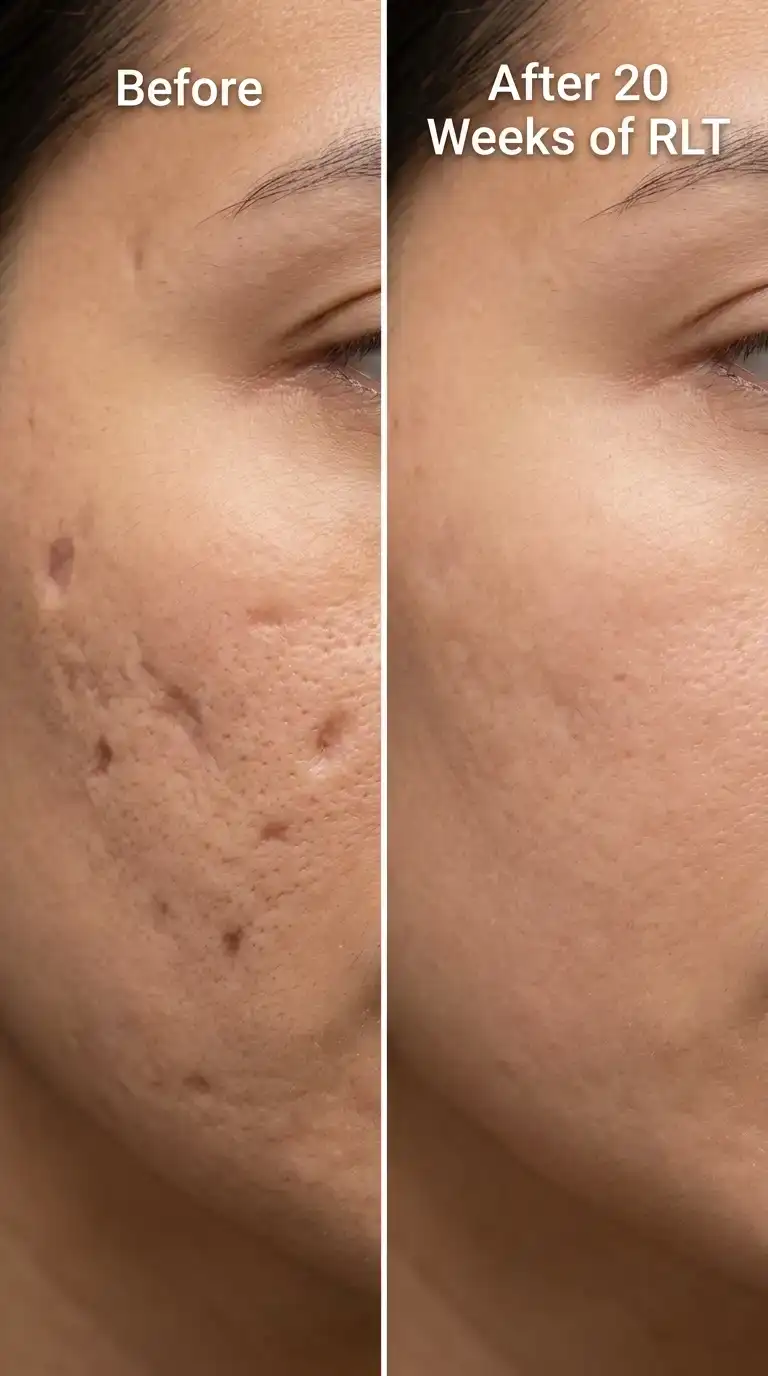
6. Acne Scarring (Rolling and Boxcar Scars)
Before Treatment: After severe or chronic acne, the skin may develop depressed scars. Rolling scars have gently sloping edges and create a wave-like appearance on the skin. Boxcar scars have sharp, vertical edges and appear as round or oval depressions. These scars are caused by loss of collagen during the healing process. Unlike hyperpigmentation or erythema, scars are textural and cannot be faded with topical products alone.
After Treatment: After 12 to 20 weeks of consistent treatment, some users report improvement in the appearance of shallow rolling and boxcar scars. Red light therapy stimulates collagen production within the scar tissue, which can partially fill in depressed areas. While deeper or ice-pick scars may not respond, many users find that their skin texture improves overall. The scars become less noticeable as surrounding skin becomes plumper and healthier. Results are gradual and require long-term commitment.
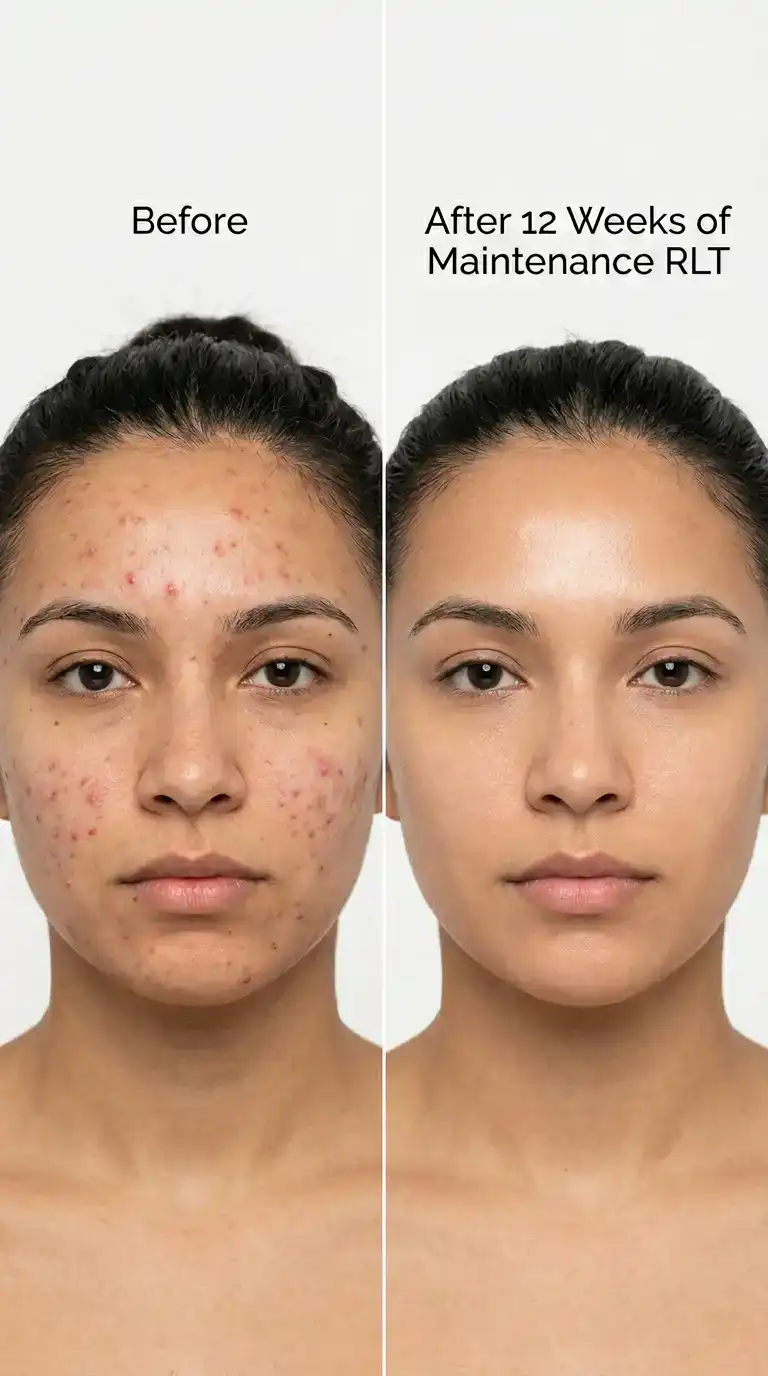
7. Overall Skin Health and Acne Prevention
Before Treatment: The individual experiences frequent breakouts, even if they are not severe. The skin may be oily, congested, or prone to clogged pores. The person has tried various products but continues to have persistent acne. The goal is not just to treat existing lesions but to prevent new ones from forming. The skin may also show signs of inflammation even when no active lesions are present.
After Treatment: With 2 to 3 treatments per week ongoing, many users report fewer breakouts and clearer skin overall. Red light therapy provides ongoing anti-inflammatory and antibacterial effects, creating an environment less conducive to acne formation. The skin becomes more resilient and heals faster when occasional breakouts do occur. Users often report that their skin looks healthier, brighter, and more even-toned. Long-term maintenance treatment can help keep acne under control without the side effects of continuous topical or oral medications.
How to Use Red Light Therapy for Acne at Home
Frequency: For active acne, use 3 to 5 times per week. For maintenance, 2 to 3 times per week is often sufficient. Duration: 10 to 20 minutes per treatment area. Distance: Follow device instructions, typically 6 to 12 inches from the skin. Wavelengths: Look for devices that emit 630 to 660 nanometers (red) for inflammation and healing, and 415 nanometers (blue) for antibacterial effects. Many acne-specific devices combine both red and blue light. Consistency: Results take time. Most studies show noticeable improvement after 4 to 8 weeks of consistent use. Cleanse First: Always start with clean, dry skin without any products that could block light penetration.
What Acne Red Light Therapy Will Not Do
Red light therapy is not a replacement for medical acne treatment in severe cases. It will not: Cure severe cystic acne on its own (may require prescription medications), eliminate deep ice-pick scars (requires more intensive treatments like microneedling or lasers), prevent acne caused by hormonal imbalances without addressing the underlying cause, produce overnight results (requires weeks to months of consistent use), or work as a substitute for good skincare hygiene including gentle cleansing and non-comedogenic products.
Safety Considerations
Red light therapy is generally safe for all skin types and tones, including darker skin (Fitzpatrick Types IV-VI). Unlike some lasers, it does not heat or damage the skin surface. However: Protect your eyes: Use opaque goggles or keep eyelids firmly closed, as bright light can be uncomfortable. Medical clearance: Consult your dermatologist before starting RLT, especially if you are using photosensitizing medications (such as certain antibiotics or retinoids). Pregnancy: Pregnant women should consult their healthcare provider before use. Keep treating: Acne is a chronic condition for many people; maintenance treatment may be needed to sustain results.
Conclusion
Red light therapy for acne offers a non-invasive, painless, and scientifically supported approach to treating and managing breakouts. From reducing active inflammatory lesions and cystic acne to fading post-inflammatory marks and improving scarring, the evidence from clinical studies is promising. However, realistic expectations are essential. Red light therapy is not a miracle cure for severe cystic acne, but for many people with mild to moderate acne, it provides meaningful, visible improvements in skin clarity and health over time. Consistency is the most important factor. Commit to a regular treatment schedule, combine with appropriate skincare and medical care when needed, and be patient. With dedicated use, the before and after results can be transformative.