12 Visual Perception Activities Occupational Therapy
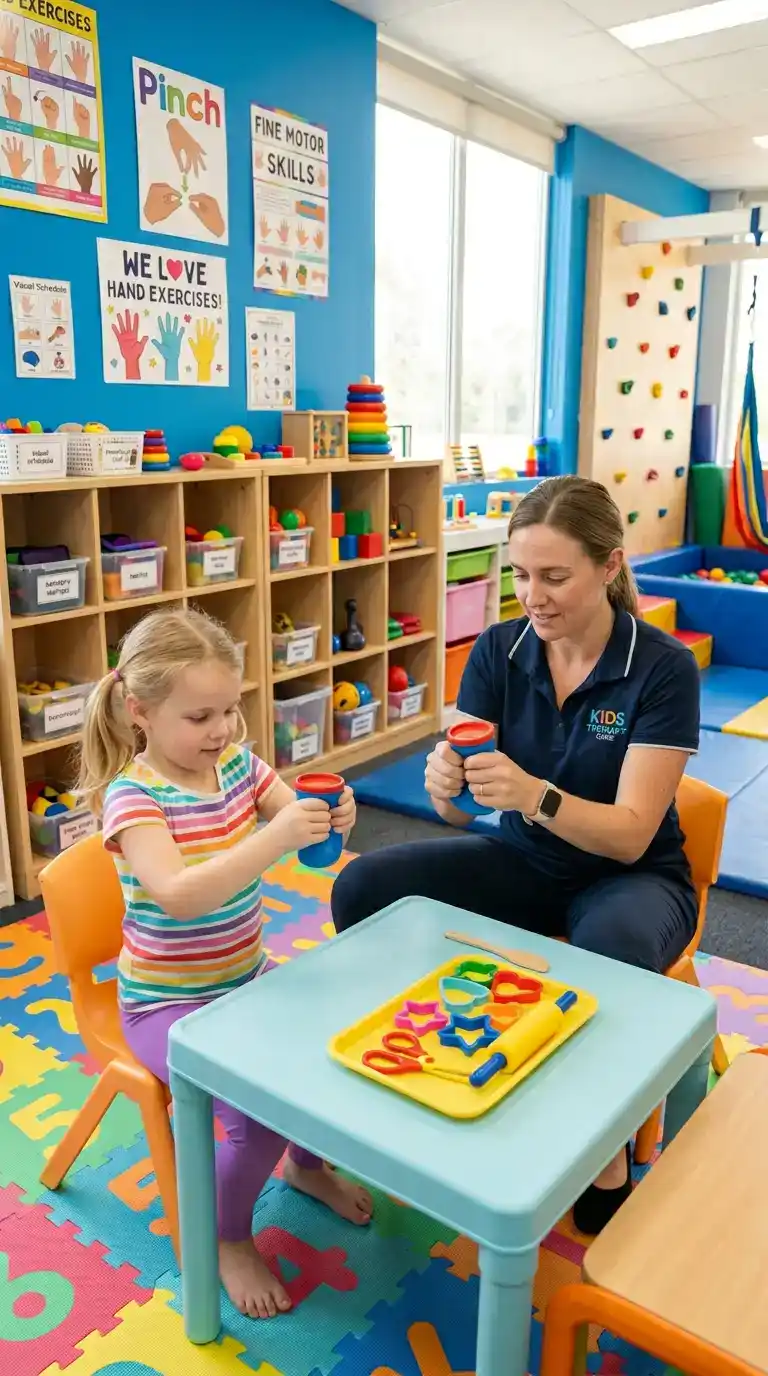
Visual perception is the brain’s ability to interpret and make sense of what the eyes see. It is distinct from visual acuity, which is how clearly a person sees. Visual perception involves skills like visual discrimination, figure-ground perception, visual memory, form constancy, spatial relations, and visual closure. These skills are essential for reading, writing, math, navigation, and countless daily activities. In occupational therapy, visual perception activities help children with learning disabilities, developmental delays, or conditions like autism and ADHD who struggle with these foundational skills. Here are twelve effective visual perception activities for occupational therapy.
1. Find the Hidden Object
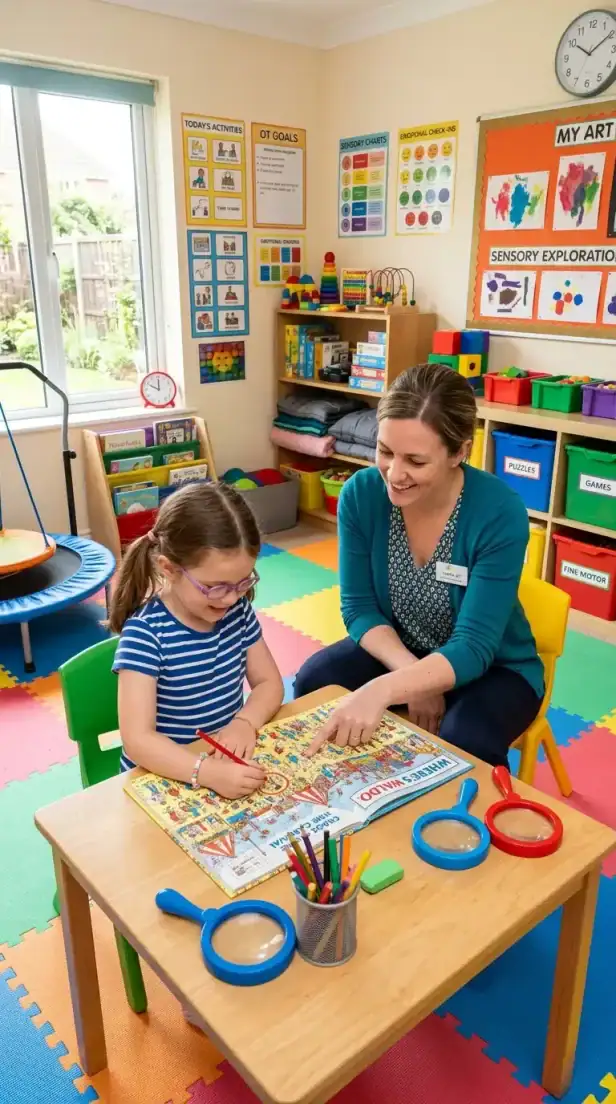
Figure-ground perception is the ability to locate a specific object within a busy or cluttered background. This activity builds that skill. Provide your child with a “I Spy” book, a Where’s Waldo page, or a custom worksheet filled with overlapping shapes and hidden items. Ask them to find and circle specific objects. You can also hide small toys in a bin of rice or beans and have them search by sight. This activity improves visual attention and scanning.
2. Matching Memory Game
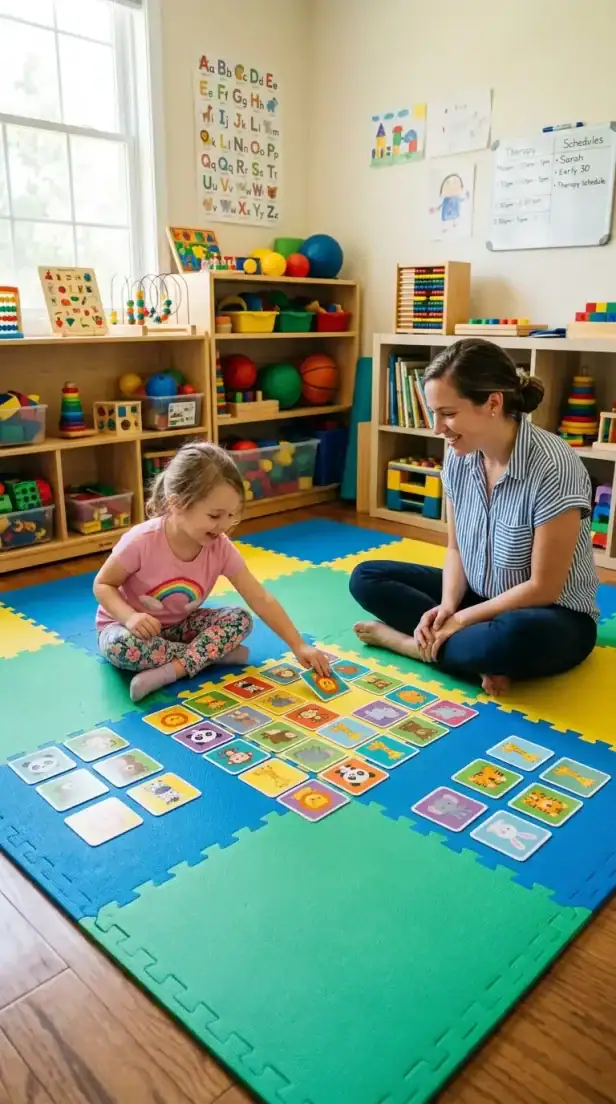
Visual memory is the ability to remember what has been seen. A matching memory game (also known as Concentration) builds this skill. Lay cards face down in a grid. Players take turns flipping two cards at a time, trying to find matching pairs. This activity also builds attention, working memory, and turn-taking. Start with a small grid of 6 to 8 cards, then increase the number as skills improve. Use cards with pictures, letters, numbers, or shapes.
3. Complete the Pattern
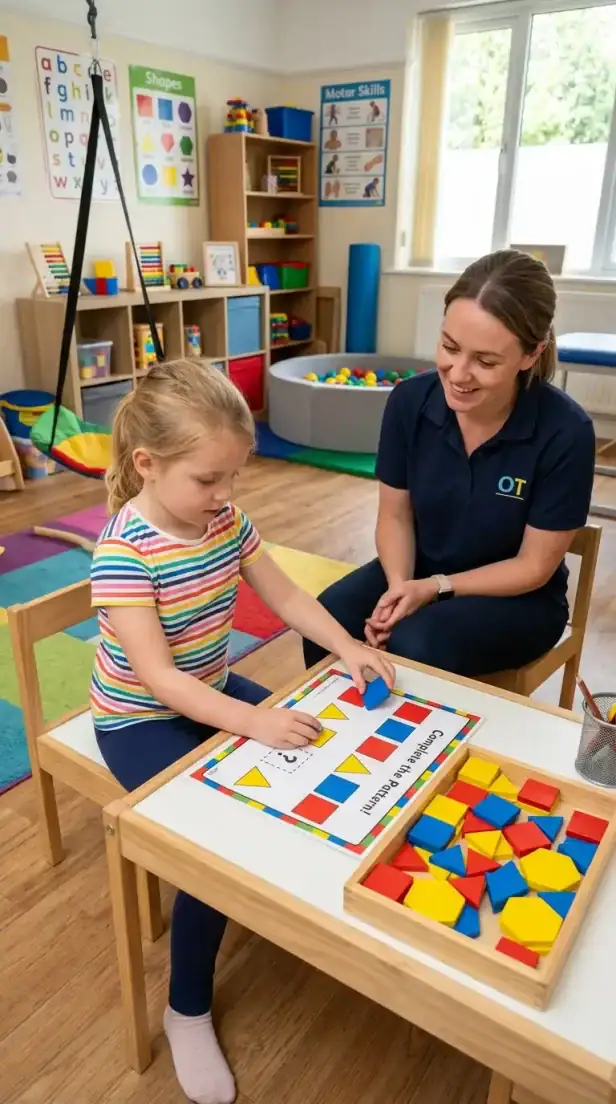
Visual closure is the ability to recognize a complete object or shape when only parts are visible. Pattern completion activities build this skill. Provide worksheets with patterns of shapes, colors, or letters where one element is missing. Ask your child to identify what is missing and draw or place the correct piece. You can also use pattern blocks or magnetic tiles to create and complete sequences.
4. Word or Letter Searches
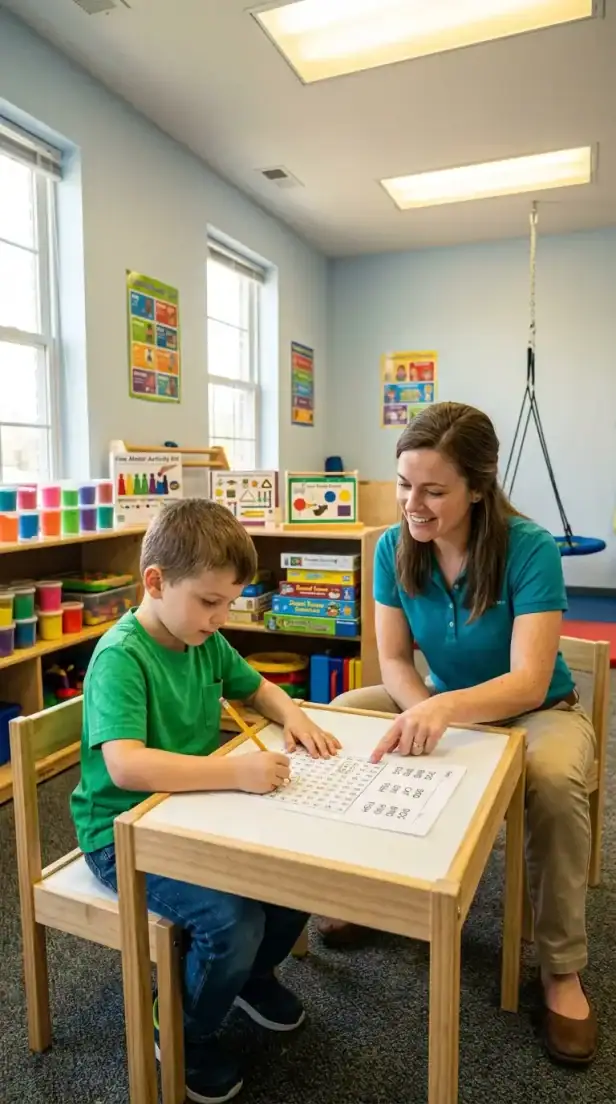
Word searches and letter searches build visual discrimination, scanning, and figure-ground perception. Provide a grid of letters and ask your child to find and circle specific letters or words. For younger children, use simple letter searches with large, bold fonts. For older children, use word searches with grade-appropriate vocabulary. This activity also builds visual attention and persistence.
5. Building with Blocks from a Picture
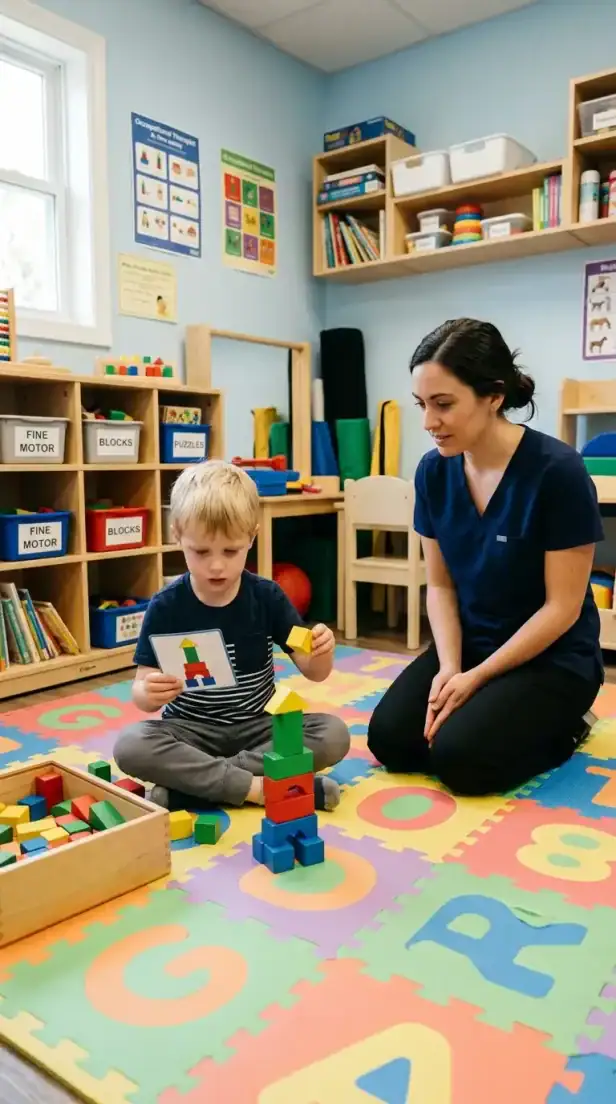
Spatial relations and form constancy are the ability to understand how objects relate to each other in space and to recognize shapes regardless of orientation. Provide your child with a set of building blocks and a picture of a structure. Ask them to replicate the structure by looking at the picture, not by copying you. Start with simple structures of two or three blocks, then increase complexity. This activity builds visual-spatial reasoning, problem-solving, and attention to detail.
6. Dot-to-Dot Worksheets
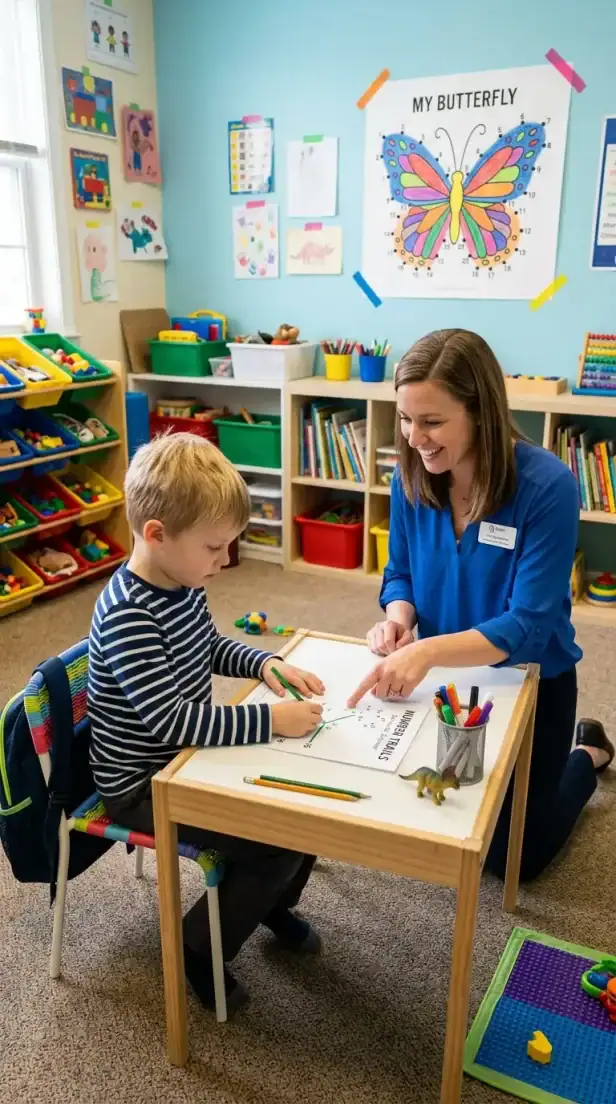
Visual sequencing and motor planning are essential for connecting points in order. Dot-to-dot worksheets require the child to connect numbered or lettered dots in sequence to reveal a hidden picture. This activity builds visual scanning, attention, and fine motor control. Start with simple 10-dot images and progress to more complex 50-dot pictures. The revealed picture provides intrinsic motivation.
7. Sorting by Color, Shape, or Size
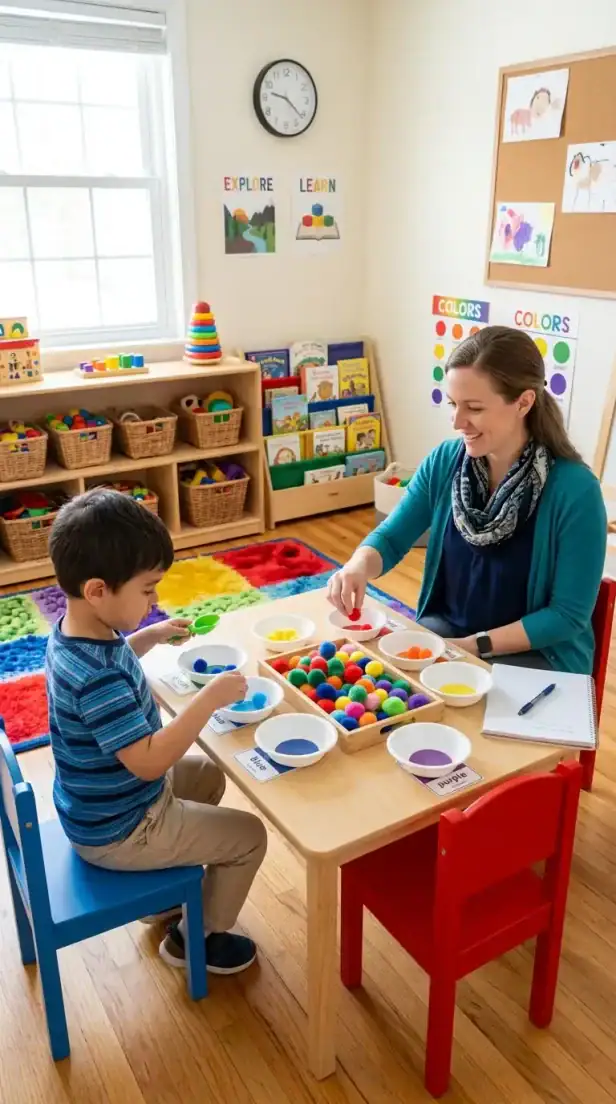
Sorting activities build visual discrimination and categorization skills. Provide a collection of objects that vary by color, shape, or size, along with containers labeled for each category. Ask your child to sort the objects into the correct containers. Use buttons, beads, blocks, pom-poms, or attribute bears. For added challenge, sort by two attributes simultaneously, such as red circles and blue squares.
8. Grid Copying and Grid Drawing
Visual spatial skills are required to copy a design from one grid to another. Provide a worksheet with a simple design on a grid and an empty grid below. Ask your child to copy the design square by square. This activity builds visual attention, planning, and fine motor precision. Start with simple shapes like a star or smiley face, then progress to more complex designs like a house or a word.

9. Mazes
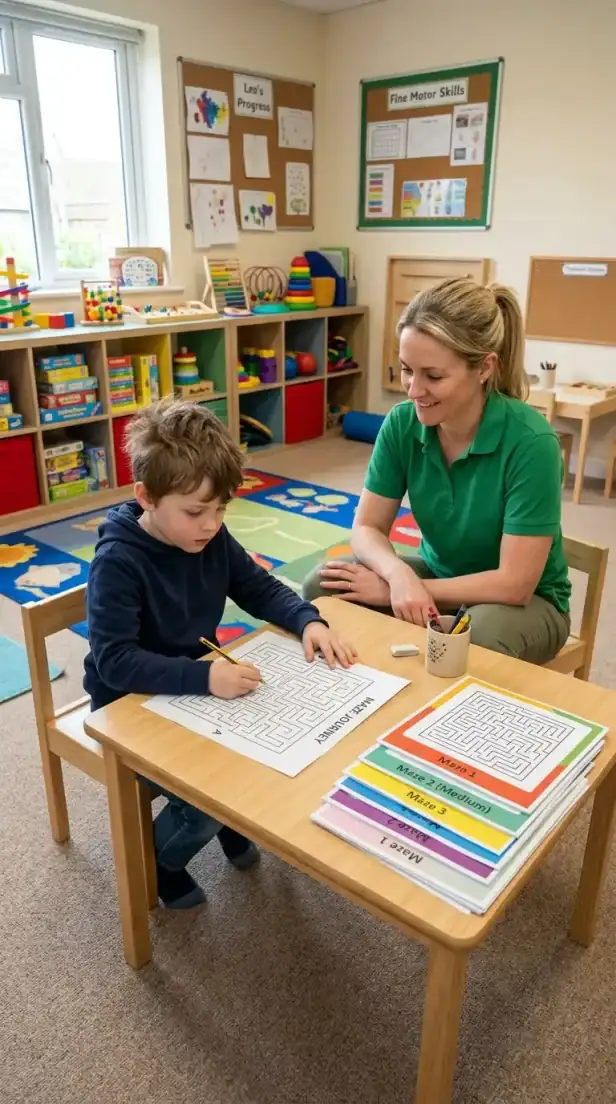
Mazes require the child to visually track a path from start to finish while planning and executing motor movements. This activity builds visual scanning, spatial planning, and sustained attention. Start with simple, wide-path mazes and progress to more complex, narrow-path mazes. Use pencil on paper or finger tracing on laminated sheets. Mazes are also excellent for building frustration tolerance and perseverance.
10. Tangrams
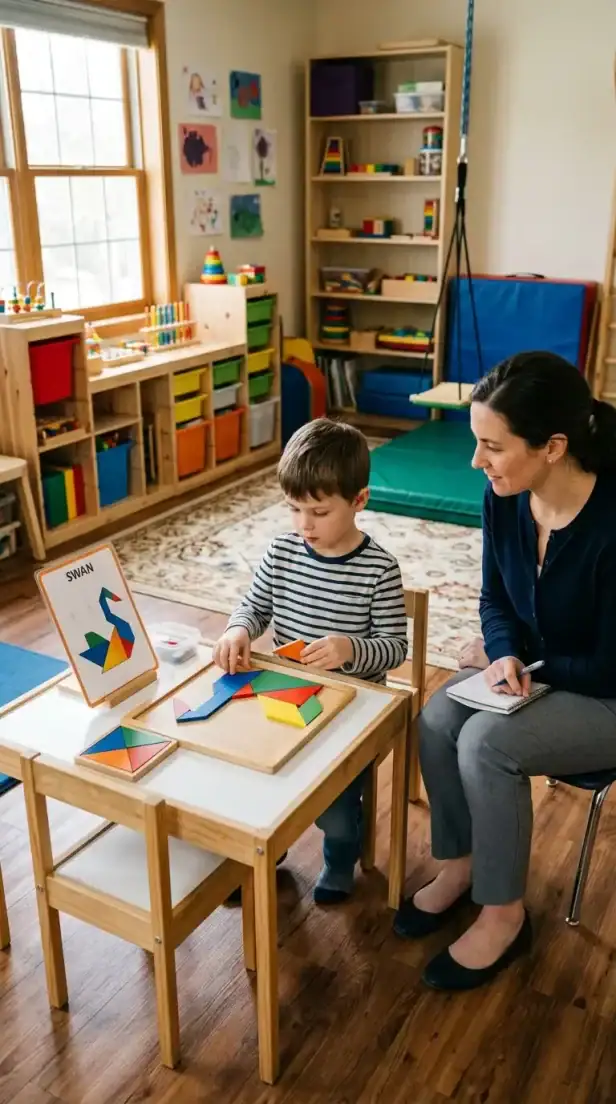
Tangrams are seven geometric puzzle pieces that can be arranged to form countless shapes and pictures. Provide your child with a set of tangrams and a booklet of target images. Ask them to replicate the image using all seven pieces. This activity builds visual-spatial reasoning, form constancy, and problem-solving. It also requires flexibility and persistence, as pieces may need to be rotated and flipped.
11. Visual Closure Worksheets
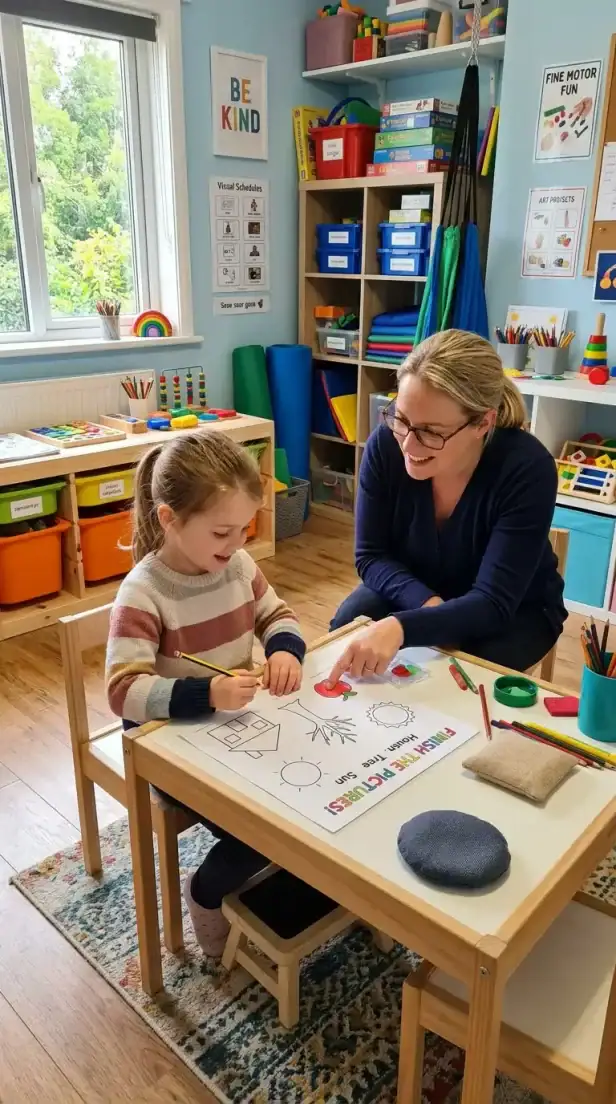
Visual closure is the ability to recognize a whole object when only parts are shown. Provide worksheets with incomplete drawings of common objects. Ask your child to identify what the object is and then complete the drawing. You can also use partially hidden pictures where part of the image is covered, and the child must identify the full object. This skill is essential for reading, as letters are often partially obscured.
12. Obstacle Course with Visual Cues
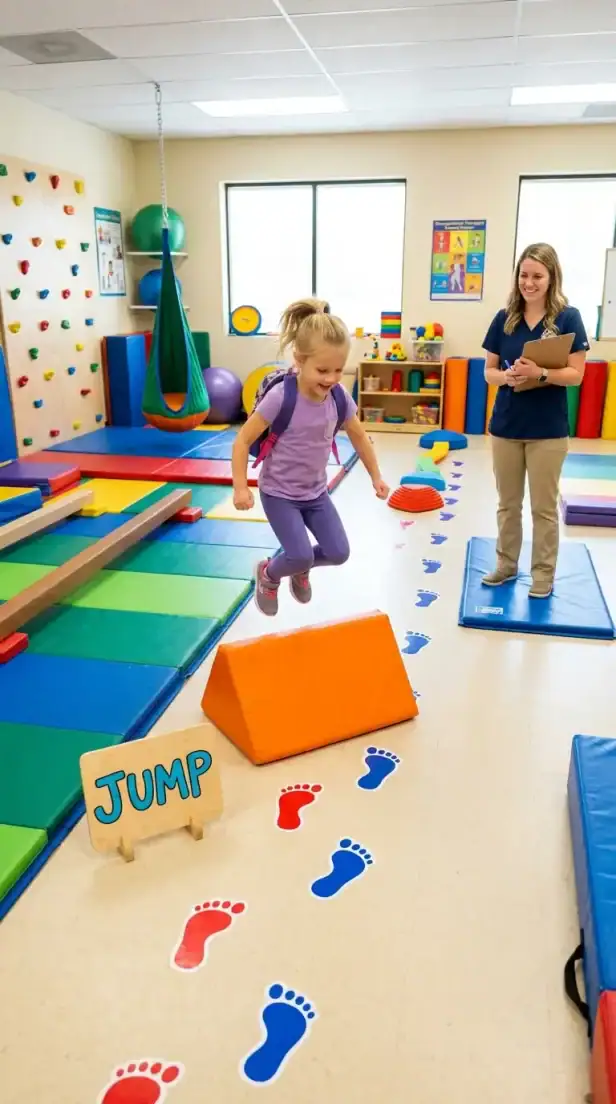
Create an obstacle course where the child must follow visual instructions. Tape colored footprints on the floor to indicate where to step. Hang arrows to show direction. Place pictures of actions like “jump,” “crawl,” or “spin” on signs. The child must visually scan, interpret the cues, and plan their movements. This activity builds visual attention, figure-ground perception, and motor planning in a fun, active way.
Conclusion
Visual perception is essential for reading, writing, math, and navigating the world. Children with visual perception difficulties may struggle with tasks that others find easy, leading to frustration and low self-esteem. These twelve activities—find the hidden object, matching memory game, complete the pattern, word or letter searches, building with blocks from a picture, dot-to-dot worksheets, sorting by attribute, grid copying, mazes, tangrams, visual closure worksheets, and obstacle courses with visual cues—are fun, engaging, and effective ways to build these foundational skills. Always consult with an occupational therapist for a comprehensive evaluation and individualized treatment plan. With regular practice and positive reinforcement, you can help your child develop the visual perception skills they need to succeed.